


When your air conditioner starts to smell odd, it’s not just unpleasant – it’s a warning sign. You might notice a musty whiff from mould or a chemical scent that hints at a refrigerant leak. In this guide, we explain the common odours, their causes and practical steps you can take to keep your split system or reverse cycle running fresh. We draw on examples from the Central Coast’s humid coastal climate to Sydney’s western suburbs, Newcastle’s sea breezes and the Hunter Valley’s temperature swings. We cover compliance with AS/NZS 3000 and AS/NZS 60335, safety reminders and when to call a licensed electrician or ARCtick-certified technician. By the end, you’ll know exactly why your unit smells and how to maintain a healthy indoor environment from postcode 2250 to 2264 on the Central Coast, through Sydney (2000–2999) and into Lake Macquarie and beyond.
Key Odour Types And Immediate Actions
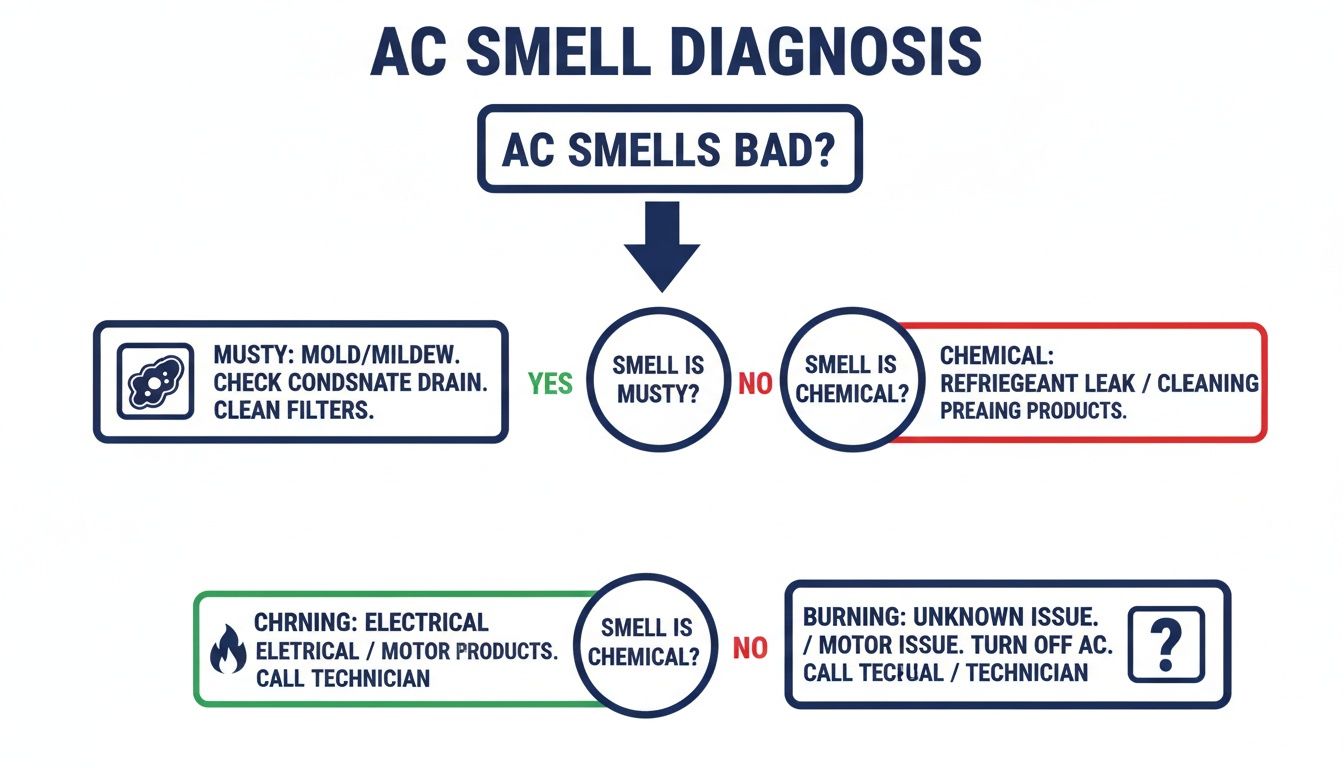
That strange smell from your air conditioner provides real clues about what’s happening inside. In most cases you’ll fall into one of three categories: musty, chemical or burning. We’ll run through each scent, its likely source and the safest first steps you can take.
- Musty: usually mould on evaporator coils or a blocked condensate line. You can remove the filter, flush the drain and run fan-only mode to clear lingering moisture.
- Chemical: a refrigerant leak often gives a sweet or sharp scent. Isolate power at the switch, open windows and call a licensed technician under AS/NZS 3000 rules.
- Burning: overheated wiring or motor parts. Turn off the isolator and book in an ARCtick-certified electrician or HVAC technician right away.
Imagine you arrive home to your Lake Macquarie villa after a humid afternoon and smell damp towels through the vents. A quick filter swap and drain-line flush usually sends that odour packing. Now consider firing up a reverse cycle in western Sydney at sunset: if you detect a faint sweet aroma, switch off the unit and schedule a professional leak test immediately.
If these simple steps don’t clear the smell, it’s time to arrange a full service. Acting quickly can protect your family’s health and prevent expensive repairs. Learn more about preventive upkeep in our guide on how often to service your air conditioner.
Understanding Microbial Growth And Musty Smells
Most musty odours begin with trapped moisture inside coils, filters or ductwork. In coastal towns like Terrigal, indoor humidity often sits above 60 percent. If condensate lines block, water pools under the evaporator and we get a playground for mould and mildew.
Consider this scenario: you live in Wamberal and your split system pauses the fan too soon. Condensation beads on the coil stay damp and spores germinate almost overnight. In the Hunter Valley’s hot days and cool nights, coils face frequent condensate cycles, making regular drying essential.
How Humidity Drives Growth
Think of your heat exchange coil as a cold glass on a humid day. Droplets form and need to evaporate. If the fan shuts off quickly, those droplets linger and invite microbial colonies. That’s why we recommend a post-cooling fan cycle to sweep moisture away.
A recent review confirms poor ventilation and high humidity drive mould on HVAC components. Read the full research about microbial growth and indoor air quality.
Fan Drying Benefits
Running fan-only mode for 5–10 minutes after cooling dries coils and cuts mould by around 70 percent. In Newcastle townhouses or Lake Macquarie villas, this routine can halve odour complaints.
For detailed cleaning instructions, see our guide to servicing split system air conditioner.
Improving Airflow
Even with perfect fan timing, stale pockets of air can harbour spores. You can boost airflow by opening louvres, adding return grilles or moving furniture off vents. In high-humidity regions, these simple tweaks make a noticeable difference.
Running the fan a few minutes longer after cooling can prevent mould growth and keep odours at bay.
Watch for recurring musty smells each startup, visible mould around vents or water pooling in drip trays. If they persist, book a licensed technician for moisture mapping and a condensate line inspection under SafeWork NSW guidelines.
Identifying Refrigerant Leaks And Electrical Odours
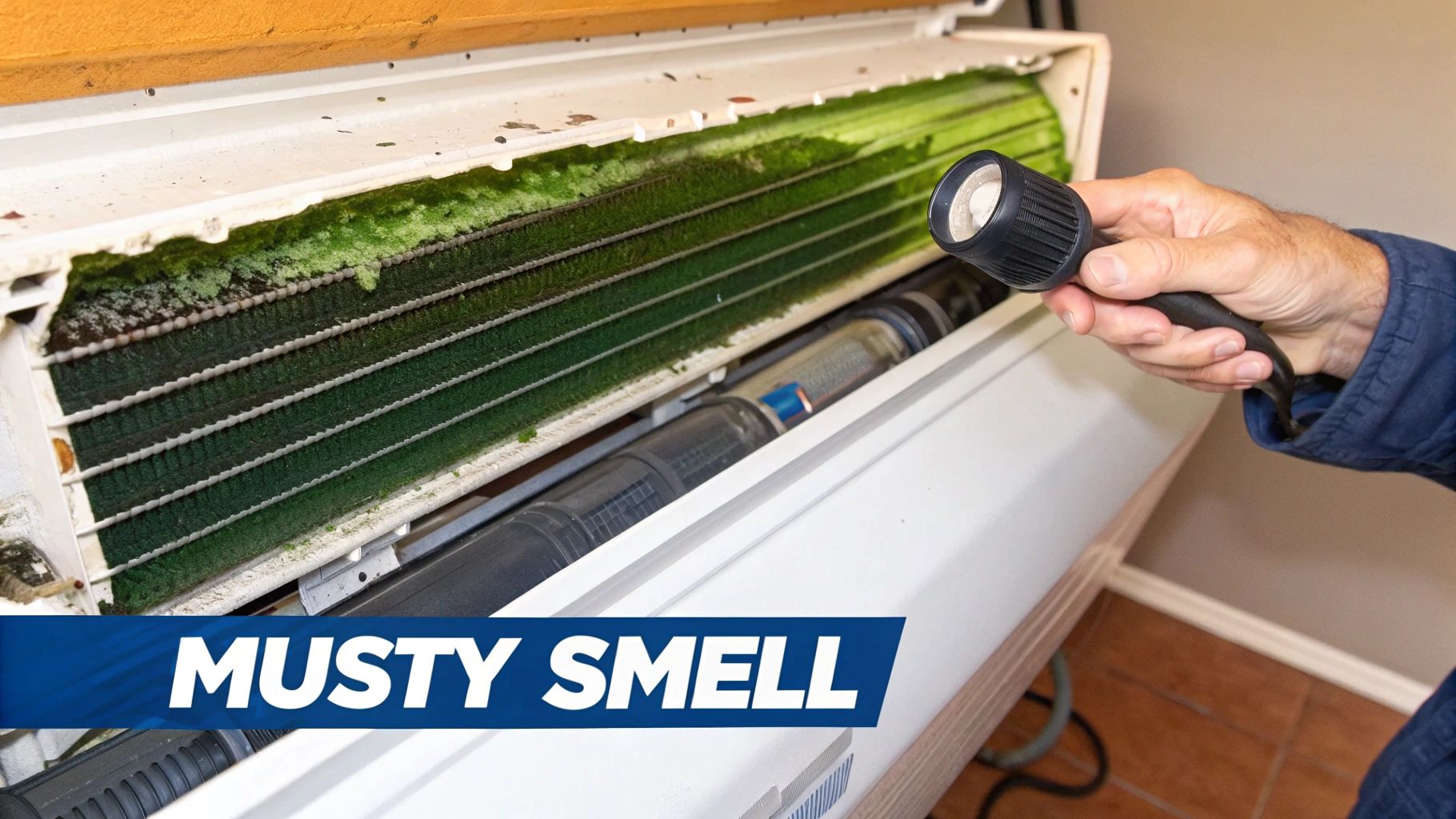
A sweet aroma under your split system almost always signals escaping refrigerant. In Sydney’s postcodes 2000–2999, we often find small leaks at pipe joints on R-410A systems. Refrigerant is odourless, so manufacturers add a hint of sweetness to help locate failures.
If you detect a sharp or acrid scent, insulation around motor windings may be melting due to loose connections or blocked fans. In Lake Macquarie lounges we’ve seen overheating parts crack plastic housings, creating a metallic or ozone smell.
Detecting these early can save you from major repairs. A qualified technician will typically spend one to two hours tracing leaks, pressure testing lines under ARCtick certification and checking electrical insulation resistance to meet AS/NZS 3000 standards.
Chemical Smells Mean Refrigerant Escape
Ignoring refrigerant leaks not only reduces cooling efficiency but also harms the environment and breaches safety regulations. Metropolitan Air Conditioning confirms that leaking lines are a leading cause of concerning odours. Learn more in their study on insidious air-conditioning smells.
Burning Smells Point To Electrical Faults
When you smell burning, shut down the isolator and keep children and pets away. Overvoltage, worn windings or failing capacitors can overheat and pose fire risks. Only a licensed electrician or an ARCtick-certified HVAC technician should handle these repairs.
- Turn off power at the dedicated isolator.
- Ventilate the room by opening windows.
- Do not restart the system until a professional clears it.
To schedule leak detection or electrical repairs, see our air conditioner repairs guide.
Maintenance Strategies To Prevent Smells
Consistent, region-aware maintenance keeps your system smelling fresh and running efficiently. In western Sydney’s summer heat, swapping filters every three months and flushing condensate lines each spring stops water stagnating.
On the Central Coast, higher-efficiency filters trap more dust and mould but increase fan load. You can strike the right balance by choosing filters certified under the Australian Energy Rating Label. Research from Fair Trading NSW and WorkSafe WA shows upgraded filters and extra ventilation can cut indoor pollutants by over 50 percent, though energy use may rise by 10–15 percent. Learn more about these findings from WorkSafe WA.
Why Professional Coil Cleaning Matters
DIY spray-and-rinse only gets surface grime. A certified technician following AS/NZS 60335 guidelines will use non-corrosive detergents, test condensate flow and inspect fan motors. Most clients report up to a 50 percent drop in odour complaints after a professional clean.
Recommended Maintenance Tasks And Frequencies
| Task | Frequency | Benefit |
|---|---|---|
| Replace air filters | Every 3 months | Reduces dust and mould growth |
| Flush condensate lines | Every spring | Prevents blockages and musty odours |
| Professional coil clean | Annually before summer | Removes sludge and microbial films |
| Ventilation inspection | Twice a year | Maintains optimal airflow |
| Full ARCtick service | Annually | Ensures compliance and peak performance |
Tailor this plan to coastal or inland conditions. Early spring drains checks save headaches when Sydney’s humidity spikes. A consistent maintenance schedule across Central Coast, Sydney, Newcastle and Lake Macquarie keeps your air conditioner odour-free year-round.
DIY Troubleshooting For Smelly Units
Before you call us, you can tackle some checks yourself. Always start by isolating power at the switch for a safe working environment.
In a Lake Macquarie villa, a damp morning whiff often means coils harbour mould. Over in Sydney’s western suburbs, dust storms can clog filters rapidly—so a filter inspection can remove gritty, stale air.
Safety First With The Isolator
Flip the isolator switch off beside your indoor unit or on the wall. Confirm the system is off via remote or control panel. Don protective gloves and safety glasses before proceeding.
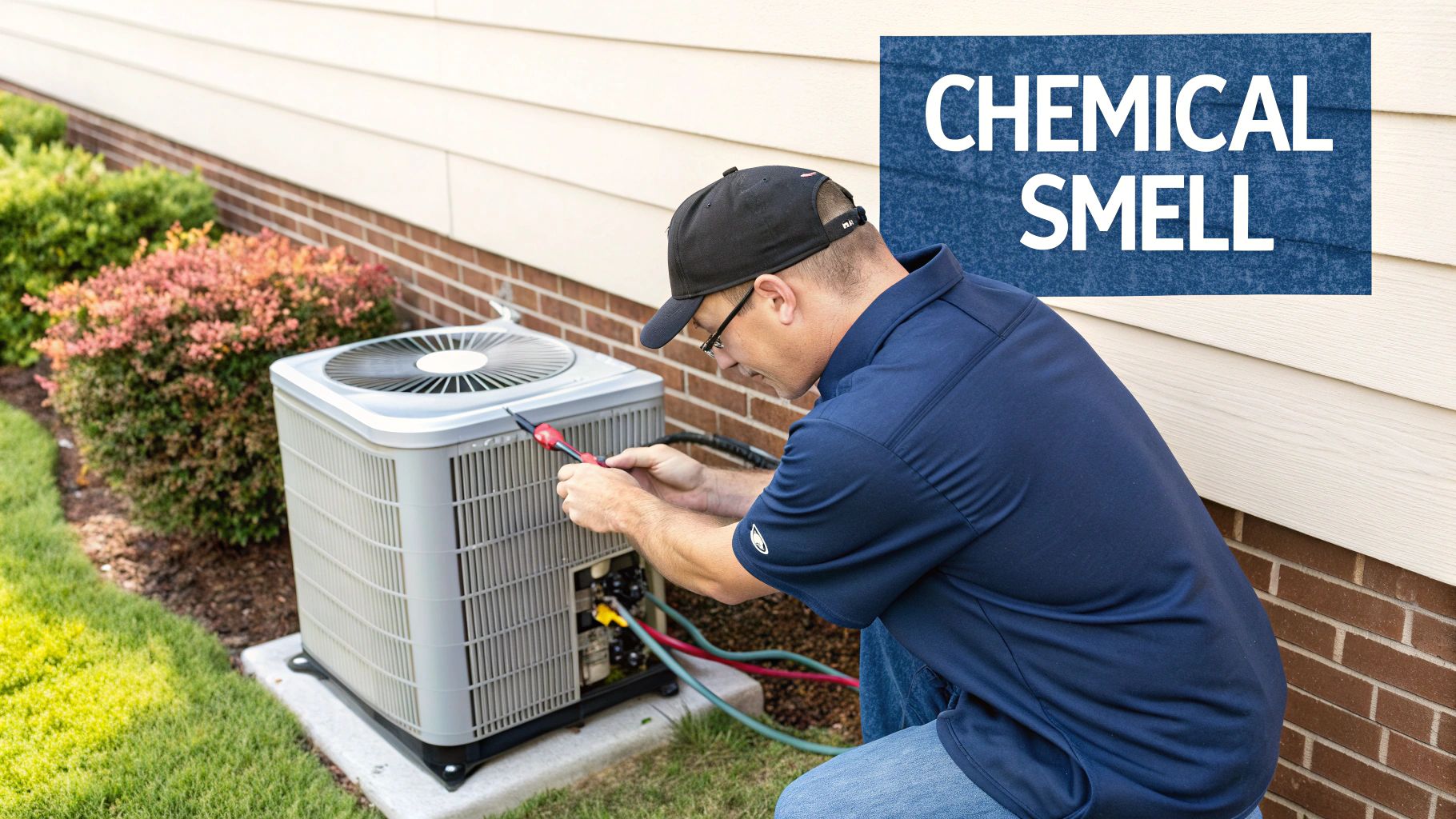
Filter Cleaning Or Replacement
Clogged filters trap dust and moisture, inviting that dank smell. Hold your filter up to daylight. In a Newcastle townhouse you might spot a grey film or even fine sand.
- Slide the filter out.
- Vacuum gently or rinse in warm water.
- Air-dry completely before reinstalling.
- Replace any torn or warped filters.
Condensate Pan And Drain Line Inspection
Standing water in the drip tray breeds mould within days. Remove the front panel, locate the tray and clear debris with a flexible brush or pipe cleaner. Flush with warm water until clear.
Regular condensate line cleaning can cut musty odours by over 50 percent, especially in coastal areas like Terrigal.
Fan Dry Mode To Remove Moisture
Run fan-only mode at low speed for about ten minutes after cooling. This extra step dries coils and halts mould growth.
Vinegar Rinse For Drip Tray
Mix one part white vinegar to three parts water, pour into the tray, wait five minutes then rinse. Avoid bleach, which can corrode metal and degrade seals.
If odours persist or you detect burning or chemical smells, stop DIY and call a pro. Check our split system air conditioner maintenance DIY guide and when to call a pro for more on safe upkeep.
When You Should Call A Licensed Technician
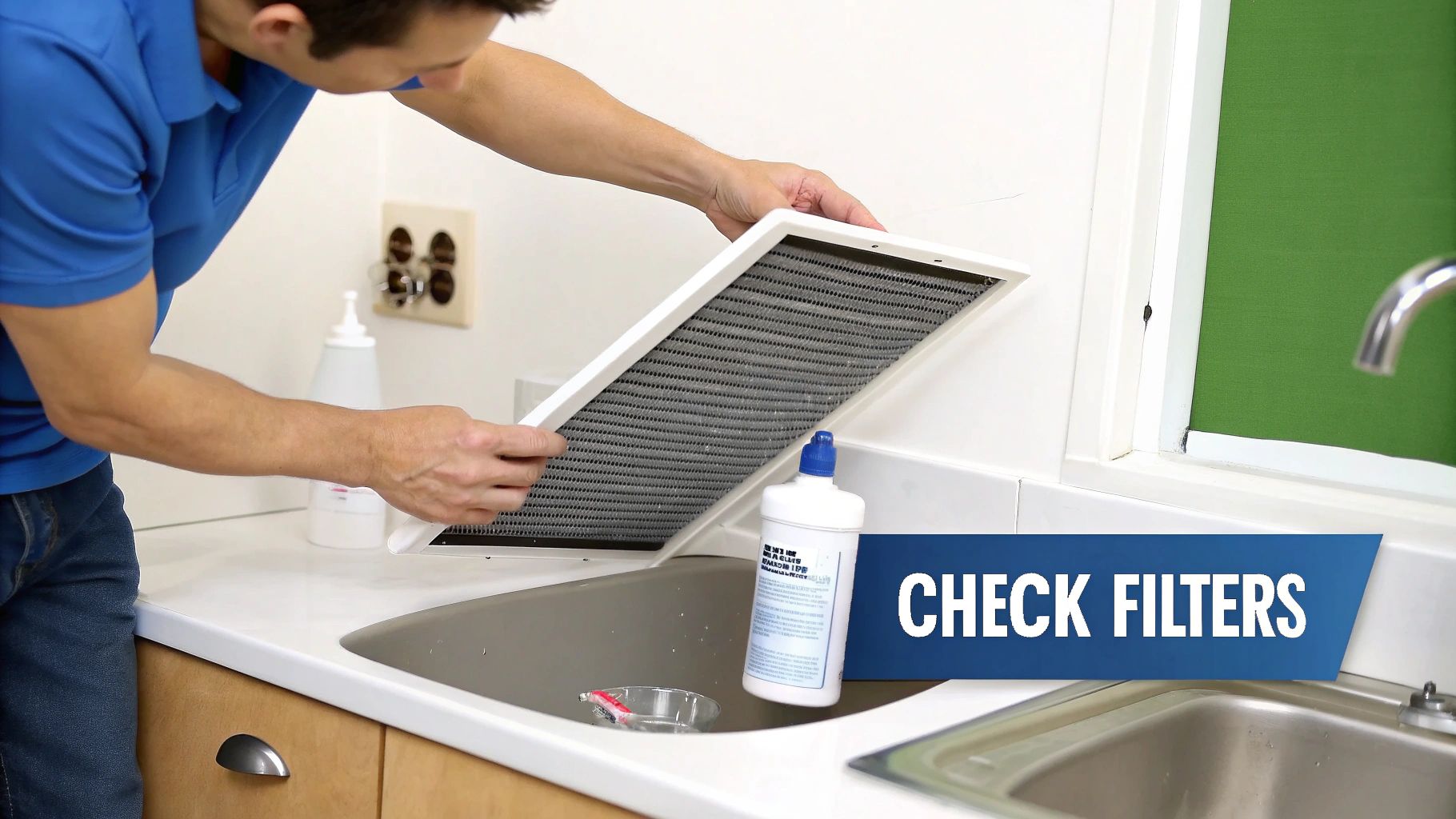
Picture this: you step into your Central Coast home after a steamy night and flick on the split system only to be hit by a harsh chemical odour. That’s your cue to kill power at the isolator and call in a technician straight away.
Across western Sydney, a recurring burning scent means wiring is too hot. And if musty smells return despite filter changes, mould has likely taken hold deep in coils or ducts.
- Chemical or burning scents: cut power immediately and book a service call.
- Persistent musty odours: usually mould or stagnant water in coils or ductwork.
- Sweet, sharp whiff: almost certainly a refrigerant leak requiring action under AS/NZS 3000.
Licensing And Compliance
Electrical and refrigerant work must comply with AS/NZS 3000 wiring rules and SafeWork NSW regulations. Only a licensed electrician or ARCtick-certified HVAC technician can regas or repair sealed refrigerant systems. In Sydney (2000–2999) you need a full electrical licence; Central Coast (2250–2264) and Lake Macquarie rules are equally strict—always check credentials.
What To Expect During Inspection
Your technician will:
- Isolate power and verify zero voltage.
- Inspect coils, filters, drip trays and electrical connections.
- Use leak detectors or dye tests to trace refrigerant faults.
- Perform insulation resistance tests to meet AS/NZS 3000.
- Provide a written report, quote and any regassing fees.
In a Lake Macquarie townhouse, a full leak detection and electrical test usually takes 1–2 hours. During peak summer you might wait up to a week, so early booking outside busy periods gets you faster service.
Service Timeline And Cost Considerations
Most inspections carry a fixed fee for labour and testing. Parts, refrigerant top-ups or major repairs appear as itemised costs. Look for clear breakdowns of AS/NZS 3000 compliance tests and environmental disposal fees—no hidden extras ensures you know what to budget.
| Task | Duration | Licence Required |
|---|---|---|
| Leak detection | 30–45 mins | ARCtick refrigerant licence |
| Electrical insulation test | 15–30 mins | Licensed electrician (AS/NZS 3000) |
| Coil and duct inspection | 20–30 mins | HVAC technician |
| Regassing and topping up | 30–60 mins | ARCtick refrigerant licence |
If you detect chemical, burning or persistent musty smells, call ALC Air on 1300 000 000 for a free assessment or fill in our online form for a free quote. With 15+ years on the Central Coast, our licensed technicians will find the right solution for your home.
Common Questions About AC Smells
Many homeowners ask why musty odours return so quickly after cleaning. Imagine mould as tiny seeds hiding deep in coils or ductwork. When indoor humidity stays above 60 percent, those spores spring back within days. The cure is better airflow, regular fan-dry cycles and professional coil cleans at the first sign of regrowth.
How Often Should I Service Different Systems?
As a rule:
- Split systems need a filter check every 1–2 months and a full service under AS/NZS 60335 each year.
- Reverse cycle units require a drain-line flush each spring and fan motor lubrication annually.
- Ducted systems collect more dust and moisture, so plan a mid-year service to clear drains and inspect insulation.
Are Lingering Smells a Health Hazard?
Persistent musty odours mean airborne mould spores, risking allergies and respiratory irritation. Chemical or burning scents hint at refrigerant leaks or electrical faults, which under SafeWork NSW rules demand immediate shutdown. If cleaning doesn’t help, switch off power and call a licensed technician.
Persistent odours can compromise safety and indoor air quality in your home.
Always isolate power before maintenance and wear protective gloves and safety glasses when handling condensate trays. Avoid bleach in your drip tray—it corrodes metal and degrades seals. Instead, use a mild vinegar solution or an approved HVAC condensate cleaner.
Regular inspections and cautious cleaning are your best defence against unwanted smells. For a thorough tune-up and lasting fixes, consult a qualified technician who understands your home’s layout and local conditions.
For expert help on odour elimination and system servicing, contact ALC Air or call us on 1300 000 000.