


When you turn on the air conditioner hoping for that rush of cool, fresh air, the last thing you want is a strange smell hitting you instead. So, why does my AC smell? More often than not, that weird odour is your system's way of telling you something needs a bit of attention.
It’s usually caused by something simple like moisture buildup, bacteria, or mould, but it can also signal a more serious electrical fault. Think of it as a smoke signal from your air con. We're here to help you figure out what's going on and what your next steps should be.
Decoding the Smells Coming From Your Air Conditioner
This guide will help you play detective and figure out what each smell means. Once you know the cause, you can decide on the right next step, whether that's a simple filter clean for your Central Coast home or a call to a professional technician in Sydney.
An air conditioner is a surprisingly complex bit of kit, and knowing the basics of how it works can really help you track down the source of a problem. If you need a quick refresher, have a look at our guide on how an air conditioner works to better understand the parts we'll be talking about.
To get you started, this decision tree can help you quickly pinpoint the smell and figure out what to do next.
As you can see from the chart, figuring out the specific scent is the first and most important step. It’s what separates a simple fix for a musty smell from an urgent call-out for a burning one.
Common AC Smells and Their Likely Causes
Here’s a quick-reference guide to help you identify what that strange smell from your air conditioner might be and how urgently you need to act.
| Smell Description | Potential Cause | Recommended Action |
|---|---|---|
| Musty or Mouldy | Moisture buildup, clogged drain line, dirty filters creating an environment for mould and mildew growth. | This is the most common smell. Start by cleaning or replacing your filters. If the smell persists, you likely need a professional clean. |
| Rotten Eggs (Sulphur) | A gas leak in your home that's being circulated by the AC, or in rare cases, a decomposing pest in the ductwork. | Safety First. Turn off your AC and gas supply immediately. Ventilate the house and call your gas provider. This is an emergency. |
| Burning or Gunpowder | An overheating electrical component, such as the fan motor, wiring, or circuit board. A serious fire hazard. | Turn off the power at the switchboard immediately. Do not use the unit again until it has been inspected by a qualified technician. |
| Chemical or Sweet | A refrigerant leak. Refrigerant has a distinct, faintly sweet or chloroform-like smell. | This can be harmful to breathe and damages the system. Turn off the AC and call a licensed technician to find and repair the leak. |
| Sewage or "Dirty Socks" | A backed-up sewer line or P-trap issue near your AC unit, with the smell being drawn into the system. | Check for plumbing issues near your indoor or outdoor units. If you can't find the source, call a plumber and an AC technician. |
This table covers the most frequent culprits, but remember, any unusual smell is worth investigating for both your system's health and your own.
Your air conditioner circulates every bit of air in your home, so any smell it produces is a sign you really shouldn't ignore. For homeowners from the humid Central Coast (postcodes 2250-2264) to the bustling suburbs of Sydney, these odours are often the first symptom of an underlying issue that could affect both your system’s performance and your family's health.
The Musty Mouldy Smell a Common Coastal Problem

Without a doubt, the most frequent complaint we hear is about that musty, "dirty socks" smell that seems to appear out of nowhere. If this sounds familiar, you're not alone, especially if you live in the humid coastal areas of NSW like the Central Coast, Sydney, or Newcastle. High humidity creates the perfect breeding ground for mould and mildew inside your unit’s dark, damp components.
Ever left a wet towel in a gym bag for a few days? That damp, earthy odour is essentially what’s happening inside your AC’s evaporator coils and drain pan. When your system cools the air, it pulls out moisture, which is meant to collect and drain away. But if the drain line gets blocked or the filter is caked with dust, that moisture gets trapped.
This stagnant water, combined with dust and warmth, turns your air conditioner into a perfect little mould factory. Every time you switch it on, the fan blows those mould spores and the musty smell right back into your living room.
Why Coastal Homes Are More at Risk
The link between our coastal climate and smelly air conditioners is undeniable. High humidity levels, which often exceed 70% during summer months in regions like Lake Macquarie and the Hunter Valley, are the main culprit. In fact, Australian HVAC service data shows a significant 62% of service calls in NSW coastal suburbs are related to mould-based smells.
You can explore more insights on how our local climate impacts air conditioning choices in our guide to choosing an AC for Central Coast homes.
This problem is made worse by dirty filters, which can choke airflow and trap even more moisture. For homeowners with popular reverse cycle systems from brands like Daikin or Mitsubishi Electric, keeping filters clean and drains clear is non-negotiable. Ignoring the smell isn't just unpleasant; it can have a real impact on your indoor air quality.
A musty smell is your air conditioner's way of telling you that it’s struggling with excess moisture. In a climate like ours, this is often the first sign that your condensate drain is blocked or your evaporator coils need a professional clean.
What You Can Do About It
The first step is always the simplest one: check your air filters. If they are clogged with dust and debris, cleaning or replacing them can sometimes solve the problem by restoring proper airflow and reducing moisture buildup.
You can also have a quick look at the indoor unit’s louvres and the outdoor unit for any obvious blockages like leaves or garden debris. However, if the smell hangs around after these basic checks, the problem lies deeper within the system.
The mould is likely growing on the evaporator coils or within the condensate drain line, areas that are difficult and unsafe for you to access without the right tools and training. This is when it's time to call in the professionals. Our ARCtick certified technicians can perform a deep clean and sanitisation, safely removing the mould and ensuring your system's drain lines are clear, restoring fresh, clean air to your home.
That Musty, "Dirty Sock" Smell
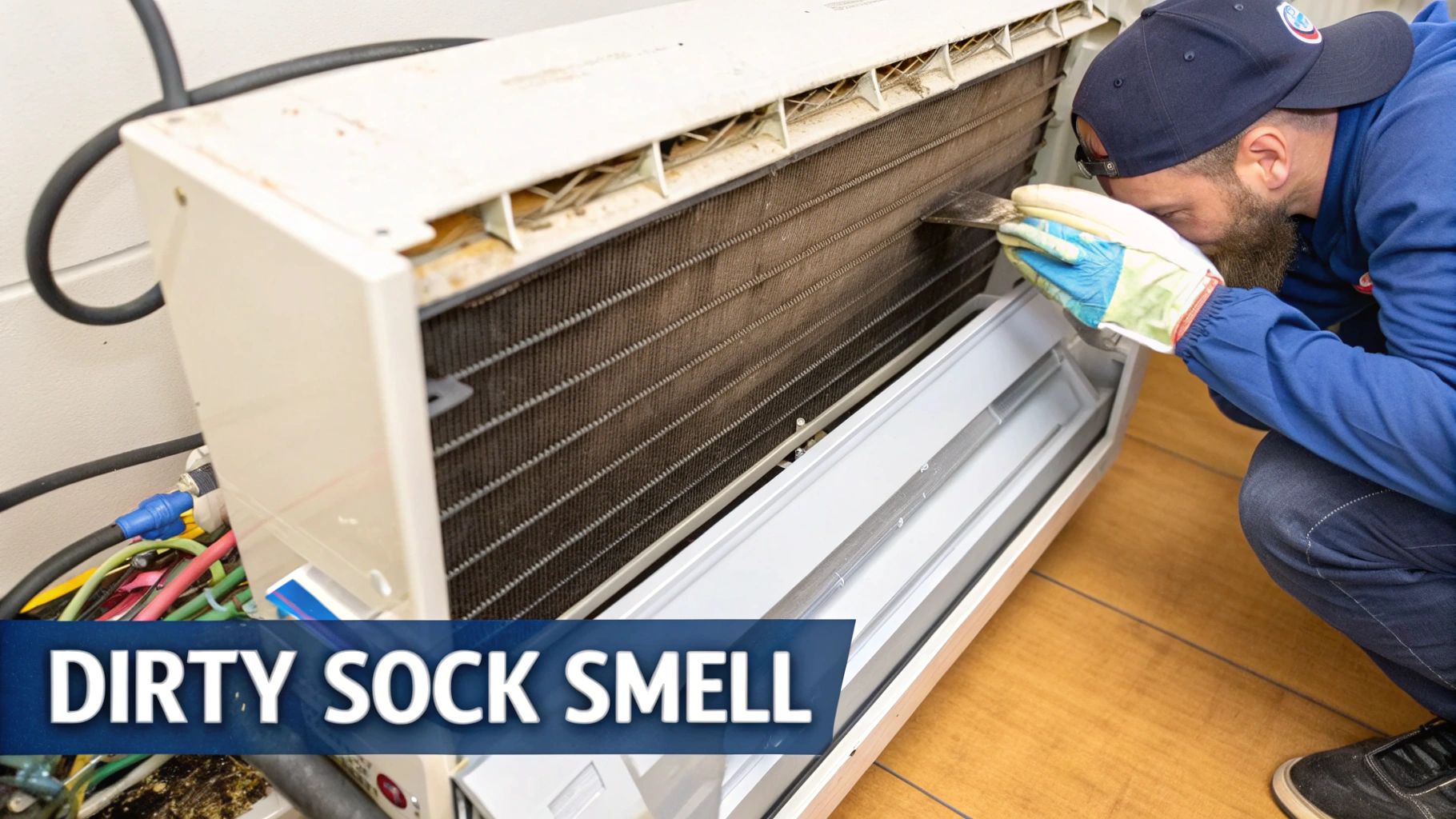
There’s a smell that, once you’ve experienced it, you’ll never forget. In the industry, we call it Dirty Sock Syndrome, and unfortunately, it smells exactly as you'd imagine. That distinct, funky odour is the result of bacteria and mould having a feast on the gunk built up inside your unit’s evaporator coils.
Think about a busy family home in a suburb like Gosford or Warners Bay. Everyday life, dust, skin cells, pet dander, gets pulled into your split system. It all sticks to the damp, dark coils, creating the perfect breeding ground for microorganisms.
What Causes This Specific Smell?
You'll usually notice that "dirty sock" smell most when you switch your reverse cycle system from heating to cooling, or right after it's been off for a while. The coils go through these wet-and-dry cycles, which is exactly what encourages the bacteria to multiply and release that foul odour.
It's a common headache for homeowners across NSW, particularly in homes with pets or just a lot of foot traffic. It’s no surprise that the problem is often worse in areas like Lake Macquarie, where higher pet ownership means more fur and dander getting sucked into the system and clogging things up faster.
If you’ve neglected the filter, it gets even worse. A clogged filter can't do its job, so more of those contaminants make their way to the coils, accelerating the problem and pumping smelly, bacteria-filled air throughout your home.
Dirty Sock Syndrome isn't just an unpleasant smell. It’s a clear signal that the inside of your air conditioner has become a microbial breeding ground. While keeping your filter clean is a good start, the real problem is usually buried much deeper, right on the evaporator coils themselves.
How to Get Rid of It for Good
Regularly cleaning your filters is a critical first step, and something every homeowner should do. But in most cases, it won’t solve Dirty Sock Syndrome. The odour-causing bacteria are embedded deep within the evaporator coils, a part of the unit you simply can’t get to safely yourself. Our split system maintenance guide shows you what you can tackle and when it’s time to call in a pro.
To truly eliminate the smell and make sure your family is breathing clean, healthy air, you need a professional deep clean and sanitisation. Our ARCtick licensed technicians use specialised, eco-friendly treatments that safely kill 99.9% of bacteria without harming your system's delicate components. This not only gets rid of the stench for good but also restores your unit’s efficiency and dramatically improves the air quality inside your home.
Urgent Smells That Signal a Serious Hazard
While a musty smell is unpleasant, some odours coming from your air conditioner are far more serious. These are the ones that demand your immediate attention. Think of them as urgent warnings that require you to shut the system down straight away and ensure your family’s safety.
Ignoring smells like burning, rotten eggs, or chemicals can lead to significant risks, including fire or exposure to harmful substances. When you find yourself asking, "why does my AC smell like something dangerous?", it's time to trust your instincts. These smells are not normal and should never be overlooked.
The Smell of Burning or Gunpowder
If you notice a sharp, acrid smell like burning plastic or even gunpowder, this is a major red flag for an electrical fault. It could mean the fan motor is overheating, wiring has frayed and is shorting out, or the main circuit board is failing. These are serious fire hazards.
What to do immediately:
- Don't wait to see if the smell goes away. Go straight to your switchboard.
- Turn off the circuit breaker that powers your air conditioner. This will cut all electricity to the unit.
- Do not turn it back on under any circumstances.
- Call a licensed and insured air conditioning technician.
This isn't a DIY situation. An electrical issue requires a qualified professional who can safely diagnose and fix the problem in line with Australian Standards like AS/NZS 3000. Trying to fix it yourself could result in a fire or serious injury. For more on what to expect, read our guide on common air conditioner repairs and the importance of a professional diagnosis.
Rotten Egg or Sulphur Smell
A rotten egg smell is almost always linked to a gas leak. Natural gas itself is odourless, so gas companies add a chemical called mercaptan to give it that distinct sulphur smell for safety. If your air conditioner is circulating this smell through your home, it means there's likely a gas leak somewhere in your house.
This is an emergency. The risk of an explosion or fire is extremely high. Your air conditioner's own electrical components could easily ignite the gas.
What to do immediately:
- Turn off the air conditioner at both the unit and the switchboard.
- Do not use any electrical switches, appliances, or even your phone inside the house.
- Extinguish any open flames, like candles or pilot lights.
- Open all windows and doors to get fresh air moving through the property.
- Evacuate everyone from the building immediately.
- From a safe distance outside, call your gas provider's emergency line.
Sweet Chemical Smell
A faintly sweet, almost chloroform-like smell often points to a refrigerant leak. While modern refrigerants are less harmful to the ozone layer than older types, they are still hazardous to inhale in a confined space and can cause dizziness or breathing difficulties.
On top of the health risk, a refrigerant leak means your system can no longer cool your home effectively. Continuing to run it can cause severe damage to the compressor, often the most expensive part of the system, leading to a very costly repair.
This issue must be handled by an ARCtick certified technician. Releasing refrigerant into the atmosphere is illegal, and they have the specialised equipment to find the leak, repair it, and safely recharge your system.
How Regular Maintenance Prevents AC Smells
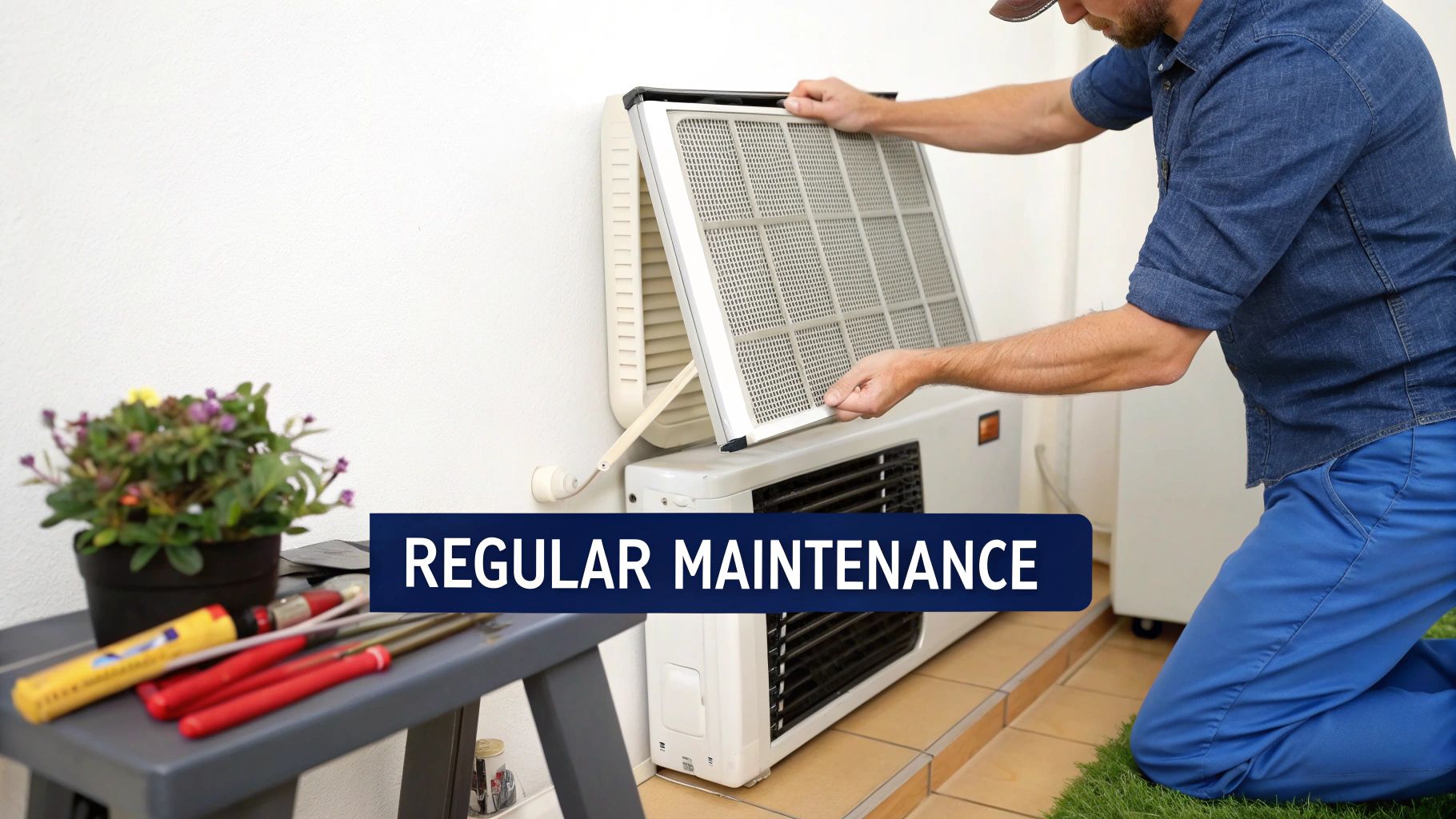
The best way to deal with bad air conditioner smells is to stop them from ever starting in the first place. A bit of proactive care is always easier, and a lot cheaper, than tackling a serious mould problem or a system breakdown down the track.
Think of regular maintenance as a small investment in your home’s comfort and air quality. It’s especially important in the humid coastal climate we get from Sydney up to Newcastle, where moisture and dust can quickly lead to those unpleasant musty odours.
Simple DIY Steps for a Fresher System
You don’t need to be a technician to handle some of the most effective maintenance tasks. These simple actions are your first and best line of defence against smells.
- Clean or Replace Your Filters Regularly: This is the single most important thing you can do. Clogged filters don’t just restrict airflow; they trap moisture and create the perfect breeding ground for mould. Check them monthly during summer and clean or replace them at least every three months.
- Keep the Outdoor Unit Clear: Your outdoor unit needs to breathe. Make sure it's free from leaves, grass clippings, and any garden debris that might have piled up against it. You want at least 30cm of clear space all the way around to ensure proper airflow and stop the motor from overworking.
- Check the Condensate Drain: Find the small PVC pipe that comes out of your house near the outdoor unit. On a humid day, you should see it dripping water. If it’s bone dry or you spot water pooling around your indoor unit, the drain line is likely blocked, a classic cause of musty smells.
Proactive maintenance isn't just about preventing smells. A clean, well-maintained air conditioner can run up to 15% more efficiently, saving you real money on your power bills while extending the life of your unit.
The Value of Professional Annual Servicing
While these DIY checks are crucial, they can't replace a thorough professional service. An annual tune-up from a licensed technician is vital for getting to the deeper issues that cause odours and making sure your system is safe and running correctly.
A professional service goes way beyond a simple filter clean. Our ARCtick certified technicians perform a comprehensive check that includes deep cleaning the indoor evaporator coils (where mould loves to hide), flushing the condensate drain to remove stubborn sludge, and inspecting all electrical connections for safety. If you're curious about what's involved, you can learn more about the benefits of servicing your split system air conditioner in our detailed guide.
This annual check-up not only prevents smells but also lets us spot potential problems before they turn into expensive breakdowns. It’s the best way to guarantee your air conditioner delivers clean, fresh, and cool air for your family all summer long.
When to Call in a Professional AC Technician
While cleaning your filters can sometimes sort out a minor musty smell, some odours are your air conditioner’s way of sending up a flare. Knowing when to put down the tools and pick up the phone isn't just about convenience, it’s about safety.
If you’ve given the basic DIY steps a go and the smell is still hanging around, it’s a sure sign the problem is deeper inside the system. A stubborn musty odour usually means mould has taken hold on the evaporator coils or in the drain pan. These are tricky, damp spots that you can't clean safely or effectively without the right training and gear.
Don't Hesitate, Make the Call
Some smells are absolute non-negotiables. These aren’t hints; they’re warnings that require an immediate call to a licensed technician. If you smell any of the following, turn the unit off at your switchboard straight away and call for help:
- Burning or Electrical Smells: This is the most urgent red flag. It points to an electrical fault, a failing motor, or fried wiring, a serious fire hazard. Don't risk it.
- A Sweet, Chemical Smell: This is the classic signature of a refrigerant leak. Refrigerant is a harmful substance that needs to be handled by an ARCtick licensed professional to ensure it's captured safely and the leak is repaired correctly.
- Rotten Eggs or Sulphur: Once you’ve confirmed it’s not a gas leak in your home, this smell often points to a dead pest trapped somewhere in the unit or ductwork. It needs to be professionally removed and the area sanitised to prevent health risks.
When you're looking for a technician on the Central Coast, Sydney, or Newcastle, checking their credentials is a must. They need a valid electrical licence (as required by SafeWork NSW) and that all-important ARCtick certification to legally and safely handle refrigerants.
At ALC Air, our entire team is fully licensed, insured, and ARCtick certified. We’ve been the trusted choice for safe, reliable air conditioning services across Sydney, Newcastle, and the Central Coast for over 15 years, making sure every job meets the highest Australian Standards.
Got Questions About Those AC Smells?
We hear a lot of the same questions from homeowners when they call us about a funny smell coming from their air conditioner. It’s completely normal to have follow-up queries, so we’ve put together some straightforward answers to the most common ones we get.
How Often Should I Be Cleaning My Filters to Stop Smells?
For most homes across the Central Coast and Sydney, a good rule of thumb is to check your filters every month and give them a proper clean at least every three months.
But, and this is a big but, if you’ve got pets shedding hair, live near a dusty road, or have anyone with allergies in the family, cleaning them monthly is a much better habit. This one simple task is the best defence against the gunk that causes musty smells and makes your unit struggle.
Can I Just Use Windex or Another Household Cleaner on My AC?
Please don’t. We strongly advise against using any standard household sprays or detergents inside your air conditioner. Most of them contain harsh chemicals that are great for your kitchen bench but terrible for your AC.
These chemicals can easily corrode the delicate aluminium fins on the evaporator coil. Worse, those chemicals can become airborne and get circulated through your home, which you definitely don't want to be breathing. For a safe and effective clean, you really need a specialised, non-corrosive coil cleaner, or just leave it to a professional technician from ALC Air. We use industry-approved solutions that clean thoroughly without causing any damage.
My AC Smells Fine, but It’s Barely Cooling the Room. Are These Problems Related?
Yes, they are almost always two sides of the same coin. A dirty, clogged filter or evaporator coil doesn’t just cause bad smells, it also chokes the system by severely restricting airflow. Proper airflow is absolutely essential for your unit to cool effectively.
When the air can't move freely, your system has to work much, much harder to do its job. This not only slashes its cooling power but also sends your electricity bills climbing. If you're noticing poor performance, it's a huge red flag that a professional service is needed to fix the underlying blockage. Sorting that out will also stop nasty smells from developing down the track.
If you're still stuck with a smell that won't go away, or your system just isn't working like it used to, don't ignore it. The team at ALC Air is ready to help homes across the Central Coast, Sydney, and Newcastle get their air quality back on track.
Give us a call for some professional advice and a free, no-obligation quote today.