


If you’ve ever walked into a home that’s perfectly comfortable in every single room, with no hot or cold spots, the secret is almost always ducted air conditioning. It’s a whole-home solution that works like a central nervous system for your house, quietly delivering conditioned air exactly where you need it through a hidden network of ducts.
It’s the most integrated and discreet way to manage your indoor climate. When you're considering the best way to cool or heat your entire property, understanding what ducted air conditioning is and how it works is the first step. Let's walk through it together.
What is Ducted Air Conditioning, Really?
So, what actually is ducted air conditioning? Think of it as a central climate control system for your entire home. Unlike a split system that blasts air into just one room, a ducted system uses a powerful central unit to cool or heat the air, then distributes it evenly to multiple rooms, or 'zones', through flexible ducts hidden in your ceiling or under the floor.
The only things you actually see are the subtle vents in each room and a central wall controller, which gives you complete command over your home's temperature. This setup is perfect for maintaining consistent comfort, whether you're in a sprawling family home in the Hunter Valley or a modern two-storey house in Sydney. It’s an elegant solution that integrates seamlessly into your home.
How The Main Components Work Together
A ducted system might sound complex, but it’s really just a few key parts working in perfect harmony. Once you understand what they are, it’s easy to see why it’s such an effective solution for Australian homes.
To get you up to speed, here’s a quick rundown of the core components and what they do.
Ducted Air Conditioning Components at a Glance
| Component | Location | Primary Function |
|---|---|---|
| Indoor Unit | In your roof space or under the floor | Contains the fan coil that heats or cools the air before sending it out. |
| Outdoor Unit | Outside your home | Houses the compressor; it releases heat outside in summer and absorbs it in winter. |
| Ductwork | Running through the ceiling/floor cavity | A network of insulated tubes that carry the conditioned air to each room. |
| Vents & Grilles | In the ceiling or floor of each room | The discreet outlets where air enters the room. A larger 'return air' grille pulls air back to be re-conditioned. |
| Central Controller | On a wall in a central location | Your command centre for setting temperatures, scheduling, and managing zones. |
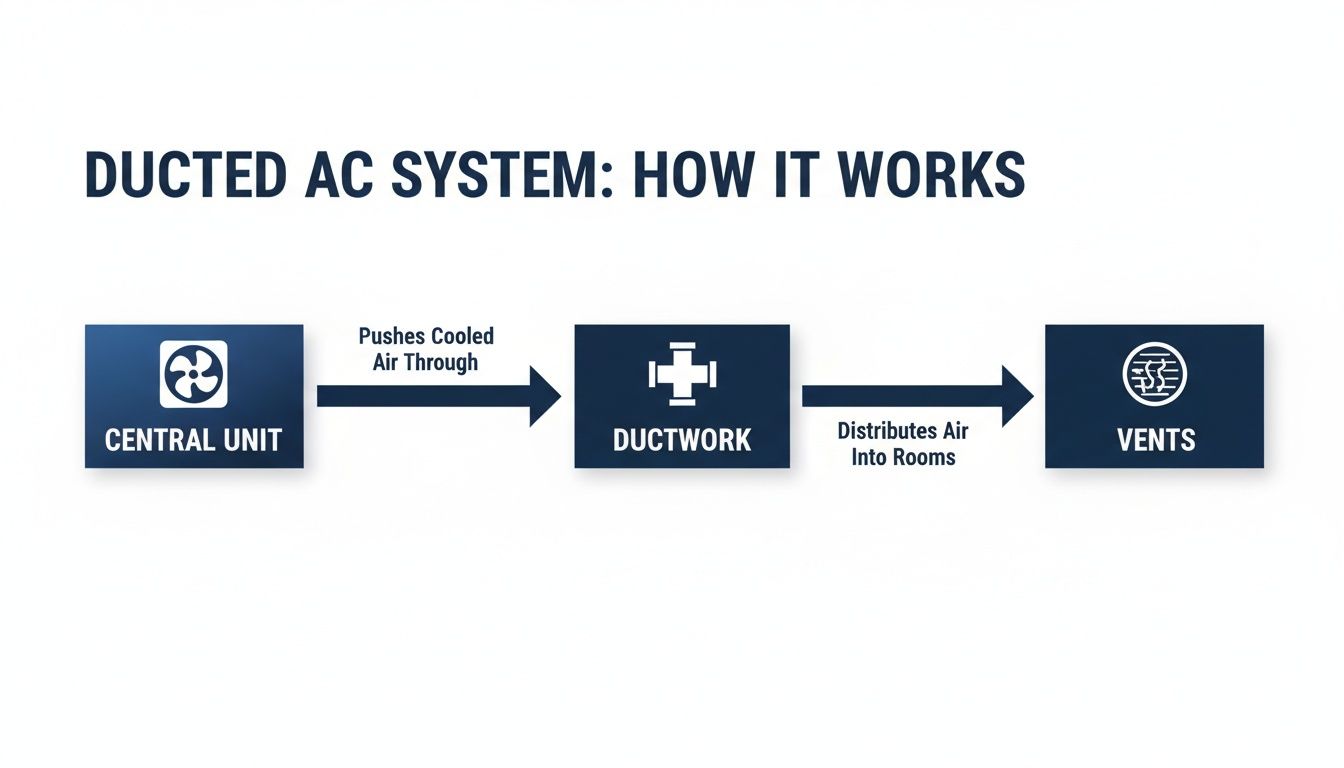
This simple arrangement forms a continuous loop to keep your home comfortable. The central unit does the hard work, the ducts act as the delivery network, and the vents are the final destination, creating a seamless and efficient cycle.
What Is Reverse Cycle Technology?
Pretty much all modern ducted systems in Australia are reverse cycle, and that’s a massive advantage. It means the exact same system that provides powerful cooling on a scorching 40°C day in Newcastle can reverse its operation to deliver cosy warmth during a chilly Central Coast winter.
You can learn more about the specifics in our detailed guide to reverse cycle heating and cooling.
This dual functionality makes it an incredibly efficient and convenient year-round solution, completely getting rid of the need for separate heaters and coolers. This all-in-one capability is a key reason so many new builds on the Central Coast and in Sydney's western suburbs opt for ducted systems, where consistent, whole-home comfort is a priority.
Ducted Systems Versus Split Systems
Choosing the right air conditioner for your home often boils down to one big decision: ducted versus split systems. While both will keep you comfortable, they’re designed for very different situations, and knowing the difference is key to making a smart investment.
Think of it this way: a split system is like a spotlight, perfect for one specific area. A ducted system is more like a floodlight, designed for broad, whole-home coverage.
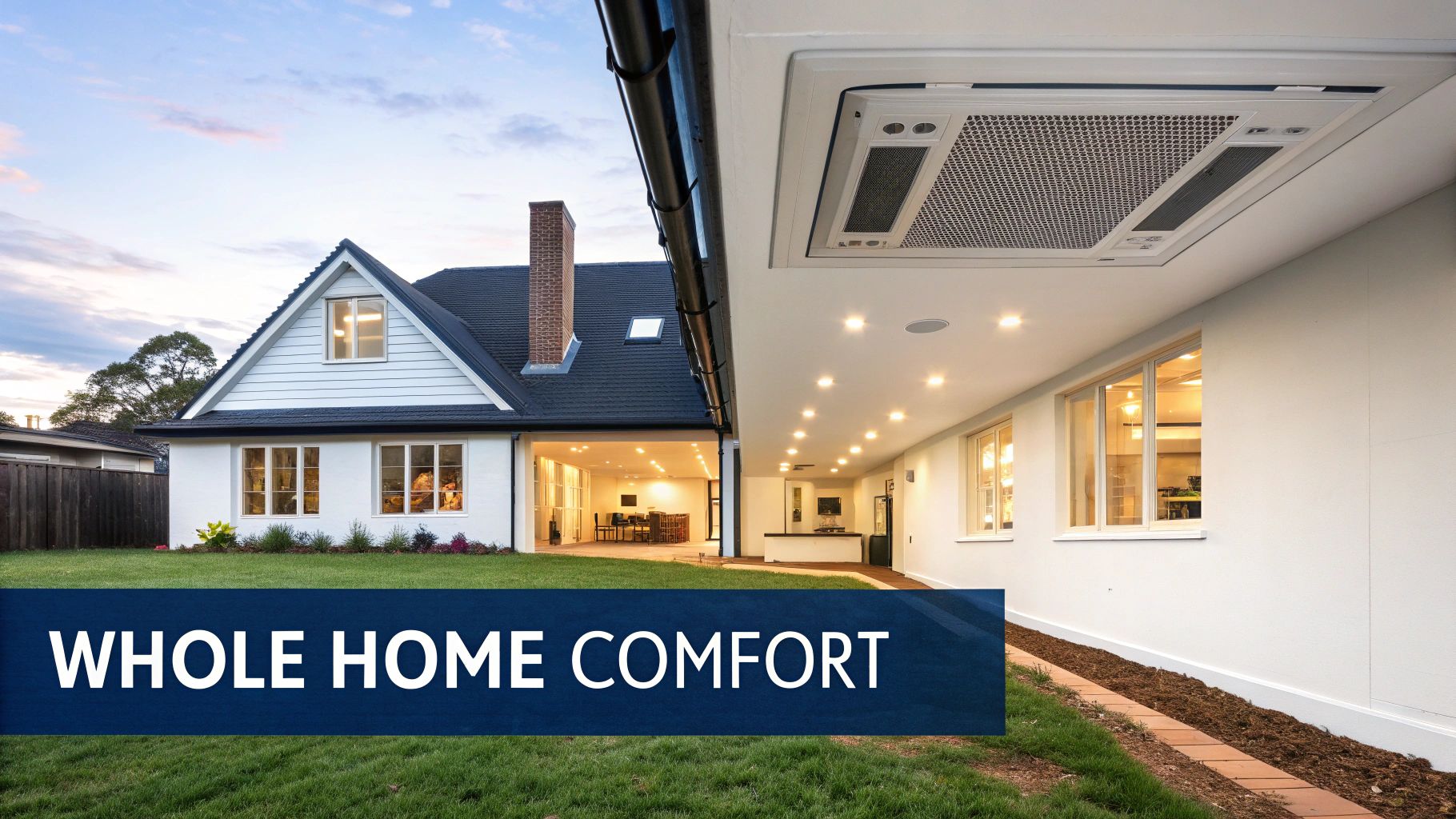
A split system is the perfect solution for a single room or a defined open-plan area. Imagine your main goal is to cool the west-facing living room of your Terrigal apartment. In that scenario, a single wall-mounted split system is a brilliant, cost-effective choice. It’s built to do one job really well in a contained space.
On the other hand, a ducted system is a complete climate solution for your entire home. It’s designed for properties where you need consistent comfort across multiple rooms at the same time. For a larger family home in Gosford, a ducted system can cool the master bedroom, the kids' rooms, and the home office all at once, all from a single, hidden unit.
Key Differences in Daily Living
Beyond just how much area they cover, the day-to-day experience with each system is miles apart. The most obvious difference is how they look. A split system has a visible indoor unit mounted high on a wall, whereas a ducted system is almost completely invisible, with only subtle vents in the ceiling or floor. For homeowners who value clean, uncluttered interior design, this is a huge plus.
Noise is another big factor. With a ducted system, the noisy parts—the compressor and fan coil—are tucked away outside or in your roof space. This means the system runs with a barely audible whisper inside your living areas. A split system's indoor unit contains a fan and is right there in the room with you, so you’re always going to hear it more.
The real advantage is control. A ducted system offers centralised command with zoning capabilities, letting you send cool air only to the rooms you're actually using. This kind of smart control is a massive practical advantage for a family in Newcastle needing to cool multiple spaces without wasting energy on empty ones.
Comparing Control and Flexibility
A ducted system gives you command over your entire home's climate from a single controller. You can set different temperatures in different zones, switch off the air to unused guest rooms, and pre-cool your living areas before you even get home. It’s a comprehensive management tool for your comfort.
A split system, in contrast, works on its own. If you have several split systems, you’ll be juggling multiple remote controls and managing each unit separately. While this works just fine for smaller homes or specific needs, it doesn't have the seamless, integrated convenience of a ducted setup.
Ultimately, the right choice really depends on your property and your lifestyle. For a much deeper dive into this comparison, our guide on ducted air conditioning vs split system has even more detail to help you make the call.
The Big Advantages of a Ducted Air Conditioning System
Moving beyond just cooling your entire home, a ducted air conditioning system brings some serious advantages to the table that a collection of single-room units just can't compete with. When we chat with homeowners, the conversation always shifts from simply ‘getting cool’ to the smarter, more efficient way of life a ducted system offers.
It’s about more than just temperature; it’s about control, aesthetics, and quiet comfort.
Intelligent Zoning for Pinpoint Control
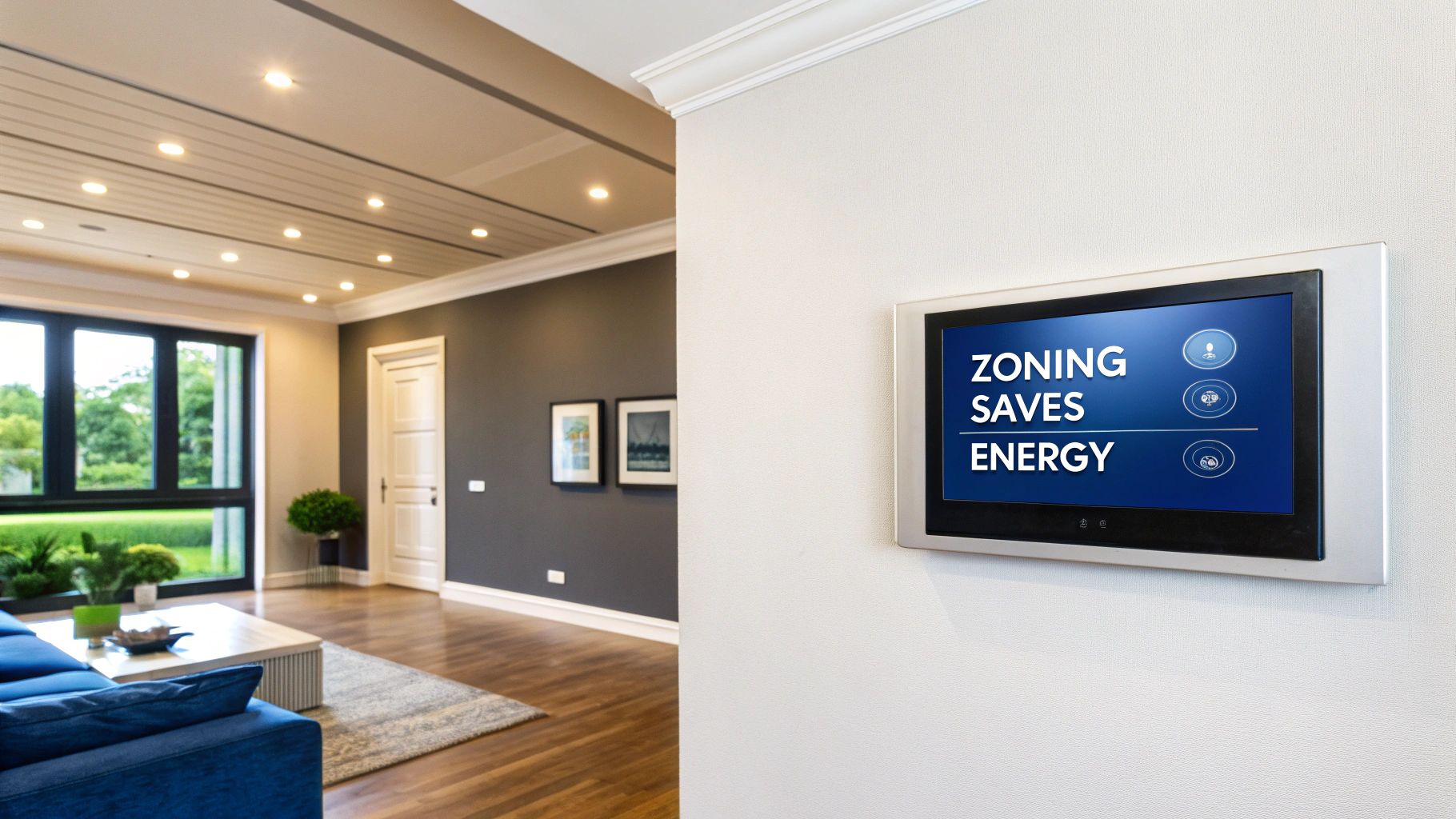
If there's one feature that truly defines modern ducted air conditioning, it's zoning. This technology is a real benefit, letting you divide your home into distinct areas so you can control precisely where the conditioned air goes.
Picture this: you're working from your home office in Hornsby during the day. With zoning, you can cool just the office and the main living area, leaving the empty bedrooms switched off. Come evening, you can reverse that, cooling only the bedrooms for a comfortable night's sleep.
This is the key to avoiding wasted energy and sky-high power bills. You get comfort exactly where you need it, when you need it, instead of paying to cool rooms no one is in.
A Clean Look and Discreet Design
For many homeowners, especially those who've put a lot of thought into their interior design, the look of an air conditioner is a big deal. Ducted systems are the clear winner here because they're designed to be almost completely invisible. The only things you'll ever see are the subtle, minimalist vents in the ceiling and a sleek wall controller.
No bulky units hanging on your walls, no visual clutter. Your system just melts into the background. This is a huge plus for modern homes across Sydney and the Central Coast where clean lines and uncluttered spaces are the goal. It does its job perfectly without ever drawing attention to itself.
Whisper-Quiet Operation for a Peaceful Home
Another huge benefit is just how quiet a ducted system is. The parts that make the most noise—the main indoor and outdoor units—are tucked away out of sight, either in your roof space or outside the house. This keeps your living environment peaceful and undisturbed.
You get all the cooling comfort without the constant hum of a fan motor whirring away in the same room. It makes ducted air conditioning the ideal choice for bedrooms, nurseries, or any space where you value a bit of peace and quiet.
Add Real, Tangible Value to Your Property
A professionally installed, high-quality ducted air conditioning system isn't just an expense; it's a premium feature in the Australian property market. It's an investment that improves your daily life and can genuinely add tangible value to your home when it comes time to sell.
In NSW, ducted systems are a top choice for new builds and major renovations. As demand for energy-efficient homes grows, ducted air has become a highly desirable feature for prospective buyers. It signals a home built for comfort and modern living.
Understanding Ducted Air Conditioning Costs
So, let's get to the question on everyone's mind: what does a ducted air conditioning system actually cost? It's the first thing most homeowners ask, and while there's no single price tag that fits every home, we can walk you through exactly what goes into the final number.
Think of it less like buying an appliance off the shelf and more like a custom solution designed specifically for your property.
The final investment depends on a few key things: the size of your home, the brand and model you go with, how many zones you need, and how complex the installation will be. A straightforward job in a new single-storey build in the Hunter Valley is naturally going to be different from a tricky retrofit in a two-storey heritage home in Newcastle.
The Critical Role of System Sizing
Getting the size (or kW capacity) of your system right is the single most important factor for both comfort and your power bills. It’s not an area for guesswork.
A system that’s too small will run flat-out all day and still struggle to keep up on a scorching hot afternoon in Western Sydney. On the flip side, an oversized system will switch on and off too frequently. This is a process called short-cycling, which is incredibly inefficient and puts unnecessary strain on the components.
This is why a professional heat load calculation from a licensed and ARCtick certified technician is absolutely essential. We don't just guess.
Our technicians will assess everything, including:
- The total floor area of your home.
- How good your wall and ceiling insulation is.
- Which way your windows face and how much direct sun they get.
- The height of your ceilings—taller ceilings mean more air volume to cool.
This detailed assessment ensures you get a system that’s perfectly matched to your home's unique needs, whether you're in a coastal property in Lake Macquarie dealing with high humidity or a family home in the 2250 postcode.
What Factors Influence the Installation Price?
Beyond the unit itself, several key elements contribute to the overall cost. Understanding these helps you see where your investment is going and why a detailed, itemised quote is so important. For a deeper dive, you can read our detailed guide on ducted air conditioner costs.
A Key Insight: The quality of the installation is just as important as the equipment. A premium unit installed poorly will never perform well. The labour component of your quote covers the expertise of licensed electricians and refrigeration mechanics who ensure your system is installed safely and to Australian Standards like AS/NZS 3000.
The installation involves more than just plugging in a box. The quality of the ductwork is a huge part of the system's overall performance. It’s such a critical component that many professionals will only work with high-quality, well-insulated ducting to ensure the system runs efficiently for years to come.
Here's a quick look at the main variables that shape the final price of your ducted system.
Factors Influencing Ducted Air Conditioning Installation Costs
| Cost Factor | Why It Matters | Example Scenario |
|---|---|---|
| System Capacity (kW) | Larger homes need more powerful (and more expensive) units to effectively cool the entire space. | A 250sqm family home might need a 14kW unit, while a 120sqm villa might only need an 8kW system. |
| Brand & Model Quality | Premium brands like Daikin or Mitsubishi cost more upfront but often offer better efficiency, longer warranties, and quieter operation. | Choosing a model with a higher energy star rating can add to the cost but save hundreds per year on electricity. |
| Number of Zones | Each zone adds dampers, controls, and labour to the installation. More zones mean more control but a higher initial cost. | A basic 2-zone setup (day/night) is cheaper than a 6-zone system where every room is controlled individually. |
| Installation Complexity | Two-storey homes, tight roof spaces, or difficult access for the outdoor unit all increase the labour time required. | A single-storey home with a spacious, accessible roof is the simplest, while a split-level home on a sloped block is more complex. |
| Ductwork Quality | The type and insulation rating of the ductwork affects efficiency. Higher-rated, better-sealed ducting costs more but reduces energy loss. | Opting for R1.5 rated ducting over a standard R1.0 option improves performance, especially in areas with extreme temperatures. |
| Electrical Work | Some homes may need switchboard upgrades or new circuits to handle the load of a large air conditioning system. | An older home with an original switchboard might require an upgrade by a licensed electrician to safely power the new system. |
As you can see, the final price is a combination of the hardware you choose and the specifics of your home.
Ultimately, investing in a properly sized and professionally installed ducted system is about long-term value. It delivers unbeatable comfort, adds real value to your property, and with modern zoning and inverter technology, can be surprisingly efficient to run.
The Ducted Air Conditioning Installation Process
A top-of-the-line ducted system from a brand like Daikin or Mitsubishi Electric is only ever as good as the team that installs it. If the job is rushed or done poorly, even the best unit will struggle to perform efficiently, costing you money and comfort down the line. That’s why the installation process itself is so critical.
Knowing what to expect from a professional installation helps you spot a quality company. The whole process should feel thorough, compliant, and focused on setting you up for years of hassle-free comfort.
The Initial On-Site Assessment
It all starts with a proper on-site assessment. This is where a qualified technician comes to your home to get a feel for its unique layout, not just to measure rooms. We're looking at everything that affects how your home gains and loses heat—things like insulation, window orientation, and ceiling height.
This visit is absolutely crucial for getting the heat load calculation right, which is the cornerstone of designing a system that actually works for your home. Our guide to sizing your air conditioner correctly digs into why this step is so important for avoiding sky-high running costs and disappointing performance. It's the difference between a perfect fit and a costly mistake.
System Design and Planning
Once we have all the data from the assessment, we get to work designing your system. This is where the expertise really comes in. We map out the most efficient path for the ductwork, figure out the best spot for the indoor and outdoor units, and plan your zones for how you actually live.
For instance, the outdoor unit needs to be placed where it gets good airflow but won't drive you or your neighbours crazy with noise. The indoor unit needs to go into a roof space or underfloor area with enough room for someone to access it for future maintenance. Every detail is planned to ensure you get great airflow and easy serviceability.
The Installation Day
When installation day arrives, our team of fully licensed and insured technicians will be on-site to bring the plan to life. Safety and compliance are our top priorities, which is why all work is handled by technicians holding both a full electrical licence and an ARCtick certification—a legal requirement here in NSW.
Here’s a rough idea of what happens on the day:
- Positioning the Units: The indoor and outdoor units are carefully mounted in their pre-determined locations.
- Running Ductwork: Flexible, insulated ducting is run from the indoor unit, weaving through your roof cavity to each room.
- Fitting Vents and the Controller: We’ll professionally install the discreet ceiling vents, the return air grille, and the central wall controller.
- Electrical and Refrigerant Connections: All the wiring and refrigerant pipework is connected and thoroughly tested, strictly following Australian Standards like AS/NZS 3000.
Final Commissioning and Handover
The final step is what we call commissioning. This isn't just a matter of flicking a switch. Our technician runs a series of tests to make sure every part of the system is operating exactly as it should be, from the airflow rates in each room to the operation of the zone dampers.
Once we’re 100% satisfied it's all working perfectly, we’ll walk you through how to use your new controller. We’ll show you how to set temperatures, manage your zones, and program schedules for efficiency. We don't pack up and leave until you’re completely comfortable and confident with your new ducted air conditioning system.
Answering Your Ducted Air Conditioning Questions
Making a big decision for your home always comes with questions. To help you get a clearer picture, we've put together answers to the most common queries we hear from homeowners across the Central Coast, Sydney, Newcastle, and Lake Macquarie. This should clear up a few key points as you think about whether ducted is the right choice for you.

How Often Should I Service My Ducted Air Conditioner?
We strongly recommend booking in a professional service at least once a year. Think of it as an annual check-up for one of your home's most important assets. This is the single best way to keep it performing at its peak, catch small issues before they become expensive problems, and get the longest possible life out of your system.
Regular servicing makes sure your air con runs efficiently, which is kinder to your power bills. In between professional visits, cleaning or swapping out the return air filter is something you can do yourself to keep things running smoothly. For more detail, have a look at our guide on air conditioning maintenance essentials.
Can You Install Ducted Air Conditioning in an Existing Home?
Absolutely. While it’s certainly simpler to install a ducted system during a new build, retrofitting one into an existing property is something we do all the time. It’s entirely possible for most homes.
The main requirement is having enough space in the roof cavity or under the floor to house the indoor unit and run the network of ducts. The only way to know for sure is to have a qualified technician pop out for a site inspection. They can properly assess your home's layout and give you a definite answer on what's possible.
Is Ducted Air Conditioning Expensive to Run?
This is a very common concern, but the reality is that modern ducted systems are worlds away from the power-hungry units of the past. Thanks to inverter technology and the game-changing impact of zoning, the running costs can be surprisingly manageable.
The key is control. By only heating or cooling the zones you're actually using, you avoid wasting a huge amount of energy on empty rooms. This clever approach often makes a ducted system more economical to run than trying to cool a whole house with multiple split systems firing at once.
What Are the Best Ducted Air Conditioning Brands?
Here in Australia, brands like Daikin and Mitsubishi Electric have earned their stellar reputations for good reason. They are known for being exceptionally reliable, delivering powerful performance, and having fantastic local support with readily available parts. That last point is crucial for long-term peace of mind.
We choose to work with these and other leading brands because we know they consistently deliver on quality. Our job is to help you pick the right brand and model that’s a perfect match for your home’s specific needs and, of course, your budget.
Ready to find out if a ducted system is the right fit for your home? The team at ALC Air has over 15 years of experience providing tailored comfort solutions across the Central Coast, Sydney, and Newcastle. Get in touch for a free, no-obligation assessment and quote today.