


You’ve probably heard the term ‘split system’ thrown around when people talk about air conditioning in Australia. In simple terms, it's a super-efficient way to control the temperature in a specific room or area of your home. We find it’s made up of two main parts: an indoor unit you see mounted on the wall, and a connected outdoor unit that sits outside. Together, they work to move heat, not just create cold.
The Fundamentals of a Split System Air Conditioner
When you need to cool or heat a single space effectively, a split system is often the perfect answer. The best way to think about it is like a refrigerator, but for an entire room. It doesn’t magically create cold air from nothing; instead, it cleverly absorbs the warmth from inside your room and pumps it outside, leaving you with a cool, comfortable space.
This job is handled by the two distinct parts of the system. The indoor unit, the one you’ll see inside, holds the evaporator coil and a fan that circulates the cooled air around the room. The outdoor unit is where the compressor and condenser coil live, and their job is to release all that collected heat into the outside air. These two halves are connected by pipes filled with refrigerant gas, the special stuff that carries the heat on its journey.
More Than Just Cooling: Reverse Cycle Technology
One of the biggest advantages of any modern split system is its reverse cycle technology. This just means the same unit that keeps your home cool and comfortable during a humid Central Coast summer can flip its process to provide seriously efficient heating through a cold Hunter Valley winter.
By simply reversing the flow of refrigerant, the system starts absorbing warmth from the outside air (yes, even on cold days!) and transfers it inside your home. This makes it an incredibly versatile and energy-efficient solution for year-round comfort in NSW’s varied climate. It delivers targeted heating and cooling exactly where you need it most.
Is a Split System Right for You?
A split system is the ideal choice for controlling the temperature in individual rooms like bedrooms, home offices, or your main living area. It's the go-to solution for cooling a hot, west-facing lounge room in a Sydney suburb or keeping a master bedroom in Newcastle perfectly comfortable for a good night's sleep.
But if you’re looking to climate-control your entire house with a single system, you’ll probably want to explore other options. Understanding the key differences is crucial, and you can get the full picture by comparing ducted air conditioning vs split system solutions to see which one really suits your home’s layout and your family’s needs.
How Your Split System Actually Cools Your Home
Ever wondered how that sleek indoor unit on your wall transforms a stuffy room into a cool oasis? It’s a clever bit of physics, really. The system isn't creating cold; it's actively moving heat from inside your home to the outside. The secret ingredient in this process is a special fluid called a refrigerant, which acts like a highly efficient heat sponge.
This refrigerant constantly circulates between the indoor and outdoor units, changing from a liquid to a gas and back again. Its entire job is to soak up warmth from inside your home and dump it outside, leaving you with refreshingly cool air. This continuous cycle is what keeps your living room in Terrigal comfortable, even on the most brutal summer afternoons.
The Key Players in the Cooling Cycle
Three main components work in perfect harmony to make this heat transfer happen. Let's walk through it.
Inside your home, the indoor unit houses the evaporator coil. As the fan draws warm air from your room across this coil, the cold liquid refrigerant inside absorbs the heat. This process forces the refrigerant to evaporate, turning it from a cold liquid into a cool gas, much like how water boiling on a stove turns into steam.
This gas then travels through copper pipes to the outdoor unit, where the compressor, the real engine of the system, gets to work. It pressurises the refrigerant gas, a process which dramatically heats it up. Now you have a super-hot, high-pressure gas, which is pushed into the condenser coil, also located in the outdoor unit. A large fan blows the surrounding air across the condenser's fins, allowing all that heat collected from your home to be released outside.
Having shed its heat, the refrigerant cools down and condenses back into a liquid. From there, it's ready to travel back inside and start the cycle all over again, grabbing more heat from your room.
Inverter Technology: The Secret to Efficiency
Older air conditioners were a bit like driving a car by flooring the accelerator and then slamming on the brakes. They would blast at full power until the room was cool, then switch off completely, only to jolt back on when it got warm again. It worked, but it was incredibly inefficient and wasted a lot of energy.
Thankfully, modern split systems use inverter technology, which is far more intelligent.
Think of an inverter as cruise control for your air conditioner. Instead of shutting off entirely once your desired temperature is reached, the compressor just slows down. It then constantly adjusts its speed to maintain a consistent temperature, using only the precise amount of energy needed at any given moment. This smooth, efficient operation is why inverter models can save households up to 30% on their energy bills, a massive saving during a harsh NSW summer.
This simple diagram shows the journey heat takes, moving from inside your home to the outside air.
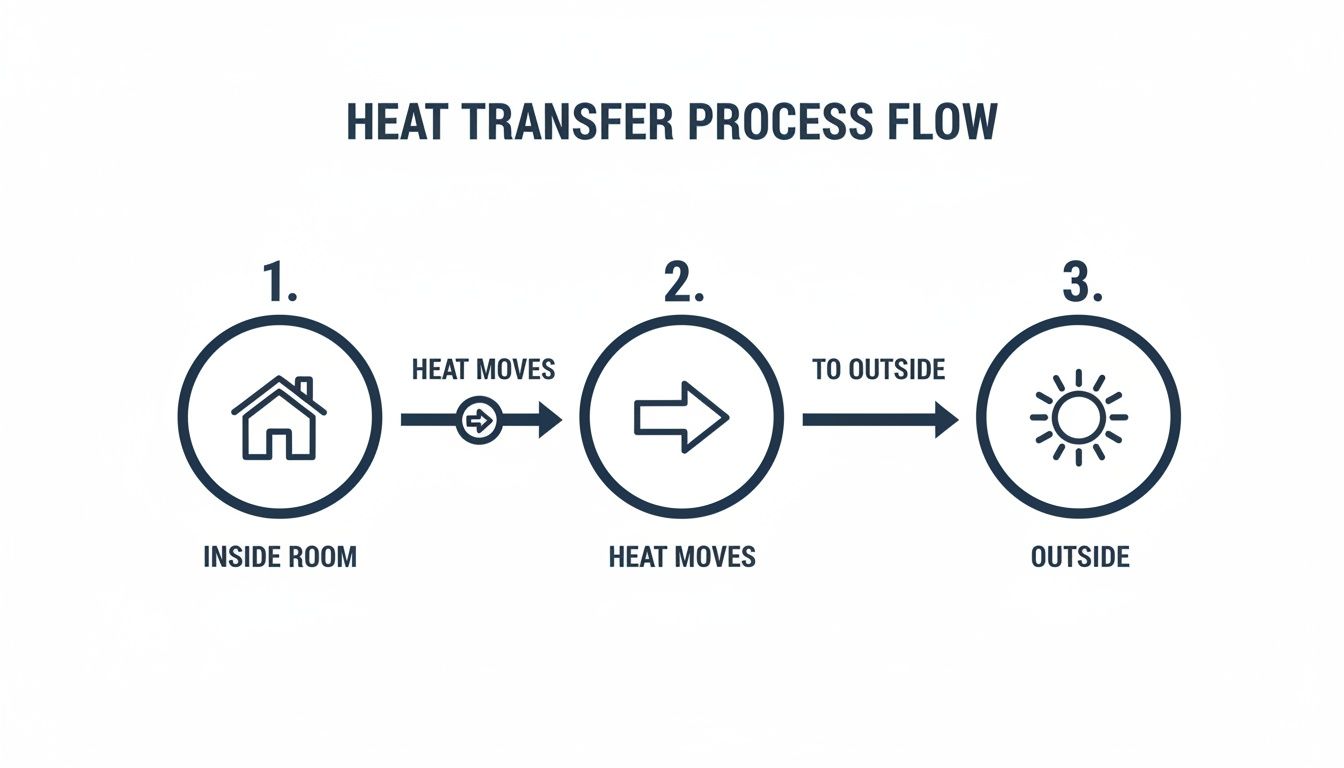
This whole process really highlights the fundamental principle of a split system: it’s a heat pump, designed to effectively move thermal energy from one place to another.
The popularity of these energy-saving systems is easy to understand. The market for residential split systems in Australia is tipped to hit AU$1.18 billion in 2025, with a projected 5.25% annual growth through to 2030. In our service areas from the Central Coast to Lake Macquarie, we're seeing over 55% of new homes being built with these efficient single-zone splits.
If you really want to get into the nitty-gritty of the science, you can learn more about how an air conditioner works in our detailed guide.
Choosing the Right Split System for Your Home
Picking the right split system is easily the most important step in making sure your home stays comfortable without your power bills getting out of hand. It's a classic mistake to think bigger is always better. In reality, an oversized system can be just as wasteful as one that's too small, leading to poor performance and higher running costs.
The goal is to perfectly match the air conditioner's power, features, and efficiency to your actual room and how you live. A well-chosen unit will cool or heat your space effectively without having to overwork itself, giving you reliable comfort for years.
Understanding System Capacity in Kilowatts (kW)
When you start comparing split systems, the first number you'll see is its capacity, measured in kilowatts (kW). This tells you exactly how much cooling or heating punch the unit has. Getting this number right is absolutely critical for both your comfort and your system's efficiency.
A unit that's too small will run flat-out on a hot day and never quite get the room to the temperature you want. This not only puts serious strain on the system, shortening its life, but it also sends your electricity bill through the roof.
On the flip side, a unit that's too big will blast the room with cold air and switch off in short, sharp cycles. This rapid cycling is a problem because it doesn't give the system enough time to properly dehumidify the air. The result? A room that feels cold and damp, a common complaint in humid coastal areas like the Central Coast.
Why Correct Sizing Matters: An oversized system cycling on and off is incredibly inefficient. It's like constantly stopping and starting your car in peak-hour traffic instead of cruising at a steady speed on the M1. This stop-start operation burns more power and puts unnecessary wear and tear on the compressor.
Getting the size spot-on means the system runs smoothly and efficiently, holding a comfortable temperature and humidity level without wasting energy. For a more detailed guide on matching room size with system power, it's worth learning more about what size split system you need for your space.
A Sizing Guide and Some Real-World Scenarios in NSW
The right capacity isn't just about floor area; it also depends heavily on your room's ceiling height, how well it's insulated, and how much sun it cops in the afternoon. Let's look at a few typical scenarios we see across our service areas.
Imagine a standard 12-15 square metre bedroom in a Newcastle apartment. In this case, a 2.5kW unit would likely be perfect. That's plenty of power to efficiently cool a smaller, well-insulated space without being overkill.
Now, consider a big, open-plan living and kitchen area in a family home in Lake Macquarie. This space might be 50-60 square metres with high ceilings and huge windows facing the punishing afternoon sun. Here, a much beefier 7kW or even an 8kW system would be non-negotiable to handle the larger volume and higher heat load. Trying to cool that area with a small unit would be a constant, losing battle.
To make things a bit clearer, here's a simplified guide to help you get a rough idea of what you might need.
Split System Sizing Guide for Typical NSW Rooms
| Room Type / Area (sq m) | Suggested Capacity (kW) | Example Use Case |
|---|---|---|
| Small Bedroom / Office | 2.0kW – 2.5kW | A 10-20 sq m room with standard ceilings & insulation. |
| Master Bedroom | 2.5kW – 3.5kW | A 20-25 sq m bedroom, maybe with an ensuite. |
| Small Living Room | 3.5kW – 5.0kW | A separate lounge room around 25-35 sq m. |
| Medium Living Area | 6.0kW – 7.1kW | A combined living/dining space of 35-55 sq m. |
| Large Open-Plan Area | 8.0kW – 9.5kW | A kitchen/living/dining area over 60 sq m with big windows. |
This table is a starting point, of course. A professional assessment will always give you the most accurate sizing for your unique home.
Decoding the Energy Rating Label
Every air conditioner sold in Australia has a mandatory Energy Rating Label slapped on it. This blue and red sticker is your best friend when it comes to figuring out the unit's long-term running costs.
The star rating gives you a quick visual guide. More stars mean better energy efficiency. Simple.
The label also gives you two vital numbers: the Cooling Capacity Output and Heating Capacity Output in kW, right next to the Power Input. The lower the power input needed to produce a certain output, the more efficient the unit is. This little sticker empowers you to look past the initial price tag and consider what the system will actually cost you to own and run over its lifetime.
Beyond Capacity: Other Features to Look For
Modern split systems are packed with features that go way beyond just blowing cold air. Depending on your needs, some of these can make a huge difference to your comfort.
- Advanced Filtration: If you live near the coast or have allergy sufferers in the family, look for systems with advanced filters. They can capture dust, pollen, and other nasties, dramatically improving your indoor air quality.
- Whisper-Quiet Operation: For light sleepers, the noise level is a massive deal. Check the decibel (dBA) rating for the indoor unit's fan, and keep an eye out for models with a dedicated 'Quiet' or 'Sleep' mode.
- Wi-Fi and Smart Control: Many new systems come with built-in Wi-Fi, letting you control your air con from your smartphone. This is brilliant for pre-cooling your home on the way back from work or tweaking the temperature without having to get off the couch.
What to Expect from a Professional Installation
A top-quality split system is a great start, but it's only half the story. The installation itself is just as critical for making sure your system runs quietly, efficiently, and safely for years to come. Getting it done right the first time saves a world of headaches down the track.
Knowing what a professional installation actually involves helps you understand the value you're paying for.
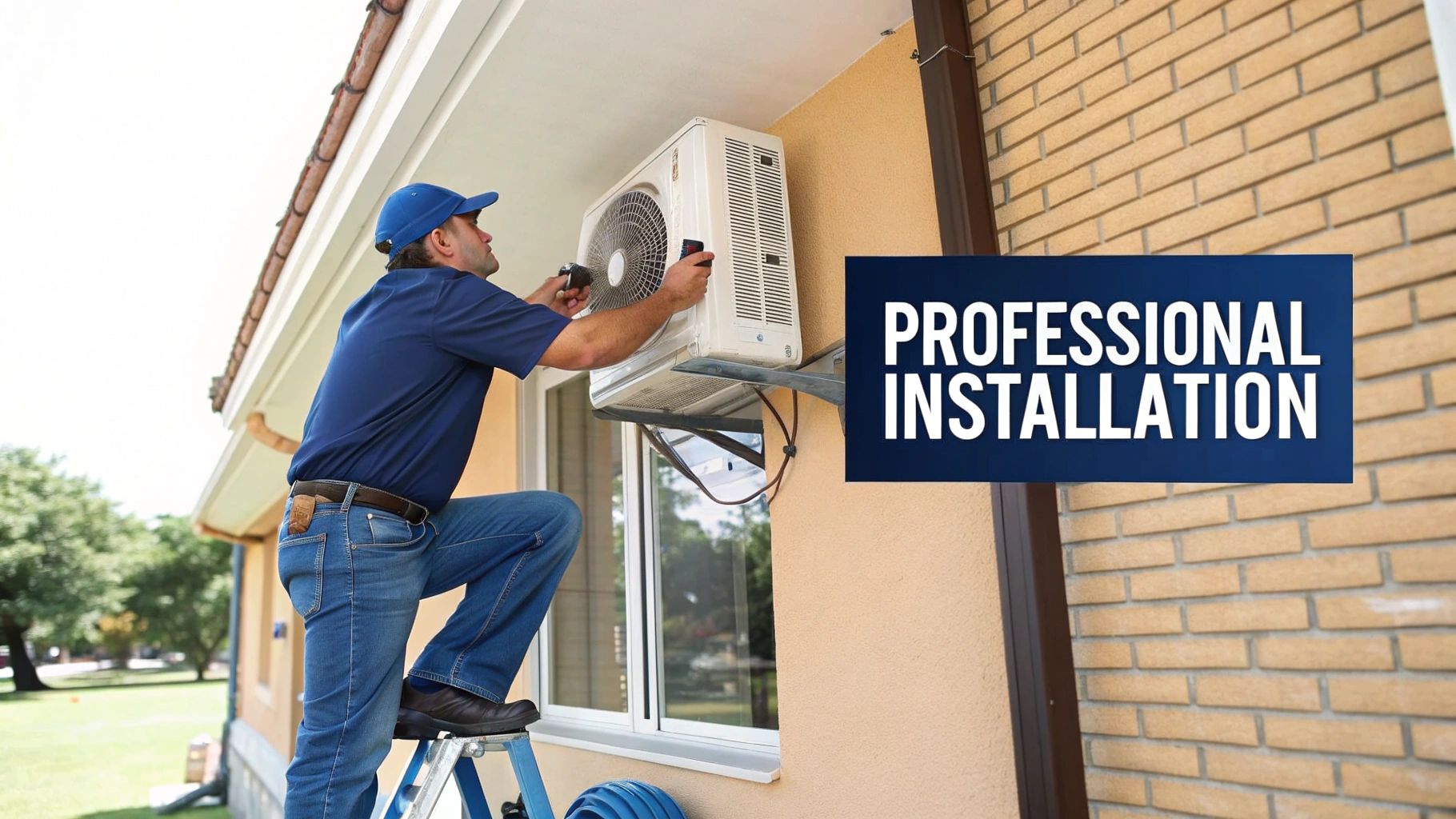
It all kicks off with a detailed on-site assessment. This is where a qualified technician visits your home to do more than just measure a wall. We look at everything: room size, window placement, insulation quality, even which way your home faces. This helps us figure out the perfect system size and the best spot for both the indoor and outdoor units.
The Initial Site Assessment and Placement Strategy
Strategic placement is everything. The indoor unit needs to be positioned where it can circulate air evenly across the room, not just blast it directly onto your couch or bed. We also make sure it’s on a solid wall that can handle its weight and is well away from heat sources like ovens or direct sun that could throw off its thermostat.
The outdoor unit is just as important. It needs to be in a well-ventilated spot with plenty of clearance for air to flow freely, and it must sit on a solid, level base. A common mistake we're often called out to fix is an outdoor unit installed right under a bedroom window. While it might seem convenient, the noise can be a real nuisance, which is why we always find a more considerate location.
Safety and Compliance First: All air conditioning work involves both high-voltage electricity and pressurised refrigerant gas. This is why it must be done by a technician holding both a full electrical licence and an ARCtick refrigerant handling licence. This isn't just a suggestion; it's a legal requirement in Australia and something we take very seriously.
The Core Installation Steps
Once we've locked in the ideal spots, the physical installation begins. Our licensed technicians follow a precise, compliant process to make sure every detail is spot on.
- Mounting the Units: We securely mount the indoor head unit and prepare the spot for the outdoor condenser, checking that both are perfectly level.
- Running the Connections: A small hole is drilled through the wall to connect the two units. This allows us to run the copper refrigerant pipes, electrical wiring, and a drain hose. Every penetration is then properly sealed to keep drafts and pests out.
- Electrical and Refrigerant Work: This is the most technical part. The system is wired into a dedicated electrical circuit, strictly following Australian Standards (AS/NZS 3000). The refrigerant lines are connected, and then we use a vacuum pump to suck all the air and moisture out of the pipes, a critical step, before charging the system with refrigerant.
- Commissioning and Handover: Finally, we fire it up and run a series of tests. We check temperatures, airflow, and operating pressures to ensure it’s performing exactly as the manufacturer intended. Then, we’ll walk you through how to use the remote control, explain the different modes, and show you the simple task of cleaning the filters.
This meticulous approach, guided by safety standards and years of experience, is our guarantee that your new split system will keep your home comfortable for a long, long time.
Understanding the Costs of a Split System
When you're thinking about a new split system, it’s easy to focus on the price tag you see on the box. But the real cost is a two-part equation: the price of the unit itself, and the cost of getting it professionally installed. Both sides of that equation have variables that can swing the final price quite a bit.
The unit itself is the first piece of the puzzle. Big names like Daikin and Mitsubishi Electric often have a higher upfront cost, and for good reason. You’re paying for a reputation built on reliability and performance. Then there’s the unit's capacity (its kW rating) and its energy efficiency. A powerful, highly-efficient model for a large living area will naturally cost more than a smaller, less-efficient one designed for a bedroom.
The Two Sides of the Cost Equation
First up is the supply cost, what you actually pay for the air conditioner. This can vary widely depending on a few key things:
- Brand and Model: Premium brands often come with better warranties and are engineered to last, which can mean better long-term value.
- Capacity (kW): A 2.5kW unit perfect for a bedroom in Gosford is going to be a lot cheaper than an 8kW beast needed for a big, open-plan living area in a Hunter Valley home.
- Energy Efficiency: Units with higher star ratings cost more to buy, but they’ll save you a noticeable amount on your power bills over the years.
The second, equally critical part is the installation labour. How complex the job is will directly shape this cost. The most straightforward scenario is a ‘back-to-back’ installation, where the indoor and outdoor units sit on opposite sides of the same wall. This is the simplest and most affordable setup.
What Influences Installation Costs
Things get a bit more expensive when the installation isn't so simple. Let's say the outdoor unit needs to be placed on a different wall, or even on a different level of your home. This means longer copper pipe runs and more labour for our technicians. Tackling double-brick walls or installing units in second-storey Sydney apartments also adds to the time and complexity.
The True Value: Don't ever cut corners on installation. A quality job by a licensed and insured technician is non-negotiable. It’s what ensures your system runs efficiently, complies with Australian Standards like AS/NZS 3000, and keeps your manufacturer's warranty intact. Skimping here almost always leads to poor performance and expensive repairs down the line.
Here in New South Wales, the demand for good air conditioning is huge. NSW accounts for a massive 31.2% share of Australia's AUD 3.76 billion air conditioner market as of 15/03/2024, largely because of summer heatwaves that can push the mercury past 35°C. This is why split systems have become the go-to for over 60% of new residential installations in areas from the Central Coast to Lake Macquarie. They just make sense. You can read more about this on Expert Market Research.
Ultimately, it’s best to see the total cost as a long-term investment in your home's comfort. A slightly more expensive, highly efficient unit combined with a top-notch installation will give you better cooling and real savings on your energy bills for years to come. For a more detailed breakdown, have a look at our guide on split system air conditioner prices.
Maintaining Your System for Long-Term Performance
A quality split system is a serious investment in your home's comfort. Just like your car, it needs a bit of regular care to keep it performing at its best year after year.
Proper maintenance is the secret to ensuring your split system runs quietly, efficiently, and reliably for its entire lifespan, which can easily be 15 years or more. A little attention now prevents small issues from turning into big, expensive headaches later. The good news? Basic upkeep is surprisingly straightforward.
Simple DIY Tasks You Can Do
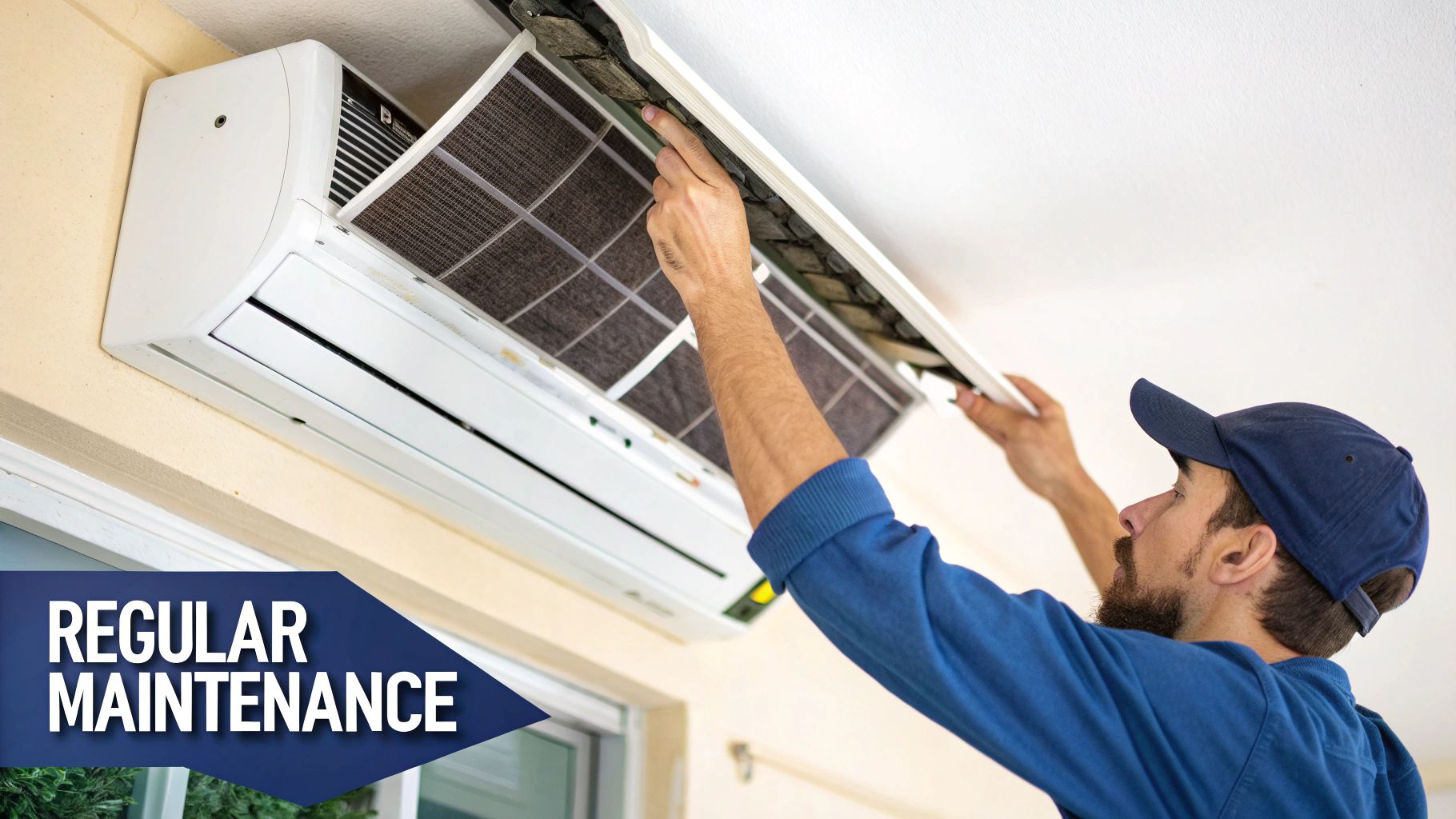
The single most important job you can do yourself is cleaning the filters on your indoor unit. Think of a clogged filter like trying to breathe through a dusty rag. It forces the system to work much harder to pull air through, wasting energy and hammering its cooling power.
Most filters just slide or clip out. Give them a gentle wash with lukewarm water, let them air dry completely, and pop them back in. We recommend checking them every month during a Sydney summer and cleaning them every three months at a minimum.
You should also keep the area around your outdoor unit clear. Make sure leaves, garden debris, and weeds are cleared away by at least half a metre on all sides to give it room to breathe.
Why Annual Professional Servicing Is Crucial
While DIY cleaning is a great start, it doesn't replace a comprehensive annual service from a licensed technician. This is a deep dive into your system's health, making sure every component is working safely and correctly. It’s the best way to catch a potential problem before it causes a breakdown on a 40-degree day.
During a professional service, our ARCtick certified technicians will:
- Check Refrigerant Levels: Low refrigerant is a classic sign of a leak and kills cooling efficiency.
- Inspect Electrical Connections: We'll tighten connections and check for wear to prevent electrical faults, a critical safety check under AS/NZS 3000.
- Thoroughly Clean Coils: We deep clean both the indoor evaporator and outdoor condenser coils for maximum heat exchange.
- Test Overall Performance: We'll check thermostats, airflow, and run a full cycle to confirm the system is performing to manufacturer specs.
For a complete checklist of what's involved, explore our detailed guide on servicing your split system air conditioner. This proactive care protects your investment and locks in long-term reliability.
The same technology keeping homes comfortable is driving major growth in the commercial sector. In fact, split units hold a massive 64.7% share of Australia's air conditioner market because they are so reliable and efficient, especially when well-maintained. Keeping your home system serviced is just as important as it is for the businesses in Newcastle relying on their cooling. You can discover more insights about the Australian commercial split HVAC systems market.
Troubleshooting Common Issues
Even with good maintenance, you might sometimes notice something isn't quite right. If your system starts making strange noises, isn't cooling like it used to, or has a funny smell, it's time to call in the experts. These are often signs of an underlying issue that needs a professional diagnosis.
Answering Your Split System Questions
To wrap things up, let's tackle some of the most common questions we hear from homeowners across the Central Coast and Sydney about split system air conditioning. Getting clear, straightforward answers can make all the difference when you're choosing, using, and looking after your system.
How Long Should a Split System Last?
With proper care and a professional service each year, a quality split system from a reputable brand should give you a solid 15 years or more of service. The real key to that longevity is consistent maintenance. That means cleaning your own filters regularly and getting a licensed technician in annually to keep it running safely and efficiently. Neglecting it is the fastest way to shorten its life.
Can I Install a Split System Myself?
In a word, no. In Australia, installing a split system involves high-voltage electrical work and handling pressurised refrigerant gases, which can be dangerous stuff. It's actually illegal for anyone without both a full electrical licence and an ARCtick refrigerant handling licence to do this work.
Trying a DIY installation is not only extremely risky but also instantly voids your manufacturer's warranty and won't comply with mandatory Australian Standards like AS/NZS 3000. This is one job you must always leave to a qualified, licensed professional.
Is It Cheaper to Leave My Air Con Running All Day?
This is a classic myth, but with modern inverter systems, the answer can be a little nuanced. If you’re just popping out to the shops for an hour, it can sometimes be more efficient to leave the system ticking over at a slightly higher temperature (say, 25-26 degrees) rather than shutting it down completely. This allows the inverter to run at a very low, energy-sipping speed.
However, if you're heading out for several hours, you should always turn it off. Leaving it on all day when no one is home will absolutely result in a higher electricity bill than simply turning it on when you get back.
A Quick Tip for Efficiency: When you get home to a hot house in a suburb like Penrith, resist the urge to crank the temperature down to 18 degrees. Instead, set it to a sensible 24 degrees and turn the fan speed up high. This circulates the air much faster, helping the room feel cooler much quicker without forcing the compressor to run flat-out for a long time.
Why Is My Split System Making a Funny Noise?
Your split system should be relatively quiet when it’s running. If you suddenly start hearing rattling, buzzing, gurgling, or grinding noises, that’s a clear signal that something isn’t right.
A rattling sound could be something as simple as a loose panel or some debris in the outdoor unit. But a buzzing or grinding noise could point to a more serious electrical or mechanical issue with the compressor. Gurgling can sometimes be normal as refrigerant moves through the pipes, but if it's loud or a new sound, it might suggest a problem with the drain line or refrigerant levels.
Whatever the noise, it's best to get it checked out. Unusual sounds warrant a call to a licensed technician to find the problem before it turns into a bigger, more expensive one.
If you have more questions or need some expert advice on the right split unit air conditioning system for your home, the team at ALC Air is here to help. We offer free, no-obligation quotes and assessments across the Central Coast, Sydney, Newcastle, and Lake Macquarie. Get in touch with us today for a professional solution for your home.