


When you're trying to figure out the best way to cool your Sydney home, the options can feel endless. But for most people, a professional split system installation is one of the simplest and most effective ways to beat our notorious summer heat. A standard job is usually done and dusted in just 4 to 6 hours, making it a surprisingly quick path to year-round comfort.
Why Sydney Homeowners Prefer Split System Air Conditioners
For countless Sydney homeowners, from those in high-rise apartments in Parramatta to families in the Sutherland Shire, split systems have become the default choice for climate control. It’s not just about surviving summer; it's about having smart, flexible, and affordable comfort all year round.
The real appeal is their efficiency and targeted control. Unlike a big, ducted system that cools the whole house, a split system lets you cool or heat just one specific room or area. This means you’re not wasting money and energy conditioning empty rooms—a massive advantage when you're trying to keep those quarterly power bills in check. It's exactly why they’re such a great fit for the city’s mix of housing, from tiny units to sprawling family homes.
This isn’t just a gut feeling, either. The number of split system installations across NSW has gone through the roof, with most of that boom happening right here in Sydney. Come peak season from November to February, demand skyrockets as everyone braces for those heatwaves that regularly push the mercury above 35°C. You can even check out more data on these trends over at Airflow Australia.
So, why the huge popularity? It boils down to a few practical reasons:
- Cost-Effectiveness: The upfront cost for both the unit and the installation is generally much lower than for a ducted system, putting effective air conditioning within reach for more households.
- Targeted Comfort: You can put units only in the rooms you actually use the most, like the master bedroom or the main living area. You get comfort exactly where you need it, when you need it.
- Energy Efficiency: Modern reverse cycle inverter models are incredibly efficient. They save you a fortune on power bills for both cooling in summer and heating through Sydney’s surprisingly chilly winters.
- Flexible Installation: Their two-part design allows for all sorts of clever placement options, which is a lifesaver when dealing with the unique challenges of different Sydney properties.
Decoding the Costs of Split System Installation in Sydney
Let’s talk numbers. When you start getting quotes for a split system installation in Sydney, the prices can seem all over the place. Understanding what goes into that final figure is key to seeing the real value in a quote and avoiding any nasty surprises down the line. We want to demystify the costs so you can budget with confidence.
One of the first things you'll run into is the difference between an "installation only" price and a "supply and install" package. If you’ve already bought a unit from a retailer, you’ll just be looking for a licensed technician to fit it. But honestly, a full supply-and-install package from a specialist like us usually works out better. It's a smoother process where we handle everything from start to finish.
The infographic below shows just how much demand for quality air conditioning has grown across Sydney.
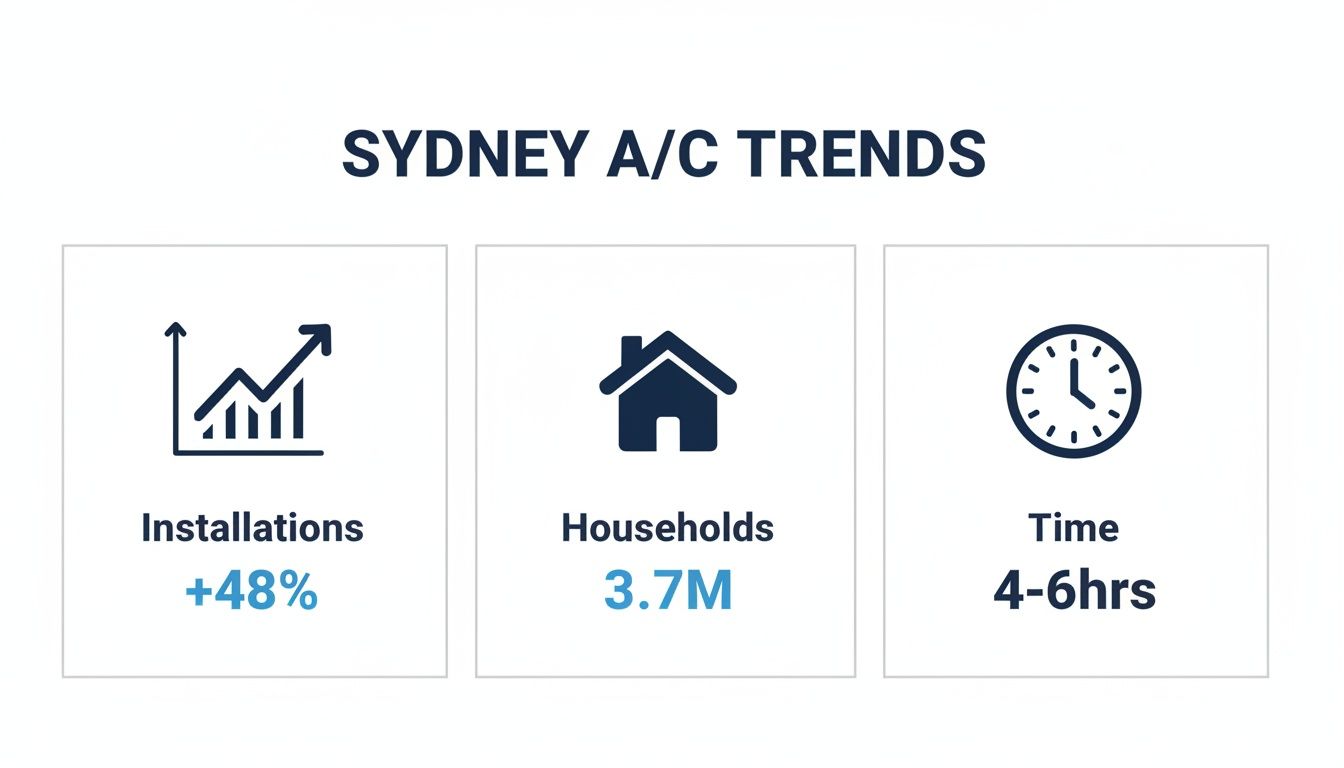
This surge shows just how essential good air conditioning has become for Sydney households. The good news is that most standard jobs are wrapped up in a single day.
What Determines the Final Installation Price?
The biggest factor influencing your quote is complexity. A straightforward "back-to-back" installation is the simplest and most affordable job. This is where we install the indoor and outdoor units directly opposite each other on the same external wall of a ground-floor home, say in a suburb like Penrith.
But let's be realistic, many Sydney properties aren't that simple. Here are the common factors that add to the cost:
- Property Type: Installing a unit in a two-storey house in Hornsby or a high-rise apartment in the CBD is naturally more complex. It often means longer pipe runs, extra labour, and sometimes special access equipment like scaffolding.
- Unit Placement: If the outdoor condenser can't sit near the indoor unit, we need to run extra copper piping and electrical cabling. This adds to both the material and labour costs.
- Electrical Work: Your new air con needs its own dedicated circuit on your switchboard. If your board is old, full, or on the other side of the house, a licensed electrician will need to run a new circuit, which can be a significant cost factor. All work must comply with Australian Standard AS/NZS 3000.
- Strata Requirements: Apartment buildings, especially in areas like North Sydney or Bondi, often have strict rules about where outdoor units can be placed. This can involve extra work to conceal pipes or meet specific aesthetic guidelines.
The reality is, a suspiciously cheap quote often means corners are being cut. An installer might skip crucial steps like proper pipe insulation or installing a compliant condensate drain. This leads to higher running costs, water leaks, and a much shorter lifespan for your system.
Understanding Typical Cost Ranges in Sydney
While every job is unique, it helps to have a realistic idea of the investment. It's no surprise that split systems are the go-to for 75% of new air conditioning installs in Australian homes.
For a standard, single-storey installation in Sydney, labour costs typically sit around $600 to $750. This figure can easily climb to $1,500 to $2,500 for more complex jobs, like the multi-storey homes you see all across the city's varied housing stock.
When you bundle the unit and installation into a complete package, you're generally looking at $1,800 to $4,800. The final price depends heavily on the brand you choose and the kW capacity you need.
Choosing a premium brand like Daikin or Mitsubishi Electric might have a higher upfront cost, but their superior energy efficiency can save you hundreds on power bills over the system's life. It’s about looking at the total cost of ownership, not just the initial price tag. For a deeper dive into budgeting, check out our guide on the cost to install a split system.
How to Choose the Right Size and Brand for Your Home
Getting the size and brand right for your split system installation in Sydney is easily the most critical part of the process. This decision directly shapes your comfort, your ongoing running costs, and how your system performs for the next decade. Nail this part, and you're set for years of efficient, reliable climate control.
This is where a lot of people feel overwhelmed, but it’s simpler than you might think. We'll walk you through what system capacity really means and how to pick a brand you can count on.
Understanding Kilowatts and Why Sizing Is So Critical
An air conditioner's "size" isn't its physical dimensions; it's its cooling power, measured in kilowatts (kW). Think of kW like the engine in a car. You wouldn't put a tiny hatchback engine in a big 4WD and expect it to climb a steep hill. Likewise, you wouldn't put a massive truck engine in a small car—it would be jerky and incredibly inefficient.
It’s exactly the same with air conditioning. An undersized unit will run its heart out on a hot day, never quite getting the room cool while chewing through electricity and wearing itself out. An oversized unit is just as bad. It will blast the room with cold air, hit the target temperature too fast, and shut down. This constant on-off cycle, known as "short cycling," leaves the air feeling clammy and puts massive strain on the system's components.
The aim is to find that perfect sweet spot. For instance, a 2.5kW system is often perfect for a bedroom (around 10 to 20 square metres) in an Inner West terrace. But for a sprawling open-plan living and kitchen area in a Hills District home, you'd need a much beefier 7.1kW or 8.0kW unit to properly manage the space.
Key Takeaway: Correct sizing is about much more than just floor area. A professional on-site assessment looks at ceiling height, the size and direction of your windows, insulation quality, and even how many people are usually in the room. This ensures your system is strong enough to do the job but not so powerful it becomes inefficient.
Factors That Influence the Right Size for Your Sydney Home
Beyond simple square metres, a few key factors unique to your home will dictate the right kW capacity. We look at all of these during our on-site assessments.
- Insulation: A home with good ceiling and wall insulation, common in newer builds around Kellyville, will trap cool air far better, often meaning you can use a smaller unit. An older, uninsulated brick home in a suburb like Marrickville will lose cool air much faster and needs more power to compensate.
- Windows and Sunlight: A room with huge, west-facing windows that cops the brutal afternoon sun will need a significantly more powerful system than a south-facing room of the exact same size.
- Ceiling Height: High or vaulted ceilings mean there’s simply more air volume to cool. A standard 2.4-metre ceiling requires less cooling power than a 3-metre ceiling in a renovated Californian bungalow.
- Local Climate: Sydney's microclimates really do matter. A home breathing in the humid, salty air of Cronulla has different cooling demands than one baking in the dry, intense heat out in Penrith.
Getting this calculation right can be tricky, which is why a professional site visit is so important. A quick online calculator can give you a rough idea, but it can't replace an expert eye.
Choosing a Brand That Delivers Reliability and Efficiency
Once you know the right size, the next decision is the brand. At ALC Air, we’re pretty strict about only working with manufacturers we know we can trust to deliver long-term performance and back their products with excellent warranty support. While there are dozens of brands out there, we consistently recommend the industry leaders like Daikin, Mitsubishi Electric, and Fujitsu.
These premium brands might have a slightly higher upfront cost than budget alternatives, but they genuinely pay for themselves over time. Their superior inverter technology, higher energy star ratings, and robust build quality translate directly into lower electricity bills and far fewer repair headaches down the road. For example, the difference in running costs between a 3-star and a 5-star rated unit can easily add up to hundreds of dollars over the system's lifespan.
What a Professional Installation Process Looks Like
Ever wondered what actually happens on the day your new air conditioner gets installed? Knowing what a professional job looks like gives you confidence and helps you spot the difference between a quality install and a rushed, corner-cutting one.
A proper split system installation in Sydney is about more than just hanging a unit on the wall. It’s a precise process built on safety, efficiency, and making sure your system runs perfectly for years to come.
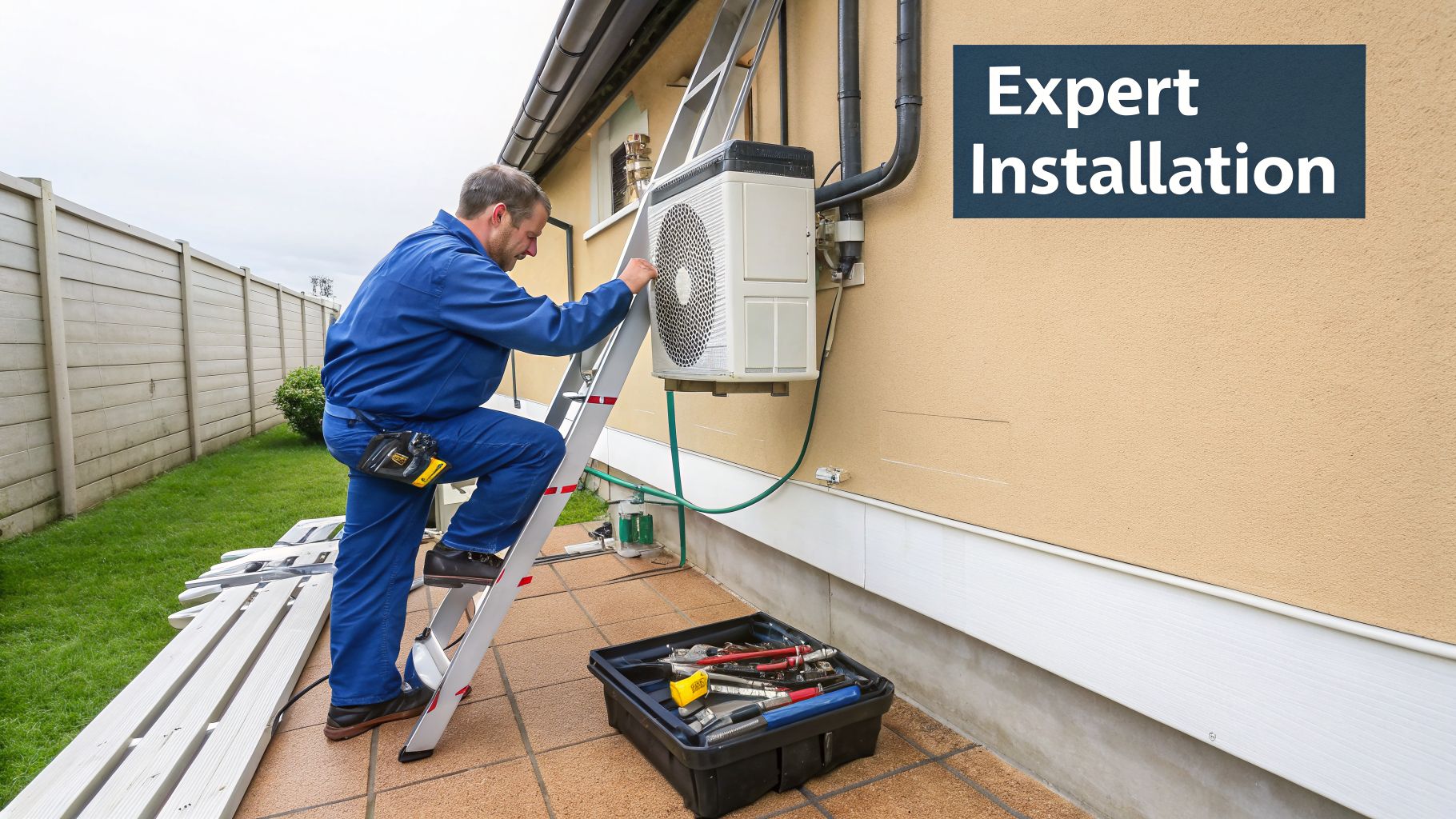
Let’s walk through the key steps our technicians take, from the moment we arrive to the final handover.
Step 1: Initial Site Assessment and Final Placement
Before a single tool comes out, our licensed technicians will do a final walkthrough with you. We’ll confirm the ideal spots for both the indoor head unit and the outdoor condenser, which we would have discussed during your initial quote.
We’re checking for things like the best airflow inside. For example, placing the indoor unit so it blows cool air down the longest part of a living room in Ryde creates much better circulation. For the outdoor unit, we’re making sure it sits on a stable, level base with plenty of ventilation, well away from anything that could block its fan and in line with any council or strata rules.
Step 2: The Technical Work of Installation
Once we’ve confirmed the placement, the real work begins. This is where technical skill and attention to detail make all the difference.
- Mounting the Units: We start by securely fixing the mounting plate for the indoor unit and preparing the base for the outdoor unit, whether that’s a sturdy concrete slab or wall brackets.
- Core Drilling: A neat hole is carefully drilled through the external wall. This is the pathway for the refrigerant pipes, electrical wiring, and the condensate drain to connect the two units.
- Running Pipes and Wires: We run the copper refrigerant pipes and electrical cables between the two units. Crucially, these pipes must be properly insulated. This prevents energy loss and stops the pipes from "sweating," which can lead to nasty water damage inside your walls.
- Connecting the Condensate Drain: The indoor unit pulls a lot of moisture out of the air, and that water needs to go somewhere. We install a dedicated drain with the correct "fall" (a slight downward angle) to ensure water flows away from your home, preventing leaks and mould.
Why Compliance Matters: Every part of this process is governed by strict Australian Standards. Our technicians aren't just installers; they are fully licensed electricians and hold ARCtick refrigerant handling licences. This is your guarantee that all electrical work meets AS/NZS 3000 safety standards and that all refrigerant is handled legally and safely.
Step 3: Electrical Connection and Commissioning
Your new air conditioner needs its own dedicated circuit from your switchboard. This is a non-negotiable safety requirement under NSW law to prevent overloading your home’s wiring. Our electrician will run this new circuit to an isolator switch right next to the outdoor unit.
With everything connected, we perform a vacuum and pressure test on the refrigerant lines. This critical step sucks all the air and moisture out of the pipework before the refrigerant is released. Skipping this is a classic sign of a rushed, unprofessional job and it will destroy your compressor and drastically shorten the life of your system.
Finally, we commission the unit. We release the refrigerant, power everything up, and test all the functions—cooling, heating, fan speeds, and the remote control. We don’t consider the job finished until we’ve checked that the airflow is strong, the louvres are moving correctly, and everything is working perfectly.
A quality installation is the foundation for years of reliable comfort.
Solving Sydney’s Unique Installation Challenges
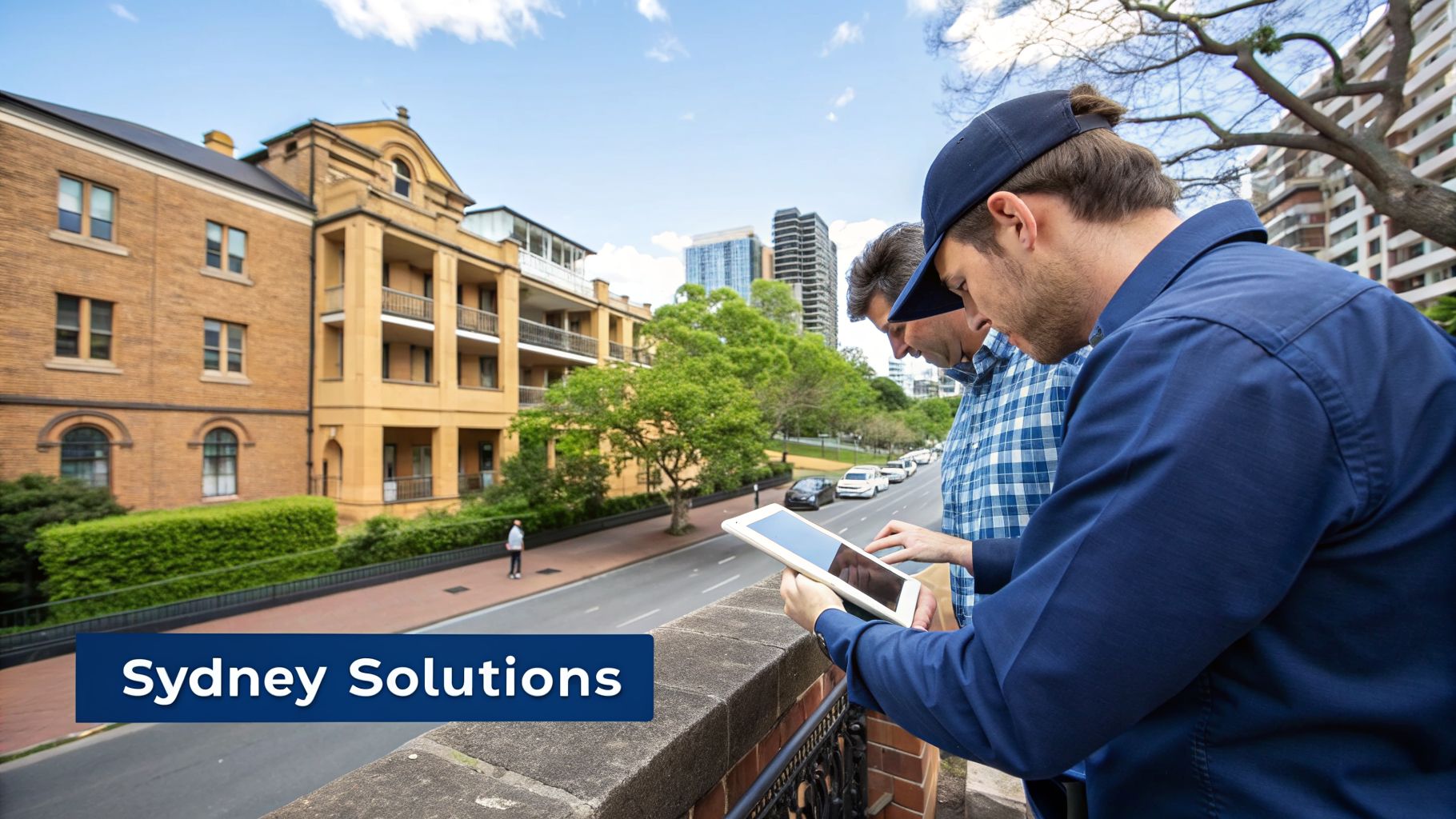
A split system installation in Sydney is almost never a simple, by-the-book job. Our city’s incredible mix of architecture and wildly different microclimates means a one-size-fits-all approach just doesn't fly. From navigating the tricky strata rules in a Bondi apartment complex to carefully working around a heritage-listed terrace in Paddington, every project presents its own puzzle.
To successfully install air conditioning here, you need more than just technical skill. You need local knowledge and genuine experience solving the specific hurdles Sydney throws at you.
Navigating Strata and Council By-Laws
For anyone living in an apartment or townhouse, those two words—"strata approval"—can be a real headache. Body corporates in high-density suburbs like North Sydney or Chatswood often have very strict rules about air conditioning. These by-laws can dictate everything from where you can put the outdoor unit to how much noise it’s allowed to make.
We deal with this every day, and we can help you get it across the line. This usually involves a few key steps:
- Providing detailed plans showing the proposed location of the outdoor unit to satisfy the building's aesthetic requirements.
- Recommending low-noise models from trusted brands like Mitsubishi Electric or Daikin to stay under the decibel limits.
- Ensuring all pipework and electrical cables are neatly concealed so the building’s appearance is maintained.
If you want to dig deeper into these local rules, our article on finding split system installation near me is a great starting point.
Adapting to Different Property Types
Sydney’s housing is incredibly diverse, and each style of home needs a different installation strategy. Just think about the difference between a brand-new house in a growth area like Campbelltown and a beautiful, century-old terrace.
A new build is like a blank canvas. We can easily run dedicated circuits and hide pipework inside wall cavities before the plaster goes up. A heritage property, on the other hand, demands extreme care to protect its original features. This might mean finding creative, non-invasive routes for wiring and pipes. Our expertise ensures your new system is both effective and respectful of your home’s character.
Recent Australian trends confirm that split systems are the top pick for 75% of new home setups, and Sydney is leading this charge with installations doubling since 2018. While the average installation cost in Sydney is around $720, the final price can range from $600 to $5,500 depending on the system's capacity and the complexity of the job.
Tackling Sydney’s Varied Microclimates
Finally, we have to account for Sydney's distinct microclimates. An installation in the salty, humid air of the Northern Beaches requires a completely different approach to one in the dry, intense heat of the western suburbs.
For homes near the coast, we always prioritise units that have enhanced corrosion protection on the outdoor condenser. This is crucial to combat the damage from salt-laden air. For properties out in areas like Penrith, which cop extreme summer heat, our focus is on ensuring the system has enough kW capacity to handle the punishing conditions. This is especially true for west-facing rooms with a lot of glass, which can require a system capacity adjustment of 10 to 25%.
This careful, tailored approach is what ensures your split system installation in Sydney will deliver reliable comfort for years to come.
Protecting Your Investment with Warranty and Maintenance
Getting your new split system installed and feeling that first blast of cool air is a great moment. But a quality split system installation in Sydney is a serious investment in your home, and we want to make sure it delivers value for its entire 10 to 15 year lifespan.
That protection comes in two parts. First, you get the manufacturer's warranty. Reputable brands like Daikin and Mitsubishi Electric back their products with a 5-year warranty covering parts and manufacturing defects. It's your security blanket, knowing you’ve bought a quality unit built to last.
Second, you have our workmanship warranty. At ALC Air, we stand behind every job we do. This warranty covers the installation itself—the pipework, the electrical connections, the mounting, and the drainage. It’s our promise to you that the work was done right, to the highest Australian Standards.
The Importance of Regular Maintenance
Warranties are there to cover you for unexpected faults, but the secret to a long and efficient life for your air conditioner is regular, preventative maintenance. It’s exactly like servicing your car. You wouldn't drive it for 50,000 kilometres without an oil change and expect it to run perfectly. Your air con works just as hard, especially during Sydney's brutal summers, and it needs that same level of care to perform at its best.
When you're choosing an installer for a long-term investment like this, it pays to look at their reputation for after-sales support. Taking a moment for understanding the importance of online reputation can reveal a lot about a company's commitment to looking after its customers long after the installation is complete.
What an Annual Service Involves
An annual service is much more than a quick wipe-down of the filters. Think of it as a comprehensive health check for your system, designed to spot small issues before they turn into big, expensive problems. Keeping your unit in top shape also means it runs more efficiently, which translates directly to lower electricity bills.
Our professional service includes:
- Thorough Cleaning: We meticulously clean the coils, filters, and fans on both the indoor and outdoor units. This ensures you get maximum airflow and cooling efficiency.
- Electrical Checks: Our licenced technicians inspect every electrical connection, terminal, and capacitor to make sure they're safe, secure, and working as they should.
- Refrigerant Level Assessment: We check the system's refrigerant pressures. Correct levels mean your system cools effectively without putting unnecessary strain on the compressor.
- Drainage Inspection: Blocked drains are a common cause of water leaks and property damage. We ensure the condensate drain is completely clear and flowing freely.
This proactive approach doesn’t just protect your investment; it guarantees you get reliable and cost-effective comfort, year after year. To see exactly what's involved, have a look at our detailed guide on professional air con maintenance.
Your Questions About Split System Installation Answered
Choosing a new air conditioner involves a lot of big-picture thinking, but we find it’s the practical, day-to-day questions that really matter to homeowners. After years of installing split systems all over Sydney, we’ve been asked just about everything you can imagine.
Here are the straightforward, no-nonsense answers to the questions we hear the most.
How Long Does a Standard Installation Take?
This is usually the first thing people want to know. For a typical "back-to-back" installation on a single-storey house, you can expect our team to be in and out within 4 to 6 hours. That means we’ll have your new system up and running, cooling your home on the very same day.
Of course, not every Sydney property is that simple. If we’re working on a multi-storey home, running complex wiring to a switchboard on the other side of the house, or navigating tricky access in an apartment block, it can take longer. We always give you a clear time estimate in our quote, so you’ll know exactly what to plan for.
Do I Need Strata or Council Permission?
This is a critical question, especially for our clients in apartment-heavy areas like the CBD, North Sydney, and the Eastern Suburbs. The answer really depends on where you live.
- For most freestanding houses, you generally won’t need council approval for a standard split system installation.
- For apartments, townhouses, or any unit managed by a body corporate, you must get strata approval before any work can start. Strata committees have rules about noise and where the outdoor unit can be placed to maintain the building's look. We can supply all the technical specs and documents you need to help make your application as smooth as possible.
Will It Also Work for Heating in Winter?
Absolutely, and it’s one of the best things about modern air con. The vast majority of split systems we install are reverse cycle models. The easiest way to think about it is like a fridge, but with a reverse switch. In summer, it pumps heat out of your home, leaving you with cool, comfortable air.
In winter, it just flips that process. It cleverly pulls warmth from the outside air—even on a chilly day—and moves it inside. This is an incredibly energy-efficient way to heat your home, making it one of the cheapest heating methods for Sydney's mild but often damp winters.
What Is an Inverter and Why Does It Matter?
You’ll see the word "inverter" thrown around a lot when you look at new air conditioners, and it’s for a very good reason. An inverter is basically a smart motor for the compressor, which is the part of the system doing all the heavy lifting.
An old, non-inverter air conditioner works like a light switch: it’s either on at 100% power or completely off. This constant stopping and starting chews through electricity and puts a lot of strain on the machine.
An inverter system, on the other hand, is more like a car’s accelerator. It smoothly ramps up to the power it needs and then constantly adjusts its speed to hold the right temperature. This means it runs quieter, uses way less power, and gives you a much more stable, comfortable temperature without those jarring blasts of freezing air. It's the modern standard for any quality split system installation in Sydney.
Ready to get answers specific to your own home? The team at ALC Air is here to help. We provide expert advice and free, no-obligation quotes to make sure you end up with the perfect air conditioning solution.