


Keeping your split system aircon clean isn't just a chore to tick off the list; it’s fundamental to your unit's performance, your family's health, and keeping those ever-rising energy bills in check. The good news is that it’s a pretty straightforward job. It really just boils down to cleaning the filters, coils, and drains to get rid of the gunk—dust, mould, and allergens—that absolutely loves the NSW climate.
Why Regular Cleaning is Critical for Your NSW Aircon
Before we get our hands dirty, it’s really important to understand why this is so crucial for your split system. Think of your air conditioner as the lungs of your home. It’s circulating the very air your family breathes, day in and day out. When it's dirty, it's pushing a lot more than just cool air around the room.
Protecting Your Family's Health
Here in NSW, especially in those humid coastal spots like the Central Coast or Newcastle, the dark, damp guts of a split system are a five-star resort for mould and bacteria. Add in the usual suspects like dust, pet dander, and pollen, and you’ve got a nasty cocktail trapped inside your unit.
The moment you switch it on, all those microscopic particles get blasted straight into your living space. This can be a real problem, often triggering allergies, asthma, and other respiratory issues.
Imagine a family in a Terrigal home, battling that relentless coastal humidity. Without regular cleaning, their aircon can quickly become the source of musty smells and irritated sinuses. It's not just an annoyance; it's a genuine health risk.
In fact, research from the CSIRO found that nearly 70% of neglected Australian AC units harbour dangerous mould growth. It effectively turns a source of comfort into an allergen bomb. You can read the full research on why clean air conditioners are vital for family health.
Lowering Your Energy Bills
A dirty air conditioner is an inefficient one. It’s that simple. When dust and grime clog up the filters and coat the internal coils, your system has to fight to pull air through and cool it down.
This extra strain means it chews through significantly more electricity to hit the temperature you’ve set on the remote. The result? A nasty surprise on your power bill. A clean system, on the other hand, runs smoothly, cools your room down faster, and uses far less energy doing it.
Extending Your System's Lifespan
That increased strain doesn't just hurt your wallet; it also causes premature wear and tear on the important bits, like the fan motor and the compressor.
Over time, this can lead to expensive breakdowns and, ultimately, shorten the life of your entire system. A simple cleaning routine is genuinely one of the best investments you can make to protect your air conditioner and dodge a costly replacement bill down the track.
Mastering the Basic DIY Aircon Clean
Ready to roll up your sleeves and give your air conditioner some attention? A basic clean is one of the smartest things you can do to keep it running efficiently and pumping out clean air between professional services. We're not talking about a deep, technical strip-down here, but tackling the parts you can safely get to will make a huge difference in how well your system breathes.
Before you even think about touching the unit, your first and most important job is to isolate the power. Head to your switchboard and flick the circuit breaker for your air conditioner to the off position. This is a non-negotiable safety step to prevent electrical shock, a strict requirement under SafeWork NSW guidelines. Once you're absolutely sure the power is dead, you can get started.
Gathering Your Tools and Supplies
The good news is you don’t need a bunch of specialised gear for a basic clean. A few simple household items will do the trick perfectly.
- A soft-bristled brush (an old toothbrush is ideal for this).
- A couple of clean microfibre cloths.
- A spray bottle with a gentle mix of mild soap and water.
- Your vacuum cleaner with its brush attachment.
A word of warning: steer clear of those harsh chemical sprays you see at the supermarket. While they promise a quick-fix miracle, many contain corrosive agents that can eat away at the delicate aluminium fins on your indoor unit's coils over time. That "quick fix" can easily lead to a very expensive repair bill down the track.
Cleaning the Indoor Unit
Start by gently opening the front panel of the indoor unit. You’ll see two mesh filters sitting there. These are your first port of call, as they trap the vast majority of airborne dust and gunk. Most models have filters that simply unclip or slide out.
Take the filters outside and give them a gentle brush to get rid of any loose dust. Next, wash them under a running tap with lukewarm water. If they’re a bit greasy from kitchen fumes, a tiny bit of mild dish soap will help break that down. Never use hot water, as it can easily warp the fine plastic mesh.
Let them air dry completely in the shade before you pop them back in. Leaving them in direct sun can make the plastic brittle over the years.
While your filters are drying, grab the vacuum with its brush attachment and gently suck up any visible dust from around the filter housing and inside the unit. Follow up with a damp microfibre cloth to wipe down the unit's outer casing and the adjustable louvres.
It might seem like a small task, but neglecting it has real consequences. This flowchart shows just how quickly a dirty unit can impact your health and your power bills.
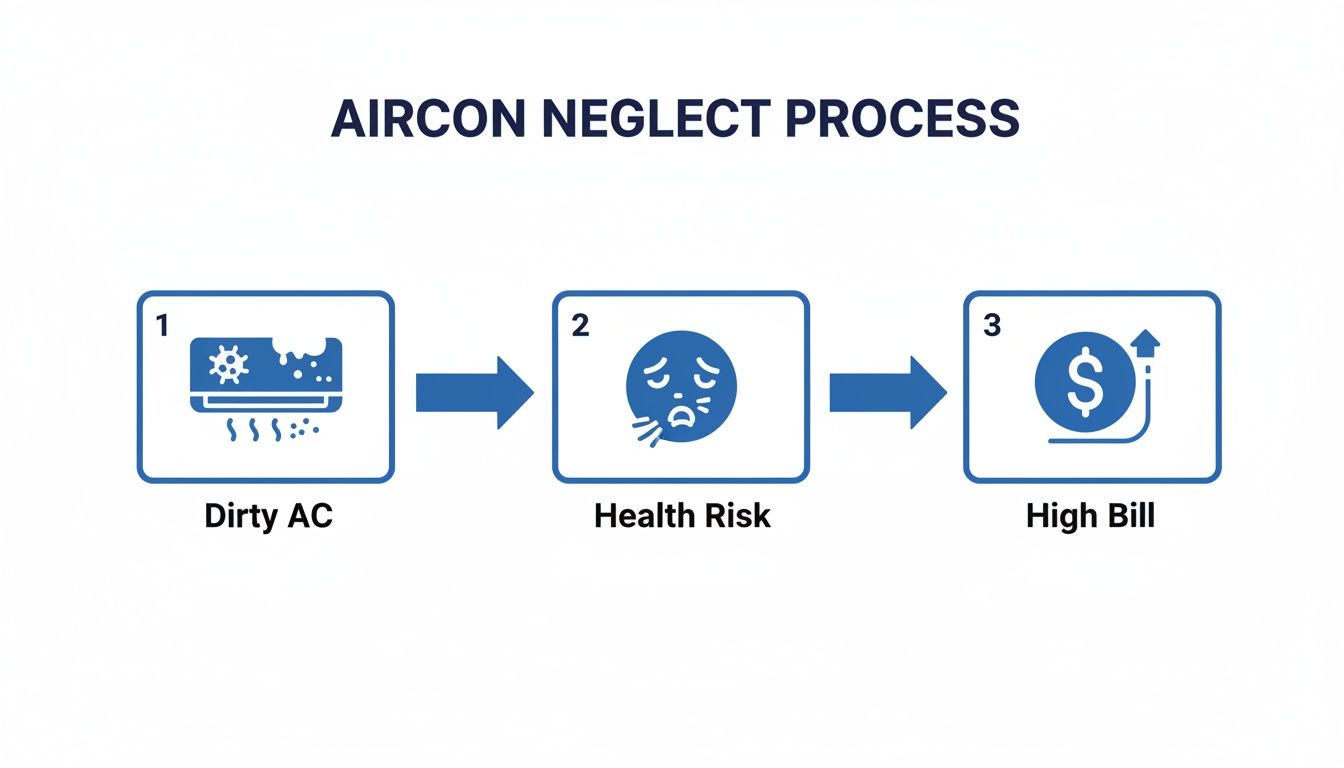
It’s a straightforward link: a little bit of neglect leads directly to bigger problems for both your home and your wallet.
Inspecting the Outdoor Unit
Don’t forget the outdoor unit, the condenser. It’s the workhorse of your system, responsible for expelling all the heat from your home. It can’t do that job efficiently if it’s suffocating under a pile of debris.
Take a look around the unit for any leaves, grass clippings, or weeds that might be blocking airflow. You want to clear a space of at least 50cm on all sides to make sure it can breathe properly.
You can use a garden hose on a gentle spray setting to rinse away dirt from the outer grille. But whatever you do, never use a high-pressure washer. The force is far too strong and will bend the fragile metal fins inside, seriously damaging the unit.
This simple routine is a fantastic starting point for keeping your aircon in good shape, but it's important to recognise its limitations. For a more detailed breakdown and to understand when it’s time to call in the professionals, take a look at our comprehensive guide on split system air conditioner maintenance.
Signs Your Aircon Needs a Professional Deep Clean
While cleaning your filters is a fantastic habit, it only tackles the surface. A professional deep clean gets into the internal components where the real grime builds up, impacting everything from your air quality to your power bill.
Knowing the warning signs that your split system is overdue for a service can save you from poor performance and costly repairs down the track.
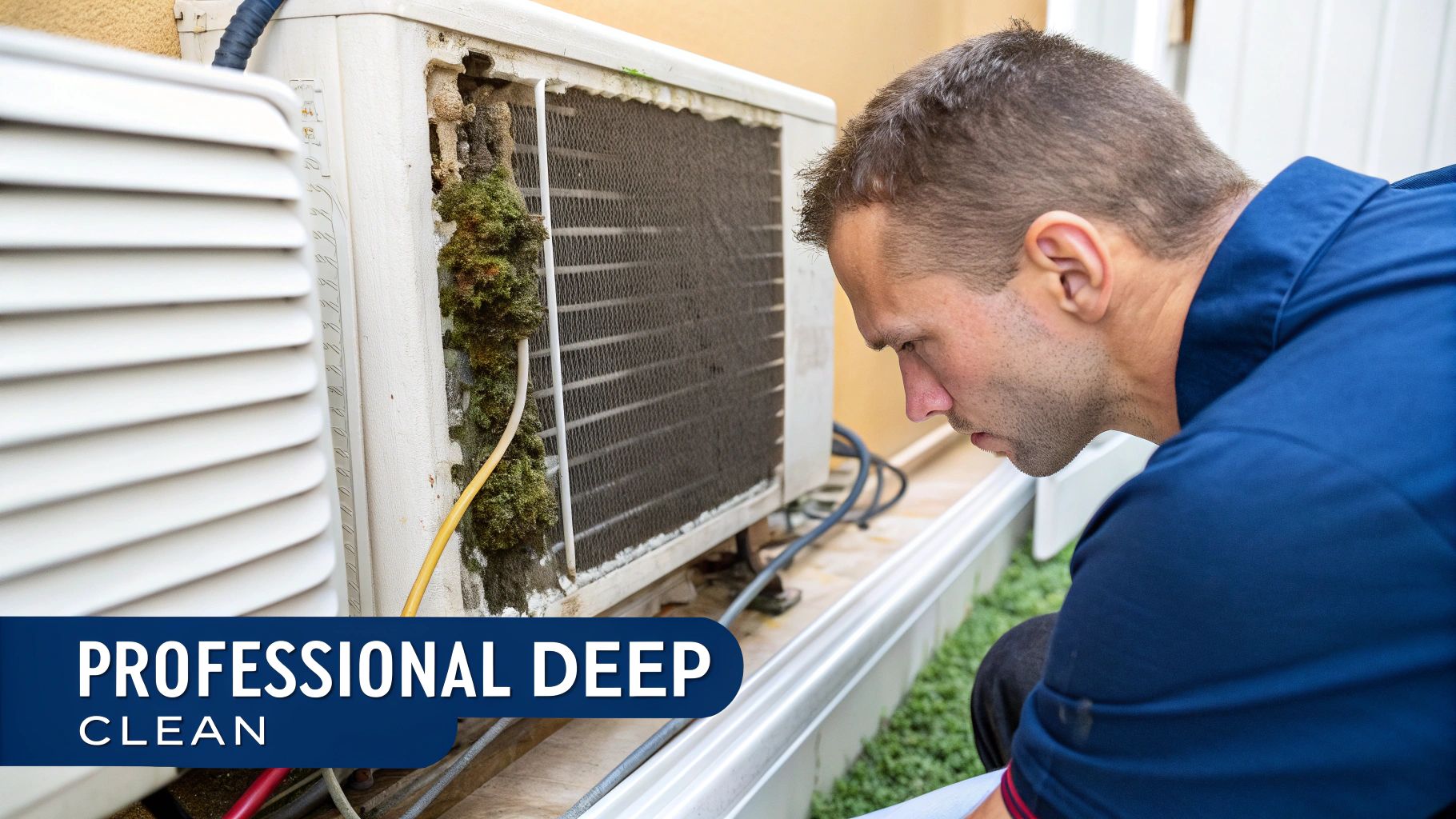
Unpleasant Odours
One of the most common and unmistakable signs is that persistent musty or sour smell when you switch the unit on. This isn't just a bit of dust—it’s a direct result of mould and bacteria thriving in the dark, damp environment of the indoor unit’s coils and drain pan.
This isn't just a bad smell; it's a clear indicator that your system is circulating mould spores and other nasties throughout your home. If you've noticed this, it's a problem that a simple filter wash simply cannot fix. You can learn more about why your air conditioner smells musty in our detailed guide.
Weak Cooling and Poor Airflow
Is your aircon running for hours without making the room feel properly cool? Imagine your split system in a western Sydney apartment on a scorching summer afternoon. If it's working overtime but the room remains stubbornly warm, this is a classic symptom of clogged internal components.
When the indoor evaporator coil and the fan barrel are choked with dust and grime, the system can't efficiently absorb heat from the air or push enough cool air back into the room. This forces the unit to run constantly, struggling to reach the temperature you've set on the remote and sending your power bill sky-high.
A professional deep clean isn't just about appearances; it's about restoring the fundamental function of your system. When your unit struggles to cool, it’s a clear signal that it needs more than just surface-level attention.
Unusual Noises or Leaks
Your air conditioner should operate with a consistent, gentle hum. If you start hearing new noises like rattling, buzzing, or grinding, it could mean that dirt buildup is causing the fan barrel to become unbalanced or that other components are under serious strain.
Similarly, water dripping from the indoor unit is a major red flag. This often happens when the drain line becomes blocked with sludge and biological growth, causing condensation to back up and overflow into your home instead of draining away safely outside. These are issues you want to get on top of immediately.
What Happens During a Professional Aircon Service
When you book a professional deep clean, you're getting something far more thorough than the DIY wipe-down we covered earlier. It's a comprehensive 'wet wash' designed to sanitise the parts of your split system you can't (and shouldn't) try to access yourself.
Knowing what our techs actually do helps you see the value and understand why it’s so critical for your system’s health and your family’s air quality.
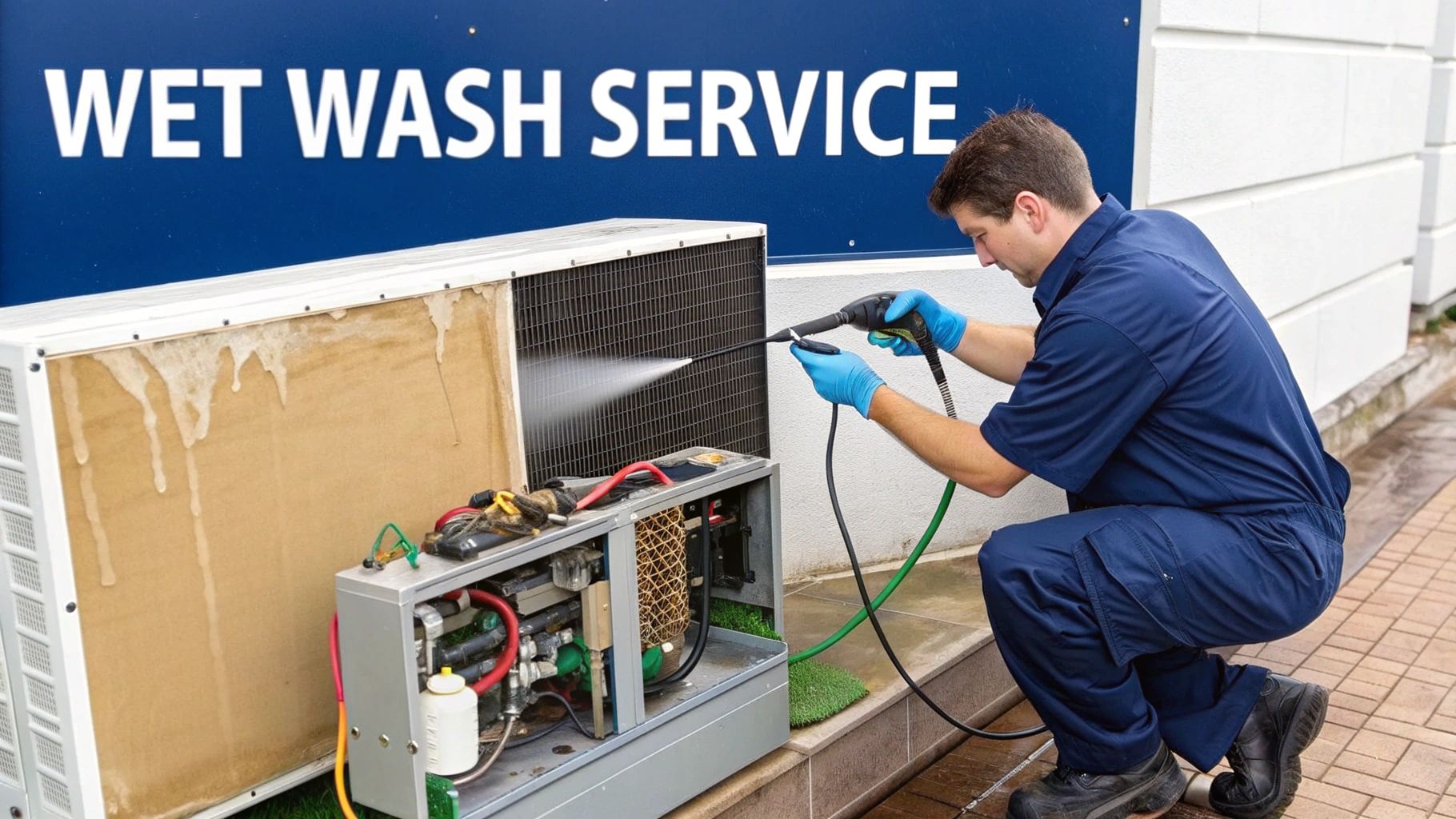
The first thing our licensed technicians do is prep your home. We lay down protective sheeting and fit a specialised catch bag, or bib, around the indoor unit. This isn’t just for show—it ensures every last bit of grime and cleaning solution is captured and funnelled away, keeping your walls and floors completely spotless.
The Deep Clean Process for the Indoor Unit
Once the area is protected, we get to work. The unit’s outer covers and louvres are carefully removed to give us full access to the internal components. This is where the real work of a professional split system aircon cleaning begins.
We then apply a specialised, non-corrosive cleaning agent to the evaporator coils and the cylindrical fan barrel—the two parts that get absolutely filthy with mould and bacteria.
This solution is formulated to break down stubborn biofilm and mould without damaging the delicate aluminium fins. After letting it work its magic, we use a low-pressure water system to thoroughly flush all the built-up gunk out of the coils, fan, and drain pan. This is the gunk that causes bad odours and chokes your airflow, and getting it out leaves the inside of your unit hygienically clean.
A professional wet wash isn't just a clean; it's a reset for your air conditioner's hygiene and performance. It eliminates the hidden mould and bacteria that a simple filter clean can't reach, ensuring the air you breathe is fresh and healthy.
Servicing the Outdoor Condenser
The job doesn't stop inside. The outdoor condenser unit is just as critical to your system's performance, so we give it a thorough clean as well.
We flush the condenser coils to get rid of the dirt, salt spray, and other debris that inevitably builds up. This gunk restricts airflow and makes it harder for the unit to expel heat, which is its entire job.
This one step can dramatically improve your system's energy efficiency. We also check electrical connections and make sure the unit is operating correctly, all in line with Australian Standards like AS/NZS 3000. To see the full checklist our techs run through, you can explore the details of servicing a split system air conditioner in our related guide.
By cleaning both the indoor and outdoor units, we restore your system's overall efficiency, helping it run better and use less power.
DIY Cleaning vs Professional Service
It's smart to do some basic upkeep yourself, but it's crucial to know where your responsibility ends and a professional's begins. Trying to tackle tasks meant for a licensed technician can lead to damaged equipment or, worse, personal injury.
This table breaks down what's safe for you to handle versus what you should always leave to the experts.
| Task | DIY Responsibility | Professional Service Responsibility |
|---|---|---|
| Filter Cleaning | Yes. Monthly cleaning of filters is essential for airflow. | Checks and deep cleans filters if needed. |
| External Wipe-Down | Yes. Wiping the outer casing keeps it looking good. | Cleans and details external covers after reassembly. |
| Indoor Coil Cleaning | No. Requires special tools and chemicals. | Deep cleans and flushes evaporator coils with pressure washer. |
| Fan Barrel Cleaning | No. Inaccessible without dismantling the unit. | Removes covers to access and sanitise the fan barrel. |
| Drain Line Flush | No. Risk of water damage if not done correctly. | Flushes and clears the condensate drain to prevent blockages. |
| Outdoor Coil Cleaning | Gentle rinse only. You can gently hose it down. | Uses pressure washer and chemicals to deep clean condenser coils. |
| Refrigerant Check | No. Requires a licence to handle refrigerants. | Checks refrigerant levels and pressures to ensure efficiency. |
| Electrical Checks | No. Extremely dangerous without proper qualifications. | Inspects all electrical components and connections for safety. |
| Mould Remediation | No. Surface cleaning won't kill hidden mould. | Uses specialised biocides to eliminate mould from deep inside the unit. |
In short, regular filter cleaning is your job. The deep, internal sanitisation that keeps your air healthy and your system efficient? That’s ours.
Creating Your Aircon Cleaning Schedule
One of the most common questions we get is, "So, how often do I really need to clean my split system?" The honest answer is there’s no single rule that fits every home. Your ideal schedule really boils down to how you live and where you live here in NSW.
Getting into a sensible maintenance rhythm is the key to protecting your investment. This means combining simple DIY filter cleans with an essential annual professional deep clean.
Nailing this balance is what keeps your system humming along efficiently all year, saving you from the headache of breakdowns and shockingly high power bills.
Your DIY Filter Cleaning Timetable
Think of your filters as the first line of defence. Keeping them clear is the single most important regular job you can do for your aircon, and how often it needs doing can vary massively.
Let’s take a real-world example. If you live in a leafy Lake Macquarie suburb and have a couple of pets, you should be checking and washing your filters every 2 to 4 weeks during the heavy summer and winter seasons. Pet dander, hair, and pollen clog filters remarkably fast.
On the other hand, if you're in a Sydney apartment with no pets and only use your aircon on those really sticky days, you might only need to check the filters every 6 to 8 weeks. The main thing is to be consistent during the seasons you rely on it most.
Why an Annual Professional Clean is Non-Negotiable
While washing your filters is crucial, it’s only half the story. The deep-seated grime, mould, and bacteria that build up on the internal coils and fan barrel can only be properly and safely removed by a professional service.
Industry experts across the board recommend a professional service at least every 12 months, even if the unit seems to be working perfectly fine. The simple reason is that a DIY filter wash can't get to the internal components where all the performance-killing gunk accumulates.
For homes in high-use or challenging environments—like coastal areas around Newcastle with salt-laden air, or dusty rural properties in the Hunter Valley—an annual professional deep clean is an absolute must to prevent corrosion and maintain efficiency.
Your local environment plays a huge role. The humid, salty air on the Central Coast promotes faster mould growth, while inland dust can quickly clog the delicate fins of an outdoor unit. A tailored schedule is always best, and you can find more guidance on how often to service an air conditioner in our dedicated post.
Your Aircon Cleaning Questions Answered
We get asked a lot of questions by homeowners across the Central Coast, Sydney, and Newcastle. Our technicians are always happy to share what they know, so here are some of the most common queries we tackle about keeping your split system in top shape.
Can I Use a Pressure Washer on My Outdoor Unit?
We strongly advise against it. It’s tempting to think a pressure washer will blast away the grime in seconds, but it’s a recipe for disaster.
The outdoor unit is covered in delicate aluminium fins that are crucial for releasing heat. A high-pressure water stream will flatten these fins in an instant, which is like trying to breathe with a blocked nose—the unit can’t get enough airflow. This absolutely kills your system's efficiency and can lead to expensive, difficult repairs.
A much safer bet is to use a standard garden hose on a gentle spray setting. That’s all you need to rinse away loose leaves and dirt without causing any damage.
What Is That Vinegar Smell When I Turn My Aircon On?
That sour, vinegar-like smell is the tell-tale sign of mould and bacteria. The dark, damp interior of your air conditioner is the perfect breeding ground for it, especially when dust and moisture get trapped on the evaporator coil or in the drain pan.
Just cleaning the filters won't touch this problem because the source is deep inside the unit. The only way to properly get rid of it is with a professional deep clean. We use specialised, non-corrosive sanitising agents that eliminate the microbial growth at its source, leaving your air fresh and genuinely healthy to breathe.
Will Cleaning My Air Conditioner Really Save Me Money?
Absolutely. It’s not just a myth—a clean air conditioner is a more energy-efficient one, and the savings really do show up on your power bill.
When filters and coils are clogged with dirt, your system has to work much harder and run longer to cool the room. This chews through a surprising amount of extra electricity.
A clean, well-maintained system can operate 5% to 15% more efficiently than a dirty one. This translates directly to lower quarterly power bills, especially during a scorching Hunter Valley summer or a humid one on the Central Coast.
On top of the running costs, regular cleaning helps you avoid expensive breakdowns. It’s about spotting small issues early and keeping all the components free from strain. In the long run, a good service saves you far more money than it costs. You can learn more about what influences the cost to run your aircon in our detailed guide.
Are Store-Bought Aircon Cleaner Sprays a Good Idea?
While those aerosol cans from the hardware store might seem like a quick fix, they rarely solve the real problem. They can give the unit a light surface clean and make it smell fresh for a day or two, but they just don’t have the power to penetrate deep into the coils and fan barrel where the worst of the grime builds up.
Worse still, some of these products contain harsh chemicals that can cause corrosion on the delicate aluminium fins or damage plastic components over time. Professionals use industry-approved, non-corrosive cleaning solutions that are powerful enough to remove stubborn biofilm but are completely safe for your air conditioner and your family.
Ready to restore your air conditioner's performance and ensure your family is breathing clean, healthy air? The team at ALC Air has been providing expert split system cleaning and servicing across the Central Coast, Sydney, Newcastle, and Lake Macquarie for over 15 years.