


Ever wondered what the 'split' in a split air conditioning system actually means? It's a simple idea that’s incredibly effective. The system is literally split into two main parts: an indoor unit and an outdoor unit. This clever design is all about moving heat from inside your home to the outside, leaving you with cool, comfortable air. For homeowners across the Central Coast and Sydney, it's the most popular way to beat the heat.
How a Split Air Conditioning System Actually Works
A split system is basically a dedicated heat-moving service for your home. We find it helps to explain that it doesn't magically create cold air; instead, it very efficiently removes unwanted heat from a room and dumps it outdoors. This entire process relies on a special fluid called refrigerant, which constantly circulates in a loop between the two units.
Think of it like a refrigerator, but for your living room. The indoor unit, that sleek box you see mounted high on a wall, contains a component called an evaporator coil. A fan inside the unit pulls in the warm air from your room and blows it over this super-chilled coil. The refrigerant flowing through the coil absorbs the heat from the air, much like a sponge soaks up water.
As the refrigerant soaks up this heat, it changes from a cool liquid into a warm gas. This gas then travels through a set of copper pipes, making its way to the hardworking outdoor unit.
The Role of the Outdoor Unit
The outdoor unit, also known as the condenser, is where the real heavy lifting happens. It houses a compressor that puts the refrigerant gas under high pressure, which makes it even hotter. This hot, high-pressure gas then flows through a series of condenser coils while a large fan blows the outside air across them.
This action is what releases all the heat absorbed from inside your home into the outside air. As the refrigerant sheds its heat, it cools down and transforms back into a liquid. From there, it travels back to the indoor unit to start the cycle all over again, continuously pumping heat out of your room.
The diagram below gives you a clear visual of this fundamental heat transfer process.
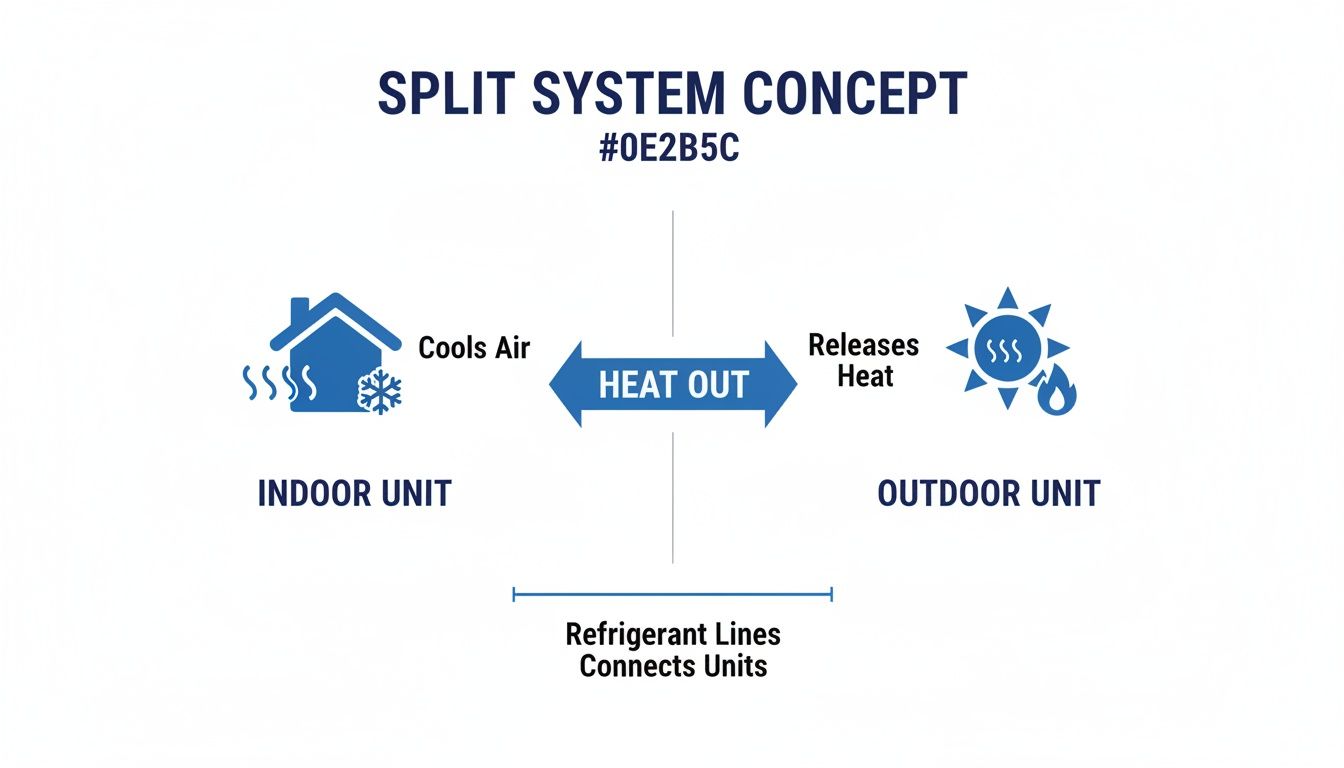
As you can see, the core job of the system is to pull unwanted heat from your indoor space and expel it outside, creating a much cooler environment for you to enjoy.
The Magic of Reverse Cycle Heating
The best part? Modern split systems are true year-round solutions. A reverse cycle split system can cleverly flip this whole process on its head. In winter, a component called a reversing valve changes the direction of the refrigerant flow. The system then absorbs heat from the cold outdoor air (yes, even on chilly days in the Hunter Valley!) and releases it inside your home, providing cosy warmth.
This dual functionality makes it an incredibly efficient choice for the varied climate across Sydney and the Central Coast. For a deeper dive into the science behind it all, you can explore more about how an aircon works.
Choosing Between a Single Split and a Multi-Head System
Deciding on the right air conditioning setup often boils down to your home's layout and how your family actually lives in it. We find the choice between a single split system and a multi-head system isn't just about how many rooms you have; it’s about finding the smartest, most efficient way to stay comfortable.

Let's start with the classic setup: the single split system. It’s a straightforward one-to-one deal, with one indoor unit mounted on your wall connected to one outdoor unit. It’s the perfect, cost-effective hero for a specific space.
For example, let's say you have a compact apartment in Newcastle where you really only need to cool the main living area. A single split system is the ideal choice, giving you powerful, targeted cooling without the cost of a bigger system.
The Single Split System Solution
This simple arrangement is perfect for targeted comfort. Think about cooling or heating a single, high-use area like a main bedroom, home office, or that north-facing living room in a Terrigal home that gets baked by the sun.
Generally, the upfront cost for both the unit and the installation labour is lower than more complex systems. With a direct one-to-one connection, troubleshooting and maintenance are usually far more straightforward too. It’s this efficiency and simplicity that makes it such a popular choice across the Central Coast and Sydney for homeowners looking to solve a specific comfort problem.
When to Consider a Multi-Head System
Now, picture a different scenario. Imagine you're cooling a two-storey home in Lake Macquarie with three bedrooms upstairs and a main living area downstairs, all needing climate control. Installing four separate single split systems would mean four bulky outdoor units chewing up space, creating noise, and making the outside of your home look a bit messy.
This is exactly where a multi-head system shines. It allows you to connect multiple indoor units, up to five or even more depending on the model, to a single, powerful outdoor condenser. Crucially, you can still control each indoor unit independently, giving you zoned comfort right where you need it.
A multi-head system offers a streamlined and aesthetically pleasing solution for whole-home comfort without the need for extensive ductwork. It's a clever alternative to both multiple single split systems and fully ducted systems.
The main benefit here is consolidating all your outdoor equipment into one box. For properties with limited outdoor space, like townhouses in the Hunter Valley or homes with strict body corporate rules in Sydney, having just one condenser is a huge advantage. It preserves your home’s kerb appeal while delivering customised comfort to each room. If you're weighing up these options, our detailed guide can help you understand the benefits of a multi-head split system.
What a Modern Split System Actually Does for Your Home
Technical specs are one thing, but what you really care about is how a split air conditioning system is going to make your life better. It’s not just about making a room colder. It’s about creating a comfortable, quiet, and healthy space for your family without getting a nasty shock when your power bill arrives.
For anyone living between the humid Central Coast and the scorching western suburbs of Sydney, energy efficiency is a huge deal. This is where modern inverter technology really shines. Forget the old, clunky systems that would blast on and off all day. An inverter unit is more like a dimmer switch for your comfort.
It intelligently ramps its power up or down to hold your ideal temperature, which is a much smarter and more efficient way to work.
Save Real Money with Smarter Tech
Because the system isn't constantly drawing a massive surge of power to start its compressor, your running costs drop significantly. You’ll really notice the difference during those long, hot summers in the Hunter Valley or a sudden cold snap when you’re relying on your reverse cycle system to stay warm.
A modern inverter split system can trim your energy consumption by up to 30% or more compared to older, fixed-speed models. That’s a real saving you’ll see on your quarterly power bills, not just a number on a brochure.
Finally, Some Peace and Quiet
Another massive win is how quiet they are. The indoor units are engineered to be incredibly discreet, which makes them perfect for bedrooms, nurseries, or a home office where the constant drone of an old air conditioner would drive you mad. You get all the comfort you need without the disruptive background noise.
Control Your Comfort, Room by Room
One of the most practical benefits is the power of zoning. A split air conditioning system lets you cool or heat only the rooms you’re actually using. Why waste money and energy conditioning empty guest rooms or the parts of your house you rarely go into?
This targeted approach is just plain more economical than old-school systems that cool the entire house at once. You can set the living room in your Umina Beach home to a perfect 22 degrees while leaving the unused bedrooms off, saving energy and personalising your comfort.
These systems also play a big part in improving your home’s air quality. The built-in filters are designed to trap airborne nasties like dust, pollen, and other allergens. For families, especially those with kids who have sensitivities, this adds another layer of well-being. To see which models are leading the pack, check out our guide on the best split system air conditioner brands.
Sizing Your System for Perfect Performance
Picking the right size air conditioner is probably the single most important decision you'll make for long-term comfort and energy efficiency. It’s also one of the easiest places to get it wrong, and a wrong choice is a costly mistake. Our team is here to make sure you get it right.
A system that’s too small will run flat-out on a hot day, desperately trying to keep up and sending your power bills through the roof. On the other hand, a unit that’s too big will constantly switch on and off. This short-cycling means it never runs long enough to properly dehumidify the air, leaving your home feeling clammy and uncomfortable.
Getting it just right is a science, one our technicians have fine-tuned over years of working in Central Coast and Sydney homes. We're experts at translating technical specs like kilowatts (kW) into real-world performance you can actually feel.

From Bedrooms to Living Rooms
To give you a rough idea, a standard 2.5kW unit is often the perfect match for a regular-sized bedroom in a place like Wyong. It has just enough grunt to create a cool, quiet sanctuary for sleep without being overkill. This size is generally ideal for rooms up to about 20 square metres.
Now, picture a large, open-plan living area in Adamstown. It's got high ceilings and a big north-facing window that gets absolutely baked in the afternoon sun. That kind of space demands a much beefier 7kW or even an 8kW system to handle the massive heat load. A smaller unit would simply never catch up on a scorching summer day.
Factors We Assess for Accurate Sizing
A professional assessment goes way beyond just measuring the floor. To recommend the right split air conditioning system, our team needs to conduct a detailed analysis of your home and how you live in it. We look at several key factors that influence how much heating or cooling power you truly need.
We check your room dimensions, calculating the total volume of the space, taking into account not just the floor area but also the ceiling height. We also assess window size and orientation, as a room with large, west-facing windows in Sydney's western suburbs will absorb significantly more heat.
Your home's insulation quality is a huge factor, as is the local climate. We consider specific conditions like the persistent coastal humidity on the Central Coast, which puts extra load on a system. Finally, we account for hidden heat sources like lighting, kitchen appliances, and even the number of people who typically use the room. Our methodical approach ensures we select a unit that is perfectly matched to your space and lifestyle. To get a better feel for what's involved, check out our complete guide for properly sizing an air conditioner.
What to Expect During the Installation Process
Getting a professional installation is the bedrock of a reliable and efficient split air conditioning system. Knowing what happens on the day can make the whole experience smooth and stress-free. From our initial chat to the final handover, our process is designed to be tidy, professional, and completely transparent, giving you confidence in your new system.

There’s no denying how popular these systems are. Sales of single split systems shot up to 1.14 million units across Australia in a recent year, making them the undisputed kings of home cooling. Projections show this trend isn't slowing down, which tells you just how many homeowners are choosing this type of comfort. You can get more insights on the Australian air conditioning market on climatecontrolnews.com.au.
The Key Installation Stages
First up, our technicians will walk through the job with you and confirm the best spots for both the indoor and outdoor units. We're thinking about things like optimal airflow inside and keeping any noise from the outdoor unit to a minimum for you and your neighbours. For example, we'll always aim to position the outdoor unit away from a bedroom window in a quiet Newcastle suburb, it's just common sense.
Next, we get to work carefully running the refrigerant piping and electrical cabling that link the two units together. Our goal here is to make this connection as neat and discreet as possible. Once the units are physically mounted, the crucial electrical work begins.
Compliance and Professionalism
Safety is non-negotiable. All electrical connections for your split system must be handled by a fully licenced electrician to comply with Australian Standards, specifically AS/NZS 3000. This isn't just a friendly suggestion; it's a legal requirement enforced by bodies like SafeWork NSW.
The final stage involves connecting the refrigerant lines, a process that legally requires an ARCtick certified technician. This certification is your guarantee that the refrigerant, a potent greenhouse gas, is handled safely and correctly according to national regulations. A licenced professional has to manage this entire process to protect your warranty, ensure your safety, and lock in the long-term performance of your investment.
Once everything is connected, we don't just pack up and leave. We run a series of tests to make sure the system is running perfectly. We check for correct refrigerant pressure, test the airflow, and ensure the condensate drain is working properly to prevent any water issues down the track. Finally, we'll walk you through how to use your new remote control and answer any questions you have. For a more detailed breakdown of what influences the final price, have a look at our guide on the installation cost for a split system air conditioner.
Your Split System Questions Answered
We get it. Thinking about a new split air conditioning system always brings up a bunch of questions. After more than 15 years installing and looking after systems all over the Central Coast, Sydney, and Newcastle, we've pretty much heard them all.
Here are the most common queries we get, with straight-up, practical answers to help you feel confident about your decision.
How Much Does a Split System Cost in NSW?
This is always the first question, and the honest answer is: it really depends. The final price tag is a mix of the unit's power (its kW rating), the brand you go for, and how tricky the installation is.
A simple "back-to-back" job, where the indoor and outdoor units sit on opposite sides of the same wall, is always going to be the most affordable option. It gets more complex, and more expensive, if we need to run long pipes or bring in extra electrical work.
For instance, fitting a system in a multi-storey Sydney terrace involves a lot more labour and planning than a straightforward ground-floor installation in a Lake Macquarie home. That's why we always do a proper site assessment and give you a fixed, upfront quote. You'll know the exact cost before we pick up a single tool.
How Often Should I Service My Air Conditioner?
We can't stress this enough: you should get your system serviced once a year. An annual check-up keeps it running at its best, extends its life, and stops small issues from becoming expensive headaches down the track. Plus, an efficient system keeps your power bills in check.
This is especially crucial if you live in coastal spots like those on the Central Coast. That salty sea air can speed up corrosion on the outdoor unit, so regular maintenance is non-negotiable to protect your investment. If you want to know what you can handle yourself versus when it's time to call in the pros, our guide on DIY and professional split system maintenance is the perfect place to start.
Can I Install a Split System Myself?
In a word: no. In Australia, it is absolutely illegal and incredibly dangerous to install a split system yourself. The job involves licenced electrical work and handling refrigerant gases under pressure, both of which legally require a fully certified and insured professional. Trying to do it yourself will instantly void your warranty, could land you with massive fines, and poses a genuine risk to your safety. It's just not worth it.
What Are the Most Reliable Split System Brands?
We only work with the brands we know and trust to stand up to tough Australian conditions. Our go-to recommendations are Daikin, Mitsubishi Electric, Fujitsu, and Panasonic, all of them are industry leaders known for performance and reliability. The "best" brand for you often comes down to the size of your space, what you need the system to do, and your budget. Our team can talk you through the options and help you land on the perfect model for your home.
It's also worth noting that split systems are a big deal in the business world. Australia's commercial split HVAC systems market is a huge sector, keeping NSW businesses from Newcastle cafes to Hunter Valley wineries comfortable and productive, with strong growth expected. And if you're ever dealing with a system that isn't performing right, understanding common AC coil freezing issues can give you some useful insight into what might be going on.
Ready to find the perfect split system solution for your home or business? The team at ALC Air is here to help with professional advice and a free, no-obligation quote. Call us today to get started.