


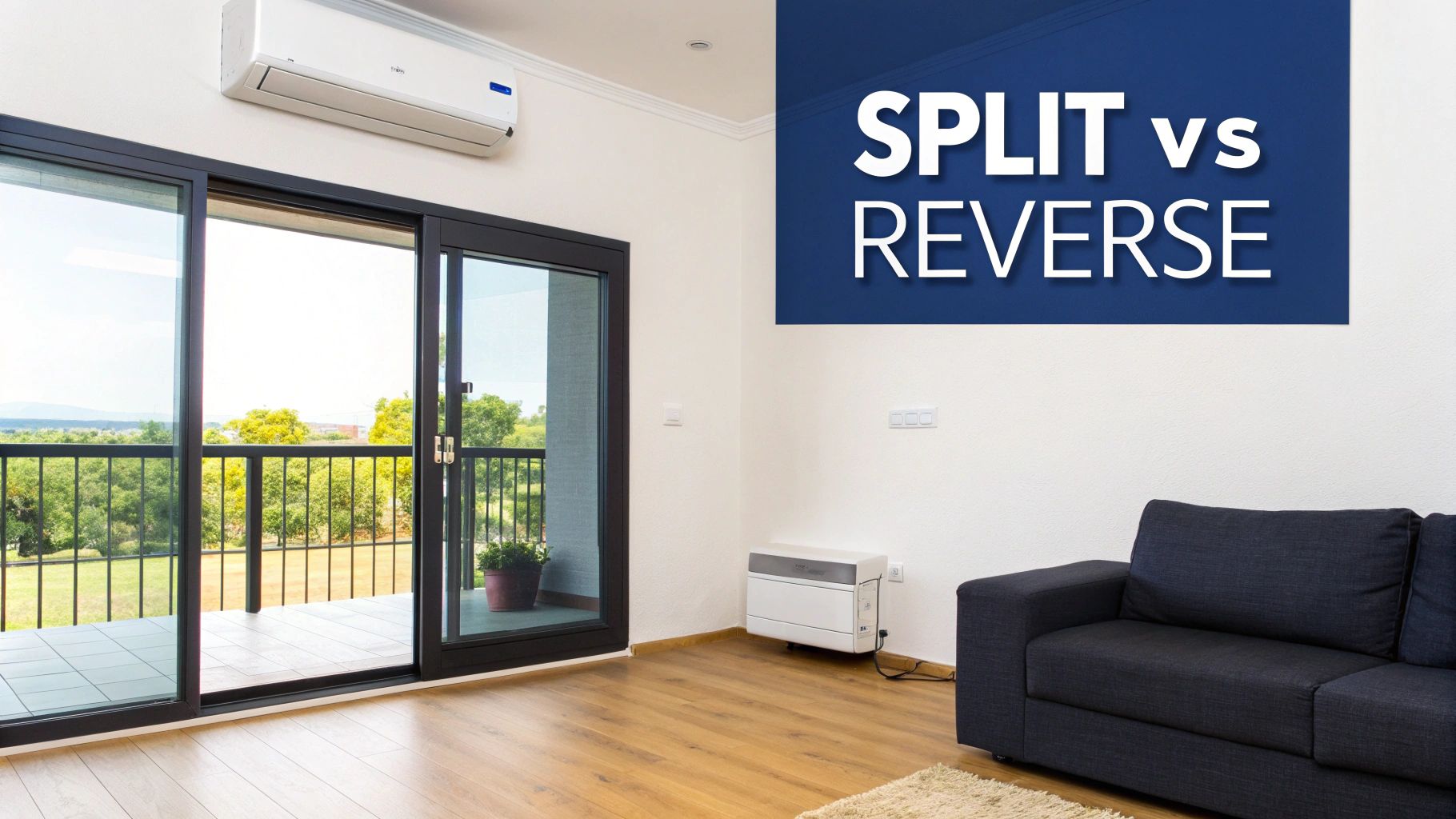
When you're trying to get your head around the difference between a reverse cycle vs split system air conditioner, here’s the simplest way to think about it: you’re comparing a function to a form. A split system describes the physical setup, an indoor unit and an outdoor unit, while reverse cycle describes what that system can actually do: provide both heating and cooling.
The truth is, almost every split system air conditioner we install in Australia today is a reverse cycle model. But understanding the terms themselves means you'll make a smarter choice for your home.
Understanding the Key Difference
It's one of the most common points of confusion we hear from homeowners across the Central Coast and Sydney. People often use "split system" and "reverse cycle" interchangeably, but knowing the distinction is key to making a smart investment in your home's comfort.
Let's use a simple analogy. Think of it like buying a car.
"Split system" is the body style, like a sedan or a ute. It tells you about the physical shape and layout of the air conditioner. You have an indoor unit mounted on your wall, connected by pipes to a separate outdoor unit. This "split" design is what makes them so quiet and versatile inside your home.
"Reverse cycle," on the other hand, is the engine type, like petrol, diesel, or hybrid. It describes the technology inside that allows the system to perform two different jobs. In summer, it pumps heat out of your home. In winter, it simply reverses that process to efficiently pump heat in.
Why This Matters for Your Home
Getting this difference straight is crucial. When you choose a reverse cycle split system, you’re not just buying a cooling appliance for those scorching summer days in Newcastle. You’re actually investing in a complete, year-round climate control solution that also provides incredibly efficient heating for those chilly winter nights in the Hunter Valley.
Here’s a quick breakdown to make it even clearer:
| Feature | Split System | Reverse Cycle |
|---|---|---|
| What it is | A physical configuration: one indoor unit connected to one outdoor unit. | A function: the ability to provide both heating and cooling. |
| Main benefit | Quiet operation and flexible installation for single rooms or specific zones. | All-season comfort from a single, highly efficient appliance. |
| Can you have one without the other? | Yes, you can buy a "cooling only" split system, though they are much less common these days. | Yes, other types like ducted and multi-head systems can also be reverse cycle. |
So, the real question isn’t "reverse cycle vs split system." It’s actually, "Do I need a split system that has the reverse cycle function?" For nearly every home in NSW, the answer is a definite yes.
To dive deeper into the specifics of this popular setup, you can learn more about the modern split unit air conditioning system in our detailed guide. This ensures you get maximum value and comfort from your investment, keeping you comfortable no matter the season.
How Reverse Cycle Technology Delivers Efficient Year-Round Comfort
To really appreciate what a reverse cycle split system can do, you have to get your head around the clever tech that makes it tick. It's a world away from a simple electric heater, giving you both heating and cooling from one incredibly efficient unit.
The easiest way to think of it is like a refrigerator that can run in both directions. In summer, the system acts as a heat pump, using a refrigerant to grab warmth from inside your home and shift it outside. The result? A cool, comfortable room.
But here’s the clever bit. In winter, it just reverses the process. Even on a frosty Central Coast morning, there's still latent heat energy in the outside air. The system is engineered to extract that ambient warmth, concentrate it, and pump it inside to heat your home.
The Efficiency Advantage Explained
This method of moving heat rather than creating it is the secret to its remarkable efficiency. Your old electric bar or fan heater works by converting electricity directly into heat, a process that chews through power. A reverse cycle system, on the other hand, only uses a small amount of electricity to run the components that transfer a much larger amount of heat energy from one place to another.
This is exactly why a reverse cycle unit is such a smart investment for NSW regions with proper seasons. Consider the temperature swings in the Hunter Valley, from scorching summer days to bitingly cold winter nights. Having one system that handles both extremes efficiently isn't just a convenience; it's a practical, cost-effective solution for year-round comfort. We dive deeper into this in our guide to understanding reverse cycle heating and cooling.
A good reverse cycle air conditioner isn't just for cooling; it's one of the most efficient ways to heat your home. By moving heat instead of generating it, you get significantly more warmth for every dollar you spend on electricity.
Why This Matters for Your Energy Bills
The heating performance is particularly crucial in coastal areas like Newcastle, Sydney, and the Central Coast, where the damp winter cold seems to get right into your bones. A quality reverse cycle air con can deliver about 3 to 5 kW of heat for every 1 kW of electricity it uses. That works out to an incredible 300% to 500% efficiency, with some high-end models even hitting 600% in the right conditions.
Now, compare that to a standard electric heater. It turns 1 kW of electricity into roughly 1 kW of heat, giving it a maximum efficiency of 100%. That massive performance gap means lower running costs and a smaller carbon footprint for your home.
Why Split Systems Are a Practical Choice for NSW Homes
When you look at the air conditioning landscape in NSW, it’s clear that one style of system has become the go-to choice for homeowners, and for very good reasons. From compact apartments in Sydney’s inner suburbs to family homes on the Central Coast, the split system configuration offers a level of practicality and versatility that’s hard to beat.
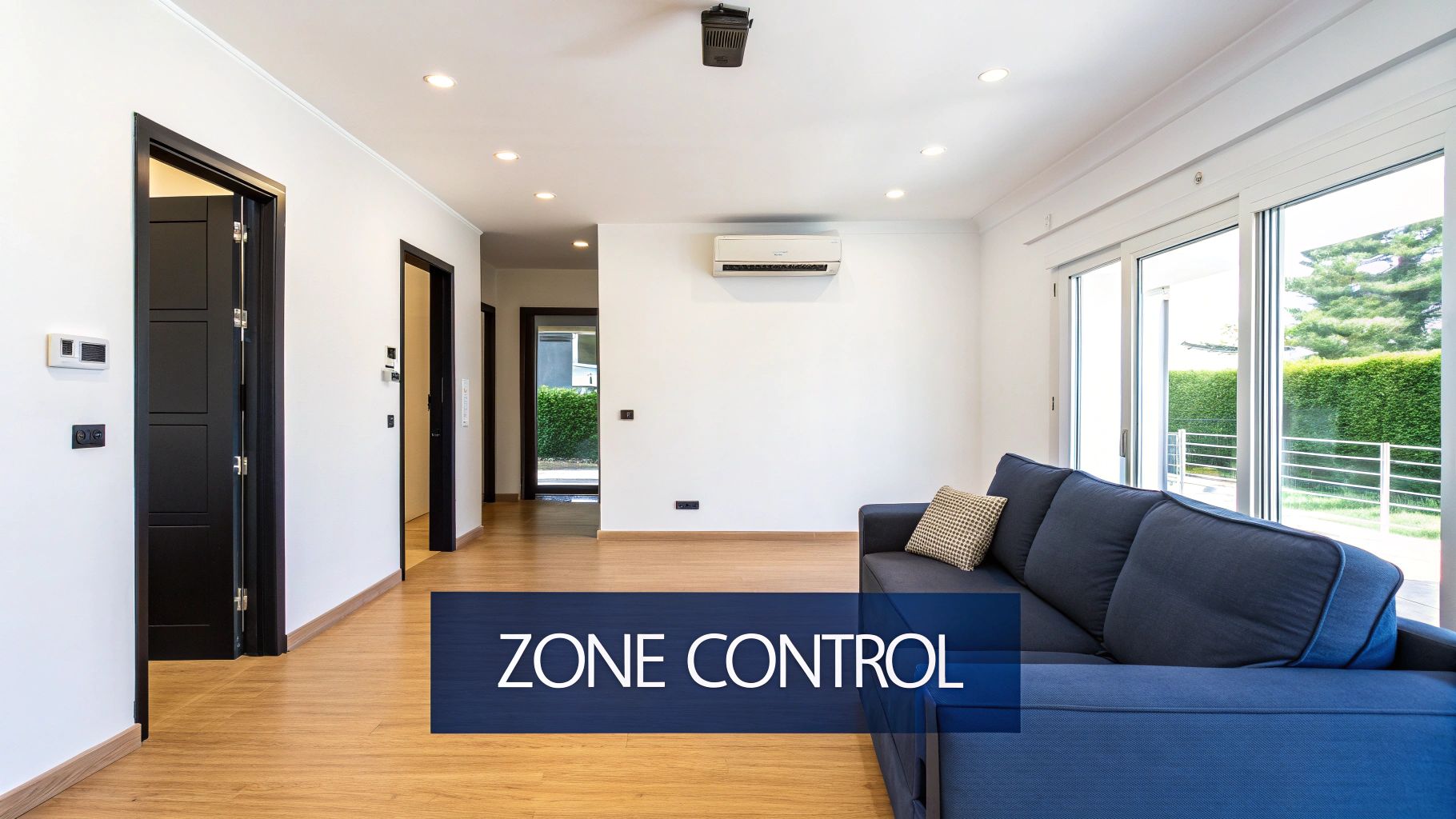
Their biggest advantage is the ability to provide targeted climate control. Instead of cooling or heating the entire house, a split system lets you condition individual rooms. This is a massive win for managing your energy bills because you only pay to run the air con in the space you’re actually using.
Straightforward Installation and Accessibility
Another key reason for their popularity is the relatively simple installation process. Unlike ducted systems that require extensive work in your roof cavity, a split system installation is far less disruptive. A licensed technician just needs to mount the indoor and outdoor units, then connect them with a small run of piping and electrical cabling through the wall.
This makes them an accessible upgrade for almost any type of property, including those with limited roof space or homes built on a concrete slab. It’s an effective way to add powerful, efficient air conditioning without needing major structural modifications.
The Power of Zoned Comfort
The ability to create distinct comfort zones is where split systems truly shine. Imagine you're cooling a two-storey home in Terrigal that gets blasted by the western sun in the afternoon. You can install a powerful split system in the upstairs living area to keep it comfortable without having to cool the downstairs bedrooms that are naturally shadier and cooler.
This targeted approach not only saves money but also gives everyone in the household control over their immediate environment. No more arguments over the thermostat.
The key takeaway: Split systems empower you to control your home's climate room by room. This flexibility is fundamental to achieving both comfort and energy efficiency, allowing you to focus your spending on the areas that need it most.
The industry data backs this up. A recent Federal Government report found that of the roughly 1.2 to 1.3 million air conditioners sold annually in Australia, about 1.09 million were non-ducted split systems. In contrast, only 178,000 were ducted systems. This shows that around 86% of new systems are splits, making them the overwhelming favourite for residential use. You can explore more about these trends in this detailed report on air conditioning in Australia.
Scaling Up with Multi-Head Systems
What if you want the zoned benefits of a split system but need to condition multiple rooms? That's where a multi-head split system comes in. This setup connects several indoor units to a single, more powerful outdoor condenser.
This provides a brilliant, ductless alternative for achieving whole-home comfort. You can have an indoor unit in the lounge, master bedroom, and home office, all running independently from one outdoor unit. This approach saves space outside and is often more efficient than installing multiple separate single-split systems. For a deeper look, check out our guide on whether a multi-head split system is right for your home.
Comparing System Configurations and Long-Term Running Costs
Now that we’ve cleared up that "reverse cycle" is what an air conditioner does (heating and cooling) and "split system" is what it is (a configuration), the next question is always about the money. How much will it cost to get comfortable, and more importantly, how much will it cost to stay comfortable?
The answer really depends on which setup you choose. We’ll look at the three main ways you can use reverse cycle technology in a NSW home: single split systems, multi-head splits, and fully ducted systems. The decision goes way beyond the initial price tag; it’s about matching the system to your home's size, its insulation, and even which way your windows face. Get it wrong, and you'll be paying for it on every power bill.
Installation Costs for Different System Types
The upfront investment is the first hurdle and where you'll see the biggest differences. Each system has a unique level of complexity, which directly shapes the cost of supply and installation by a licensed professional.
A single reverse cycle split system is the most common entry point. It's perfect for tackling a specific area, like the main living room in a Lake Macquarie home or the master bedroom in a Newcastle apartment. Because it’s just one indoor unit connected to one outdoor unit, the installation is straightforward and less labour-intensive.
A multi-head split system is the middle ground. It’s more complex than a single split because you’re running pipes and wiring from one powerful outdoor condenser to multiple indoor units. This adds to the installation cost, but it's often a more affordable way to cool several rooms than a full ducted setup, especially in homes where installing ductwork is a nightmare.
A fully ducted reverse cycle system represents the biggest upfront investment. This is a major job involving a large central unit in the roof, a network of ducts running through the ceiling space, and vents installed in every room. It requires meticulous planning and a lot of labour, making it the priciest option to get up and running.
Long-Term Running Costs and Energy Efficiency
This is where the real value of your decision comes into play over the next decade. While a ducted system costs a lot more to install, a well-zoned, high-efficiency model can be surprisingly economical for a large home. On the flip side, trying to cool an entire house with a single split system that's constantly running at full tilt will send your power bills through the roof.
Your best friend here is the energy efficiency star rating. A unit with more stars will cost more to buy, but it uses far less electricity to do the same job. For example, jumping from a 3-star to a 5-star unit might add a bit to the initial price, but the savings on your energy bills over the unit's 10 to 15-year lifespan can easily pay for that difference and then some.
It's not just about the system type. The key to low running costs is matching the system's capacity and efficiency to your specific needs. A correctly sized and professionally installed system will always be cheaper to run in the long term.
To give you a clearer picture, let's compare the typical costs for a medium-sized home in NSW.
Air Conditioner Setups and Cost Comparison for NSW Homes
This table breaks down the upfront installation costs and estimated annual running expenses for different reverse cycle configurations. These are ballpark figures, as the final cost depends on your home's specific layout, insulation, and usage habits.
| System Type | Typical Installation Cost Range | Best Suited For | Estimated Annual Running Cost |
|---|---|---|---|
| Single Split System (7kW) | $2,500 – $4,500 | Large living areas, open-plan spaces, small apartments. | $450 – $700 |
| Multi-Head Split System | $7,000 – $12,000 | Homes with 2-4 key areas to cool/heat; properties with no roof space. | $700 – $1,100 |
| Fully Ducted System | $10,000 – $20,000+ | Medium to large family homes requiring whole-house comfort. | $1,200 – $2,000+ (highly dependent on zoning) |
As you can see, the initial investment for a ducted system is significant, easily exceeding $10,000, while a quality split system can be installed for under $5,000. However, the running costs tell a more nuanced story. Trying to cool a whole home with multiple splits running constantly can get expensive, which is where a zoned ducted system can become more efficient.
For a deep dive into what actually makes up your power bill, check out our guide on how much it costs to run aircon in Australia. It’s packed with practical tips to keep you comfortable without breaking the bank.
Essential Checks Before You Install a New System
Deciding on a reverse cycle split system is a great step towards year-round comfort, but the choices you make just before installation are absolutely critical. Getting these details right ensures your new system runs efficiently, saves you money on power bills, and meets all legal requirements in NSW.
Frankly, it’s about more than just picking a brand from a catalogue. It's about setting up your investment for long-term success. Before any work begins, a few essential checks can mean the difference between a perfectly comfortable home and years of frustration.
Correct System Sizing Is Crucial
Choosing the right size, or kilowatt (kW) capacity, is the single most important factor for efficiency. It’s a classic Goldilocks problem.
A system that’s too small for your space will run constantly on full power, desperately trying to reach the set temperature but never quite getting there. This not only causes excessive wear on the components but also leads to shockingly high electricity bills.
On the flip side, a system that’s too powerful is just as bad. An oversized unit will cool or heat the room in short, aggressive bursts and then switch off. This constant cycling is inefficient, creates uneven temperatures, and fails to properly dehumidify the air, leaving you with a space that feels cold and clammy.
To get it right, you need a professional assessment that considers room size, window orientation, ceiling height, and local climate factors, like the intense summer heat we see in Sydney's western suburbs. For a preliminary idea, you can use our handy air conditioning unit calculator to get a solid estimate.
Optimal Placement for Performance and Peace
Where you place the indoor and outdoor units has a massive impact on performance. The indoor unit needs to be positioned where it can distribute air evenly throughout the room, away from direct sunlight and obstacles like furniture or curtains that block airflow.
The outdoor unit requires good ventilation to effectively get rid of heat in summer and absorb it in winter. It should be installed on a solid, level base to minimise vibration and noise, and placed somewhere accessible for future maintenance. In coastal areas like Newcastle or the Central Coast, positioning the outdoor unit away from direct, salt-laden sea breezes can really help extend its lifespan.
Legal and Safety Compliance Is Not Optional
In NSW, air conditioning installation is strictly regulated to ensure safety and quality. Let’s be blunt: attempting a DIY installation is illegal and dangerous. All work must be performed by a fully licensed and insured technician who holds two key qualifications.
First, they must be a licensed electrician to handle the dedicated circuit required for your system, ensuring all wiring complies with Australian Standard AS/NZS 3000. Secondly, they must hold an ARCtick certification, which is a legal requirement for anyone handling refrigerant gases. Always ask to see these licenses before work begins, it protects your warranty, your home insurance, and your family’s safety.
This chart gives you a general idea of how installation costs stack up for different system types.
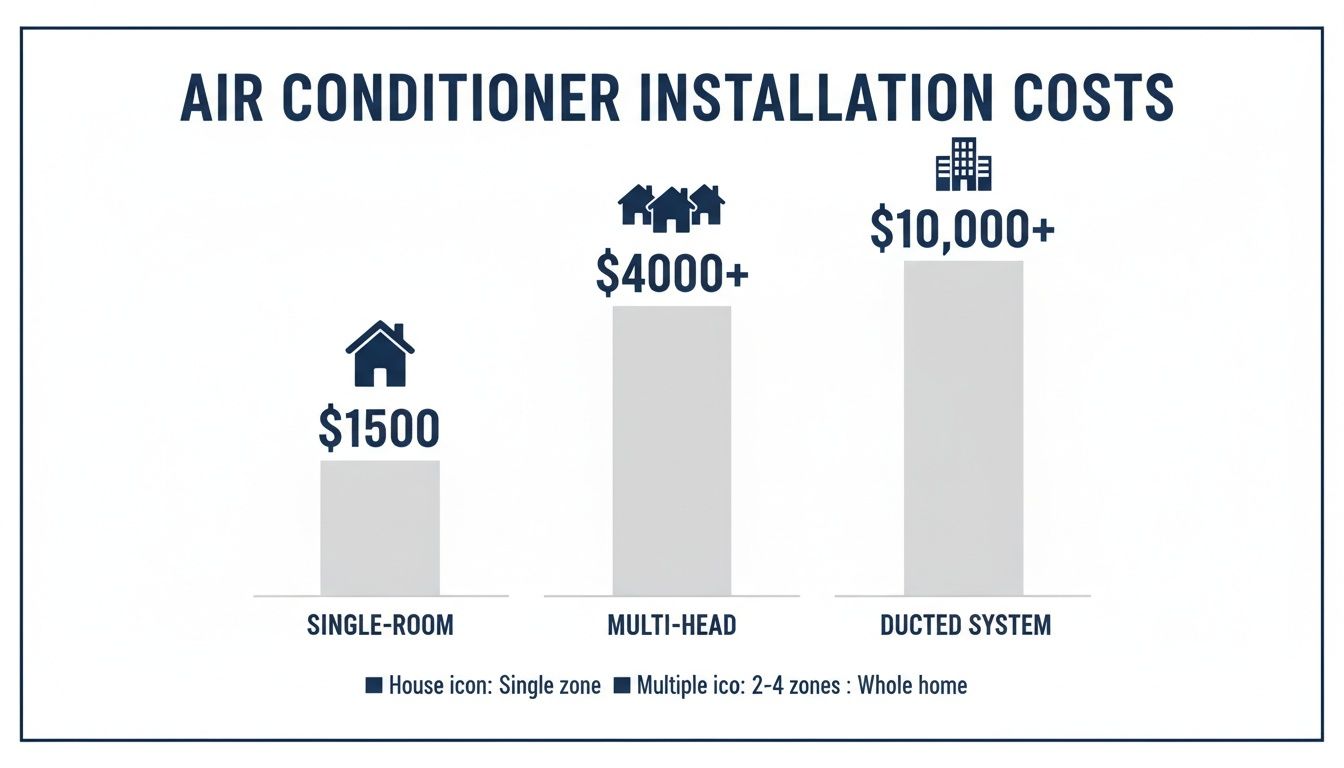
As you can see, the investment scales significantly when you go from cooling a single room to providing whole-home climate control with a ducted setup.
Making the Right Choice for Your Home and Budget
After digging into how these systems work, the choice between a reverse cycle split system, a multi-head setup, or a full ducted system really comes down to three things: your home, your lifestyle, and your budget. There’s no single “best” answer here, just the right solution for your specific circumstances. Our job is to help you connect the dots so you can make a confident choice for year-round comfort.
For most homeowners, it’s a balancing act between immediate needs and long-term value. The key is to think honestly about how you actually live in your space.
Situational Recommendations for NSW Homes
Let's walk through a few common scenarios we see every day across the Central Coast, Sydney, and Newcastle.
Take a modern apartment in Hornsby or a cosy two-bedroom home in Gosford. For spaces like these, a single reverse cycle split system in the main living area is often the perfect fit. It delivers powerful, efficient heating and cooling right where you spend most of your time, without the big expense of a larger setup. This is easily the most popular and cost-effective way to get targeted comfort.
Now, picture a two-storey family home in Charlestown where the building's design makes running ductwork a nightmare. This is where a multi-head split system really shines. It gives you that zoned comfort with individual units in the master bedroom and living areas, but it only needs one outdoor condenser. You get fantastic flexibility without needing to rip your house apart.
Finally, think about a large family home out in the Hunter Valley that needs consistent temperatures everywhere. In this case, a ducted reverse cycle system is still the premium choice. It gives you that seamless, whole-home climate control that’s both discreet and incredibly effective, as long as the property and budget can accommodate the more involved installation.
For the vast majority of homeowners in NSW, a high-quality reverse cycle split system hits the sweet spot. It delivers outstanding performance, flexible installation, and excellent value for money, making it a smart investment for reliable, year-round comfort.
At the end of the day, picking the right system isn't just about comparing types; it's about making sure the one you choose is a perfect match for your property. A professional assessment is the only way to guarantee your new unit is correctly sized and positioned for peak performance. This simple step helps you avoid the common traps of sky-high running costs and poor comfort, ensuring your investment pays off for many years to come.
Frequently Asked Questions
When it comes to the difference between reverse cycle vs split system air conditioners, a few questions pop up time and time again. We've gathered the most common ones we hear from homeowners across the Central Coast and Sydney to give you clear, straightforward answers.
Are all split systems reverse cycle?
Not all of them, but the vast majority you'll find for sale in Australia today certainly are. You can still track down "cooling only" split system models, but they’re becoming a lot less common. Why? Because a reverse cycle unit provides essential year-round value for only a small extra upfront cost.
For the kind of climate we get across NSW, from cool, damp winters on the Central Coast to scorching summers in Sydney’s western suburbs, a reverse cycle system is almost always the more practical and economical choice for total comfort.
How much more does a reverse cycle split system cost?
The price difference is often surprisingly small. For a comparable model from one of the top brands we install, you might only be looking at a few hundred dollars more for the reverse cycle function. It’s a minor increase in the overall investment for a massive gain in functionality.
When you factor in the cost of buying and running a separate portable electric heater for winter, the reverse cycle option usually pays for itself very quickly. Its incredible heating efficiency makes it the most cost-effective solution for total climate control in your home.
Investing in a reverse cycle model is one of the smartest decisions you can make. The slight increase in upfront cost is easily offset by the energy savings and convenience of having a single, powerful system for both heating and cooling.
Does a reverse cycle split system need special wiring?
Yes, absolutely. All split systems, whether they're cooling-only or reverse cycle, require a dedicated electrical circuit installed by a fully licensed electrician. This isn't just a recommendation; it's a critical safety requirement under the Australian Standard AS/NZS 3000.
Any professional installation will always include this electrical work. It ensures your system operates safely, complies with all regulations, and doesn’t overload your home's existing circuits. This is a non-negotiable part of any quality installation.
Can I install a split system myself?
Absolutely not. In Australia, it is illegal for anyone without the proper licence to handle the refrigerant gases used in air conditioners. This is governed by strict ARCtick regulations to protect both you and the environment from harmful substances.
On top of that, the high-voltage electrical work must be completed by a licensed electrician. Attempting a DIY installation will immediately void your manufacturer's warranty, is extremely dangerous, and can lead to significant fines from SafeWork NSW. Always use a fully licensed and insured professional for your own peace of mind and safety.
Ready to find the perfect reverse cycle split system for your home? The team at ALC Air has over 15 years of experience helping homeowners on the Central Coast, Sydney, and Newcastle. Get a free, no-obligation quote today!