


Think of your home’s climate control working behind the scenes, like a central nervous system, quietly keeping every single room at the perfect temperature. That’s the real promise of a ducted air conditioner, and for homeowners across New South Wales, Panasonic ducted air conditioners have become a go-to choice. They deliver that whole-home heating and cooling without the visual clutter of wall units, making them a sleek and highly effective solution.

Why Choose Panasonic for Your NSW Home Climate?
When you’re looking at a whole-home climate solution, you need a system that can stand up to the unique, and often demanding, conditions we get in New South Wales. From the humid, salty air on the Central Coast to the dry, intense summer heat of Sydney’s western suburbs, your air conditioner has to be both powerful and seriously reliable. This is where Panasonic ducted systems really come into their own.
Panasonic has built a solid reputation for performance and durability, making them one of the most trusted brands in Australian households. In fact, they have earned their spot through constant innovation and delivering reliable products that work.
Built for Australian Conditions
A ducted system from Panasonic is designed from the ground up to be a discreet, long-term asset for your property. We install an indoor unit out of sight, usually in your roof cavity or under the floor, which connects to a series of ducts. These ducts deliver conditioned air to each room through subtle vents in your ceiling or floor. The main outdoor unit is then placed somewhere unobtrusive, ensuring your home's look isn't compromised.
This setup offers some real advantages for homes across the Hunter Valley, Newcastle, and Lake Macquarie regions. It provides consistent temperature throughout your entire house, getting rid of those annoying hot and cold spots for good. Because the main components are hidden away, the system runs with very little noise, helping create a peaceful indoor environment. Plus, you don't have bulky units hanging on your walls; all you see are the discreet vents that blend right into your ceilings or floors.
Making the Right Choice
While Panasonic makes fantastic hardware, getting real long-term value comes down to picking the right system and, just as importantly, the right installer. For instance, a sprawling single-storey home out in the Hunter Valley has completely different needs than a modern two-storey house in a Sydney suburb like Kellyville.
Our experience at ALC Air is all about tailoring these systems to your specific property and lifestyle, ensuring you get efficient performance that lasts for years. To help you weigh up your options, you can check out our guide on the best ducted air conditioning brands.
A Guide to Panasonic Ducted Models and Features
When you start looking at Panasonic ducted air conditioners, the model numbers and feature lists can feel a bit overwhelming. Our job is to cut through the jargon and explain what these features actually mean for your family's comfort on a hot summer afternoon.
Let’s break down the main options. Think of it like choosing a car: there’s the reliable family model, a high-performance version packed with the latest tech, and a compact solution for tight spaces. Understanding the difference helps you invest in what you’ll actually use, rather than paying for features that sound fancy but don’t fit your lifestyle.
Why Inverter Technology Is So Important
One term you’ll see everywhere is inverter technology. This isn't just a marketing buzzword; it’s the heart of modern air conditioning efficiency and the main reason new systems are so much cheaper to run.
An old, non-inverter system works like a light switch: it’s either 100% on or completely off. It blasts cold air until the room hits the target temperature, then shuts down. As soon as the room warms up, it lurches back to full power with a jolt. This constant stop-start cycle chews through electricity.
An inverter system, on the other hand, is more like a dimmer switch. It quickly ramps up to cool the room, but instead of shutting off, it slows the compressor right down, running at a very low, steady speed to maintain a consistent temperature. It’s this smart, continuous operation that makes inverter models significantly quieter and more energy-efficient.
Comparing Panasonic Ducted Air Conditioner Series
Panasonic offers several series to suit different homes and budgets. The Standard series is a fantastic all-rounder, while the Premium series adds advanced air purification and connectivity. For homes with limited ceiling space, the bulkhead and slimline models are a perfect fit.
| Feature | Standard Inverter Series | Premium Inverter Series (HZ) | Bulkhead & Slimline Series |
|---|---|---|---|
| Best For | Excellent all-round performance for most family homes | Homes wanting the best air quality and smart control | Apartments, townhouses, and homes with limited roof space |
| Key Benefit | High efficiency and reliable whole-home comfort | Advanced nanoe™ X air purification and built-in Wi-Fi | Compact design for tricky installations |
| Inverter Tech | Yes | Yes | Yes |
| nanoe™ X | No | Yes (Standard) | No |
| Wi-Fi Control | Optional Add-on | Yes (Built-in) | Optional Add-on |
While the Standard Inverter series offers brilliant efficiency for most homes, the Premium series is a popular choice for families concerned with allergies or who want the convenience of controlling their air con from anywhere.
Key Features You'll Actually Use
Beyond the core technology, Panasonic systems come with some genuinely useful features designed for health, convenience, and comfort. Here are two of the most important ones.
nanoe™ X Air Purification: This is a standout feature for families, especially those living in areas with high pollen counts like the Hunter Valley or with allergy sufferers at home. The system releases microscopic water particles that actively inhibit airborne pollutants like pollen, mould, and bacteria. It also helps break down common household odours from pets or cooking, purifying your air even when the cooling or heating is off.
Panasonic Comfort Cloud (CONEX) App: Many models now come with Wi-Fi control, allowing you to manage your entire system from a smartphone app. Imagine leaving the office in Sydney on a 35-degree day and turning the air con on so your home is perfectly cool the moment you walk through the door. The app lets you adjust temperatures, set weekly schedules, and control different zones from absolutely anywhere.
For those wanting a deeper dive into how these systems compare to others, we've put together a comprehensive look into the world of ducted air conditioning systems.
Whether it's the rock-solid reliability of the Standard series, the advanced features of the Premium models, or the clever design of the compact units for apartments in places like Newcastle, there’s a Panasonic solution that fits.
How to Correctly Size Your Ducted Air Conditioner
When it comes to ducted air conditioning, getting the size, or capacity, of your Panasonic system right is everything. It’s easily the most important decision you’ll make, and it’s way more involved than just looking at your floor plan. Get this right, and you’ll enjoy reliable comfort without dreading your power bill.
Get it wrong, and you’ll feel it. An undersized system will gasp for air on a scorching summer day, never quite hitting the mark. An oversized one will constantly switch on and off, wasting a huge amount of energy and putting needless strain on the components.
Think of it like this: a system that’s too powerful is clumsy and inefficient for the job, failing to properly dehumidify the air and creating an uncomfortable, clammy environment. A correctly sized system, on the other hand, just hums along, sipping power to keep your home at that perfect temperature.
It’s About More Than Just Square Metres
A professional heat load calculation is the only way to be sure you’re getting the right fit, and it looks at a whole lot more than just square metres. When our team assesses a home on the Central Coast or in the suburbs of Sydney, we analyse a bunch of crucial factors.
- Home Orientation and Windows: Let's say you have a two-storey home in Lake Macquarie with huge, west-facing windows that bake in the afternoon sun. That home needs a lot more cooling muscle than a single-level house tucked away in a leafy, shaded street. The direction your home faces and the amount of glass it has are massive variables.
- Ceiling Height and Volume: It's not just about floor space. A room with standard 2.4-metre ceilings has far less air to cool than one with soaring 3-metre ceilings, even if the footprint is identical. We calculate the total air volume to get an accurate picture.
- Insulation Quality: The R-value of your ceiling and wall insulation makes a world of difference. A well-insulated home in the Hunter Valley will hold its temperature much longer, meaning a smaller capacity unit can keep it comfortable through freezing winter nights and blazing summer days.
- Local Climate: We factor in the specifics of your location, from Newcastle's sticky coastal humidity to the intense, dry heat you find further inland. These conditions directly dictate how hard your system needs to work to keep you comfortable.
This decision tree gives you a simplified idea of how these different factors guide us toward the right model for you.
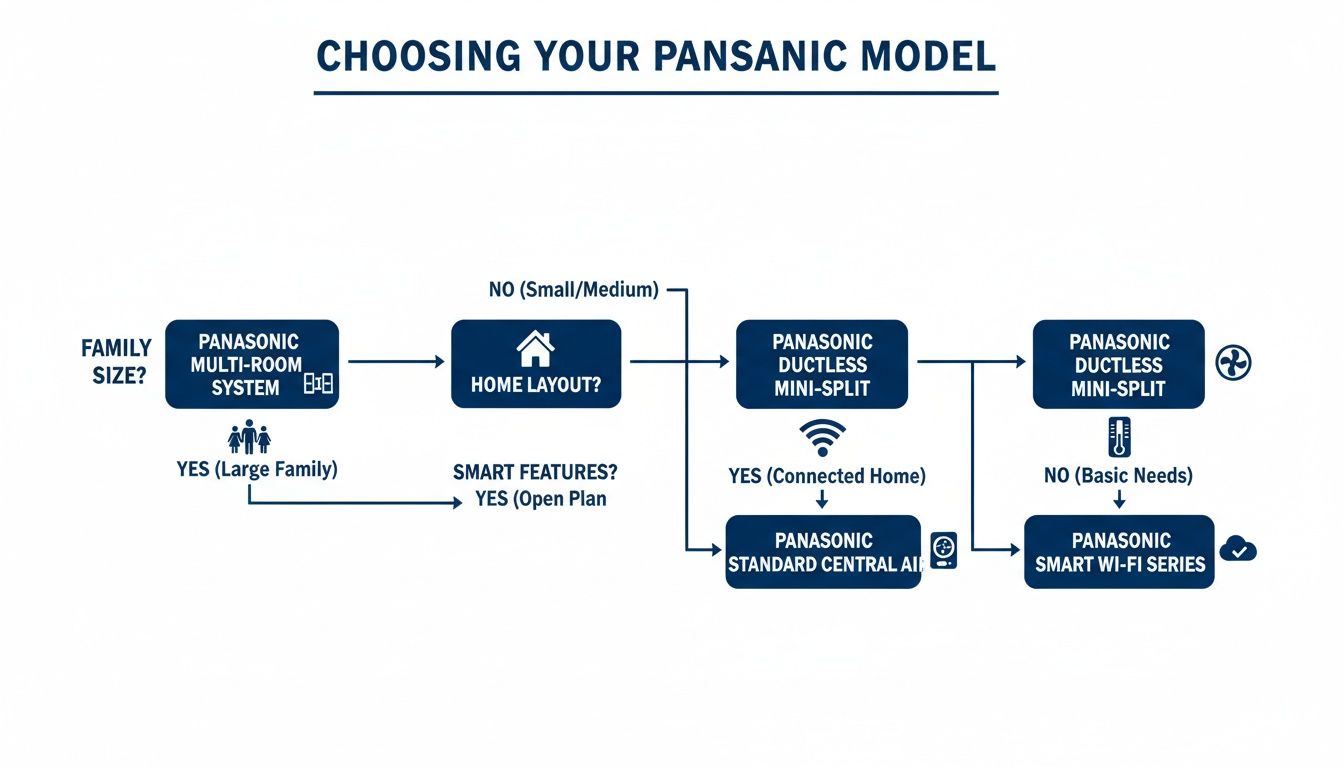
As you can see, things like your family size, your home's layout, and the features you want all point toward the ideal Panasonic model for your unique situation.
Why Professional Sizing Is Non-Negotiable
Sure, you can find online calculators that will give you a rough estimate, but they’re no substitute for having a licensed professional on-site. An expert can spot the things a formula can’t, like thermal bridging where heat seeps through the frame, tiny air leaks around windows, or the afternoon shade cast by your neighbour’s new extension.
Getting the size right from the start is the single most important factor for long-term performance and efficiency. It directly impacts your running costs and the lifespan of your investment. A professional heat load calculation is mandatory, not optional.
At ALC Air, this detailed assessment is a standard, non-negotiable part of our process. It’s the only way we can guarantee the Panasonic ducted system we recommend is a perfect match for your home and lifestyle. To learn more about the variables involved, you might find our guide on how to properly size an air conditioner helpful. Ultimately, this protects your investment and ensures you actually get the year-round comfort you’re paying for.
What to Expect During the Installation Process
So you’ve decided a Panasonic ducted air conditioner is right for you. That’s the big decision made, but you’re probably wondering what actually happens when it’s time for installation. Knowing what the process involves gives you peace of mind and helps you prepare.
At ALC Air, we’ve spent over 15 years refining our installation process to be as smooth and undisruptive as possible, whether we're working on a family home in Sydney or a property on the Central Coast.
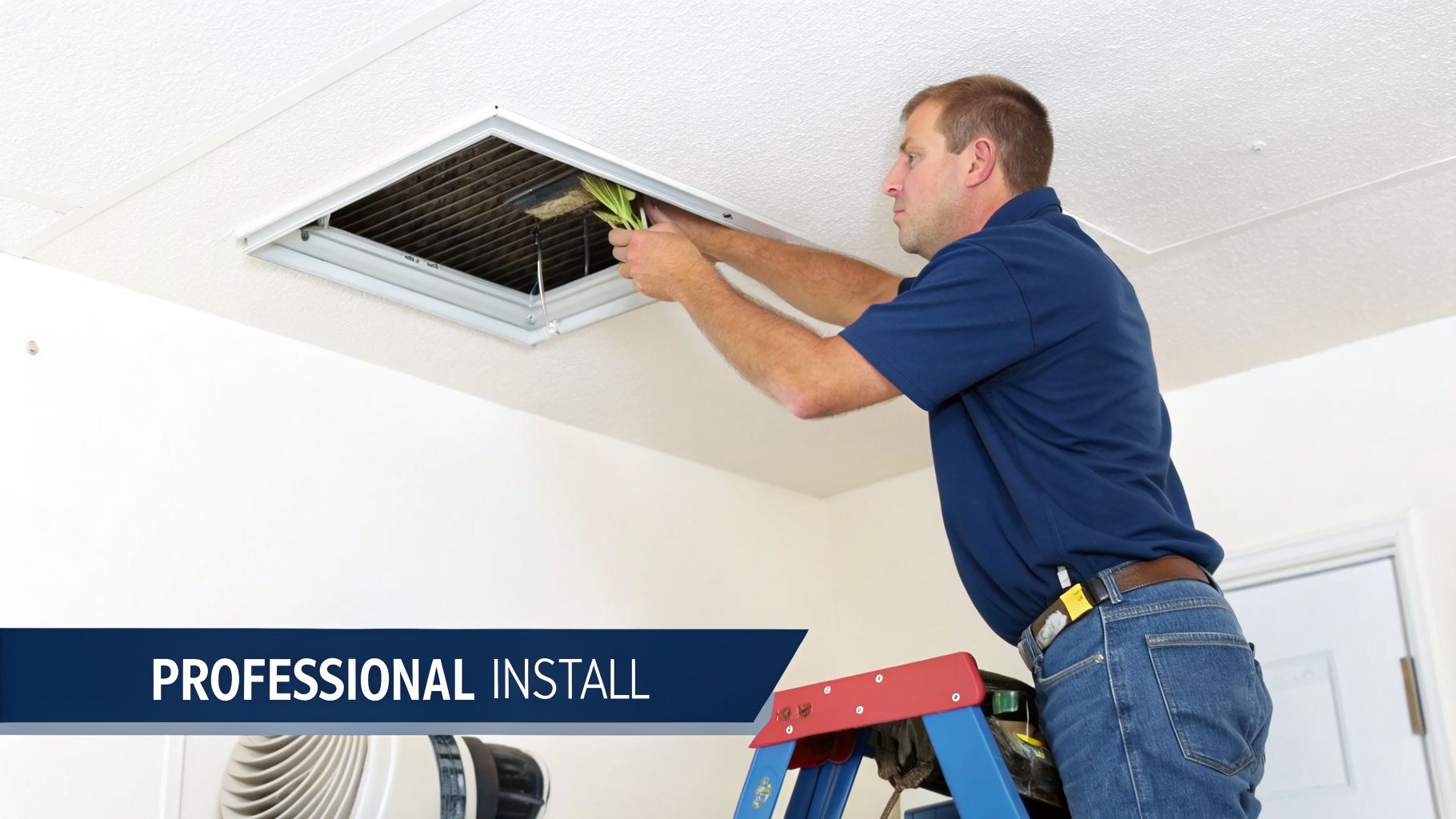
A quality installation isn’t just about what happens on the day. It’s a staged process that starts well before we even open our toolboxes, ensuring everything is perfectly planned.
Stage 1: The On-Site Assessment and Design
This is where a successful job begins. A senior technician from our team will visit your home to do more than just measure up; they'll perform a detailed heat load calculation and map out the entire system with you.
We’ll work together to find the best spots for the indoor and outdoor units, balancing things like noise, easy access for future servicing, and how it all looks. This is also when we plan the ductwork layout and zone setup, figuring out the most efficient way to run ducts through your ceiling to get balanced airflow into every single room.
Before any work kicks off, you'll receive a clear, fixed-price quote that details every part of the job. You won't find any surprises with us.
Stage 2: The Day of Installation
On the day, our team of fully licensed and ARCtick certified technicians will arrive ready to get started. We treat your home like it’s our own, using drop sheets and protective coverings to keep your floors and furniture clean and tidy.
The main tasks we'll tackle on the day include placing the indoor fan coil unit in your roof space and mounting the outdoor condenser on a solid polymer or concrete slab. Our crew carefully runs the insulated flexible ducting from the indoor unit to each vent location, following the design we agreed on. We also make precise cuts for the ceiling or floor vents (grilles) and install the main controller and any zone pads in spots that are easy for you to get to and use.
A critical point: all electrical wiring is carried out by a licensed electrician. We strictly follow Australian Standards (AS/NZS 3000) and SafeWork NSW guidelines. This is non-negotiable, as it guarantees your system is safe, compliant, and your Panasonic warranty is protected.
Stage 3: Commissioning and Handover
Once all the components are in place, the final and most important step is to commission the system. This involves testing refrigerant pressures, checking the airflow to each zone, and making sure every single function on your new controller works exactly as it should. We don't consider the job done until we're confident your new ducted system is running at peak performance.
Then, we'll walk you through everything you need to know. We’ll show you how to use the controller, manage your zones for maximum efficiency, and perform basic maintenance like cleaning the return air filter. After we leave, it's a good habit to do your own practical completion inspection to confirm you're happy with every detail.
Our goal is to make the entire process transparent and stress-free. For a more detailed look at what a typical install day looks like, check out our guide on air conditioning installation on the Central Coast.
Understanding Your Total Investment and Running Costs
When you're looking at a Panasonic ducted air conditioner, it’s easy to focus on the initial price. But the reality is, that’s only one part of the picture. While a ducted system is a bigger upfront investment than a single split system, it's designed for long-term value, delivering whole-home comfort and, crucially, lower running costs over its life.
Understanding what makes up the final price helps you make a confident decision. Your total investment isn’t just for the unit itself; it’s for the combination of high-quality hardware and the expert installation that ensures it runs safely, efficiently, and for years to come.
What Influences the Upfront Cost?
Several key things determine the price of your Panasonic ducted system. We believe in being upfront about these costs, so you know exactly what you’re paying for.
- System Capacity (kW): This is the big one. A larger home simply needs a more powerful system to cool and heat it effectively. A 14kW unit, perfect for a large two-storey house in Sydney, will naturally have a higher price tag than a 7kW system suited to a smaller home on the Central Coast.
- Number of Zones and Outlets: Every zone you add requires its own motorised damper and controller. The more individual rooms you want to control, the more complex the installation becomes, which affects both material and labour costs.
- Installation Complexity: A straightforward job in a single-storey home with great roof access is less labour-intensive than a complex installation in a two-storey house with limited space. Factors like your home's age, its construction, and the design of your roof all play a part in the final cost.
For a much more detailed breakdown of what you might expect to budget, it's worth reading our guide on how much ducted air conditioning can cost.
Focusing on Long-Term Value and Running Costs
This is where investing in a quality Panasonic ducted system really starts to make sense. The initial outlay is just the beginning of the story; the real savings show up on your power bills, year after year.
Panasonic has built its reputation on energy efficiency. Their HZ Series, for instance, offers excellent energy performance compared to some competitors. That’s a massive difference for anyone wanting to keep their power bills in check. In fact, many households find their new air conditioners use significantly less energy than their old units.
This impressive efficiency comes from two key features working in perfect harmony.
Inverter Technology + Smart Zoning = Lower Electricity Bills
Panasonic’s inverter technology is smart. It ensures the system uses only the precise amount of energy needed to hold your set temperature, rather than constantly switching on and off. When you combine this with smart zoning, the ability to close off air conditioning to unused rooms, you stop wasting money cooling empty spaces. You can cool just the living areas of your Newcastle home during the day, then switch to only the bedrooms at night.
Over a decade, these daily savings add up to a substantial return on your initial investment. It’s what makes a high-efficiency Panasonic system such a smart financial choice for your home and family.
Maintaining Your System for Peak Performance
A Panasonic ducted air conditioner is a serious investment in your home’s comfort and value. Like any complex machine, it needs a bit of attention to keep it running at its best for years to come. Think of it like your car: a regular service prevents small issues from turning into major, inconvenient breakdowns, especially during a summer heatwave.
The good news is that looking after your system is a team effort. There are a few simple things you can do yourself, and then there are the more technical checks that are best left to a licensed professional.
Simple Maintenance You Can Do Yourself
The single most important job you can do as a homeowner is to keep the return air filter clean. This is that large grille you see in the ceiling, usually in a central hallway, that sucks air back into the system to be cooled. Over time, it naturally gets clogged with dust, pet dander, and everything else floating around in the air.
When that filter gets dirty, your system has to work much harder to pull air through, which drives up your power bills and puts a huge strain on the fan motor. We recommend checking and cleaning this filter every three to six months for most homes. If you have pets or live in a dustier area, you might need to do it more often. It’s a five-minute job that makes a massive difference.
Why It Matters: A clean filter is the simplest way to guarantee good airflow, improve your home’s air quality, and keep your running costs down. A clogged filter is one of the most common reasons we get called out for systems that aren’t performing well.
The Professional Annual Service
While cleaning the filter is crucial, it’s only one piece of the puzzle. Once a year, we strongly recommend a comprehensive service from an ARCtick licensed technician. This is a proper deep dive into your system’s health, designed to catch minor issues before they become expensive problems. It's the key to ensuring your Panasonic ducted air conditioner operates safely and efficiently.
During a professional service, our technicians will:
- Check Refrigerant Levels: We make sure the system has the exact refrigerant charge it needs. Too much or too little can cripple efficiency and eventually damage the compressor.
- Inspect and Clean Coils: Both the indoor and outdoor coils are cleaned to allow for maximum heat exchange, which is vital for efficient cooling and heating. Dirty coils on a unit in a coastal spot like Newcastle or the Central Coast can lead to serious corrosion and premature system failure.
- Test Electrical Connections: We check and tighten all electrical terminals and measure the amperage draw to ensure every component is working correctly and safely, in line with AS/NZS 60335 appliance safety standards.
- Clear Condensate Drains: The drain lines are flushed to prevent blockages, which can cause water to back up and leak into your ceiling, a messy and expensive problem.
- Test All Functions: We run the system through its full heating and cooling cycles to make sure everything from the thermostat to the zone motors is responding exactly as it should.
Treat it as a preventative health check for your air conditioner. This annual service doesn't just extend the life of your unit; it ensures it runs as cheaply as possible, saving you real money on your power bills over the long haul.
Answering Your Top Panasonic Ducted Air Con Questions
By this point, you probably have a good picture of how a Panasonic ducted system could work in your home. But it’s totally normal to have a few more specific questions pop up before you’re ready to make a decision.
To help you out, we’ve put together answers to the most common questions we get from homeowners across the Central Coast, Sydney, and Newcastle. No jargon, just straight-up, practical advice.
What Warranty Comes with a Panasonic Ducted System?
Panasonic backs their ducted air conditioners with a full 5-year manufacturer's warranty, covering both parts and labour. That’s a strong vote of confidence in their own gear and gives you solid protection right out of the box.
The key thing to know is that this warranty is only valid if the system is installed by a fully licensed and accredited professional. When you work with ALC Air, you get that full manufacturer’s warranty, plus our own workmanship warranty on top. It’s a double guarantee, so you know both the unit itself and the quality of the installation are covered.
How Noisy Are Panasonic Ducted Air Conditioners?
One of the biggest perks of a ducted system is just how quiet it is. Modern Panasonic units are designed to be almost silent inside your home. The whole idea is to move the noisy parts well away from where you live and relax.
The indoor unit sits hidden away in your roof space or under the floor, and the outdoor compressor is placed outside. With a properly designed system, the only thing you should notice inside is a gentle, quiet flow of air from the ceiling vents. Plus, Panasonic's inverter technology means the compressor runs at a lower, more consistent speed instead of stopping and starting with a loud jolt, which keeps the noise down even further.
Is Zoning Worth the Extra Cost?
For almost every home we work on in NSW, the answer is a definite yes. Zoning is what really unlocks the full potential of a ducted system, and it makes a huge difference to both your comfort and your power bills. It lets you divide your home into different 'zones', like living areas and bedrooms, and control them independently.
Consider this scenario in your Lake Macquarie home: you can run the air con in the living areas during the day. Then, when it’s time for bed, you can switch that zone off and only cool the bedrooms. It’s a simple change, but it stops you from wasting a ton of electricity cooling empty rooms. While it does add a bit to the upfront cost, zoning almost always pays for itself in energy savings and far better comfort.
Can I Control the Air Con from My Phone?
Yes, you absolutely can. Newer Panasonic ducted air conditioners can be set up with an optional Wi-Fi adapter that links your system to the Panasonic Comfort Cloud app. This puts complete control over your home's climate right in the palm of your hand, wherever you are.
It’s a feature that fits perfectly with our busy lives. You can switch the system on before you leave work on a scorching day, so the house is perfectly cool the moment you step inside. You can also tweak temperatures, set weekly schedules, and manage different zones remotely. It’s a level of convenience that was almost unheard of just a few years ago.
Ready to discuss how a Panasonic ducted system could work for your home? The team at ALC Air has over 15 years of experience designing and installing the perfect climate solutions for homes across the Central Coast, Sydney, Newcastle, and Lake Macquarie.
Get a free, no-obligation quote today and find the right system for your needs.