


When your Mitsubishi air conditioner isn't pulling its weight, the comfort of your entire home is on the line. It doesn't matter if you're trying to escape the sticky summer humidity on the Central Coast or a sudden winter chill in the Hunter Valley; a reliable air conditioner is something you count on. Thankfully, most problems, from weak cooling to strange noises, have clear solutions.
Is Your Mitsubishi AC Failing to Keep You Comfortable?
A struggling air conditioner is more than just an annoyance; it’s a clear signal that your system needs attention. Even the most dependable Mitsubishi units can develop faults over time.
Perhaps your system can’t seem to cool your western-facing Sydney living room on a blistering afternoon. Maybe the unit in your Newcastle bedroom has started making an odd buzzing sound you’ve never heard before. These are the early warning signs you shouldn't ignore.
While it’s tempting to just wait and see, tackling these issues early often means the difference between a minor fix and a major, expensive repair. If your system has given up completely and you're sweating it out waiting for a technician, you might find some useful temporary relief with these tips on how to cool a room without AC.
A huge factor in performance is whether the unit is the right size for the room. An undersized unit will run non-stop without ever hitting the set temperature. Go too big, and it will switch on and off so frequently that it never gets a chance to properly dehumidify the air, leaving you feeling cool but clammy. You can dive deeper into this in our guide on how to correctly size an air conditioner for your room.
Mitsubishi Electric systems have a well-earned reputation for durability. In fact, Australian consumer data shows they have an average lifespan of 10-15 years with proper care, easily outlasting many rivals in our harsh climate. This is especially true in coastal areas like Lake Macquarie, where salt and humidity can be unforgiving.
This reliability is backed by a 5-year warranty when installed by licensed professionals, giving NSW families genuine peace of mind.
Decoding Common Mitsubishi Air Conditioner Problems
Let's play detective. Your Mitsubishi air conditioner is trying to tell you something with its strange behaviour, and learning its language can save you a lot of guesswork and stress. Knowing what's happening inside your unit helps you decide whether you have a simple fix on your hands or if it's time to call in a professional.
A classic example we see all the time is an air conditioner that’s blowing air but not actually cooling the room. While your mind might jump straight to a costly refrigerant leak, it's often something much simpler. Here on the Central Coast and in Newcastle, salty sea air and dust can clog the outdoor unit's coil, stopping it from releasing heat properly. It's a common problem with a straightforward solution.
Translating AC Symptoms into Plain English
Every strange noise or blinking light is a clue. A grinding sound means something very different from a hissing one, and those flashing lights on the indoor unit aren't just for show; they're specific error codes designed to help a technician pinpoint the problem.
Here’s what your AC might be trying to tell you:
- Blinking Lights: The flashing light sequence on a Mitsubishi indoor unit is a diagnostic code. The specific pattern of blinks and pauses tells a technician exactly where to start looking, from a communication error between the indoor and outdoor units to a fan motor fault. It’s the system’s way of saying, “The problem is right here!”
- Strange Noises: A grinding or rattling noise often points to a problem with a motor or a loose part. On the other hand, a hissing or bubbling sound is a classic sign of a potential refrigerant leak, which needs immediate attention from a licensed technician.
- Water Leaks: Seeing water dripping from your indoor unit? This is usually caused by a blocked drain line. It's a frequent issue in humid climates where algae and gunk can build up inside the pipe, causing a messy backup.
- No Power: If the unit won’t turn on at all, start with the simple stuff. It could be dead remote batteries or a tripped circuit breaker. If those check out, it might be a more serious internal electrical fault.
This quick guide below breaks down the most common issues we encounter. It connects the symptom you're seeing with its most likely cause and tells you what you can safely check yourself before making a call.
Quick Guide to Mitsubishi AC Faults
| Symptom | Potential Cause | What You Can Safely Check | When to Call a Professional |
|---|---|---|---|
| Not Cooling (but fan is on) | Dirty filters, clogged outdoor unit, low refrigerant | Clean the indoor unit filters; check the outdoor unit for leaves/debris | If basic cleaning doesn't work; hissing sounds |
| Blinking Lights | Internal fault (fan, sensor, board, etc.) | Note the colour and pattern of the lights; try a power reset (turn off at switchboard for 5 mins) | If the fault code returns after a reset |
| Water Dripping Inside | Blocked drain line | Check if the outdoor drain hose is kinked or visibly blocked at the outlet | If you can't see an obvious blockage; for a professional drain flush |
| Strange Noises | Loose component, failing motor, refrigerant leak | Check for debris in the outdoor unit fan; ensure panels are secure | For any grinding, screeching, or hissing sounds |
| Unit Won't Turn On | No power, remote issue, tripped breaker | Change remote batteries; check your home's circuit breaker | If the breaker keeps tripping or there's still no power |
Following these steps can often resolve minor issues or, at the very least, give your technician valuable information to speed up the repair when they arrive.
This decision tree gives you a visual path for figuring out what to do next.
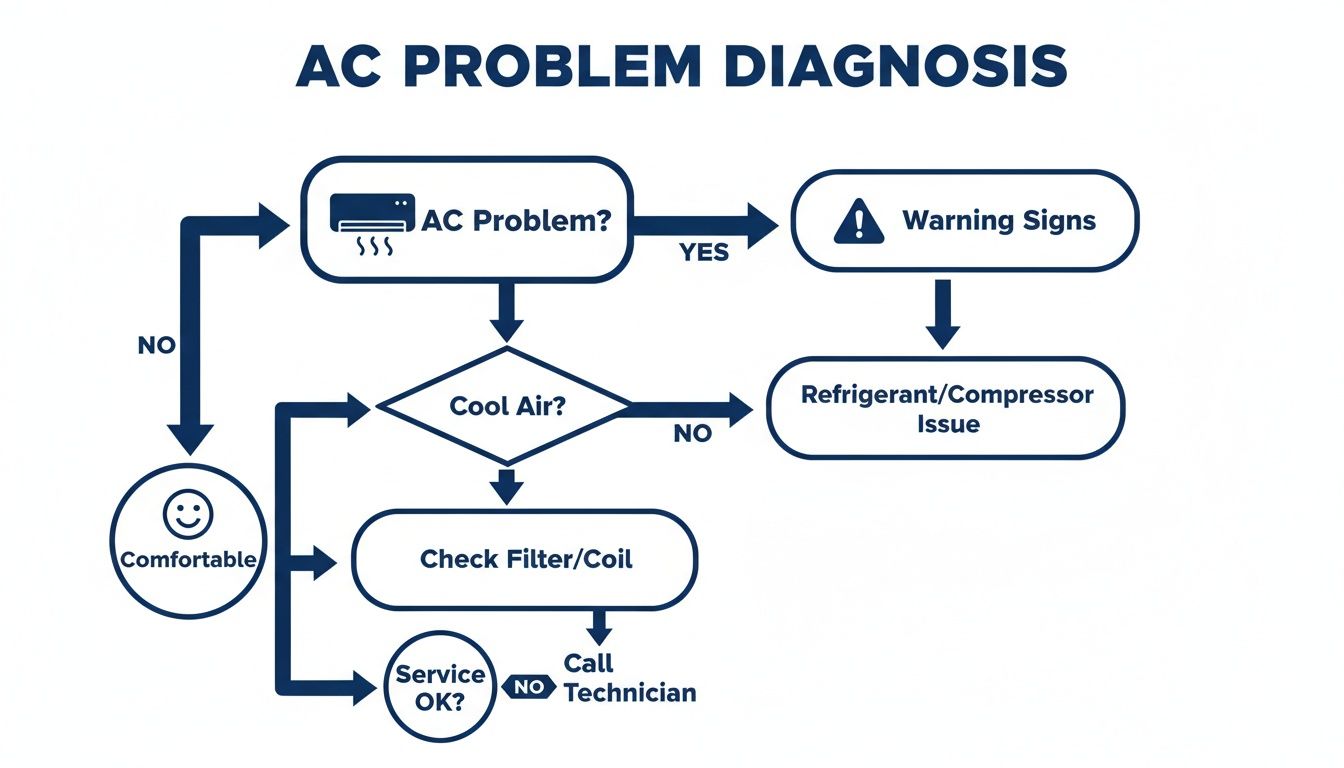
As the flowchart shows, taking a moment to identify the specific warning signs can help narrow down the cause before you even pick up the phone.
The Most Common Culprit
More often than not, the root cause of poor performance is surprisingly simple: a dirty filter. When the filter inside your indoor unit gets clogged with dust and debris, it drastically restricts airflow.
This restriction forces the system to work much harder to cool your home, driving up your power bills and putting unnecessary strain on critical components like the compressor. It’s the single most common and preventable cause of service calls we see across Sydney and the Hunter Valley.
For a closer look at what signs mean you definitely need a professional, you might find our guide on common signs you need air conditioner repairs helpful. Understanding these signs helps you know exactly when to make the call.
Safe DIY Checks to Perform Before Calling a Technician
Before you pick up the phone to book a Mitsubishi AC repair, it’s worth running through a few simple checks yourself. More often than you’d think, these basic steps can solve the problem, saving you a call-out fee and getting your air con back on track fast.
Your safety is the priority: these checks are all things you can do without opening up the main unit or touching any of the serious electrical bits.
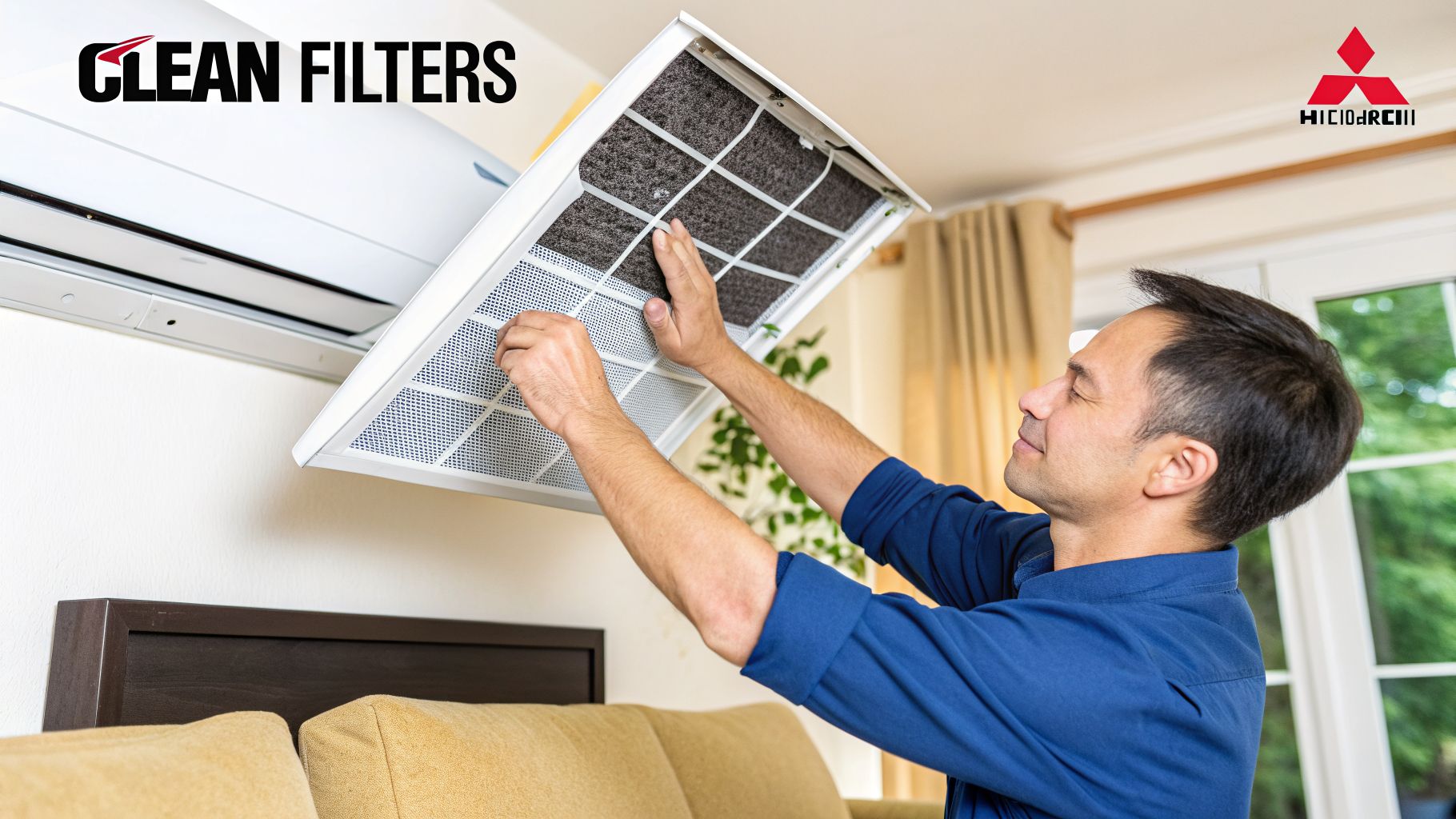
Sometimes the simplest solution is the right one. Before you assume the worst, start with these three quick tasks that are surprisingly common culprits.
Check the Remote Control: It sounds almost too basic, but dead batteries are a frequent cause of a "non-responsive" air conditioner. Pop in a fresh set of batteries; it can make all the difference.
Inspect the Outdoor Unit: Take a quick walk outside and have a look at the condenser unit. Is it getting choked by overgrown garden beds, a mountain of leaf litter, or that forgotten piece of outdoor furniture? The unit needs plenty of clear space to breathe, so trim back any plants and clear away debris from all sides.
Perform a Power Reset: Head over to your home's switchboard and find the circuit breaker labelled for your air conditioner. Flick it off, wait a full five minutes, and then switch it back on. This simple reboot can clear minor electronic glitches that sometimes plague modern systems.
How to Clean Your Indoor Unit's Filters
If your system is running but just isn't cooling the room like it used to, clogged filters are the number one suspect. Honestly, this is the single most important bit of maintenance you can do.
First, make sure the unit is switched off at the remote. Gently lift the front panel of the indoor unit; it should click open and hold itself up. Inside, you’ll spot one or two mesh filters that you can easily unclip and slide out.
Take the filters outside and give them a good tap to shake off the loose dust. For a proper clean, wash them under some lukewarm water and let them air dry completely in the shade before sliding them back in. Never run your system without the filters in place, as this lets dust get sucked into the sensitive internal parts, causing serious damage.
Clean filters mean better airflow, which translates directly to better performance and lower running costs. It’s also good to know which symptoms point to a bigger issue; for more on that, you can learn about situations that count as an HVAC repair emergency.
When You Must Call a Licensed Technician for Repairs
Knowing your limits isn't just smart; it's crucial for your safety and the health of your Mitsubishi air conditioner. While we encourage simple checks like cleaning filters, there’s a clear line you should never cross. Trying to perform a technical Mitsubishi AC repair yourself is not only dangerous but often leads to much more expensive damage down the track.
Any work that involves cracking open the main casing of your indoor or outdoor unit, touching the electricals, or handling refrigerant is strictly off-limits. Under Australian law, this work is legally reserved for technicians holding both a valid electrical licence and an ARCtick refrigerant handling licence. This isn't just red tape; it's there to prevent serious personal injury and environmental harm.
Don't Risk It—Call a Professional
Certain symptoms are immediate red flags that demand a professional diagnosis. If you notice any of the following, it’s time to put down the tools and pick up the phone.
- Hissing or Bubbling Sounds: These are classic signs of a refrigerant leak. Refrigerant is a restricted substance and can only be handled by a licensed professional.
- Grinding or Screeching Noises: This often points to a failing motor or a seized compressor. These are major internal components that require an expert's touch.
- Circuit Breaker Repeatedly Tripping: If your AC keeps tripping the breaker right after you’ve reset it, there's almost certainly an electrical fault inside the unit that needs to be diagnosed safely.
- A Burning Smell: Turn the system off at the switchboard immediately. This suggests an overheating electrical component or motor and is a serious fire risk.
Trying to fix these issues yourself is not only illegal but will also instantly void your manufacturer's warranty. Calling a professional early for your unit in Sydney or Newcastle can be the difference between a straightforward fix and a complete system failure.
The good news for homeowners is that Mitsubishi Electric Australia maintains a strong local presence, with its headquarters in Rydalmere, NSW, and numerous support centres. This ensures authorised agents have fast access to spare parts, a fact that helped MHIAA earn the CHOICE® 'Best Brand of Air Conditioners' title multiple times. You can explore more about what makes them a top choice in this detailed brand review.
When it is time to call in an expert, knowing who to trust is key. For more tips on this, you can learn how to choose the right technician for appliance repair. While DIY checks are great for maintenance, our article on the difference between a DIY guide and when to call a pro provides even more clarity.
What to Expect from a Professional Repair Service

Deciding to call for a Mitsubishi AC repair is the first step, but what actually happens next? Knowing what to expect from a professional service visit gives you confidence that your system is in good hands. A reputable company makes the entire process clear and straightforward, from that first phone call to the finished job.
When you get in touch with us, we’ll ask a few questions to get a handle on the issue you’re facing. Is the unit making a strange noise? Are there any lights blinking on the indoor unit? This initial information helps our technician arrive prepared, whether you’re in a Gosford apartment or a family home in Newcastle.
The Diagnostic and Quoting Process
Once our licensed and ARCtick-certified technician arrives, their first job is to accurately diagnose the fault. This isn't guesswork. We use a systematic process to track down the true source of the problem, ensuring we fix it correctly the first time around.
This involves several key steps:
- Systematic Component Testing: We’ll check critical parts like capacitors, fan motors, and control boards to see if they’re operating within the manufacturer’s specifications.
- Electrical Inspection: Our technician will safely inspect all the electrical connections for any signs of wear, corrosion, or faults, ensuring everything complies with the Australian Standard AS/NZS 3000.
- Refrigerant Pressure Checks: We'll hook up our gauges to check the system’s refrigerant levels. This helps us rule out a leak or an incorrect charge, which is a surprisingly common cause of poor cooling.
After a thorough diagnosis, we provide you with a fixed, upfront price for the repair. This means the price you're quoted is the price you pay; no hidden fees or surprise labour charges tacked on at the end. We believe in total transparency, so you can approve the cost with complete confidence before any repair work begins.
Completing the Repair and Timelines
Once you give us the go-ahead on the quote, our technician will get to work. Mitsubishi has a strong local presence in NSW, which means that most common parts are usually readily available, allowing for pretty prompt repairs.
If a specific component does need to be ordered in, we'll give you a realistic timeline and keep you in the loop every step of the way.
Our goal isn’t just to patch up the immediate issue, but to ensure your system is running reliably and efficiently for the long haul. For a deeper dive into what a full professional check-up involves, you can learn more about our comprehensive air con service, which is designed to prevent these kinds of breakdowns in the first place.
Before we leave, we’ll test the whole system thoroughly to confirm everything is working perfectly, finally restoring comfort to your home.
Preventative Maintenance to Avoid Future Breakdowns
The most affordable repair is always the one you never have to make. Moving from a reactive, "fix it when it's broken" mindset to proactive care is easily the smartest way to keep your Mitsubishi air conditioner running reliably for years. This is especially true in demanding climates, from the scorching summers in Sydney's western suburbs to the temperature extremes of the Hunter Valley.
But regular maintenance isn't just about dodging breakdowns. It's about keeping your system running at its peak energy efficiency. Think of it as a small investment in your long-term comfort and reliability. A well-maintained unit doesn't have to work nearly as hard to cool or heat your home, which means lower power bills and a much longer lifespan for the unit itself. It lets us be your partner in home comfort, not just the emergency service you call when things go wrong.
What a Professional Service Includes
A professional preventative maintenance service goes miles beyond just giving the filters a quick rinse. When one of our licensed technicians visits your home, they run through a comprehensive series of checks designed to catch small issues before they snowball into major, expensive problems. It's a proper health check for one of your home's most important assets.
This comprehensive service typically involves:
- Deep Coil Cleaning: We thoroughly clean both the indoor evaporator coils and the outdoor condenser coils. This removes the built-up dirt, dust, and grime that essentially suffocates your system and kills its efficiency.
- Refrigerant Level Checks: Our ARCtick licensed technicians check that the refrigerant charge is at the optimal level. If it's too high or too low, the compressor is forced to work overtime, leading to poor performance and potential damage.
- Electrical Component Testing: We inspect all the electrical connections, capacitors, and contactors for any signs of wear and tear, making sure they meet the safety requirements of Australian Standards like AS/NZS 3000. Loose or corroded connections are a very common point of failure.
- Drainage System Flush: We flush the condensate drain line to clear out any algae, mould, or blockages. This simple step prevents the messy and damaging water leaks that can happen inside your home.
Investing in an annual service is one of the most effective ways to protect your Mitsubishi AC. It ensures the system operates exactly as the manufacturer intended, preserving its energy rating and keeping your warranty valid. This proactive step helps you avoid the stress and cost of an unexpected breakdown on a 40-degree day in Penrith or a chilly winter night in Cessnock.
Your Questions About Mitsubishi AC Repair Answered
When your Mitsubishi air con starts acting up, it’s natural to have a few questions floating around your head. To give you some clarity, we’ve pulled together the most common questions we get from homeowners across the Central Coast, Sydney, and Newcastle, and answered them straight up.
How Much Does a Typical Mitsubishi AC Repair Cost?
This is the big one, and the honest answer is: it completely depends on what’s gone wrong. A simple fix, like unblocking a clogged drain line, is a relatively quick job that might only involve a standard call-out fee and a small amount of labour.
On the other hand, a major repair is a different story. If your compressor has failed or the main circuit board has given up, you’re looking at a much more involved task. These kinds of jobs need expensive parts and take a lot more time, so the cost will naturally be higher. We don’t like surprises any more than you do, which is why we always give you a fixed, upfront quote after our technician has figured out the problem. You’ll know the exact cost before we pick up a single tool.
Is My Mitsubishi Air Conditioner Still Under Warranty?
Mitsubishi Electric offers a solid 5-year parts and labour warranty on their residential systems, as long as it was installed by a licensed and accredited technician. This is great peace of mind, as it covers any faults that pop up due to a manufacturing defect.
It’s important to know what isn’t covered, though. The warranty won’t help with issues caused by outside factors. This includes things like pests getting into the unit, damage from a lack of regular maintenance (like not cleaning your filters), or any physical damage. If your system is less than five years old, give us a heads-up when you call and we can walk you through the warranty process.
Should I Repair or Replace My Old Mitsubishi AC?
This is a classic dilemma, and the answer usually comes down to two things: age and cost. If your system is getting on a bit, say, over 10-12 years old, and it’s facing a major, expensive repair, then replacing it is often the smarter financial move in the long run.
Think of it this way: a brand-new inverter model will be dramatically more energy-efficient, which means you’ll see immediate savings on your power bills that help to offset the upfront cost. Plus, you get the security of a new 5-year warranty. For newer systems with more minor faults, a repair is almost always the best and most economical choice. Our technicians will always give you honest, practical advice to help you figure out what’s best for your home and your budget.
Is your Mitsubishi air conditioner playing up? The expert team at ALC Air provides honest advice and fixed-price repairs across the Central Coast, Sydney, Newcastle, and Lake Macquarie.