


Regular maintenance isn't just another chore on your to-do list; it's genuinely the single best thing you can do to make sure your aircon runs efficiently, lasts longer, and keeps your power bills from spiralling out of control. It's the difference between a reliable asset that gets you through a scorching NSW summer and a potential liability that’s waiting to break down on the hottest day of the year.
Why Aircon Maintenance Is a Smart Investment, Not an Expense
Staring at a shockingly high power bill after a hot summer is a frustrating feeling, especially when you feel like you’ve been sensible with the thermostat. It’s easy to think of air conditioning maintenance as just another cost to avoid, but it’s far more accurate to see it as a smart investment in your home's comfort and your own financial well-being.
Think of it as preventative care for one of your home's most important, and expensive, appliances. Proactive servicing saves you real money in the long run, prevents the sheer stress of a system failure in the middle of a heatwave, and helps your unit last for its full intended lifespan. For homeowners anywhere from Sydney’s western suburbs to the humid Central Coast, a well-maintained unit is your best defence against both extreme weather and climbing energy costs.
The Real Cost of Neglect
Skipping an annual service might feel like saving a hundred bucks or so now, but it almost always leads to much higher costs down the line. A poorly maintained unit has to work much harder to cool your home, which translates directly to higher electricity use. It’s not just a guess; Australian government data shows just how big a slice of the pie heating and cooling takes from household energy budgets.
What this graph really highlights is that keeping your system efficient is one of the most powerful ways to manage your bills. In fact, a neglected system can lose a significant chunk of its efficiency, forcing it to guzzle more power every single time it kicks in.
With Aussies projected to spend a staggering $3.1 billion on running air conditioners this summer alone, and with heating and cooling already making up to 50% of home energy use, efficiency is everything. For a typical NSW homeowner, ignoring maintenance can cause a unit to lose up to 30% of its efficiency, which will dramatically inflate those running costs. You can read more about how these costs add up from Finder.com.au.
To see how this plays out in real dollars and cents, check out our detailed guide on how much it costs to run aircon to better understand the financial impact.
Your Essential DIY and Professional Maintenance Checklist
Keeping your air conditioner in top shape isn't one big, complicated job. It’s actually a mix of simple things you can easily do yourself and more technical checks that are best left to a licensed professional. Knowing the difference is the key to an efficient, safe, and long-lasting system.
Let's break down what you should be doing and when it’s time to call in the experts.
Simple DIY Tasks for Every Homeowner
Picking up a few basic maintenance skills will make a huge difference in how well your air con performs between professional services. These aren't complex mechanical jobs, just simple housekeeping for your system that genuinely improves airflow, efficiency, and the quality of the air inside your home.
Your first and most important job is looking after the air filters. Think of them as the lungs of your system. When they get clogged with dust, pet dander, and other gunk, your air conditioner has to work much harder to pull air through. That means higher power bills and less effective cooling.
For most split systems, cleaning the filters is a breeze. You just unclip the front panel of the indoor unit, slide the filters out, give them a gentle wash in lukewarm water, and let them dry completely before popping them back in. Try to do this every one to three months, or more often if you have pets or live in a dusty spot.
Pro Tip: Set a recurring reminder on your phone for the start of each season. It’s a simple habit that ensures your filters are clean before the peak Sydney summer heat arrives or a chilly Hunter Valley winter sets in.
Another easy but vital task is keeping the outdoor unit (the condenser) clear of obstructions. This unit’s job is to push heat from inside your home to the outside, and it needs plenty of clear airflow to do it properly. Get into the habit of checking for fallen leaves, overgrown shrubs, or anything else that might be blocking the vents. We recommend keeping at least 30-60 centimetres of clear space around the entire unit.
Lastly, take a quick peek at the condensate drain line. This is the small pipe that carries condensation away from the indoor unit. If it gets blocked by mould or debris, water can back up and leak inside your home, causing a real mess. A quick visual check to make sure it's dripping freely on hot, humid days is great preventative medicine.
These small actions are a smart investment in your system’s health, as this flowchart shows.
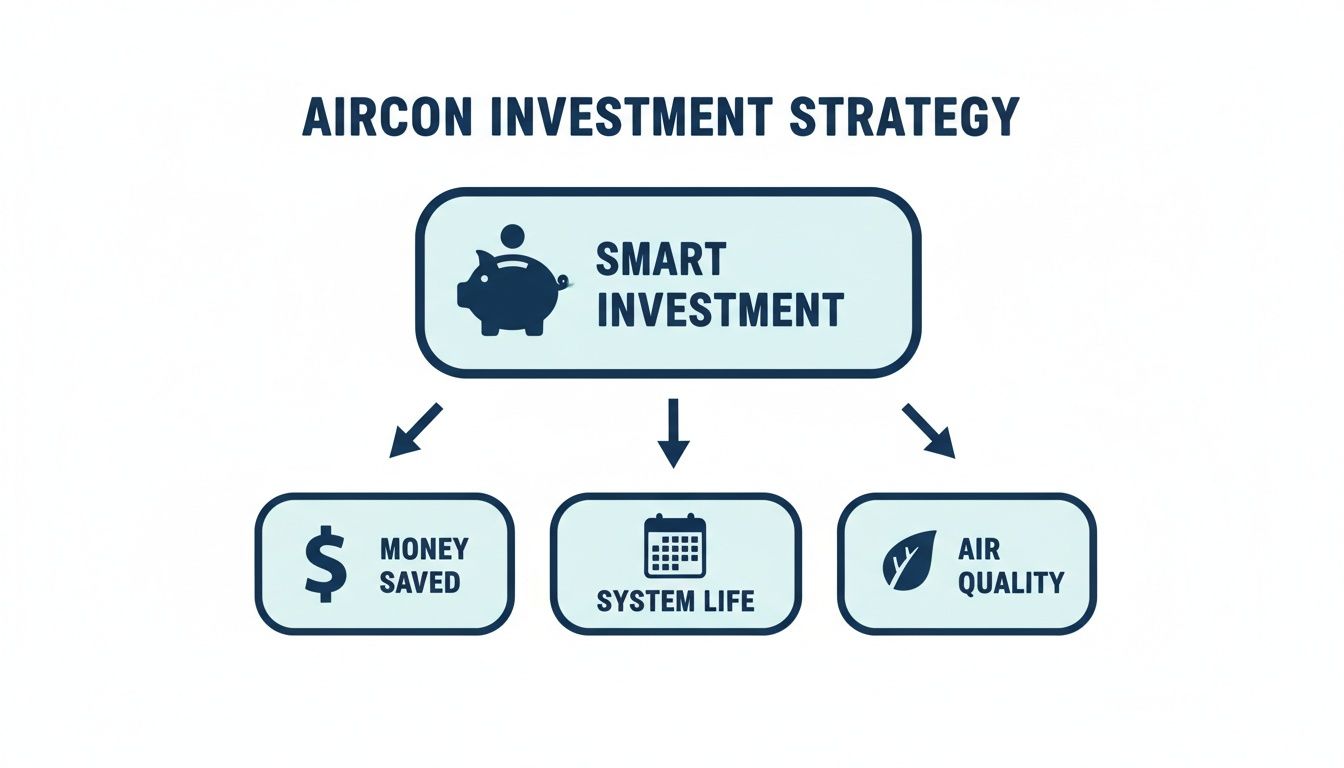
It’s clear that consistent care leads directly to real benefits like lower running costs, a longer lifespan for your unit, and healthier air for your family.
When to Call a Licensed Professional
While these DIY tasks are important, they're no substitute for a comprehensive professional service. Some jobs are not just complex, but genuinely dangerous without the right qualifications and tools. Under no circumstances should you ever attempt to work on electrical components or handle refrigerant.
The table below gives you a clear picture of what you can tackle yourself versus what absolutely needs a pro.
DIY vs Professional Aircon Maintenance Tasks
| Maintenance Task | Can I Do It Myself? | Why It's Important |
|---|---|---|
| Clean/Replace Filters | Yes – Monthly to quarterly. | Prevents restricted airflow, improves efficiency, and keeps indoor air cleaner. |
| Clear Outdoor Unit Debris | Yes – Seasonally. | Ensures the unit can expel heat effectively, preventing overheating and strain. |
| Check Condensate Drain | Yes – Monthly visual check. | Stops blockages that can cause water damage inside your home. |
| Inspect Electrical Wiring | No – Annual professional check. | Loose connections are a serious fire hazard. Requires a licensed electrician. |
| Check Refrigerant Levels | No – Annual professional check. | Incorrect levels drastically reduce efficiency and can destroy the compressor. |
| Deep Clean Coils | No – Annual professional service. | Removes stubborn grime that impacts heat exchange and system performance. |
| Test System Performance | No – Annual professional check. | A technician can diagnose underlying issues with thermostats, fans, and airflow. |
As you can see, a qualified technician with an ARCtick licence handles the critical safety and performance aspects of your system during a service visit. Here’s what that looks like:
- Electrical Safety Checks: A technician will inspect all wiring and connections to make sure they’re secure and meet Australian Standards like AS/NZS 3000. This is a critical fire safety check.
- Refrigerant Level Inspection: The refrigerant charge is the lifeblood of your system. A technician checks the pressure to ensure it’s at the manufacturer’s exact specification. An incorrect charge not only kills performance but can wreck the compressor.
- Deep Coil Cleaning: Both the indoor evaporator coil and the outdoor condenser coil get a professional clean to remove the built-up grime your regular filter wash can't touch. This is vital for efficient heat transfer.
- System Performance Testing: The technician will run your unit in both heating and cooling modes, checking everything from thermostat accuracy to airflow to catch any underlying problems before they become big ones.
For a deeper dive, our [split system air conditioner maintenance DIY guide](https://alcairconditioning.com.au/blog/split-system-air- conditioner-maintenance-diy-guide-when-to-call-a-pro/) explains in more detail when to call a professional.
Think of it like servicing your car. You can top up the windscreen washer fluid and check the tyre pressure yourself, but you rely on a qualified mechanic for an oil change or to inspect the brakes. The exact same logic applies here. Annual professional servicing is essential to ensure your unit is safe, efficient, and ready for the years ahead.
The Hidden Costs of Skipping Your Aircon Service
It’s easy to look at an annual service as an expense you can put off, thinking you're saving a bit of cash. In reality, skipping that check-up is often a false economy. Neglecting your aircon doesn't just lead to a higher power bill; it quietly introduces a bunch of other problems that can hit your family's health, your home's safety, and your wallet in ways you probably haven't considered.
Putting off that service call might seem harmless enough for now. But inside your air conditioner, small issues have a habit of growing into big, expensive ones. From both a financial and safety perspective, a proactive service is always a smarter move than a reactive, emergency repair. Let’s break down the real risks you’re taking when you decide to "leave it for another year."
The Impact on Your Family’s Health
Your air conditioner does more than just cool the air, it circulates it, over and over, throughout your entire home. When the internal parts, like the filters and coils, get caked in grime, they become the perfect breeding ground for mould, bacteria, and dust mites. This is a huge concern in the humid environments we see right across the Central Coast and Sydney.
Every time you switch on that neglected unit, it’s blasting these microscopic nasties into your living room, your kitchen, and your bedrooms. For families, especially those with young kids, elderly members, or anyone with allergies or asthma, this can trigger respiratory issues, constant allergy flare-ups, and a general drop in your indoor air quality. That slightly musty smell you might notice? That’s not just unpleasant, it’s a warning sign.
Serious Electrical and Safety Hazards
Every air conditioner, whether it's a small split system in a Newcastle apartment or a big ducted unit in a Hunter Valley home, is a serious electrical appliance. Over time, the constant vibration and use can cause electrical connections to work themselves loose and wires to fray. A critical part of any professional service is a thorough check of these components to make sure they are tight, secure, and safe.
A loose connection can create an electrical arc, a massive fire hazard. On top of that, a system that’s struggling with blocked filters or low refrigerant has to work much harder, causing the motor and compressor to overheat. This not only cuts the lifespan of your unit but dramatically increases the risk of a critical failure that could lead to electrical damage. These are the exact reasons why any work on an air conditioner must be done by a licensed and insured technician.
A professional maintenance visit isn't just about cleaning; it's a crucial safety inspection. A technician ensures your system complies with Australian Standards (like AS/NZS 3000 for electrical work), giving you peace of mind that your family is safe.
The Financial Shock of Major Component Failure
The cost of a yearly service is pocket change compared to the bill for a major component failure. The single most expensive part of your air conditioner is the compressor. It’s the heart of the system, doing the hard work of circulating refrigerant to create cool air. When the compressor dies, you're often looking at a repair bill that runs into the thousands.
Picture this: a slow refrigerant leak goes unnoticed for a season or two. The system keeps chugging along, but it’s working harder and harder to keep up. This constant strain eventually causes the compressor to burn out. A simple service would have caught the leak early, allowing for a quick, affordable fix. Instead, the homeowner is now staring down a massive repair that was completely avoidable. You can find out more about what leads to these expensive fixes in our guide to common air conditioner repairs.
Environmental Consequences of Inefficiency
Finally, a neglected air conditioner is just plain bad for the environment. A system that’s dirty and struggling to perform efficiently uses significantly more electricity, which means a bigger carbon footprint. But it's not just about wasting energy, an unserviced unit could also be leaking refrigerant.
Refrigerant gases are potent greenhouse gases. A qualified technician with an ARCtick licence is trained to handle these substances safely, find and fix leaks, and ensure your system is properly sealed. Skipping a service means a potential leak could go on for months, releasing harmful gases into the atmosphere while simultaneously damaging your system.
Warning Signs Your Air Conditioner Needs a Check-Up
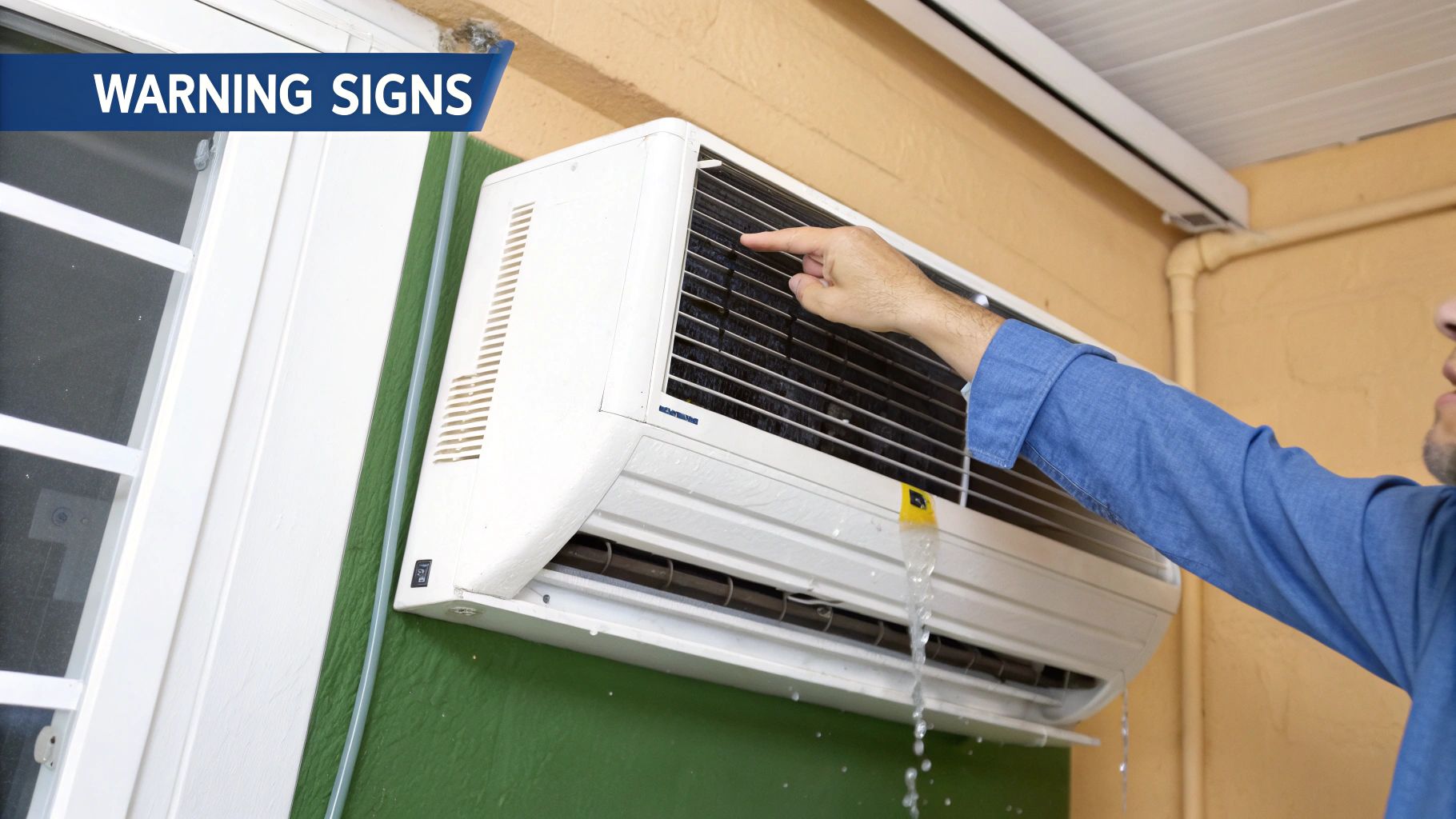
Your air conditioner usually gives you a few subtle hints that something isn't right long before it breaks down completely. Learning to spot these early warning signs is the key to catching a small issue before it becomes a major, expensive repair. Think of it as listening to what your system is trying to tell you.
Being proactive about these symptoms means you can call a technician for a simple fix, rather than an emergency call-out on the hottest day of summer in Sydney. It’s a simple way to stay in control of your comfort and your budget.
Strange Noises from Your Unit
One of the most obvious signs of trouble is a new or unusual noise. Your air conditioner should operate with a consistent, low hum, so any sudden changes are worth paying attention to.
Different sounds can point to different problems:
- Grinding or Squealing: This often suggests a problem with the motor's bearings. If you hear this, it's best to turn the unit off immediately to prevent further damage and call a professional.
- Rattling or Banging: A rattling noise could be as simple as a loose louvre or panel, but it might also indicate that a component like the fan is coming loose.
- Clicking: Frequent clicking sounds during start-up or shut-down can point to a potential electrical or thermostat issue.
Ignoring these sounds is a gamble. A simple bearing replacement is much cheaper than replacing a completely burnt-out motor.
Weak Airflow from Vents
If you hold your hand up to a vent and the airflow feels weaker than usual, it’s a clear sign your system is struggling. This is often the first symptom homeowners in the Central Coast or Newcastle notice.
The most common cause is a clogged air filter, which is an easy DIY fix. However, if you’ve cleaned the filters and the problem persists, it could point to a more serious issue, like a failing fan motor or even blockages within your ductwork.
Leaks or Excess Moisture
Finding a puddle of water around your indoor or outdoor unit is never a good sign. This is usually caused by a blocked condensate drain line, which is designed to carry moisture away from the system. When it gets clogged with algae or debris, water backs up and spills out.
While it might seem like a minor plumbing issue, this water can cause significant damage to your walls, floors, and ceilings. It also creates a damp environment perfect for mould growth, so it’s something you should get looked at promptly.
Unpleasant Smells or Odours
When you turn on your aircon, you should only feel cool air, not smell it. A musty, mouldy smell often means there's moisture building up inside the unit, allowing mould and mildew to grow on the coils.
Other odours can be more serious. A burning smell could indicate an electrical fault or an overheating motor, which is a significant safety risk. If you are experiencing this, you can learn more about what causes these issues in our guide on why your AC smells.
Ignoring these signs can be costly. While many Australians are embracing energy-saving habits, experts warn that skipped maintenance causes 70-80% of summer breakdowns. Serviced units run 15-25% cheaper, a massive return when cooling accounts for up to 45% of home energy use.
How to Choose a Qualified Aircon Technician in NSW
Choosing the right person to work on your air conditioner is one of the most important decisions you’ll make for your home. It’s not just about getting the job done; it’s about making sure the work is safe, compliant, and won’t cause bigger, more expensive problems down the track.
In NSW, not just anyone can legally touch your aircon, and for very good reason. Let’s walk through the non-negotiables you should look for when hiring a professional, whether you’re in a Sydney apartment, a family home on the Central Coast, or a property in the Hunter Valley.
Check for Essential Licences and Credentials
Before you even start discussing the job, there are two key credentials you absolutely must verify. These aren't optional extras; they are legal requirements for anyone working on air conditioning systems in Australia.
The first is a Refrigerant Handling Licence, issued by the Australian Refrigeration Council (ARCtick). This licence proves the technician is qualified to handle refrigerant gases safely and legally, which protects both your system and the environment.
The second is a valid NSW Electrical Licence. Air conditioners are hard-wired into your home’s electrical system, so any work must be performed by a licensed electrician to comply with Australian Standards (AS/NZS 3000). Hiring someone without these qualifications is not only risky but can void your home insurance.
Important: Always ask to see physical copies or digital versions of these licences before work begins. A legitimate professional will be happy to show you their credentials and will never be offended by the request. It’s your right as a homeowner to verify their qualifications.
Questions to Ask Before You Hire
Once you've confirmed the essential licences, it's time to dig a little deeper to find the right fit. A few well-placed questions can tell you a lot about a technician's professionalism, experience, and commitment to quality.
Here are some key things to ask:
- Are you fully insured? Ask for proof of public liability insurance. This protects you and your property in the unlikely event of an accident.
- Do you offer a warranty on your labour? A reputable technician will stand by their work with a warranty, separate from the manufacturer’s warranty on parts.
- What's your experience with my specific brand and system type? A technician with years of experience on your Daikin ducted system or Mitsubishi split system will diagnose and fix it far more efficiently.
- Can you provide a fixed, itemised quote? Vague estimates can lead to unexpected costs. A clear, upfront quote ensures there are no nasty surprises when the bill arrives.
The refrigeration and air conditioning industry in Australia supports hundreds of thousands of jobs, and the number of licensed technicians has grown significantly to meet demand. The number of Refrigerant Handling Licences grew by 26% between 2016 and 2023, with a surge in trainees ensuring a skilled workforce is available for the future. You can find out more about the industry’s growth from Climate Control News.
The Value of Local Expertise
Finally, don't underestimate the benefit of hiring a local technician. A professional based on the Central Coast, for example, will have firsthand experience dealing with the corrosive effects of salt air on outdoor units in suburbs like Terrigal or Woy Woy.
Similarly, a technician working in Sydney's hot western suburbs understands the immense strain placed on systems during summer heatwaves. Local knowledge means better advice, faster response times, and solutions that are genuinely suited to your environment. For more tips, check out our guide on how to find quality air conditioning service on the Central Coast.
What Happens During a Professional Maintenance Visit
Booking a professional service for your aircon might feel a bit mysterious if you’ve never done it before. What exactly does a technician do that you can’t handle yourself with a filter rinse and a wipe-down?
Seeing the process firsthand shows you the real value in getting an expert in. It’s a thorough, systematic check-up designed to catch small issues before they snowball into expensive, mid-summer breakdowns.
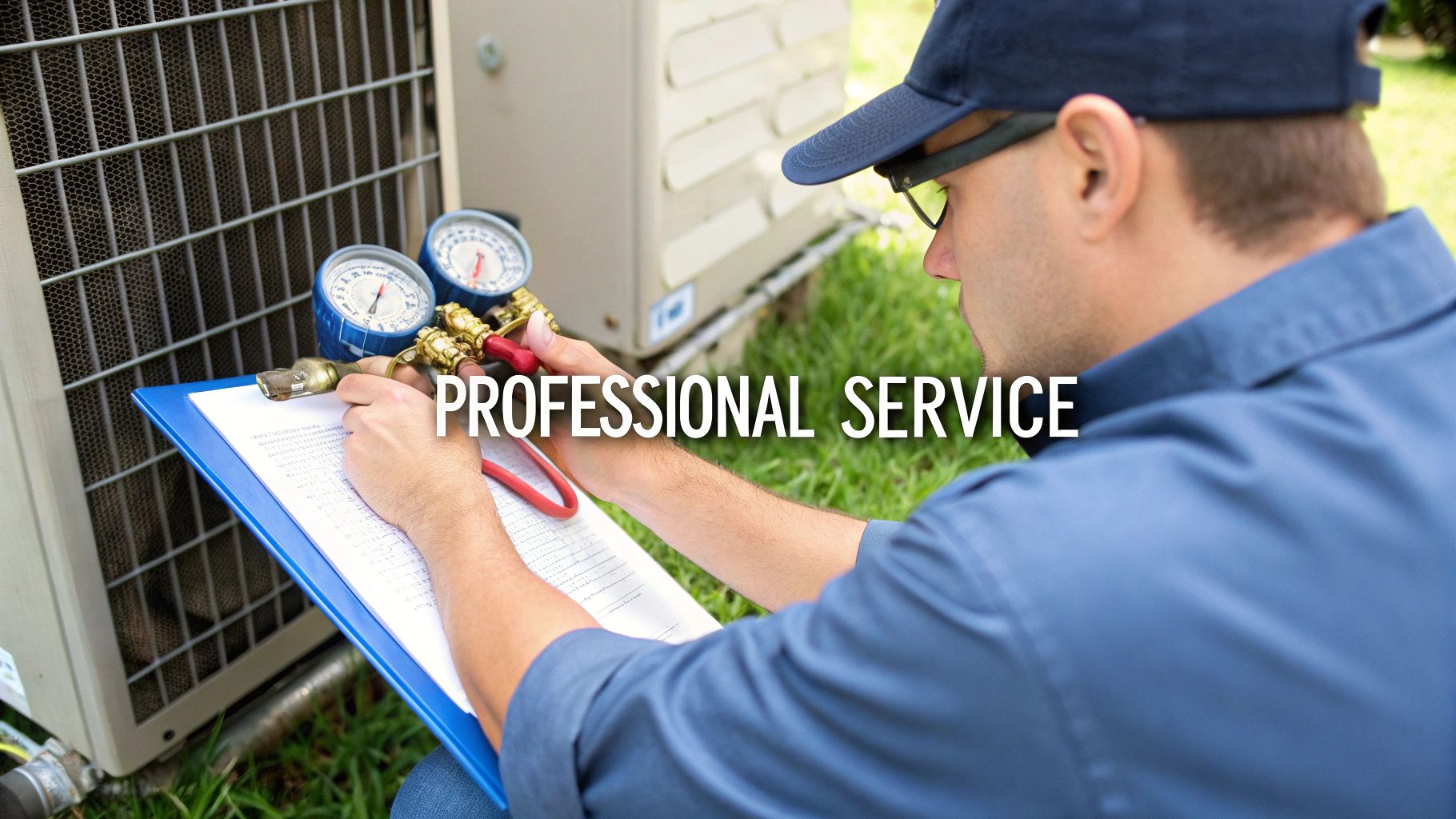
From the moment our technician arrives at your Central Coast or Sydney home, their focus is on a comprehensive inspection that covers safety, efficiency, and performance. This isn't just a quick clean; it’s a deep dive into the health of your entire system.
The Indoor Unit Inspection
The service always starts inside with the head unit. Our technician will carefully remove the covers and filters for a deep clean, going far beyond what you can do with a simple rinse under the tap.
They use specialised, industry-grade cleaning solutions to get rid of stubborn grime, mould, and bacteria from the evaporator coils and the barrel fan. This is the stuff that gets missed in a DIY clean and directly impacts your air quality.
This step is critical for two reasons. First, it ensures the air you and your family breathe is genuinely clean and healthy. Second, it allows for maximum airflow and efficient heat exchange, which translates directly to better performance and lower running costs. While they’re inside, they'll also test the thermostat to make sure it’s reading the room temperature accurately and communicating properly with the system.
The Outdoor Unit Deep Clean and Check
Next, the focus shifts to the outdoor condenser unit. This is where your system does the heavy lifting of expelling heat from your home, and it needs to be in top shape to handle a Sydney summer.
Our technician will:
- Thoroughly clean the condenser coils, removing any built-up dust, salt spray, or debris that could be restricting airflow. A clogged outdoor unit has to work much harder, driving up your power bill.
- Inspect the fan motor and blades for any signs of wear, damage, or imbalance that could point to a future failure.
- Check and tighten all electrical connections to prevent loose wires, which are a serious and surprisingly common fire hazard. This is a critical safety check that must comply with Australian Standards.
Critical System and Safety Tests
With the cleaning done, the technician moves on to the technical diagnostics. This is where their specialised equipment and training really come into play.
They’ll measure the refrigerant pressure to ensure it matches the manufacturer’s exact specifications. Incorrect refrigerant levels are a leading cause of poor performance and can lead to catastrophic compressor failure, the most expensive component in your whole system.
They will also flush the condensate drain line to clear any gunk or blockages, preventing those annoying (and damaging) water leaks inside your home. Finally, they run the system through both its cooling and reverse cycle heating modes, testing its overall performance and listening for any unusual noises that could indicate an underlying problem.
At the end of the visit, you’ll receive a full report on your system’s condition. This includes details of the work performed, any issues that were identified, and clear, practical recommendations for any necessary repairs, ensuring you have all the information you need.
Common Questions About Aircon Maintenance
Even with a clear plan, you’ve probably still got a few questions buzzing around. It’s completely normal. To help you feel confident, we’ve put together straightforward answers to the most common questions our technicians hear from homeowners across the Central Coast, Sydney, and Newcastle.
Our goal is to give you the clear, practical information you need to make smart decisions about looking after your system.
How Often Should I Service My Air Conditioner?
For most homes, we strongly recommend a professional service once per year. The sweet spot is usually autumn or spring. This gets your system ready for the extreme weather just around the corner, whether it's a scorching summer or a chilly winter.
That said, if your unit is getting on in years, runs almost non-stop, or is copping the salty air in coastal suburbs, a twice-yearly check-up is a very wise investment. On top of that, you should be giving the filters a clean yourself every one to three months.
Is Aircon Maintenance Really Worth the Money?
Absolutely. The best way to think about it isn't as a cost, but as an investment that pays you back in several ways. The fee for a professional check-up is a drop in the ocean compared to the savings you'll see on your power bills when a properly tuned unit runs more efficiently.
More importantly, it helps you sidestep the nasty shock of a huge repair bill. A major component like a compressor can set you back thousands, and regular servicing is the best way to catch problems early. It also extends the life of your entire unit, pushing back the need for a complete and costly replacement by several years.
Are DIY Cleaning Kits a Substitute for a Pro Service?
While those DIY cleaning sprays you see at the shops can be handy for a light, surface-level clean between professional visits, they are not a replacement for a full service. They simply can't get deep into the internal components or perform the safety checks that a licensed technician can.
A professional service goes way beyond just a spray and wipe. It involves critical safety inspections of electrical parts, testing refrigerant levels to make sure they’re correct, and diagnosing hidden mechanical issues that are invisible to the naked eye. Relying only on a DIY kit could mean you miss a dangerous electrical fault or a slow refrigerant leak that is quietly wrecking your system from the inside out.
What Should a Standard Maintenance Service Include?
A proper, comprehensive maintenance service should always cover several key areas. Your technician needs to thoroughly clean the indoor unit’s filters, coils, and fan, and then get outside to inspect and clean the outdoor unit to make sure it has proper airflow.
They must also check and flush the condensate drain to prevent blockages, test the system's refrigerant pressures, and inspect all electrical connections for safety and compliance. To finish, they'll run the system to test its overall heating and cooling performance. You should always get a detailed report on your system’s health and clear recommendations for any necessary repairs.
Ready to get your system running at its best? The team at ALC Air has over 15 years of experience keeping homes on the Central Coast, in Sydney, and Newcastle comfortable and energy-efficient. Get in touch for a free, no-obligation quote on our professional aircon maintenance plans.