


Thinking about a new split system air conditioner means looking at the whole picture, not just the price on the box. The final installation cost for a split system air conditioner is a mix of the unit you choose, the skilled labour to fit it, the necessary electrical work, and the unique quirks of your home. A simple setup for a small bedroom will sit at one end of the price scale, while a powerful unit for a big, open-plan living area will naturally cost more.
Your Guide to Split System Air Conditioner Installation Costs in NSW
When you're looking to cool your home, getting a realistic idea of the price from the get-go helps you set a sensible budget. The final number on your quote is shaped by a whole range of factors, from the size of the unit to the complexity of the job. Our goal here is to give you a clear, honest look at what you can expect for a standard installation in the areas we know best: the Central Coast, Sydney, Newcastle, and the Hunter Valley.
For most homeowners, cost is the bottom line. Let’s get straight to it.
For a small 2.5kW unit, perfect for a standard bedroom, you’re typically looking at a total installed price of $1,200 to $2,000. Stepping up to a mid-range 5.0kW system for a decent-sized living area, the total cost usually falls between $2,000 and $3,500. For those larger, open-plan spaces that need a beefy 7.0kW unit, prices can range from $3,000 up to $5,000, especially if the installation is a bit tricky.
It’s crucial to remember these figures include both the air conditioner itself and the professional installation, where the labour alone can account for $600 to $1,500 of the total bill.
Here’s a quick-glance table to make that even clearer.
Estimated Total Cost (Unit and Standard Installation) by System Size
| System Capacity (kW) | Ideal Room Size | Estimated Total Cost Range (AUD) |
|---|---|---|
| 2.5kW | Small bedroom or home office (up to 15 m²) | $1,200 – $2,000 |
| 3.5kW | Larger bedroom or small living area (15 m² – 25 m²) | $1,600 – $2,500 |
| 5.0kW | Medium living area or small open-plan space (25 m² – 35 m²) | $2,000 – $3,500 |
| 7.1kW | Large living area or open-plan space (35 m² – 60 m²) | $3,000 – $5,000 |
These ranges give you a solid starting point for budgeting, covering the most common scenarios we see in homes across NSW.
What Does a "Standard Installation" Actually Include?
You’ll hear installers talk about a "standard installation", which is the most common and cost-effective job. We often call it a 'back-to-back' installation. Think of it as the baseline for pricing.
Here’s what that typically looks like:
- The indoor head unit gets mounted on a wall that also faces the outside.
- The outdoor condenser unit is placed directly on the other side of that wall, usually on the ground on a concrete slab or plastic pads.
- The connection between the two, the refrigerant pipes and electrical wiring, is short, usually under three metres.
- There's already a suitable electrical circuit nearby to power the system.
This straightforward setup keeps the labour time and the amount of materials needed to a minimum.
Of course, not every home is that simple. Many properties, especially two-storey places in suburbs like Terrigal or older Sydney terraces, need a more customised approach. Any variation, like needing longer pipe runs, installing a pump to get rid of condensation, or having to upgrade your switchboard, moves it into non-standard territory and will adjust the final cost. We break all this down in much more detail in our comprehensive guide to Central Coast air conditioning installation costs, which will help you understand all the moving parts before you even get a quote.
Breaking Down Your Quote to See What You Are Paying For
When you get a quote for a new split system, it's easy to just skip to the bottom line. But understanding exactly what goes into that final number is the key to comparing quotes properly and knowing you're getting good value for your money. A decent quote will always break down the costs, giving you a clear picture of where your investment is going.
The total price isn't just for the air conditioner itself. It covers a whole range of essential parts and the skilled work needed for a safe, efficient, and long-lasting setup.
The Cost of the Unit Itself
The first and most obvious piece of the puzzle is the air conditioner, which includes both the indoor head unit you see on the wall and the outdoor condenser unit. The price tag on the unit is directly tied to its capacity (measured in kilowatts or kW), its energy efficiency rating, and the brand you choose.
A smaller 2.5kW unit perfect for a bedroom in a Newcastle apartment is naturally going to cost less than a powerful 7.1kW system designed to cool a big, open-plan living area in a family home on the Central Coast.
Choosing between different brands also plays a role. While all the reputable brands we work with are reliable, some offer premium features or longer warranties that are reflected in their cost. If you're weighing up your options, our guide to the best split system air conditioner brands has detailed comparisons to help you figure out what’s right for your home and budget.
This chart shows some typical price ranges you might expect for the unit and a standard installation combined.
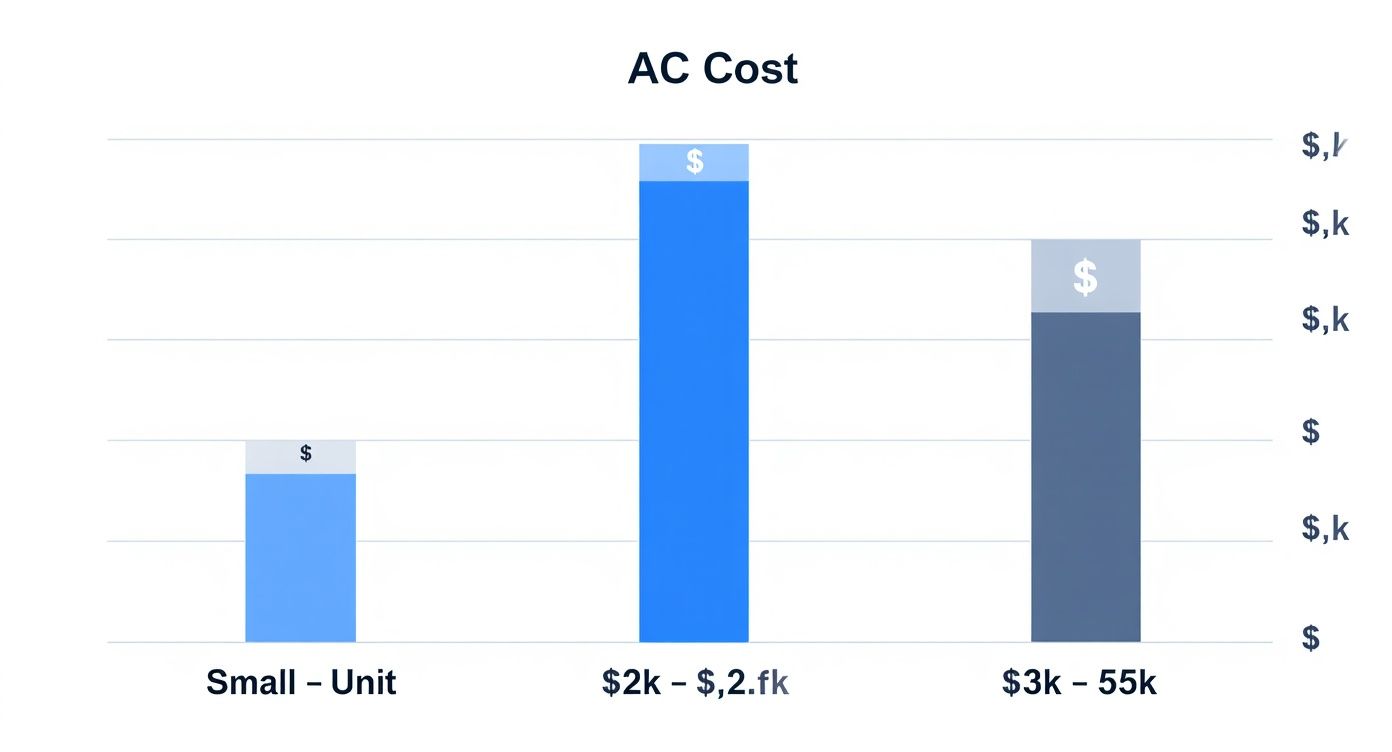
As you can see, the jump in cost isn't just about the bigger unit being more expensive; it also reflects the more involved installation work that often comes with it.
Professional Labour: The Technician's Expertise
A big chunk of your quote is for the skilled labour provided by a licensed and experienced technician. This is so much more than just screwing two boxes to your walls. The installation process is technical and has to be done perfectly to ensure safety and performance.
This labour cost covers the technician's qualifications, including their ARCtick certification for safely handling refrigerants and their electrical licence for all the wiring. It’s an investment in peace of mind, knowing your system is installed to meet strict Australian Standards.
The technician’s time includes carefully planning where to put both units for the best airflow, drilling the hole through your wall, mounting the units securely, and running all the pipework and cabling between them.
Essential Materials and Electrical Work
Beyond the unit and the labour, your quote also covers all the materials needed to connect everything up. This includes the copper piping that carries the refrigerant, the electrical cabling that powers the system, and the drain hose that gets rid of condensation. For a standard back-to-back installation, this is usually just a few metres, but longer runs will naturally add to the material costs.
Finally, there’s the critical electrical work. A split system is a powerful appliance that needs its own dedicated circuit running back to your switchboard. This work must be performed by a licensed electrician to comply with Australian Standards (AS/NZS 3000) and SafeWork NSW regulations.
This ensures the circuit can handle the load safely, preventing overloaded wiring and potential fire hazards. It’s a non-negotiable part of any professional installation and a crucial component of your total cost.
Key Factors That Influence Your Final Installation Cost
Ever wondered why one quote for a split system can be so different from another? It’s simple, really: no two homes are the same. A handful of key factors directly impact how complex the job is, which in turn shapes the final price you pay. Once you understand these variables, you’ll see exactly why your quote is built specifically for your home.
It all starts with the system’s power, or capacity, which we measure in kilowatts (kW). A small 2.5kW unit perfect for a bedroom is naturally going to cost less than a beefy 7.1kW system needed to cool a large, open-plan living area. But it’s not just about the price tag on the unit itself. A bigger system often demands more robust electrical wiring and a more involved installation process, which adds to the labour bill. Nailing the right size is critical for both your comfort and your energy bills, a topic we dive into in our guide to correctly sizing your air conditioner.
Back-to-Back vs. Complex Installations
The most straightforward and budget-friendly setup is what we in the industry call a 'back-to-back' installation. This is where the indoor unit is mounted on an external wall, and the outdoor condenser unit sits directly behind it on the ground outside. This setup keeps the copper piping and electrical cabling runs short (usually under three metres), which minimises both material costs and the time our techs spend on site.
However, a lot of homes just aren't built for that kind of simplicity. Installing a unit in a Sydney apartment, for example, often means the indoor unit has to go on an internal wall. That immediately complicates things. The pipework and drainage now need to be carefully routed through the ceiling or wall cavity, and we might need to install a condensate pump to get rid of the moisture. Every extra metre of piping and each additional hour of labour will be factored into your quote.
Your Home’s Construction and Layout
The way your home is built plays a huge part in the installation process. A standard brick veneer house is relatively easy for our team to work with. On the other hand, a double brick home in one of Newcastle’s historic suburbs requires more specialised drilling and a delicate touch, which takes longer and demands more from our technicians.
Your property’s layout is just as important. A single-storey home is generally a much simpler job than a two-storey house. If we're installing a system on the second floor, it might call for ladders or even specialised height access equipment to work safely, especially if the outdoor unit needs to be mounted on wall brackets. That extra equipment and the safety precautions that go with it will naturally add to the final cost.
Your Electrical Switchboard
A modern air conditioner is a power-hungry appliance. To run safely and comply with AS/NZS 3000 electrical standards, it needs its very own dedicated circuit. When we come out to assess your home, one of the first things we check is your switchboard.
An older switchboard with ceramic fuses might not have the capacity or the necessary safety switches to support a new air con unit. In these cases, a switchboard upgrade isn't just a suggestion: it's an essential cost to ensure your home's electrical system is safe and compliant.
This is a common scenario in older homes right across the Central Coast and Sydney's more established suburbs. A modern switchboard with circuit breakers is non-negotiable for a safe, professional installation.
Real-World Installation Scenarios and How They Affect Your Quote
Numbers on a quote are one thing, but it’s much easier to understand costs when you can see how they apply to real-life situations. An air conditioning installation isn't a one-size-fits-all job; every home presents its own unique set of challenges.
By walking through a few common scenarios, you can start to see which one looks most like your own property. This will give you a much better feel for where your project might land on the cost spectrum.
Scenario 1: The Gosford Apartment
First up, picture a modern, two-bedroom apartment in Gosford. The owner wants to cool just the master bedroom with a small, energy-efficient 2.5kW unit. Crucially, the bedroom has an external wall that opens onto a small balcony, the perfect spot for the outdoor unit.
This is what we in the trade call a classic 'back-to-back' installation. It’s the most straightforward and cost-effective job you can get.
- System Size: A 2.5kW unit is perfectly matched to the room size, keeping the purchase price down.
- Installation Simplicity: The pipe run between the indoor and outdoor units is short, less than three metres. There's no messing around with wall brackets, condensate pumps, or extra-long cabling.
- Electrical Work: The apartment building is new, so the switchboard is modern and has spare capacity for a new dedicated circuit. Simple.
This scenario sits right at the lower end of the installation cost range. It's a clean, simple job that requires the least amount of labour and materials and can often be wrapped up in just a few hours.
Scenario 2: The Terrigal Family Home
Now let’s move to a two-storey family home in Terrigal. The goal here is to cool a large, open-plan living and dining area on the ground floor. This big space needs a much more powerful 7.1kW reverse cycle system to properly handle the summer heat and provide warmth in winter.
The best spot for the indoor unit is on a central internal wall for even air distribution. The problem? The outdoor unit needs to be tucked away at the side of the house.
This immediately takes us away from a simple back-to-back setup. The longer the distance between the indoor and outdoor units, the more labour and materials are needed, a key driver of the final cost.
Here’s where the complexity comes in:
- Longer Pipe Run: The refrigerant pipes and electrical wiring now have to run from that internal wall, up into the ceiling cavity, across the room, and then down the external wall to the outdoor unit. This could easily be a run of eight to ten metres.
- Potential for a Condensate Pump: Because the indoor unit is on an internal wall, gravity-fed drainage probably isn't an option. A small condensate pump might be needed to actively push moisture outside, adding another component and cost to the job.
- Electrical Demands: A powerful 7.1kW system draws a lot more current. The existing switchboard will need a new, dedicated circuit. If the board is old and already full, it might even require an upgrade to handle the load safely.
This kind of job is naturally more expensive. The price reflects the extra time on the tools, the higher cost of materials like copper piping and capping, and the more involved electrical work. When you're looking at these bigger systems, it's also smart to think about the ongoing expenses. We've put together a handy guide that explains how much running your air conditioner costs, which is a crucial part of the total cost of ownership.
Scenario 3: The Pokolbin Rural Property
Finally, let's head out to a sprawling rural property in Pokolbin. The owner wants to install a system in a renovated barn that’s now a guesthouse. A major constraint is that the outdoor unit can't be mounted on the building's historic facade.
The only solution is to place the outdoor unit on a dedicated concrete slab about fifteen metres away from the guesthouse, keeping it out of sight and minimising any noise.
- Extensive Groundwork: This is where things get serious. We’d need to dig a trench to run the insulated refrigerant pipes and electrical conduit underground from the guesthouse all the way to the slab.
- Material Costs: A pipe run of over fifteen metres means a big jump in the cost of copper piping, electrical cable, and the protective conduit needed for an underground run.
- Specialised Labour: Trenching and laying underground services takes a lot of time and effort. It adds significantly to the labour component of the quote, and the system will also need extra refrigerant gas to compensate for that long pipe run.
This type of complex, non-standard installation sits at the highest end of the cost scale. It’s a perfect example of how site-specific requirements can dramatically influence the final price, turning what sounds like a standard job into a much more involved project.
How Different Scenarios Impact Key Installation Cost Factors
To see how these factors play out side-by-side, this table breaks down the key differences between our three scenarios. It clearly shows why a fixed price for "air con installation" just doesn't exist.
| Factor | Scenario 1: Basic Apartment | Scenario 2: Family Home | Scenario 3: Complex Rural Property |
|---|---|---|---|
| System Size & Cost | Small 2.5kW unit. Low initial cost. | Large 7.1kW unit. Higher cost for more power. | Medium capacity, but cost influenced by other factors. |
| Pipe Run Length | < 3 metres (Back-to-back). Minimal materials. | 8-10 metres. Requires more copper & capping. | 15+ metres (underground). Highest material cost. |
| Labour Hours | Low. A few hours for a straightforward job. | Medium. A full day's work due to complex pipe run. | High. Multiple days for trenching & installation. |
| Electrical Work | Simple. New circuit on a modern board. | Moderate. New circuit, potential switchboard check. | Complex. Long underground cable run required. |
| Additional Parts | None. Standard parts included. | Possible. Condensate pump may be needed. | Required. Concrete slab, underground conduit. |
| Overall Complexity | Very Low. Standard, textbook installation. | Medium. Common but requires more planning & labour. | Very High. A custom, labour-intensive project. |
As you can see, the jump from a simple apartment job to a complex rural installation involves significant increases in materials, labour, and specialised work. Each factor builds on the last, which is why a detailed on-site assessment is the only way to get a truly accurate quote for your specific property.
The Hidden Costs of a Cheap Install and Why Quality Saves You Money
Getting a surprisingly cheap quote for a split system installation can feel like you've scored a major win. But from years of experience in this industry, we can tell you that those "great deals" often end up costing you a whole lot more down the track. The initial savings from a rushed, corner-cutting job get wiped out fast by expensive repairs, shocking power bills, and even serious safety hazards.
Thinking about the installation cost for a split system air conditioner needs to go beyond the number on the quote. It's about the total cost of owning that system for the next 10 to 15 years. A cheap install almost always means a poorly performing unit that has to work overtime just to keep your room comfortable, and you'll see that reflected in a nasty spike on your next electricity bill.

Common Problems We See from Poor Installations
When an installation is rushed or done by someone who isn't properly qualified, a few classic problems always seem to pop up. These issues aren't just inconvenient; they can cause real damage to your home and your bank account.
One of the most common is a refrigerant leak. The copper pipes connecting the indoor and outdoor units have to be flared and tightened to perfection. If they're not, refrigerant gas will slowly leak out. Not only does this stop the unit from cooling properly, but it’s also terrible for the environment. Finding and fixing a leak is a specialised job that costs time and money.
Another huge headache is incorrect drainage. The indoor unit pulls a lot of moisture out of the air, and that condensation has to drain away safely. If the drain line is installed without the right slope or it gets blocked, water can back up and overflow inside your house. We've seen this lead to stained gyprock, ruined carpets, and even mould growth in the walls.
The Critical Role of Compliance and Licensing
There’s a good reason air conditioning installation is a highly regulated trade in Australia. Anyone who handles refrigerant gas must hold a proper ARCtick licence, and all the electrical work must be done by a licensed electrician who follows Australian Standards like AS/NZS 3000.
Choosing an unlicensed installer doesn't just put your home at risk: it instantly voids your manufacturer's warranty. If your brand-new unit has a fault, the manufacturer will wash their hands of it the moment they find out it wasn't installed by a certified professional.
With air conditioning now in about 80% of Australian homes, getting a compliant installation is more important than ever. Labour charges from a licensed technician, which typically range from $600 to $1,500, reflect the skill, compliance, and insurance that protect you and your home.
When you consider that heating and cooling can account for up to 50% of your household's energy use, getting it installed right is crucial for keeping those bills in check.
A quality installation means your system runs at peak efficiency, keeping you comfortable without chewing through electricity. It also protects your investment by keeping your warranty valid and extending the unit's lifespan. To get a better idea of what to expect from a properly maintained system, you can learn more about how long air conditioners last in our detailed article.
Ultimately, paying a little more upfront for a professional job saves you from far greater costs, and a lot of stress, in the long run.
How to Get an Accurate Quote for Your Air Conditioner Installation
Getting a reliable quote is easily the most important step in managing your installation cost for a split system air conditioner. A vague guess over the phone can be miles off the mark, leaving you with unexpected costs on installation day. A little preparation from your side makes a world of difference.
Before you even pick up the phone, a bit of homework helps a technician give you a much sharper initial estimate. It also shows you’re a serious buyer and speeds up the whole process, right from the first call through to getting your new system up and running.
Information to Have Ready
When you contact an installation company like us at ALC Air, having a few key details on hand is the best thing you can do. Try to pull together the following:
- Room Dimensions: Know the length, width, and ceiling height of the room you want to cool. This is the absolute starting point for choosing the right size unit.
- Window Details: Make a note of the window sizes and which direction they face. A west-facing window in a Sydney home cops a huge amount of afternoon sun, and that massively impacts the cooling load.
- Photos of Key Areas: Snap a few clear photos on your phone of the wall where you want the indoor unit, the spot outside for the condenser, and your electrical switchboard. This gives us a virtual tour of the job site.
This simple prep work lets us spot potential challenges, like an old, maxed-out switchboard or a tricky spot for the outdoor unit, right from the get-go.
The Value of an On-Site Assessment
While a phone estimate based on your info is a great start, nothing beats having an expert come out to your home. An on-site assessment is where we can confirm every detail, accurately measure the refrigerant pipe runs, and inspect your electrical system in person.
It’s genuinely the only way to provide a fixed, all-inclusive price with no nasty surprises down the track.
An on-site visit is what turns a rough estimate into a firm, reliable quote. It protects you from surprise costs and makes sure the system we recommend is a perfect match for your home’s unique layout and needs.
This visit is also your best chance to ask questions and get a feel for the team you’re thinking of hiring.
Key Questions to Ask Any Installer
When you’ve got a technician at your home, don’t be shy. The way they answer these questions will tell you everything you need to know about their professionalism and the quality of their work.
- Are you and your electricians fully licensed and insured? Ask to see their electrical licence and ARCtick certification. Any hesitation here is a major red flag.
- What warranties do you provide? You should get two separate warranties: one from the manufacturer for the unit itself, and another from the installer covering their workmanship.
- What brand and model are you quoting? Make sure it’s a reputable brand that suits what you need, not just what they want to sell.
- Is this quote all-inclusive? Get them to confirm in writing that the price includes the unit, all materials, labour, electrical work, and GST.
- What is not included in this quote? This is a brilliant question for sniffing out hidden extras like patching up walls, painting, or asbestos removal if it’s discovered.
Asking these questions confidently helps you choose an installer who offers transparent, comprehensive pricing. It’s all about giving you peace of mind.
Got Questions? We’ve Got Answers.
When you're thinking about a new split system, it’s natural to have a few questions about how it all works. We get asked these all the time, so let's run through the most common ones to give you a clearer picture of what to expect.
How Long Does a Standard Installation Take?
For a straightforward, back-to-back installation, our technicians are usually in and out in about three to five hours. That’s enough time to do the job properly, positioning both units with care, running the pipework neatly, getting the electrical connections spot on, and then testing the whole system to make sure it’s running perfectly before we leave.
Of course, not every job is straightforward. If we’re installing in a double brick home on the Central Coast or running longer pipes through a tricky ceiling cavity in a Sydney terrace, that will naturally add a bit more time to the process.
Can I Buy My Own Air Conditioner and Just Get You to Install It?
We know it can seem like a smart way to save a few dollars, but honestly, we usually advise against it. When you get a single company to supply and install your unit, you’ve got one point of contact for the whole job. From making sure the unit is the right size for the room to handling any warranty issues down the track, it’s all seamless.
The real headaches start when you supply the unit yourself. If it arrives damaged or turns out to be faulty, it can lead to frustrating delays and arguments over who is responsible. Worse still, if an installer fits a unit you’ve bought and it’s undersized for your room, you’re the one left with an air conditioner that struggles on hot days and costs a fortune to run. A full supply-and-install service just makes sure you get the right advice and the right system from day one.
Is It Cheaper to Install an Air Conditioner in Winter?
This is a great question, and it shows you’re planning ahead. While you might find it harder to book an installer during the mad rush in December, any reputable company will have consistent, fair pricing right through the year. The real win from scheduling your installation during the cooler months is much better availability.
Booking in autumn or winter means you can often get the job done within a week or two, completely avoiding that peak season backlog. You’ll be all set for the first heatwave, feeling smug while everyone else is scrambling to find a technician.
Ready to find out exactly what it would take to get your home cool and comfortable? The team at ALC Air provides clear, upfront quotes with no obligation, so you know exactly what your installation will involve.