


So, how often should you really get your air conditioner serviced?
If you ask ten different people, you'll probably get ten different answers. But when you ask the experts, the consensus is pretty clear: for most homes in Australia, the golden rule is to have your air conditioner professionally serviced at least once a year.
Think of this annual check-up as the absolute baseline. It's the essential preventative care that keeps your system running efficiently, catches small problems before they become big, expensive ones, and ultimately helps your unit last longer. We're here to explain exactly what that means for you.
The Golden Rule for Air Conditioner Servicing
While an annual service is the standard recommendation, it’s not a one-size-fits-all answer. The ideal frequency really depends on your specific situation. It’s less of a strict rule and more of a starting point for a smart maintenance plan.
For example, a reverse cycle system in a Hunter Valley home gets a serious workout, battling scorching summers and then flipping to handle chilly winters. That unit is going to need more attention than a simple cooling-only system in a mild coastal apartment that only gets used on the hottest days.
Likewise, the humid, salt-laden air we get on the Central Coast is notoriously tough on outdoor units, accelerating corrosion and justifying more frequent check-ups to keep things in good shape.
The infographic below breaks down how your system type, how much you use it, and our local climate all play a part in figuring out the perfect service schedule for your home.
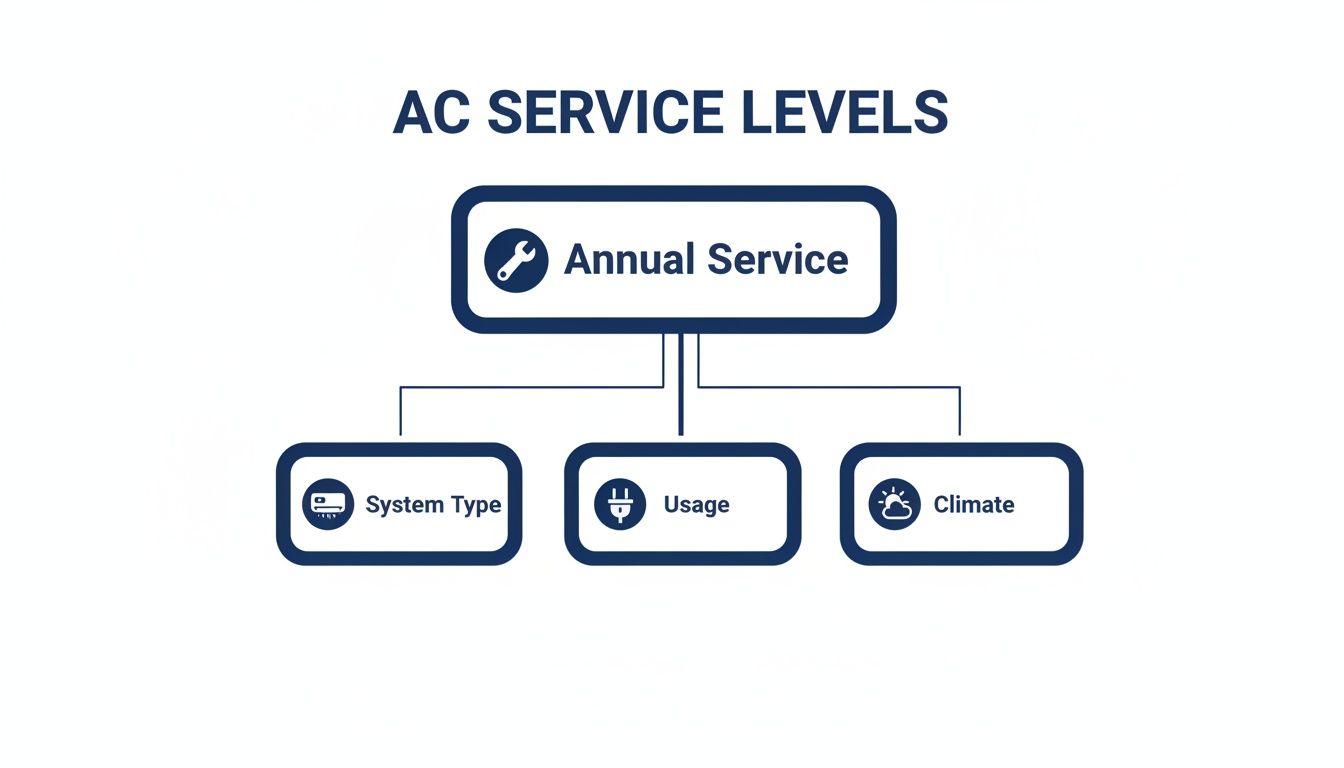
As you can see, while that yearly service is the foundation, your specific circumstances are what really determine if more frequent care is needed to keep you comfortable.
Key Factors Influencing Service Frequency
Industry-wide, the advice is consistent: get your air conditioner looked at by a professional at least once every 12 months. This one-year interval is the accepted standard for everything from the common split systems to the larger ducted air conditioners found right across Australian homes.
At its core, this yearly visit from a licensed technician is all about prevention. It’s their chance to spot and fix the small issues, a slight refrigerant leak, a struggling fan motor, or a clogged drain line, before they turn into a catastrophic failure on a 35-degree day.
This regular service ensures your system is safe, running efficiently, and ready for the season ahead. To get a better idea of what's involved in a typical tune-up, have a look at our detailed guide on essential air conditioning maintenance. By understanding these variables, you can create a schedule that works for your system and keeps your home comfortable all year round.
Why Regular Servicing Is a Smart Investment

Think of your air conditioner like your car. You wouldn't skip its regular oil change and expect it to perform reliably on a long road trip, would you? The same logic applies to your home's cooling and heating system.
Regular servicing isn't just a "nice to have", it's a non-negotiable investment in your comfort, safety, and finances. It's about much more than just avoiding a breakdown. A professional service is a comprehensive health check that addresses efficiency, longevity, and safety all at once, saving you serious money and stress in the long run.
Maintain Peak Energy Efficiency
One of the most immediate benefits you'll see from an annual service is on your power bill. Over time, components like filters and coils get clogged with dust, pet hair, and grime, forcing the system to work much harder to cool your home.
This extra strain means it’s burning through more electricity to achieve the same result. A clean, well-maintained unit runs just as the manufacturer intended, ensuring you’re not paying for wasted energy, especially during a scorching summer on the Central Coast or in Sydney's western suburbs.
Extend Your System's Lifespan
An air conditioner is a significant investment, and you want it to last as long as possible. Here in Australia, a well-looked-after unit can typically last between 15 to 20 years, but expert analysis confirms regular maintenance is crucial to achieving that lifespan.
Neglecting your system can lead to premature failure of key components like the compressor, potentially halving its operational life. You can explore more insights on AC unit longevity to understand the economic benefits.
A scheduled service allows a technician to lubricate moving parts, tighten electrical connections, and sort out minor issues before they snowball into major wear and tear. This proactive care protects your investment and postpones the costly expense of a full system replacement.
Prevent Costly Breakdowns
There is nothing worse than your air conditioner giving up the ghost during a summer heatwave. These emergency breakdowns aren't just stressful; they often come with higher call-out fees and a longer wait for repairs during the busiest season.
An annual service is your best defence against unexpected failures. A licensed technician can spot a worn fan belt or a struggling capacitor long before it fails completely, allowing for a planned, affordable repair instead of a costly emergency.
Uphold Your Warranty and Safety
Most manufacturer warranties actually require proof of regular professional servicing to remain valid. Skipping your annual check-up could leave you fully on the hook for repair costs that would otherwise have been covered.
More importantly, a professional service is a critical safety check. A licensed technician will inspect all electrical components to ensure they are safe and compliant with Australian Standards like AS/NZS 3000. This isn't just a formality; it's a vital measure to protect your home and family from potential electrical hazards.
How Often to Service Different Air Conditioner Types
Not all air conditioners are built the same, and their service needs are just as unique. The right answer to "how often should I get my air con serviced?" really changes depending on whether you've got a simple split system for one room or a complex ducted network cooling your entire home.
Getting your head around these differences is the key to keeping your system running well. A simple setup needs a different approach than a large, integrated one, especially when you're dealing with the varied climates across NSW, from the salty coastal air in Newcastle to Sydney's intense urban heat.
Split System Air Conditioners
For that standard split system you see in most living rooms or bedrooms, an annual professional check is the absolute baseline. This is where a technician makes sure the outdoor condenser and the indoor head unit are talking to each other properly, checks the refrigerant levels are spot on, and confirms all the electrical connections are safe.
But your job is a bit more frequent. The filters inside the indoor unit are your first line of defence against dust and allergens. We strongly recommend you clean these filters every 1 to 3 months. If you have pets or live near a busy road, you might even want to do it monthly. It’s a simple five-minute job that makes a massive difference to airflow and efficiency between professional visits.
Ducted Air Conditioning Systems
Ducted air conditioning is a more complex beast, and its service schedule reflects that. Because it’s a whole-home solution, an annual service is absolutely critical. A technician’s job here goes way beyond just checking the big outdoor unit.
They need to inspect the whole network of ducts hidden in your ceiling for any leaks or damage, test that all the zone motors are opening and closing as they should, and make sure every vent is clear and pushing out air evenly. These systems are a significant investment, and skipping a yearly service is a surefire way to risk poor performance and some seriously expensive repairs down the track. You can explore a detailed comparison in our article about ducted air conditioning vs split systems.
Reverse Cycle and Multi-Head Systems
Reverse cycle units are the true workhorses of Australian homes, giving you cooling in summer and heating in winter. This dual-purpose role means they run for many more months of the year compared to cooling-only units. As you'd expect, they often need more diligent upkeep.
For a hard-working reverse cycle unit, especially in regions with distinct seasons like the Hunter Valley, a bi-annual check-up is a smart move. Getting it serviced once before summer and once before winter ensures it's ready for the demands of each season.
Similarly, multi-head systems, which connect several indoor units to one outdoor condenser, simply have more parts to check. An annual service is vital to make sure each indoor head is working correctly and that the entire system is balanced and running efficiently.
DIY Maintenance to Keep Your System Healthy
While professional servicing is non-negotiable for the technical stuff, there are a few simple jobs you can (and should) do yourself between visits. Think of it as the regular upkeep that keeps your system running smoothly and efficiently, ultimately saving you a fair bit on your power bills.
The single most important task for any homeowner is keeping the filters clean on your indoor unit. It's a quick job that stops dust and gunk from clogging up the works, which would otherwise force your air con to work much harder just to keep you cool.
Cleaning Your Filters and Outdoor Unit
Here in Australia, our climate really dictates the maintenance schedule. As a rule of thumb, it's best to clean your system's filters every 1 to 2 months. If you skip it, you're just restricting airflow and putting unnecessary strain on the whole system.
The coils, the fins that actually do the heat exchange, also need a clean every 4 to 6 months. When they get caked in dirt, your AC's cooling power drops off a cliff, and your energy use will spike.
Another crucial job is playing groundskeeper for your outdoor unit. If you're in a leafy part of Lake Macquarie or have a garden in the Hunter Valley, you'll need to keep fallen leaves, grass clippings, and other debris clear. That condenser unit needs to breathe, so make sure there’s at least 30cm of clear space all the way around it.
Know Your Limits: What Not to Do
It's vital to understand where DIY stops and professional work begins. Cleaning filters and clearing away debris from your outdoor unit are safe, simple, and something every homeowner should do. For a full walkthrough, take a look at our split system air conditioner maintenance DIY guide.
However, any task involving refrigerants or electrical components is strictly for professionals. That’s not a friendly suggestion; it’s the law. SafeWork NSW has crystal-clear guidelines, and only a licensed technician with an ARCtick certification can legally handle refrigerant gas or touch the electricals. Trying it yourself is incredibly dangerous, will instantly void your warranty, and is illegal. When in doubt, always put safety first and call a pro.
How Local Climate Impacts Your Service Needs
Generic advice on how often you should service your air conditioner often misses the one thing that matters most: our unique local climate. The environment your system battles every day has a massive impact on its health and performance. A one-size-fits-all schedule just doesn’t cut it for homes across the Central Coast, Hunter, and our major cities.
Understanding how your specific location affects your air conditioner helps you move beyond a simple calendar reminder. It gives you the "why" behind the service schedule, so you can make smarter decisions to keep your system running smoothly.
Coastal Living on the Central Coast
For homes dotted along the Central Coast, from Terrigal to Toukley, those beautiful ocean views come with a hidden challenge: humid, salty air. This coastal air is highly corrosive and can cause the delicate fins on your outdoor unit's condenser coil to deteriorate much faster than they would just a few kilometres inland.
This corrosion acts like a blanket, trapping heat and forcing your system to work harder just to keep you cool. As a result, units in suburbs like Avoca Beach or Wamberal often need more frequent cleaning and inspection of their outdoor coils. It's the only way to prevent long-term damage and keep efficiency high. We created a detailed guide on this very topic, which you can find here: choosing air conditioning for Central Coast homes.
Temperature Extremes in the Hunter Valley
Head inland to the Hunter Valley, and the climate challenge changes completely. Here, reverse cycle units are true workhorses, battling scorching summer heatwaves and then switching to combat frosty winter mornings. This constant, heavy usage puts immense stress on every single component, especially the compressor.
Because these systems rarely get a break, an annual service is the absolute bare minimum. Many homeowners in areas like Cessnock or Singleton actually opt for twice-yearly check-ups, once before summer hits and again before winter, to make sure their unit is ready for the intense workload of each season.
Urban Air Quality in Sydney and Newcastle
In bustling urban centres like Sydney and Newcastle, the enemy is often airborne pollution. Dust, traffic emissions, and industrial particles are constantly being sucked into your air conditioning system.
This grit and grime can clog your filters and coils with surprising speed, restricting airflow and killing your unit's performance. For apartments in the Sydney CBD or homes near industrial areas in Newcastle, you’ll probably find your filters need cleaning more often. A professional annual service becomes vital to clean the deeper components you simply can't reach yourself.
Warning Signs Your AC Is Calling for Help
Even with the best annual service plan, your air conditioner can sometimes run into trouble. Long before it gives up completely, usually on the hottest day of the year, your system will often give you clear warning signs that it’s struggling.
Think of these signs as your AC’s way of asking for a check-up. Spotting them early is the key to avoiding a much bigger, more expensive problem down the track. If you notice any of the following, it’s time to call in a professional, regardless of when your last service was.
Weak or Warm Airflow
This is one of the most obvious signs something is wrong. The air trickling out of your vents just isn't as cold or as strong as it used to be, and you find yourself constantly nudging the thermostat down a few more degrees just to feel comfortable.
This almost always points to an airflow problem. It could be something as simple as a filter that's completely choked with dust, but it can also signal a more serious issue. A dirty evaporator coil, for example, can't absorb heat from the air effectively, meaning the air that passes over it doesn't get properly chilled. In a worst-case scenario, it might be a refrigerant leak, which needs a licensed technician to fix immediately.
Strange Noises or Unpleasant Odours
Your air conditioner should operate with a consistent, gentle hum. When new and unusual sounds start popping up, it’s a major red flag that something is mechanically wrong.
A grinding or squealing noise often points to a problem with the motor's bearings or a worn-out fan belt. If you ignore it, you risk the entire motor seizing up. A rattling or banging sound could be a loose panel or a stray twig, but it could also be a loose internal part which needs to be fixed before it causes more damage.
By the same token, any strange smells are a cause for concern. A musty, mouldy odour usually means moisture is building up where it shouldn't, creating the perfect breeding ground for mould and mildew inside your unit or ductwork. A burning smell is far more urgent; it points to an electrical fault and is a serious fire risk. You can learn more in our guide to common air conditioner repairs.
Sudden Spikes in Your Energy Bills
Your quarterly power bill is actually a great health report for your air conditioner. If you see a sudden, unexplained jump in your electricity usage during summer, when your cooling habits haven't really changed, your AC is almost certainly the culprit.
That spike means the system is working much harder and running for longer to achieve the same cooling result. It's burning through excess energy because of an underlying issue, whether it's a dirty coil, a failing component, or low refrigerant. Getting it sorted out won't just make you more comfortable; it will bring your energy costs back under control.
Your Air Conditioner Servicing Questions Answered

Even after covering the basics, you probably still have a few specific questions floating around. That’s completely normal. To help clear things up, here are answers to some of the most common queries we get from homeowners across the Central Coast, Sydney, and Newcastle.
What Does a Standard Air Conditioner Service Actually Include?
Think of a professional service as a comprehensive health check for your system. It’s not just a quick filter clean. A qualified tech will get into the nitty-gritty, methodically testing and inspecting every part of your unit to make sure it's running safely and efficiently.
This includes a deep clean of filters, indoor coils, and the outdoor unit. They'll also check refrigerant levels (a low level is a sign of a leak), test all the electrical connections for safety, and clear out any gunk from the drain lines to prevent blockages that can cause water damage. It’s a complete top-to-bottom inspection to catch small issues before they become expensive problems.
Is It Worth Servicing an Old Air Conditioner?
In most situations, absolutely. A proper service can breathe new life into an older unit, significantly boosting its performance and extending its lifespan. It keeps the system running as efficiently as it possibly can for its age, which translates directly to savings on your power bills.
But there's a point where it becomes a false economy. If your air conditioner is over 15 years old and starts needing major, costly repairs (like a compressor or fan motor replacement), it’s often smarter to put that money towards a modern, energy-efficient model. A good technician will give you an honest assessment to help you make the right call, not just push for a repair that isn’t in your best interest.
Can I Service My Air Conditioner Myself to Save Money?
While you can, and definitely should, do basic maintenance like cleaning the filters every month or two, a full service is strictly a job for a licensed professional. There are a couple of very important reasons for this.
In Australia, the law is crystal clear: anyone handling refrigerants must hold a valid ARCtick licence. On top of that, any work involving the system's wiring requires a licensed electrician. Trying to do it yourself is not only illegal and dangerous, but it will also instantly void your manufacturer's warranty. It’s a risk that is never, ever worth taking.
At ALC Air, our goal is to give you clear, expert advice so you can get the most out of your air conditioning system. If you need a reliable, professional service on the Central Coast, in Sydney, or up in Newcastle, get in touch with our friendly team. We’re always happy to provide a free, no-obligation quote.