


Trying to figure out "how much is ducted air con" can feel like a big, complicated question, but we can give you a clear place to start. A fully installed ducted air conditioning system in Australia will typically set you back anywhere from $5,000 for a small, simple home up to $25,000 or more for a large, complex installation.
That final price tag is always a mix of two things: the cost of the unit itself and the significant amount of skilled labour required to get it all working perfectly. Let's break down what goes into that final figure so you can feel confident in your decision.
Your Quick Guide to Ducted Air Conditioning Costs
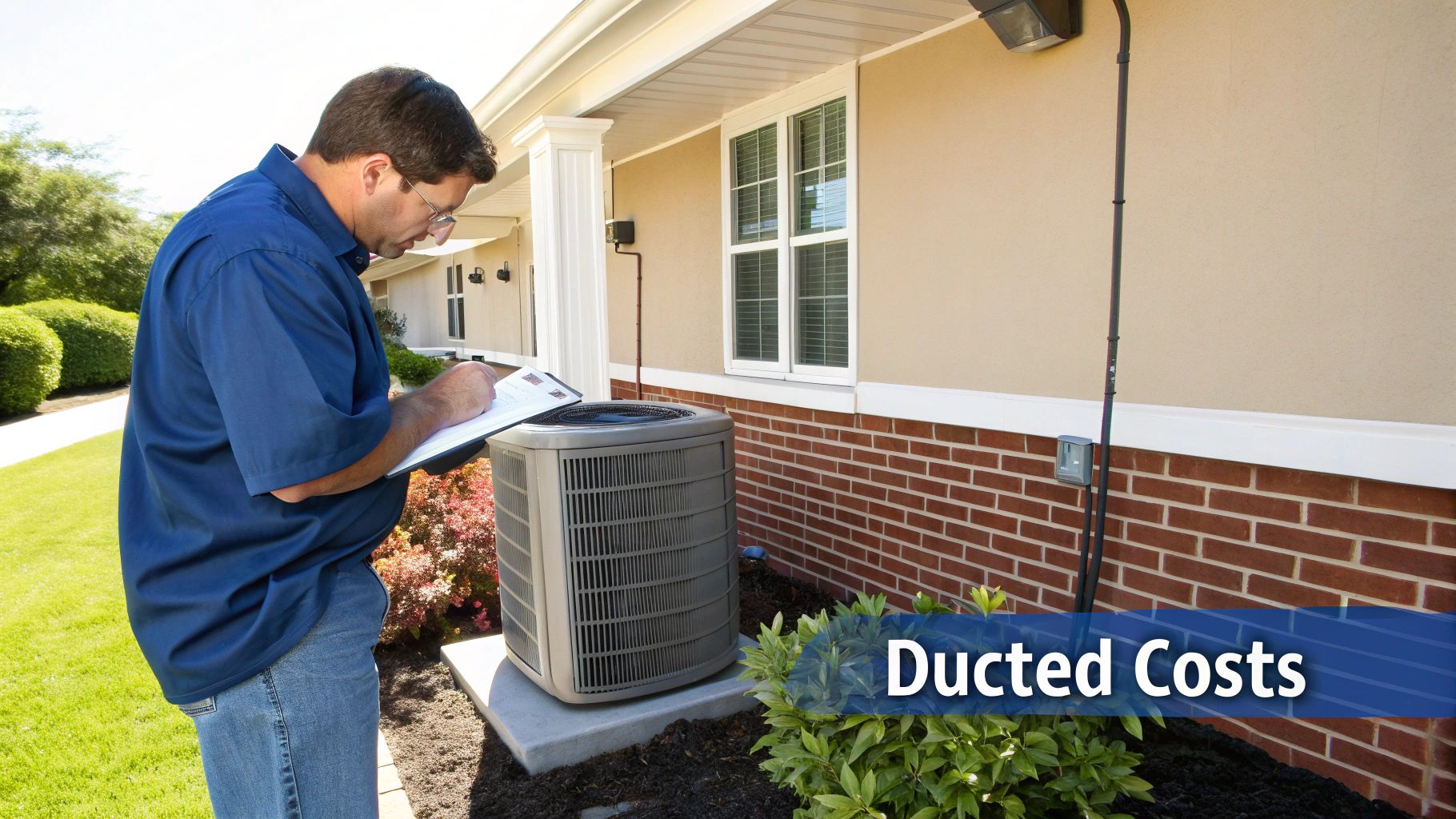
When you choose a ducted system, you're not just buying another appliance off the shelf; you’re investing in genuine, whole-home comfort. Unlike a split system that just tackles one room, a ducted setup gives you consistent temperature control everywhere, from a family home in Terrigal to a new build in Newcastle.
If you're still getting your head around the basics, our guide on what ducted air conditioning is is a great place to start.
The total cost breaks down into the equipment (the indoor and outdoor units, controller, and all the ducting) and the installation itself. The installation is often the biggest part of the bill, as it takes licensed, experienced technicians to properly design and fit the entire network of ducts throughout your roof space.
Estimated Ducted Air Con Installation Costs By Home Size
To give you a clearer idea of what to expect, here’s a quick look at how installation costs scale with the size of your home. These figures are a helpful starting point, but remember every home is different.
| Home Size (Bedrooms) | Typical Price Range (Fully Installed) |
|---|---|
| Small Home (2-3) | $8,000 – $12,000 |
| Medium Home (3-5) | $12,000 – $18,000 |
| Large Home (4-5+) | $15,000 – $25,000+ |
These figures give you a solid ballpark for budgeting. For example, a larger home in Sydney might sit at the higher end of the scale compared to a similar-sized property on the Central Coast, simply due to different market dynamics and installation challenges.
A common mistake is to focus only on the price of the unit. A high-quality installation by a licensed professional is just as important. It ensures your system runs efficiently for years to come and prevents costly repairs down the track.
Think of these numbers as a guide to help you set a realistic budget. The final, accurate quote will always depend on the specific features of your home, but this overview should give you a much better sense of the investment involved.
Decoding the Key Factors That Influence Your Final Quote
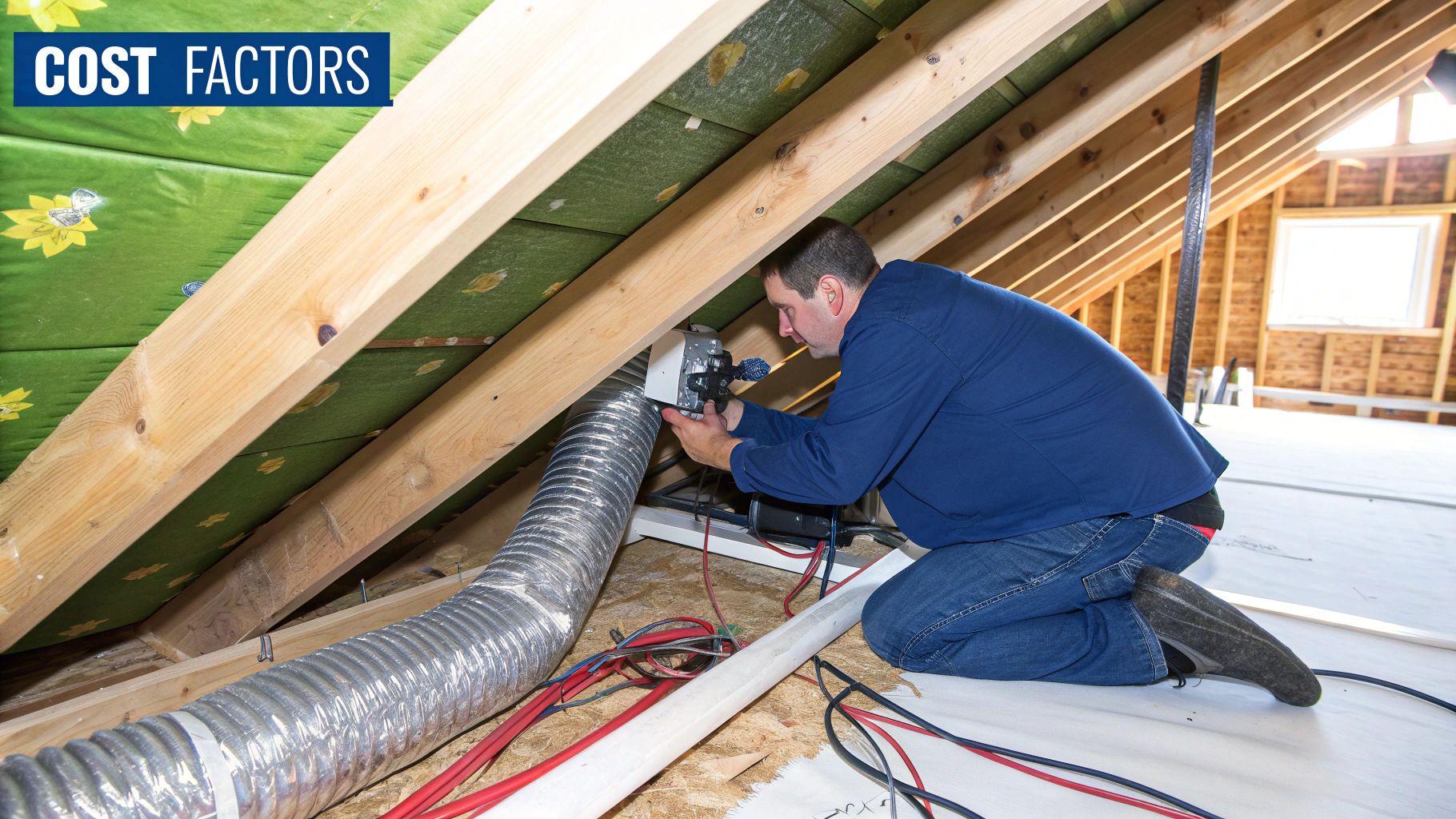
That initial price range gives you a good starting point, but the final figure on your quote is shaped by a handful of critical variables. Understanding what these are helps explain why one quote can be thousands of dollars different from another and puts you in a much better position to make an informed choice. The question "how much is ducted air con?" is really a question about your specific home and your family's needs.
So, let's pull back the curtain and break down exactly what goes into calculating the real cost of a ducted system.
Unit Size and Capacity
The first major dial that gets turned is the system's capacity, measured in kilowatts (kW). This isn't about the physical size of the unit, but its raw power to cool or heat a certain volume of air. Get this wrong, and you're in for a rough ride. An undersized unit will struggle constantly, driving up your power bills without ever making you comfortable. Go too big, and the system will switch on and off too frequently, leading to poor humidity control and premature wear and tear.
Getting this right is absolutely crucial. A large, two-storey home in Sydney's hot western suburbs with lots of west-facing windows will need a much beefier system, maybe 14-16kW or more. Compare that to a smaller, well-insulated villa cooled by Newcastle's sea breezes, which might only need a 10kW unit. We don't guess. We perform a detailed load calculation to ensure your system is perfectly sized for your home's unique layout, orientation, and insulation.
Choice of Brand
Just like with cars or kitchen appliances, the brand you choose has a big say in the upfront cost. At ALC Air, we specialise in trusted names like Daikin, Mitsubishi Electric, and Panasonic. Why? Because they offer proven reliability, excellent performance, and proper warranty support right here in Australia.
While a premium brand might cost more initially, they almost always deliver better long-term value through superior energy efficiency and durability. Cheaper, lesser-known brands might save you a bit of cash on day one, but they can come back to bite you with higher running costs and more frequent repair bills down the track. We can walk you through the pros and cons of each to find the sweet spot for your budget and expectations.
The Complexity of Your Installation
This is often the biggest wildcard in the final cost. Every single home is different, and the amount of labour required can vary dramatically. A straightforward installation in a new, single-storey home in Lake Macquarie with fantastic roof space access is a relatively simple job for our team.
In contrast, retrofitting a system into an existing two-storey heritage property on the Central Coast presents a much bigger challenge. This sort of job requires meticulous planning to navigate structural beams, tight ceiling spaces, and delicate interior finishes, all of which adds to the labour cost.
Other common things that ramp up the installation complexity include:
- Roof Space: Tight or hard-to-access roof cavities make running the ductwork much harder and more time-consuming. It’s the difference between a comfortable walk and an army crawl for our installers.
- Building Structure: Homes with flat roofs, cathedral ceilings, or concrete slabs require creative, and often more labour-intensive, solutions to get the ducting where it needs to go.
- Electrical Work: Your switchboard might need an upgrade or a new dedicated circuit to handle the load of the air conditioner. All electrical work must be performed by a licensed electrician to comply with AS/NZS 3000 standards. This isn't just red tape; it's about keeping your family safe.
Getting Smart with Zoning and Controls
A modern ducted system is so much more than just a big air conditioner; it’s a complete climate control network for your home. Two of the biggest features that influence both the upfront cost and your long-term power bills are zoning and smart controls. Getting your head around these is key to answering "how much is ducted air con," because they’re what turn a basic setup into a seriously efficient and personalised system.
Imagine a standard, un-zoned ducted system is like a single light switch that turns on every single light in your house at once. It’s all or nothing. Zoning is like giving each room its own light switch, giving you pinpoint control over where you use your power.
What is Zoning and Why Does it Matter?
Zoning is simply the practice of dividing your home into different areas, or 'zones', that you can cool or heat independently. We do this by installing electronically controlled dampers inside the ductwork. These act like little gates, opening or closing to direct conditioned air only to the zones you’ve selected. You might have one zone for the bedrooms, another for the main living area, and a third for a home office.
This level of control is pretty much a must-have for most families. Consider this scenario: it's a hot summer night on the Central Coast. With zoning, you can switch off the air conditioning to the empty living and kitchen areas and funnel all that cool air just to the bedrooms. Not only does this keep everyone comfortable while they sleep, but it also slashes your energy use because the system isn't wasting power on rooms no one is in.
For a family in the Hunter Valley, where you get those scorching days and properly chilly winter nights, zoning is absolutely vital. It lets you heat just the living areas during a cold evening, then switch to cooling only the bedrooms overnight, perfectly adapting to the region's big temperature swings.
Without zoning, you're paying to cool or heat your entire home every single time you turn the system on. This is one of the biggest reasons owners of older, basic ducted systems get hit with such high power bills.
Smart Controls for Modern Life
The next step up from basic zoning is adding smart controllers and app-based access. A standard system might come with a single, functional thermostat on the wall. An advanced setup, however, gives you a central smart hub, often with a colour touchscreen, and Wi-Fi connectivity that lets you manage everything from your phone.
This means you can turn on the air con for your home in Sydney's western suburbs while you're on the train home from work, making sure it’s perfectly cool the second you walk through the door. You can also set custom schedules, fine-tune the temperature in different zones, and keep an eye on your energy usage, all from the palm of your hand. It's this level of convenience that adds a bit to the initial investment but pays you back every day in comfort and lower running costs.
Ductwork and Insulation: The Bits You Can’t Afford to Skimp On
Finally, we have to talk about the hidden network that makes it all work: the ductwork. The quality of the ducting and its insulation has a massive impact on how well your system performs and how much it costs to run. Skimping here is a classic mistake that will cost you dearly in the long run.
Poorly installed or cheap, uninsulated ductwork can leak a huge amount of conditioned air straight into your roof space. It's like trying to fill a bucket that has a hole in it; your air conditioner has to work much harder, and for much longer, just to hit your target temperature. All that wasted energy goes straight onto your power bills.
We make sure that every centimetre of ductwork we install is high-quality, properly insulated, and sealed tight at every join. This is a non-negotiable part of a quality installation. It’s the only way to guarantee that the cooled or heated air your system is working hard to produce actually makes it into your rooms, giving you the comfort you paid for without wasting a drop of energy.
Comparing Ducted Air Con Against Other Cooling Systems
So, when you’re weighing up the big question – "how much is ducted air con?" – it’s super helpful to see how it stacks up against the other options out there. Is a fully ducted system the right call for your home and your budget, or would something else make more sense?
Let's put the cost into perspective by comparing it with single and multi-head split systems. A ducted system is the top-tier solution for integrated climate control, giving you seamless, whole-home comfort from one quiet, hidden unit. The upfront investment is definitely higher than for split systems, but the real value is in its total coverage and much cleaner look.
Ducted vs Single Split Systems
A single reverse cycle split system is designed for one job: to cool or heat a specific room or an open-plan area. It’s made up of an indoor head unit mounted on the wall and a matching outdoor compressor. For a granny flat in Gosford or a single living room that cops the brutal afternoon sun, a split system is a brilliant and cost-effective choice.
But what if you want to cool the whole house? Let's imagine a typical four-bedroom home in Maitland. To get the same kind of coverage as a ducted system, you'd need to install at least four or five individual split systems, one for each bedroom and one for the main living space. That also means four or five separate outdoor units bolted to the outside of your house, which can look pretty cluttered.
Ducted vs Multi-Head Split Systems
A multi-head split system is a bit of a middle ground. It uses a single, more powerful outdoor unit that connects to several indoor head units, usually up to five or six. This cuts down on the external clutter compared to using multiple single splits, but you still have the visual impact of the indoor units on your walls in every room.
For some homes, especially those where running ductwork is tricky or impossible, a multi-head can be a decent compromise. You get individual room control, but the combined cost of the bigger outdoor unit and all the indoor heads often starts creeping up to the price of a basic ducted system anyway.
This is where the value of zoning in ducted systems really comes into its own.
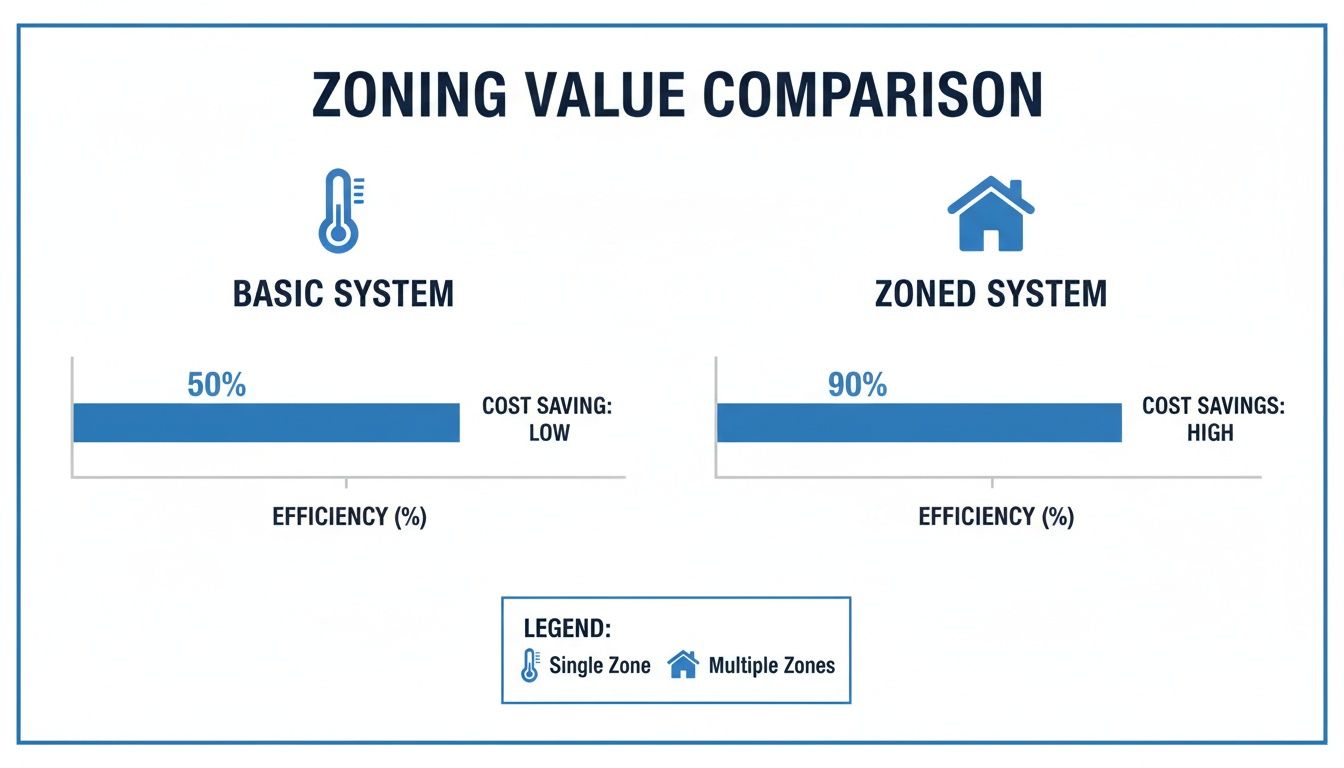
As you can see, a zoned ducted system gives you targeted comfort, which translates directly into better energy efficiency and lower running costs compared to an all-or-nothing approach.
To get a really deep dive into which setup is best for your place, check out our detailed guide comparing split system vs ducted air conditioning, which breaks down the pros and cons even further.
Cooling System Cost & Feature Comparison (Typical 4-Bedroom Home)
To make it even clearer, here’s a side-by-side look at how the three main options compare for a standard four-bedroom family home.
| Feature | Ducted System | Multi-Head Split System | Multiple Single Split Systems |
|---|---|---|---|
| Upfront Cost | $15,000 – $22,000+ | $10,000 – $16,000+ | $8,000 – $14,000+ |
| Running Efficiency | High (with zoning) | High (per unit) | High (per unit) |
| Aesthetics | Excellent (discreet vents) | Fair (visible indoor units) | Poor (visible indoor & multiple outdoor units) |
| Whole-Home Coverage | Yes, seamless & even | Yes, but with separate units | Yes, but with separate units |
| Noise Level | Very Quiet | Quiet | Quiet |
| Best For | New builds, larger homes, aesthetics are a priority | Homes where ducting is not possible | Cooling 1-3 specific rooms, budget-conscious |
This table highlights the trade-offs. While multiple single splits might have the lowest entry price, you compromise on aesthetics and external space. Ducted offers the premium, integrated solution, with multi-head systems sitting somewhere in between.
When Does Ducted Make the Most Sense?
While installing four individual split systems might look cheaper on paper, a ducted system offers benefits that go way beyond the initial price tag. You get a far more streamlined look with only discreet vents in the ceiling, quieter overall operation, and the ability to get consistent, even temperatures flowing through your entire home.
A ducted system is the premium solution for comprehensive comfort in a new build or larger family home. It adds significant value to the property and delivers an unmatched level of integrated climate control that other systems simply cannot replicate.
Why a Quality Installation Is Your Best Investment
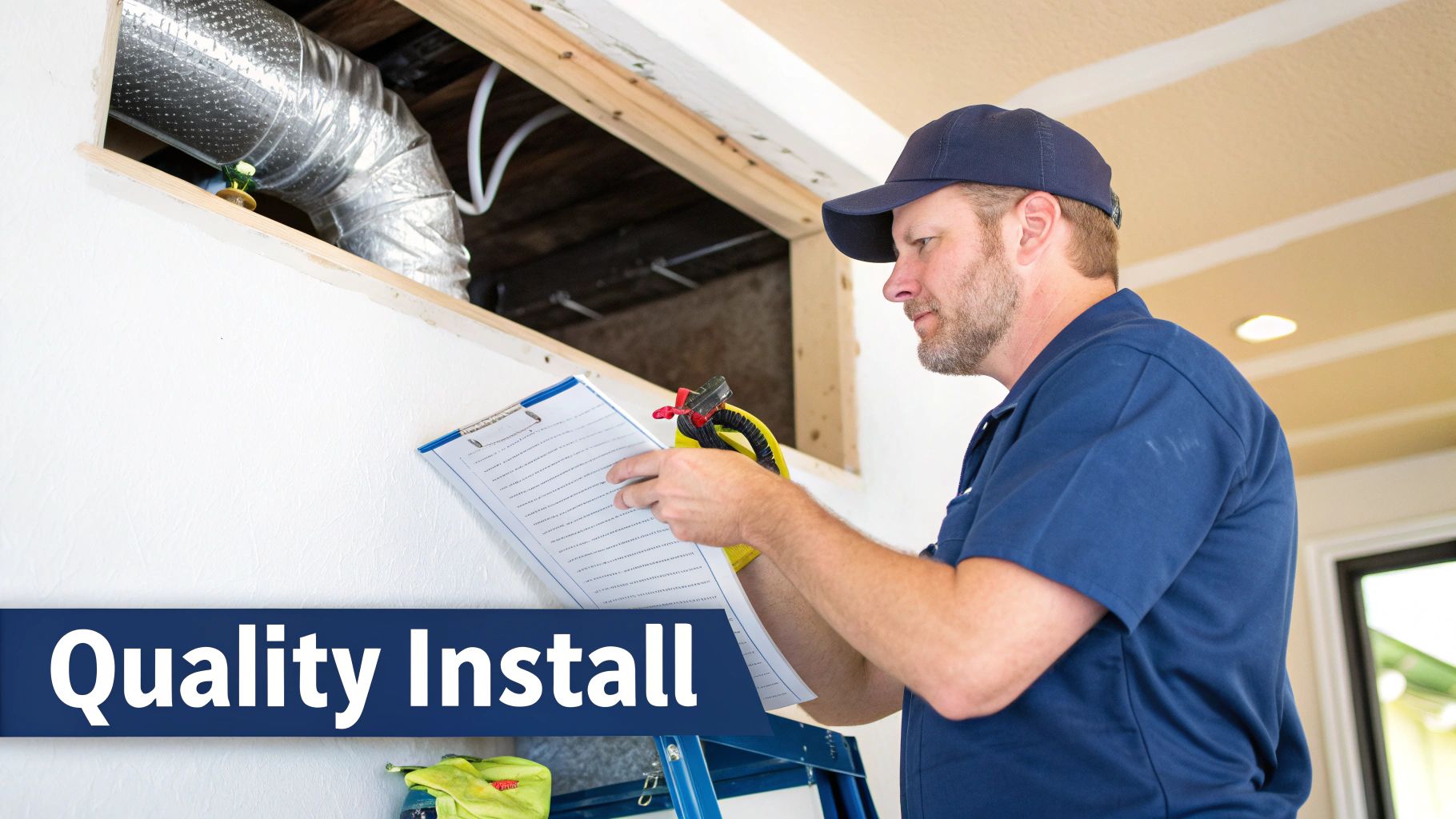
When you start digging into "how much is ducted air con," it's easy to get fixated on the price of the unit itself. But here’s the thing: even the most advanced, high-efficiency system from a premium brand will let you down if it’s installed poorly. The reality is that a huge chunk of your investment pays for the skilled labour and technical know-how needed for a professional job. This is where you get the most long-term value.
Honestly, a cheap installation is almost always the most expensive one in the long run. An incorrectly fitted system can cause a whole host of headaches, from weak airflow and rattling noises to refrigerant leaks and shockingly high power bills. That’s why choosing an installer based on their reputation and qualifications, not just the lowest price, is the smartest financial move you can make.
What a Professional Installation Actually Involves
A quality installation is a meticulous process that starts long before a single tool comes out. It kicks off with a thorough on-site assessment where a technician properly evaluates your home’s layout, insulation, window orientation, and roof space. This isn't just a quick glance; it's a detailed analysis to design a system that delivers perfect airflow to every single room.
From there, the process includes:
- System Design: This involves mapping out a custom ductwork layout that ensures balanced and efficient air distribution. The goal is to avoid sharp bends or long, restrictive runs that kill airflow.
- Safe Placement: Strategically positioning both the indoor and outdoor units is key for optimal performance, minimal noise, and making future servicing easy.
- Electrical Compliance: All electrical work, from the circuit breaker to the final connection, must be done by a licensed electrician according to Australian Standards (AS/NZS 3000). No exceptions.
- Final Commissioning: Once everything is installed, the system is put through its paces. We check refrigerant pressures, test the airflow at each outlet, and make sure the controller and all the zones are working exactly as they should.
This detailed approach is what separates a professional job from a rushed one.
The Importance of Licensing and Certification
In Australia, the air conditioning industry is strictly regulated to protect homeowners and ensure everyone’s safety. Never, ever hire an unlicenced installer. A reputable technician will hold several key qualifications that prove they know what they’re doing and are operating legally.
The most critical credentials to look for are a valid contractor licence from NSW Fair Trading and an ARCtick refrigerant handling licence. This certification is a legal requirement for anyone working with refrigerants, ensuring they handle these substances safely and responsibly to protect the environment.
When you choose a fully licensed and insured team, you’re not just paying for labour. You’re investing in peace of mind. You know the work is compliant, your warranties are valid, and your home is safe. If you want to dive deeper into the hardware, you can explore some of the best ducted air conditioning brands we recommend and install.
Ultimately, a quality installation ensures your new ducted system performs exactly as it should from day one. It guarantees efficiency, reliability, and the quiet, whole-home comfort you’re paying for, preventing costly headaches for years to come.
How to Get an Accurate Quote for Your Home
Now that you’ve got a handle on all the moving parts, getting a precise quote tailored to your home is the next logical step. The real answer to "how much is ducted air con?" isn't found online; it's discovered when an expert actually walks through your property.
Arming yourself with the right information and questions will help you compare quotes intelligently and avoid any nasty surprises down the track.
The only reliable quote comes from an on-site assessment, not a quick chat over the phone. A technician needs to get into your roof space, measure your rooms, and take a look at your electrical switchboard to give you a fixed, accurate price.
Information to Have Ready
To help your installer give you the best possible quote, it helps to have a few key details on hand. This prep work makes the whole process smoother and ensures the system we design is a perfect fit for your family's needs.
- House Plans: If you have them, especially for new builds or renovations, floor plans are incredibly helpful for mapping out the system.
- Room Count: Know exactly how many rooms, or zones, you want to be air conditioned.
- Insulation Details: Make a note of what kind of insulation you have in the ceiling and walls. This makes a huge difference to the required system capacity.
- Home Orientation: Which way does your home face? Knowing where the sun hammers your home on a hot summer afternoon is critical information.
Gathering this info beforehand shows you’ve done your homework and helps us design a system that genuinely works for you.
Critical Questions to Ask Every Installer
Not all quotes are created equal. When you get a proposal, you need to look beyond just the final price tag. Asking these key questions will help you understand exactly what you’re paying for and spot a truly professional installer.
A detailed, transparent quote is the hallmark of a reputable company. If an installer is vague about brands, licensing, or what’s included, consider it a major red flag.
Make sure you ask every potential installer the following:
- Are you and your electricians fully licensed and insured? Ask to see their NSW Fair Trading contractor licence and ARCtick certification.
- What specific brand and model of unit are you quoting? A generic "14kW system" just isn't enough detail.
- Does this quote include all necessary electrical work? This should cover any switchboard upgrades and a certificate of compliance.
- Is all ductwork, zoning equipment, and the controller included in this price? There should be no hidden extras.
- What warranties do you provide on your installation workmanship? This is completely separate from the manufacturer’s warranty on the unit itself.
- How did you determine the right system size for my home? A professional will be able to clearly explain their load calculations. For more detail, you can read our guide on correctly sizing your air conditioner.
By taking these steps, you’ll be in a strong position to get an accurate quote and choose an installer who will deliver a reliable, high-performing system for your Central Coast, Sydney, or Newcastle property.
Common Questions About Ducted Air Con Costs
Even after getting your head around the main factors, it's completely normal to have a few more questions pop up. Investing in your home's comfort is a big decision, and you want to feel confident you've covered all the bases.
Here are our straightforward answers to some of the most common queries we get from homeowners just like you.
How Much Does It Cost to Run Ducted Air Conditioning?
This is the big one, and the honest answer is: it really depends on how you use it. Think about things like your system's energy rating, the electricity tariff you're on in Sydney or the Central Coast, what temperature you set on the thermostat, and how well your home is insulated.
A modern, well-zoned inverter system can be surprisingly efficient. As a very rough guide, you might expect running costs of $0.60 to $1.50 per hour, but this can vary widely from home to home.
The single best way to keep your power bills in check is to use your zones properly—don’t cool rooms you aren’t in! For a more detailed breakdown, check out our guide on how much running your air conditioner actually costs.
Can I Install Ducted Air Con in an Existing Two-Storey Home?
Yes, in most cases, it’s absolutely possible. But it's important to know that it is a more complex and, therefore, more expensive installation compared to a single-storey house or a home under construction. The main challenge is finding a clear path to run the ductwork between the two floors without tearing your house apart.
This often requires some creative thinking, like building bulkheads or running ducts through the back of wardrobes to keep them out of sight. A skilled technician will need to do a thorough on-site inspection to map out a plan, confirm it's feasible, and give you an accurate quote for a two-storey retrofit.
Expert Tip: If you're building a new home, installing a ducted system during construction is significantly cheaper. With open access to wall cavities and roof spaces, the labour and complexity are slashed. Integrating the system into your initial plans is easily the most cost-effective way to do it.
Do I Need Three-Phase Power for a Large Ducted System?
For the vast majority of standard residential homes on the Central Coast or in Newcastle, your existing single-phase power is perfectly fine for ducted systems up to around 14-16kW.
You would only need to consider three-phase power for exceptionally large homes or for systems with unusually high power demands.
A qualified technician and electrician will assess your home’s power supply during the on-site inspection. If an upgrade is needed, they’ll identify it early and quote it as an additional cost, so there are no surprises.
Ready to get a clear, fixed-price quote for your home? The team at ALC Air has over 15 years of experience providing tailored ducted air conditioning solutions across the Central Coast, Sydney, Newcastle, and Lake Macquarie. We'll give you honest advice and a no-obligation quote based on your specific needs.