


Right, let's get straight to the point: you want to know how much ducted air con costs. The short answer is it’s a significant investment in your home's comfort, but a worthwhile one. A fully installed system in Australia typically ranges from around $6,000 to over $25,000, depending on your home’s size, the complexity of the job, and where you are, whether that's the Central Coast, Sydney, or the Hunter Valley.
Your Guide to Ducted Air Con Costs
When you're budgeting for a whole-home climate solution, understanding the typical price brackets is the perfect place to start. The final figure isn't just a number pulled from thin air; it’s a calculation based on the specific needs of your property. A smaller, modern home in Newcastle will have entirely different requirements from a sprawling, two-storey heritage house in a Sydney suburb.
Thinking about the scale of your project helps narrow down the expected cost. Before we dive into the nitty-gritty of what drives the price up or down, it’s useful to have a general idea of what to expect based on your home's size. This gives you a realistic baseline for planning and ensures there are no major surprises when you start getting quotes. If you're new to the concept, it's worth taking a moment to learn more about what ducted air conditioning is and how it delivers that seamless, whole-home comfort.
Ballpark Figures for NSW Homes
The cost of a ducted air conditioning system is a key consideration for homeowners across New South Wales. For most properties, the investment falls into predictable ranges based on size and the number of rooms needing climate control.
For a typical small home with two or three bedrooms, you might expect costs to be in the $6,000 to $9,000 range. A medium-sized home, perhaps with three to five bedrooms, often sees prices from $8,000 to $15,000. For larger properties with more than four bedrooms, the costs can start from $12,000 and go up significantly from there, sometimes exceeding $25,000 for complex installations.
To give you a clearer picture, the table below breaks down these general estimates.
Estimated Ducted Air Con Installation Costs By Home Size
This table provides a general estimate of supply and installation costs for ducted air conditioning in NSW based on property size. Prices are indicative and can vary based on your specific requirements.
| Home Size | Typical Number of Zones | Estimated Cost Range (Supply & Install) |
|---|---|---|
| Small Home (2-3 bedrooms) | 2-4 Zones | $6,000 – $9,000 |
| Medium Home (3-5 bedrooms) | 4-6 Zones | $8,000 – $15,000 |
| Large Home (4+ bedrooms) | 6+ Zones | $12,000 – $25,000+ |
Keep in mind, these are just starting points. The final price depends on a bunch of factors we'll get into next, from the brand of unit you choose to the complexity of the installation itself.
What Factors Shape the Final Price Tag
When you ask, "how much for ducted air con?", the answer is never just a single number for the unit itself. Think of it like getting a quote for a new kitchen; the final price depends on the size of the room, the quality of the appliances, and how complex the installation is. The same logic applies here.
A handful of key factors all come together to determine your total investment, and understanding them helps you see exactly where your money is going. A simple installation in a single-storey Lake Macquarie home with plenty of roof space will naturally have a different price tag than a tricky job in a two-storey Sydney terrace with tight access.
System Capacity and Brand Choice
The heart of your system, the outdoor condenser and indoor fan coil, is one of the biggest drivers of the final cost. Its capacity, measured in kilowatts (kW), has to be a perfect match for your home. This is non-negotiable.
An underpowered system will struggle and run constantly on a scorching Hunter Valley afternoon, never quite getting the job done. On the flip side, an oversized one will switch on and off too frequently, which is incredibly inefficient and wastes energy. Getting the size right is so important, which is why we have a whole guide on sizing your air conditioning.
The brand you choose also plays a big part. We stick with trusted names like Daikin, Mitsubishi Electric, and Actron Air for a reason, they've proven themselves when it comes to reliability and long-term performance. While a premium brand might have a higher upfront cost, it often pays you back with better energy efficiency and longer warranties, saving you money over the life of the system.
Ductwork, Zoning, and Outlets
Beyond the main unit, all the components that actually deliver the conditioned air to each room are a significant part of the quote. This covers the ductwork, zoning controllers, and the ceiling outlets.
Ductwork is a major factor; the more you need, the more it will cost. A bigger home simply requires more materials and more labour to run the ducting correctly through the roof space. Zoning is where you get real control. Adding zones lets you cool just the living areas during the day and switch to only the bedrooms at night. It adds to the initial price, but the energy savings down the track can be substantial.
Finally, the number of rooms you want cooled determines the number of outlets (also called grilles or louvres) needed to ensure balanced, consistent airflow. For a good parallel, you can see how different materials and features affect the final price in this complete pricing guide for security window film, which breaks down costs in a similar way.
Electrical Work and Installation Complexity
The installation itself involves skilled tradespeople and critical electrical work. Every ducted system needs its own dedicated electrical circuit. In some older homes, this might even mean a switchboard upgrade is necessary to safely handle the extra load.
This work must be performed by a licenced electrician. It’s a legal requirement to ensure everything complies with Australian Standards (specifically AS/NZS 3000). We never cut corners on safety, and our quotes always include all the necessary, fully compliant electrical work from the start.
This infographic gives you a quick visual of how the size of your home generally lines up with the overall cost.
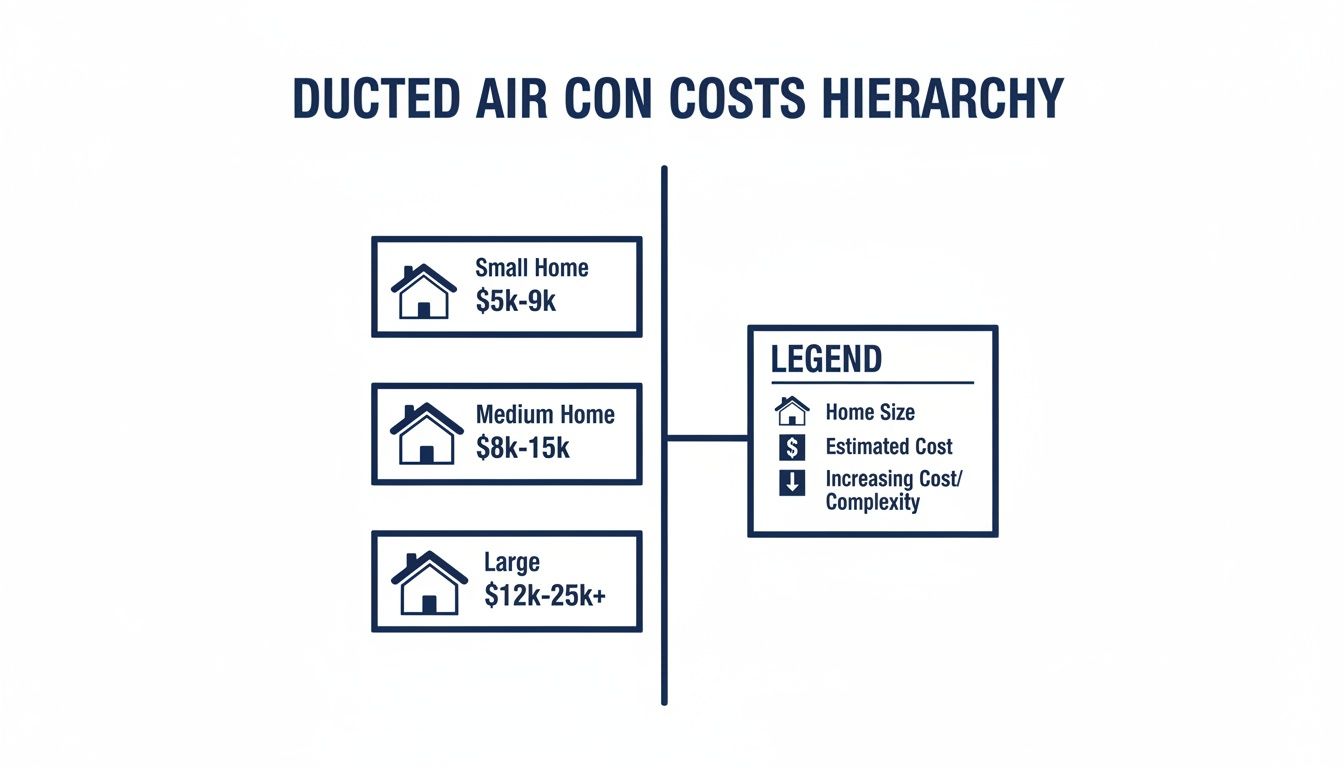
As you can see, the investment scales up with the size of the house. This reflects the need for a more powerful unit, more materials like ductwork and vents, and the extra labour required to put it all together.
Understanding Your Long-Term Running Costs
Thinking about "how much for ducted air con" is about more than just the installation quote. The real cost of ownership shows up on your power bills for the next decade or more. The good news is that modern ducted systems are worlds apart from the power-hungry beasts of the past, and understanding how they work helps you see the long-term value.
The biggest advantage here is inverter technology. Old systems used to slam on at full power until the room was freezing, then shut off completely, only to repeat the cycle a few minutes later. It was incredibly inefficient. An inverter system is much smarter, working more like the accelerator in your car. It ramps up smoothly to reach your desired temperature, then sips just enough power to hold it there. This avoids those constant, energy-guzzling stop-start cycles, keeping you comfortable while being much kinder to your wallet.

Energy Efficiency and Zoning
Another brilliant tool for managing your power bill is zoning. A ducted system with zones gives you the power to switch off the air conditioning in rooms you aren't using. After all, there’s no point cooling empty bedrooms during the day or blasting the living area with air all night long.
Let's say you're a family on the Central Coast: during the day, you might only cool the kitchen and living areas. Come nighttime, you can turn those zones off and direct the cool air only into the bedrooms. This simple habit dramatically reduces how hard your system has to work, and in turn, how much energy it uses. It’s not uncommon for smart zoning to slash your cooling bills by over 25%.
The official measure for efficiency is the star rating you see on the government's Energy Rating Label. It's simple: the more stars a system has, the less electricity it needs to do its job. Investing in a modern, reverse cycle ducted unit with a 5 or 6-star rating is a smart move that pays you back in lower running costs for years. If you want to dive deeper, we've written a detailed guide on how much an aircon costs to run across different system types.
Realistic Running Cost Estimates
So, what does this all mean in dollars and cents? Based on current NSW electricity rates, running a ducted air con system can average between $1.85 to $3.00 per hour. But here's the key: an efficient, modern system can chop that down by 30% to 50%.
For a medium-sized Sydney home cooling five zones for eight hours a day in January, you might be looking at around $200-$300 for the month. With NSW household energy bills on the rise, choosing a high-efficiency system isn't just a "nice-to-have", it's essential. In humid coastal areas, air conditioning can make up a whopping 40% of your summer power bill, so every bit of efficiency counts.
Key Takeaway: Your long-term running costs really boil down to three things: the unit's star rating (efficiency), its inverter technology (intelligence), and how you use your zones (smart operation). Nail these three, and you'll get the best value.
The Role of Regular Maintenance
Finally, the single best way to keep your running costs low over the life of the system is regular, professional maintenance. Don't think of it as an expense; it’s an investment in performance, just like servicing your car. A system with dirty, clogged filters or incorrect refrigerant levels has to work much, much harder to cool your home, which sends your power consumption through the roof.
We always recommend an annual service by an ARCtick certified technician. This is actually a legal requirement in Australia for anyone handling refrigerants, and it’s your guarantee that the job is done safely and to a high standard. During a service, a technician will clean the coils, check all the components, and make sure the system is running at its absolute peak. This preventative care not only keeps your bills down but also helps spot small issues before they turn into major, expensive repairs. It's the key to ensuring your system keeps you comfortable for many years to come.
Choosing the Right System for Your Home
Picking the right ducted system is one of those decisions that impacts both your comfort and your wallet for years to come. It’s a bit like choosing an engine for a car, you need just the right amount of power for the job. Go too small, and the system will constantly struggle on a hot summer’s day in Sydney’s western suburbs, running flat out and driving up your power bills without ever making you feel properly cool.
On the flip side, a system that’s too big is just as bad. It will blast the space with cold air, hit the target temperature way too quickly, and then shut off. This is a process known as short cycling, and it’s a real problem. Not only does the frequent on-off cycle chew through a massive amount of energy, but it critically doesn't run long enough to properly dehumidify the air. This is a common issue in humid coastal areas like Newcastle or the Central Coast, leaving you with a home that feels cool but annoyingly clammy.
Matching Kilowatts to Your Home
When we talk about the "size" of an air conditioner, we're really talking about its capacity, which we measure in kilowatts (kW). Think of kW as a straight measure of the unit's cooling (or heating) power. A higher kW rating means more grunt.
But it’s not as simple as just picking the biggest number. Our technicians perform a detailed heat load calculation to find the perfect fit for your home. This isn't guesswork; it's an assessment that looks at a bunch of critical factors that are unique to your property:
- Total floor area: The larger the space you need to cool, the higher the kW capacity you’ll need. Simple enough.
- Ceiling height: High ceilings are beautiful, but they mean there's a lot more air volume to cool, which demands more power.
- Insulation quality: A well-insulated home in Lake Macquarie will hold its temperature far better than an uninsulated one, meaning it can get away with a smaller, more efficient system.
- Window size and orientation: Those huge, west-facing windows that bake in the afternoon sun? They act like heaters, significantly increasing the heat load on your home.
- Local climate: The dry, extreme heat of the Hunter Valley demands a different approach than the humid, salt-air conditions you find all along the Central Coast.
Real World Scenarios
To see how this plays out in the real world, let’s imagine a couple of different homes.
Imagine you're cooling a two-storey home in Terrigal with afternoon western sun. This home is relatively easy to cool and might only need a 10-12kW system to keep the entire space comfortable.
Now, consider this scenario: an older, single-storey home out in Cessnock in the Hunter Valley. It’s got high ceilings, old single-pane windows, and not much in the way of roof insulation. This property is going to lose cool air much faster and gain heat more easily. To get the same level of comfort, it would likely need a much more powerful system, probably in the 14-16kW range, or maybe even higher.
If you want to explore a broader range of options, have a look at our guide on choosing the best air conditioner for your home.
The Goal of Sizing: The perfect system is one that can run efficiently at a low, consistent speed on the hottest days, rather than one that’s always struggling at maximum capacity or constantly turning itself on and off.
Getting this balance right is the absolute key to an effective and economical ducted air conditioning solution. It ensures you’re not paying for a bigger system than you need, and it guarantees you’re not stuck with an underpowered unit that just can’t handle a classic NSW heatwave. A professional, on-site assessment is the only way to get this crucial calculation right, setting you up for years of reliable and efficient comfort.
Why Professional Installation Matters
A high-quality ducted system from a brand like Daikin or Mitsubishi Electric is a fantastic start, but it's only half the story. The truth is, that premium unit is only as good as the installation it receives. Skimping on the install is a classic recipe for headaches down the track, leading to problems that will cost you far more in wasted energy and repairs than you saved upfront.
Poor workmanship is a hidden threat to your investment. Badly sealed ductwork can leak cooled air straight into your roof space, forcing your system to work much harder to hit the temperature you've set. Incorrectly positioned outlets create annoying draughts or hot and cold spots, while improper system setup can slash efficiency and cause expensive components to fail prematurely.
It’s the quickest way to turn a significant home upgrade into a source of constant frustration.
The Hallmarks of a Quality Installation
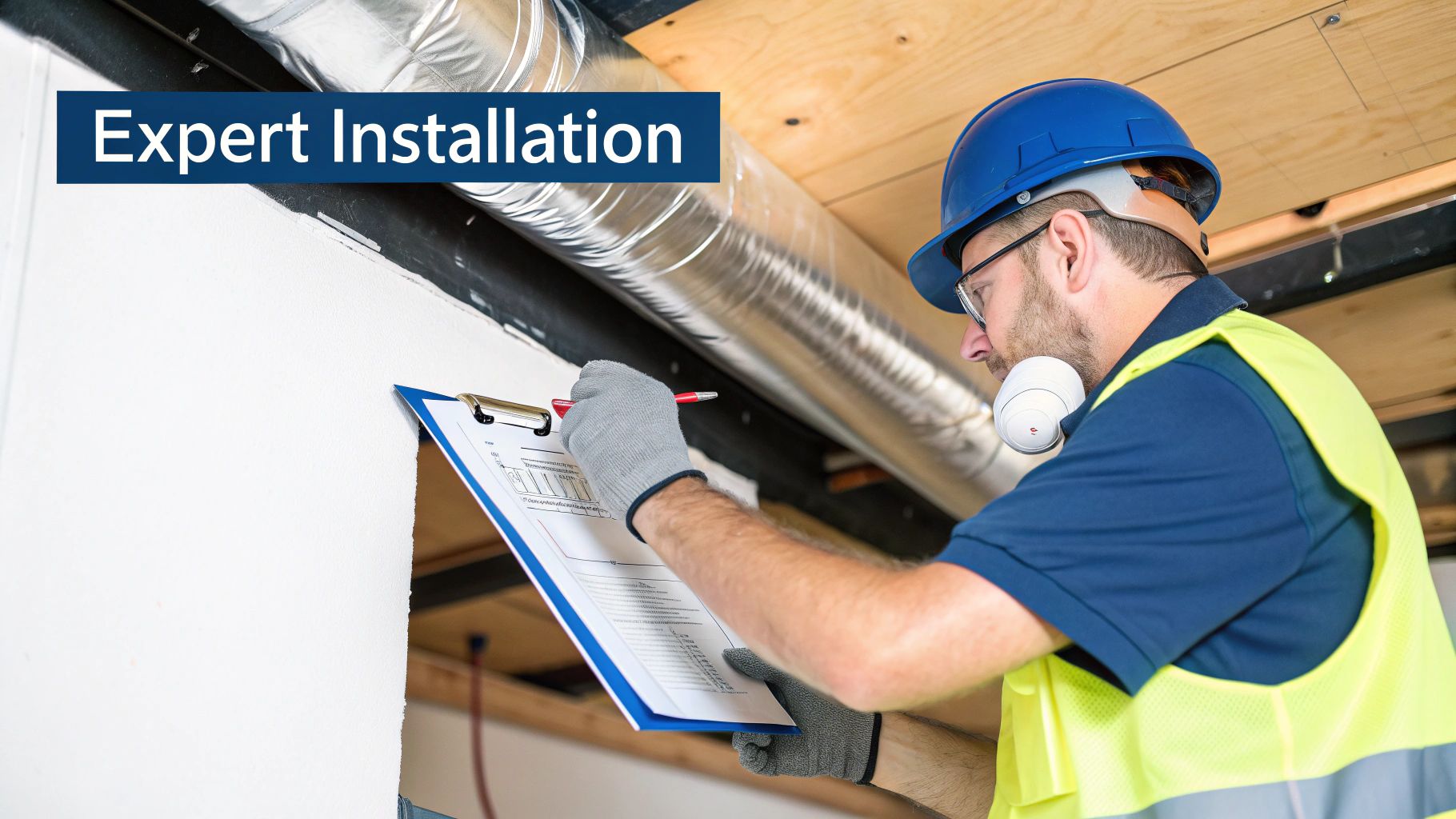
A truly professional installation is a detailed process from start to finish. It begins long before any tools come out, with a thorough on-site assessment and a system design tailored specifically to your home. This isn't just a quick look around; it's a careful calculation of your property’s heat load, factoring in everything from window size and orientation to insulation levels.
The process then moves to the careful placement of the indoor and outdoor units, the expert running of ductwork to ensure optimal airflow, and the precise connection of all electrical components. Finally, the system is commissioned. This involves testing refrigerant pressures, checking airflow to every single outlet, and ensuring the entire system operates exactly as the manufacturer intended. For a deeper look into the specifics, you can learn more about the process of installing a reverse cycle air conditioner in our detailed guide.
Licencing and Compliance Are Non-Negotiable
When you hire an installer, you need to be certain they hold the right qualifications. In Australia, this isn't just a recommendation; it’s the law.
Crucial Requirement: Any technician working on your air conditioning system must hold both a full electrical licence and an ARCtick certification. This is your guarantee of safety, compliance, and quality.
An electrical licence, overseen by bodies like SafeWork NSW, ensures all wiring is done safely and to Australian Standards (AS/NZS 3000). The ARCtick licence is a federal requirement for anyone who handles refrigerants, protecting both you and the environment from harmful gases. Hiring an unlicenced individual not only puts your home at risk but can also void your system's warranty instantly.
Choosing a professional, fully licenced installer is about more than just getting the system running. It's about peace of mind. It’s knowing your investment is protected by quality workmanship that is built to last. This commitment to using high-grade materials and sticking to all the relevant standards ensures your system performs efficiently and safely for years to come, delivering the comfort you paid for.
How to Get an Accurate and Reliable Quote
Getting a quote for ducted air conditioning should be a straightforward, transparent process. But if a company gives you a firm price over the phone without ever stepping foot in your home, that’s a massive red flag. It’s simply impossible to give an accurate and reliable quote without a thorough on-site assessment.
This initial visit isn't just a formality; it's the most critical step in understanding your home's unique layout and your family's needs. Any reputable installer will insist on it. It’s the only way to ensure the price you receive is final, covering every part of the job with no nasty surprises on installation day.
What to Expect During a Professional Consultation
When one of our qualified technicians visits your home, they’re on a fact-finding mission, not a high-pressure sales pitch. Their job is to gather all the information needed to design a system that’s genuinely right for you.
During this free, no-obligation assessment, we’ll carefully inspect several key areas. We need to get into your roof space to check for access, see where the timbers are, and figure out how much room we have for the indoor unit and ductwork. We'll also measure your rooms to calculate the total area that needs cooling and heating.
Finally, we’ll take a look at your electrical switchboard. This is a critical safety check to see if it can handle the load of a new ducted system or if it needs an upgrade to meet Australian Standards. This detailed approach is the only way to provide a genuinely fixed price for your project.
Key Questions to Ask Any Installer
Before you sign on the dotted line with anyone, you need to ask the right questions. This helps you compare quotes properly and ensures you’re partnering with a professional, compliant company. Think of it as a checklist to protect your investment.
Here are a few essential questions you should be asking every single company that gives you a quote:
- Are you fully licenced and insured? Don't be shy, ask to see their electrical licence and ARCtick certification.
- What specific brands and models are you recommending, and why? A good installer won’t just name a brand; they’ll explain their reasoning based on your home’s layout and your family’s needs.
- What warranties are included? You should get two: a manufacturer’s warranty on the unit itself and a separate installation warranty from the installer.
- Is all the necessary electrical work included in this quote? This should cover everything, including a dedicated circuit and any potential switchboard upgrades.
- Is the price fixed? You need to confirm that the number on the quote is the final price you’ll pay, with no hidden costs for labour or materials popping up later.
At ALC Air, we believe in complete transparency. Our free quotes are detailed, itemised, and provide a fixed price upfront. You’ll know exactly what the total cost will be before any work begins, giving you the confidence to make an informed decision for your home.
Common Questions About Ducted Air Con Costs
When you’re looking at a major upgrade like ducted air conditioning, it’s completely normal to have questions. We hear the same ones from homeowners all the time across Sydney, Newcastle, and the Central Coast, and getting clear answers is the first step to making a confident decision.
Let's tackle some of the most common queries we get about ducted air con costs and what the installation process actually involves. This should help paint a much clearer picture.
Is Ducted Air Conditioning Cheaper to Run Than Multiple Split Systems?
This is a great question because the answer isn't just about the initial price tag. If you need to cool your entire home, a modern, well-designed ducted system is almost always more energy-efficient and cheaper to run than firing up three or four separate split systems at once. The real benefit is zoning, you only pay to cool the rooms you're actually using, which can lead to some serious savings on your power bills.
So, while the upfront installation cost for ducted is higher, the lower long-term running costs and the value it adds to your property often make it the smarter financial choice over the life of the system.
How Long Does Ducted Air Conditioning Installation Take?
You've got to plan for the disruption, so this is a crucial one. For a standard, single-storey house, a typical ducted air conditioning installation can usually be wrapped up in just one to two days.
If you've got a larger or more complex home, say, a two-storey house or a place with tricky roof access, it might stretch out to two to three days. Any professional installer, like our team at ALC Air, will give you a firm timeline in their formal quote so you know exactly what to expect and for how long.
Do I Need to Upgrade My Switchboard for Ducted Air Conditioning?
This really comes down to the age and capacity of your current electrical switchboard. Ducted systems are powerful and need their own dedicated circuit. A lot of older homes simply don't have the electrical capacity to safely handle that extra load, and this is a non-negotiable safety issue.
As part of any proper on-site assessment, a licenced electrician will inspect your switchboard. They'll figure out if an upgrade is needed to meet Australian electrical standards (AS/NZS 3000). If you do need some electrical work done, it will be clearly explained and included in your fixed, upfront quote. No surprises.
Ready to get a clear, fixed-price quote tailored to your home? The team at ALC Air has over 15 years of experience designing and installing ducted systems across the Central Coast, Sydney, and Newcastle. Contact us today for a free, no-obligation assessment and find the perfect comfort solution for your family.
https://alcairconditioning.com.au