


The cost to run your air conditioner in NSW can be anywhere from $0.50 an hour to well over $3.00. That huge range comes down to one simple thing: are you cooling a small bedroom with a modern split system, or a large, two-storey home with a full ducted setup? Your electricity tariff is the final piece of the puzzle that turns power usage into a dollar figure.
When you ask, "how much does air conditioning cost to run?", it’s a bit like asking how much it costs to run a car. The answer depends entirely on whether you're driving a little hatchback around town or a V8 on a long road trip. The same logic applies to cooling your home in Sydney, Newcastle, or here on the Central Coast. We're here to help you make sense of it all.
The biggest factors creating this cost difference are pretty straightforward:
- System Type: A 2.5kW split system for a bedroom in Gosford uses a fraction of the power a 14kW ducted system needs to cool a big house in the Hunter Valley.
- Energy Efficiency: A new unit with a high energy star rating will always be cheaper to run than an old, inefficient model from a decade ago. It’s that simple.
- Your Electricity Rate: The price you pay per kilowatt-hour (kWh) varies between providers and plans across NSW, directly impacting your final bill.
To give you a clearer picture, we've put together a quick reference table. This shows the typical hourly running costs for common air conditioners, based on an average NSW electricity tariff of around 31 cents per kWh.
Your Air Con Running Costs Answered
Estimated Hourly Air Conditioning Running Costs in NSW
This table is a quick reference guide to the approximate hourly cost to run different types of air conditioning systems. Think of it as a starting point to see where your system might land.
| Air Conditioner Type | Typical Size (kW cooling capacity) | Estimated Hourly Cost (Low-High) |
|---|---|---|
| Small Split System | 2.5kW – 3.5kW | $0.50 – $0.85 |
| Medium Split System | 5.0kW – 7.0kW | $0.90 – $1.60 |
| Large Split System | 8.0kW – 9.0kW | $1.50 – $2.20 |
| Small Ducted System | 10kW – 12kW | $1.90 – $2.70 |
| Large Ducted System | 14kW – 18kW | $2.60 – $3.50+ |
While this table is a great starting point, remember these are estimates. In the next sections, we'll dive deeper into the specific factors that influence these numbers and show you how to calculate your own precise costs.
The Three Biggest Factors Driving Your Air Con Bill
When you get that first eye-watering electricity bill after a hot summer, it’s tempting to point the finger squarely at the air conditioner. But to really get a grip on what it costs to run, you need to look at three specific areas. Understanding these is the first real step toward taming your cooling expenses.
First up is the air conditioning unit itself. This covers its type, whether it's a single split system for one room, a multi-head unit for a few key areas, or a full ducted system for the whole home. Its cooling capacity (measured in kilowatts, or kW) and its energy star rating are also critical. A higher star rating genuinely means better efficiency and lower running costs, full stop.
Your Home’s Unique Character
Second, we need to look at your home. Every house is different, and the way it handles heat directly affects how hard your air conditioner has to work. Things like the quality of your ceiling and wall insulation, the type of windows you have (single vs double glazed), and even which way your house faces can make a massive difference.
Imagine a west-facing home in Terrigal with big, single-glazed windows. It’s going to soak up a huge amount of afternoon sun, forcing the air con to run flat out just to keep things bearable. Contrast that with a well-shaded apartment in a leafy part of Sydney, which might need far less cooling power to stay comfortable.
This infographic breaks down how the system type, its size, and your electricity tariff are the foundational pieces of your final bill.
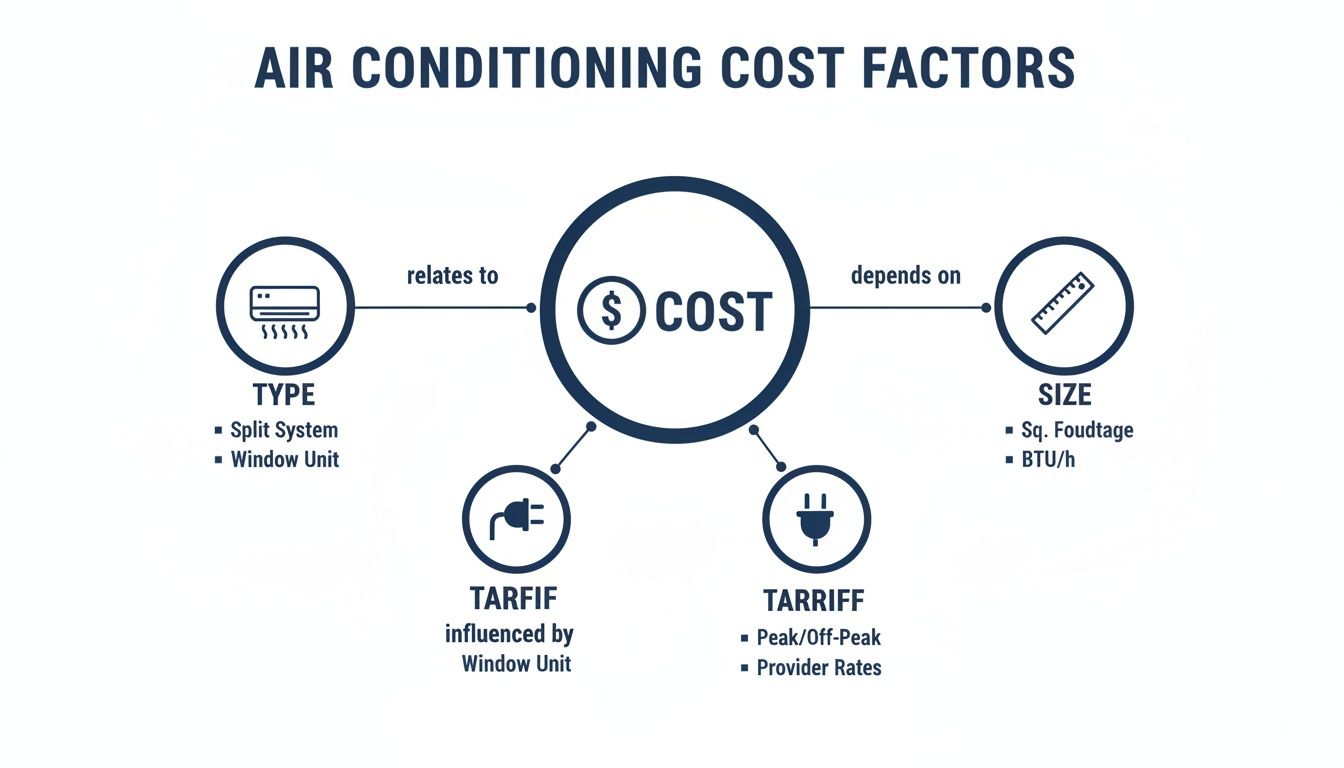
Without getting your head around these three core components, trying to estimate your air conditioning bill is pure guesswork.
Your Personal Usage Habits
Finally, and most importantly, your own habits play a huge role in the final cost. This is the one factor you have direct control over every single day. It all comes down to the temperature you set, how many hours the system runs, and your general usage patterns through the season.
Cranking the thermostat down to a frosty 18°C on a 35°C day will cost you a fortune compared to setting it to a comfortable 24°C. Likewise, running the unit all day in an empty house is just throwing money away, whereas using timers to pre-cool the house just before you get home is a much smarter play.
It’s no secret that air conditioning is one of the biggest power hogs in Aussie homes. In fact, heating and cooling can chew through 20–50% of your total household electricity use. National research estimates that Australians will spend a staggering $3.1 billion running their air conditioners over summer alone. For an individual household, that works out to an average summer spend of $305.
A big reason for this is the jump in electricity prices, which have climbed by roughly 37% in two years to around $0.31 per kWh. At those rates, a mid-sized split system can cost you anywhere from $0.45 to $0.78 per hour to run. You can dig into more of these numbers in this detailed air conditioning statistics report.
By understanding these three main drivers, your system, your home, and your habits, you can start making informed choices to bring those running costs back under control.
How to Calculate Your Own Air Conditioner Running Costs
Ever looked at a summer power bill and wondered exactly how much of it was the air con? You can move beyond guesswork and get a surprisingly accurate idea of what you’re paying. It’s much easier than you’d think.
All you really need are two numbers and a dead simple formula. The magic formula is: Power Consumption (kW) x Electricity Tariff ($/kWh) = Hourly Running Cost ($). It might look a bit technical, but let's break it down into practical steps. We'll show you exactly where to find these numbers so you can run your own calculation with confidence.
Step 1: Find Your Unit's Power Consumption
First up, you need to find the power input of your air conditioner. This is measured in kilowatts (kW) and is usually printed on the compliance label stuck to the side of your outdoor unit. If you can’t find it there, it’ll be in the user manual.
Now, this is the most common point of confusion: do not confuse this with the cooling capacity. For instance, when you buy a "2.5kW split system," that number refers to its cooling output, not how much electricity it actually uses. The power input will be a much lower number, typically around 0.6kW to 0.8kW for a unit that size. Always look for the words "Power Input" or "Rated Input" on the technical label.
Key Takeaway: The "kW" number in your air conditioner's model name is its cooling output, not its power consumption. The power input number you need for this calculation will always be a smaller figure found on the unit's technical label.
Step 2: Find Your Electricity Tariff
Next, you need to know what you pay for power. This is your electricity tariff, the price you’re charged per kilowatt-hour ($/kWh). The easiest place to find this is on your latest electricity bill, usually listed in the breakdown of charges. This rate varies between providers in NSW, so using the exact figure from your own bill will give you the most accurate result. For our examples, we’ll use a common NSW rate of around $0.31 per kWh.
Real-World Calculation Examples
Let's put this formula into action with a couple of realistic scenarios for homes in our service areas.
Scenario 1: Cooling a Bedroom on the Central Coast
- System: A small 2.5kW split system in a bedroom in Woy Woy.
- Power Input: We check the label on the outdoor unit and find it’s 0.75kW.
- Electricity Tariff: Your bill shows you pay $0.31 per kWh.
- Calculation: 0.75kW x $0.31/kWh = $0.23 per hour.
That's right, just 23 cents per hour to keep your bedroom comfortable on a hot night.
Scenario 2: Cooling a Family Home in the Hunter Valley
- System: A large 14kW ducted system cooling a home near Cessnock.
- Power Input: The label on this powerful unit shows an input of 4.5kW.
- Electricity Tariff: We'll use the same rate of $0.31 per kWh.
- Calculation: 4.5kW x $0.31/kWh = $1.40 per hour.
As you can see, understanding your system's actual power draw is crucial. The difference between cooling a single room and a whole house is significant, but now you have the tools to figure it out for yourself. If you're unsure about finding the right details for your unit or want to explore different system sizes, you might find our air conditioning unit calculator a helpful tool for more insights. This simple calculation gives you the power to see exactly where your money is going.
Comparing Costs: Split Systems vs. Ducted Air
When you’re looking at air conditioning for your home, the two heavy hitters in NSW are split systems and ducted air. While the upfront installation cost gets a lot of attention, the real decider for your budget is the long-term running cost. These two systems cool your home in fundamentally different ways, and that difference shows up directly on your power bill.
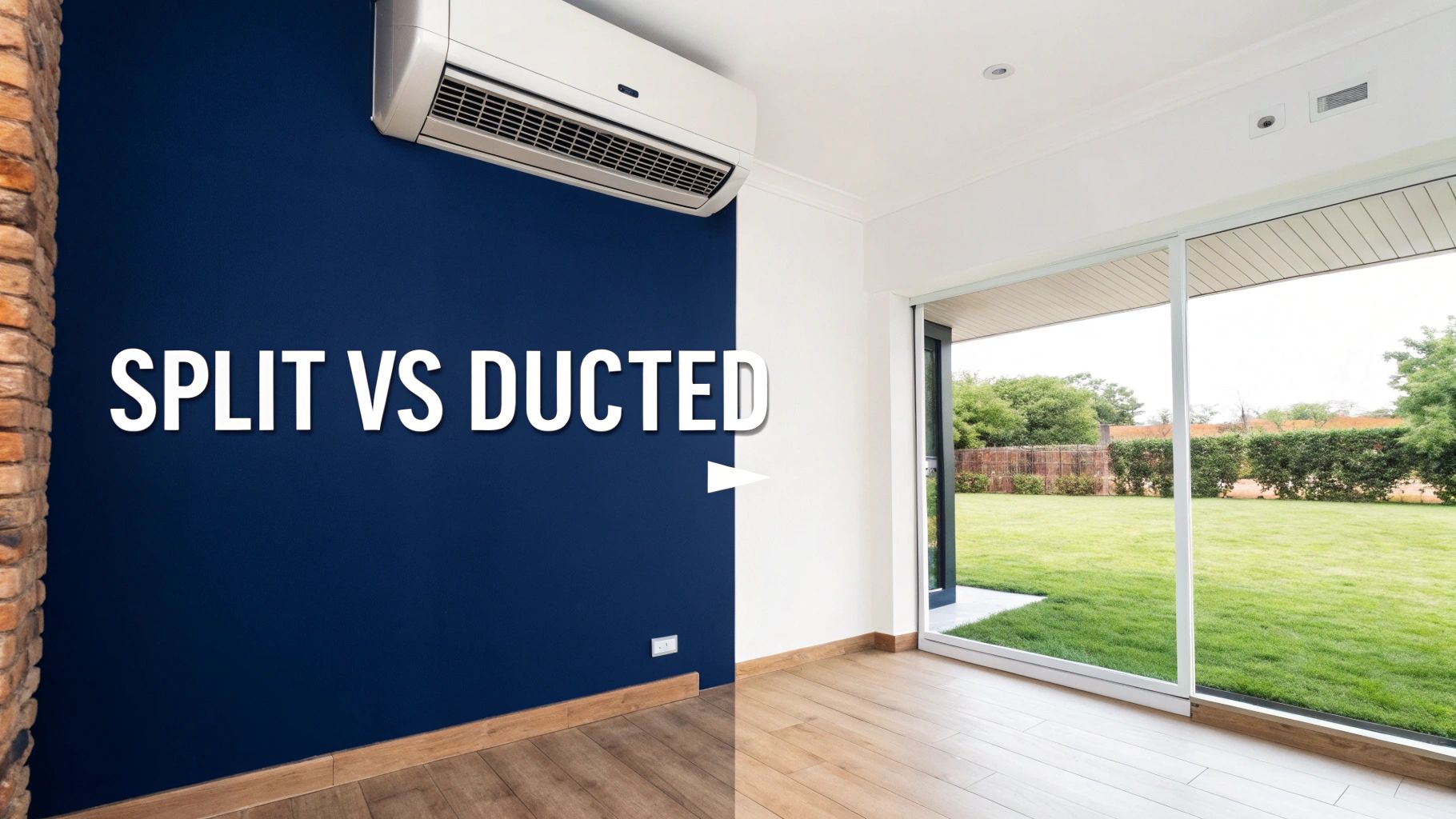
Split systems are the undisputed champions of targeted cooling. They’re designed to handle one specific room or zone, like your living room or the master bedroom. Because you only switch on the unit in the room you’re actually using, they can be incredibly energy efficient. For instance, a modern 2.5kW split system ticking away in a bedroom might only draw about 0.7kW of power. This makes them a perfect, wallet-friendly solution for apartments in Newcastle, townhouses across Sydney, or for any homeowner who just needs to cool one or two key areas.
The Power of Zoned Cooling
Ducted air conditioning delivers that seamless, whole-home comfort, but it’s a bigger beast that naturally uses more power. A common myth is that you have to cool the entire house every time you turn it on. This is where zoning becomes the single most important feature for keeping ducted running costs under control.
A smartly designed ducted system carves your home into separate zones, like "living areas" and "bedrooms." You can then choose to send chilled air only to the zones you’re in. This simple step stops you from pouring money into cooling empty rooms, bringing the running costs much closer to what you’d expect from running a couple of split systems.
Why Zoning Matters: Without zoning, a ducted system is like having every single light in your house wired to one switch. Zoning gives you individual switches for each area, letting you direct airflow precisely where it's needed and slash your electricity consumption.
To get a clearer picture of the key differences, here's a direct comparison of what you can expect from each system in a typical NSW home.
Split System vs Ducted Air Conditioning: A Running Cost Comparison
| Feature | Split System Air Conditioning | Ducted Air Conditioning |
|---|---|---|
| Typical Use Case | Cooling individual rooms or specific zones. | Providing seamless, whole-home cooling. |
| Energy Efficiency | High efficiency for single-room use, as you only cool the space you're in. | Can be less efficient if not zoned; highly efficient when using zones correctly. |
| Control | Each unit is controlled independently. | Central control, with zoning allowing for different areas to be turned on or off. |
| Running Cost | Lower cost when cooling 1-2 rooms. Can become more expensive if multiple units are run simultaneously. | Higher base running cost, but zoning brings it down significantly. Can be more economical than running 4+ splits at once. |
| Ideal for | Smaller homes, apartments, or cooling specific high-use areas like living rooms and main bedrooms. | Larger family homes where even, whole-house cooling is desired. Great for open-plan layouts. |
As you can see, the "cheaper" option really depends on how you live in your home and how you use the system day-to-day.
A Tale of Two Lake Macquarie Homes
Let's make this real. Imagine two similar family homes in Warners Bay. Both want to cool their main living area during the day and three bedrooms at night. Home A goes with four separate split systems. During the day, they fire up the big 7kW unit in the living room. At night, they switch that off and turn on the three smaller 2.5kW units in the bedrooms. They are only ever paying for the power needed for the rooms they are physically in.
Home B opts for a 14kW ducted system with two zones: one for the living area and another for the bedrooms. During the day, they run only the "living" zone. At night, they switch over to the "bedroom" zone. In this scenario, the running costs for both homes can be surprisingly similar because they are both using zoning to their advantage. The game changes, however, if the owner of Home B ran their entire ducted system all day without using the zones. Their power bill would be dramatically higher than their split-system neighbours.
The choice really comes down to weighing the upfront investment against how you plan to use the system every day. To dive deeper into the pros and cons, our guide on split system versus ducted air conditioning offers a detailed comparison to help you find the perfect fit for your home.
Why a High Efficiency System Is a Smart Investment
When you’re looking at a new air conditioner, it’s easy to get fixated on the initial purchase price. But the real cost of an air con system isn't what you pay on day one, it's what you pay on your electricity bill for the next ten to fifteen years. Investing in a modern, high-efficiency unit is genuinely one of the smartest financial decisions you can make for your home.
Think of it this way: an old, inefficient air conditioner is like a car stuck in first gear. It just runs at full power, then abruptly stops, then blasts on again at full tilt. This constant stopping and starting chews through an enormous amount of electricity.
The Power of Inverter Technology
A modern, high-efficiency system uses something called inverter technology. An inverter acts like your car's cruise control. Instead of the jarring stop-start cycle, it smoothly adjusts its power up and down to maintain a consistent temperature. This simple difference means it uses far less energy to keep you comfortable.
This technology is the driving force behind the impressive star ratings you see on new units. A 7-star rated split system, for example, might have a higher upfront cost than a 3-star model, but it can pay for itself through lower running costs in just a few years. It’s about future-proofing your home against rising energy prices, a vital consideration for families everywhere from Sydney's hot western suburbs to the Hunter Valley.
The Financial Proof in NSW
The benefits aren't just theoretical; they're being proven across thousands of homes. Upgrading to high-efficiency air conditioning in NSW has been shown to materially slash running costs. In fact, the NSW Energy Savings Scheme helped deliver upgrades that produced an estimated $513 million in net bill savings for households and businesses. A huge chunk of these savings came from replacing old systems with modern, efficient air conditioners.
A modern inverter unit can be up to 30% more efficient than an older on/off model. This means a system that once cost you $1.00 per hour could now cost closer to $0.70 per hour for the same cooling power. You can discover more insights about these energy saving initiatives in NSW. This is precisely why we specialise in supplying and correctly sizing quality, energy-efficient brands. For those considering an all-in-one heating and cooling solution, understanding which models offer the best year-round efficiency is key. Our guide to the best reverse cycle air conditioner provides a deeper look into units that excel in both performance and energy conservation.
Practical Ways to Reduce Your Air Conditioning Bill Today
Knowing how your power bill gets calculated is one thing, but actually doing something about it is what puts money back in your pocket. The good news is you don’t need to rip out your system or spend a fortune to see a real difference. Small, consistent changes in how you use your air con can lead to some seriously significant savings over a summer. These aren't complicated technical fixes. They’re simple, actionable tips you can start using this afternoon.
Set Your Thermostat Wisely
This is one of the easiest wins available. While it’s tempting to crank the air con down to 18°C on a scorching Sydney afternoon, every single degree you lower the temperature sends your energy use soaring. We always recommend setting your thermostat to 24°C. This is widely considered the sweet spot for balancing genuine comfort with energy efficiency. For every degree you raise the temperature, you can save up to 10% on your running costs. It really is that simple.
Master Your System's Features
Modern air conditioners come packed with clever features designed to save you money, but they only work if you actually use them. Get into the habit of using the timer function. You can set it to pre-cool your home an hour before you arrive, which is far smarter than running it all day in an empty house. And don't forget the 'fan only' mode. On milder days when you just need a bit of air circulation, this uses a tiny fraction of the electricity compared to the full cooling cycle.
Improve Your Home's Natural Defence Against Heat
Your air conditioner shouldn't have to fight a losing battle against the sun. You can give it a massive helping hand by improving your home's natural ability to stay cool.
- Seal the Gaps: Check for draughts around windows and doors. Sealing these gaps is a cheap and easy DIY job that stops your precious cool air from escaping and hot air from sneaking in.
- Use Your Curtains: On hot days, keep your blinds and curtains closed, especially on west-facing windows that cop that harsh afternoon sun. This simple act creates a physical barrier, dramatically reducing the amount of heat pouring into your rooms.
- Create Shade: If you can, use external awnings or plant some shady trees. Stopping direct sunlight from hitting your windows in the first place is the most effective strategy of all.
Don't Neglect Regular Maintenance
A clean air conditioner is an efficient air conditioner. Period. The single most important job you can do yourself is to clean your indoor unit's filters regularly. Aim for at least once every three months, or more often if you have pets. Clogged filters force the system to work much harder just to pull in air, which drives up power consumption and tanks its cooling performance.
While cleaning filters is a great start, nothing beats a professional service. An annual tune-up by a licensed technician ensures your system is running at peak efficiency. Our techs check refrigerant levels, clean the coils properly, and make sure all the electrical components are safe and functioning correctly, just as Australian Standards like AS/NZS 3000 require. Any work on your system should always be done by a professional with the right qualifications, like an ARCtick licence for handling refrigerants and a full electrical licence as mandated by SafeWork NSW.
For a deeper dive into what a pro service involves, check out our guide on the importance of professional air conditioning maintenance.
The Big Picture on Cooling Costs: Zooming out from individual homes, air conditioning represents a massive cost across Australia. One analysis estimates that Australians spent about $12.4 billion on electricity for air conditioning in 2023. This massive demand, especially on hot days across NSW, drives up network costs that ultimately get passed on to homeowners. You can learn more about these nationwide air conditioning energy trends.
By combining these simple habits, setting an efficient temperature, using timers, sealing up your home, and keeping up with maintenance, you can make a huge dent in how much your air conditioning costs to run this summer.
Common Questions About Air Con Running Costs
Even after breaking down all the numbers, a few key questions always seem to pop up. Let's tackle the most common ones we hear from customers, with straightforward answers to help you make smarter decisions about cooling your home.
Is It Cheaper To Leave Air Con On All Day?
This is a classic question, and the answer has completely changed with modern technology. With old, non-inverter systems, the answer was a definite no. The huge surge of power needed to start the compressor each time meant it was always cheaper to turn it off.
But today’s inverter systems are a different beast entirely. An inverter is designed to run continuously at a very low power state once your room hits the right temperature. Think of it like a car on cruise control, just sipping fuel to maintain speed instead of constantly stopping and starting in heavy traffic. For a well-insulated home, leaving your inverter air con on a moderate temperature (say, 24°C) can genuinely be more efficient than switching it off and forcing it to work flat-out to cool a sweltering house down again later.
How Much To Run Ducted Air Con For A Day?
This one varies massively from house to house, but we can give you a realistic ballpark figure. Imagine a typical family home in the Sydney suburbs with a modern, zoned ducted system. If you run it for eight hours a day, maybe cooling the living areas in the afternoon and then switching to just the bedrooms at night, you could expect to use between 30 and 45 kWh of electricity.
Based on a typical electricity rate of $0.31 per kWh, your daily running cost would land somewhere between $9.30 and $13.95. Of course, things like your home's insulation, how hot it is outside, and your thermostat setting will push this number up or down.
Does The Fan Only Mode Save Electricity?
Absolutely. Using the 'fan only' mode is one of the smartest, cheapest ways to stay comfortable on milder days. When you switch to 'fan only', the system's most power-hungry part, the big outdoor compressor unit, shuts down completely. All that’s running is the indoor unit’s fan, which simply circulates air around the room. It uses about the same amount of power as a standard ceiling fan.
This means running your air con on 'fan only' can cost as little as $0.05 to $0.10 per hour, a huge saving compared to the $1.00 or more per hour it might cost in full cooling mode. It’s a brilliant, low-cost way to create a gentle breeze without even touching your cooling budget. This is a key strategy for managing how much your air conditioning costs to run over a whole season.
Understanding what drives your air conditioning costs is the first step toward getting them under control. If you're ready to explore a new, high-efficiency system or just need expert advice on getting the most out of your current one, ALC Air is here to help. We specialise in providing Central Coast, Sydney, and Newcastle homes with perfectly sized, professionally installed air conditioning solutions.