


Trying to pin down a budget for a new air conditioner can feel like a bit of guesswork. The simple truth is, the total cost comes down to the type of system you choose. A straightforward split system for a single room is always going to be your most affordable entry point. On the other end of the scale, a multi-head or a full ducted system for the entire house represents a much more significant investment.
The final figure you see on a quote is always a mix of two things: the cost of the unit itself and the price of professional labour to get it installed safely and to Australian standards. It's our job to help you understand both parts, so you can make a confident choice for your home.
Your Guide to Air Conditioner Installation Costs
When you start digging into air conditioning costs, you quickly realise it’s about more than just the price on the box. The total on your quote is a reflection of the system's size, its complexity, your home's unique layout, and the crucial electrical work needed to power it all safely.
This is exactly why getting a professional on-site assessment is so important, whether you're in a Sydney apartment, a family home on the Central Coast, or a sprawling property in Newcastle. We need to see the space to give you an accurate price.
To help you get a clearer picture of where your budget might land, here’s a quick look at the typical all-inclusive price ranges for common residential systems in NSW.
Typical Air Conditioner Installation Costs at a Glance
| System Type | Best Suited For | Typical Price Range (Supply & Install) |
|---|---|---|
| Single Split System | Cooling or heating one specific room (e.g., living room, main bedroom). | $2,200 – $4,500 |
| Multi-Head Split System | Cooling or heating 2-4 individual rooms with a single outdoor unit. | $6,000 – $12,000+ |
| Ducted System | Seamless, whole-home climate control with discreet ceiling vents. | $10,000 – $25,000+ |
These figures give you a solid starting point. Each type of system serves a different purpose, and that’s directly tied to its price. A split system is perfect for tackling a stuffy bedroom. A multi-head system is the next step up, letting you cool a few key rooms from one outdoor unit. Then you have ducted, the premium choice for seamless, whole-home climate control.
The chart below gives you a visual on how these systems compare in terms of that initial investment.
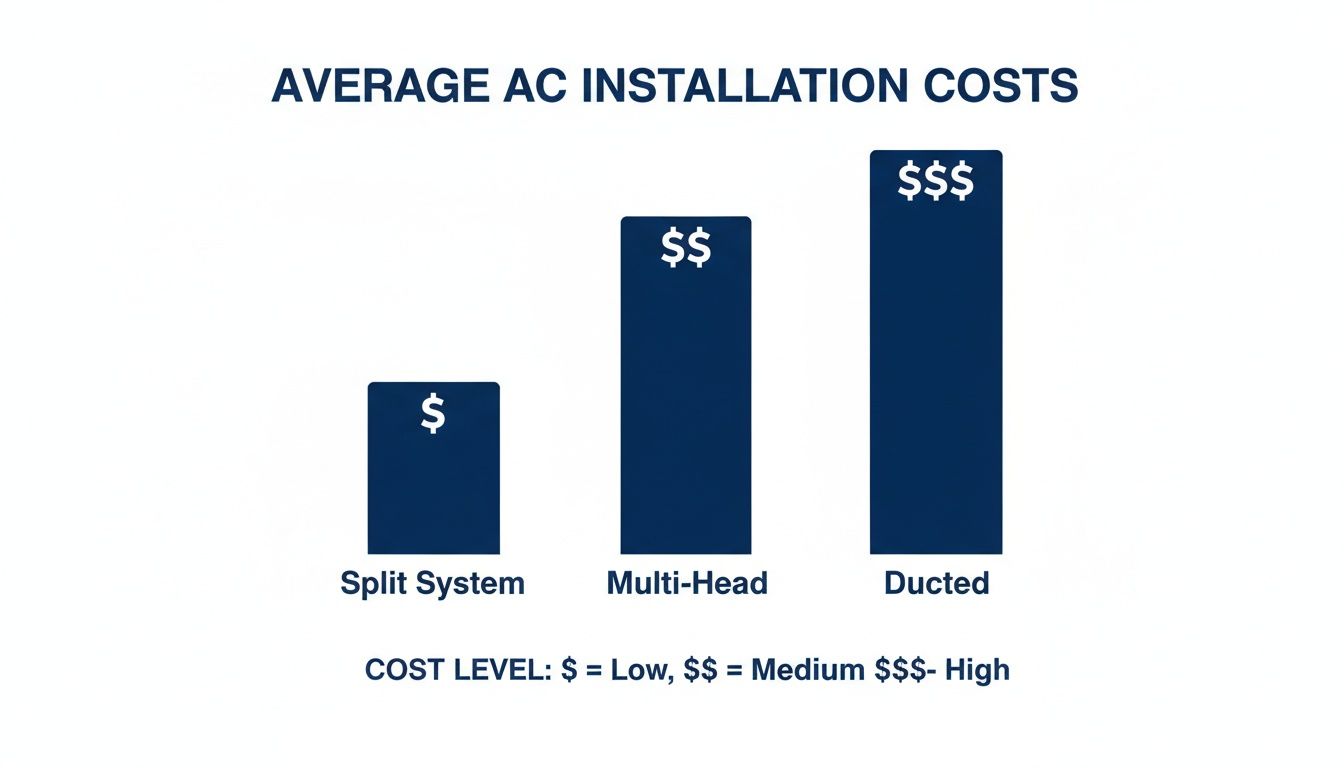
As you can see, the upfront cost scales with the system’s ability to cool larger spaces or multiple rooms. In this guide, we'll break down the costs for each system so you can see what drives the price and make a smart decision for your home and your budget. We’ll even get into the specific factors that can shift your quote up or down, helping you understand the real value behind a quality installation.
Breaking Down Split System Air Conditioner Costs

When you just need to cool a single room or a specific zone in your home, a split system air conditioner is almost always the right tool for the job. It's the most popular choice for a reason: it’s efficient, effective, and generally the most affordable way to get permanently installed air conditioning.
The name "split system" comes from the fact that it’s split into two main parts. You’ve got the indoor unit (the head unit) mounted high on a wall, quietly blowing cool air into the room. Then there’s the outdoor unit (the condenser), which sits outside and does the heavy lifting of getting rid of the heat pulled from your home.
This setup is perfect for everything from making a master bedroom in a Terrigal home an oasis of cool, to taming a west-facing living room in Penrith during a summer heatwave. But while the idea is simple, the final cost to get one installed has a few important moving parts.
The Unit Itself: Your Starting Point
The first big chunk of the price is the air conditioner unit itself. This isn't just about picking a brand off the shelf; it's about choosing the right capacity, measured in kilowatts (kW), and the right features for your actual needs.
A small 2.5kW unit might be perfect for a standard bedroom, but a large, open-plan living area in a Newcastle home will need a much more powerful 7kW or 8kW system to properly handle the space and humid coastal air.
Why Capacity Matters: Choosing an undersized unit to save a few hundred dollars upfront is a classic false economy. The system will be forced to run flat-out, 24/7, just trying to keep up. This leads to shocking electricity bills and a much shorter lifespan for the unit. A correctly sized system works smarter, not harder, saving you money in the long run.
The brand's reputation also plays a big role in the cost. Well-known names like Mitsubishi Electric, Daikin, and Fujitsu often have a higher price tag, but that price reflects their investment in reliability, energy efficiency, and better warranty support. A cheaper, unknown brand might look tempting, but it could easily cost you more in repairs and running costs down the track. You can dive deeper into how split system air conditioner prices are shaped by these factors.
Installation Complexity: Where the Real Cost Varies
This is where the difference between a simple job and a complex one really shows up in the final quote. The most straightforward and cost-effective scenario is what we call a "back-to-back" installation. This is where the indoor unit is mounted on an exterior wall, and the outdoor unit is placed directly behind it on the ground outside. This setup keeps the copper piping and electrical cabling to a minimum.
Of course, not every home in Sydney or on the Central Coast is that simple.
Just think about these common situations:
- Apartment Living: Installing a unit in a multi-storey apartment in Gosford often means the outdoor condenser has to be mounted on a balcony wall or even requires special lifting equipment. This adds labour time, complexity, and cost.
- Long Pipe Runs: If the perfect spot for your indoor unit is on an internal wall, we'll need to run the pipes through the ceiling cavity or under the floor to reach the outdoor unit. This increases both the material and labour costs.
- Tricky Access: A job on a steeply sloping block in Lake Macquarie or a home tucked away in a tight-access laneway in Sydney's inner west might require extra safety gear or more technicians on site to get the job done safely and correctly.
Recent market guidance shows that even a small split system (around 2.5–3.5 kW) can vary significantly in price. The things that push a quote toward the higher end are necessary electrical upgrades to comply with AS/NZS 3000 standards, difficult access like high walls, and of course, the use of premium, highly energy-efficient models. It's also true that labour costs in busy urban centres like Sydney and Newcastle tend to be a bit higher than in other regional areas. To get a better handle on local quotes, you can discover more insights about these pricing factors.
Understanding Ducted Air Conditioning Prices
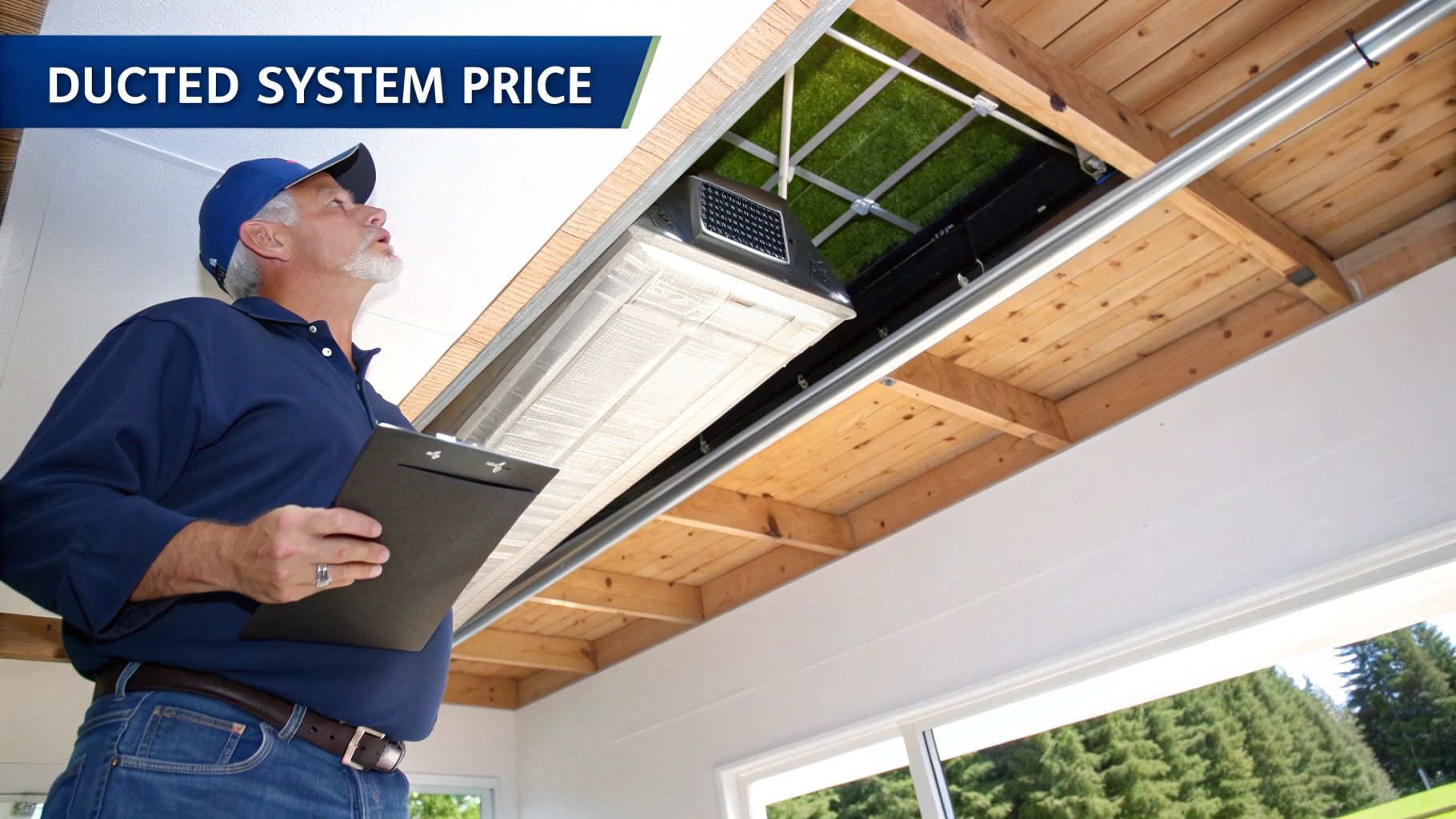
If you're looking for the ultimate in whole-home comfort, a ducted air conditioning system is the way to go. Unlike a split system that just targets a single room, a ducted setup gives you consistent, quiet climate control in every corner of your house, delivered through subtle vents in the ceiling. This level of seamless integration makes it a premium solution, and that comes with a higher initial investment.
The reason for the bigger price tag is pretty straightforward: it's a much more involved installation. We’re not just hanging a unit on a wall. We’re designing and fitting a complete network of insulated ductwork throughout your roof space, connecting it all back to a powerful central unit. This job requires careful planning, specialised skills, and a lot more materials.
Home Size and Layout
The single biggest factor driving the cost of your ducted system is the size and layout of your house. A single-storey, three-bedroom home in Lake Macquarie has completely different needs than a sprawling two-storey, five-bedroom place in a Sydney suburb. The more space you need to cool, the bigger the central unit's capacity (measured in kW) needs to be, and the more ductwork you'll require.
The floor plan plays a huge part, too. A modern, open-plan layout might need fewer but larger ducts. In contrast, a home with lots of small, separate rooms will demand a more intricate network to get even airflow everywhere. The state of your roof cavity is also a massive variable. A spacious, easy-to-access roof makes running ducts a breeze, but a tight, cluttered roof space adds serious time and complexity to the job.
Zoning and Customisation
One of the smartest features of a ducted system is the ability to create "zones." Zoning lets you turn the air conditioning on or off in different parts of your house independently. You might cool the living areas during the day and only the bedrooms at night, a brilliant way to slash your running costs.
The number of zones you opt for directly influences the installation price. Every zone needs its own motorised damper inside the ductwork, plus a way to control it, adding to both material and labour costs. A simple two-zone system (think "Living" and "Sleeping") will be far more affordable than a five-zone setup where every bedroom can be controlled individually. We dive deeper into this in our guide to understanding ducted air conditioner costs.
The All-Inclusive Investment
When you get a quote for a ducted system, you're looking at a complete package. The price covers the powerful outdoor condenser, the hidden indoor fan coil unit, all the flexible ducting, the ceiling vents or grilles, zone controllers, and the extensive, licensed electrical work required by Australian Standards.
A Note on Pricing: For a typical freestanding home in NSW, a ducted air conditioning system is a significant investment. A complete system for a smaller home with a couple of zones might start around $10,000. For larger, more complex installations in multi-storey homes with extensive zoning and premium controllers, the price can easily push beyond $20,000.
This wide range reflects how custom every ducted installation is. Market research for NSW shows that most mid-sized, whole-home installations tend to land in the $12,000 to $18,000 bracket. These figures really underline why a detailed, on-site assessment is the only way to get a firm, accurate quote. While it's a major purchase, it delivers unparalleled comfort and can significantly boost your property's value, making it a fantastic long-term investment for homeowners.
Key Factors That Influence Your Final Quote

Once you have a ballpark figure for a split or ducted system, a few critical factors can nudge that price up or down. A professional quote isn't a number pulled from thin air; it’s a detailed calculation based on the unique layout and needs of your home. Understanding these variables helps you see exactly where your money is going and why one quote might look different from another.
Think of it like this: the air conditioner itself is just one ingredient in the recipe. The final cost depends on all the other essential components and the complexity of putting it all together. From critical electrical work to how accessible your property is, every detail plays a part.
The Non-Negotiable Electrical Work
Let's start with one of the most important factors, and one that's absolutely non-negotiable for safety and performance: the electrical work. A modern air conditioner is a powerful appliance that draws a serious amount of electricity. To handle this load safely, it almost always needs its own dedicated electrical circuit running straight from your switchboard.
This isn’t just a friendly suggestion; it’s a strict requirement under Australian Standards, specifically AS/NZS 3000, which governs all electrical installations. A licensed electrician has to make sure your system is wired correctly to prevent overloaded circuits, electrical fires, or damage to the unit itself. If your switchboard is old or already packed to the gills, it might also need an upgrade, which will be factored into your quote.
Accessibility and Installation Complexity
How easy is it for our technicians to physically install your system? This simple question has a huge impact on labour costs. A straightforward, ground-level installation at a home in Wyong is a very different job from fitting a unit on a second-storey apartment in Newcastle with tricky access.
Here are a few common scenarios we see all the time:
- High-Set Homes: Installing an outdoor unit for a high-set Central Coast home might require scaffolding or specialised lifting equipment just to get it into position safely.
- Roof Cavity Space: For ducted systems, a nice, spacious roof cavity makes running the ductwork a breeze. A tight, cluttered, or difficult-to-access roof space adds a significant amount of time and complexity to the job.
- Wall Materials: Drilling through double brick is a lot more time-consuming than going through standard plasterboard, and that extra time can influence the labour component of your quote.
System Size and Energy Efficiency
As we’ve mentioned, the capacity of the unit itself is a major cost driver. A larger system designed to cool a big, open-plan living area will naturally cost more upfront than a small unit for a bedroom. It's absolutely crucial that the system is correctly sized for the space, get this wrong, and it will either struggle to cool the room or waste a ton of energy.
You can learn more about this in our detailed guide to properly sizing an air conditioner for your space.
Your choice in energy efficiency also plays a big role in the initial cost. A system with a higher star rating will likely have a bigger price tag, but it’s guaranteed to save you a substantial amount on your electricity bills over its lifespan. It helps to think of it as an investment in lower running costs for the next decade.
Brand Choice and Installer Credentials
The brand of air conditioner you choose really does make a difference. Trusted brands like Mitsubishi Electric and Daikin pour huge amounts of money into research, quality components, and reliable performance, and that’s reflected in their price. While a cheaper unit might look tempting, it often comes at the cost of lower efficiency, a shorter lifespan, and less reliable warranty support down the track.
Finally, a crucial part of the cost is who you hire to do the job. A quote from a fully licensed and insured installer with ARCtick certification includes the peace of mind that the work will be done right. This certification ensures the technician is legally qualified to handle refrigerants safely. Choosing an unlicensed installer might save you a few dollars upfront, but it puts your home, your warranty, and your family’s safety at risk.
Cost Factor Checklist for Your Installation Quote
Use this checklist to understand the key variables that impact the final price of your air conditioning installation and what to look for in your quote.
| Cost Factor | Why It Matters for Your Home | Potential Cost Impact |
|---|---|---|
| System Type | Ducted systems are more complex and require more materials than split systems. | High (Ducted can be 3-5x the cost of a single split) |
| System Size (kW) | Larger spaces need more powerful (and more expensive) units. | Medium to High |
| Brand & Quality | Premium brands cost more upfront but often offer better efficiency and longevity. | Medium |
| Energy Efficiency | Higher star-rated units cost more initially but save money on power bills. | Low to Medium |
| Electrical Work | Does your home need a new circuit or a full switchboard upgrade? | Medium to High |
| Installation Access | Is it a simple ground-floor job or a complex two-storey installation? | Medium |
| Number of Zones | For ducted systems, adding more independently controlled zones increases cost. | Medium |
| Property Age & Type | Older homes or those with materials like double brick can add labour time. | Low to Medium |
When you get a quote from a reputable company like ALC Air, it will account for all these factors. A thorough quote isn't just a price; it's a transparent breakdown that shows you're getting a safe, efficient, and long-lasting solution tailored to your home.
Thinking Beyond the Installation Price Tag
The initial quote for your air conditioner is a big part of the puzzle, but it’s definitely not the whole picture. To really get your head around what an air con system costs, you need to think about its total cost of ownership, what you’ll spend over its entire lifespan. The true value of a system isn’t just the number on that first invoice; it’s found in how well it performs for you year after year.
A smart investment in your Central Coast or Sydney home means looking at two crucial ongoing expenses: running costs and maintenance. These two factors will determine what you really spend over the next ten to fifteen years, long after the installation team has packed up and left.
Energy Efficiency and Your Power Bills
One of the biggest ongoing costs you’ll face is the electricity needed to run your system. This is where energy efficiency ratings become your best friend. Think of it like a car's fuel economy, a more efficient model might cost a little more upfront, but it’ll save you a fortune at the petrol pump down the track.
Air conditioners in Australia come with an energy rating label, showing stars for both cooling and heating. It’s simple: more stars mean lower running costs. Opting for a system with a high star rating might add a bit to the installation price, but it will directly translate into smaller quarterly power bills, especially during those long, hot summers in the Hunter Valley or Sydney's western suburbs. You can find out more by reading our detailed guide on how much it costs to run your aircon.
The Value of Regular Servicing
Just like your car, your air conditioner needs a regular professional service to keep it running at its best. Trying to save a few dollars by skipping this is a false economy that almost always leads to much bigger, more expensive problems later on. An annual service keeps your system efficient, helps catch small issues before they turn into major breakdowns, and can significantly extend its lifespan.
During a professional service, a licensed technician will:
- Clean the filters, coils, and fans to ensure you’re getting maximum airflow.
- Check refrigerant levels for optimal cooling performance.
- Inspect all the electrical connections to prevent safety hazards.
- Make sure the whole system is running as efficiently as the day it was installed.
This kind of preventative care is your best insurance against a system failure during a sweltering January heatwave. A well-maintained unit is a reliable unit.
Understanding Warranties and Long-Term Protection
When you invest in a new air conditioner, you’re actually protected by two different types of warranties, and it’s vital to understand the difference. The manufacturer’s warranty covers the physical unit itself against defects, which is typically for five years. The installer’s warranty, on the other hand, covers the quality of the workmanship and installation.
This is exactly why choosing a reputable installer with over 15 years of experience is so important. A quality installation warranty means we stand by our work, giving you a single point of contact and complete peace of mind. If an issue ever pops up because of the installation itself, you know you’re covered.
If you break down the costs for a typical split system in NSW, the unit itself might make up 50–65% of the upfront price, with labour and other materials covering the rest. However, ongoing running costs can easily range from $150 to $600 per year just for a single room, which makes long-term efficiency a critical factor in your decision.
How to Get an Accurate and Reliable Quote
Getting to the bottom of what your air conditioner installation will actually cost takes more than a quick phone call. To get a figure you can genuinely rely on, you need a detailed, itemised quote from a licensed professional. This is the final, crucial step that gives you the confidence to compare your options and make a smart decision for your home.
A vague estimate scribbled on the back of a business card is a massive red flag. Any true professional knows that every home in Sydney, Newcastle, or on the Central Coast is unique. We need to see your space in person to understand the layout, check the state of your existing switchboard, and figure out the best possible placement for both the indoor and outdoor units.
An on-site assessment is the only way to provide a fixed, accurate price you can take to the bank.
Essential Questions for Your Installer
When a technician visits your property, it’s your chance to make sure you’re dealing with a legitimate and qualified expert. Don’t be shy about asking the important questions before you agree to anything. A reputable installer will be happy to answer and provide proof.
Here are a few key things to ask:
- "Can I see your licence numbers?" This is non-negotiable. You need to confirm they hold both a valid NSW electrical licence and an ARCtick refrigerant handling licence.
- "Are you fully insured?" Ask to see their public liability insurance certificate. This protects your property in the unlikely event something goes wrong.
- "What warranties do you provide?" Get clarity on two things: the manufacturer's warranty on the unit itself and, just as importantly, the installer's warranty on their own workmanship.
- "Is all the electrical work included?" Make sure the quote covers any necessary switchboard upgrades or new circuits so there are no surprise costs down the track.
What to Look for in a Professional Quote
Once you receive a quote, it should be a clear, detailed document, not just a single number on a page. A professional quote gives you a complete breakdown of the project, showing transparency and helping you understand exactly what you’re paying for.
Your quote should clearly itemise:
- The exact make and model of the air conditioning unit being supplied.
- A full list of materials, including copper piping, electrical cabling, and mounting brackets.
- The total cost for all licensed labour, covering both refrigeration and electrical work.
- Details of the warranty periods for both the system and the installation itself.
- A clear outline of the scope of work, so you know precisely what is and isn’t included.
A vague quote with lump-sum figures can easily hide extra fees or the use of subpar materials. A detailed, transparent quote is the hallmark of a trustworthy company that stands behind its work and wants you to feel completely comfortable with your investment. For more advice on finding the right person for the job, our guide offers valuable insights into finding a split system installation expert near you.
Common Questions About Air Con Installation Costs
When you’re budgeting for a new air conditioner, a few questions always come up. It’s completely normal. To give you a bit more clarity, we’ve answered some of the most common queries we hear from homeowners across the Central Coast, Sydney, and Newcastle.
Is It Cheaper to Install Air Conditioning in Winter?
You can definitely find more competitive pricing during the cooler months. While the cost of the air con unit itself doesn't change much, demand for installers drops right off once summer ends.
This means we have more availability, which can sometimes translate into a better price for you. Planning your install between March and September is a smart move. Not only does it give you more flexibility with booking, but it also guarantees you’re ready to go the moment that first summer heatwave hits.
Can I Supply My Own Air Conditioner?
While it might look like a way to shave a few dollars off the final price, we generally advise against it. When a professional company like ours supplies and installs the unit, we take full responsibility for the whole setup, from the unit's performance to the installation quality. You get a single point of contact if anything goes wrong.
If you buy the unit yourself, you can easily get stuck in a frustrating blame game. The installer might point to a faulty unit, while the manufacturer blames the installation. A complete supply-and-install package from a trusted team protects your investment and gives you total peace of mind.
What Is a Back-to-Back Installation?
A "back-to-back" installation is the most straightforward and cost-effective way to set up a split system. It’s exactly what it sounds like: the indoor head unit is mounted on an exterior wall, and the outdoor condenser unit is placed directly on the other side of that same wall.
This setup is the cheapest because it uses the absolute minimum length of copper piping, electrical cabling, and drainage lines. Less material and less labour time equals a lower cost. Any job that needs longer pipe runs or a more complex mounting position will naturally cost more.
Do I Need Council Approval for an Air Conditioner?
For most standard home installations in places like Sydney or the Central Coast, you won't need to get council approval. However, there are a few important exceptions to keep in mind.
You should definitely check first if you live in a heritage-listed property, a strata building with its own by-laws, or if the outdoor unit could create noise issues for your neighbours. A quick call to your local council or body corporate is always the best approach. A professional installer can also give you solid advice based on the common rules in your suburb.
Ready to get a clear, fixed-price quote for your home? The team at ALC Air provides free, no-obligation on-site assessments to give you an accurate and transparent price. Get your free quote today.