


Air conditioners in Australia typically last between 10 to 15 years, but this can vary a lot. The final innings for your system really depends on the type you have, how well it was installed, the local climate you live in, and how consistently you look after it with regular servicing.
Think of that 10 to 15-year figure as a good starting point. If you give your unit the proper care it needs, especially in the challenging climates we see across the Central Coast, Sydney, and the Hunter Valley, you can certainly aim for the higher end of that lifespan. Let’s get into what that looks like for different types of systems.
What Is the Average Lifespan of an Air Conditioner?
Knowing how long your air conditioner is likely to last helps you plan for the future. You can budget for a potential replacement down the track and make smarter decisions when a repair quote lands in your inbox. While we often say 10 to 15 years is a solid guide, not all air conditioners are created equal.
A split system, for instance, is the most common choice for homes in Newcastle and on the Central Coast. With a quality installation and annual professional servicing, these units will comfortably serve you for 10 to 15 years. We’ve seen high-quality, well-maintained units go even longer, which just proves what a difference proper care makes.
To give you a clearer idea, let’s compare the life expectancy for the different types of systems you’re likely to find in your home.
Split System vs Ducted Lifespan: A Quick Comparison
The design and complexity of an air conditioner have a big say in how long it will last. A simple window unit doesn’t have the same robust parts as a large ducted system designed to cool an entire two-storey home in the Hunter Valley.
To make it simple, we’ve put together this quick comparison table showing what you can realistically expect from the most common systems we install and service around the Central Coast, Newcastle, and Sydney.
| System Type | Average Lifespan (Years) | Best For |
|---|---|---|
| Split System | 10 – 15 Years | Cooling and heating single rooms or open-plan areas efficiently. |
| Multi-Head Split System | 12 – 15 Years | Climate control for multiple rooms with individual temperature settings. |
| Ducted System | 15+ Years | Whole-home heating and cooling with centralised control. |
| Window/Wall Unit | 8 – 12 Years | Budget-friendly cooling for small rooms or rental properties. |
As you can see, a fully ducted system generally has the longest service life. This makes sense when you consider its heavy-duty build and the fact that it requires a comprehensive, professional air con installation from the get-go. A quality install sets the foundation for a long and healthy life.
Signs Your Air Conditioner Is Dying
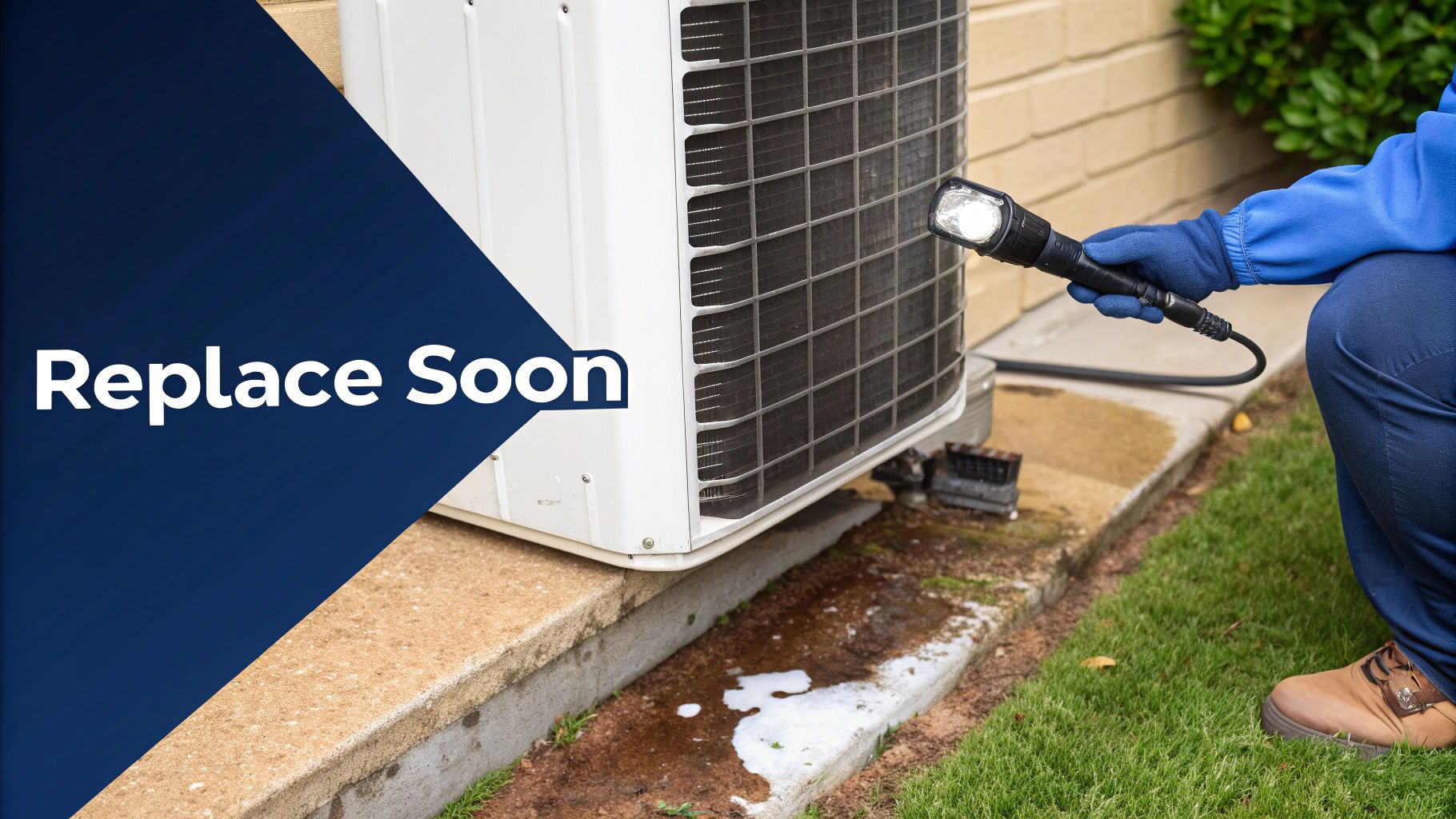
Even the most reliable air conditioner will eventually reach the end of the road. The key is to recognise the warning signs so you can plan for a replacement instead of being caught out during a 40-degree summer heatwave. These signs are your system’s way of telling you it’s getting tired and might not be worth another expensive repair job.
- Your Power Bills Are Suddenly Skyrocketing: If your usage habits haven’t changed but your electricity bills are climbing, your air conditioner is likely losing efficiency as its parts wear out.
- The System Struggles to Cool Your Home: Do you find yourself constantly lowering the thermostat? If the air from the vents feels weak or lukewarm, it could point to a failing compressor or a significant refrigerant leak.
- It’s Making Strange or Loud Noises: Your air conditioner should be a quiet hum in the background. Any new grinding, squealing, or banging sounds are serious red flags that internal parts are failing.
- Frequent and Costly Breakdowns: If you and your repair technician are on a first-name basis, it’s a clear signal the entire system is on its last legs. Pouring money into fixing one part after another is rarely a good investment.
- Excessive Moisture or Leaks: Finding water pooling around your indoor or outdoor unit can indicate a blocked drain line or, more seriously, a refrigerant leak.
- It’s Over 15 Years Old: Once a system passes the 15-year mark, it’s living on borrowed time. Technology has moved on, and a new unit will be far more energy-efficient, saving you money in the long run.
Ignoring these warnings often means you end up spending good money on a system that’s already past its prime. A single costly repair on an old unit could easily cover a significant portion of a brand-new, efficient system that comes with a full warranty.
Coastal vs Inland Lifespan Differences
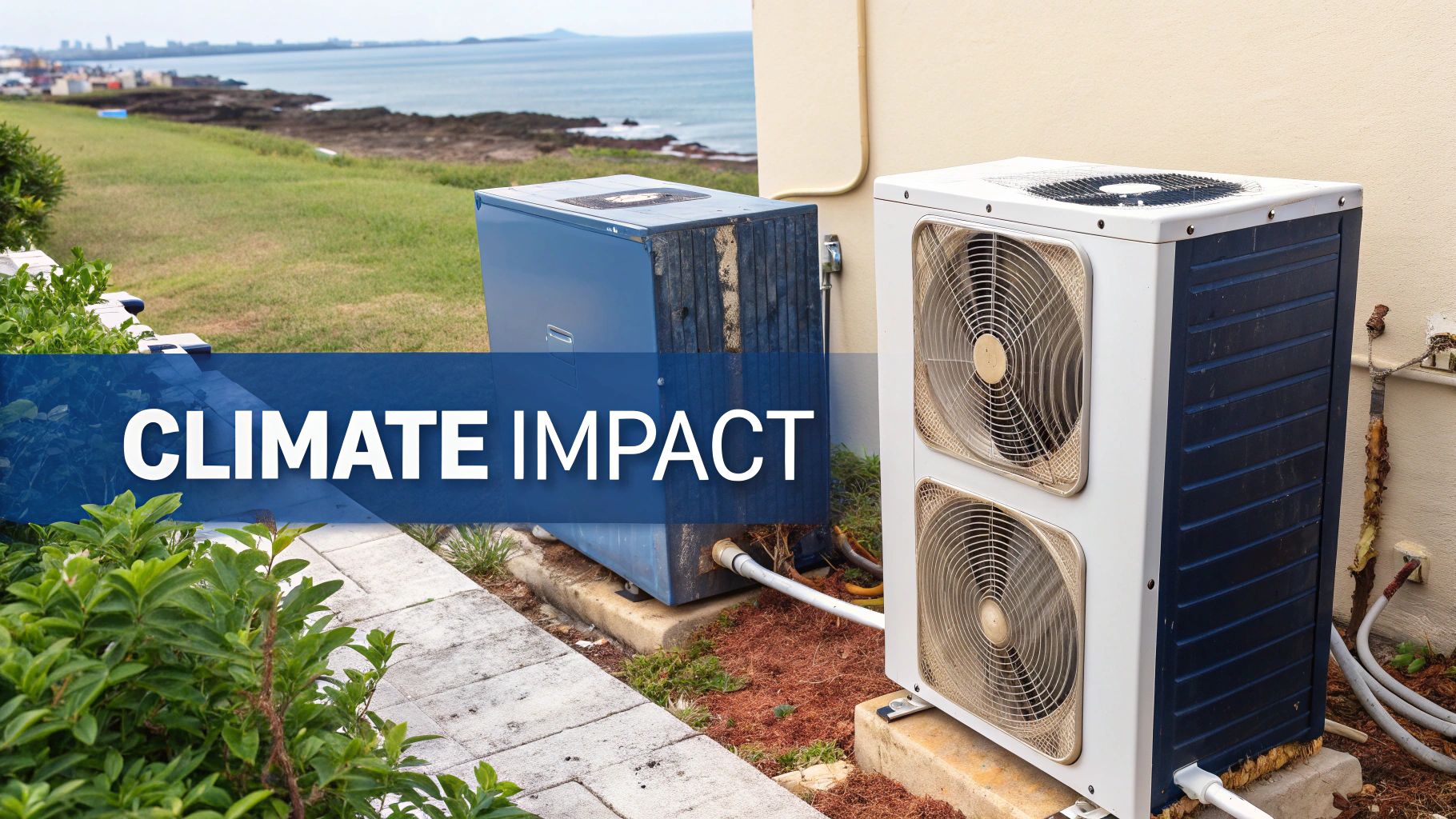
Where you live in New South Wales has a huge impact on how long your air conditioner will last. Your system isn’t just fighting the summer heat; it’s in a constant battle with its local environment. The salty air of the coast and the dry, dusty heat further inland each present unique challenges that can shorten your unit’s life if you’re not prepared.
This local knowledge is something we prioritise. It helps our technicians recommend the right system and create a maintenance plan that protects your investment from the specific threats in your postcode.
Coastal Conditions: Central Coast and Newcastle
If you live anywhere near the water, from Terrigal on the Central Coast to Merewether in Newcastle, your air conditioner faces a relentless enemy: salt. The humid, salty sea air is highly corrosive and aggressively eats away at the outdoor unit.
The main target is the delicate aluminium fins on the condenser coil. Over time, salt causes these to degrade and crumble. This damage makes it much harder for the unit to get rid of heat, forcing it to work overtime and eventually leading to premature failure. Without a unit designed with anti-corrosion coatings, a coastal environment can easily shave years off an air conditioner’s lifespan.
Inland Heat: The Hunter Valley
Head inland to the hotter, drier Hunter Valley, and the challenge is completely different. Here, the biggest issue is sheer workload. During those punishing summer heatwaves, air conditioners are forced to run at full capacity for days on end, which puts immense strain on the compressor and fan motors.
On top of that, the fine dust common in rural areas gets sucked into the system, clogging filters and coating internal parts. This build-up restricts airflow and also insulates components that need to release heat, causing the system to overheat and wear out much faster.
Urban Environments: Sydney
City life in Sydney brings its own unique mix of problems. The “urban heat island” effect is very real. Densely built-up areas absorb and retain more heat, meaning your air conditioner has to work harder, especially at night when things should be cooling down naturally.
For homes in Sydney’s busy western suburbs, this constant battle against heat and airborne pollution demands vigilant maintenance if you want your system to reach its full potential lifespan.
How to Extend Your Air Conditioner’s Lifespan
You have more control over your air conditioner’s longevity than you might think. While you can’t stop the clock, a little proactive care can easily add years of reliable service to your system. This isn’t about complex technical jobs, but a consistent routine of simple, smart maintenance.
The single most important thing you can do is book in for annual professional maintenance with a qualified technician. This isn’t just a quick filter clean; it’s a comprehensive health check for your entire system, and it’s absolutely crucial for both longevity and safety.
The Value of Professional Servicing
A professional air con service is like a preventative health check for your air con. It’s about spotting small issues before they snowball into major failures. A licensed technician with an ARCtick certification will run through a series of critical checks you simply can’t do yourself.
During a service, a technician will inspect and clean coils, check refrigerant levels for leaks, and test all electrical connections to ensure they are safe and compliant with Australian Standards like AS/NZS 3000. This professional tune-up gets your system ready for the intense summer heat, reducing the strain on its most critical components.
Simple DIY Tasks That Make a Big Difference
Alongside professional servicing, there are a couple of easy tasks you can do yourself. First, clean the filters on your indoor unit regularly. Clogged filters are the number one cause of poor performance; they restrict airflow and make your system work much harder than it needs to.
Second, keep the area around your outdoor unit clear. Make sure there’s at least half a metre of clear space around the unit, free from leaves, overgrown grass, and any other garden debris. This ensures the unit can “breathe” properly, drawing in air and expelling heat effectively. These simple steps contribute directly to a longer lifespan.
Don’t think of this as a chore. See it as a small investment in your system’s reliability. These simple steps directly help you avoid a surprise breakdown during a summer heatwave.
This proactive approach is standard practice. For example, to maximise longevity, Australian businesses are advised to clean or replace filters every one to three months and schedule professional maintenance. You can find more insights on commercial system care from the experts at Coles Refrigeration. Adopting these habits gives your air conditioner the best possible chance of outlasting its expected lifespan.
When to Replace Your Air Conditioner Instead of Repairing It
Deciding whether to patch up an old air conditioner or invest in a new one can be a tough call. But there’s a practical way to look at it, removing the guesswork and making sure you don’t throw good money after bad.
A solid rule of thumb we’ve seen hold true for years is this: if your air conditioner is over 10 years old and the repair bill is more than one-third of the cost of a new, comparable system, replacement is almost always the smarter move. This isn’t just about avoiding one big repair bill; it’s about thinking long-term.
The Repair vs Replace Calculation
Pouring hundreds of dollars into a major fix for a decade-old system can feel like a sunk cost, especially when you know another part could easily fail next summer.
When you buy a new air conditioner, you’re getting more than just a working machine. You’re buying peace of mind with a full manufacturer’s warranty. You’re also locking in significantly lower running costs, thanks to huge improvements in energy efficiency over the last decade.
In Australia, the industry often considers an air conditioner to have reached its ‘end-of-life’ when it’s more than two-thirds through its expected lifespan and needs a repair costing over 30 percent of the replacement price. You can read more about how Australian HVAC professionals define an appliance’s life expectancy to get a better feel for the industry standard.
Visualising Your Next Steps
Before you pick up the phone, there are a few simple checks you can do yourself. This decision tree lays out the first things to look at when your air con’s performance starts to slide.
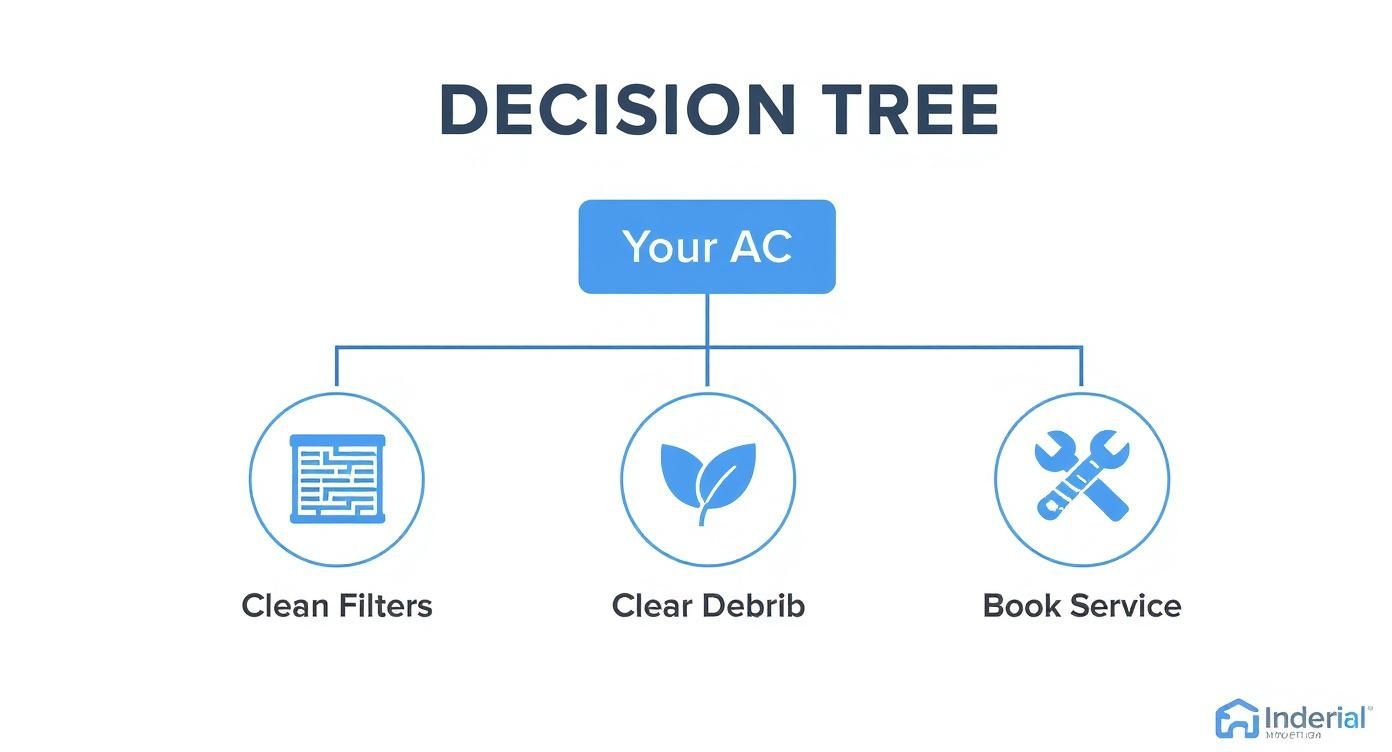
As you can see, the process starts with the basics you can handle yourself. From there, it moves to a professional assessment, which is vital for older, more complex systems.
Choosing to replace an older, failing unit is an investment in reliability and efficiency. It means predictable power bills and guaranteed comfort through the next scorching summer. If your system is showing its age, we can provide a free, no-obligation quote to help you make the smartest decision for your home and budget.
Your Top Questions Answered
Homeowners across the Central Coast, Sydney and Newcastle often ask us the same key questions about their air conditioner’s lifespan. Here are some quick, no-nonsense answers.
How Long Should a Split System Air Conditioner Last?
You can realistically expect a well-maintained split system to last between 10 and 15 years in a typical Australian home. Of course, factors like how hard you run it, how close you are to the coast, and whether it gets a regular professional service will determine if it reaches the lower or upper end of that range.
Is It Worth Fixing a 10-Year-Old Air Conditioner?
It really comes down to the cost of the repair. If the unit has been reliable and the fix is for a minor, inexpensive part, it can definitely be worth it.
However, if a major component like the compressor has failed and you’re looking at a quote that’s more than 30% of the cost of a new unit, it’s almost always more economical to replace it. A modern system will come with a fresh warranty and save you money on power bills.
Does Running My Air Conditioner All the Time Shorten Its Life?
Yes, absolutely. Just like driving a car 24/7 causes more wear and tear, continuous heavy use will shorten its lifespan. Running it flat-out on the lowest temperature setting forces the compressor and fan motors to work under constant strain, which definitely accelerates the ageing process.
A simple way to reduce the strain is to use your thermostat to maintain a comfortable temperature (around 24°C is perfect for summer) and turn the system off when you’re not home. This small habit can add years to its operational life.
If your air conditioner is showing its age or you’re facing a repair bill that makes you wince, get in touch with ALC Air. We can provide a free, no-obligation quote to help you weigh up your options and decide on the best path forward.
Contact us today for a professional assessment of your system.