


When you’re after that perfect, consistent temperature throughout your entire home, not just one room, ducted air conditioning is the answer. It’s the gold standard for seamless, whole-home climate control, giving you comfortable cooling and heating from discreet vents in every room, all managed by one central unit.
It’s a completely different approach compared to a split system that just tackles a single room. A ducted setup works quietly behind the scenes to bring total comfort to every corner of your house.
What Exactly Is Ducted Air Conditioning?
The easiest way to think about a ducted system is as your home’s central nervous system for comfort. A single command from you sends perfectly conditioned air exactly where it needs to go, through a network of hidden pathways. It’s a complete solution designed for total comfort, not just spot cooling.
The heart of the system is an indoor unit, which we usually tuck away out of sight in your roof space or under the floor. This unit is connected to a series of insulated ducts that branch out to each room or "zone" you want to control. Air is drawn from inside your home, cooled or heated by the powerful indoor unit, and then gently sent back into your rooms through small, subtle vents. It’s a continuous cycle that keeps the temperature right where you want it, everywhere.
Consistent Comfort vs Room-by-Room Cooling
The biggest difference between ducted air conditioning and other types, like a split system, is the scale of comfort. A split system is a fantastic solution for a single room or an open-plan living area. But to cool your whole house, you’d need multiple units bolted to walls in different rooms, leading to patchy temperatures and a cluttered look.
In contrast, ducted air conditioning is a fully integrated, centralised solution. It’s the perfect fit for family homes across the Central Coast and Sydney, where you want the bedrooms to be just as comfortable as the living room. It’s especially popular for new builds or major renovations, as we can run all the ductwork before the ceilings and walls go up, leaving you with a clean, minimalist finish where only the small grilles are visible.
Year-Round Climate Control with Reverse Cycle
Just about every modern ducted system we install in Australia features reverse cycle technology. This is a clever bit of engineering that allows the exact same unit to provide powerful cooling in summer and beautifully effective heating in winter. It simply reverses its refrigeration cycle to pull warmth from the outside air, even on a chilly day, and transfer it inside.
For the kind of climate we get across NSW, from sticky summer days in Newcastle to crisp winter nights in the Hunter Valley, a reverse cycle ducted system is an incredibly efficient and practical investment for year-round comfort. If you want to dive deeper into how it all works, you can learn more about the fundamentals of central air conditioning and how it provides that seamless, whole-home feel. It really does simplify your climate control into one easy-to-manage system.
How a Ducted System Cools and Heats Your Home
A ducted air conditioning system might look complex, but at its heart, the process is beautifully simple. It’s all about a continuous cycle: drawing in air, treating it, and then delivering it right where you need it. The whole process starts quietly, usually hidden away in your roof cavity.
An indoor unit draws in the air from your home. This is where the real work happens.
During summer, the air flows over an incredibly cold indoor fan coil. Think of it like a cold drink on a hot day. The coil is filled with refrigerant that absorbs the heat and humidity from the air. A powerful fan then gently pushes this newly cooled, dry air into a network of insulated ducts, delivering it through discreet vents in your ceiling.
For winter, the system simply reverses this process. The outdoor unit cleverly extracts heat from the outside air (even on cold days) and transfers it to the refrigerant. This hot refrigerant flows to the indoor coil, which then heats the air from your home before circulating it back through the ducts. The result? Cosy, consistent warmth without the stuffiness of old-fashioned heaters.
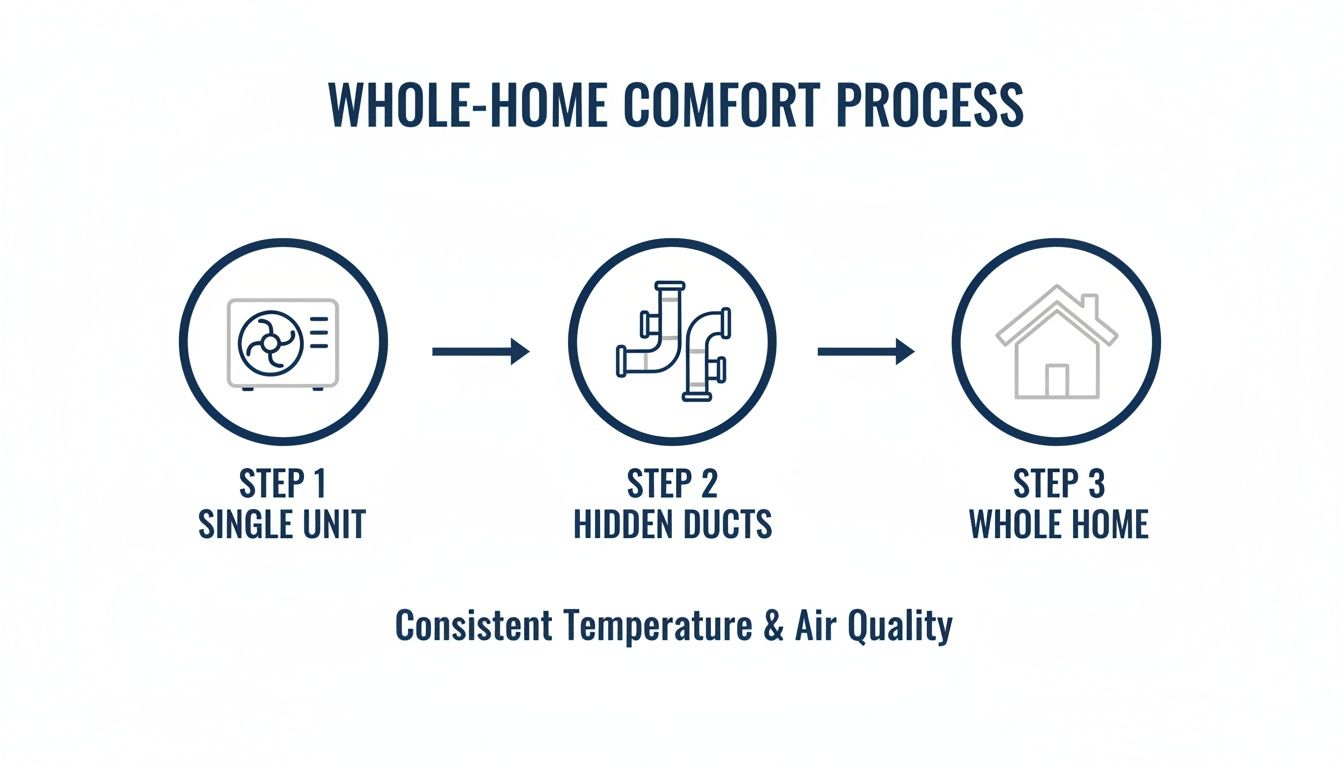
This diagram shows you the core benefit: a centralised, whole-home approach to comfort, not just isolated, room-by-room solutions.
The Critical Components Working Together
For your system to perform perfectly, several key parts have to work in perfect harmony. If the design or installation isn't spot on, you can end up with patchy temperatures or an inefficient system that costs a fortune to run.
Here are the main players:
- The Indoor Unit (Fan Coil): This is the engine room, tucked away in your roof space or under the floor, that does the actual heating and cooling.
- The Outdoor Unit (Condenser): Sitting outside, this unit’s job is to release heat from your home in summer or absorb it from the air in winter.
- Insulated Ductwork: Think of this as the delivery network. The quality of the insulation and the sizing of these flexible tubes are critical for preventing energy loss.
- Vents and Grilles: These are the subtle outlets in your ceiling or floor where the conditioned air enters each room.
- Central Wall Controller: This is your command centre. It’s where you set temperatures, create schedules, and manage different zones of your home.
Why Professional Design Is Non-Negotiable
Getting the design of a ducted system right is just as important as the quality of the equipment itself. Imagine you have a home in the Hunter Valley with huge west-facing windows. A system designed without considering that brutal afternoon sun is going to struggle, no matter how powerful the unit is. You’ll be left with a hot, uncomfortable living area every summer evening.
This is where a professional, licensed technician is essential. We don't just guess; we calculate the right duct sizes, the best placement for vents to avoid annoying draughts, and the correct kW capacity for your home’s specific layout and local climate. This meticulous planning ensures every room gets the right amount of airflow, eliminating those hot and cold spots.
If you're curious about the science behind it all, we have a more detailed explanation of how an air conditioner works in our guide.
More importantly, any job involving refrigerant and high-voltage electricity legally must be done by a licensed professional. All our technicians are fully qualified electricians and hold ARCtick certification, which guarantees your system is installed safely and meets all Australian Standards, like AS/NZS 3000. It's a non-negotiable requirement for your safety and your home insurance.
Choosing Between Ducted and Split System Air Conditioning
When you’re trying to decide on the right air conditioning, one of the biggest forks in the road is choosing between a ducted system and one or more split systems. Both are brilliant at what they do, but they’re designed for very different homes and lifestyles. Getting this choice right comes down to your home’s layout, your budget, and what you really value in year-round comfort.
A split system is your go-to for targeted cooling or heating in a specific space, like the main living room or a master bedroom. On the other hand, ducted air conditioning is engineered for seamless, whole-home climate control, delivering a consistent temperature from one end of your house to the other.
A Tale of Two Homes
To make this crystal clear, let's picture two very different, but very real, scenarios.
First, imagine a four-bedroom family home in Terrigal on the Central Coast. It’s a two-storey place where the kids' bedrooms are upstairs, and the main living and kitchen area is downstairs. In this situation, ducted air conditioning is the obvious choice. A single, powerful system keeps the entire home comfortable without plastering multiple noisy outdoor units all over the exterior walls.
Now, let's switch to a two-bedroom apartment in Sydney’s inner west. The living space is more compact, and you’ve probably got body corporate rules dictating where an outdoor unit can even go. Here, a high-quality split system in the main living area, and maybe another in the master bedroom, just makes more sense. It’s a practical, cost-effective solution that puts comfort exactly where it's needed most without the complexity of a ducted install.
To help you see the differences side-by-side, we've put together a quick comparison table. This isn't about which one is "better" – it's about which one is better for you.
Ducted Air Conditioning vs Split System At a Glance
| Feature | Ducted Air Conditioning | Split System Air Conditioning |
|---|---|---|
| Coverage | Whole-home, even temperature distribution | Single room or specific area |
| Aesthetics | Virtually invisible, with only discreet vents | Visible indoor unit mounted on the wall |
| Noise Level | Extremely quiet indoors (central unit is hidden) | Quiet, but the indoor unit is in the room |
| Initial Cost | Higher upfront investment | Lower upfront investment |
| Zoning | Excellent control to cool/heat specific areas | Each unit is its own zone |
| Property Value | Can add significant value, especially in larger homes | Adds some value, but less of a major feature |
| Installation | More complex, requires roof space | Simpler and faster to install |
This table gives you a snapshot, but the real decision often comes down to a few key factors that go beyond just the specs.
Key Factors to Consider
Your final choice will likely pivot on how you feel about these key differences.
- Aesthetics and Visual Impact: A ducted system is the minimalist’s dream. The only signs of it are the sleek, discreet grilles in the ceiling or floor, which won't clash with your interior design. Split systems, however, mean having a visible indoor unit mounted on the wall in every room you want to cool.
- Uniform Temperature Control: This is where ducted really shines. It provides an even, consistent temperature throughout the entire house. With split systems, you can walk from a perfectly chilled living room into a noticeably warmer hallway.
- Noise Levels: Because the main machinery of a ducted system is tucked away in the roof space, it runs incredibly quietly inside. All you'll ever hear is the gentle whisper of air flowing from the vents.
- Upfront Cost vs Long-Term Value: Let’s be honest, ducted air conditioning has a higher price tag to get started. But for a larger home, it can often be more energy-efficient to run than firing up multiple split systems at once. It’s also seen as a premium feature that adds real, tangible value to your property.
Zoning is another massive advantage for ducted systems. It gives you the power to direct air only to the specific areas you're using. You can shut down the living area zone when everyone heads off to bed, saving a huge amount on running costs. That's a level of smart control you just don't get with standard split systems.
If you're looking to get into the nitty-gritty, we've broken this down even further. Check out our detailed guide on ducted air conditioning vs split systems for a deeper dive that will help you make a truly informed decision.
So, What Does a Ducted Air Conditioner Cost?
Let's get straight to it. One of the first questions everyone asks is about the price tag on a ducted air conditioning system. It’s a significant upgrade for your home's comfort, and you need to know exactly what you’re paying for.
Unlike buying a fridge or a TV, you're not just buying a box. The final price is a blend of the high-quality equipment and the complex, skilled installation required to make it all work seamlessly.
The final figure really depends on your home. No two installations are the same. We have to look at the size of your house, how many rooms you want to cool, and the specific layout. A single-storey home in Lake Macquarie with a spacious, easy-to-access roof is a completely different job from a two-storey terrace in Sydney with tight spaces to work in.
The Key Factors That Shape the Final Price
When we put together a quote, we’re not just guessing. We're doing the maths on what it will take to give you a system that performs perfectly for your home and your family.
Here’s a quick rundown of what goes into that calculation.
- System Size (kW Capacity): This is the big one. The size or power of the main unit, measured in kilowatts (kW), is the single largest factor in the cost. A larger home simply needs a more powerful system to keep it cool. We run detailed calculations to make sure the unit we recommend is perfectly sized, not so big it’s wasteful, and not so small it struggles on a 40-degree day.
- Number of Zones and Outlets: Think of zones as areas you can control independently. The more zones and outlets (the vents in your ceiling) you want, the more ductwork, labour, and specific components are needed. A simple four-outlet system for a smaller home will naturally cost less than a ten-outlet, five-zone setup for a large family house.
- The Nitty-Gritty of Installation: This is where the unique character of your home really comes into play. Things like how easy it is to get into your roof space, the type of construction (brick, timber frame), and whether you're in a single or multi-storey home all impact the amount of labour involved.
- Brand and Model Choice: Just like with cars, different air con brands come with different price points. We stick with trusted names like Daikin and Mitsubishi Electric because they offer fantastic performance and rock-solid reliability, with options to suit various budgets.
Why You Can't Trust an Instant Online Price
Because of all these variables, a fixed price you see online is almost never going to be accurate. An on-site assessment is the only way to do it right. It lets us measure your rooms properly, get a good look at your roof space, and actually talk to you about how you live. This way, the quote you get is comprehensive, with no nasty surprises down the line.
Balancing the Upfront Cost with Long-Term Savings
While the initial investment for ducted air conditioning is higher than for a standard split system, it’s really important to think about the long-term picture. A well-designed system with smart zoning can be incredibly efficient to run.
You’re not wasting money and energy cooling empty rooms, which makes a huge difference to your power bills over the system’s 15-to-20-year lifespan. For a deeper dive into the numbers, check out our complete guide to understanding ducted air conditioner costs, which breaks all of this down in more detail.
The demand for better cooling solutions is growing across Australia, especially here in NSW. This trend is sometimes helped along by government incentives for energy-efficient models, which can help bring down that initial cost.
Our Installation Process, Step by Step
To make everything crystal clear, here’s exactly what you can expect when you work with the ALC Air team.
- The First Chat: It all starts with a simple conversation. Give us a call or fill out our online form, and we'll talk through your basic needs and what you're hoping to achieve.
- Free On-Site Assessment: One of our experienced technicians will visit your home to carry out a proper inspection, measure up, and talk you through the best options for your space and budget.
- A Clear, Fixed-Price Quote: You’ll get a detailed, itemised quote that has everything included. No hidden fees, no confusing jargon, just a clear breakdown of the recommended system and all the costs.
- The Professional Installation: Our licensed and ARCtick certified team will get the job done with as little disruption as possible. We treat your home like it's our own.
- System Handover and Walkthrough: Once everything is installed, we test the entire system to make sure it’s running perfectly. We’ll then show you exactly how to use your new controller so you can get the most out of your new system from day one.
Why Zoning and Smart Controls Are Essential
Zoning is, without a doubt, the smartest feature of a modern ducted air conditioning system. It's the difference between a simple on/off appliance and a genuine climate control solution that actually adapts to the way you live. Without it, you're just cooling or heating your entire house, even the rooms nobody is in.

The idea is simple: we divide your home into distinct areas, or "zones". This lets you send conditioned air only to the parts of your home you want, giving you total control over both comfort and your power bill. It’s the key to unlocking some serious savings on running costs.
How Zoning Works in a Real Home
Let's paint a picture of a typical evening in a family home in the Newcastle suburbs. Everyone’s gathered in the open-plan kitchen and living area. With a zoned system, you can direct all the cooling power into that single zone, keeping everyone comfortable without wasting a cent on the empty bedrooms upstairs.
Later, when everyone heads off to bed, you simply switch the living area zone off and turn the bedroom zones on. This intelligent use of your ducted air conditioning means you aren't paying to cool rooms all night long. It’s this level of control that makes a ducted system so incredibly efficient for larger homes.
Zoning isn't just a feature; it's a fundamental shift in how you manage your home's climate. It puts you in direct control of where your energy dollars are spent, ensuring comfort without the waste of conditioning unoccupied spaces.
The Rise of Smart Controls and Wi-Fi Apps
Modern ducted systems have thankfully moved beyond a clunky controller on the wall. Today's smart controls, usually managed through a Wi-Fi app on your smartphone, offer a level of convenience we could only have dreamed of a decade ago.
These apps let you tweak temperatures, switch zones on and off, and set detailed schedules from anywhere with an internet connection. Imagine this: you're wrapping up work in Sydney's CBD on a scorching afternoon, about to start the commute home to Lake Macquarie. With a quick tap on your phone, you can turn the air con on before you even get in the car. You’ll walk into a perfectly cool home without having had to leave the system blasting all day.
This remote access is brilliant for handling those unexpected changes in your routine. If you decide to stay out later than planned, you can easily adjust the schedule so you’re not wasting energy. It also gives you peace of mind, letting you check if the system was accidentally left on after you’ve left the house. This kind of smart management translates directly into lower power bills and a more comfortable, convenient lifestyle for your family.
Choosing Quality Brands And Looking After Your System
Putting a ducted air conditioning system into your home is a big decision, and it's one you want to get right for the long haul. To make sure that investment pays off, two things are absolutely crucial: picking a quality brand from the start, and committing to regular, professional maintenance. A great brand gives you a solid foundation, while proper care makes sure it keeps performing at its best year after year.
Over the last 15 years, we've installed systems in homes all across the Central Coast and Sydney, so we’ve seen firsthand which brands can handle our tough Aussie climate. We confidently recommend names like Daikin, Mitsubishi Electric, Fujitsu, and Actron Air. Why? Because they have a proven track record of performance, reliability, and excellent after-sales support right here in Australia. These aren't just names; they're companies known for engineering systems that are both powerful and seriously energy-efficient.
When you go with a reputable manufacturer, you're getting the benefit of all their research and development, solid warranties, and the peace of mind that comes with knowing spare parts are readily available if a repair is ever needed. For a more detailed look, you can check out our guide on the best ducted air conditioning brands to see which one might be the perfect fit for your place.
Why Regular Maintenance Is a Must-Do
It's an easy mistake to make: once the system is installed, you figure the job is done. But a ducted system is a complex piece of machinery that needs regular attention to keep running efficiently and safely. Think of it like servicing your car, if you skip it, you’ll notice poor performance, higher running costs, and eventually, a costly breakdown.
Getting a qualified, ARCtick licensed technician to service your system once a year is crucial. It keeps your unit running at peak efficiency, which helps keep those power bills in check. More than that, it actually extends the lifespan of the entire system, protecting the money you invested in the first place.
A well-maintained ducted system doesn't just save you money on running costs and future repairs; it also ensures the air circulating through your home is clean and healthy for your family.
What's Actually Involved in a Professional Service?
A proper maintenance check is a lot more than just a quick filter clean. When our technicians come out, they perform a thorough inspection to make sure every single component is working exactly as it should be.
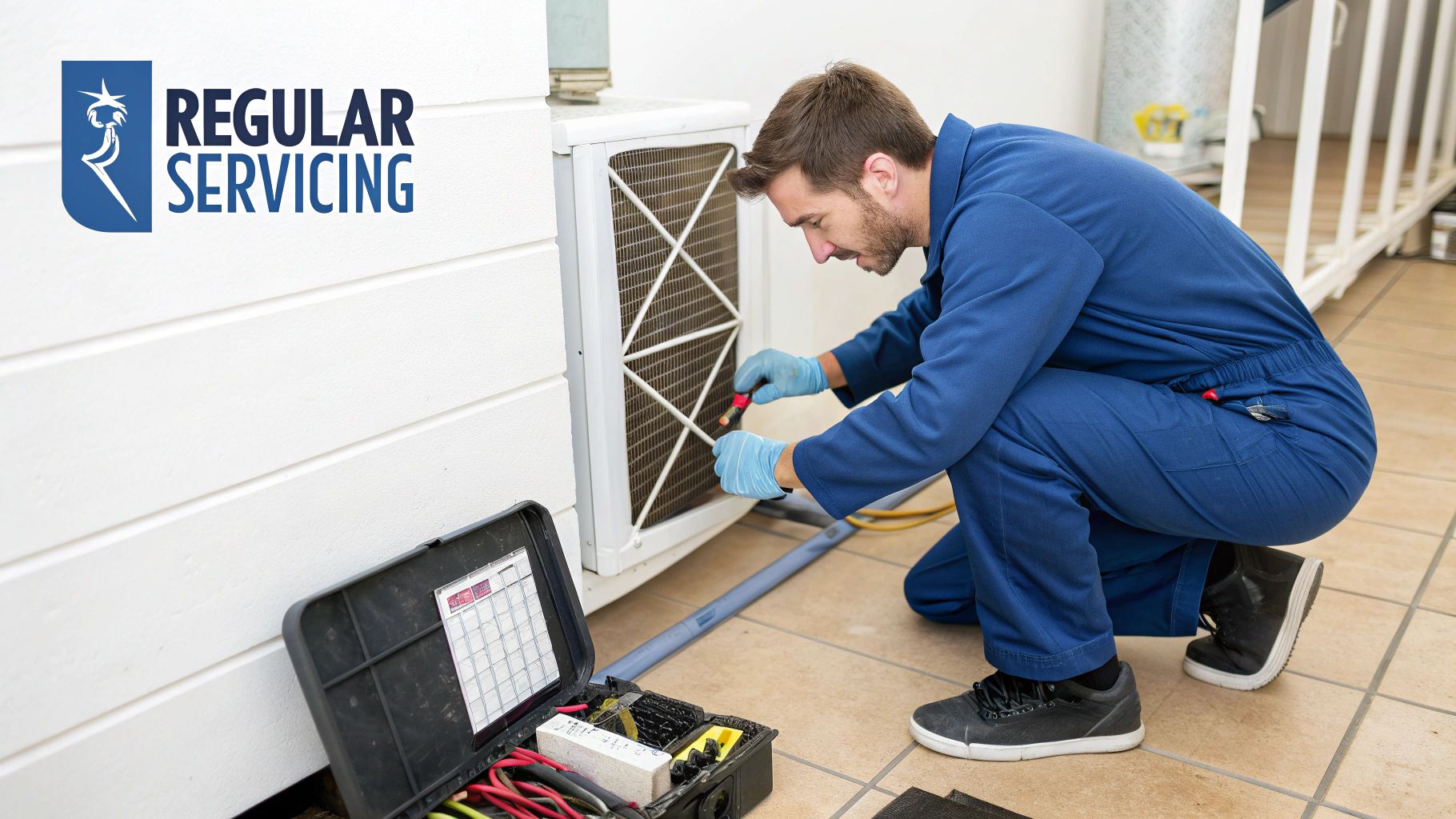
Here’s what a typical service includes:
- Cleaning filters, coils, and fans to improve airflow and boost your home's air quality.
- Checking refrigerant levels to ensure you're getting optimal cooling performance.
- Inspecting all the ductwork for leaks that can waste energy and cost you money.
- Testing electrical connections for safety, making sure everything is in line with AS/NZS 3000 standards.
- Calibrating your thermostats and checking that the zone motors are responding correctly.
This proactive approach is all about catching small issues before they snowball into major, expensive problems. For homeowners who like to dig into the details, understanding the components of an HVAC maintenance plan can offer some valuable insight from a contractor's perspective.
The inverter technology in modern ducted units is a significant advancement, capable of cutting electricity use by 25-35% compared to older, fixed-speed models. As energy prices continue to rise across NSW, that's a saving that really adds up, highlighting why so many people are making the switch to more efficient climate solutions.
Your Ducted Air Conditioning Questions Answered
We get it. Deciding on a new air conditioning system is a massive decision, and you’re bound to have questions. After installing systems in homes across the Central Coast, Sydney, and Newcastle for over 15 years, we’ve heard just about everything.
Here are some straight-up answers to the questions we get asked the most.
How Long Does a Ducted Air Conditioning System Last?
You can realistically expect a quality ducted system from a top-tier brand like Daikin or Mitsubishi Electric to last anywhere between 15 and 20 years. The single biggest thing you can do to hit that 20-year mark is to get it serviced regularly.
An annual professional service isn't just a "nice-to-have." It allows a technician to keep the system running at peak efficiency and, more importantly, to catch tiny issues before they snowball into expensive headaches. That harsh, salt-heavy air we get along the Central Coast and Newcastle coastline is especially tough on the outdoor units, making that routine check-up even more critical to prevent corrosion.
Can Ducted Air Conditioning Be Installed in an Existing Home?
Yes, absolutely. While it’s definitely simplest to run all the ductwork during a new build or a major reno, we retrofit ducted systems into existing homes all the time.
The main thing we need is enough space in your ceiling cavity or under the floor to run the network of insulated ducts. Our installers are experts at sizing up homes of all ages and styles to figure out the least intrusive, most effective way to get it done. It all starts with a free, no-obligation site visit where we can confirm it’s a viable option for your specific property.
How Much Noise Does a Ducted System Make?
This is a big one for people. The good news is that modern ducted air conditioning is engineered to be incredibly quiet. The parts that actually make the noise, the indoor fan coil and the outdoor condenser, are tucked away where you won’t notice them.
The indoor unit sits out of sight in your roof space, and the outdoor unit is placed discreetly outside. All you should ever hear inside your home is the gentle, consistent whisper of air coming from the ceiling vents. This is where professional installation is vital. Shoddy work with unsecured ductwork or poorly mounted components can lead to all sorts of annoying rattles and vibrations that a quality installation avoids.
Is Ducted Air Conditioning Expensive to Run?
Your running costs really come down to three things: how you use it, the system’s energy efficiency rating, and how well your home is insulated. Modern inverter systems are remarkably efficient, but the real secret to managing your power bill is using zoning properly.
Think about it, cooling only the rooms you’re actually in, instead of the entire house, makes a huge difference. If you compare it to firing up multiple split systems to try and cool down a whole house for a family gathering, a well-designed, properly zoned ducted system is almost always the more energy-efficient and cost-effective choice in the long run.
Ready to find the perfect climate control solution for your home? The team at ALC Air has the local knowledge and technical expertise to design a ducted air conditioning system that fits your home, lifestyle, and budget.
Get your free, no-obligation quote today and enjoy whole-home comfort.