


So, you’re trying to pin down the actual ducted air conditioning price and you want a straight answer, not a sales pitch. Let's get right to it. For a standard single-storey home on the Central Coast or in Newcastle, you can expect a fully installed system to start from around $9,000 and go up to $20,000 or more.
That price gets you a complete, whole-home comfort solution, not just a single box on the wall. Think of it as investing in your home's central nervous system for climate control. We're here to walk you through what goes into that cost so you can make a smart, informed decision for your family.
Typical Ducted Air Conditioning Prices In NSW
Getting a realistic idea of the price helps you budget properly for what is a significant and genuinely valuable home upgrade. Unlike a split system that just tackles one room, a ducted system is a whole network designed to deliver consistent comfort everywhere, whether you're in a townhouse in Terrigal or a family home in Lake Macquarie.
The total investment covers everything: the powerful outdoor unit, the discreet indoor unit hidden in your roof, the intricate web of ductwork, all the vents, and the smart controller that puts it all at your fingertips.
To give you a clear starting point, we've broken down the typical costs based on home size. This isn't a final quote, but it's a solid guide for what to expect. If you want to dive deeper into how these systems compare, check out our guide explaining what ducted air conditioning is and how it works.
Important Note: These figures are solid estimates for standard, single-storey installations. Complex projects, two-storey homes, or premium brand systems will naturally shift into a higher price bracket.
Typical Ducted Air Conditioning Price Ranges In NSW
This table shows estimated price ranges for a fully installed reverse cycle ducted system in a standard single-storey home, helping you budget for your project.
| Home Size / Type | Estimated Price Range (Fully Installed) | Best Suited For |
|---|---|---|
| Small Home (2-3 bedrooms) | $9,000 – $12,000+ | Compact single-storey homes, villas, or townhouses needing 2-4 zones. |
| Average Home (3-4 bedrooms) | $11,000 – $16,000+ | Most single-level family homes in suburbs across Sydney or the Central Coast. |
| Large or Two-Storey Home (4+ beds) | $15,000 – $20,000+ | Larger properties, multi-level homes, or designs requiring complex zoning solutions. |
These numbers give you a strong foundation for planning. The next step is understanding what specific factors, from your home's layout to the brand you choose, will influence where your project lands within these ranges.
Decoding Your Ducted Air Conditioning Quote
Getting a quote for a new ducted system can feel a bit like reading a foreign language. It’s never just a single number; it's a detailed blueprint for your home's comfort, and understanding the different parts helps you see exactly where your money is going. More importantly, it helps you spot where cheaper offers might be cutting corners.
Think of a complete system like the human body. You have the indoor and outdoor units, which are the heart and lungs, working together to heat or cool the refrigerant that flows through the system. Then you’ve got the ductwork – the arteries and veins that carry all that conditioned air from the indoor unit into every room.
The Brains and Bones of Your System
The controller is the brain of the whole operation, giving you direct command over temperature, schedules, and airflow. And if you have zoning components like dampers and sensors, they act like the muscles, directing that conditioned air only to the parts of the house that actually need it, which is a massive help for efficiency. Getting the size and layout of all this right is absolutely critical, and you can learn more about this in our complete guide to sizing your air conditioner.
Of course, one of the most important line items on any quote is the cost of professional labour. This isn't just paying for someone's time. It's an investment in the safety and long-term performance of your system. You're paying for fully licensed and ARCtick certified technicians who make sure every single electrical connection and refrigerant line is installed to strict Australian Standards, like AS/NZS 3000.
This infographic shows how the price of a ducted system scales up depending on the size of the home.
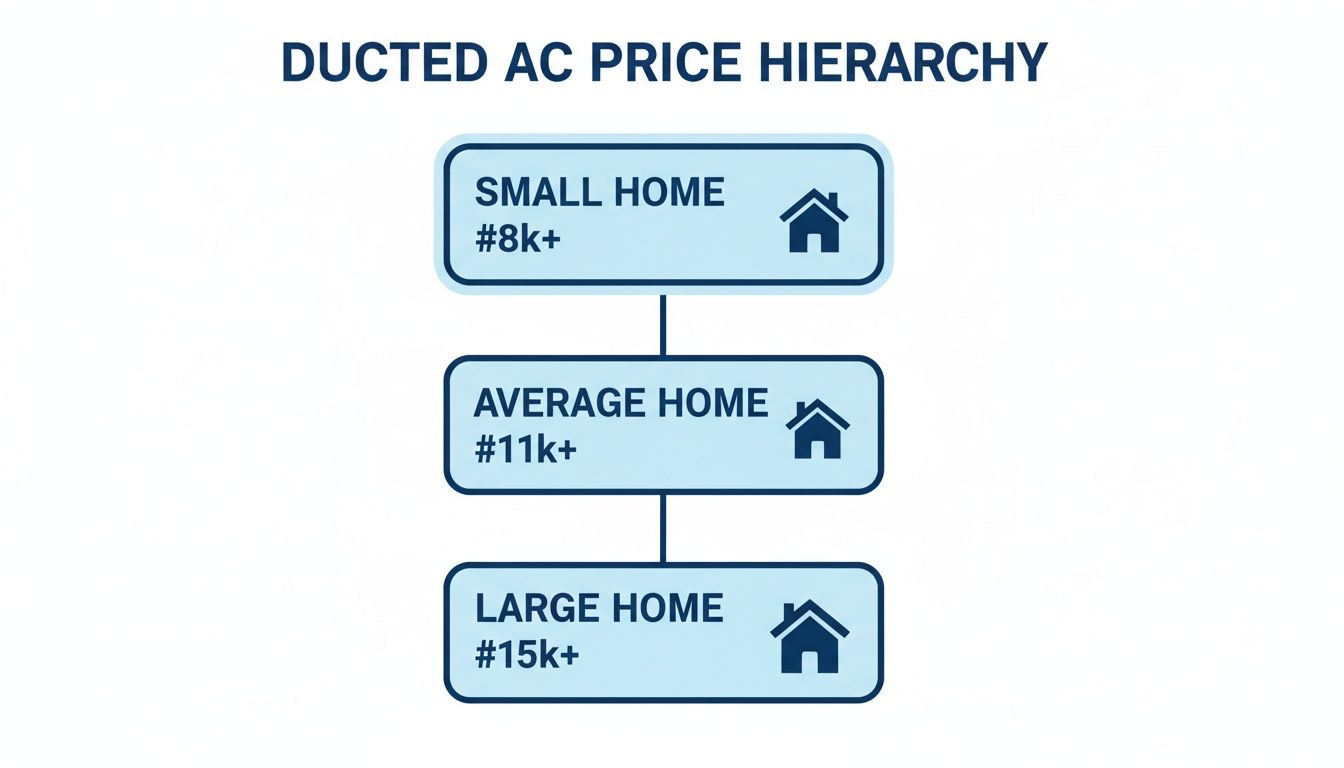
It's a clear visual breakdown: as a home gets bigger and more complex, the investment needed for a complete ducted solution naturally goes up with it.
A suspiciously low quote almost always signals a compromise. It could be on the quality of the materials, the installer's licensing, or their adherence to safety codes, all of which can lead to poor performance and expensive repairs down the track.
Here in New South Wales, the cost to install a ducted air conditioning system in an average single-storey home typically lands somewhere between $9,000 and $20,000. It's a significant investment, but you're getting whole-home comfort. This pricing reflects the specific demands of our region, from the complex layouts in coastal homes on the Central Coast to the need for really effective zoning in humid Sydney suburbs. For those interested in the business side of things, seeing how tools can generate instant estimates offers a fascinating look into improving customer experience and sales efficiency.
Key Factors That Influence Your Final Quote
When you start getting quotes for ducted air conditioning, you might notice something odd. Two houses that look pretty similar on the outside can get wildly different prices. That final number on your quote isn't pulled out of thin air; it's the sum of a bunch of factors unique to your home and your needs.
Understanding what goes into that final figure helps you see exactly what you're paying for and why a proper on-site assessment is so important.
The single biggest driver of your ducted air conditioning price is the size and layout of your house. It's a simple matter of physics. A compact, single-storey villa in Umina Beach just doesn't have the same heating and cooling demand as a sprawling two-storey home in the Hunter Valley. Our first job is to calculate the total volume of air we need to treat and then design a system with the right capacity (measured in kilowatts or kW) to handle it. The goal is to find that sweet spot: powerful enough to work efficiently without being overworked, but not so oversized that you’re paying for capacity you'll never use.
Zoning and System Complexity
Another major factor is the number of zones you want. Zoning is what gives you control, allowing you to direct airflow to different parts of your home independently. Think of it as being able to turn off the cooling in the bedrooms during the day while keeping the living area comfortable.
Every zone you add needs its own motorised damper in the ductwork, and often its own temperature sensor. This adds to the initial material and labour costs. However, despite the higher initial price, zoning is one of the best ways to reduce your running costs. By only conditioning the rooms you're actually using, you slash wasted energy.
This is a classic trade-off between upfront investment and long-term savings. For example, a typical system for a Newcastle home might have four zones: living area, kitchen/dining, master bedroom, and kids' rooms. This allows the family to only run the air where it's needed, leading to some pretty substantial savings on their power bills over the life of the system.
Home Construction and Brand Choice
The unique quirks of your home also play a massive part in the final cost. Consider this scenario: navigating a tight or cluttered roof space in an older Sydney terrace with very low clearance requires a lot more time and specialised labour than a brand-new build with a walk-in roof cavity.
The quality of your insulation makes a direct impact, too. A well-insulated home holds its temperature much better, which means the air conditioner doesn't have to work as hard. In some cases, this might even allow us to specify a slightly smaller (and less expensive) unit without sacrificing comfort.
Finally, the brand you choose will influence the price tag. We work with trusted names like Daikin, Mitsubishi Electric, and ActronAir because they have a proven track record for reliability and performance. While a premium brand might have a higher purchase price, they often deliver better long-term value through superior energy efficiency, quieter operation, and stronger warranty support. The right choice really comes down to your budget and priorities, and we can walk you through the pros and cons of each to find the best fit for you.
Thinking Beyond The Installation Price
A truly smart investment looks at the whole picture, not just the number on the quote. That initial ducted air conditioning price is the starting line, not the finish. To understand the real value you're getting, we need to shift focus to the ongoing costs that kick in once the system is up and running.
Your electricity bill is the most significant long-term expense. This is precisely where choosing a modern, energy-efficient inverter system, and making sure it’s the right size for your home, makes a massive difference. An undersized system will run itself ragged on a hot day in Sydney's western suburbs, chewing through power. An oversized one will constantly turn on and off, which is incredibly inefficient and puts extra wear on the components.
Protecting Your Investment With Preventative Care
It’s like picking the right engine for your car. A perfectly matched system just hums along, delivering comfort without the shocking power bills. You can take a deeper dive into how much running an air conditioner costs in our detailed guide, but the short version is that efficiency is everything.
Preventative maintenance is the other piece of the long-term puzzle. Think of it as a small, annual check-up to protect a major investment in your home. Just like you service your car to keep it reliable, a regular tune-up for your air conditioner ensures it runs at peak performance and catches small issues before they snowball into big, expensive breakdowns.
A scheduled service is your best insurance against system failure during a scorching summer heatwave on the Central Coast or a freezing winter morning in the Hunter Valley. It’s a proactive step that ensures reliability when you need it most.
This annual service involves cleaning filters, checking refrigerant levels, inspecting all the electrical connections, and making sure the entire system is performing to the manufacturer’s specifications. Not only does this keep your system efficient, but it’s also often a condition of keeping your warranty valid.
The True Cost of Neglect
Skipping your annual service might save you a little bit of cash today, but it almost always costs you more down the track. Something as simple as a clogged filter or a slow refrigerant leak can force the compressor to work much harder, leading to significantly higher electricity consumption and, eventually, premature failure of key parts.
Ultimately, looking beyond the installation price means you're planning for the entire life of the system. By pairing a high-efficiency unit with regular, professional maintenance, you ensure your ducted air conditioning provides years of reliable, cost-effective comfort for your family. It transforms the purchase from a simple expense into a lasting and valuable home asset.
How To Get The Best Value For Your Investment
Making a smart investment in ducted air conditioning isn't about chasing the absolute cheapest quote you can find. It’s about getting the best possible performance, reliability, and comfort for your money over the entire life of the system.
Cutting corners on the install might lower the initial ducted air conditioning price, but it almost always leads to higher running costs and frustrating, premature repairs down the track.
The key is to focus on long-term value, not just the upfront number on the quote. A quality installation from a reputable team ensures your system is designed and fitted correctly from day one, which is the single best way to guarantee its efficiency and longevity.
Compare Quotes Like An Expert
When you’ve got a few quotes in hand, it’s crucial to make sure you’re comparing apples with apples. A lower price might look tempting, but it could be for a smaller capacity unit, a less reputable brand, or a system with fewer zones than you actually need.
A professional quote should be a detailed document, not just a single figure scrawled on a page. To make a fair comparison, check that each quote clearly specifies the exact make and model of the units, the system's capacity in kilowatts (kW), the number of zones and outlets included, and the type of controller being offered.
If one quote is significantly cheaper but doesn’t give you this level of detail, that's a major red flag. It often means they're using lower-quality components or haven't sized the system correctly for your home in the first place.
Focus On Long-Term Savings
One of the most effective ways to get better value is to invest in a high-energy-efficiency model. These systems might have a slightly higher purchase price, but their reduced electricity consumption delivers real savings, year after year.
Over a decade, a highly efficient system can easily pay for the initial difference in cost through lower power bills alone.
Think of it this way: the purchase price is a one-time payment, but the running cost is a bill you pay every quarter for the next 15 years. Prioritising efficiency is a decision that keeps on giving back.
Ultimately, getting the best value comes from making an informed decision. By choosing a high-quality, energy-efficient system and partnering with a licensed installer who provides transparent, detailed pricing, you’re securing a reliable comfort solution that will be a genuine asset to your home for years to come.
To keep your system running at its peak, have a look at our guide on essential air conditioning maintenance. This kind of proactive approach is the smartest way to protect your investment and enjoy lasting comfort.
Why Your Installer Is As Important As The System Itself
Even the most advanced, top-of-the-line ducted system will struggle if the installation is a hack job. This highlights a crucial truth in the air conditioning world: your choice of installer is just as vital as the brand of unit you select. A premium system installed poorly is a surefire recipe for high energy bills, annoying noises, and rooms that are never quite the right temperature.
When you invest in a ducted system, you're buying a lot more than just a piece of equipment. You're paying for the expertise and careful workmanship needed to weave that system perfectly into the bones of your home.
The Hallmarks of a Professional Installer
A quality installation partner doesn't just hang a unit and hope for the best. Their service starts with a meticulous system design, calculating airflow requirements, planning duct layouts for maximum efficiency, and ensuring every single component works in harmony. This professional approach is your best defence against common problems and protects your financial investment down the line.
When you're sizing up an installer, think about their whole operation. Do they communicate clearly and run their business efficiently? A company that invests in modern solutions to stay organised, like those discussed in an article about an AI receptionist for general contractors, is likely to provide a more responsive and professional service all around.
It is absolutely essential that the company you choose holds the right licences. This isn't negotiable. They need a full electrical licence for any wiring work and an ARCtick certification, which is a legal requirement for anyone handling refrigerants in Australia.
Your installer must be a licensed electrician and hold an ARCtick licence from the Australian Refrigeration Council. Never let an unlicensed individual perform electrical or refrigerant work on your property; it’s unsafe, illegal, and will void your warranty.
Ultimately, a great installer doesn't just sell you a box. They deliver a complete, engineered solution designed specifically for your home’s unique needs. For more tips on what to look for, check out our guide on how to find quality air conditioning service on the Central Coast.
Common Questions About Ducted Air Conditioning Prices
We get it. As soon as you start looking into the ducted air conditioning price, a whole lot of questions pop up. To help clear the air, we’ve put together answers to the most common queries we hear from homeowners across the Central Coast, Sydney, and Newcastle.
Is Ducted Air Conditioning More Expensive Than Split Systems?
Yes, the upfront investment for a ducted system is definitely higher than for a single split system. A split system is designed to cool just one room, whereas a ducted system is a complete, whole-home solution that needs a lot more design work, labour, and materials like ductwork.
But it's not always a clear-cut comparison. If you were to install four or five individual split systems to get coverage across your whole house, the total cost would start creeping up towards the price of a basic ducted system. At that point, going with ducted becomes a more elegant and often more efficient choice for total home comfort.
How Long Does a Ducted System Last?
With a professional installation and regular annual maintenance, you can expect a quality ducted system from a brand like Daikin or Mitsubishi Electric to last for 15 years or more.
The fastest way to shorten that lifespan? Skipping maintenance. Doing so puts a huge amount of strain on the most critical parts of the system, like the compressor. Think of it this way: a small investment in a yearly service is the best way to protect the much larger investment you made in the system itself.
Can I Get A Quote Over The Phone?
While we can give you a rough ballpark figure over the phone, a firm and accurate quote is impossible without seeing your home in person. Every house is different. The layout of your roof space, the type of insulation you have, and even which way your home faces the sun all have a direct impact on the final design and cost.
An on-site assessment is the only way to guarantee the system is perfectly sized for your home. This step is critical for ensuring long-term efficiency and performance, preventing issues that a "best guess" quote can't account for.
A proper assessment means you get a fixed price with no nasty surprises down the line. We can come to you anywhere from the Hunter Valley to Sydney's northern beaches to ensure everything is perfect.
Ready to find the perfect climate control solution for your home? The team at ALC Air provides professional advice and a free, no-obligation quote tailored to your specific needs. Visit us at https://alcairconditioning.com.au to get started.