


Of all the bits and pieces that make up your ducted air conditioner, the filter is the one component you can, and should, get familiar with. It's the first line of defence for your system's health and, just as importantly, the quality of the air inside your home. At its core, it’s just a simple mesh screen, but it has a massive impact on your system's efficiency and your power bills. Think of it as a small task that prevents big problems.
The Hidden Role of Your Air Conditioner Filter
Before you even think about grabbing a ladder, it’s worth understanding why this simple component is so critical. Your ducted air conditioner filter is the gatekeeper for your entire system and your family’s comfort.
We like to think of it as the lungs of your home. It’s constantly breathing in air from your living spaces, cleaning it, and then circulating it back through every single room.
Why a Clean Filter Matters So Much
That simple screen is designed to trap dust, pollen, pet dander, and other airborne nasties, stopping them from being endlessly circulated through your house. This is especially vital in places like the Central Coast or Newcastle, where coastal air can carry extra moisture and allergens you really don't want spreading indoors. A clean filter simply means healthier air for you and your family to breathe.
Beyond just keeping you cool, the filter’s most overlooked job is protecting your home's air quality. By trapping pollutants, it’s a key player in various methods for improving indoor air quality. The moment that filter gets clogged, however, those benefits vanish.
A blocked filter forces your air conditioner’s fan motor to work overtime just to pull enough air through the system. This chews through more electricity and puts a huge amount of strain on the components, which can easily lead to expensive, avoidable repairs down the track. If you want to get into the nitty-gritty of how it all works, we cover it in our complete guide to ducted air conditioning.
Finding and Safely Accessing Your Filter
First things first, you need to find the filter. Locating your ducted air conditioner filter can sometimes feel like a treasure hunt, but it’s almost always tucked away in the same spot: behind the return air grille.
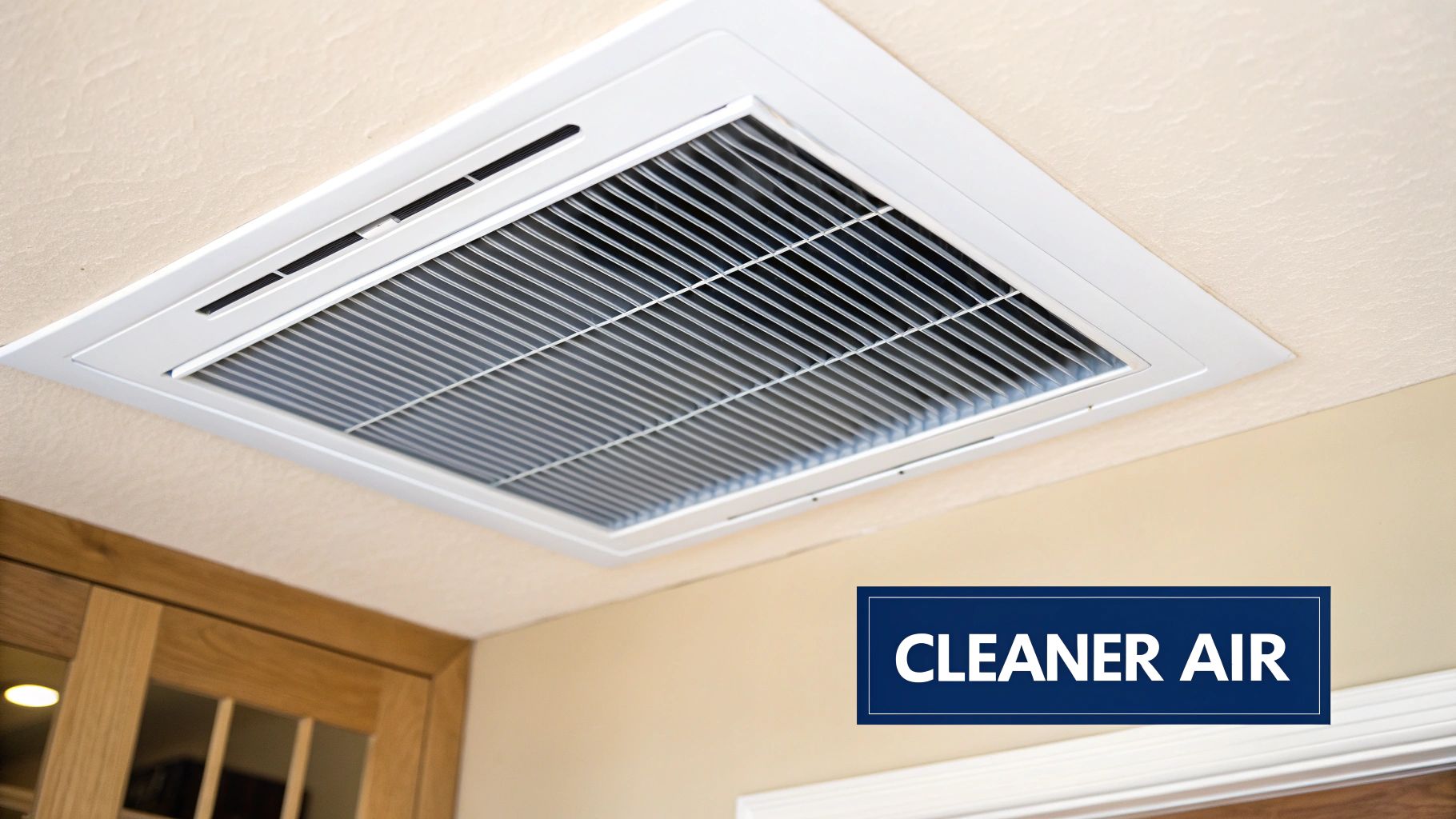
This is typically the largest grille in your home. Have a look up at the ceiling in a central hallway or your main living area. You’re looking for a big, rectangular or square vent with a grid-like pattern. This is where your system pulls air in from the house to be cooled or heated before it gets sent back out through the smaller vents in each room.
Safety First, Always
Before you even think about touching that grille, there's one step that is absolutely non-negotiable.
Walk over to your home's switchboard or circuit breaker box and turn off the power to the air conditioning unit. This is, without a doubt, the most important thing you'll do.
Messing with any part of your system while it's live is a serious electrical risk. This isn't just a friendly suggestion; it's a critical safety practice that aligns with SafeWork NSW guidelines to prevent accidents. Don't ever skip it.
How to Open the Return Air Grille
Once you're certain the power is off, you can safely open the grille. The mechanism is usually pretty straightforward. In most homes across Sydney's suburbs, you'll find hinged grilles held shut by small, sliding clips or simple thumb screws.
- For sliding clips: Gently push the clips on the side of the grille frame inwards or outwards. This should release the latch, letting the grille hinge downwards like a little trapdoor.
- For thumb screws: These are designed to be loosened by hand. Just twist them until the grille panel can swing open on its hinges.
Be ready for a little dust to fall when you open it, and whatever you do, don't force anything. These mechanisms are designed to open easily, so if you're feeling a lot of resistance, take another look for a clip you might have missed. For example, a larger grille in a two-storey Hunter Valley home might have four clips instead of the usual two.
Once it's open, you'll see the filter sitting just inside. Carefully slide it out of its tracks, trying to keep it level so you don't spill a decade's worth of dust all over your floor. With the filter now in hand, you’re ready for the next step.
How to Properly Clean Your Reusable Filter
Good news for your wallet: most ducted systems in Australian homes come with a reusable, washable filter. Cleaning it is a straightforward job you can tackle yourself, and doing it right is one of the best things you can do for your system's airflow and the quality of the air you breathe.
First things first, take the filter outside. Shaking it out or cleaning it indoors just releases all that trapped dust straight back into your home, completely defeating the purpose. A few gentle taps against a solid surface will dislodge the worst of the loose gunk.
This simple process shows the key steps for finding and getting to your filter before you even think about cleaning.
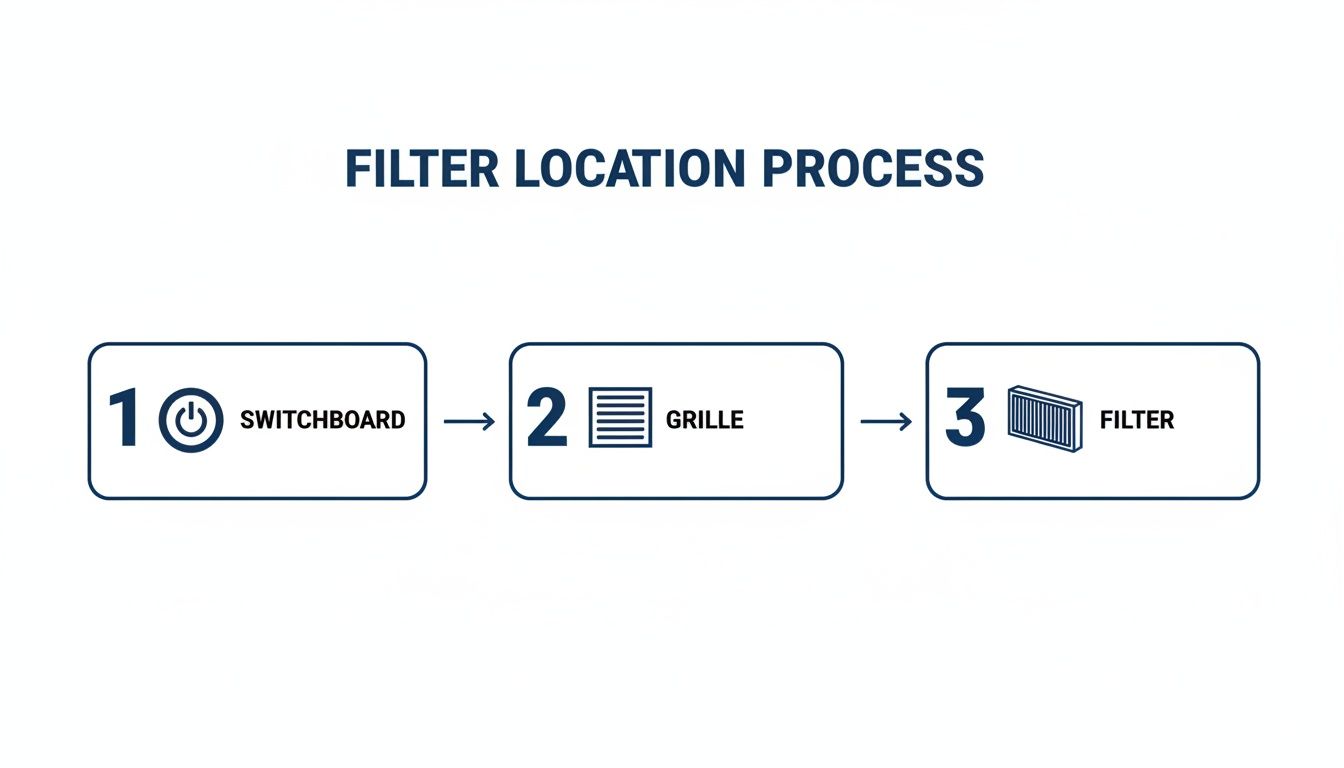
It’s a visual reminder to always put safety first, starting at the switchboard before you touch the grille to get to the filter itself.
The Cleaning Process, Step by Step
For the initial clean, a vacuum cleaner with a soft brush attachment is your best friend. It’s perfect for lifting off that surface layer of dust and grime without being too aggressive. Be gentle here, you don't want to damage the delicate mesh. Just run the brush over both sides until most of the visible debris is gone.
Next up is the wash. You don't need any harsh chemicals for this at all. A garden hose on a low-pressure setting is ideal. If you don't have a hose handy, rinsing it in a laundry tub with lukewarm water and a tiny bit of mild dish soap works just as well. Let the water run through the filter in the opposite direction of the normal airflow until it runs clear.
This little detail helps push the embedded particles out of the mesh instead of forcing them deeper in. It’s a small trick that makes a big difference.
Crucial Tip: Never, ever use hot water or a pressure washer. High temperatures can easily warp the filter’s frame, and high pressure will tear the mesh in a heartbeat, rendering the filter useless. A gentle rinse is all it takes.
The Most Important Final Step: Drying
Once the filter is clean, give it a good shake to get rid of any excess water and find a spot for it to air dry completely. A shaded, well-ventilated area is perfect. It might be tempting to use a hairdryer or stick it in the hot sun to speed things up, but resist. Direct heat can also cause damage.
This step is especially critical if you live in a humid coastal area like Lake Macquarie or the Central Coast. A damp filter is the perfect breeding ground for mould and mildew. Putting it back into your system while it's still wet can blow these nasty spores directly into the air you breathe, creating a whole new air quality problem.
Make sure the filter is 100% bone-dry to the touch before you even think about sliding it back into the return air grille. This simple bit of patience ensures your system circulates nothing but clean, healthy air. This task is a fundamental part of a good home maintenance routine, which you can learn more about in our guide to essential air conditioning maintenance.
Knowing When It's Time for a Replacement
While a good clean brings a reusable filter back to life, it won’t last forever. Over time, even the best filters wear out, and knowing when to replace yours is just as important as knowing how to clean it. A filter that’s past its prime simply can’t do its job effectively, putting your system and air quality at risk.
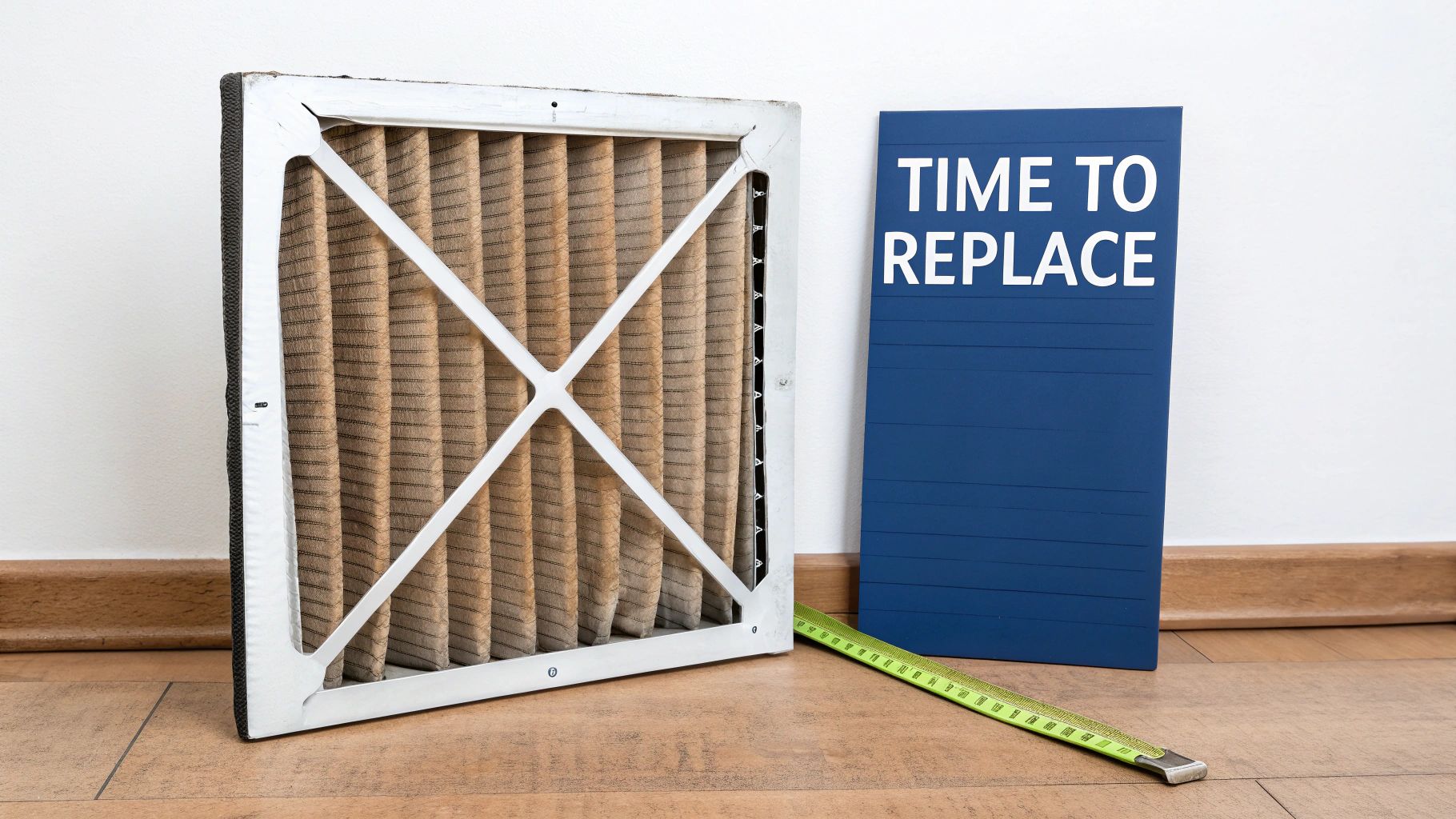
The signs of a worn-out filter are usually quite obvious once you know what to look for. During your regular clean, give it a thorough inspection. If you spot any visible tears, holes, or thinning patches in the mesh, it’s definitely time for a new one. A damaged filter allows dust and debris to bypass it completely, going straight into your system’s sensitive internal components.
Also, check the frame itself. After years of being removed and washed, a plastic frame can become brittle and may crack or warp. A warped frame won’t sit snugly in the return air grille, creating gaps that let unfiltered air sneak through.
Understanding Filter Types and Ratings
When you look for a replacement, you might come across disposable filters. These are typically made of cardboard and pleated fabric and are designed to be thrown away, not washed. While less common in standard residential ducted systems here in Australia, it's good to know they exist.
You'll also see something called a MERV rating. MERV stands for Minimum Efficiency Reporting Value, which is just a simple way of rating how effective a filter is at trapping tiny airborne particles. The scale usually runs from 1 to 16; the higher the number, the smaller the particles it can catch.
For most homes, a filter in the MERV 4-8 range strikes a great balance between good filtration and healthy airflow. However, if your family in a suburb like Penrith deals with allergies or you have pets shedding dander, stepping up to a MERV 9-12 filter can make a noticeable difference to your indoor air quality.
Just be careful not to go too high without professional advice. A highly restrictive filter can starve your system of air, which causes its own set of problems. To stay on top of this, a comprehensive preventive maintenance checklist for HVAC can be an invaluable tool.
Getting the Size Spot On
Finding the right size is crucial. An incorrectly sized filter will either not fit at all or leave gaps, defeating its purpose entirely. The easiest way to get the correct dimensions is to measure your old filter’s length, width, and thickness with a tape measure.
Write these numbers down and take them with you when buying a new one. If you can’t find the filter, checking your air conditioner’s user manual is your next best bet.
Getting this right is a small step that protects the long-term health of your entire system. Understanding the signs of wear helps you get more out of your investment; we explore this further when discussing how long air conditioners last.
When to Call a Professional for a System Service
Giving your ducted air conditioner filter a regular clean is a fantastic habit, but it’s only one piece of the puzzle. Think of it like topping up the oil in your car, it’s essential, but it doesn’t replace a full service by a mechanic. There are some critical jobs that go far beyond what you can see at the return air grille.
These tasks require specialised tools, years of technical knowledge, and just as importantly, the right licences to be performed safely and legally. Trying to tackle them yourself can lead to some pretty serious system damage or, even worse, create a dangerous electrical hazard in your home.
Signs That Go Deeper Than a Dirty Filter
Sometimes, your system will give you clear signals that a simple filter clean isn't going to cut it. If you’ve just cleaned or replaced your filter but are still dealing with the same old issues, it’s a sure sign that a deeper problem is at play.
Keep an eye out for these tell-tale warnings:
- Weak Airflow: If the air coming from your vents still feels weak or sluggish even with a sparkling clean filter, it could point to issues like a struggling fan motor or blockages deep within the ductwork.
- Strange Noises: Any grinding, squealing, or rattling sounds are definitely not normal. These often indicate mechanical problems with motors or bearings that need immediate professional attention before they fail completely.
- Sudden Bill Spikes: A noticeable jump in your electricity bill without a change in your habits means your system is working way too hard. This kind of inefficiency could be caused by anything from low refrigerant levels to clogged coils.
These symptoms are your system’s way of asking for help from a qualified technician.
What a Professional Service Actually Involves
When you book a professional service, our licensed technicians do a lot more than just glance at your filter. A comprehensive service is a deep health check for your entire system, making sure it runs safely, efficiently, and reliably for the season ahead.
We always recommend scheduling an annual service, especially before the peak summer season hits the Central Coast. This proactive approach is the best way to catch small issues before they snowball into major, costly breakdowns on a 40-degree day.
During a service, a technician will perform several crucial checks that should never be attempted as a DIY job. This includes inspecting all electrical connections to ensure they comply with Australian Standards like AS/NZS 3000, checking refrigerant levels (which requires an ARCtick licence), and giving the indoor and outdoor coils a thorough clean.
Our guide on regular aircon servicing and maintenance also details exactly what’s involved in a full professional service with us.
Common Questions About Ducted Air Conditioner Filters
We’ve talked this through with hundreds of homeowners, and some questions just keep coming up. Below are the answers you need to feel confident managing your own ducted filter.
How Often Should I Really Clean My Ducted Filter
In a typical Central Coast or Sydney home, it pays to inspect your filter every 1 to 2 months and give it a proper wash at least every three months. That simple rhythm keeps airflow strong and your energy bills in check.
If you’ve got any of the following, check it more often, ideally monthly:
- Pets shedding fur
- A busy road nearby (think Newcastle traffic)
- Family members with allergies
And during a Hunter Valley heatwave? There’s no harm in giving the filter a quick peek whenever the system’s running flat-out.
Can I Use a Stronger Filter for Better Air Quality
It’s tempting to slap in the highest-rated filter you can find and feel smug about trapping every speck of dust. But overly restrictive filters:
- Reduce airflow through the system
- Force your AC to run harder
- Risk damage to your fan motor or compressor
Always match the filter to your ducted unit’s specification. Check the manufacturer’s guide or have a technician eyeball it. That’s the best way to strike a balance between clean air and peak performance.
What Happens If I Forget to Clean My Filter
Skip filter care, and you’ll notice it almost immediately, poor cooling and a spike in power bills as your system fights to push air through a clogged mesh. Over weeks, restricted airflow can freeze the indoor coil. When it thaws, you could end up with water damage on your ceilings or walls.
Left unchecked, this strain puts your fan motor and compressor at risk of expensive, premature failure. And don’t be surprised by funky odours. If your AC ever smells off, read our guide on what to do when your air conditioner smells musty.
Is It Safe for Me to Clean the Filter Myself
Absolutely, cleaning or swapping your filter is one of the simplest DIY jobs you’ll tackle.
Always turn off the power at your home’s main switchboard before you open the return-air grille. That one step eliminates any risk of electrical shock.
If stepping onto a ladder or fiddling with screws makes you uneasy, or if you suspect something more serious is lurking behind that grille, call in a technician. Remember, regular filter upkeep is the easiest and cheapest way to protect your investment.
If any of this still feels confusing or you’d rather have a pro take over, ALC Air has you covered. Contact us for a thorough service and keep your ducted system humming all year. Get a free quote today!