


When you’re considering a whole-home comfort solution, the first question on your mind is always about the ducted air conditioner cost. Let’s get straight to it: a fully installed system in Australia will typically set you back anywhere from $9,000 for a small, single-storey home to over $20,000 for a large, two-storey property.
That price tag isn’t just for the outdoor unit you see. It’s a complete package covering the hardware, specialised labour, and every component needed to cool or heat your entire home. It’s a significant investment, and understanding where that money goes is key.
Understanding the True Investment in Ducted Air Conditioning
When we put together a quote for ducted air conditioning, you’re not just buying an appliance; you’re looking at a total investment in your home’s comfort and future value. For homeowners across the Central Coast, Sydney, and Newcastle, understanding the breakdown is crucial for making a smart decision.
The installation is far more involved than simply connecting a few pipes. It’s a custom job, tailored to the unique layout of your home. We have to consider a whole range of factors, including:
- The size and layout of your home (a single-storey build is very different from a two-storey).
- How many rooms or “zones” you want to control independently.
- The quality of your home’s insulation and which way your windows face.
- The specific kW capacity needed to cool your space without wasting energy.
These variables are exactly why a “one-size-fits-all” price just doesn’t exist. To give you a clearer idea, let’s look at some typical scenarios for homes in our service areas.
Estimated Total Cost by Home Size
Here’s a quick overview of what you might expect to invest for a complete ducted air conditioning system, based on the size and layout of a typical Australian home. Remember, these prices are indicative and can change based on the specific factors we’ve discussed.
| Home Size and Type | Average Total Installed Cost Range |
|---|---|
| Small Home (2-3 Bedrooms, Single Storey) | $9,000 – $12,500 |
| Medium Home (3-4 Bedrooms, Single Storey) | $12,000 – $15,500 |
| Large Home (4-5 Bedrooms, Single Storey) | $15,000 – $18,500 |
| Two-Storey Home (4-5 Bedrooms) | $17,000 – $22,000+ |
As you can see, the complexity of the installation—like navigating between two floors—has a significant impact on the final cost. Recent industry data for 2025 shows that the installed price for a medium three to five-bedroom home often lands between $12,000 and $14,500, reflecting a modest increase due to shifts in material and labour costs.
Ultimately, the choice comes down to what works best for your property and lifestyle. To help you weigh your options, you can explore our detailed comparison of split system vs ducted air conditioning to see which is the right fit.
Decoding Your Ducted Air Conditioning Quote
When you get a quote for ducted air conditioning, it’s easy to focus on the final number. To really understand what you’re paying for, you need to look at what’s inside. It’s not one big cost, but a detailed breakdown of three core parts: the physical system hardware, the custom ductwork and zoning controls, and the skilled labour needed to install it all safely.
Getting your head around these elements is the key to comparing quotes fairly. A cheaper price might look tempting, but it could mean corners are being cut in one of these crucial areas, leading to poor performance and higher power bills down the track.
This visual shows how the total cost is split between the system, the installation, and the ongoing expenses that make up your overall investment.
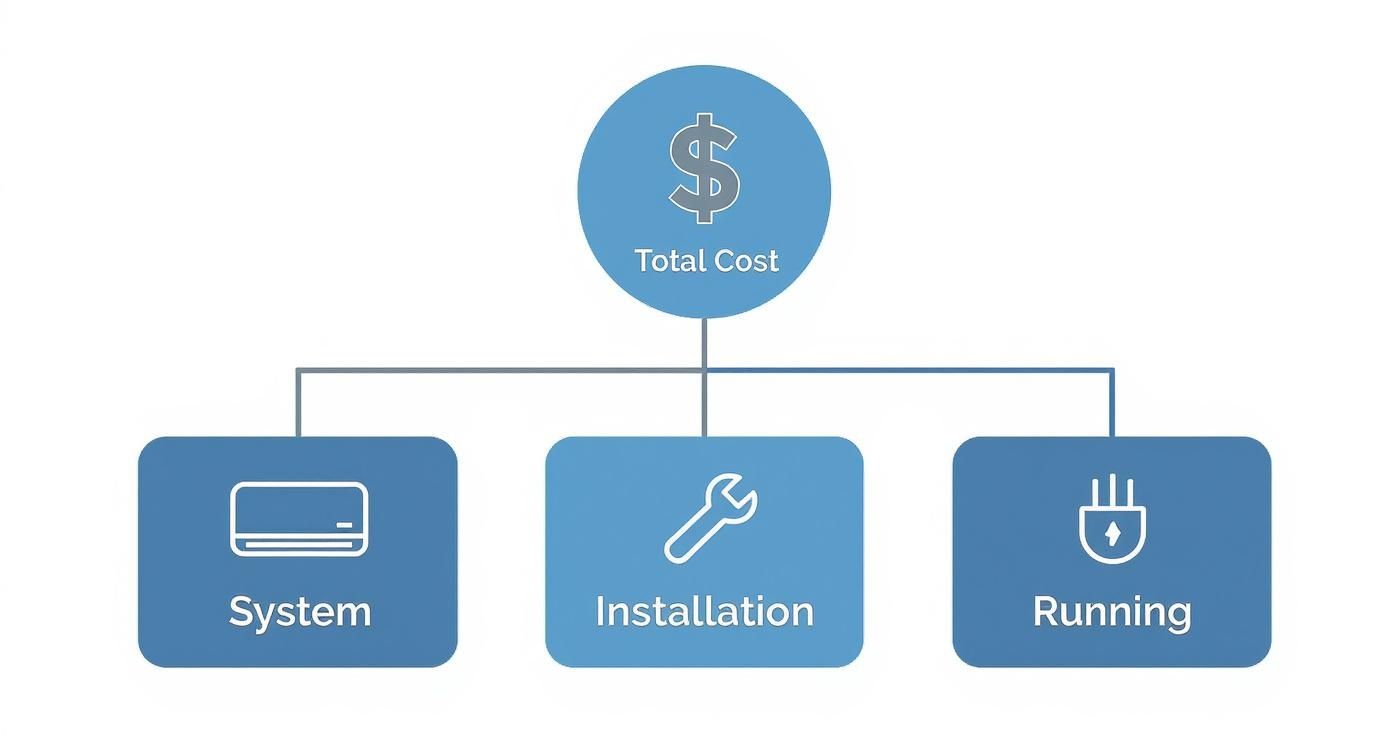
As you can see, the initial price tag is just one piece of the puzzle. The installation quality and long-term running costs are just as important for your budget.
The System Hardware
The first major component is the system itself. This includes the outdoor condenser unit and the indoor fan coil unit, which is usually tucked away in your roof space. The cost of this hardware can swing quite a bit based on a few key things.
Trusted brands like Daikin, Mitsubishi Electric, and ActronAir might have a higher upfront price, but they’ve earned that reputation through reliability, efficiency, and solid warranty support. This often translates to long-term savings for you.
The unit’s size, measured in kilowatts (kW), is matched to your home. For example, a large house in Sydney’s western suburbs will need a much more powerful unit than a small villa in Terrigal, and that directly impacts the hardware cost. Systems with higher energy star ratings and advanced inverter technology also cost more to buy, but they can dramatically slash your electricity bills over the system’s life.
Ductwork and Zoning Components
Next up is the circulatory system of your air con: the ducting and zoning controls. This is where a one-size-fits-all approach simply doesn’t cut it. The layout of the ductwork is custom-designed for your home’s unique architecture.
Imagine you have a two-storey home in Newcastle. Our installation team needs to carefully route insulated ducting through tight ceiling cavities and between floors to deliver consistent airflow to every single room. The complexity of that design directly affects the cost of materials and the time needed for the install.
On top of that, zoning lets you control different areas of your home independently, like cooling living areas during the day and just the bedrooms at night. While adding zones increases the initial cost—you’re paying for extra dampers, sensors, and a smarter controller—the energy savings are massive.
Professional Labour and Electrical Work
Finally, the cost of skilled labour is a non-negotiable part of your quote. This isn’t just about connecting a few ducts; it’s a highly regulated trade that demands expertise and legal compliance. Your quote must include the cost for an ARCtick-certified technician to handle the refrigeration side and a licensed electrician for all the wiring.
Safety and Compliance First: All electrical work for your air conditioner must be done by a qualified electrician and follow the strict Australian Standards (AS/NZS 3000). This is a legal requirement under SafeWork NSW regulations and is absolutely vital for your family’s safety and your home insurance.
This professional labour ensures your system is installed correctly and runs efficiently. Paying for qualified tradespeople is an investment in the safety, performance, and longevity of your ducted system. It’s a cost that protects your home and makes sure your system runs perfectly for years to come.
Key Factors That Influence Installation Price
Ever wondered why a quote for a ducted system in a Hornsby home can look so different from one for a similar-sized house in Gosford? It’s because the sticker price on the air conditioning unit is just one part of the equation. The real variables in your final cost come from the unique character of your home and the specific challenges of the job.
These factors can dramatically change the labour time, materials needed, and the overall complexity of the installation. Understanding them is the key to seeing why a surprisingly cheap quote might not be the bargain it seems.
Your Home’s Construction and Layout
The way your home is built plays a huge role in the installation price. A newer, single-storey brick veneer home is often the most straightforward. With good access to the ceiling space, our technicians can run ductwork efficiently, which helps keep labour costs down.
Now, picture a two-storey terrace in Newcastle with a low-pitched roof and barely any room to move in the ceiling. Navigating those tight spaces and running ducts between floors takes more time, specialised techniques, and often more materials. That complexity naturally adds to the final cost.
The materials themselves matter, too. A double-brick home might need different mounting techniques for the outdoor unit compared to a simple weatherboard house.
Roof and Ceiling Space Accessibility
For a ducted system, the space above your ceiling is where all the magic happens. The amount of room we have to work with directly impacts the installation price. A spacious, easily accessible roof cavity lets our team move freely, lay out the ducting for the best performance, and position the indoor unit perfectly.
On the flip side, a very low or cluttered roof space, common in older homes, presents a real challenge. It can be a much slower, more difficult job, and in some cases, we might need to create new access points. All of this adds to the labour cost.
Key Takeaway: Easy access equals efficiency. The more time our ARCtick-certified technicians have to spend navigating difficult, cramped spaces, the more it will be reflected in the final installation cost. This is a crucial safety and quality consideration.
System Complexity and Your Choices
Beyond your home’s bones, the features you choose for your system also shape the price. The number of zones you want is a big one. A basic setup might have just two zones—one for living areas and one for bedrooms. A more sophisticated system could have eight or more individual zones, giving you control over almost every room.
Each extra zone requires more hardware, including motorised dampers in the ductwork, more complex wiring, and a more advanced central controller. While this increases the upfront cost, the long-term energy savings from not heating or cooling unused rooms can be massive. The type of controller you choose also plays a part; a basic model is more affordable than a premium smart controller with Wi-Fi and app controls.
Local and Environmental Factors
Finally, where you live really matters. A home right on the coast in Avoca Beach or Terrigal is constantly exposed to salt-laden air. To prevent the outdoor unit from corroding prematurely, we almost always recommend models with special anti-corrosion coatings. This adds a little to the initial hardware cost but can save you from expensive repairs down the track.
Local council requirements, especially in heritage areas of Sydney or Newcastle, can sometimes add extra steps to the installation process. The climate of your specific area also dictates what your system needs to handle. To get a better feel for how your local environment affects your options, our guide to choosing air conditioning for Central Coast homes has some valuable insights for our coastal climate.
Calculating Your Ongoing Running Costs
The initial price tag is a big part of the picture, but it’s your quarterly power bill where the long-term cost of a ducted air conditioner really shows up. Getting your head around these ongoing costs is vital for your household budget, ensuring you can enjoy year-round comfort without any nasty surprises.
The good news is that modern systems are worlds away from the power-hungry units of the past. By making smart choices upfront and using your system efficiently, you can absolutely keep your bills manageable—whether you’re beating the heat of a Sydney summer or staying warm during a chilly Hunter Valley winter.
Understanding Energy Efficiency Ratings
When you’re comparing ducted systems, you’ll see a star rating label. This isn’t just a sticker; it’s a standardised guide to how much cooling or heating you get for every dollar of electricity you put in. A higher star rating means the system uses less power to do the same job, which translates directly into lower running costs for you.
Another key term you’ll hear is inverter technology. Think of it like a car’s accelerator. Old, non-inverter systems were either at full power or completely off. An inverter system, on the other hand, can adjust its speed, gently ramping up or down to hold your desired temperature. This avoids constant, power-hungry start-ups and can cut your energy use by 30% or even more.
Why It Matters: Putting a bit more into a system with a high energy rating and inverter technology might increase the initial cost, but the savings on your electricity bills deliver a serious return on that investment over the life of the system.
Estimating Your Annual Expenses
Predicting exact running costs is tricky because they hinge on your personal habits, your home’s insulation, and the local climate. For example, a family in the hot western suburbs of Sydney will naturally use their air con more than someone enjoying Newcastle’s coastal breezes.
However, we can look at some general estimates to give you a clearer picture. Here’s a quick look at what you might expect for an average home.
Estimated Annual Running Costs by System Size
| System Capacity | Estimated Annual Running Cost |
|---|---|
| Small (e.g., 7-10 kW) | $300 – $450 |
| Medium (e.g., 10-14 kW) | $600 – $900 |
| Large (e.g., 14-18 kW+) | $900 – $1,200+ |
These figures give you a ballpark idea. On an hourly basis, you could be looking at anywhere from $0.60 to $0.95, depending on the system’s size and how hard it’s working. For a deeper dive, you can explore more insights on the real cost of ducted air conditioning.
Let’s say you have a medium-sized home in the Lake Macquarie area (postcode 2280-2283). During a hot summer, you run your 12kW ducted system for six hours a day. This would definitely add a noticeable amount to your quarterly bill. But by using your zones effectively, you could easily slash that cost.
Smart Strategies for Efficient Operation
The single best way you can control your running costs is to use your system intelligently. These practical tips make a real difference:
- Zone It Out: This is the most powerful tool you have. Only heat or cool the rooms you are actually using. Closing off the zones to guest bedrooms or formal living areas when they’re empty stops you from paying to cool empty space.
- Find Your Ideal Temperature: Set your thermostat to a comfortable but reasonable temperature. A setting of 24°C in summer and 20°C in winter is generally recommended for the sweet spot between comfort and efficiency. Every degree you push it further can increase your running costs by up to 10%.
- Regular Maintenance: Just like a car, your ducted system needs a regular tune-up to run at its best. A clean filter and well-maintained parts ensure the unit doesn’t have to work harder than necessary, keeping it efficient and extending its lifespan.
Why Professional Sizing and Installation Matters
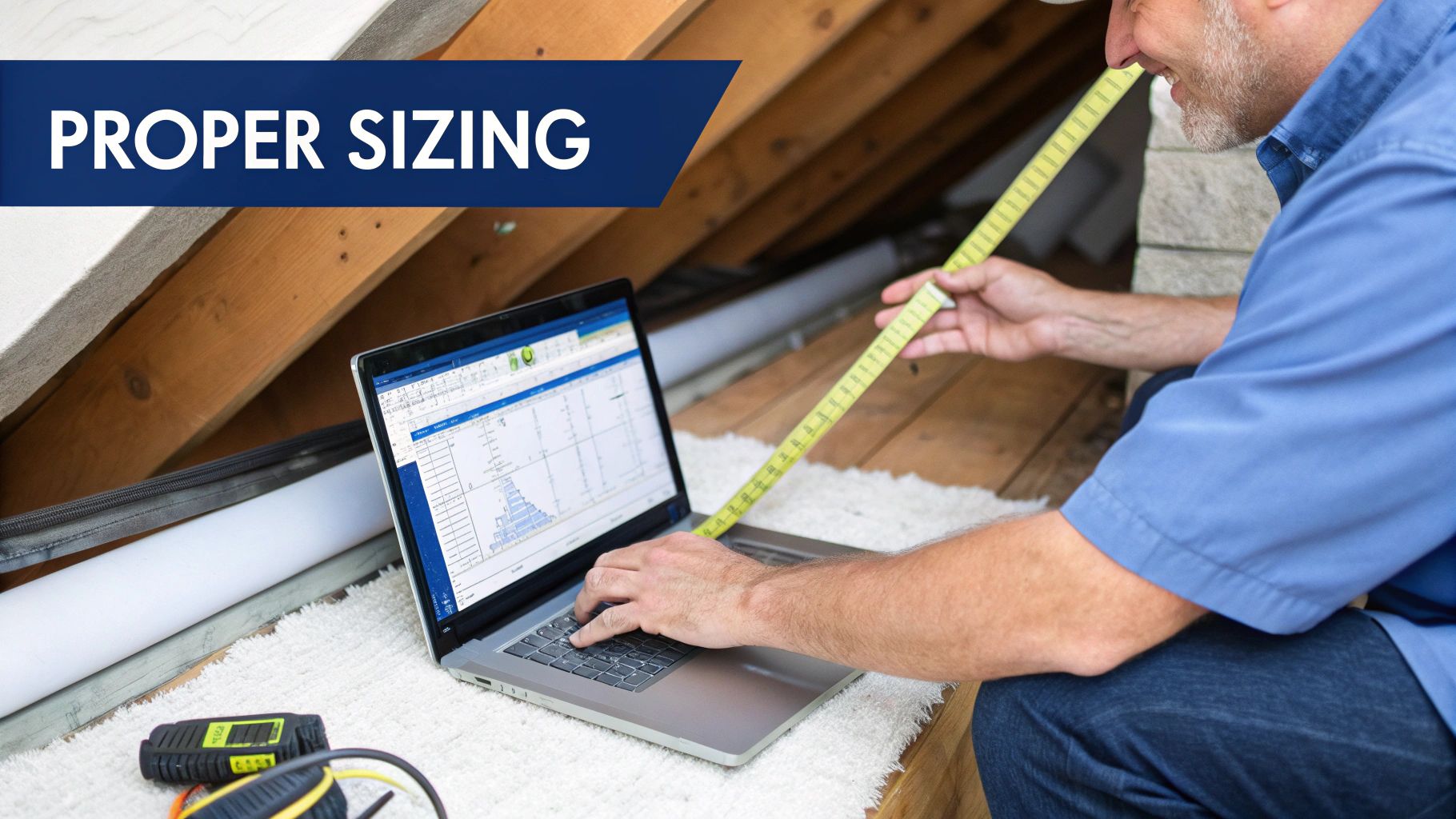
When you’re investing thousands in a new ducted system, getting the size right isn’t just important—it’s everything. An incorrectly sized system will never work properly, no matter how much you paid for the unit itself.
A system that’s too small for your home will run non-stop on a hot Sydney day, struggling to hit the temperature you’ve set while sending your power bills through the roof. But a unit that’s oversized is just as bad. It will switch on and off too frequently in a process called short cycling, which destroys its ability to control humidity, causes premature wear and tear, and wastes a huge amount of energy.
The Science of Accurate System Sizing
Accurate sizing is far more than a quick guess based on your floor plan. This is why a professional, on-site assessment by an ARCtick-certified technician is absolutely non-negotiable. We need to calculate the precise heating and cooling load for your specific home.
Our process for finding the right kW capacity is detailed and methodical. We account for a whole range of factors that an online calculator simply can’t, including:
- Window Placement and Orientation: Consider this scenario: north-facing windows in a Hunter Valley home have a completely different heat load compared to west-facing windows on a Central Coast property getting hammered by the afternoon sun.
- Ceiling Height and Volume: High ceilings dramatically increase the total volume of air that needs to be cooled or heated, which directly impacts the required system size.
- Insulation Quality: How well your ceiling, walls, and underfloor are insulated plays a massive role in how much conditioned air your home actually holds onto.
- Local Climate Conditions: The intense dry heat of Sydney’s western suburbs demands a different approach than the humid, salt-filled air near Lake Macquarie.
By properly analysing these variables, we can recommend a system that’s perfectly balanced—powerful enough to keep you comfortable on the hottest days, but not so big that it wastes your money.
The Dangers of Incorrect Installation
Beyond just sizing, the quality of the installation itself is critical. A poorly installed system isn’t just inefficient; it can be dangerous. The job must be done by a licensed and insured team who knows all the relevant Australian Standards inside and out.
The risks are serious. Poorly joined ductwork can lead to massive air leaks in your roof space, meaning you’re paying to cool your attic instead of your living room. Worse still, incorrect refrigerant handling can cause leaks that harm the environment and cost a fortune to fix.
Electrical Safety is Non-Negotiable: The biggest risk comes from dodgy electrical work. All wiring has to comply with AS/NZS 3000 and be completed by a licensed electrician. An incorrect installation can create a genuine fire hazard—a risk no family should ever take.
The Financial Impact of Getting It Wrong
Choosing a professional installer makes sure your system is not only safe but also a sound financial decision. The cost is often linked to the system’s capacity, and a per-kilowatt price gives you a clear way to understand your investment. For instance, a correctly sized 10kW system might cost around $8,000, while a smaller 5kW model averages closer to $4,500.
The Australian Refrigeration Council (ARC) mandates that only licensed technicians can perform these installations, which protects your investment and ensures everything is done by the book. You can learn more about ducted air conditioning cost guides online to see how these models work in different areas.
Ultimately, investing in a professional assessment and installation protects your warranty, ensures your system runs at peak efficiency, and gives you peace of mind that your home and family are safe. It’s the only way to guarantee you get the long-term value and comfort you expect from your new ducted reverse cycle system.
How to Get an Accurate Quote for Your Home
Now that you’ve got a handle on the factors that shape the total cost, it’s time for the most important step: getting a detailed quote you can actually rely on. A proper quote is far more than just a single number; it’s a transparent breakdown that shows you exactly what you’re paying for.
Online estimators and over-the-phone guesses can give you a rough ballpark, but they simply can’t capture the unique details of your property. For a truly accurate price, a thorough, on-site inspection is non-negotiable. It’s the only way for a professional to properly assess your home’s layout, check the roof space, and inspect your switchboard, ensuring the final quote is comprehensive and free of any nasty hidden surprises.
What a Reputable Quote Should Always Include
When you get a quote from us, or any professional air conditioning installer, it needs to be crystal clear and itemised. This transparency is what allows you to compare different proposals fairly and understand the full scope of the project.
A trustworthy quote will always provide a clear breakdown of costs for:
- The System Hardware: This should list the specific make and model of both the indoor and outdoor units, along with their kW capacity.
- Materials and Components: All the necessary ducting, zoning equipment (like dampers and sensors), louvres, and electrical cabling should be listed.
- Professional Labour: The quote has to detail the cost for the ARCtick-certified refrigeration technicians and the licensed electricians who will complete the work.
Expert Tip: A vague quote that bundles everything into one price is a major red flag. Always insist on a detailed breakdown so you can see where your money is going and ensure no corners are being cut on essential components or qualified labour.
Key Questions to Ask Every Installer
Before you agree to any work, you need to feel confident in the team you’re hiring. Asking the right questions helps you vet potential installers and ensures you’re partnering with a qualified, reliable, and insured professional. This step is crucial for protecting your investment and your home.
Here are the essential questions you should be asking:
- Are you fully licensed and insured? Ask for their contractor licence number and their ARCtick certification number. You should also confirm they have current public liability insurance.
- Who will be performing the electrical work? They must confirm that a licensed electrician will handle all wiring in compliance with Australian Standards (AS/NZS 3000). This is non-negotiable.
- What warranties do you provide? You should get a manufacturer’s warranty on the unit itself and a separate installation or workmanship warranty from the installer.
- Do you have local experience? Ask about their experience working on homes in your specific area—whether it’s dealing with the coastal air in Newcastle or navigating the unique architecture of Sydney’s inner suburbs.
Getting clear answers to these questions is vital. For more detailed information on what to expect, our guide on air conditioning installation costs on the Central Coast provides a deeper look into local pricing and considerations. This knowledge empowers you to confidently choose an installer who guarantees a high-quality, compliant, and dependable system for your home.
Common Questions About Ducted Air Con Costs
When you’re making a big decision like installing ducted air conditioning, it’s only natural to have a few questions. To help you feel more confident, we’ve put together straight answers to the most common queries we hear from homeowners across the Central Coast, Sydney, and Newcastle about what a ducted system really costs and the value it delivers.
Is Ducted Air Con More Expensive to Run Than Multiple Split Systems?
While the initial ducted air conditioner cost is usually higher than putting in a few separate split systems, the running costs can be surprisingly competitive. This is especially true for larger family homes where you often have multiple rooms going at once.
With modern inverter technology and smart zoning, a ducted system can actually be more economical. Running four or five separate split system units at the same time chews through a fair bit of power. A central ducted system with zones lets you direct air only where it’s needed, cutting out waste and making it a seriously efficient way to get whole-home comfort.
Are There Any Rebates or Financing Options Available?
Government rebates for energy-efficient appliances do pop up from time to time, but the schemes and who’s eligible can change pretty quickly. We always suggest checking the official Australian Government’s Energy Rating website for the most current information on what incentives might be available.
To help with the initial investment, many reputable installers, including our team here at ALC Air, offer flexible financing options. This can make getting a premium, high-efficiency system much more manageable for your household budget. We can walk you through any current financing plans when we come out for your free on-site assessment.
How Much Does It Cost to Add Zones to a Ducted System?
Adding zones is one of the single best things you can do to boost your ducted system’s efficiency and your family’s comfort. The cost to add them varies, depending on how many zones you need, the type of controller you go for, and how complex the ductwork is.
A basic setup might start with just two or three zones, while a premium system could have a dedicated zone for every single room. As a general guide, adding zoning can increase the total installation price by several hundred to a few thousand dollars.
But it’s important to remember that the long-term savings from not heating or cooling unused parts of your home often give you an excellent return on that initial investment, making a real dent in your ongoing running costs.
Ready to get a clear, upfront quote to install a ducted air conditioning system in your home? The team at ALC Air has been providing reliable air conditioning solutions across the Central Coast, Sydney, and Newcastle for over 15 years. Contact us for a free, no-obligation assessment and discover the perfect ducted system for your family.