


Trying to nail down the cost to install a split system can feel a bit like guesswork, but it doesn't have to be. For a standard, straightforward installation in NSW, you can generally expect the total cost for the unit and the labour to start from around $1,500 for a small unit and climb up to $4,000 or more for a larger, more powerful system. Where you land in that range really depends on the unit's size, the brand you choose, and how complex the job is for your home.
A Quick Look at Split System Installation Costs
When you're starting to budget for a new reverse cycle air conditioner, it helps to understand what a "standard" installation actually involves. The most common and cost-effective setup is what we call a 'back-to-back' installation.
This is where the indoor unit is mounted on an external wall, and the outdoor compressor unit sits directly behind it on the ground outside. We use this method wherever possible because this simple layout keeps the piping and electrical work to a minimum, which helps keep labour costs down for you.
Of course, many homes on the Central Coast or in Sydney's varied suburbs need a more customised approach. If the outdoor unit needs to be mounted on wall brackets, placed on a roof, or installed a fair distance from the indoor unit, the cost will naturally go up. This is purely down to the extra materials and labour time required.
To give you a clearer picture, here’s a table showing typical price ranges for different system sizes.
Typical Split System Supply and Installation Cost Ranges in NSW
| System Size (kW) | Ideal For | Estimated Total Cost (Supply & Install) |
|---|---|---|
| 2.5kW | Small bedrooms, home offices | $1,500 – $2,200 |
| 3.5kW | Larger bedrooms, small living areas | $1,800 – $2,800 |
| 5.0kW – 7.0kW | Standard living rooms, open-plan areas | $2,200 – $3,500 |
| 8.0kW+ | Large open-plan areas, high ceilings | $3,000 – $4,500+ |
These figures give you a solid starting point for budgeting. They reflect what most of our customers on the Central Coast, in Sydney, and around Newcastle can expect for a quality installation with a reputable brand.
The chart below also gives you a general idea of how the system's power, measured in kilowatts (kW), influences the overall cost.

As you can see, the larger and more powerful the system your space needs, the higher the initial investment for both the unit and the installation. If you want to dig deeper into what makes up these figures, you might find our detailed guide on air conditioner installation costs helpful.
Just remember, these numbers are a starting point. The final price is shaped by a few key factors, like the brand you go with, whether your home’s switchboard needs any electrical upgrades, and how easy it is for our technicians to access the installation areas. Our goal is always to provide a transparent, fixed-price quote with absolutely no surprises.
What Actually Affects Your Installation Cost?
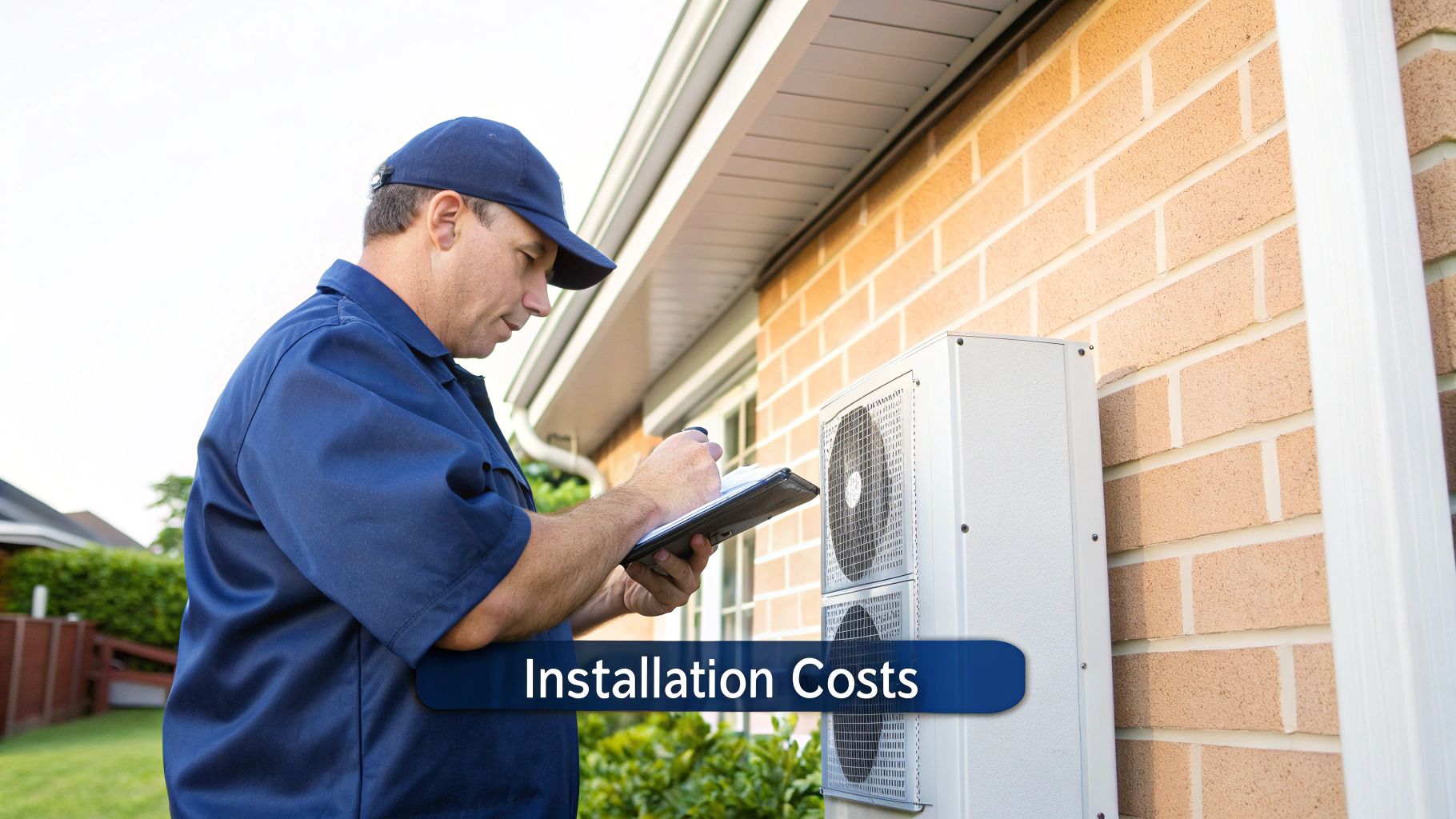
So, why can one quote for a split system be so different from another? It’s rarely just about the unit itself. The final price is a combination of several key ingredients, and understanding them helps you see exactly where your money is going. A quality installation is an investment, not just a purchase.
The first, and most obvious, factor is the air conditioner itself: the specific brand and its capacity, measured in kilowatts (kW). Big names like Daikin, Mitsubishi Electric, and Fujitsu often come with a higher price tag, but you’re paying for proven reliability, better energy efficiency, and solid after-sales support.
The Unit Choice and Its Cooling Power
A unit’s kW rating is all about its muscle. A small 2.5kW unit, perfect for a bedroom in a Terrigal home, will naturally cost less than a powerful 7.0kW system needed to cool a large, open-plan living area in a hot Western Sydney suburb.
Getting the capacity right is non-negotiable. If you go too small, the unit will struggle constantly, costing you a fortune to run. If you go too big, you are paying for power you’ll never use.
Your Home's Layout and Installation Complexity
This is where labour costs can really start to vary. A simple ‘back-to-back’ installation on a ground-floor home is as straightforward as it gets, and the most affordable. But let’s be honest, not every home is that simple.
Imagine you live in a two-storey home in Newcastle. The best spot for the outdoor unit is on a second-floor wall bracket to keep a narrow walkway clear. That job immediately requires specialised brackets, more time, and extra safety gear, all of which adds to the labour cost.
Similarly, apartment installations, especially in Sydney's dense suburbs, bring their own headaches with body corporate rules and tricky access.
Key Takeaway: The distance between the indoor and outdoor units is a major cost driver. A standard install usually includes about 3 metres of piping. Every extra metre needed adds to both the material bill and the time it takes to do the job right.
The All-Important Electrical Work
Finally, we need to talk about your home's electrical system. Every single new split system needs its own dedicated circuit running straight back to your switchboard. This isn't a suggestion; it's a safety requirement under Australian Standard AS/NZS 3000 to stop you from overloading your existing circuits.
In many older homes across the Hunter Valley and the Central Coast, the switchboard is either full or still running on old-school fuses. If that's the case, a switchboard upgrade or at least a new circuit is needed before the air con can be safely powered up.
This isn’t an upsell; it's about protecting your home from electrical hazards. It’s exactly why we always do a thorough check of your electrical setup from the get-go. This way, any necessary work is identified upfront and included in our fixed-price quote, so there are absolutely no surprises on installation day.
Choosing the Right System Size for Your Space
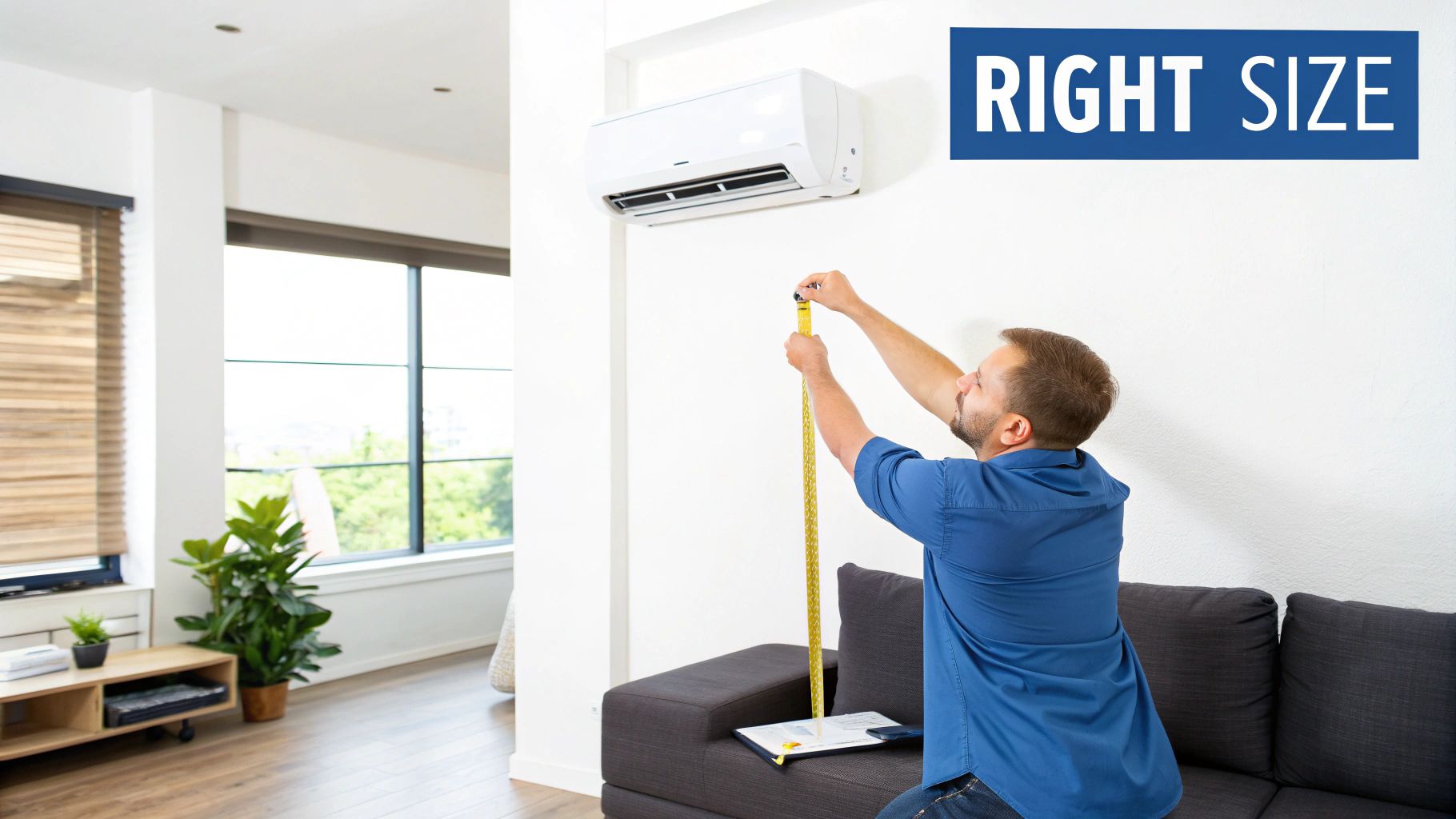
Picking the right size air conditioner, measured in kilowatts (kW), is easily the most important decision you'll make. It has a massive impact on your upfront installation cost, your long-term comfort, and your power bills. Getting this right is all about finding that perfect sweet spot for your home.
An undersized unit will be forced to run flat-out on those scorching summer days we get around Western Sydney, struggling to keep up, chewing through electricity, and wearing itself out years before it should. On the other hand, an oversized system is just as bad. It will cycle on and off in short, sharp bursts, never running long enough to properly dehumidify the air, leaving you with that unpleasant, clammy feeling.
Why Room Size Is Just the Starting Point
A lot of people think sizing is just about the square metres of a room, but it’s so much more detailed than that. A professional installer, like one of our team, looks at a whole range of factors to get the calculation right.
For instance, a small 15 square metre bedroom in a well-insulated Central Coast home might only need a 2.5kW system. But a large, open-plan living area in a Newcastle property with high ceilings and big north-facing windows will likely need a 7.0kW unit, maybe even larger, just to be effective.
Key Factors Influencing System Sizing
Beyond the basic room dimensions, we have to look at several other crucial elements:
- Window Orientation: North and west-facing windows let in a huge amount of heat, seriously increasing the cooling load.
- Insulation Quality: A home with good ceiling and wall insulation holds its temperature far better, which often means you can get away with a slightly smaller unit.
- Ceiling Height: High ceilings mean more air volume to cool down, and that demands a higher capacity system.
- Local Climate: The humid, coastal air of Lake Macquarie places different demands on a system compared to the dry, intense heat you find further out in the Hunter Valley.
Understanding these variables is everything. The cost to install a split system can vary wildly based on these very factors. A small bedroom might need a 2-3kW unit, while a big living area could require a 4-7kW system. This is why a full supply and installation package can range from $1,795 to over $4,815, reflecting both the unit's size and how complex the job is.
Making an educated choice on system size ensures you get the comfort you paid for without wasting money on the unit or your future power bills. To help you get a better idea, check out our detailed guide on what size split system you might need for a more detailed breakdown.
Uncovering Potential Hidden Installation Costs
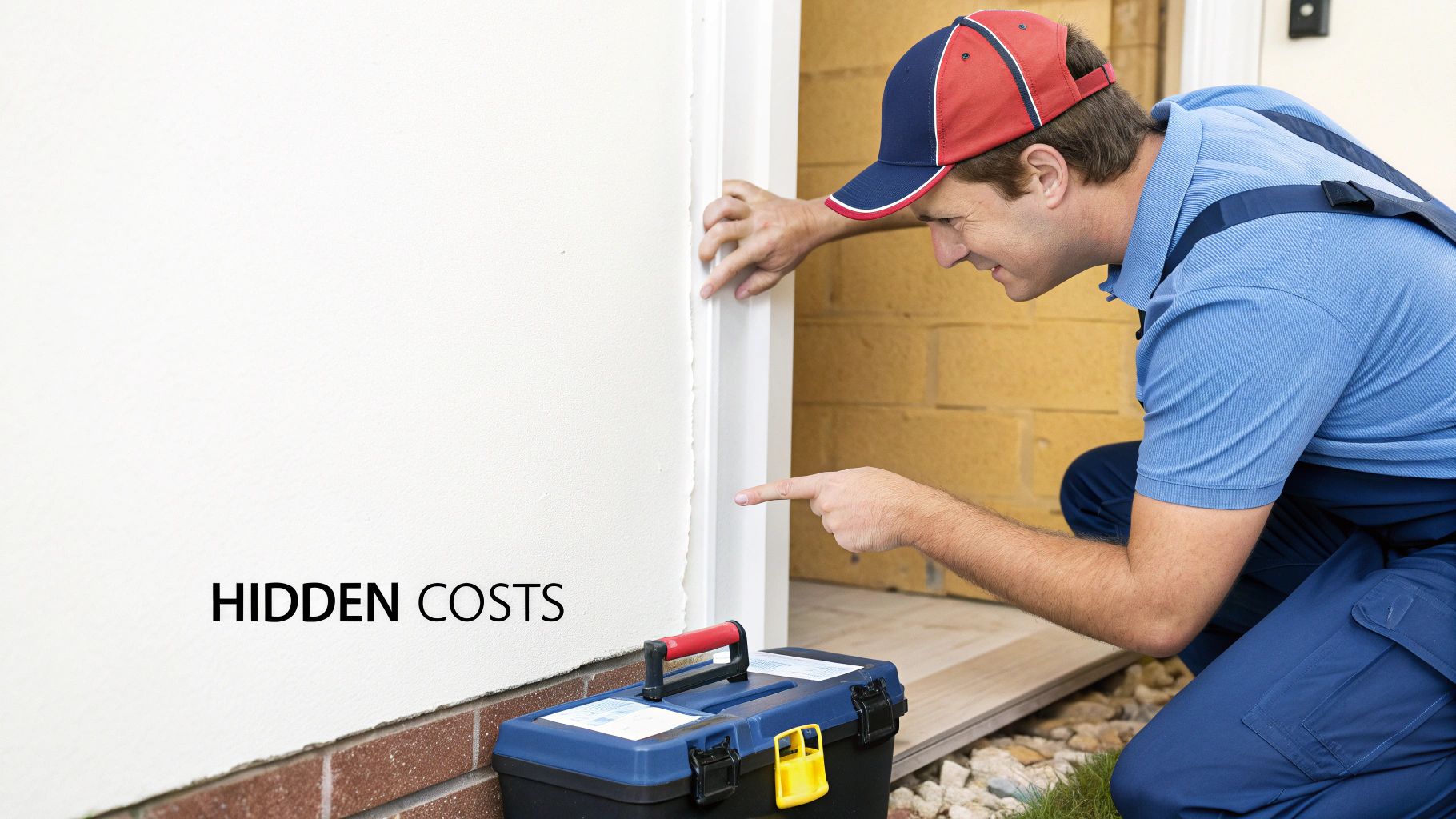
That surprisingly cheap quote can look tempting, but it often hides costs that turn a bargain into a budget blowout. The real cost to install a split system covers everything needed for a safe, compliant, and efficient job, and sometimes, unexpected issues pop up that weren't obvious at first glance.
Knowing about these potential extras is the key to getting a genuinely fixed-price quote you can trust. A professional installer anticipates most of these things during an on-site assessment, but some can only be found once the work starts. This is where having a transparent, experienced team makes all the difference; we keep you in the loop every step of the way.
Common Non-Standard Installation Costs
Not every installation is a simple back-to-back job. For instance, if your home has solid brick or concrete walls, drilling through them needs specialised tools and more labour, which adds to the final price. Homes in Newcastle or Sydney with limited outdoor space might need the compressor mounted on wall brackets, which also bumps up the cost.
Another common one is drainage. The indoor unit produces condensation that has to drain away safely. If a simple gravity-fed drain isn't possible, we might need to install a small condensate pump. This little device actively moves the water away, stopping any chance of water damage inside your home.
Important Safety Note: A significant hidden cost can pop up if we find asbestos sheeting in a wall while drilling. All work has to stop immediately, and a licensed asbestos removalist must be brought in. This is a non-negotiable safety requirement mandated by SafeWork NSW.
The True Cost of Unlicensed Work
Tempted by a rock-bottom price from an unlicensed installer? This is the biggest hidden cost of them all. Any electrical work, including running a new circuit for your air conditioner, must be done by a licensed electrician to comply with Australian Standard AS/NZS 3000.
Using someone without the right tickets doesn't just create a serious fire risk; it also instantly voids your manufacturer’s warranty. If the unit fails down the track, you’ll be stuck with the entire bill for repairs or a full replacement. Our team is fully licensed and insured, and we provide compliance certificates for all electrical work.
Understanding these potential extra costs isn't about expecting the worst; it's about being prepared. For a closer look at what a standard installation includes, check out our guide to air conditioning installation costs on the Central Coast.
Why Professional Installation Is a Non-Negotiable Investment
It’s always tempting to try and shave a few hundred dollars off the total cost to install a split system, maybe by hiring a general handyman or even attempting a DIY job. But installing an air conditioner in Australia is far more than just connecting a few pipes and wires. It’s a job that involves licensed electrical work and handling restricted refrigerant gases.
This isn’t just a recommendation, it's the law. In Australia, anyone touching refrigerants must hold a specific licence from the Australian Refrigeration Council (ARCtick). This is to ensure these potent greenhouse gases don't escape into the atmosphere. On top of that, all electrical wiring must be completed by a licensed electrician to meet strict safety standards like AS/NZS 3000.
Safety and Compliance Are Paramount
An incorrect installation isn't just a minor mistake; it poses serious risks. Poorly handled electrical connections can create a significant fire hazard, while refrigerant leaks are not only terrible for the environment but also lead to your system performing poorly from day one.
A professional job from a qualified team like ALC Air guarantees that every part of the installation is compliant, safe, and handled correctly. We make sure your system is perfectly sealed, electrically sound, and positioned for the best possible airflow and efficiency. Ultimately, this compliance is about keeping your home and family safe.
Protecting Your Warranty and Performance
Here’s one of the biggest financial risks of using an unqualified installer: you’ll almost certainly void your manufacturer’s warranty immediately. If the unit fails because of an installation error, you're left with no support and a potentially massive repair bill.
A quality installation also has a direct impact on how well your unit works and how long it lasts. Industry insights show that poor installations can lead to 20-30% higher failure rates. For a more detailed look at what a professional job actually involves, you can check out the steps in our split system air conditioner installation guide.
Key Insight: A professionally installed unit simply runs better. It cools and heats more effectively, uses less power, and lasts longer. This saves you significant money on both running costs and future repairs, making the initial investment in professional labour a wise financial decision.
When you're looking for an installer, it helps to choose businesses that present themselves professionally online. For example, an effective website design for electricians often signals reliability and expertise in their field.
The labour cost for a single-head unit installation in Newcastle or Sydney can range from $600 to $1,500. This price reflects the skill, licensing, and compliance needed to do the job safely and correctly. At the end of the day, investing in a professional ensures your new split system is a reliable asset, not a costly liability.
How to Get an Accurate Quote for Your Home
Now that you've got a handle on the factors that shape the final price, the last step is getting a firm, reliable quote. Knowing what information to pull together and what a quality quote should look like makes the process simple and ensures you get an accurate price for your specific needs.
To get the most accurate estimate right from the start, have a few key details handy before you call. This includes basic room dimensions (length, width, and height) and a couple of photos showing where you picture the indoor head unit and the outdoor compressor. This gives our technicians an immediate sense of the layout and any potential complexities.
What to Look for in a Quote
A professional quote should be clear, detailed, and leave no room for guesswork. It’s much more than just a single figure; it’s a complete breakdown of the entire job from start to finish.
Here’s what a transparent quote should always include:
- The exact make and model of the split system unit being proposed.
- A clear outline of all labour and material costs.
- Confirmation that all necessary electrical work, including a dedicated circuit, is covered.
- Inclusion of GST, so the final price is exactly what you’ll pay on the day.
At ALC Air, we believe in total transparency. That’s why we offer a free, no-obligation on-site assessment for homes across the Central Coast, Sydney, and Newcastle. This visit allows our experienced technicians to properly measure the space, check your switchboard, and talk through the best placement options with you, face-to-face.
Our Promise: We provide a fixed price upfront, so you know precisely what the cost to install your split system will be. There are no hidden fees or surprise charges on installation day; just honest advice and quality workmanship.
This thorough approach means your quote is tailored specifically to your home, guaranteeing a system that performs efficiently for years to come.
Your Questions Answered
When you're looking at getting a new air conditioner, a few common questions always come up. Here are the straight answers to the things we get asked most often about installation costs and logistics.
How Long Does a Typical Split System Installation Take?
For a straightforward, back-to-back job on a single-storey home, we're usually in and out in 3 to 5 hours. It's a pretty smooth process.
However, if the job is more complex, like fitting a unit on a second-storey wall in a tight Sydney terrace or needing a switchboard upgrade in an older Central Coast home, it can easily take a full day. We'll always give you a clear time estimate with your quote so you know exactly what to plan for.
Can I Buy My Own Air Conditioner?
You absolutely can. We’re more than happy to provide an 'install only' service if you've already bought a unit.
That said, we really recommend having a chat with us before you buy. We can make sure the model you’re looking at is genuinely the right size and type for your room. It’s easy to get this wrong, and an undersized or oversized unit will never run efficiently.
The other big advantage of getting the complete supply and install package from us is warranty. If anything goes wrong, you have one phone number to call. We handle everything for both the unit and our workmanship, which saves you a massive headache trying to figure out who is responsible for what.
What Is a Back-to-Back Installation?
A 'back-to-back' installation is the industry term for the simplest, quickest, and most affordable way to install a split system. It’s where the indoor unit is mounted on a wall that backs onto the outside of your house, and the outdoor compressor unit is placed on the ground directly behind it.
This setup keeps the copper piping and electrical wiring to a minimum, which is what helps keep the cost down. It’s the baseline price you'll see quoted, and any installation that needs longer pipe runs or more complex mounting will build on that cost. Of course, once it's in, it's also worth understanding how much an air conditioner costs to run.
Ready to get a clear, upfront price for your home? The team at ALC Air provides free, no-obligation quotes across the Central Coast, Sydney, Newcastle, and Lake Macquarie. We'll assess your needs and give you a fixed price with no hidden surprises. Contact us today to arrange your professional assessment.