


A clean air conditioner isn't just a "nice to have"—it's a must for your health and your wallet. A quick clean of the filters and coils is all it takes to keep your system running efficiently, which means better air quality, lower power bills, and a longer life for the unit itself. As your local experts, we want to give you the confidence to handle the simple tasks and know when it's time to call us for a professional service.
Why A Clean Air Con Is Essential For Your Home

Think of your air conditioner as the lungs of your house. It pulls in air and circulates it through every room where your family lives and breathes. Here in NSW, whether you're dealing with the humid coastal air in Terrigal or the dry heat of Sydney's western suburbs, your system is constantly fighting dust, pollen, and moisture.
Leave it unchecked, and that combination creates the perfect breeding ground for mould and bacteria. This isn’t just another chore to add to the list; it’s a crucial piece of home maintenance that directly affects your family’s wellbeing and your household budget.
Better Health Through Cleaner Air
Your air con's filters are the first line of defence against all the gunk floating in the air. Once they get clogged, allergens like dust mites, pet dander, and pollen have nowhere to go but back into your living space. This can be a nightmare for anyone with allergies or asthma, especially kids and the elderly.
Worse still, a dirty, damp internal coil can become a hotspot for mould. As the unit runs, it blows these microscopic spores all through your home. This is what causes that all-too-common musty smell and can lead to some nasty health problems. It's a common issue we see in homes across the Central Coast where humidity is a year-round battle.
Lower Energy Bills and Increased Efficiency
A dirty air conditioner has to work much, much harder to do its job. Clogged filters physically restrict airflow, forcing the fan motor to spin faster and use more power. At the same time, a layer of grime on the evaporator and condenser coils acts like a blanket, stopping the system from efficiently transferring heat.
All that extra strain means your unit runs longer and chews through significantly more electricity to hit the temperature you’ve set. Just by keeping your system clean, you can slash its energy consumption by up to 15%. That’s a saving that really adds up on your quarterly power bills, especially during a scorching Hunter Valley summer.
A Longer Lifespan For Your Investment
Putting constant stress on your air conditioner’s components is a recipe for premature wear and tear. The compressor, the heart of the system, is particularly at risk of overheating when the coils are caked in dirt. This can lead to eye-wateringly expensive breakdowns and ultimately shorten the life of the whole unit.
Regular cleaning is a simple, proactive way to protect your investment and dodge a massive replacement bill down the track. Of course, the air con is just one part of a healthy home. It's interesting to see how other elements, like your choice of bedding, can also influence your indoor air quality.
Your Essential Toolkit For Safe Air Con Cleaning
Before you even think about opening up your air conditioner, let's talk about gear and safety. You don’t need a professional workshop to clean your air con, just a few common household items and a healthy respect for what you're doing. Getting this part right is the most important step of the whole process.
Having everything on hand before you start just makes the job smoother. You'll want a Phillips head screwdriver for any panels, a soft-bristled brush (an old toothbrush is perfect) for the delicate fins, and a spray bottle for your cleaning solution. Grab a couple of clean, dry microfibre cloths, too—they’re great for wiping everything down without leaving lint behind.
The Non-Negotiable Safety Steps
Let's be crystal clear: your safety is the absolute priority here. Anytime you're working on an electrical appliance, there's an element of risk, but it's one you can completely eliminate by following one simple, non-negotiable rule.
Before you touch a single screw, you must completely cut the power to the unit.
This isn’t just about flicking a switch. First, head to your home’s switchboard and turn off the circuit breaker labelled for the air conditioner. Then, find the isolator switch, usually a separate switch on the wall right next to your outdoor unit, and turn that off as well. This double-check ensures the system is totally de-energised, which is a core principle of Australian electrical safety standards like AS/NZS 3000.
Safety First: Always switch off the power at both the circuit breaker and the outdoor isolator switch. This isn't just a recommendation; it's a critical step to prevent electric shock and protect your system's electronics. A licensed electrician always follows this process, and you should too.
Personal Protective Equipment (PPE)
Next, you need to protect yourself from what you’re about to clean out. Over the months, your air con's filters and coils have trapped a nasty cocktail of dust, pollen, and potentially mould spores. The moment you start cleaning, you'll disturb all that stuff and send it airborne. You don't want to be breathing that in.
At a minimum, wear a good quality dust mask and a pair of safety glasses. The mask will stop you from inhaling all those fine particles, and the glasses will shield your eyes from any falling debris or cleaning spray. A pair of gloves is a smart idea, too, just to keep your hands clean.
If you want to dive deeper into what these components do, you can learn more about how air filters for your home work and why they're so important. These simple precautions make the entire job safer for you and your family, so you get all the benefits of a clean air con without any of the risks.
How To Clean Your Split System Air Conditioner
Right, let's get into the practical side of things. This is your guide to cleaning the most common type of air con found in NSW homes, the split system. We’ll walk through the simple steps for both the indoor and outdoor units, tasks you can easily handle as part of your regular home maintenance.
Remember, a clean air con is an efficient air con. A little bit of effort here and there will genuinely save you money and keep the air in your home much healthier.
First things first: safety. Before you touch anything, kill the power. Head to your switchboard and flick the circuit breaker for the air conditioner to the ‘off’ position. For good measure, find the isolator switch next to the outdoor unit and turn that off too. No shortcuts here.
This simple process is non-negotiable before you start.
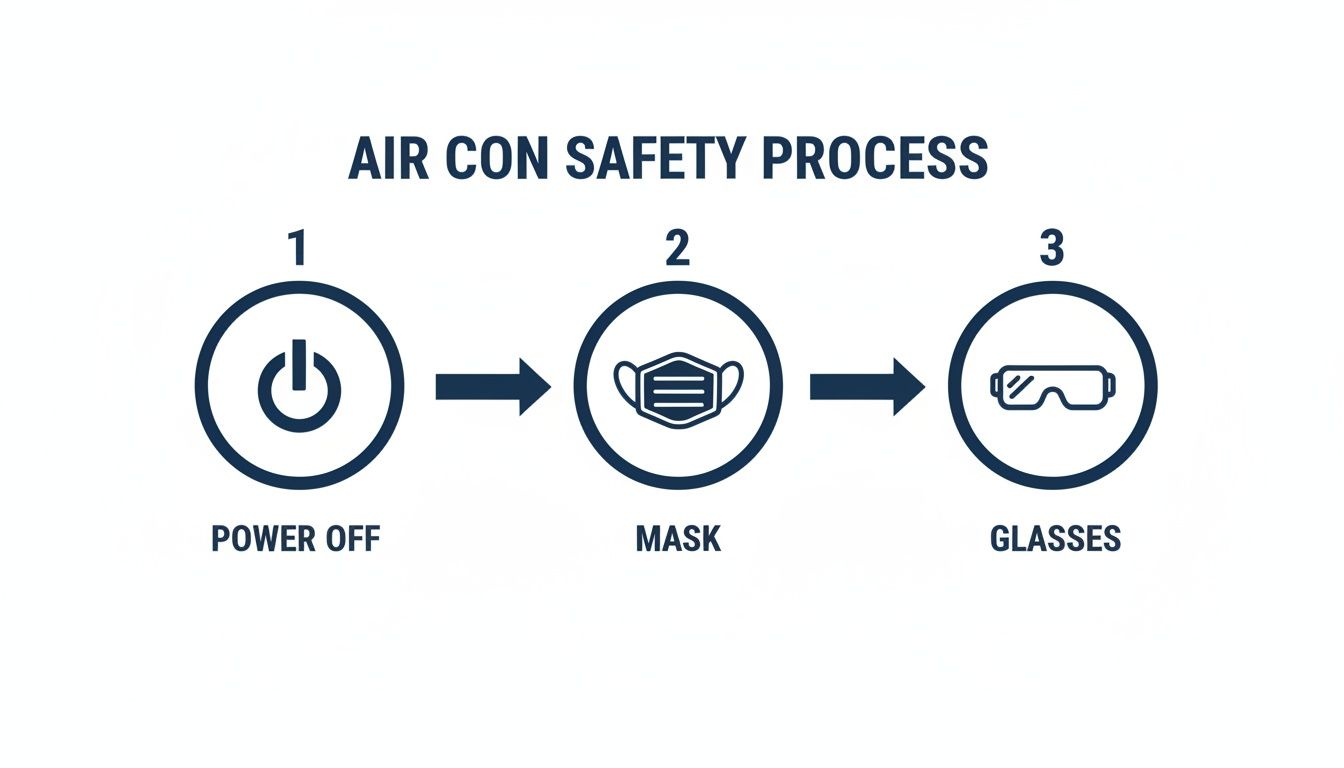
Following these three steps protects you from any electrical risks and lets you get on with the job without any hazards.
Tackling The Indoor Unit
Start by gently lifting the front cover of the indoor unit. It should click open and stay up on its own, revealing the mesh filters. Most filters just slide or unclip easily. Carefully take them out.
Give the filters a good rinse under lukewarm running water. Your laundry tub is perfect for this, or you can use a garden hose on a gentle setting. The key is to let them air dry completely in the shade before putting them back. Never use hot water, as it can easily warp the delicate plastic mesh.
A common mistake we see is people putting damp filters back into the unit. This creates a perfect breeding ground for mould, which defeats the whole purpose of cleaning and leads to that musty smell nobody wants.
With the filters out, you’ll see the delicate indoor coils, they look like a series of thin metal fins. Grab a soft-bristled brush (a paintbrush works well) and gently stroke the fins in a downward motion, following the direction they run. Be gentle, as they can bend easily.
Finally, give the plastic casing and the directional louvres a wipe-down with a damp microfibre cloth. This gets rid of the surface dust that often collects and gets blown around the room.
Cleaning The Outdoor Unit
Your outdoor unit, the condenser, is the workhorse of the system, pushing all the heat from inside your home to the outside. It needs clear airflow to work properly.
Start by clearing away any leaves, grass clippings, weeds, or general garden debris that has piled up around it. You want to ensure there’s at least 50cm of clear space on all sides.
For the condenser coils themselves, a garden hose on a gentle spray is your best tool. If you can, direct the water from the inside out to push the dirt away from the unit. If not, spraying at a 45-degree angle from the outside works too. The goal is to wash the grime out, not force it deeper into the fins.
This is especially important in certain locations. For example, if you live in a coastal area like Newcastle or anywhere on the Central Coast, your unit is constantly exposed to salt-laden air. That salty residue builds up and can seriously accelerate corrosion. A regular rinse every few months is crucial to prevent long-term damage.
DIY Air Con Cleaning Checklist
To make things even easier, here's a quick checklist you can follow for your own routine maintenance. It breaks down what to do and how often.
| Component | Action Required | Frequency |
|---|---|---|
| Indoor Filters | Remove, wash with lukewarm water, and air dry completely. | Every 1-3 months (monthly in heavy use) |
| Indoor Coils | Gently brush with a soft brush to remove dust. | Every 6 months |
| Indoor Casing/Louvres | Wipe down with a damp microfibre cloth. | As needed |
| Outdoor Unit Debris | Clear leaves, grass, and obstructions from around the unit. | Monthly, especially after mowing or storms |
| Outdoor Coils | Gently rinse with a garden hose to remove dirt and residue. | Every 3-6 months (more often in coastal areas) |
Sticking to this simple schedule will keep your split system running smoothly, efficiently, and cleanly.
For a deeper dive into what you can tackle yourself versus when it's time to bring in the pros, our [split system air conditioner maintenance guide](https://alcairconditioning.com.au/blog/split-system-air- conditioner-maintenance-diy-guide-when-to-call-a-pro/) offers some extra tips.
Looking After Your Ducted Air Conditioning System
Ducted air conditioning can feel like a much bigger beast than a simple split system, but the basic maintenance you can do yourself is surprisingly straightforward. The key is to focus on what you can safely handle, which will make a real difference to your air quality and power bills without putting you or your system at risk.
The single most important job for any homeowner with a ducted system is keeping the return air filter clean. This is that large vent you see in the ceiling, usually in a central hallway, that sucks all the air in to be heated or cooled. Naturally, it’s a magnet for household dust, pet dander, and whatever else is floating around.
Keeping Your Return Air Filter Clean
First things first, you need to get the filter out. Look for the clips or latches on the side of the grille frame and open it up. The filter is the big mesh pad sitting inside. Just slide it out gently and, if you can, take it outside to avoid making a mess.
A quick vacuum on both sides will get most of the loose dust off. If it's really grubby, you can give it a rinse with the hose using cool water. The golden rule here is the same as with split systems: it must be completely bone dry before you put it back. A damp filter is a breeding ground for mould.
While you've got the filter out, give the grille itself a wipe-down with a damp cloth. There's no point putting a clean filter back into a dusty frame. If you want a more detailed walkthrough, check out our guide on how to clean a ducted air conditioner filter.
Knowing When to Call in the Professionals
While cleaning the filter is an easy DIY task, it’s crucial to know where your job ends and a technician’s begins. The main indoor unit for your ducted system, known as the fan coil, lives up in your roof space. That unit, along with all the ductwork snaking through the ceiling, should only ever be touched by a licensed professional with an ARCtick certification.
Trying to clean the internal fan unit or the ducts yourself isn’t just ineffective, you simply don’t have the specialised gear. It’s also genuinely dangerous. You risk damaging delicate components and running into serious electrical hazards that only a qualified technician is trained to handle.
This professional-only approach isn’t just about safety; it’s part of a bigger picture. There's a growing focus on indoor air quality across Australia, which has seen the HVAC market grow significantly. As homeowners in places like Sydney and Newcastle become more aware of airborne pollutants, the demand for well-maintained systems with top-notch filtration has gone through the roof.
When Your Air Con Needs A Professional Service
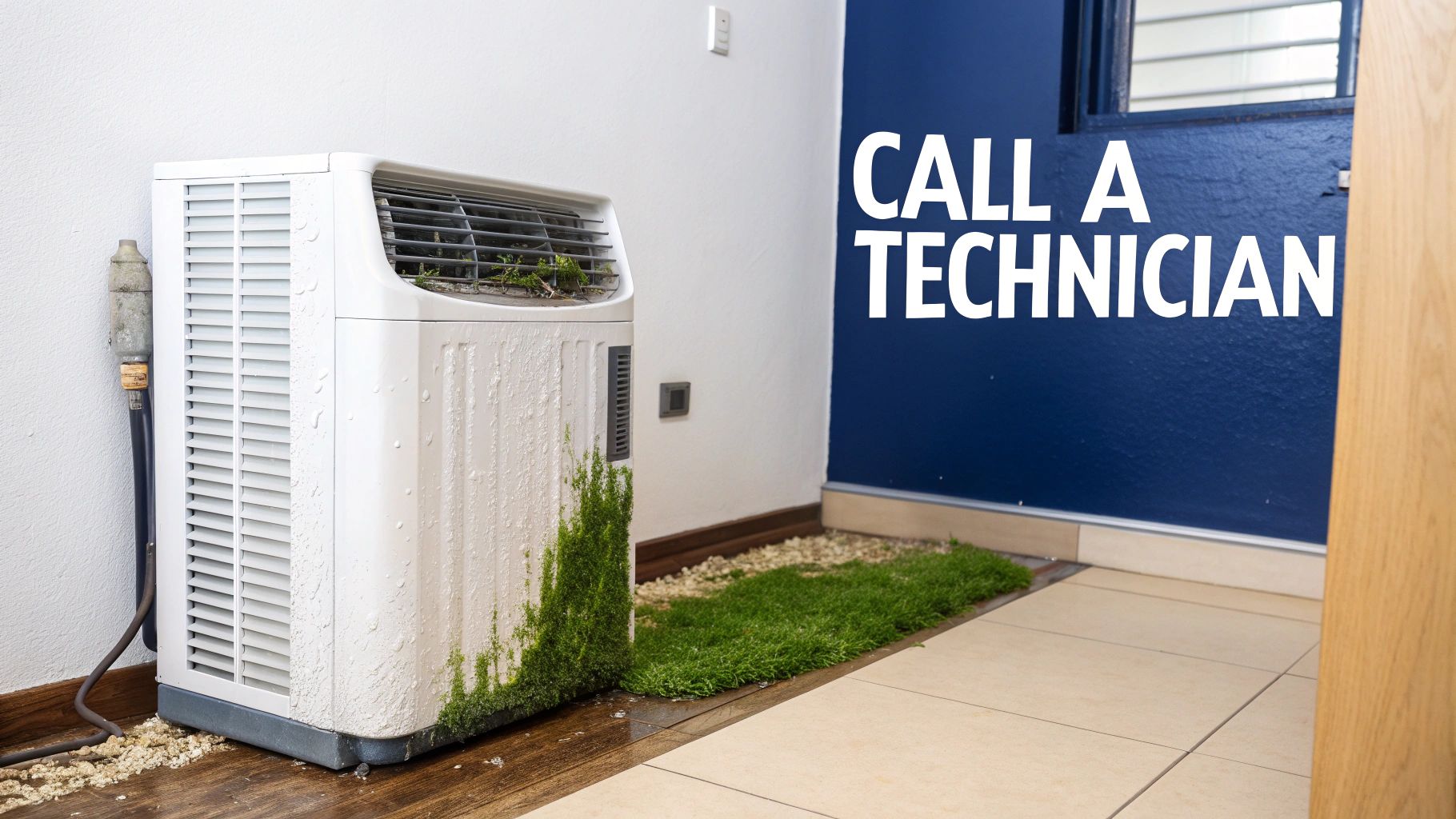
While regular DIY cleaning is fantastic for keeping your system running efficiently, some problems go deeper than a dirty filter. Knowing the difference between a simple clean and a system crying out for help is key to preventing a minor issue from becoming a costly disaster.
Sometimes, even after you've given it a good clean, your air con just isn’t performing. These are the red flags telling you it’s time to put down the tools and call in a licensed professional. Ignoring them can lead to much bigger damage and even safety risks.
Persistent Musty Odours
If you’ve thoroughly cleaned the filters and that musty, "dirty sock" smell lingers, it’s a strong sign of deep-seated mould and bacteria. This isn’t just on the surface; it's likely growing within the evaporator coil, drain pan, and even the internal fan barrel, areas you can't safely reach yourself.
This isn’t just an unpleasant smell. It’s a serious indoor air quality concern, especially for families in humid areas like Lake Macquarie or the Central Coast. A professional technician has the right gear and sanitising agents to properly eliminate the source of the mould, ensuring you have a genuinely clean air con system.
Strange or Loud Noises
Your air conditioner should operate with a consistent, gentle hum. If you start hearing new and unusual sounds, it's the system's way of telling you something is wrong internally.
Listen out for these specific noises:
- Grinding or Squealing: This often points to a problem with the fan motor bearings. If left unchecked, the motor could seize up completely.
- Rattling or Banging: This might be a loose component, like a fan blade hitting its housing, or a more serious issue with the compressor.
These are mechanical problems that a surface clean won't fix. They need a diagnostic check from a qualified technician to pinpoint the fault before it causes a major breakdown. For more information, our guide to common air conditioning repair issues can offer further insight.
Water Leaks and Poor Cooling
Finding water dripping from your indoor unit is a major red flag. This almost always means you've got a blocked condensate drain line. While it might start as a small drip, it can quickly lead to significant water damage to your walls and floors.
Similarly, if your system is struggling to cool the room even after the filters are spotless, the problem lies deeper. It could be a refrigerant leak or an issue with the compressor, both of which are jobs strictly for an ARCtick licensed professional. When your air con system requires more than a routine clean or you encounter complex issues, it's time to consider professional assistance from specialised HVAC Companies.
Australia's air conditioning and heating services industry has grown into a substantial market, and for good reason. With repair calls rising in coastal NSW, property managers and homeowners alike rely on scheduled maintenance to prevent costly breakdowns. You can explore more about this growing industry and its importance on ibisworld.com.
Common Air Con Cleaning Questions
We get asked a lot about the right way to clean an air conditioner, so we've pulled together the most common questions we hear from homeowners across NSW. Getting the facts straight helps you look after your system safely and keep it running the way it was designed to.
Here are the answers to the things people ask us most often.
How Often Should I Clean My Air Con Filters?
For a typical home on the Central Coast or in a Sydney suburb, getting into the habit of checking and cleaning your filters every one to two months during summer is fantastic. It genuinely only takes a few minutes but makes a huge difference to performance.
However, if you've got pets that shed, live near a busy road with a lot of dust, or have family members with allergies, it’s a good idea to check them monthly. It’s honestly the single most effective thing you can do to keep your air con running efficiently and your power bills in check.
Can I Use Bleach or Harsh Chemicals on the Coils?
This is a hard no. Never use bleach, harsh chemicals, or acidic cleaners on your air conditioner's coils. The indoor and outdoor coils are made of thin, delicate aluminium fins that are surprisingly easy to damage. Harsh chemicals will corrode this metal, causing permanent damage that can lead to expensive repairs or even a full system replacement.
Stick to a proper pH-neutral coil cleaner you can get from a specialty store, or just use a soft brush and a gentle spray of water. When in doubt, it’s always much safer to leave the deep coil cleaning to a professional technician who has the right gear and solutions.
Consider this scenario: we’ve seen units in the Hunter Valley completely ruined by well-intentioned owners using a harsh degreaser they had in the garage. The damage is irreversible and turns what should be a simple cleaning job into a very costly mistake. Always be gentle with your system’s components.
What Causes That Musty Smell From My Air Con?
That unpleasant "dirty sock" smell is almost always caused by a buildup of mould and bacteria on the indoor coil and lurking in the drain pan. Your air con naturally creates condensation as it works, and when that moisture mixes with dust and warmth, you've created the perfect breeding ground for mould.
While cleaning your filters regularly helps, a smell that won't go away means the problem has really taken root in areas you can't easily reach. This is when a professional deep clean is needed to safely get to these components and use specialised sanitising treatments to kill the source of the problem for good.
Is Cleaning the Outdoor Unit Really That Important?
Yes, it’s absolutely critical for the health of your system. The best way to think of the outdoor unit is like the radiator for your air conditioner; its entire job is to get rid of all the heat it has pulled out of your home.
If the coils on that unit are clogged with dirt, leaves, lawn clippings, or salt spray from the sea breezes in Newcastle, it simply can't release that heat effectively. This forces the whole system to work much harder, driving up your power bill and putting a huge strain on the compressor, which happens to be the most expensive part to replace. A quick rinse every few months is vital.
A clean air con is a happy, efficient air con. If you've followed these steps but are still having issues, or if the job just feels too big to tackle, the team at ALC Air is here to help. We specialise in professional servicing and deep cleaning to get your system running like new.
Get in touch with us for a free, no-obligation quote by visiting https://alcairconditioning.com.au.