


When you see an ad for a "cheap aircon split system," what are you really looking at? A rock-bottom sticker price can, unfortunately, hide some nasty surprises down the track, like shocking power bills, weak performance, and a unit that gives up the ghost years too soon.
The smart way to think about cost is to balance the upfront price with professional installation and the lifetime running costs. We'll show you how to find true long-term value, not just the cheapest box on the shelf.
The Real Cost of a Cheap Aircon Split System
Finding a genuinely affordable air conditioner isn't about chasing the absolute lowest price tag you can find online. It's about understanding the total cost of ownership over the unit's entire life.
Think of it like buying a car. The cheapest model on the lot might have terrible fuel economy, costing you far more in petrol over the years. Air conditioning works on the exact same principle.
A slightly higher initial investment in an energy-efficient model from a trusted brand like Daikin or Mitsubishi Electric often saves homeowners hundreds on their power bills. These units are properly engineered for the demanding Australian climate, from the sticky humidity of a Central Coast summer to the dry heat of Sydney's western suburbs. They simply work better and last longer.
What Your Money Really Buys
When you compare models, you're not just looking at a price. You're comparing performance, durability, and future expenses. A budget unit might seem like a bargain, but it often comes with lower-quality components, less efficient technology, and a much shorter warranty. This combination is a recipe for higher electricity bills and a greater chance of costly breakdowns, usually right in the middle of a summer heatwave in Newcastle or the Hunter Valley.
To make a smart choice, it helps to see what you get at different price points. Let's say you're cooling your main living area; paying a bit more upfront almost always secures significant long-term savings and reliability. For a deeper analysis of all the factors involved, you can learn more about the cost of a split system air conditioner in our detailed guide.
Split System Price Tiers at a Glance
To make this clearer, let's group reverse cycle split systems into three general tiers. This shows what you can realistically expect your money to buy, from the unit itself to the installation.
| Tier | Typical Upfront Cost (Unit + Install) | Key Features | Best For |
|---|---|---|---|
| Budget | Low ($1,500 – $2,200) | Basic on/off or older inverter tech, lower energy ratings (2-4 stars), shorter warranties (1-3 years). | Very small rooms, occasional use, or extremely tight budgets where long-term running costs are less of a concern. |
| Mid-Range | Moderate ($2,200 – $3,500) | Efficient inverter technology, good energy ratings (5-7 stars), quiet operation, reliable brand names (e.g., Daikin, Fujitsu), 5-year warranties. | Most homeowners in areas like Sydney and Lake Macquarie, providing a great balance of performance, efficiency, and upfront cost. |
| Premium | High ($3,500+) | Advanced inverter tech, highest energy ratings (8-10 stars), ultra-quiet, smart features (Wi-Fi, sensors), premium filtration, and robust warranties. | Those prioritising maximum energy savings, superior comfort in extreme climates, or wanting the quietest and most advanced features available. |
As you can see, the sweet spot for most people is the mid-range. It delivers the efficiency and reliability you need for year-round comfort without the premium price tag. While a budget unit might get the job done for a guest room you rarely use, it's rarely the right choice for your main living area.
What Actually Determines Your Upfront Cost
When you get a quote for a new split system, the brand name on the box is only one part of the story. A few practical, real-world factors really determine the final price, and getting your head around them helps you see exactly what you're paying for. These elements go far beyond just the unit itself and cover everything involved in a safe, professional installation.
The biggest single factor driving the price is the system's capacity, measured in kilowatts (kW). Think of kW like the engine power for your air conditioner. A small, well-insulated bedroom might only need a 2.5kW unit. But a large, open-plan living area with high ceilings and big windows will need a much more powerful system, maybe 7kW or more, to even make a dent on a hot day.
Capacity: The Key to Performance and Price
Choosing the right capacity is crucial. This isn't about getting the biggest unit you can afford; it's about matching the power to the space.
An undersized unit will run constantly, burning through electricity without ever properly cooling the room. It’s like trying to tow a caravan with a hatchback—the engine will scream, you’ll barely move, and something is bound to break. The result? High power bills and a worn-out compressor.
On the other hand, an oversized unit will blast the room with cold air too quickly and then switch off. This constant "short cycling" is inefficient, terrible at removing humidity (leaving the room feeling clammy), and puts unnecessary wear on the system. For example, a small apartment bedroom in Newcastle (postcode 2300) might be perfectly comfortable with a 2.5kW unit. But a large, west-facing living room in a Terrigal home that cops the full force of the afternoon sun would need a system with more muscle, like a 7kW or 8kW model, just to keep the space liveable.
Installation Complexity: Beyond Back-to-Back
The other major part of your quote is the installation itself. A "back-to-back" installation is the most straightforward and cost-effective scenario. This is where the indoor unit is mounted on a wall that backs onto the outside, and the outdoor compressor unit is placed directly behind it on the ground. This setup uses the least amount of piping, cabling, and labour.
However, many homes on the Central Coast and in Sydney require a more complex setup, which naturally affects the cost. Factors that push up the installation price include:
- Placement: Installing an outdoor unit on a second-storey wall, on a roof, or a long way from the indoor unit requires extra piping, specialised brackets, and significantly more labour.
- Wall Type: Drilling through standard gyprock is simple. But getting through double-brick or concrete walls takes more time, specialised tools, and a lot more care.
- Electrical Work: Your home's switchboard might need a new dedicated circuit to safely handle the load of a new air conditioner. This isn't an optional extra; it's required by Australian Standard AS/NZS 3000 to prevent overloads and fires.
This flowchart breaks down the true cost of ownership into three key areas, showing how the sticker price is just the beginning.
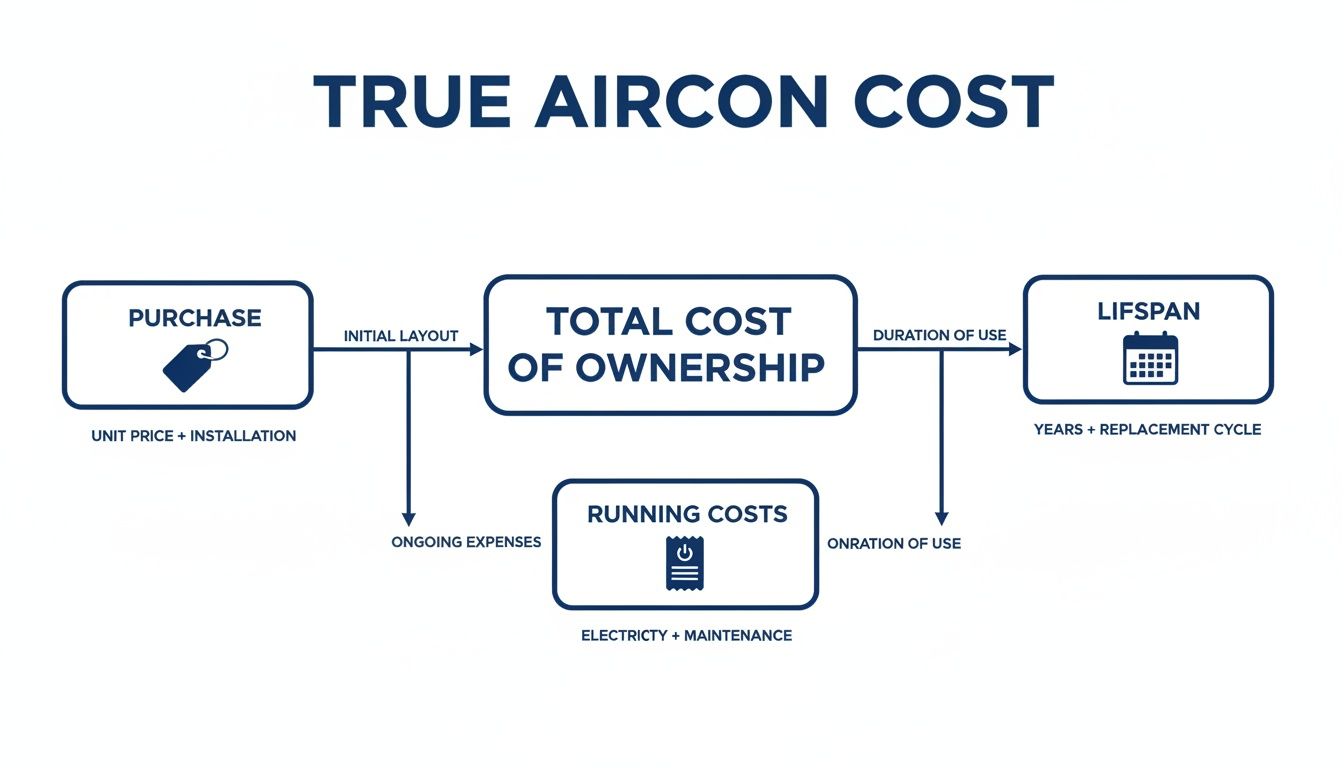
As you can see, the upfront price is just the starting line. Running costs and lifespan are just as important for understanding the real value you’re getting over the next 10-15 years.
At ALC Air, our licensed technicians assess all these elements during our free on-site assessment. We check your room size, insulation, window orientation, and electrical setup to give you a fixed, transparent quote. It details all the work required so you know exactly what the cost is before we even pick up a tool. No hidden surprises on installation day. To get a deeper understanding of what's involved, you might find our guide on the installation cost for a split system air conditioner helpful.
How to Read Energy Labels and Lower Your Power Bills
An attractive price tag on a cheap split system doesn't mean much if the unit costs a fortune to run. The real savings come from understanding the long-term running costs, and that journey starts with a small sticker you’ll find on every new air conditioner in Australia.
Demystifying the Zoned Energy Rating Label
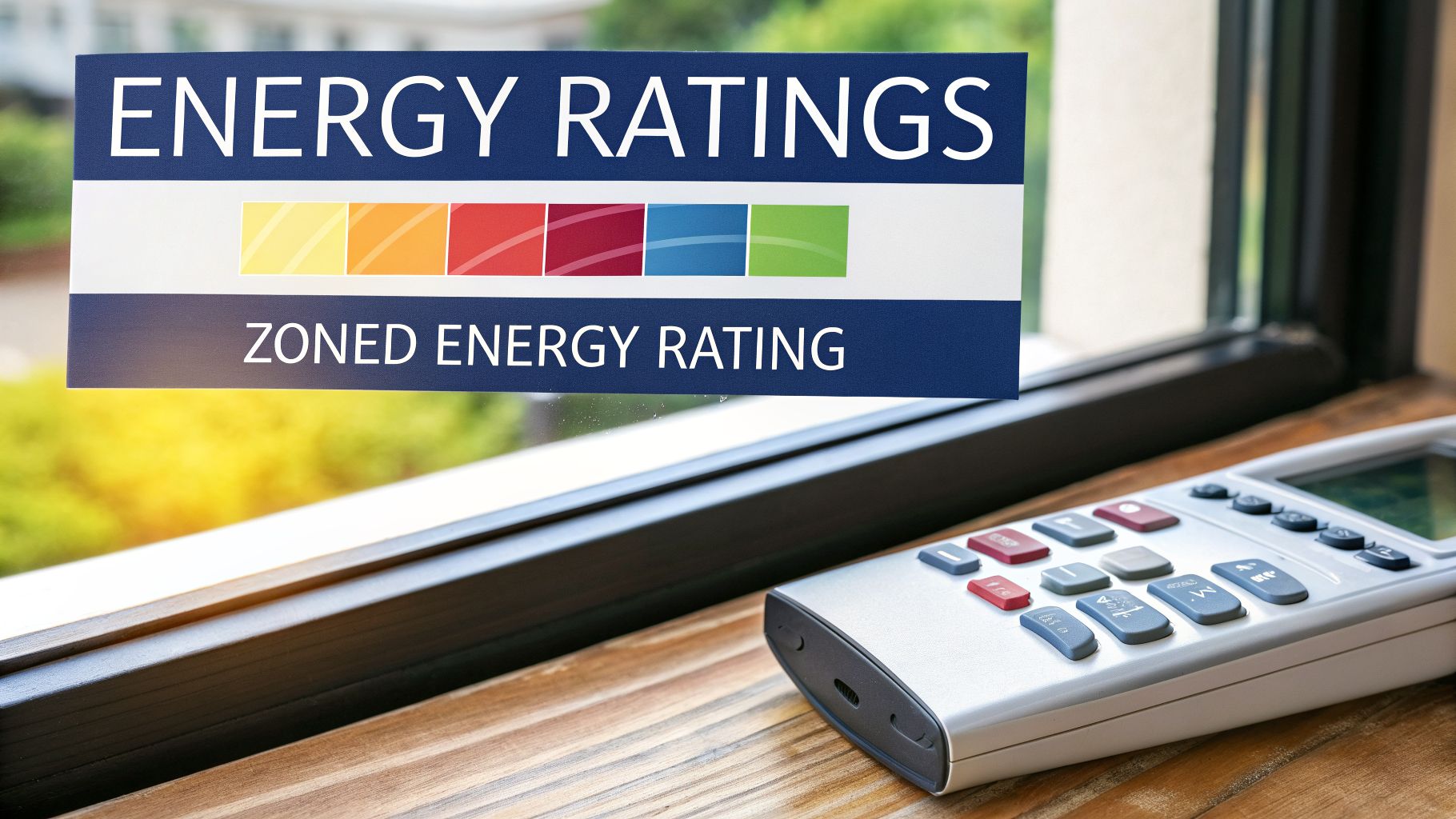
That colourful sticker on your new split system is the Zoned Energy Rating Label (ZERL). It's a huge improvement on the old, simple star rating system because it provides efficiency information based on Australia's different climate zones. For those of us in Sydney, Lake Macquarie, and the Hunter, the "Hot" or "Mixed" climate zones are the ones to look at.
You’ll notice two separate star ratings on the label: one for cooling (usually blue) and one for heating (usually red). A reverse cycle system battling a cold Hunter Valley winter needs a high heating star rating just as much as a unit fighting a Sydney summer needs a high cooling rating. It's simple: more stars mean lower running costs.
The Power of Inverter Technology
If there's one feature that makes the biggest difference to your power bill, it's inverter technology. Most reputable mid-range and premium systems now include this as standard, and for good reason. Think of an old, non-inverter air conditioner like a light switch. It’s either fully on or fully off. It blasts cold air until the room is freezing, then switches off until it gets too hot again. This constant stop-start cycle chews through a huge amount of electricity and creates noticeable, uncomfortable temperature swings.
An inverter-driven system works more like a car's cruise control. Instead of stopping and starting, its compressor intelligently speeds up or slows down to precisely maintain your desired temperature. This smooth, continuous operation can reduce electricity consumption by up to 50% compared to a fixed-speed model. This efficiency makes a massive difference over the life of the unit. Imagine a family in Sydney's hot western suburbs, like Penrith or Blacktown, who use their air conditioner heavily for three or four months a year. Choosing an efficient inverter model over a basic, non-inverter unit could easily save them hundreds of dollars on their power bills every single summer.
Turning Knowledge into Savings
Understanding these labels and technologies puts you in the driver's seat. Prioritising a higher star rating and ensuring your unit has inverter technology might mean a slightly higher upfront cost, but the savings on your power bills will quickly make up for it. Beyond picking the right unit, a practical guide on how to reduce electricity bills can give you even more strategies for managing your aircon's operational costs.
The difference in running costs between an inefficient and an efficient unit can be substantial, especially as electricity prices climb. We break down exactly what you can expect to pay in our detailed guide exploring how much running an AC actually costs. Ultimately, investing in efficiency isn't just about saving money; it’s the smartest way to guarantee year-round comfort without the bill shock.
The Hidden Dangers of a Too-Cheap Installation
It’s easy to focus on the price of the air conditioner itself, but the installation is where your investment is either secured or completely wasted. While hunting for a cheap aircon split system, you might be tempted by a handyman offering a low-cost cash install. This is one of the biggest and most dangerous mistakes you can make.
A shockingly cheap installation quote is a massive red flag. It almost always means the installer is unlicensed, uninsured, or planning to cut corners that will cost you dearly in the long run. The risks aren't just about poor performance; they involve serious safety hazards and financial loss.
Why Licensing Is Not Negotiable
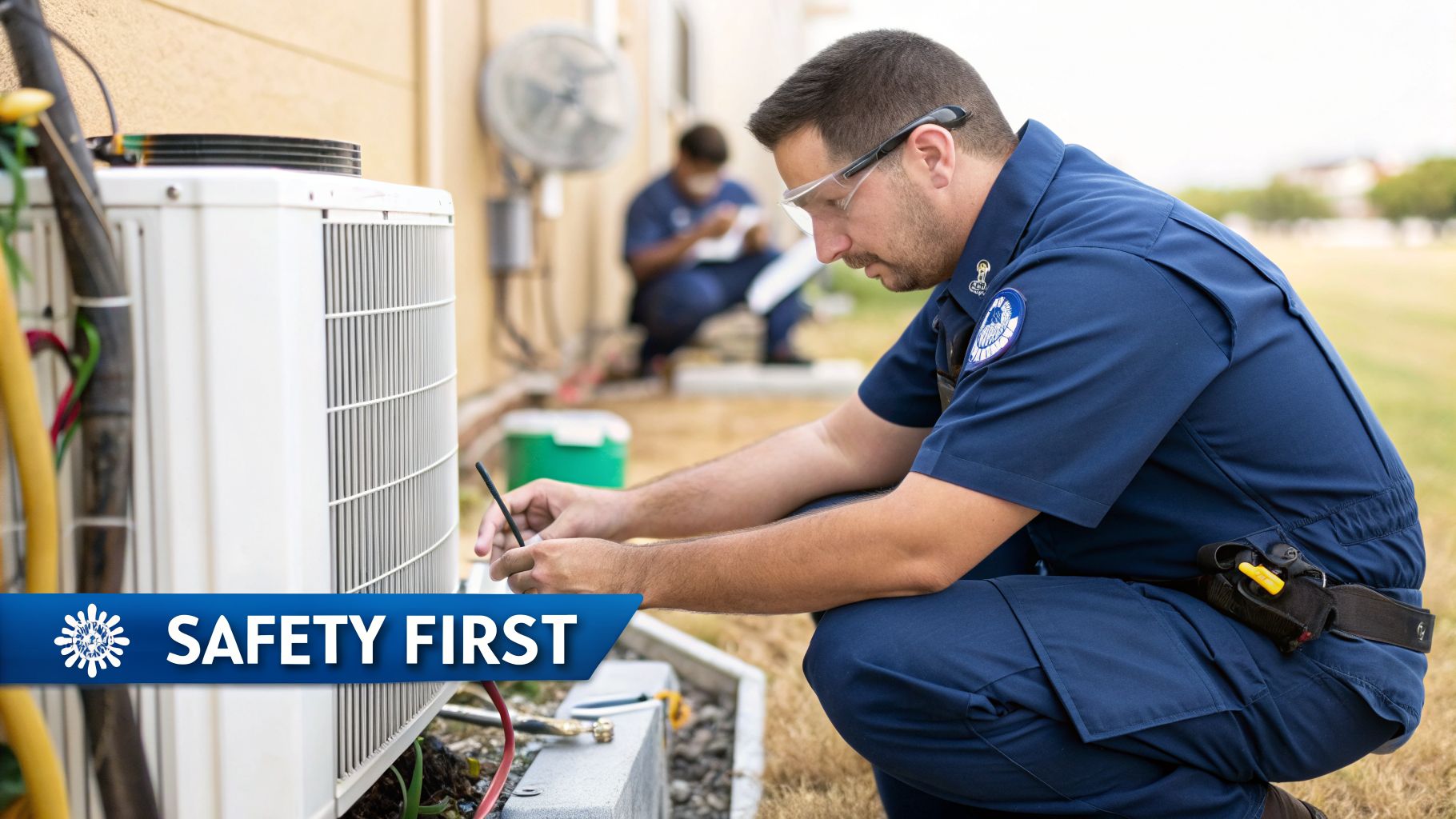
In Australia, air conditioning installation is a highly regulated trade for very good reasons. There are two critical licences every installer must hold, and you should always ask to see them before letting anyone touch your system.
The first is a full electrical licence, governed by SafeWork NSW. Air conditioners are powerful appliances that have to be wired directly into your home’s switchboard. Faulty wiring is a leading cause of house fires. An unlicensed installer poses a direct threat to your home and family, and any work they do will not comply with Australian Standard AS/NZS 3000, the mandatory rulebook for all electrical installations.
The second is an ARCtick licence from the Australian Refrigeration Council. This is a legal requirement for any person who handles refrigerant gases. Improper handling can lead to leaks of potent greenhouse gases into the atmosphere or, worse, cause the system to fail catastrophically. All compliant appliances must also meet AS/NZS 60335 standards for safety.
The Consequences of Cutting Corners
Hiring an unlicensed or unqualified installer to save a few hundred dollars is a gamble with terrible odds. The potential fallout is severe and far-reaching. Here’s what you risk with a cheap, non-compliant installation:
- Voided Manufacturer Warranty: Every major air conditioner brand, from Daikin to Mitsubishi Electric, explicitly states that the unit must be installed by a licensed professional. If an unlicensed person installs it, your five-year warranty is void from day one. If the unit fails, you have no recourse.
- Serious Electrical Hazards: Improper wiring can lead to overloaded circuits, short circuits, and even electrical fires. It also puts you at risk of electric shock when using the appliance.
- Poor Performance and High Bills: A quality installation isn’t just about connecting pipes. It’s about optimal placement for airflow, ensuring correct refrigerant pressure, and properly vacuuming the lines to remove moisture. A botched job guarantees the unit will run inefficiently, driving up your power bills.
- Water Damage: Split systems produce condensation that must be properly drained away. An incorrectly sloped drain pipe will cause water to back up and leak inside your walls, leading to mould, rot, and expensive structural repairs.
A professional installation is the best insurance policy you can buy for your new air conditioner. It ensures your system is safe, efficient, and compliant, protecting both your home and your manufacturer’s warranty for its entire lifespan. You can learn more about what a proper job involves by reading about our split system air conditioner installation process.
Smart Ways to Save Money on a Quality Split System
Finding a great deal on a new air conditioner doesn't mean you have to settle for a low-quality unit that will let you down. Securing a reliable split system that doesn't break the bank is all about making smart, informed choices, not just grabbing the cheapest box on the shelf. Here are a few practical ways you can save money without taking unnecessary risks.
The single most effective way to save money is to ensure the system is correctly sized for your space. It's a common mistake to think a bigger, more powerful unit must be better. An oversized system will cost you more upfront, and it will constantly cycle on and off, a process that wastes a huge amount of energy and, crucially, fails to dehumidify the air properly. This is why our technicians perform a thorough, free onsite assessment to recommend a unit with the perfect capacity.
Be Strategic with Your Timing
Timing your purchase can also lead to real savings. The peak of summer is when everyone suddenly realises their old air con has given up, creating a frantic rush for installations. This high demand can sometimes mean longer waiting times.
By planning ahead, you can often find more flexibility. Scheduling your installation during the milder autumn or spring "shoulder seasons" can be a savvy move. While the price of the unit itself doesn't often change, our installation calendar is generally more open, giving you a better choice of dates and a faster turnaround from quote to a cool, comfortable home.
Focus on Features You Will Actually Use
Modern air conditioners come packed with an impressive list of features, from advanced air purification filters to complex scheduling and motion sensors. While these can be fantastic, they also add to the cost.
Take a moment to consider what you genuinely need. For example, while Wi-Fi control is a convenient bonus for some, a solid, reliable unit from a trusted brand without all the extra bells and whistles can be an incredibly cost-effective choice. Prioritising core performance and efficiency over nice-to-have gadgets is a simple way to get a high-quality system that fits a tighter budget. Researching air con reviews can provide valuable insights into the real-world performance of different models.
Look for Rebates and Bundle Deals
Another way to chip away at the overall cost is by taking advantage of available programs. You might be interested in our guide on how to claim an air conditioner rebate, which can help lower your initial outlay.
Finally, consider bundling services. If you're renovating or need to cool multiple rooms, installing several split systems at the same time can be more economical. Let's say you're updating a home on the Central Coast; installing three units in one visit reduces our overall labour and travel time per unit, and we can often pass those savings directly on to you. It's always worth asking about a multi-unit discount.
Taking the Next Step Towards Affordable Comfort
Hopefully, you now have a much clearer picture of what to look for beyond just a low price tag. The goal isn’t to find the absolute cheapest aircon split system you can get your hands on, but to find the one that offers the best value over its entire life.
That means chasing the lowest lifetime cost, not just the lowest upfront price. It all comes down to two things: an energy-efficient system that keeps your power bills down, and a top-notch, professional installation that protects your investment for years to come. Get those two right, and you’ve cracked the code to affordable, long-term comfort.
Your Local Guide to the Right System
Here at ALC Air, our job is to guide you to the right solution for your home and your budget. For over 15 years, we’ve been helping families across the Central Coast, Sydney, Newcastle, and Lake Macquarie strike that perfect balance between performance and price.
We live and work here, so we understand the local climate inside and out. A system for a humid coastal home in Terrigal (postcode 2260) has different demands placed on it than one battling the dry, intense summer heat in Sydney’s western suburbs. That local knowledge makes all the difference. We believe the best decision is an informed one, which is why we offer a free, no-obligation quote where our experts come to you. We don’t just sell you a box; we provide a complete sizing and comfort assessment to make sure you get exactly what you need.
Get Your Free, No-Obligation Quote
Our friendly team will come out to your home and have a proper look. We’ll assess your layout, check your insulation, see which way the sun hits the house, and recommend the perfect system for your needs and budget. You’ll get a clear, fixed-price quote with no nasty surprises.
We make it easy to book in a time that works for you and start the journey towards reliable, affordable home comfort.
Ready to find the right air conditioning solution for your home? Here’s how to get in touch:
- Call us directly: You can chat with one of our experts by phoning [Your Phone Number Here].
- Request a quote online: Fill out our straightforward form to get a free quote for your split system installation, and we’ll get back to you promptly.
Answering Your Questions About Affordable Aircon
Even after you’ve done your homework, it’s completely normal to have a few questions lingering in the back of your mind. To help you feel confident in your decision, we’ve put together some straightforward answers to the most common queries we get from homeowners across the Central Coast, Sydney, and Newcastle.
Is It Cheaper to Install Air Conditioning in Winter?
While the price of the air conditioning unit itself doesn't change much throughout the year, booking your installation during the quieter "shoulder seasons" of autumn and winter definitely has its perks. The main advantage is flexibility. Once summer hits, everyone scrambles to get aircon installed, and wait times can stretch out for weeks.
By booking in the off-season, you often get a much quicker turnaround from quote to installation. It’s a smart way to be fully prepared for the first heatwave, rather than battling the rush when everyone else is sweating.
What Is the Cheapest Type of Split System to Run?
Without a doubt, the cheapest split system to run over its lifetime is an energy-efficient inverter model with a high star rating. It might have a slightly higher price tag upfront compared to a basic non-inverter unit, but the savings you'll see on your power bills are substantial.
Inverter technology lets the compressor intelligently adjust its speed, using only the precise amount of power needed to hold a temperature. This simple difference can slash your running costs by up to 50%, making it the clear winner for regular use, especially in places with punishing temperatures like the Hunter Valley.
How Much Does a Basic Split System Installation Cost in NSW?
For a simple, straightforward "back-to-back" installation of a small unit (around 2.5kW), you can expect the labour and basic materials to start from around $600 to $800. This figure doesn't include the cost of the air conditioner itself.
Keep in mind, that's the best-case scenario. The price will go up if the job is more complex. Things like installing on a second storey, needing extra-long pipe runs between the indoor and outdoor units, or requiring electrical upgrades at your switchboard will add to the cost. That's why we always provide a fixed, all-inclusive quote after a free site assessment, so there are no surprises.
Are Cheap Aircon Brands Worth It?
It's tempting to go for a lesser-known budget brand to save a few hundred dollars, but for a room you use all the time, it's rarely worth the risk. These units are often built with lower-quality components, have poor energy efficiency ratings, and come with shorter, less comprehensive warranties.
What that usually means in the real world is higher power bills, a shorter lifespan, and a much greater chance of a breakdown right in the middle of a heatwave. For the crucial spaces in your home, investing in a reputable brand like Daikin, Mitsubishi Electric, or Fujitsu gives you far better long-term value and genuine peace of mind. A cheap brand might only make sense for a shed or a guest room that gets used once a year.
Ready to get a clear, fixed-price quote tailored to your home? The team at ALC Air has over 15 years of experience providing reliable and affordable air conditioning solutions. We’ll help you find the perfect system for your needs and budget.