


When you hear someone talk about ‘central air conditioning’ in Australia, they’re almost always talking about a ducted system. It’s the behind-the-scenes, whole-home solution that delivers quiet, year-round comfort without you even noticing it's there. Unlike a single split system that just tackles one room, a central system is designed to keep your entire house at a consistent, comfortable temperature. We're here to walk you through how it all works and what you need to consider for your home.
What Is Central Air Conditioning? A Look Behind the Scenes
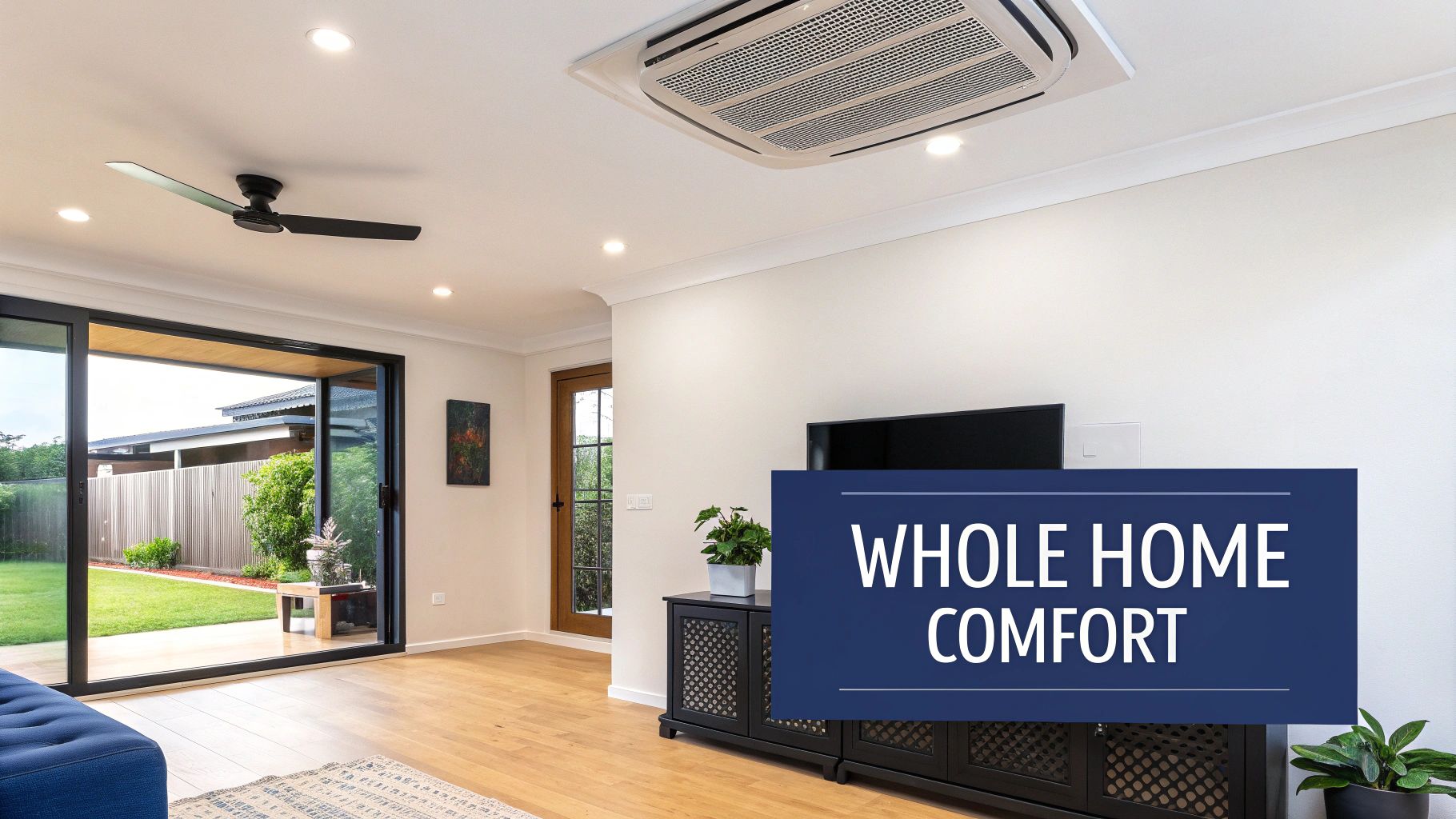
At its core, a central air conditioning system is all about seamless, integrated climate control. It’s hands-down the most discreet and effective way to manage the temperature in every corner of your house, from the living room right through to the kids' bedrooms. The system works with two main units operating in perfect harmony to give you that whole-home comfort.
Outside your home, you’ll have a compressor unit, which looks similar to what you’d see with a split system air conditioner. This is connected to a central indoor unit that’s neatly tucked away, usually in your roof space or under the floor. From there, a network of flexible ducts branch out, delivering conditioned air to each room through subtle vents, or louvres, in the ceiling or floor. The result is quiet, even air distribution everywhere.
A Single System for Year-Round Comfort
Here in Australia, modern central air conditioning is almost always reverse cycle. This is a huge advantage for you. It means the very same system that keeps you cool during a sweltering Sydney summer can also provide wonderfully efficient heating when a chilly winter evening sets in on the Central Coast. It works by cleverly absorbing heat from the outside air, even on cold days, and transferring it inside to warm your home.
This dual functionality makes it an incredibly practical and space-saving choice. You don’t need separate systems for heating and cooling; one ducted network does it all, managed from a single, central controller. It simplifies everything and gives you a complete climate control solution for every season.
Why It’s a Perfect Fit for NSW Climates
That versatility is precisely what makes central air conditioning such a great match for the diverse climates we experience across New South Wales. For homes in the often-humid coastal areas like Newcastle and the Central Coast (postcodes 2250-2290), a ducted system’s ability to dehumidify the air while it cools provides a level of comfort that basic cooling methods just can't match. It’s not just cooler; it feels less sticky.
Let's say you're in the Hunter Valley, which sees more extreme temperature swings from scorching summer days to frosty winter nights. A robust reverse cycle ducted system offers a reliable, all-in-one solution. For larger family homes across Sydney, it simply ensures every part of the house stays comfortable, no matter the season. Ultimately, it’s a powerful and consistent way to manage your indoor environment.
Getting to Know the Different Types of Central Air Conditioning
When we talk about "central air conditioning," we're really talking about a family of clever technologies designed to deliver consistent, whole-home comfort. While the core idea is the same, a central unit distributing conditioned air through a network of ducts, the specific features are what make modern systems so good at what they do, especially for homes here in NSW.
For our local climate, the most popular and practical choice is easily the reverse cycle ducted system. This technology is a true all-in-one solution. It provides powerful, refreshing cooling on those scorching summer days and then, with the flick of a switch, it reverses its operation to deliver cosy, energy-efficient warmth during winter. It's a single investment that has your back all year round.
The Power of Zoning for Smarter Energy Use
One of the best features of any modern central air conditioning system is zoning. It’s a simple concept with a massive impact on both your comfort and your power bills. Zoning allows you to divide your home into different sections, or ‘zones’, that you can cool or heat independently.
Imagine you're cooling a two-storey home in Terrigal with afternoon western sun. During the day, the family is probably downstairs in the kitchen and living areas. With a zoned system, you can choose to direct all the cooling power to that downstairs zone, leaving the empty upstairs bedrooms switched off. This common-sense approach means you’re never paying to cool empty rooms, which is genuinely one of the quickest ways to slash the running costs of your ducted system.
Understanding Inverter Technology
Another key piece of the puzzle you'll hear about is the inverter. In older, non-inverter systems, the compressor motor could only do two things: run at full blast or switch off completely. This constant stopping and starting is incredibly inefficient and can lead to those annoying temperature swings where you feel too hot, then too cold.
Inverter technology completely changes the game. The best way to think of it is like the cruise control in your car. Instead of flooring the accelerator and then braking hard over and over, an inverter system’s compressor intelligently adjusts its speed. It runs faster to cool a room down initially, then slows right down to a whisper-quiet, low-power mode to simply maintain the temperature you've set. This smarter operation means the system uses significantly less energy and provides far more stable temperatures.
An Alternative for Homes Without Ductwork
Of course, installing a full network of ductwork isn't always possible. In some Sydney apartment buildings, for instance, body corporate rules can be quite restrictive, or the building's structure just might not allow for it. In these situations, a multi-head split system is an excellent alternative.
This setup uses a single outdoor unit connected to multiple individual indoor units in different rooms. While it’s not technically ‘central’ air conditioning, it provides a highly effective way to achieve zoned, whole-home climate control without needing to install ducts. It gives you room-by-room temperature control and is a versatile solution for properties where a traditional ducted installation just isn't on the cards.
Why Getting the Size and Efficiency Right is Non-Negotiable
When it comes to central air conditioning, getting the size and efficiency right isn't just a minor detail, it's everything. It's the single biggest factor that determines how well your system performs, how comfortable your home feels, and how much you'll be paying on your power bills for the next 15 years. It's a careful balance of science and a genuine understanding of local conditions.
A system's cooling power is measured in kilowatts (kW). This isn't just some number plucked from a brochure; it's the result of a precise calculation based on your home’s unique layout. We look at everything: the total floor area, ceiling height, the quality of your insulation, and even the number and direction of your windows.
Why Kilowatts Aren't One-Size-Fits-All
The right kW capacity for a home in the scorching western suburbs of Sydney is completely different from what’s needed for a breezy coastal property in Newcastle. For example, a home with huge, west-facing windows that cops the brutal afternoon sun will need a much beefier unit than a well-insulated, shaded home of the exact same size.
This is where a professional on-site assessment becomes absolutely critical. A technician will perform a detailed "heat load calculation" to figure out exactly how much power your system needs to work effectively without being overworked. If you're weighing up your options, our guide to choosing the best air conditioner for your home explores these technologies in more detail.
The Big Mistakes: Oversized vs. Undersized Units
Getting the size wrong leads to serious problems that cost you both money and comfort. It’s a common mistake we see, and the consequences are incredibly frustrating for homeowners. An undersized unit is the more obvious problem. On a hot day, it will run constantly, desperately trying to hit the temperature you’ve set but never quite getting there. This puts immense strain on the compressor, dramatically shortening the system's lifespan.
Perhaps less obviously, an oversized unit is just as bad, if not worse. It will blast your home with cold air, hit the target temperature way too quickly, and then shut down. This constant stop-start cycle, known as "short-cycling," is incredibly inefficient and wears out components fast. Because it doesn't run long enough, an oversized unit fails to properly dehumidify the air. This is a massive issue in the humid coastal climate of the Central Coast, leaving you with a room that feels cold but also damp and clammy.
How to Actually Read the Energy Rating Label
Every air conditioner sold in Australia has a Zoned Energy Rating Label. This label is your best friend when it comes to figuring out long-term running costs. It gives you a simple star rating for both cooling (blue) and heating (red), more stars mean better energy efficiency. Simple as that.
Don't just look at the purchase price. A cheaper unit with a low star rating could easily cost you thousands more in electricity over its lifetime. The label also shows an annual energy consumption figure in kWh, giving you a tangible idea of what to expect on your power bills. Choosing a high-efficiency system is one of the smartest long-term investments you can make for your home.
A Look Inside the Ducted Air Conditioning Installation Process
Thinking about getting ducted air con installed can feel like a huge undertaking. What actually happens? How disruptive is it? Knowing the process from start to finish helps take the mystery out of it and sets clear expectations for what to expect on the day. A quality installation isn't just about connecting pipes and wires; it's a carefully mapped-out project designed for performance and efficiency that will last for years.
The whole thing kicks off with a detailed, on-site consultation. This is where one of our technicians visits your home to do more than just measure up. We're there to assess your home's unique layout, check the available roof or underfloor space, and see what your insulation is like. Most importantly, we talk to you about how your family actually uses the home. This is the foundation for a system that genuinely works for you.
Step 1: The Design and Consultation
During this initial visit, we plan out the entire system right there with you. This means figuring out the smartest, most discreet spots for the indoor and outdoor units and mapping the most efficient route for all the ductwork. We also pinpoint the ideal placement for vents in each room to make sure you get nice, balanced airflow everywhere.
This is also your chance to ask us anything. We'll walk you through the different options for controllers and zoning setups, explaining the pros and cons of each. For a deeper dive into what this stage involves, check out our detailed guide to the Central Coast air conditioning installation process. Getting this initial planning right is what makes the actual installation day run like clockwork.

As you can see, your home's layout, its insulation, and the final kW sizing are all completely connected. Getting one part wrong throws the whole system out of balance.
Step 2: What Happens on Installation Day
On the scheduled day, our team of qualified technicians arrives ready to turn the plan into reality. A full ducted installation is a pretty big job, but we work methodically to keep the disruption to an absolute minimum. The process starts with positioning the main components. We'll carefully place the outdoor condenser unit on a solid, stable base and then secure the indoor fan coil unit inside your roof space.
Once those are in place, the really meticulous work begins: running the flexible ductwork. Our team navigates your ceiling or underfloor space, connecting each duct run from the central unit out to the predetermined vent locations. We then professionally install the ceiling or floor vents and wire up the central wall controller. Safety is always our number one priority. All electrical work is performed by a licensed electrician, strictly following Australian Standards (AS/NZS 3000). On top of that, every technician on our team holds an ARCtick certification, ensuring all refrigerant is handled safely and legally.
Step 3: Final Checks and Handover
After the physical installation is done, we don't just pack up our tools and disappear. The final, most critical step is to "commission" the system. This means we power it on, test every single zone, check the airflow from each vent, and make sure the controller is talking perfectly to the entire system. We then walk you through how to use your new air conditioning. We'll show you how to operate the controller, set up programs, and manage your zones to get the best performance and efficiency. We make sure you’re completely comfortable and confident before we consider the job done.
Understanding the Costs of a Central Air Conditioning System
When you're looking at getting central air conditioning, it helps to think about the cost in two distinct parts. First, there's the initial investment, the supply and installation of the whole system. Then, you've got the ongoing running costs that show up on your power bills. Getting your head around both gives you a much clearer picture of the real investment in your home's comfort.
The upfront price isn’t a simple, one-size-fits-all number. It’s shaped by a few key things, starting with the brand and model you go for. Big names like Daikin and Mitsubishi Electric often have different price points depending on their features and how energy efficient they are.
Factors That Shape the Upfront Investment
But what really moves the needle on price is the complexity of the installation itself. For instance, putting a system into a new single-storey home being built in Lake Macquarie is usually a pretty straightforward job. Compare that to retrofitting a system into an older two-storey terrace in a cramped Sydney suburb with almost no roof space; that's a whole different ball game.
The number of zones you need also plays a big role. A setup with eight zones, each with its own controller, is naturally going to need more materials and labour than a simple four-zone system. The amount of ducting required and how easy it is for our technicians to get around your roof space are also big factors. If you want to dive deeper into the numbers, we’ve put together a full guide explaining how much a ducted air conditioner costs.
Connecting Running Costs to Smart Choices
While the installation is a one-time hit, the running costs are where a quality system and a professional install really start to pay you back. This ties directly back to what we were saying about energy efficiency and getting the sizing spot-on. A highly efficient unit with a good star rating just uses less electricity to do its job.
This is a big deal here in New South Wales. The demand for reliable cooling is driven by our scorching summers in places like the Central Coast and Newcastle, where air conditioning is no longer a luxury, it’s an essential. A system that has been perfectly sized for your home doesn't have to work overtime to keep you comfortable. It runs efficiently, maintains your desired temperature without struggling, and avoids the energy-wasting cycles that push up your power bills.
Proactive Maintenance to Ensure Lasting Performance
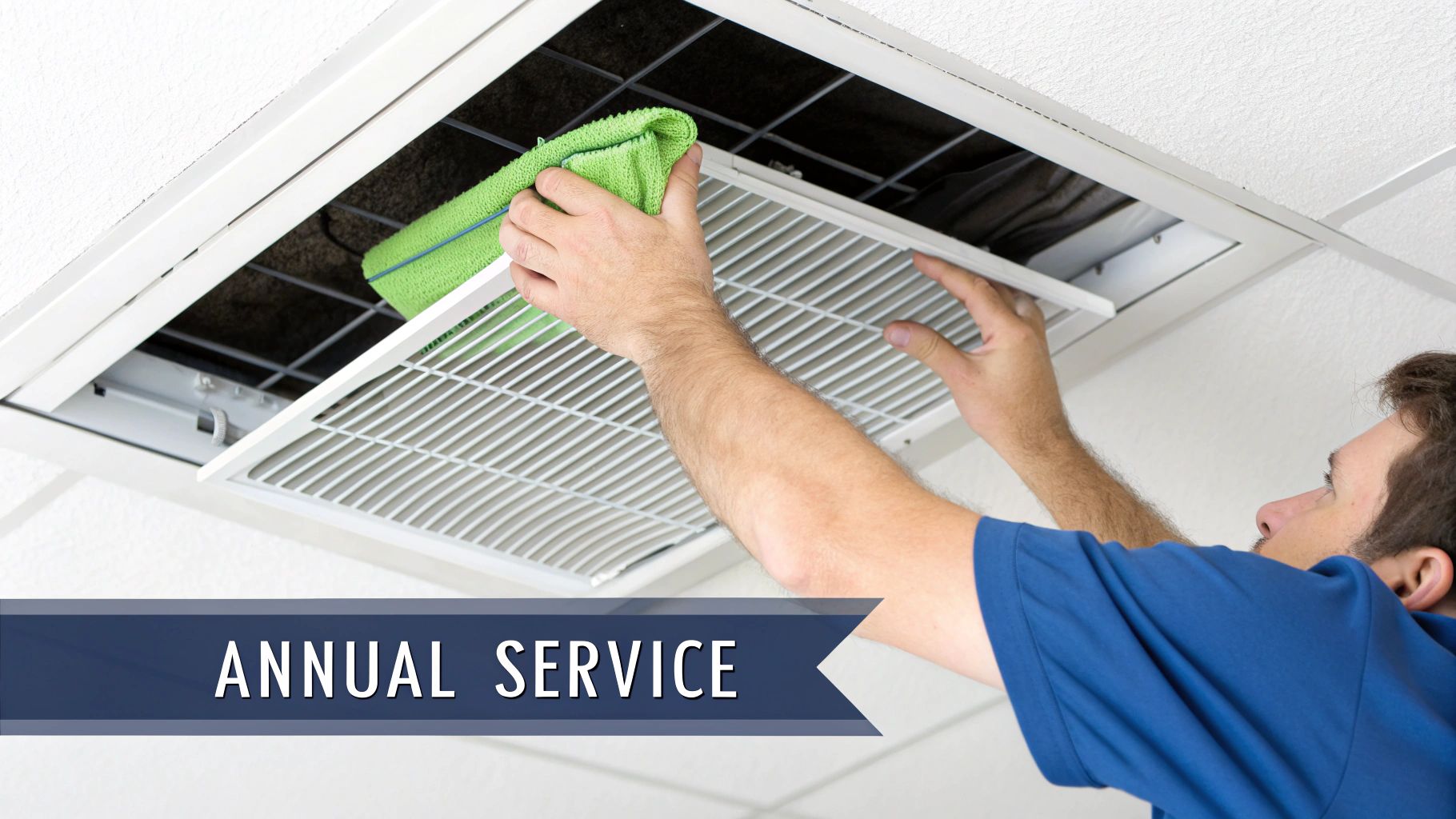
Your central air conditioning system is a significant investment in your home's comfort. Just like your car, it needs regular attention to keep running at its best, especially when you need it most. Think of proactive maintenance as the key to protecting that investment. It’s what ensures your system operates efficiently for its entire lifespan and doesn't let you down during a scorching Central Coast heatwave.
An annual service by a licensed professional is the single most effective thing you can do. It's far more than a quick clean; it’s a comprehensive health check for your entire system, helping you sidestep costly repairs down the track.
The Importance of Professional Annual Servicing
During a professional service, a qualified technician will inspect all the critical components of your central air conditioning. This isn't just about finding faults, it’s about optimising your system for peak efficiency. They'll check refrigerant levels, clean the coils, test all the electrical connections, and make sure your thermostats are calibrated correctly.
The impact of proper servicing is huge. A professionally maintained system can run far more efficiently, which translates directly into savings on your cooling bills as NSW power prices continue to climb. This proactive approach also helps our technicians catch common faults before they snowball into major, expensive problems. Learn more about what's involved in professional air conditioning maintenance in our detailed guide.
Simple Tasks You Can Do Yourself
While the complex electrical and refrigerant work must be left to the experts, there is one simple but vital task you can do yourself: regularly cleaning or replacing the return air filters. This is crucial for maintaining healthy airflow and good indoor air quality. A clogged filter forces the system to work much harder to pull in air, which drives up your energy use and puts unnecessary strain on the motor.
We recommend checking your filters every couple of months, especially during periods of heavy use in summer or winter. Simply remove the grille, take out the filter, and give it a gentle clean according to the manufacturer’s instructions. This five-minute job makes a world of difference to your system’s performance.
Troubleshooting Common Issues
Sometimes, your system might show signs that something isn't quite right. Before you pick up the phone, a few simple checks can sometimes solve the problem or at least help diagnose the issue for our technicians.
- Weak Airflow: The first thing to check is always the filter. A blocked filter is the most common cause of poor airflow by a long shot.
- Strange Noises: Rattling or buzzing sounds can indicate a loose panel or just some debris in the outdoor unit. Make sure the area around your outdoor unit is clear of leaves and branches.
- System Not Turning On: Check your thermostat settings to ensure it’s on 'cool' and set to the right temperature. It’s also worth checking your home’s circuit breaker to see if it has tripped.
If these simple checks don’t resolve the issue, it’s time to call in a professional. Continuing to run a faulty system can cause much more extensive, and expensive, damage.
Your Central Air Conditioning Questions Answered
Choosing a central air conditioning system is a big decision, and it’s natural to have a few questions before you commit. We get asked these all the time by homeowners across the Central Coast, Sydney, and Newcastle, so we’ve put together some straightforward answers to the most common queries.
How Long Does a Central Air Conditioning System Last?
You can realistically expect a quality ducted system from a reputable brand like Daikin or Mitsubishi Electric to last 15 to 20 years. But that lifespan isn't guaranteed, it's heavily influenced by your local environment and how well you look after the system. For example, a unit installed in a coastal suburb like Avoca Beach is constantly battling corrosive salt air and needs more frequent checks than one in the Hunter Valley. The single most important factor in hitting that 20-year mark is consistent, professional servicing.
Is Ducted Reverse Cycle Air Conditioning Expensive to Run?
This is a common concern, but modern ducted systems are surprisingly efficient, especially the ones with high energy star ratings and inverter technology. Your final power bill will come down to a few things: how you use it, how well your home is insulated, and your electricity tariff. The real key to keeping those bills in check is using features like zoning. There’s no point cooling or heating the entire house when you're only using the living area. A professionally sized and installed system is the foundation of efficiency.
Can Central Air Conditioning Be Installed in an Existing Home?
Absolutely. While it’s simplest to do during a new build or a major renovation, retrofitting ducted air into an existing home is something we specialise in. It's a very common project for our teams right across the region. The main thing you need is enough space in your ceiling cavity or under the floor to house the indoor unit and the network of ducts. Our technicians can assess almost any property, from older character homes in Newcastle to modern builds in Lake Macquarie, to map out an effective and minimally disruptive installation plan.
What Is the Difference Between an Inverter and Non-Inverter System?
Think of a non-inverter system as a basic light switch, the compressor motor is either blasting at 100% power or it’s completely off. An inverter system is much smarter, acting more like a dimmer switch. Its compressor intelligently adjusts its speed, running continuously at whatever power level is needed to precisely hold the temperature you've set. This makes inverter systems significantly more efficient, much quieter, and far better at delivering consistent, even comfort throughout your home.
Ready to find the perfect central air conditioning solution for your home? The team at ALC Air has been providing expert advice and quality installations across the Central Coast, Sydney, and Newcastle for over 15 years. Contact us today for a free, no-obligation quote and let's make your home comfortable all year round.