


Choosing the right split system air conditioner usually boils down to a balancing act between performance, reliability, and running costs. For most homes in our neck of the woods, brands like Daikin, Mitsubishi Electric, and Fujitsu are the ones we see delivering exceptional quality and long-term value time and time again.
It’s no surprise they’re the top contenders. They’re known for quiet operation, solid warranties, and having excellent local support networks right here in Australia, which is a bigger deal than most people realise until they need it.
Choosing the Best Split System Brand for Your Home
Putting in a new split system is a serious investment in your home’s comfort, especially when you consider the wild swings in climate we get across New South Wales. This isn’t just about picking a name you recognise; it’s about finding the right tool for the job.
Let’s say you’re a family sweltering through summer in a hot western Sydney suburb like Penrith. Your needs are very different from a homeowner on the humid Central Coast. The Penrith family needs raw cooling power that will not quit, while the Central Coast home might need to prioritise corrosion resistance for their outdoor unit to stop it from rusting away in the salt air.

This guide gets past the slick marketing brochures. We are going to break down the factors that actually matter for your long-term satisfaction and look at the real-world differences between Australia’s top-rated split system brands. The goal is to give you a balanced, practical comparison so you can put your money where it counts.
Top Split System Brands At a Glance
To kick things off, here is a quick look at what each of the leading air conditioner brands is really known for in the industry. Think of this table as a starting point to help you figure out which manufacturer might be the best match for your home before we get into the nitty-gritty details.
While this is a handy cheat sheet, understanding why each brand excels where it does is the key to making a confident choice. If you’re looking for a wider overview, you can also check out our guide on the best air conditioner for your home.
| Brand | Known For | Key Technology | Standard Warranty |
|---|---|---|---|
| Daikin | Premium performance, quiet operation, and advanced air purification. | Streamer Technology, Coanda Airflow | 5 Years Parts & Labour |
| Mitsubishi Electric | Whisper-quiet operation, reliability, and excellent efficiency. | QuietDrive Technology, Wi-Fi Control | 5 Years Parts & Labour |
| Fujitsu | All-round reliability, strong local support, and powerful performance. | Human Sensor Control, High Efficiency | 5 Years Parts & Labour |
| Panasonic | Smart home integration, air quality features, and energy efficiency. | nanoe™ X Technology, ECONAVI | 5 Years Parts & Labour |
Now that you have a feel for the key players, let’s dive deeper into what sets each of these brands apart in a real-world setting.
Why Inverter Split Systems Are Now the Aussie Standard
If you’re wondering why just about every second house seems to have a split system air conditioner, it comes down to two things: a super-flexible design and seriously clever inverter technology. The whole setup, with its separate indoor and outdoor units, means our technicians can fit them into almost any home. It does not matter if it’s a modern build in Lake Macquarie or an older character home in the Hunter Valley that has zero existing ductwork – the modular design is incredibly adaptable.
But the real magic happens inside that outdoor unit. This is where the inverter compressor gets to work, and it is a massive leap forward from the old, clunky air conditioners you might remember from your childhood.
How Inverter Technology Actually Works
Think of an old air conditioner like a basic light switch – it is either on full blast or completely off. It would roar to life, blasting icy air until the room was freezing, then shut down completely. A few minutes later, as the room warmed up, it would slam back on again. Not only was this cycle incredibly inefficient, but it also created those annoying temperature swings that were never quite comfortable.
An inverter system is much smarter. It is more like a dimmer switch for your power usage. Instead of just stopping and starting, the compressor adjusts its speed on the fly. It runs faster to cool down a hot room quickly, then slows right down to a gentle hum to simply hold that perfect temperature. This intelligent adjustment completely avoids those energy-wasting start-stop cycles and keeps your comfort perfectly consistent.
Key Takeaway: The inverter’s ability to constantly adjust its power output is the single biggest reason modern air conditioning is so much cheaper to run and more comfortable. It uses only the precise amount of energy needed at any given moment, and not a drop more.
What This Means for Your Home (and Your Power Bill)
This clever tech translates directly into benefits you can feel in the room and see on your electricity bill. Because the system is not constantly drawing a huge amount of power to start up, it uses significantly less energy overall. That means lower running costs, especially during those long, hot summers we get in Sydney’s western suburbs or across the Hunter Valley.
It also means the system gets your room to the right temperature much faster and then holds it there with pinpoint accuracy. You can say goodbye to those sudden, noisy blasts of cold air. All you get is quiet, steady comfort, which makes a huge difference at night, making inverter systems perfect for bedrooms.
The proof is in the numbers. Split system air conditioners are easily the most popular choice for Australian homes, with recent data showing they grabbed a massive 54.67% of the air conditioner market share in 2024. This is not a fluke; it is a direct result of their unmatched energy efficiency and installation flexibility. You can read more about these market trends and the growth of split systems in Australia.
A Detailed Look at the Top Air Conditioner Brands
Now that we have covered the tech, let’s get into the real head-to-head comparisons. When we assess air conditioners for homes across Sydney, the Central Coast, and Newcastle, we look past the glossy brochures. We focus on what genuinely matters: how these units perform in real-world Aussie conditions.
We will break down each brand based on their inverter technology, typical energy ratings, noise levels, and their proven track record for reliability. This should give you a much clearer picture of where each one shines.
Daikin: The Market Leader and Innovator
Daikin is a giant in the air conditioning world, and they did not get there by accident. They are constantly pushing the envelope with innovative features, especially when it comes to air purification and clever airflow control. Their Streamer technology, for instance, is designed to break down allergens and odours, making their units a go-to for families dealing with asthma or allergies.
Another great feature is their Coanda airflow, which intelligently directs cool air up along the ceiling. This prevents those uncomfortable draughts and creates a more natural, even cooling effect throughout the room. Backed by a massive service network across Australia, Daikin systems consistently deliver high energy efficiency and reliability.
Learn more about Daikin Air Conditioners
Mitsubishi Electric: The Quiet Achievers
Mitsubishi Electric has earned a stellar reputation, and for good reason—they are exceptionally quiet. For anyone living in an apartment or wanting to cool a bedroom without disruptive noise, their systems are usually our first recommendation. Some of their indoor units operate as low as 19 dBA, which is practically silent.
But this focus on quietness does not mean they skimp on performance. Their inverter technology is incredibly refined and efficient, consistently hitting excellent energy star ratings. They are a premium choice for anyone who puts a peaceful indoor environment at the top of their list.
This infographic hits on the core benefits of inverter technology, which all these top-tier brands have mastered to deliver a better experience.
Learn more about Mitsubishi Electric Air Conditioners
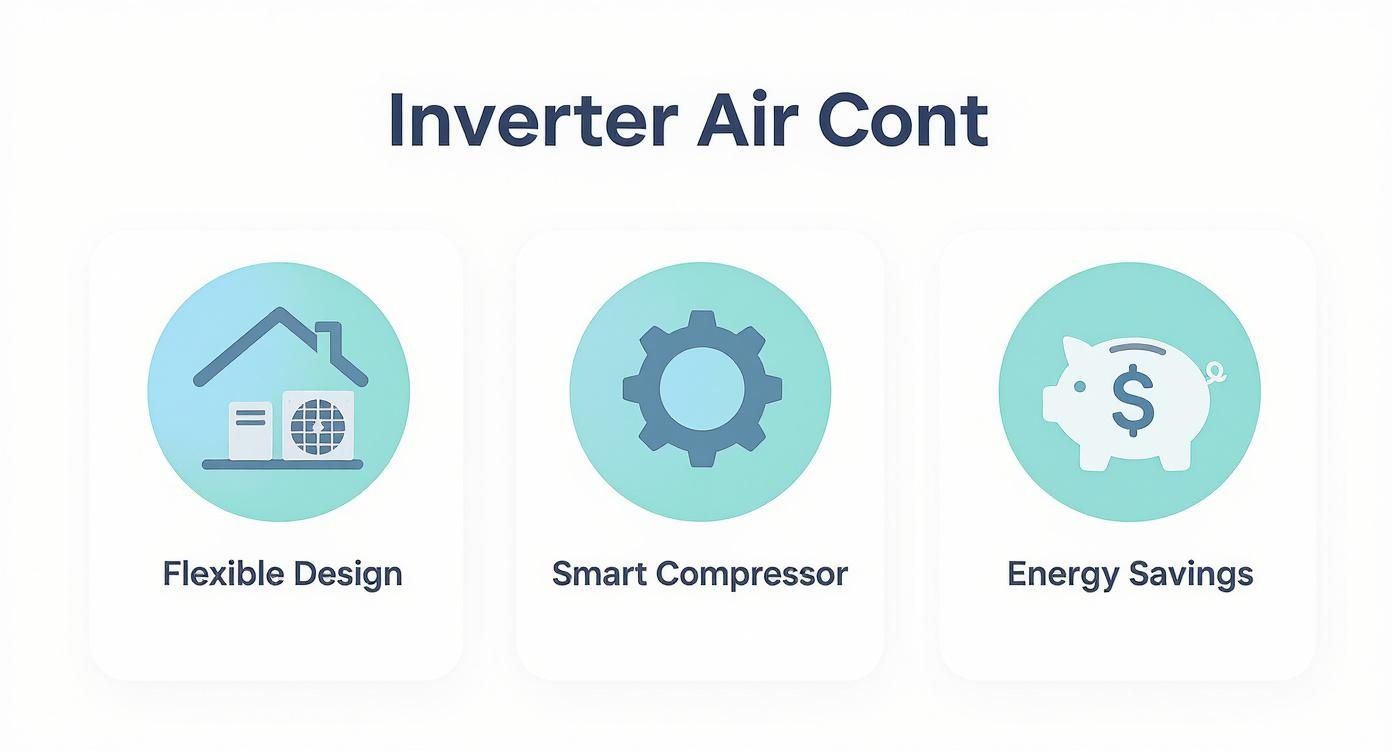
The key takeaway is that the smart compressor is the heart of the system, enabling both energy savings and flexible installation possibilities.
Fujitsu: Australia’s Favourite Air
Fujitsu earned its famous slogan through years of delivering solid, dependable, all-round performance. They are a consistently strong player in the market, known for producing powerful units that are straightforward and easy to live with. Their systems are well-suited to the wide variety of homes and climates we see across NSW.
One of their most practical innovations is the Human Sensor Control. It detects when people leave a room and automatically switches the unit into a low-power mode, saving energy without you having to think about it. Fujitsu also boasts one of the most extensive service networks in the country, which provides real peace of mind. For a deeper look into how different brands stack up, you can explore our comprehensive guide on air conditioner brands.
Learn more about Fujitsu Air Conditioners
Panasonic: The Smart Home Specialist
Panasonic really leans into smart technology and advanced air quality features. Their units are often at the forefront of connectivity, offering intuitive Wi-Fi control and easy integration with popular smart home assistants like Google Home and Alexa. This makes them a natural fit for tech-savvy households.
Beyond the smarts, Panasonic has invested heavily in air purification with its nanoe™ X technology. This system is designed to actively inhibit pollutants, viruses, and bacteria, effectively cleaning the air as it circulates. Combine that with their ECONAVI sensors that adjust performance based on room conditions, and you have a very compelling package for anyone focused on health and efficiency.
Learn more about Panasonic Air Conditioners
Our Expert Take: There is no single “best” brand for every situation. Mitsubishi Electric is exceptional for quiet bedrooms, Daikin leads in air purification, and Fujitsu is a fantastic all-rounder. The right choice depends entirely on your specific priorities.
Energy Efficiency Ratings by Brand
When you are comparing split system brands, it is tempting to focus on the upfront purchase price. But experienced homeowners know the real cost of an air conditioner is what you pay on your power bills over the next decade. Getting your head around the new energy labels is the key to making a financially savvy choice.
This is where the Zoned Energy Rating Label (ZERL) comes into play. You will see this colourful sticker on every new unit, and it is a massive improvement on the old, generic star rating system. Instead of giving you a single rating, the ZERL breaks down performance across three distinct Australian climate zones, which is far more useful.
Decoding the Zoned Energy Rating Label
The ZERL label shows you exactly how a particular model will perform where you actually live. It is a simple but brilliant idea. A system might be a top performer in the dry heat of an inland town but less efficient in the humid coastal climate we get around Newcastle and the Central Coast.
- Hot Climate Zone: This applies to areas with hot, dry summers like those in the upper Hunter Valley.
- Average Climate Zone: This covers much of Sydney, where conditions are more moderate but still demand strong cooling performance.
- Cold Climate Zone: Relevant for colder regions, this zone is most important for judging how well a reverse cycle system will handle heating in winter.
When you look at the label, just find the zone that best matches your location. This gives you a much clearer picture of what your running costs will actually look like. For a deeper dive into the numbers, our article explains more about how much running your air conditioner costs.
Quietest Split System Brands
Noise levels are a critical factor, especially for bedrooms or in densely populated Sydney suburbs where you need to be considerate of neighbours. In our experience, Mitsubishi Electric and Daikin consistently lead the industry for quiet operation. They invest heavily in designing fan blades and compressors that minimise sound.
To compare, look for the decibel rating (dBA) on the unit’s technical specifications. A lower number means a quieter unit. The difference between 19 dBA (virtually silent) and 25 dBA is surprisingly noticeable when you are trying to sleep.
Feature and Specification Comparison
To make things clearer, let’s put these brands side-by-side on the technical specs that most impact your daily comfort and power bills. This table gives you a quick snapshot of what to expect from their popular models.
| Brand | Energy Star Rating (Cooling/Heating) | Indoor Unit Noise (Quiet Mode dBA) | Standout Technology | Ideal Application |
|---|---|---|---|---|
| Daikin | Up to 7 stars | As low as 19 dBA | Streamer Air Purification | Bedrooms & homes with allergy sufferers |
| Mitsubishi Electric | Up to 7 stars | As low as 19 dBA | QuietDrive Technology | Bedrooms & noise-sensitive areas |
| Fujitsu | Up to 6 stars | As low as 20 dBA | Human Sensor Control | All-purpose residential use |
| Panasonic | Up to 7 stars | As low as 19 dBA | nanoe™ X Air Purification | Smart homes & health-conscious users |
As you can see, the market is incredibly competitive. While the top-end models have similar star ratings and noise levels, it is the standout technologies that really set them apart. This is what helps you zero in on the brand that is the perfect match for your home and family.
How to Match a Brand to Your Home and Climate
Picking the best split system brand is not about chasing the flashiest features or the biggest marketing budget. It is about finding the right tool for the job. The best air conditioner is always the one that solves your specific problems, and a unit that is perfect for a Sydney apartment might be completely wrong for a home in the Hunter Valley.
Let’s look at some real-world situations we see every day across Sydney, the Central Coast, and the Hunter Valley. This is how you match a brand’s known strengths to your actual needs.
Cooling for Coastal and Humid Areas
If you live anywhere near the water, from Newcastle down to Central Coast suburbs like Terrigal or Woy Woy, you are not just fighting the heat. You are in a constant battle with humidity and corrosive salt air. This environment is brutal on the outdoor units of split systems, and we regularly see cheaper, unprotected units rusting out years before their time.
In this scenario, build quality and corrosion protection are non-negotiable. Fujitsu, for example, has built a solid reputation for durable outdoor units. They use special coatings on the condenser fins specifically to resist salt damage. This focus on longevity makes them a genuinely practical choice for coastal properties, ensuring your investment does not just wash away with the sea breeze.
Expert Tip: For any coastal home, you should always ask your installer about the specific anti-corrosion treatments on the outdoor unit. A quality installation also means placing the unit where it has good airflow but is shielded from direct sea spray wherever possible.
Managing Urban Heat and High-Density Living
Living in a dense Sydney suburb or a modern apartment block brings a different set of challenges. Noise is a huge one, both for your own peace and quiet and for keeping the neighbours on side. On top of that, the urban heat island effect means city environments often get hotter and stay hotter for longer, demanding efficient and reliable cooling.
For a bedroom in a Sydney apartment, a whisper-quiet model is essential. This is where brands like Daikin and Mitsubishi Electric really stand out. Their premium models are engineered for near-silent operation, with some indoor units running as low as 19 dBA, which is basically imperceptible. Their refined inverter technology is also incredibly efficient, which is crucial when you are running the air con frequently in a hot apartment.
Tackling Extreme Temperatures in Inland Regions
The climate in the Hunter Valley is a completely different beast. Here, you are dealing with punishing temperature swings, from scorching summer days that can soar past 40°C to frosty winter mornings. You need an air conditioner with the raw power to handle these extremes without breaking a sweat.
Consider this scenario: cooling a large, open-plan living area in a Hunter Valley home. A high-capacity system known for its powerful performance is the only way to go. This is often where brands known for robust engineering earn their keep, as their systems are designed to throw strong, consistent airflow over long distances to cool large, open spaces effectively when others might struggle.
Finding the Right Size and Capacity
No matter which brand you are leaning towards, choosing the correct size (measured in kilowatts or kW) is the single most important decision you will make. An undersized unit will run non-stop, struggling to cool your room and sending your power bills through the roof. On the flip side, an oversized unit will switch on and off too often, failing to dehumidify the air properly and creating a clammy, uncomfortable space.
You can get a better handle on this by reading our detailed guide on properly sizing an air conditioner for your space.
The demand for effective climate control is only getting stronger. The Australian air conditioner market hit USD 2.24 billion in 2024 and is forecast to keep growing. This trend is driven by rising temperatures and a greater focus on energy-efficient solutions. You can find more insights on the booming Australian air conditioner market. This growth just underscores how vital it is for homeowners to choose a system that is correctly matched to their home for long-term comfort and savings.
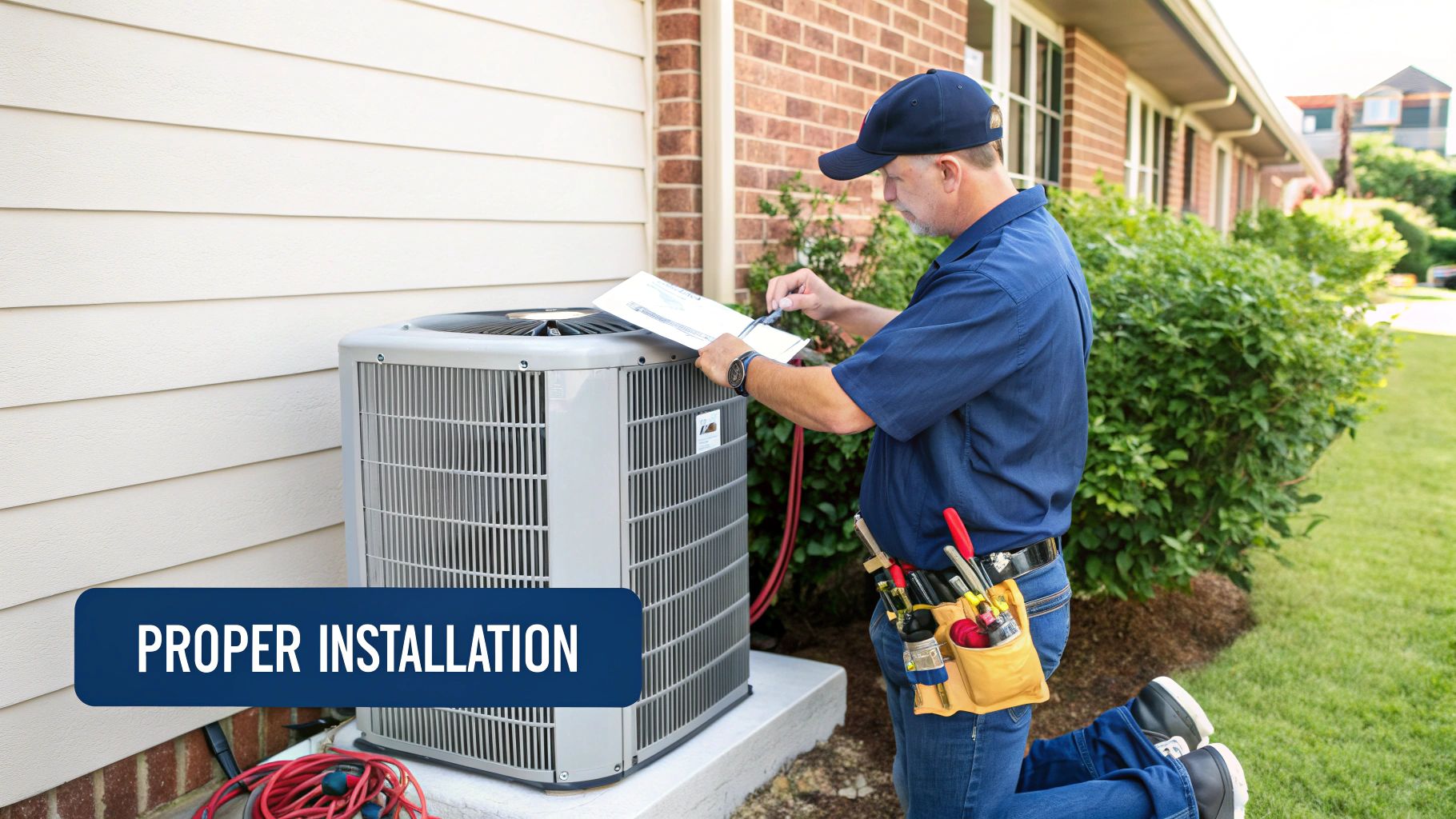
You can spend weeks agonising over the best split system air conditioner brands, but that premium unit from Daikin or Mitsubishi Electric is only as good as its installation. The single biggest factor determining your system’s efficiency, safety, and lifespan is not the logo on the front; it is the quality of the work done by the technician who puts it on your wall.
A professional installation is a non-negotiable part of the process. In Australia, any person handling refrigerants must hold a valid ARCtick certification. This is not just a recommendation—it is a legal requirement that ensures the technician is qualified to handle refrigerant gases safely, protecting both your family and the environment.
The Critical Role of Sizing and Placement
Beyond licensing, two fundamental details dictate performance: system sizing and unit placement. Getting the size right is absolutely crucial. For instance, installing a small 2.5kW unit in a large, open-plan living room in the Hunter Valley is a recipe for disaster. That system will run constantly, failing to reach the set temperature while driving up your power bills.
Likewise, placing the indoor unit incorrectly can ruin your comfort. A unit blowing directly onto your favourite spot on the sofa creates unpleasant draughts, while one tucked away in a corner will struggle to circulate air evenly. A skilled installer assesses your room’s layout, window orientation, and insulation to find the optimal position for truly effective and efficient climate control.
Electrical Safety and Long-Term Reliability
Your air conditioner is a powerful electrical appliance, and its installation must comply with strict Australian Standards, specifically AS/NZS 3000 for electrical wiring. This work must be performed by a licensed electrician who provides a Certificate of Compliance for Electrical Work (CCEW). Cutting corners here is not just illegal; it is a serious safety risk.
A professional installation ensures every connection is secure, the refrigerant lines are perfectly sealed, and the system is commissioned to the manufacturer’s exact specifications. This meticulous work prevents future problems like refrigerant leaks, drainage issues, and premature component failure, protecting your investment for years to come.
Ultimately, a top-tier brand is only half the story. The expertise of the installer is what unlocks its true performance. To get a clearer idea of the factors involved, you can explore our detailed breakdown of air conditioning installation costs on the Central Coast.
Have a Question? Here Are a Few We Hear Often
When you are trying to pick the best split system for your home, the same questions tend to pop up. Here are the straight answers our technicians give homeowners across the Central Coast and Sydney every day.
Which Split System Air Conditioner Brand Is Most Energy Efficient?
This is the million-dollar question, and the honest answer is: it depends. Most of the top brands we have covered—Daikin, Mitsubishi Electric, and Fujitsu—all produce exceptionally efficient models. The “most energy efficient split system brand” for you depends entirely on your climate and the specific size of the system you need.
Your best friend here is the Zoned Energy Rating Label (ZERL) you will find on the side of the box. Do not just look at the overall star rating. Find the rating for your specific climate zone—whether that is the humid “Average” zone for Sydney or the “Hot” zone for places like the Hunter Valley—and pick the one with the highest stars for your area.
What Is the Quietest Split System Brand in Australia?
Noise is a massive deal, especially for bedrooms or media rooms where you want near silence. Daikin and Mitsubishi Electric consistently lead the pack here. They pour serious money into research and development for advanced fan blade designs and compressor technology specifically to minimise sound.
When you are comparing models, hunt down the decibel rating on the spec sheet, shown as dBA. Pay attention to the figure for the indoor unit’s ‘quiet’ or ‘low’ fan setting. You would be surprised how noticeable a difference of just a few decibels is when you’re trying to sleep.
How Important Is the Warranty When Choosing an Air Conditioner?
The warranty is incredibly important. Think of it as the manufacturer’s vote of confidence in their own product. It is a direct reflection of how reliable and durable they expect their air conditioner to be, and it gives you peace of mind on what is a pretty significant investment.
Most reputable brands offer a standard 5-year warranty covering both parts and labour for residential jobs. But here’s the crucial fine print: that warranty is nearly always conditional on the system being installed by a licensed and ARCtick-certified professional. Many also require proof of regular servicing to keep it valid, so do not skip your annual tune-up.
Ready to find the perfect split system for your home? The team at ALC Air can give you professional advice and a no-obligation quote to make sure you get a system that’s perfectly matched to your needs and budget. Get in touch with us today.