


When you start looking for the best ducted air conditioning brands in Australia, a few names pop up again and again. Daikin, ActronAir, and Mitsubishi Electric are always in the conversation for their performance and reliability. But the truth is, the “best” brand for you hinges entirely on your specific needs, like the size of your home, your local climate, and your budget.
For instance, ActronAir has built a stellar reputation for handling the brutal Australian heat without breaking a sweat, making it a favourite in Sydney’s hot western suburbs. On the other hand, Daikin is a global powerhouse known for its all-around efficiency and clever technology. We’re here to help you make sense of it all.
Choosing the Right Ducted Air Conditioning for Your Home
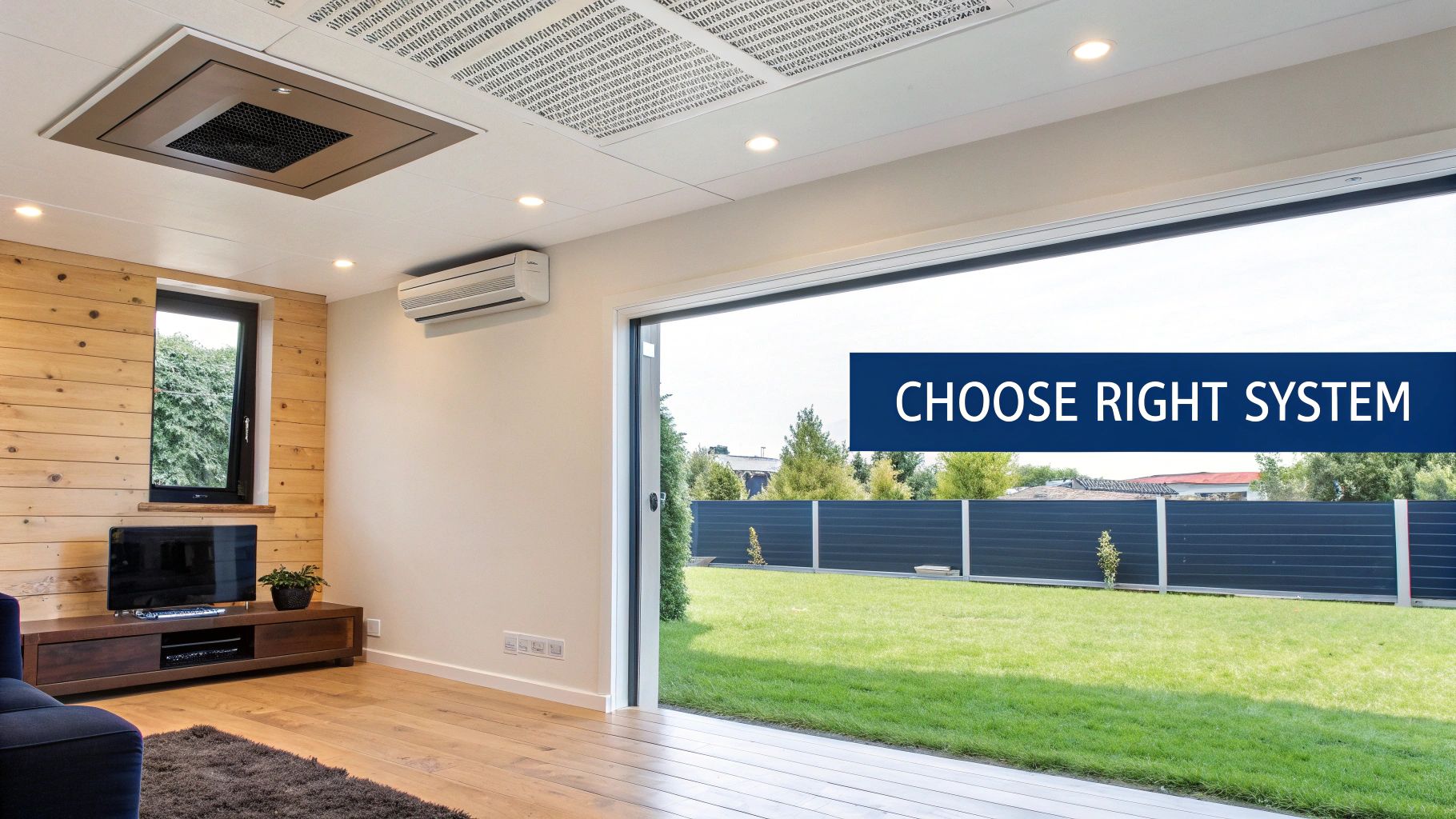
Picking a ducted air conditioner is a serious investment in your home’s comfort, especially with the diverse climates we see across NSW. The right system makes all the difference, whether you’re dealing with the sticky summer humidity on the Central Coast or the dry, intense heat of the Hunter Valley. This guide is here to help you understand what separates the top-tier brands from the rest of the pack.
We’ll explain why things like energy efficiency, long-term reliability, local support, and features designed for Australian conditions are so critical. Getting your head around these elements is the first step to choosing a system that delivers genuine value and performance for years.
While we’re focused on ducted systems here, it’s worth seeing how they stack up against other options. You can explore our guide on the best air conditioner for your home to compare them with split and multi-head systems.
The Australian air conditioner market is massive, which tells you just how much we rely on effective climate control. Ducted systems are a huge part of this, valued for providing that seamless, whole-home cooling and heating. This growth highlights the trust Aussies place in ducted systems for dependable comfort.
This comparison will walk you through the key players you should be considering. We’ll summarise their core strengths to help you make a properly informed decision, whether you’re building a new home in Lake Macquarie or retrofitting an older property in Newcastle.
What Separates Good Ducted Brands From Average Ones?
When you start comparing ducted systems, you’ll quickly find out they’re not all built the same. On the surface, two outdoor units might look similar, but the engineering, build quality, and technology inside can make a massive difference to your comfort and your power bills. Understanding what you’re paying for is the key to making a smart investment.
A premium brand sinks its money into the components you can’t see. We’re talking about everything from the compressor, which is the heart of the whole system, to the quality of the copper coils and the protective coatings on the outdoor unit. This attention to detail is what defines the most reliable ducted air conditioning systems on the market.
Superior Inverter Technology and Efficiency
One of the biggest leaps forward in air conditioning has been inverter technology. The easiest way to think about it is like a car’s accelerator. A basic, old-school non-inverter system is either off or running at 100% power, like flooring the accelerator and then slamming on the brakes repeatedly. This harsh stop-start cycle chews through electricity and creates noticeable temperature swings.
In contrast, a premium inverter system is more like cruise control. It intelligently adjusts its power to precisely match the cooling or heating your home needs. This smooth operation at variable speeds is far more efficient, giving you stable temperatures and much lower power bills. To get a real sense of how this affects your budget, it’s worth understanding the real costs of running your air conditioner.
Build Quality for Australian Conditions
Australia’s climate is seriously tough on outdoor equipment. For homes anywhere along the Central Coast or in Newcastle, the salty, humid air is a killer, causing corrosion that can drastically shorten the life of an air conditioner. Top-tier brands know this and tackle it head-on by using robust materials and specialised anti-corrosion coatings on the outdoor unit’s coils and casing.
This is an area where average brands often cut corners, using thinner-gauge metals or flimsy coatings that leave the system vulnerable. A premium unit is engineered to withstand everything from the relentless coastal salt spray near Terrigal to the scorching summer heat of Sydney’s western suburbs.
Why It Matters: A brand’s commitment to durable materials and corrosion resistance isn’t a luxury feature; it’s a clear sign of quality. For any coastal installation, this is non-negotiable if you want longevity and reliable performance.
Sophisticated Zone Control Systems
Effective zoning is what elevates a good ducted system to a great one. A basic setup might only let you turn huge sections of the house on or off. Premium brands, on the other hand, offer a far more granular and intelligent level of control.
Imagine setting the living room to a comfortable 22°C while an unused guest room stays at a more economical 26°C, or is switched off entirely. Advanced systems from brands like ActronAir allow for individual temperature control in different zones, with some models able to dial their airflow down to just 10% of total capacity. This precision stops you from wasting energy cooling empty rooms and makes sure everyone is comfortable. It’s also a major point of difference when comparing ActronAir vs Daikin ducted systems.
Detailed Brand Comparison: Daikin vs ActronAir vs Mitsubishi
Picking between the industry’s heavyweights can feel a bit like splitting hairs, but each brand absolutely has its own strengths. We’re putting three of the most popular choices under the microscope to give you a clear, honest comparison of what they offer for homes across Sydney, the Central Coast, and Newcastle.
Let’s break down the real-world differences between Daikin, the global giant; ActronAir, the Australian specialist; and Mitsubishi Electric, the quiet achiever. Understanding their core philosophies is the first step in finding the perfect match for your property and lifestyle.
Daikin: The Global Standard for Reliability
Daikin has earned its global reputation for one simple reason: their systems just work. Renowned for exceptional engineering and rock-solid reliability, Daikin is the go-to for homeowners who want a proven, high-performance solution without any fuss. Their ducted units are consistently praised for quiet operation and solid energy efficiency ratings.
Imagine a modern family home in Cherrybrook, the owners want a system that’s quiet enough not to disturb a sleeping baby but powerful enough to handle a scorching summer’s day. A Daikin system fits this scenario perfectly, offering dependable performance backed by a comprehensive five-year parts and labour warranty. Plus, their huge local support network means servicing and parts are never an issue.
ActronAir: Australian Made for Australian Extremes
ActronAir is an Australian-owned company that designs its systems specifically for our harsh and unpredictable climate. This local focus is their biggest advantage, particularly when it comes to managing the brutal summer heat you find in places like Penrith or the Hunter Valley.
Where ActronAir really pulls ahead is with its advanced zoning technology. While most brands offer basic zoning, ActronAir’s ESP (Energy Smart Performance) systems can throttle airflow down to just 10% of total capacity. This means you can cool a single bedroom overnight without wasting a cent on the rest of the house. It’s a significant advantage for large family homes and makes the ActronAir vs Daikin ducted debate very interesting for efficiency-focused buyers.
Mitsubishi Electric: The Quiet and Versatile Performer
Mitsubishi Electric is a brand synonymous with quality and quietness. Installers often rave about their robust build quality and incredibly low failure rates, cementing their place as one of the most reliable ducted air conditioning brands. Their units are engineered to be exceptionally quiet, both inside and out, which is a massive plus for homes with close neighbours in denser Sydney suburbs.
A standout feature on some Mitsubishi Electric models is the unique two-piece indoor unit design. This clever construction can make retrofitting a ducted system into an existing home with tight roof space much easier. For a homeowner in an older house in Hamilton, Newcastle (postcode 2303), this versatility could be the deciding factor, turning a complex installation into a straightforward one.
Our Expert Takeaway: Your final choice often comes down to your home’s unique needs. ActronAir’s superior zoning is ideal for large, multi-zone homes seeking maximum efficiency. Daikin offers unbeatable all-around reliability for standard family homes, while Mitsubishi Electric excels in quiet operation and tricky installations.
The best systems are defined by a few core features, as the infographic below highlights.
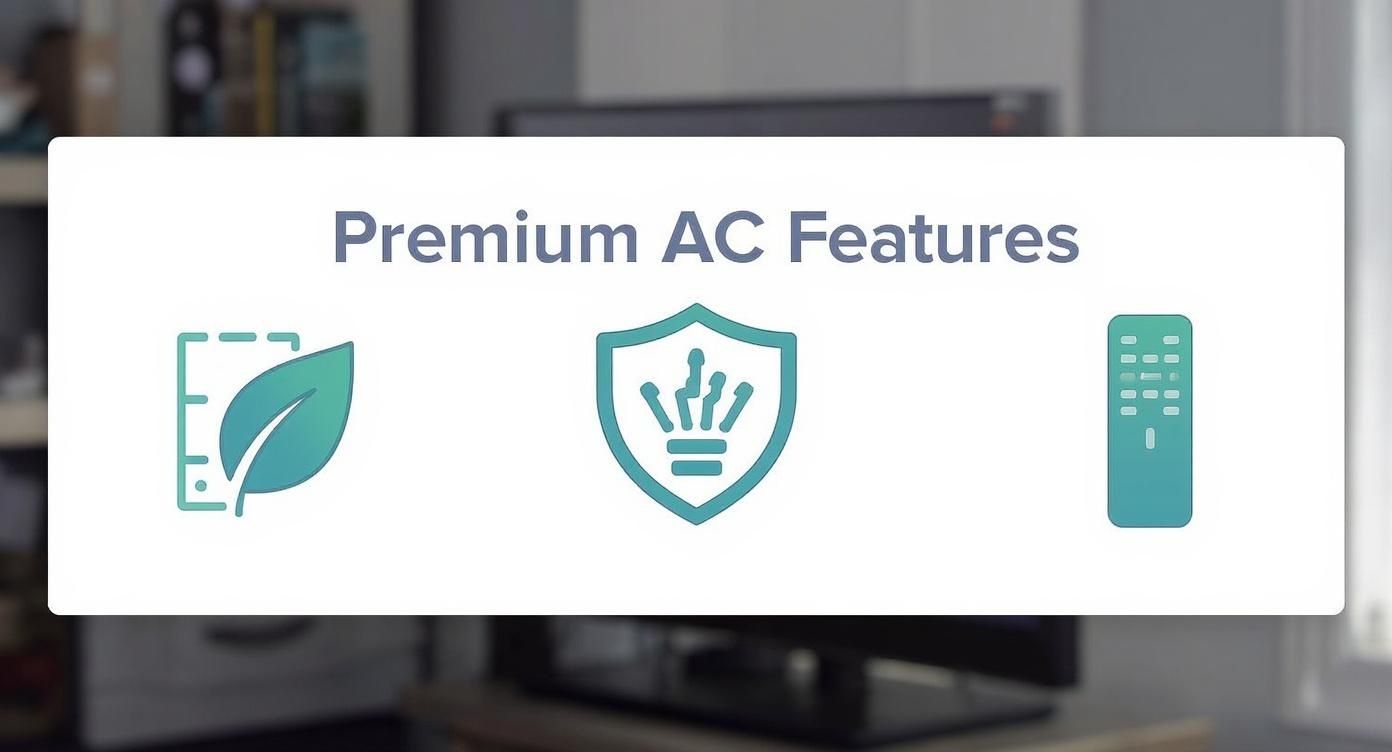
This visual guide shows that top brands all compete on efficiency, durability, and smart control, ensuring you get long-term value from your investment.
A Head-to-Head Feature Comparison
To help you see how these brands stack up on the features that matter most, we’ve put together a simple comparison table. This isn’t about declaring one “winner,” but about helping you find the right fit for your home.
Ducted Air Conditioning Brand Feature Comparison
| Feature | Daikin | ActronAir | Mitsubishi Electric |
|---|---|---|---|
| Primary Strength | All-round reliability and quiet performance. | Superior zone control and Australian-made durability. | Ultra-quiet operation and installation flexibility. |
| Operating Range | Excellent performance in a wide range of temperatures. | Designed to handle extreme Australian heat effectively. | Very reliable in both hot and cold conditions. |
| Zone Control | Standard zoning options available. | Market-leading, highly granular ESP zoning. | Good zoning options, including up to 8 zones. |
| Energy Efficiency | High efficiency ratings across their premium range. | Excellent efficiency, especially with ESP zoning. | Very good energy ratings with efficient inverter tech. |
| Warranty | 5-year parts and labour warranty. | 5-year parts and labour warranty. | 5-year parts and labour warranty. |
| Smart Control | Advanced Wi-Fi control via an intuitive app. | Wi-Fi and smart home integration options available. | Optional Wi-Fi control for remote access. |
As you can see, the core offerings like warranty and smart control are pretty consistent across the board. The real differences lie in their specialist strengths.
The Australian ducted air conditioning market is a massive part of our economy, reflecting our need for effective climate control. Healthy competition ensures brands like Daikin and Mitsubishi Electric keep innovating. You can discover more insights about the ducted air conditioners market in Australia on alledirect.com.
Ultimately, the best brand comes down to your priorities. For a standard home where reliability is king, Daikin is a safe bet. If you have a large home and want to slash running costs with precise zoning, ActronAir is hard to beat. And if whisper-quiet operation or a complex installation is your main concern, Mitsubishi Electric is an outstanding choice.
Best Ducted Brands for Coastal and Regional Homes

Choosing a ducted system isn’t just about the size of your house; it’s about where your house is. The salty air along the Central Coast and Newcastle coastline is relentless on outdoor equipment, while the Hunter Valley’s extreme temperature swings demand a system that can perform under pressure. The best ducted air conditioning brands understand these challenges and engineer their units to withstand them.
Your home’s location dictates the specific features you should prioritise. For a property in Woy Woy or Terrigal, corrosion resistance is non-negotiable. For a rural property near Cessnock, you need a system that won’t falter when the temperature climbs past 40°C or drops near freezing. Matching the brand’s strengths to your local climate is the key to long-term reliability.
Best Ducted Brands for Coastal Installation
The biggest enemy of any air conditioner in a coastal area is corrosion. The salty, humid air that drifts inland from the ocean can eat away at the delicate fins and coils of an outdoor condenser unit, drastically reducing its efficiency and lifespan. This is why superior build quality is so important for homes in postcodes like 2250 to 2264.
Top-tier brands like Daikin and Mitsubishi Electric invest heavily in advanced anti-corrosion treatments. They apply a special hydrophilic coating (often called a ‘blue fin’ treatment) to the outdoor unit’s heat exchanger. This coating acts as a barrier, protecting the aluminium fins from the corrosive effects of salt and moisture.
Why It Matters: An untreated outdoor unit in a coastal environment can show signs of significant corrosion in just a few years. A properly coated unit can resist this damage for much longer, ensuring your system runs efficiently and saving you from a premature and costly replacement.
Additionally, these brands often use higher-grade materials for casings and fasteners, further extending the unit’s life. When we assess a property in Lake Macquarie, one of the first things we look at is its proximity to the water. This directly influences which brands we recommend for maximum durability. You can learn more by reading our guide on choosing air conditioning for Central Coast homes.
Best Performers for Regional and Rural Properties
Regional areas like the Hunter Valley present a completely different challenge. Here, it’s all about a system’s ability to perform reliably across a massive temperature range. Summers can be intensely hot and dry, while winter nights can bring frost. You need a reverse cycle system with a wide operating range.
This is where a brand like ActronAir, designed and built in Australia, truly shines. Their systems are specifically engineered to handle the extreme heat that can cause other units to struggle or even shut down. They are renowned for their ability to maintain performance even on the hottest days, making them a top contender for properties in the Hunter region.
Similarly, other robust brands deliver consistent heating performance even when outside temperatures drop significantly. This is a crucial feature for ensuring your reverse cycle system provides effective warmth during chilly winter mornings without relying heavily on less efficient auxiliary heating elements. For larger rural properties, the system’s capacity to handle long duct runs without losing performance is also a key consideration.
Residential vs. Commercial-Grade Systems: What’s the Difference?
When you start digging into ducted air conditioning brands, you’ll hear installers talk about ‘residential’ and ‘commercial-grade’ systems. It sounds simple, but the line can get blurry. Knowing the difference is the key to getting the right outcome for a large or architecturally unique home.
At its heart, the difference really comes down to durability, capacity, and power. Commercial systems are built for a harder life. Imagine an office in Sydney running flat out for ten hours a day, five days a week, compared to a home system that runs for a few hours in the evening. This means they’re often built with tougher components designed to handle a constant workload.
When Your Home Needs a Bit More Grunt
For most standard homes on the Central Coast or in Newcastle, a top-quality residential system is more than enough. But some properties benefit from stepping up to what we’d call a light commercial unit.
Consider this scenario: a big, open-plan architectural home in the Hunter Valley with soaring cathedral ceilings and huge walls of glass. On a blistering 40°C summer afternoon, even a large residential unit might struggle to keep a space like that comfortable. It would be running at its absolute limit, just trying to keep up.
This is exactly where a light commercial system shines. With its higher cooling capacity (measured in kilowatts, or kW), it can handle the huge thermal load of that space without breaking a sweat, ensuring consistent comfort.
Why It Matters: Pushing a residential system too hard in a massive home is a recipe for disappointment. You’ll get poor performance, sky-high energy bills, and you’ll wear the unit out years before its time. A correctly sized light commercial unit, on the other hand, operates comfortably within its limits, giving you better efficiency and a much longer lifespan.
The Three-Phase Power Factor
One of the biggest technical hurdles is the power supply. Almost every home in Australia runs on standard single-phase power, and that’s what all residential air conditioners are designed for. Larger commercial-grade systems, however, often need three-phase power.
Three-phase is a more stable and efficient electricity supply, capable of handling the heavy-duty motors inside powerful commercial units. It’s standard in industrial areas, but you don’t often find it on a typical residential street.
If your home is large enough to need a system that requires a three-phase connection, this isn’t a small detail. It involves a significant electrical upgrade that must be carried out by a licensed electrician, following strict Australian Standards like AS/NZS 3000. This can add thousands to the installation cost, so your installer must identify and discuss this with you during the initial on-site assessment.
Why a Quality Installer Is Key to Long-Term Performance
You can invest in the most premium, energy-efficient ducted air conditioning brand, but if it’s installed poorly, you’ll never get the performance you paid for. The quality of the installation is arguably more important than the brand you choose. It’s the foundation for your system’s efficiency, reliability, and lifespan.
A great installation goes far beyond simply connecting the indoor and outdoor units. It’s a technical craft that demands precision, experience, and a deep understanding of airflow dynamics. This is why choosing a qualified and licensed installer isn’t just a box to tick; it’s the most critical step in protecting your investment.
What Defines a Professional Installation
A professional job is a meticulous process that follows a clear, compliant methodology. From the initial system design to the final commissioning, every step is handled with care to squeeze every drop of performance out of your unit and guarantee safety.
A quality technician will never give you a quote over the phone without first setting foot in your home. They need to get into your roof space, measure rooms, check your electrical switchboard, and understand your home’s layout and insulation. This on-site inspection is non-negotiable for getting the system size and ductwork design right.
Why It Matters: The installation process directly impacts everything from your running costs to the noise levels of your system. A rushed or sloppy job can lead to air leaks, unbalanced temperatures, and a unit that works much harder than it should, costing you more money in the long run.
Essential Licences and Certifications
In Australia, air conditioning installation is a highly regulated trade for good reason. The work involves handling both high-voltage electricity and pressurised refrigerant gases, both of which are dangerous if managed incorrectly.
When you’re vetting potential installers, you absolutely must verify two key credentials:
- A valid Electrical Licence: Any technician doing the electrical wiring must hold a current electrical licence recognised by SafeWork NSW. This is your assurance that all work complies with the stringent Australian Standard AS/NZS 3000.
- An ARCtick Licence: It is illegal for anyone to handle refrigerants or work on an air conditioning system without a licence from the Australian Refrigeration Council (ARCtick). This certification proves they are properly trained to handle these substances safely and responsibly.
Asking to see these licences isn’t rude; it’s your right as a homeowner. Any reputable company will be more than happy to show you.
The Australian market continues to see strong growth in ducted system sales as homeowners opt for whole-home comfort. Newer refrigerants are now used in most recent system imports, which underscores the importance of choosing installers who are up-to-date with current tech. Read the full snapshot of the local air conditioning market on climatecontrolnews.com.au.
Questions to Ask Your Installer Before You Commit
To make sure you’re hiring a true professional, don’t be afraid to ask detailed questions. A good installer will welcome the chance to demonstrate their expertise.
Consider asking things like:
- How will you determine the right kW capacity for my home?
- What’s your process for designing the ductwork layout?
- Do you perform air balancing after the installation is complete?
- What brand of ducting and components do you use and why?
Their answers will reveal a lot about their experience and attention to detail. For a deeper dive into what goes into the pricing, our guide on air conditioning installation costs on the Central Coast provides a comprehensive breakdown. A great installer ensures your system is not just installed, but properly optimised for your specific home.
Your Top Questions Answered
Choosing a ducted system is a big decision, and it’s normal to have a few questions. Here are the answers to some of the most common things we get asked by homeowners across the Central Coast, Sydney, and Newcastle.
Which Is the Most Reliable Ducted Air Conditioning Brand?
This is the million-dollar question. In our experience, reliability comes from a combination of great engineering and strong local support. Brands like Mitsubishi Electric and Daikin have fantastic global reputations for a reason: they are incredibly well-built and backed by solid five-year warranties.
That said, an Australian brand like ActronAir is engineered specifically for our harsh local conditions, which gives many homeowners extra peace of mind. Ultimately, the ‘most reliable’ brand is the one that is correctly sized for your home and installed by a certified, experienced technician who doesn’t cut corners.
What Is the Main Difference Between ActronAir and Daikin?
The biggest difference comes down to their design philosophy. Daikin is a global giant, focusing on leading technology and brilliant efficiency that works well in a massive range of climates worldwide. They are a safe, premium bet.
ActronAir, being an Australian company, designs its systems from the ground up for our unique and often brutal conditions. They really shine when it comes to handling extreme heat. They’re particularly well-known for their advanced zone control systems, which can deliver serious energy savings by giving you precise control over airflow.
How Much More Expensive Is Ducted Air Con Than Split Systems?
A fully installed ducted system is a much larger upfront investment than a single split system; there’s no getting around that. A split system is designed to cool one room, whereas a ducted system is a complete whole-home solution. The final cost really depends on the size of your house, the number of zones you need, the complexity of the installation, and the brand you choose.
However, if your goal is to cool the entire house, a single ducted system is almost always more cost-effective and energy-efficient than installing four or five separate split systems to do the same job. A quality installation is also key to getting the most out of its lifespan, which you can read more about in our guide on how long air conditioners last.
Choosing the right ducted system is a major decision, but you don’t have to make it alone. The expert team at ALC Air is here to provide professional advice and a free, no-obligation quote tailored to your home and budget. Contact us today to find the perfect solution for your comfort.