


When you start digging into the best air conditioning brands in Australia, a few names always seem to surface: Daikin, Mitsubishi Electric, and Actron Air are usually right at the top of the list. These brands have earned their reputations for a reason. They deliver on reliability, efficiency, and performance that’s genuinely suited to Australian climates, making them a solid starting point for most homes.
An Introduction to Australia's Top Air Conditioner Brands
Choosing an air conditioner for your home, whether you're on the Central Coast, in Sydney, or out in the Hunter Valley, is a big decision. It's an investment that has a real impact on your family’s comfort, your power bills, and even your property's value for years to come. With so many options out there, getting to know the key players is the first step to making a confident choice.
And it’s a choice more and more Australians are making. The demand for reliable cooling is booming, with the local air conditioner market projected to grow from AUD 3.76 billion in 2025 to a massive AUD 6.48 billion by 2035. This isn't just about rising temperatures; it's about homeowners actively seeking more energy-efficient ways to manage ever-increasing electricity prices. Find out more about Australian air conditioning market trends.
Before we jump into a detailed comparison, it helps to understand what each major brand is really known for. Some have perfected whisper-quiet operation ideal for bedrooms, while others build incredibly robust systems designed to handle the brutal heat of a Hunter Valley summer. A good first step is thinking about your own specific needs; our guide on choosing the best air conditioner for your home is a great place to start.
Here's a quick rundown of the leading names you’ll come across to get you started.
Quick Guide to Top Air Conditioning Brands in Australia
This table gives you a snapshot of the leading brands and what they do best, helping you quickly spot which ones might be the right fit for your home.
| Brand | Best Known For | Typical System Types | Ideal for NSW Climate |
|---|---|---|---|
| Daikin | Market-leading reliability and powerful air purification technology. | Split Systems, Ducted, Multi-Head | Excellent for allergy sufferers in Sydney's urban areas. |
| Mitsubishi Electric | Ultra-quiet operation and packed with advanced, user-friendly features. | Split Systems, Ducted | Perfect for bedrooms and quiet living spaces on the Central Coast. |
| Fujitsu General | Trusted, workhorse performance and excellent customer support. | Split Systems, Ducted, Multi-Head | A reliable all-rounder for a wide range of homes in Newcastle. |
| Actron Air | Australian-made for our harsh local conditions, with superior zoning. | Ducted Systems, Split Systems | Handles the extreme heat of the Hunter Valley with exceptional efficiency. |
Think of this as your starting line. Each of these brands offers something different, and the "best" one truly depends on your home, your climate, and your priorities. Now, let's explore what sets them apart in more detail.
A Detailed Comparison of Leading Air Conditioner Brands
When you start digging into the best air conditioning brands Australia has to offer, it’s easy to get lost in a sea of names. Daikin, Mitsubishi Electric, Fujitsu, Panasonic all make excellent products. But the real differences that matter to you are in the details. It’s the subtle distinctions in reliability, noise levels, and specific features that decide which brand is the perfect fit for your home.
Choosing a brand isn’t just about the logo on the unit; it’s about matching the system’s strengths to your unique environment. Imagine you're trying to cool a two-storey home in Terrigal, where salty air and coastal humidity are your daily reality. Your needs are worlds away from someone in the Hunter Valley, who’s battling scorching dry heat in summer and frosty mornings in winter.
This comparison isn’t just a feature list. We’re going to explore what really sets these brands apart, using practical, real-world scenarios to show how they perform where it counts. This will help you see which one will deliver the comfort and long-term value you’re looking for.
This summary highlights a few key differences between the brands we recommend most often.

Each of these brands brings something unique to the table, whether it’s Daikin's focus on air quality, Mitsubishi's quiet efficiency, or Actron's resilience in our harsh local climates.
Daikin: The All-Round Performer
Daikin has built a rock-solid reputation in Australia, and for good reason. They are often seen as the market leader, known for exceptional reliability and a strong local support network. Their systems are engineered to last, making them a safe bet for homeowners wanting long-term peace of mind.
A standout feature for Daikin is their focus on air quality. Many of their split systems are approved by the National Asthma Council Australia’s Sensitive Choice® program. This means their advanced filtration technology is designed to capture common allergens and airborne particles. For families in Sydney or Newcastle dealing with urban air pollutants or seasonal allergies, this is a huge plus.
Why it matters: In a home with young kids or allergy sufferers, an air conditioner that also purifies the air can make a genuine difference to daily comfort and health. Daikin’s commitment to this technology really sets them apart.
Mitsubishi Electric: Quiet and Technologically Advanced
If whisper-quiet operation is your top priority, Mitsubishi Electric should be right at the top of your list. Their units are famous for being some of the quietest on the market, which makes them perfect for bedrooms or home offices where any noise is a distraction.
Their popular MSZ-AP series, for example, is incredibly discreet, both in sound and appearance. But it's not just about being quiet. Mitsubishi Electric units are often packed with user-friendly tech, like advanced controllers and dual barrier coatings on internal parts. This coating helps reduce the build-up of dust and grime, which keeps the unit running efficiently and extends its life. This is especially useful in coastal spots like Lake Macquarie, where salt and humidity can speed up wear and tear.
Fujitsu: The Trusted Workhorse
Fujitsu has earned its place as one of Australia’s most trusted brands through years of consistent, reliable performance. People often describe them as a "workhorse," and it’s true. Fujitsu systems are built to perform day in and day out without any fuss. They might not always have the flashiest features, but they absolutely deliver on their core promise of effective cooling and heating.
Their systems are well-regarded for their robust build and dependable operation. Let's say you own a rental property on the Central Coast. You need a system that is easy for tenants to use, reliable, and backed by strong local service. A Fujitsu split system is often the perfect solution in this scenario, giving you that ideal balance of performance and durability. For a deeper dive, you can explore a detailed guide to top air conditioner brands and their specific models.
Panasonic: The Energy Efficiency Champion
Panasonic consistently shines when it comes to energy efficiency and air purification. Their nanoe™ X technology is a key feature, designed to inhibit pollutants, odours, and allergens to create a healthier indoor environment. This makes them a strong competitor to Daikin for any health-conscious household.
Where Panasonic often pulls ahead is in its impressive energy star ratings. Their inverter technology is finely tuned to minimise power consumption, which can lead to significant savings on your electricity bills over the life of the unit. Think about cooling a large, open-plan living area in a new build in Sydney's western suburbs. A high-capacity, energy-efficient Panasonic unit can maintain a comfortable temperature during a heatwave without sending your power bill through the roof. Their sharp focus on efficiency makes them a smart long-term investment.
Daikin: A Deep Dive into the Market Leader
When you start looking into the best air conditioning brands in Australia, Daikin is a name that comes up again and again. For good reason. It has become almost synonymous with reliability and quality, earning its place at the top through decades of solid performance and genuinely useful innovation. For homeowners across NSW, from Sydney to the Central Coast, choosing Daikin often feels like the safest and smartest long-term investment you can make.

The brand's reputation for dependability isn't just word-of-mouth; it’s backed by hard numbers. Daikin was named Australia's most reliable air conditioner brand, hitting a perfect trust score of 100% at the 2024 Finder Retail Awards. With their split systems commanding a dominant 54.67% market share, it’s clear their blend of performance and trust resonates with Australian families. You can learn more about leading split system air conditioner brands on our blog.
But this market leadership is built on more than just powerful cooling. Daikin has carved out a unique space by focusing heavily on creating healthier indoor environments, a significant advantage for many families.
Superior Air Quality for Healthier Homes
One of Daikin’s biggest advantages is its unwavering commitment to indoor air quality. Many of their systems, particularly their split systems, are the only ones approved by the National Asthma Council Australia’s Sensitive Choice® program. This isn't just a marketing badge; it's a formal recognition that their technology is genuinely beneficial for people with asthma and allergies.
How do they achieve this? Through advanced filtration systems that actively purify the air circulating through your home. These multi-stage filters are engineered to capture and neutralise common airborne nasties like dust mites, pollen, mould spores, and other allergens. For a family in a dense Sydney suburb or a humid coastal home in Newcastle where allergens can be a year-round issue, this feature provides invaluable peace of mind.
What this means for you: A Daikin system doesn't just cool or heat your space; it actively cleans the air your family breathes. This can lead to a noticeable improvement in comfort for anyone with respiratory sensitivities, making your home a healthier sanctuary.
Reliability and Extensive Local Support
Beyond clean air, Daikin is known for its robust engineering and an impressive local support network. Their systems are built to withstand the punishing Australian climate, from the intense summer heat of the Hunter Valley to the salty, humid air along the Central Coast. This durability translates into fewer breakdowns and a longer operational lifespan for your investment.
On top of that, Daikin has a comprehensive network of dealers and technicians right across NSW. This means that whether you need routine maintenance in Lake Macquarie or an urgent repair in Sydney, qualified help and genuine parts are always close by. This strong local presence ensures your system is supported for its entire life, a critical factor people often overlook when choosing a brand.
To unlock the full potential of any Daikin unit, a professional installation by a licensed and ARCtick certified technician is non-negotiable. Proper sizing and placement ensure the system runs efficiently, quietly, and reliably for years to come, protecting your warranty and guaranteeing compliance with Australian Standards.
Mitsubishi Electric vs Mitsubishi Heavy Industries Explained
It’s one of the most common points of confusion when you’re looking for a new air conditioner: are Mitsubishi Electric and Mitsubishi Heavy Industries the same company?
The short answer is no. While they share a historic name, they are two completely separate, competing businesses. They have distinct engineering philosophies, different product strengths, and are designed for different priorities in your home.
Understanding the difference is key. One brand specialises in whisper-quiet operation and refined features, while the other is an absolute workhorse, known for its robust engineering and powerful performance. Think of them as two highly skilled experts who excel in different fields.
Mitsubishi Electric: The Specialist in Quiet Comfort
Mitsubishi Electric has carved out a stellar reputation for making some of the quietest air conditioners on the market. Their whole focus is on the user experience, blending high efficiency with advanced features that make daily life more comfortable. This makes their units a top choice for places where noise is a deal-breaker, like bedrooms, nurseries, or a home office.
Take their popular MSZ-AP series of split systems. It’s engineered for near-silent operation, with some models running as low as 18 dB(A). That's genuinely quieter than a whisper, meaning your sleep won't be disturbed on a hot summer night.
Why this matters for your home: If you’ve ever been kept awake by a rattling, humming air conditioner, you’ll immediately appreciate the value of quiet engineering. A Mitsubishi Electric unit in a Central Coast bedroom means you can stay cool through a humid night without any annoying background noise.
It's not just about being quiet, though. Their units pack in clever tech like the Dual Barrier Coating on internal parts. This coating helps stop dust and grime from building up, which keeps the unit running efficiently and maintains better air quality over the long term. Throw in their sleek designs and user-friendly controllers, and it’s easy to see why they’re so popular in modern homes.
You can see how they stack up against other leading brands in our guide to the best split system air conditioner brands.
Mitsubishi Heavy Industries: The Robust Performer
While Mitsubishi Electric masters quiet refinement, Mitsubishi Heavy Industries (MHI) built its name on powerful, heavy-duty engineering. Their air conditioners are legendary for their durability and robust performance, designed to handle tough conditions without breaking a sweat. This makes them an excellent choice for large, open-plan living areas or homes in demanding climates like the Hunter Valley, which cops intense summer heat.
MHI's Avanti® series, for instance, is celebrated for its powerful airflow technology. The fan blades are designed to push conditioned air further and more evenly across a room, ensuring you don't get hot or cold spots, even in big spaces. Their engineering often borrows from their industrial background, resulting in units that are simply built to last and perform reliably, year after year.
To make the choice clearer, here’s a quick overview of how the two brands compare.
Mitsubishi Electric vs Mitsubishi Heavy Industries At a Glance
This table breaks down the core differences to help you decide which brand aligns better with your needs.
| Feature | Mitsubishi Electric | Mitsubishi Heavy Industries |
|---|---|---|
| Primary Strength | Ultra-quiet operation and advanced features. | Robust engineering and powerful airflow. |
| Ideal Use Case | Bedrooms, home offices, and quiet living spaces. | Large open-plan areas and demanding climates. |
| Key Technology | Dual Barrier Coating for internal cleanliness. | Advanced fan blade design for long-reach airflow. |
| Noise Levels | Often industry-leading for quietness. | Quiet, but prioritises powerful performance. |
Ultimately, choosing between these two fantastic brands comes down to what you need for your home.
If you need a quiet, feature-rich solution for your bedroom in a Newcastle apartment, Mitsubishi Electric is a brilliant option. But if your goal is to cool a large, sun-drenched living area in a Sydney family home, the powerful and durable engineering of Mitsubishi Heavy Industries is likely the better fit.
Actron Air: Australian Made for Australian Conditions
While most of the big names in air conditioning hail from Japan, Actron Air is proudly Australian-owned and operated. This isn't just about local pride; it means their systems are designed from the ground up for our uniquely harsh and varied climate. They get that a humid summer on the Central Coast is a world away from the wild temperature swings in the Hunter Valley.
This local focus is exactly why Actron Air has become a dominant player, especially in ducted air conditioning. Their units are engineered to keep churning out cold air when a summer heatwave pushes temperatures past 40°C in Sydney's western suburbs. This is a scenario where some overseas brands can genuinely start to struggle.
Advanced Zoning for Serious Efficiency
One of Actron Air's biggest advantages is its incredibly smart zoning technology, especially in their renowned ESP Platinum ducted series. Traditional ducted systems often work on an "all or nothing" basis, blasting cold air through the entire house. Actron’s approach is far more intelligent and, frankly, much cheaper to run.
Their systems let you control the temperature in individual rooms or zones with precision. Picture a hot summer evening: you can cool just the bedrooms for a comfortable night's sleep without wasting a cent on the empty living areas. This level of control can slash your running costs over the life of the system, making it a brilliant long-term investment for larger family homes.
Why this matters for your home: Effective zoning means you only pay to cool the rooms you're actually using. For a family in a multi-storey Newcastle or Lake Macquarie home, being able to direct airflow exactly where it’s needed can lead to huge savings on your quarterly power bills.
Built Tough for Australia, with Local Support to Match
Choosing an Australian brand has practical perks that go way beyond performance. With manufacturing and support based right here, getting spare parts is typically much faster and more straightforward. This is a crucial point that too many people overlook. When your air con dies in the middle of a January scorcher, you don’t want to be told a critical part is weeks away on a ship from overseas.
Actron’s local presence gives you peace of mind that technical support and expertise are always on hand, ensuring your system is well-supported for its entire lifespan. Their dedication to building robust, efficient units makes them a top contender, particularly when you're looking at the best ducted air conditioning brands in Australia. Combine that local backing with technology built for our specific conditions, and you've got a powerful and reliable solution built to last.
Why a Great Brand Requires Professional Installation
Investing in a high-quality unit from one of Australia's best air conditioning brands is a fantastic first step. But that top-tier system is only half the equation. The quality of the installation is just as critical to its performance, efficiency, and how long it will last.
A premium Daikin or Mitsubishi Electric unit can perform worse than a budget model if it's installed incorrectly, leaving you with high power bills and a home that never feels quite right.
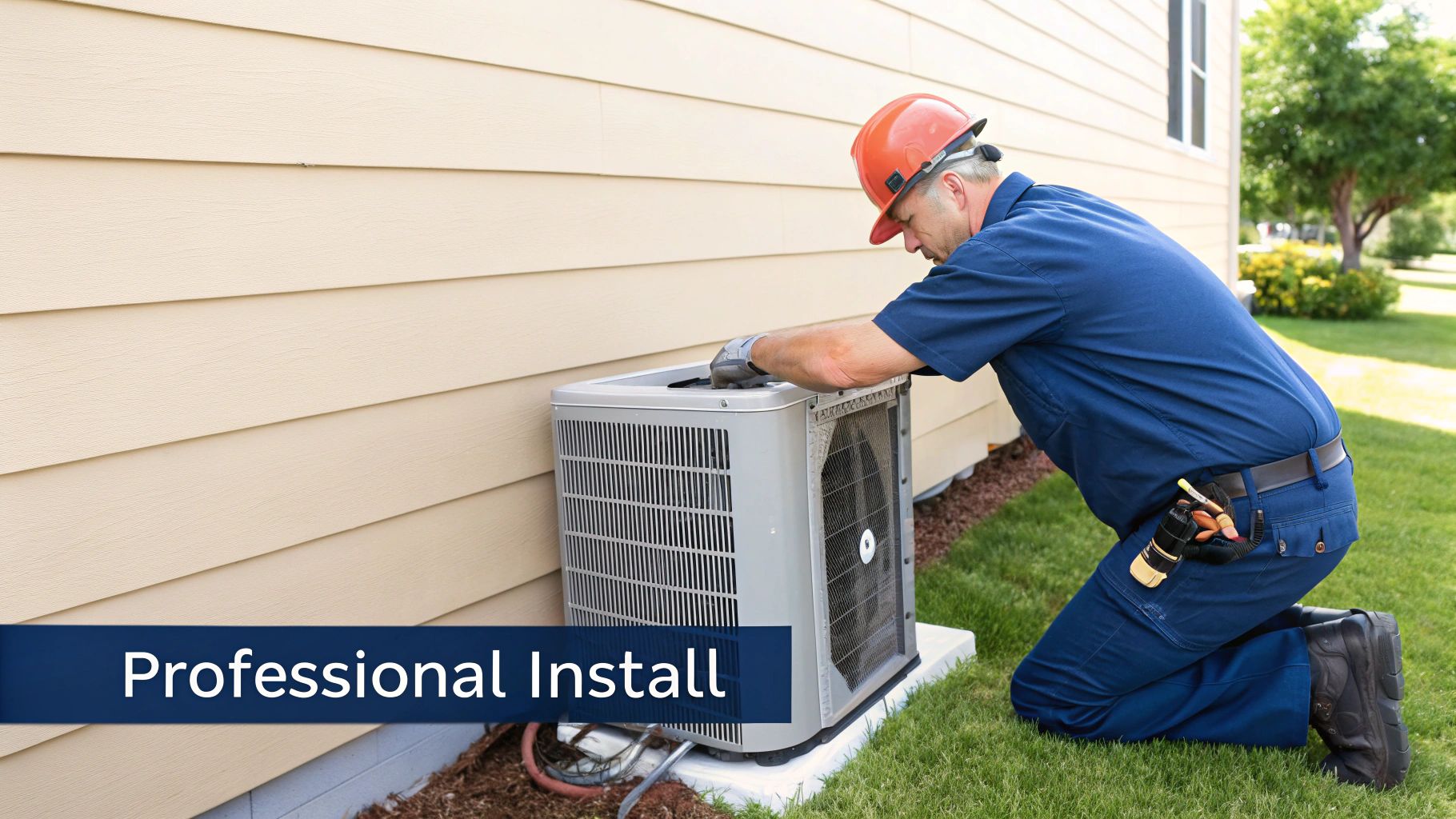
Think of it like buying a high-performance car. You wouldn't let an unqualified mechanic work on its complex engine, and the same principle applies here. Professional installation by a licensed and experienced team is non-negotiable to protect your investment and ensure you get the comfort and efficiency you paid for.
The Technical Side of a Quality Installation
A professional installation goes far beyond simply mounting units on walls and connecting pipes. It’s a technical process that demands precision, expertise, and a deep understanding of how these complex systems actually work.
Getting the system sizing right is the absolute foundation of an effective system. This isn't just about the dimensions of a room; it's a careful calculation involving window placement, insulation levels, ceiling height, and even the local climate. A home in Sydney’s hot western suburbs, for example, needs a different capacity calculation than a coastal property in Newcastle catching the sea breeze.
An undersized unit will run constantly without ever properly cooling the space. An oversized one will cycle on and off too frequently, wasting energy and failing to dehumidify the air properly.
Why it matters: An incorrectly sized system guarantees inefficiency. You'll either face sky-high power bills from a unit that never stops running or experience a stuffy, humid environment because the system is too powerful for the space. Getting the kW capacity right from the start is crucial for long-term savings and comfort.
Compliance and Safety Are Not Optional
In Australia, air conditioning installation is a highly regulated trade for very good reasons. It involves working with potent refrigerant gases and high-voltage electricity, making safety non-negotiable. This is where certifications and licensing become incredibly important.
Every technician handling refrigerants must hold an ARCtick licence. This is a legal requirement ensuring they are qualified to manage these substances safely and responsibly, preventing harm to the environment.
Furthermore, all electrical work must be performed by a licensed electrician and comply with the strict Australian Standard AS/NZS 3000. This ensures the system is wired safely, protecting your home and family from electrical hazards.
You can and should always verify an installer's credentials. Checking their electrical licence with SafeWork NSW and their ARCtick certification is a simple step that provides complete peace of mind. A reputable company will always be transparent about its qualifications.
We've previously detailed the factors that go into the installation cost for a split system air conditioner, and a significant part of that cost covers the expertise and compliance of licensed professionals. Cutting corners here simply isn't worth the risk. A poor installation can not only void your manufacturer's warranty but also create serious safety risks, turning your new air conditioner into a dangerous liability.
Your Air Conditioning Questions, Answered
Navigating the world of air conditioning can feel overwhelming, especially with all the jargon and conflicting advice out there. To make things clearer, here are some practical, no-nonsense answers to the questions we hear most often from homeowners across the Central Coast, Sydney, and Newcastle.
Which Air Conditioner Brand Is the Most Energy Efficient?
This is a bit like asking which car brand is the most fuel-efficient. It really comes down to the specific model more than the brand itself. That said, brands like Daikin, Mitsubishi Electric, and Panasonic consistently release models that lead the pack with excellent star ratings.
The real key to understanding efficiency is the Zoned Energy Rating Label (ZERL) you’ll find on new units. It gives you a much better picture of how an air conditioner will perform in your specific climate zone. The good news is that any modern inverter system from a reputable brand will be leagues ahead of an old, fixed-speed unit, which means you’ll definitely see the difference in your power bills.
What Is the Average Lifespan of a Quality Air Conditioner?
With professional installation and regular tune-ups, you can realistically expect a quality air conditioner to last between 10 to 15 years.
A few things can affect that number. How often you run it, your local climate, and most importantly, how well you look after it. For instance, the salty air around Newcastle or Lake Macquarie can cause components to wear out faster. Sticking to an annual service schedule is genuinely the best thing you can do to get the most out of your investment and avoid a premature breakdown on a 40-degree day.
How Do I Know What Size Air Conditioner I Need?
Figuring out the right size air conditioner is crucial, and it’s about a lot more than just the square metres of a room. A proper calculation takes into account ceiling height, the number and orientation of your windows, how good your insulation is, and even your local climate. A home in Sydney’s blistering western suburbs has completely different needs to a shaded property on the coast.
An undersized unit will run constantly and never quite get the job done, while an oversized one will cycle on and off too frequently, chewing through power. Always get a professional assessment. It’s the only way to be sure you’re getting the right kW capacity for your home.
Is Reverse Cycle Air Conditioning Worth It in NSW?
Absolutely. A reverse cycle system is a brilliant two-in-one solution, giving you powerful cooling in summer and efficient heating in winter from a single unit.
Considering that areas from the Central Coast right up to the Hunter Valley get those damp, chilly winters, having a reliable heater is non-negotiable for year-round comfort. Reverse cycle heating is also worlds more energy-efficient than old-school electric heaters, making it a smart and cost-effective way to keep your home cosy whatever the season.
Ready to find the perfect, energy-efficient air conditioning solution for your home? The team at ALC Air provides expert advice and professional installation across the Central Coast, Sydney, and Newcastle.
Get a free, no-obligation quote online or call us today to discuss your needs.