


Choosing the right air conditioning is a massive decision for your home's comfort, especially with our unique Australian climate. The best air conditioner for your home isn’t one specific model; it’s the system that perfectly fits your house layout, family needs, and budget.
This guide will walk you through the main contenders, split systems, ducted systems, and multi-head systems, to help you find the ideal cooling and heating solution for your home. We'll give you a clear decision framework so you can work out which system truly suits your home and lifestyle.
Finding the Right Air Conditioner for Your Home
Choosing an air conditioning system can feel overwhelming. With so many options out there, it is easy to get lost in technical jargon and conflicting advice.
Whether you’re sweltering through a Sydney summer or looking for a year-round comfort solution for your Central Coast home, understanding the core differences between the main system types is the first real step.
The goal is to find a system that keeps you comfortable without costing a fortune to run. This means we look beyond the initial purchase price and consider things like your home's size, its layout, how good your insulation is, and even which direction your windows face.
Imagine you're cooling a two-storey home in Terrigal that cops the brutal afternoon sun, this presents a completely different challenge than a modern apartment in Newcastle. With over 15 years of local experience, our job is to help you navigate these choices and make sure you invest in a system that performs efficiently for years to come.
Air Conditioner Quick Comparison Guide
To get a quick sense of the landscape, this table breaks down the three main types of residential air conditioning at a glance. It's a great starting point before we dive into the details.
| System Type | Best For | Typical Cost (Installation) | Zoning Capability |
|---|---|---|---|
| Split System | Cooling/heating single rooms or specific areas (e.g., living room, main bedroom). Ideal for apartments, smaller homes, or budget-conscious installations. | $1,800 – $4,000 per unit | Not applicable (each unit is its own 'zone') |
| Multi-Head Split | Homes needing to cool 2-4 specific rooms without the cost of ducted. Good for properties with limited outdoor space for multiple compressors. | $6,000 – $12,000 | Each indoor unit is controlled independently |
| Ducted System | Whole-home cooling and heating with a clean, discreet look. Best for larger family homes, new builds, or major renovations. | $10,000 – $25,000+ | Excellent; can be zoned by room or area for efficiency |
Each of these systems has its place, and the best one for you really depends on the unique layout of your home and how you plan to use it.
Understanding Your Options
Before we get into the nuts and bolts of each system, it’s worth knowing which brands are reliable performers. While this guide focuses on the system type, matching it with a quality brand is just as important for long-term satisfaction.
To get a head start, you can check out our guide on the best air conditioner brands in Australia. This will give you a solid foundation as you explore the right fit for your home.
Next, we'll break down the pros and cons of each system type.
Split Systems: The Popular Choice for Individual Rooms
If you've seen a rectangular unit on a wall in an Australian home, you’ve seen a split system. They are, by far, the most common type of air conditioner you'll find, and there's a good reason for that. We design them to do one thing exceptionally well: cool or heat a single room or a specific open-plan area.
This makes them perfect for tackling that one problem room, the west-facing living room that gets blasted by the afternoon sun, or the master bedroom that stays too hot to sleep in on a summer night.
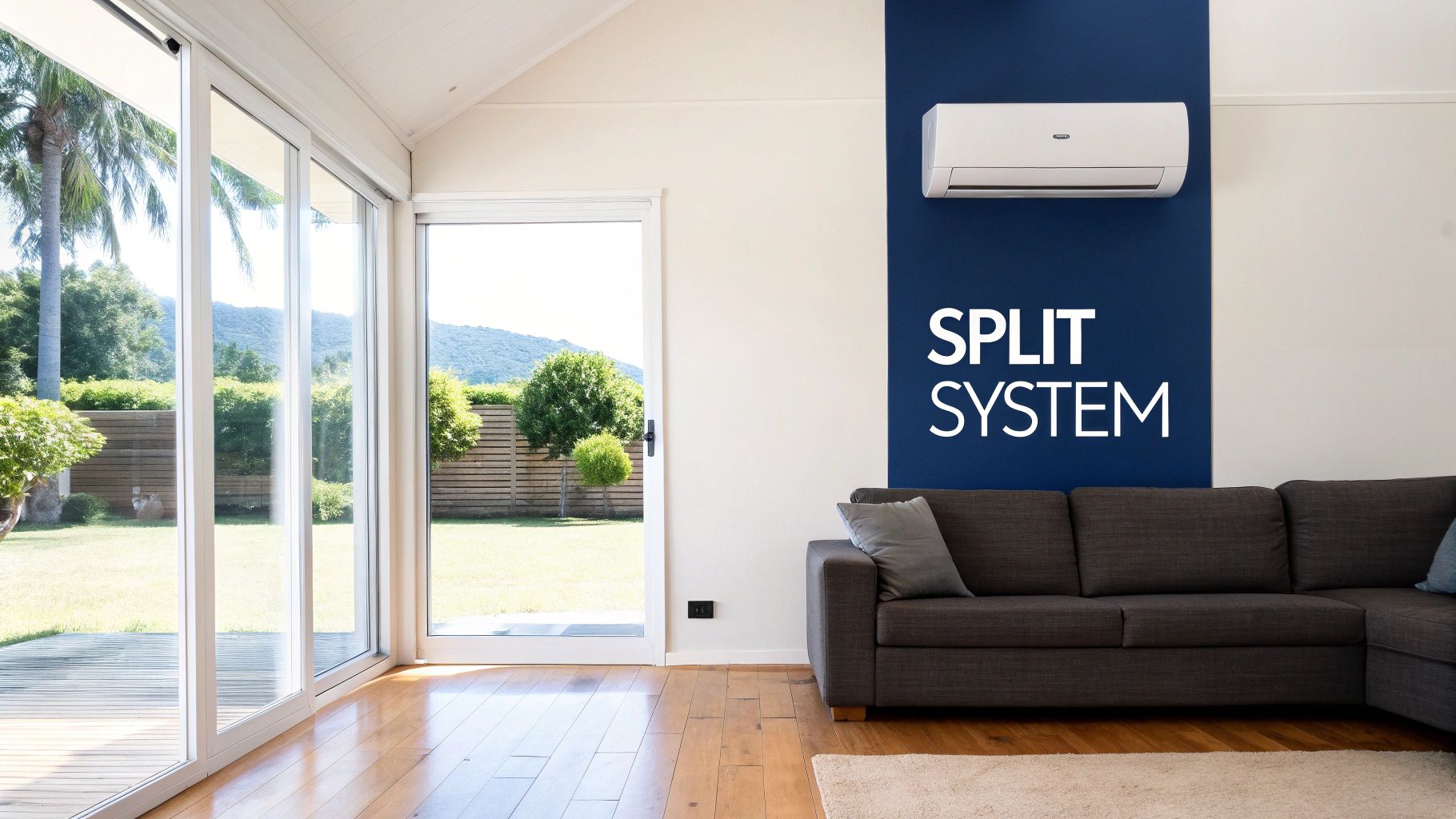
The name "split" tells you exactly how they work. The system is split into two parts: a sleek indoor unit that houses the fan, and a hard-working outdoor unit that contains the noisy compressor. These two are connected by a set of pipes carrying refrigerant gas, which is the magic that moves heat from inside your home to the outside.
Why Choose a Split System?
The biggest drawcard for a split system is its focused efficiency. You only pay to cool the room you are actually in. Why cool the entire house when the family is just watching a movie in the living room? This targeted approach can lead to some serious savings on your power bills.
This makes them the best air conditioner for apartments, home offices, or for adding comfort to that one high-traffic area without committing to a whole-home system.
Installation is also much simpler than a ducted setup. Because there’s no need to run a complex network of ducts through your roof, a licensed technician can usually get a standard ‘back-to-back’ installation done in half a day. This just means the indoor unit is mounted on an external wall, with the outdoor unit sitting directly behind it on the ground.
Key Benefits of Split Systems
- Energy Efficiency: Modern reverse cycle inverter models are incredibly smart. They use just enough power to hold your set temperature instead of constantly switching on and off.
- Affordability: The upfront cost for both the unit and the installation is generally much lower than for ducted or even multi-head systems.
- Independent Control: Each unit is its own boss. You can have the bedroom at a crisp 21°C while the living room unit is completely off.
- Quiet Operation: All the noisy work happens outside. We house the compressor and condenser fan in the outdoor unit, so the indoor fan can run whisper-quiet.
Consider this scenario: you live in a three-bedroom house in Gosford (postcode 2250), and the family spends most of their time in a large, west-facing living room. In summer, that room becomes an oven from about 3 pm onwards. Installing a single, correctly sized split system here is a powerful and cost-effective fix without the massive expense of a whole-home system.
Potential Drawbacks to Consider
Of course, split systems are not the right answer for every situation. Their main limitation is baked right into their design: one unit can only effectively cool one specific area. If you want to cool three bedrooms plus a living room, you’ll need four separate split systems.
This means finding wall space for four indoor units and, more critically, finding a spot for four outdoor units. This can be a real headache for homes with limited yard space or apartments with strict body corporate rules about what you can bolt onto balconies and external walls.
They also require a bit of simple upkeep. The filters on the indoor unit need regular cleaning to keep the air flowing efficiently. It’s a simple DIY job, but it has to be done. To keep your unit in top shape, it's worth checking out our guide on split system air conditioner maintenance.
Ducted Air Conditioning for Whole-Home Comfort
When you want seamless, whole-home cooling and heating without the look of wall-mounted units in every room, ducted air conditioning is the ultimate solution. It’s the quiet achiever in the air conditioning world, working almost invisibly behind the scenes to keep your entire house at the perfect temperature.
Think of it like the central nervous system for your home’s climate. A powerful indoor unit is tucked away in your roof space or under the floor. From there, a network of insulated ducts branch out to different areas of your house, delivering perfectly conditioned air through subtle vents in the ceiling. You get total temperature control without compromising your interior design.
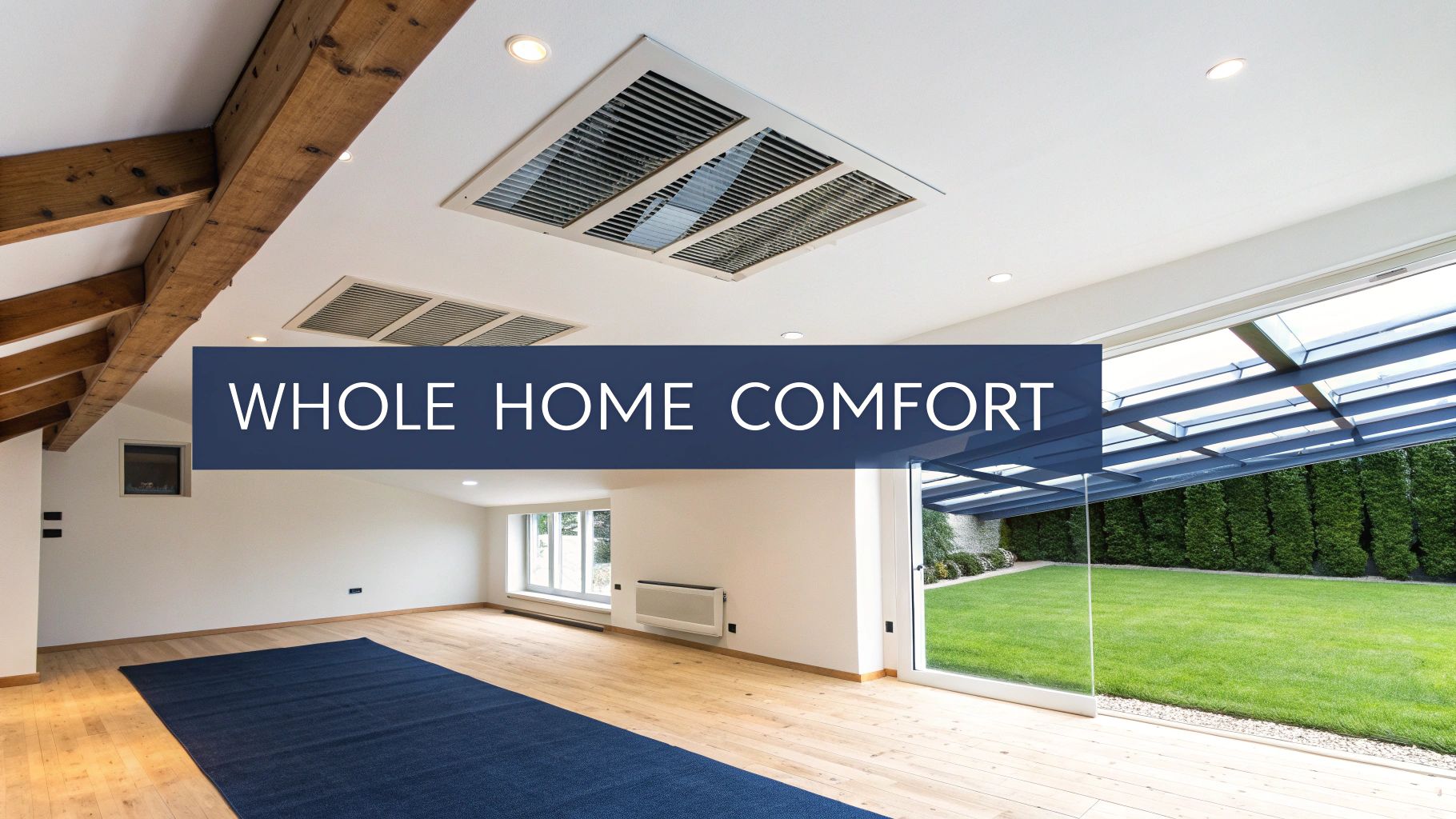
Why Is Ducted the Premium Choice?
The biggest advantage is the consistent, even temperature control you get across your entire property. No more hot and cold spots; just a perfectly balanced environment from the living room right through to the back bedrooms. This makes it the best air conditioner for a 4-bedroom house or any larger family home where comfort across multiple spaces is a must.
Imagine you're building a new home in the Hunter Valley. You already know the summers can be brutal and the winter mornings frosty. Planning for a ducted system from the get-go is a brilliant move. We find that integrating it during construction is far more straightforward and ensures the layout is perfectly optimised for your new home's design, adding significant comfort and value from day one.
The Power of Zoning for Efficiency
One of the smartest features of any modern ducted system is zoning. This technology lets you divide your home into different climate zones that we can control independently. For instance, you could create a "day zone" for your kitchen and living areas, and a separate "night zone" for the bedrooms.
Zoning transforms a ducted system from a simple whole-home solution into a highly efficient climate control hub. You only cool or heat the areas you are actually using, which can lead to substantial savings on your energy bills without sacrificing comfort.
In practice, this means you’re not wasting money cooling empty bedrooms during the day. Then at night, you can switch off the living area zone and direct all the cooling power to keeping the bedrooms comfortable. It’s the perfect blend of total comfort and intelligent energy management.
Is Ducted Air Conditioning Right for You?
While ducted systems offer unparalleled comfort, it’s important to be realistic about the practical side of things. The initial investment is higher than for split systems, and the installation is a much bigger job. It demands careful planning by licensed professionals who understand ductwork design, airflow, and electrical compliance with Australian Standards like AS/NZS 3000.
Our ARCtick certified technicians ensure every installation we perform, from Sydney's western suburbs to the coastal homes of Lake Macquarie, is safe, compliant, and built to last. Because the installation is more involved, ducted air conditioning is often best suited for:
- New home builds where we can design it into the plans from the beginning.
- Major renovations where ceiling or floor access is already available.
- Larger, single-storey homes with enough roof space for the indoor unit and ducts.
The price is a significant factor, but it's an investment in your property's value and your family's daily comfort. To get a clearer picture of what’s involved, it’s helpful to understand the factors that make up the overall ducted air conditioner cost before you make a final decision.
Multi-Head Systems: The Flexible Hybrid Solution
What happens when you need more than a single split system but don’t have the roof space for a full ducted setup? Or maybe you only want to cool the bedrooms and the main living area, not the entire house. This is where multi-head systems shine, offering a clever and flexible middle ground.
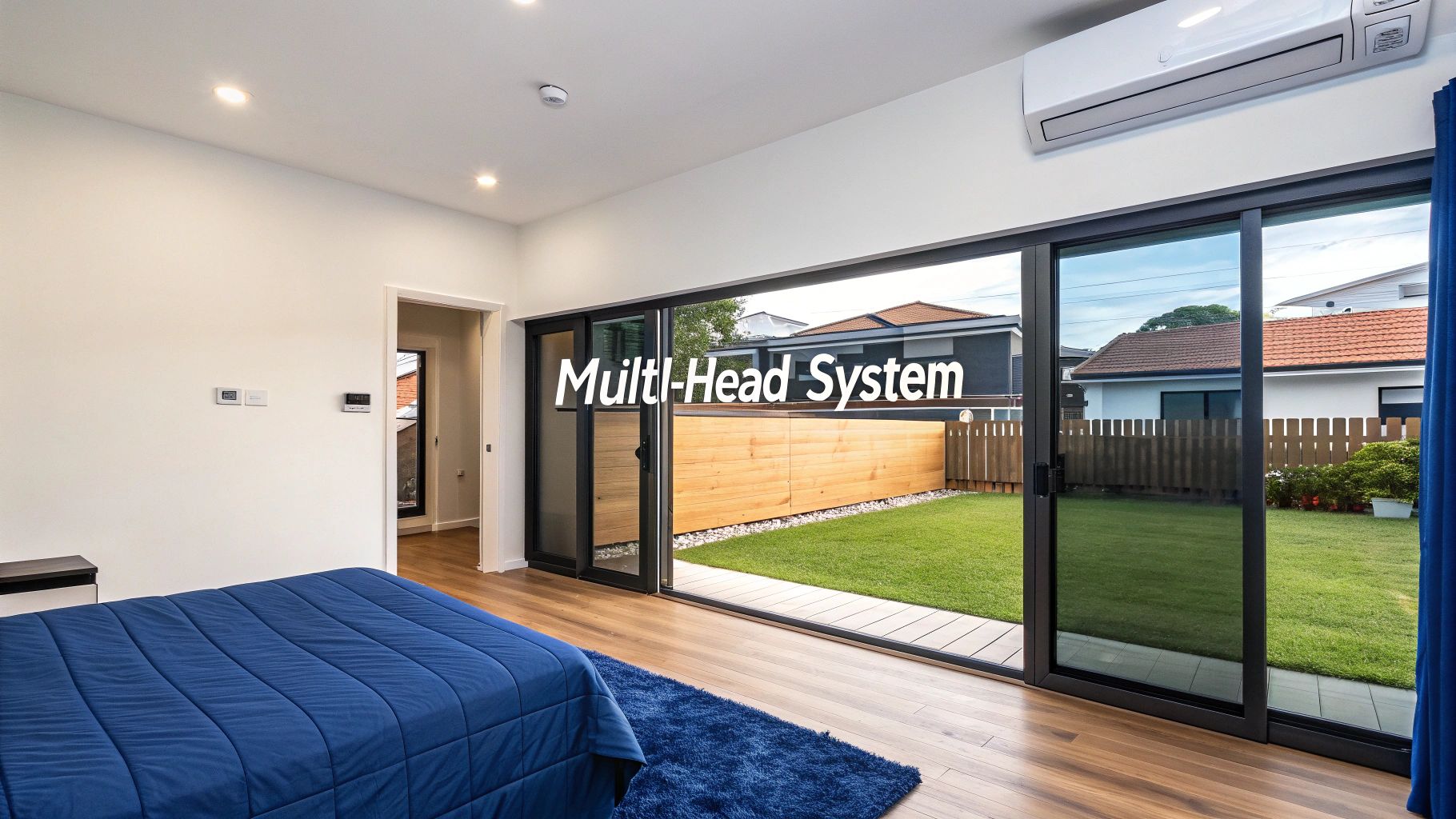
Think of a multi-head system as a powerful hybrid. It uses a single, robust outdoor condenser unit that connects to multiple indoor units, usually between two and five. This gives you individual temperature control in different rooms while avoiding the clutter of having several outdoor units lined up against your wall.
Why Choose a Multi-Head System?
The main advantage is customised comfort without major structural work. Each indoor unit has its own remote and can be set to a different temperature, or turned off completely. This makes it an ideal solution for homes where ducted installation is impractical or impossible.
Consider this common scenario: a two-storey townhouse in Newcastle. Installing ducts between levels can be complex and expensive, and there might be limited roof space. A multi-head system lets you place an indoor unit in the downstairs living area and one in each of the upstairs bedrooms, all running off a single outdoor unit.
Multi-head systems are perfect for situations where you need targeted, independent climate control in several key areas but a full ducted system is either overkill or not feasible. It’s the best of both worlds, offering flexibility and a cleaner exterior aesthetic.
This setup is also great for managing your power bills. You can cool the living room during the day and then switch to only cooling the bedrooms at night, ensuring you’re not wasting energy on empty spaces.
Practical Applications and Considerations
Multi-head systems are particularly well-suited for specific property types and situations across our service areas, from the Central Coast to Sydney.
- Best for Apartments and Townhouses: Where body corporate rules or limited space make multiple outdoor units a non-starter.
- Best for Homes with Complex Layouts: Such as older homes with extensions or properties with raked ceilings where ductwork is difficult.
- Best for Partial Home Conditioning: When you only need to cool, for example, the best air conditioner for a 3 bedroom house plus a home office, leaving lesser-used areas unconditioned.
While these systems are incredibly versatile, professional planning is key. The single outdoor unit needs to have enough capacity to potentially run all indoor units at once. Plus, the length and complexity of the refrigerant piping connecting the units require careful design by a licensed technician. Correctly sizing an air conditioner is crucial to its performance, and this is especially true for multi-head setups.
The installation must be carried out by an ARCtick certified professional to ensure it complies with Australian Standards, is electrically safe, and performs efficiently for years to come. This is a requirement under SafeWork NSW guidelines and essential for safety.
How to Choose the Best System for Your Home
So, you’ve narrowed it down between a split, ducted, or multi-head system. That’s a great start, but picking the right type is only half the battle.
To find the perfect air conditioner for your home, you need to dig into the details, the kind of details that determine your long-term comfort and, just as critically, your future power bills. Let's walk through the essential factors our technicians look at for every single installation.
Understanding Energy Efficiency Star Ratings
When you look at a new air conditioner, one of the first things you'll see is the Zoned Energy Rating Label (ZERL). This label gives you a star rating for both cooling and heating, which is a straightforward guide to how energy-efficient the unit is. More stars mean more efficiency and lower running costs. Simple as that.
It's tempting to grab a cheaper unit with fewer stars to save a bit of cash upfront. But we encourage you to think of a highly efficient unit as an investment that pays you back every time you open your electricity bill. A 6-star unit might cost more to buy, but its lower energy consumption can save you hundreds over its lifespan, especially with energy prices being what they are.
This isn't just a sales pitch; it's what homeowners are demanding. Sales of 5-star and 6-star rated air conditioners have surged, now making up over 60% of new residential installations. In fact, consumer surveys show that over 70% of Australians now see energy efficiency as a top priority when buying a new air conditioner.
Why System Sizing (kW Capacity) Is So Critical
An air conditioner's cooling power is measured in kilowatts (kW). It’s a common mistake to think "bigger is always better," but getting the sizing wrong, either too big or too small, is a recipe for disaster.
An undersized unit will be forced to run flat-out, all day long, just trying to keep up. This leads to massive wear and tear and sky-high energy bills. On those scorching summer days in Sydney's western suburbs, it will struggle constantly and never quite get the job done.
On the other hand, an oversized unit is just as bad. It will blast the room with cold air, reach the set temperature too quickly, and then shut off. This constant starting and stopping, known as short cycling, is incredibly inefficient. Worse, it does not get a chance to properly dehumidify the air, leaving you with a room that feels cold but unpleasantly clammy, a common problem on the humid Central Coast.
A professional load calculation is the only way to get sizing right. Our technicians don't just guess; they assess your home’s insulation, window size and orientation, ceiling height, and even the local climate to recommend the perfect kW capacity for your needs.
To help you get a rough idea, here's a simple table matching common home types with typical air conditioner recommendations.
Home Type Air Conditioner Recommendation
| Home Type | Primary Recommendation | Secondary Option | Key Consideration |
|---|---|---|---|
| Small Apartment (1-2 Bed) | Single or Multi-Head Split | N/A | Perfect for cooling specific rooms without major install. |
| Standard Home (3-4 Bed) | Ducted System with Zoning | Multiple Split Systems | Ducted offers whole-home comfort; splits offer flexibility. |
| Large Home (5+ Bed) | Ducted System (possibly zoned) | Multiple Split Systems | Ducted provides the most even, seamless cooling solution. |
| Open-Plan Living Area | Large Capacity Split System | Ducted System (single zone) | Requires a powerful unit to handle the large, open space. |
This table is a starting point, but a professional on-site assessment is always the best way to ensure you get the perfect fit for your home.
Modern Features That Make a Real Difference
Today’s air conditioners come packed with technology designed to boost your comfort and slash your running costs. There are two features, in particular, that are non-negotiable for any modern system.
Inverter Technology: This is now the standard for any quality reverse cycle system. Instead of an old-school compressor that’s either off or running at 100% speed, an inverter compressor works like a car's accelerator. It smoothly speeds up or slows down to maintain your desired temperature precisely, using far less energy and keeping the room consistently comfortable.
Smart Controls: Wi-Fi connectivity lets you control your air conditioner from your smartphone, wherever you are. You can turn it on before leaving work to come home to a perfectly cool house, or you can check if you accidentally left it running after you've left. This isn't just about convenience; it's a powerful tool for managing your energy usage. Wondering how these features impact your bills? Check out our guide on how much running an air conditioner costs.
The Importance of a Professional Installation
Finally, and this is a big one, even the world's best air conditioner will perform poorly if it's not installed correctly. A professional installation by a licensed and insured technician isn't just a good idea, it's a legal requirement.
Your installer must hold both a valid NSW electrical licence and an ARCtick refrigerant handling licence. This ensures all work is done to strict Australian Standards, including AS/NZS 3000 for electrical wiring and AS/NZS 60335 for appliance safety.
A fully compliant installation guarantees your system runs safely, efficiently, and, crucially, that your manufacturer's warranty remains valid. Here at ALC Air, every single one of our technicians is fully licensed and accredited, giving you complete peace of mind.
Making the Final Decision for Your Home
Okay, you’ve got a much clearer picture of the options available. Now it’s time to pull it all together and pick the right air conditioner for your home. The best choice almost always comes down to a mix of your lifestyle, your home's unique layout, and your long-term budget.
To recap, a split system is brilliant for targeted comfort in one or two key rooms. A ducted system delivers that seamless, whole-home climate control. And a multi-head system? That’s your flexible hybrid, perfect for homes where ducted isn’t practical but you need to cool more than a single room.
How to Choose Your System
Think about your daily routine. Do you work from home and just need to keep the office comfortable? A single split system is a seriously cost-effective way to do that. Or do you have kids who like their rooms freezing while you prefer a milder temperature? A multi-head system or a zoned ducted setup gives everyone that individual control.
It's also worth noting the rise of smart air conditioners, which now account for around 25% of new home installations. These Wi-Fi enabled systems let you manage everything from a smartphone app. You can set schedules, tweak temperatures before you get home, and keep an eye on energy use, which can lead to some pretty significant savings. You can read more about Australian air conditioner market trends to see where things are headed.
This simple decision tree breaks down the three big factors, sizing, efficiency, and features, to help steer you in the right direction.
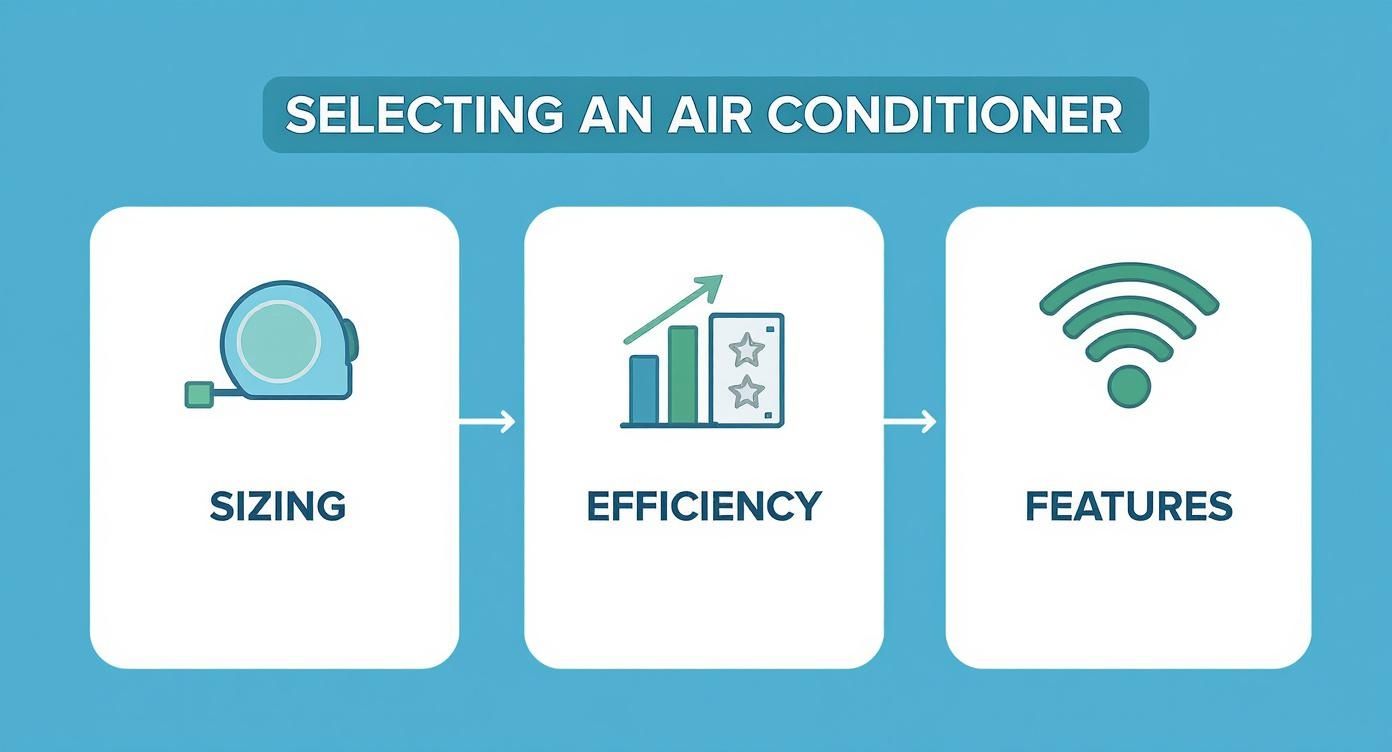
Ultimately, if you nail the sizing and prioritise a high energy efficiency rating, you'll have a system that performs beautifully and keeps those power bills in check.
Get a Professional Assessment
While this guide gives you a solid foundation, getting a professional assessment is non-negotiable. An on-site inspection is the only way to get it right.
A licensed technician will perform a proper load calculation, looking at all the things a website can't see: which way your windows face, the quality of your insulation, your ceiling height, and even how much afternoon sun hits your living room.
This is what ensures your new system is perfectly matched to your home, whether you’re in a breezy Central Coast suburb like those in the 2250-2264 postcodes or a family home in Sydney.
If you’re ready to find the perfect air conditioning solution, our team is here to help. We offer a free, no-obligation chat to figure out exactly what you need and provide a tailored recommendation that fits your home and your budget.
Your Questions Answered
We talk to homeowners across the Central Coast, Sydney, and Newcastle every day, and a few questions always come up. Here are some straight answers to the things people ask us most.
How Much Does a New Air Conditioner Cost to Install?
This is the big one, and the honest answer is: it varies. The final price tag really depends on the type of system you choose, how powerful it needs to be (its kW capacity), and how tricky the installation is at your place.
A simple back-to-back split system in an easy-to-access room is your most budget-friendly option. At the other end of the scale, a fully zoned ducted system for a large family home is a more significant investment. To make sure there are no surprises, we always do a proper on-site assessment and give you a detailed, fixed-price quote before any work starts.
What Size Air Conditioner Do I Need for My Room?
Getting the size right is absolutely critical. If it’s too small, it will struggle on hot days and never make the room comfortable. Too big, and it will switch on and off constantly, wasting energy and failing to dehumidify the air properly.
As a very rough rule of thumb, you can allow about 1.0 to 1.5 kW of cooling power for every 10 square metres of space.
But please, treat that as just a starting point. Things like ceiling height, how many windows you have (and which way they face), the quality of your insulation, and our local climate all make a huge difference. The only way to get it spot on is with a professional heat load calculation.
What Is Reverse Cycle Air Conditioning?
Reverse cycle is a brilliant feature that lets your air conditioner pull double duty. It provides fantastic cooling in summer and surprisingly effective heating in winter.
It cleverly works by reversing the refrigeration process. Instead of pulling heat from inside your home and dumping it outside, it finds warmth in the outside air (even on cold days) and brings it inside. It's an incredibly energy-efficient way to heat your home, which is why it’s pretty much standard for year-round comfort in NSW.
How Often Should I Get My Air Conditioner Serviced?
We cannot stress this enough: get your system professionally serviced at least once a year. Think of it like a car service. Regular maintenance is the key to keeping it running efficiently, which directly translates to lower power bills for you.
An annual service also does wonders for your indoor air quality. It helps us catch small problems before they become big, expensive breakdowns, and is usually a requirement to keep your manufacturer's warranty valid. If you live anywhere in the 2250-2264 postcodes or other coastal spots, that salt-laden air means more frequent filter cleaning is a very smart move.
Ready to find the perfect, energy-efficient air conditioning solution for your home? The team at ALC Air provides professional advice and a free, no-obligation quote to help you make the right choice. Get a free quote today.