


Trying to pick the right air conditioner brand in Australia can feel like a guessing game. But for most homes, the best choice consistently comes down to three names: Daikin, Mitsubishi Electric, and Fujitsu. Technicians trust these Japanese manufacturers for a simple reason: they just work. Their gear is reliable, energy-efficient, and backed by solid local support, making them a safe bet for long-term comfort.
Choosing the Best Air Conditioner for Your Home
When you’re looking for the best air conditioning brand, you’re not just buying a piece of equipment. You’re investing in a system that needs to handle everything from a sweltering Central Coast summer to a frosty Hunter Valley winter. Getting the brand right means peace of mind, lower power bills, and a comfortable home all year round.
So, what actually separates the top players from the rest of the pack? The brands we consistently recommend stand out for a few key reasons. They have long-term reliability because they simply use better quality parts inside the machine. This means they’re built to last and are far less likely to break down when you need them most.
These brands also deliver superior energy efficiency. Their advanced inverter technology means they cool and heat your home using less power, which is a huge factor with today’s electricity prices. Finally, they offer quiet operation and strong local support. If you ever need a spare part or have to make a warranty claim, it gets sorted out efficiently.
Imagine you’re cooling a two-storey home in Terrigal with afternoon western sun. A premium brand is engineered and tested for exactly those conditions. A cheaper, lesser-known unit, on the other hand, might struggle, use a ton of power, and end up costing you more in repairs down the track.
Understanding this fundamental difference is the first step to making a smart choice for your home.
Top Air Conditioner Brands At a Glance
This quick summary of the leading brands and their key strengths can help you identify which might be the best fit for your needs.
| Brand | Best Known For | Typical Price Point | Standard Warranty | Key Technology |
|---|---|---|---|---|
| Daikin | All-round performance and reliability | Premium | 5 Years | Advanced air purification, Sensitive Choice approval |
| Mitsubishi Electric | Whisper-quiet operation | Premium | 5 Years | Quiet technology, high-efficiency inverter control |
| Fujitsu General | Robust build and powerful performance | Mid to Premium | 5 Years | High power output for larger spaces |
| Panasonic | Air quality and innovative features | Mid to Premium | 5 Years | nanoe™ X air purification technology |
| LG | Smart features and connectivity | Mid-range | 5 Years | ThinQ® smart home integration, dual inverter |
| Hisense | Value for money and features | Budget to Mid-range | 5 Years | Feature-packed at a competitive price |
Each of these brands brings something different to the table. Now, let’s break down what that means for your home in more detail.
A Detailed Comparison of Leading Air Conditioner Brands
Trying to pick between the best air conditioner brands in Australia can feel like splitting hairs. On the surface, they all seem to do the same thing. But those small differences in build quality, running costs, and local support really add up over a decade of use.
Here, we break down the top contenders we recommend and install across the Central Coast, Sydney, and Newcastle. We’re moving beyond the marketing slogans to what actually matters for your home.
This chart shows the three pillars we use to evaluate every brand we work with.
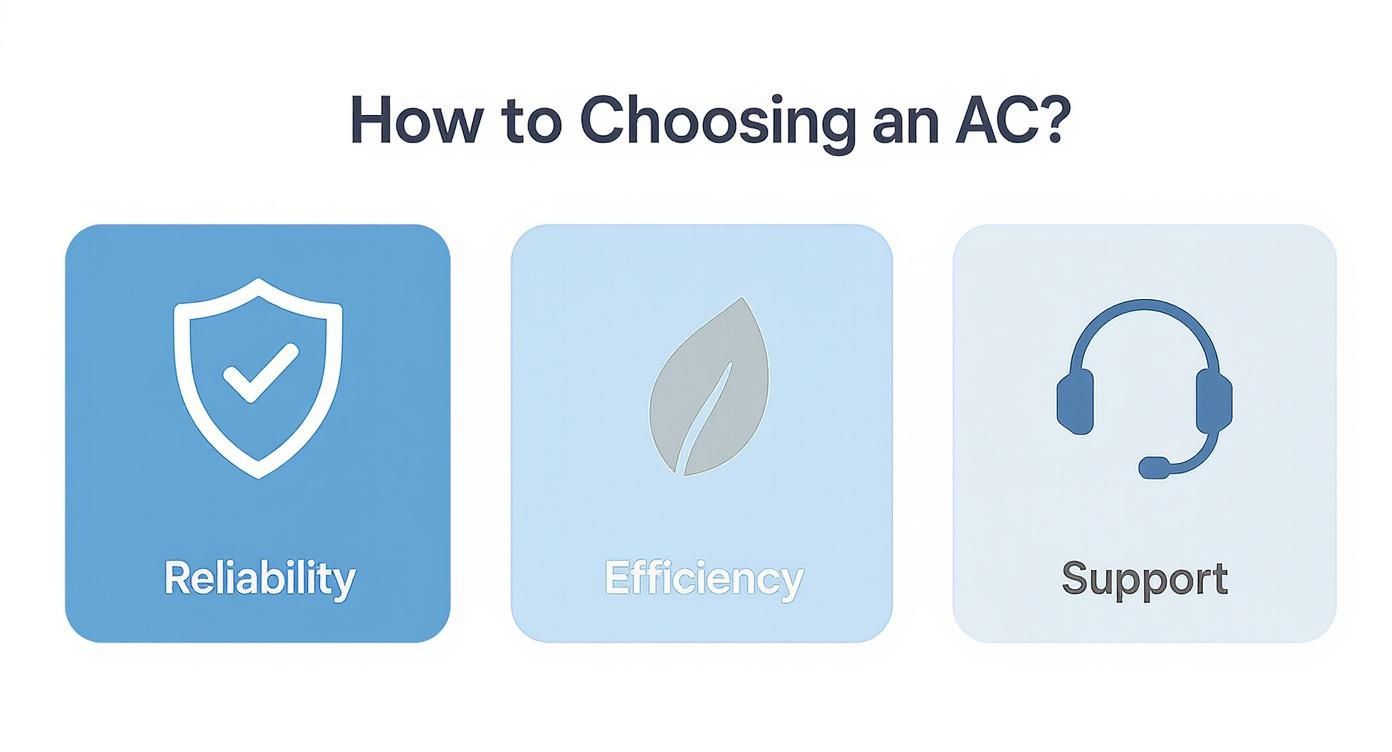
It’s a simple formula: a great brand delivers more than just cold air. It gives you dependable performance year after year, keeps your power bills in check, and has strong local backup when you eventually need it.
Daikin: The All-Round Performer
There’s a reason Daikin has earned its reputation as a market leader. They produce exceptionally reliable and efficient systems, making them a safe and popular choice for both residential homes and commercial properties. We consistently find their build quality to be a cut above across their entire range.
One of the standout features of Daikin Air Conditioners is its serious focus on air quality. Many of their split systems are approved by the National Asthma Council Australia’s Sensitive Choice® program. This means they’re designed with advanced filtration to help pull common allergens and asthma triggers out of the air, which is a massive advantage for families with respiratory concerns.
Why it matters: In humid areas like the Central Coast or Lake Macquarie, mould and allergens can be a constant battle. A system with superior air purification can make a real, noticeable difference to your family’s health and comfort.
Their after-sales support and parts availability here in Australia are excellent. That’s crucial for long-term ownership. While they do sit at a premium price point, the investment often pays for itself through sheer reliability and lower energy bills.
Mitsubishi Electric: The Quiet Achiever
If quiet operation is your absolute top priority, especially for a bedroom or study, Mitsubishi Electric is often the first brand we recommend. They are renowned for engineering some of the quietest split systems on the market, with some indoor units operating at a barely audible 19 decibels on their lowest setting.
But they aren’t just quiet; their systems are also incredibly energy efficient. Mitsubishi Electric’s inverter technology is top-tier, allowing the system to precisely adjust its power usage to maintain a consistent temperature. This avoids the energy-guzzling stop-start cycles of older, less advanced units.
Let’s say you’re trying to sleep through a hot, humid night in a Sydney apartment where every sound seems to travel. A loud, clunky air conditioner is the last thing you want. A Mitsubishi Electric air con unit provides the cooling you need without the disruptive noise, ensuring a restful night.
Fujitsu General: The Robust Powerhouse
Fujitsu has built an incredibly powerful brand in Australia, famously known as ‘Australia’s Favourite Air’. This reputation is well-earned. Their units are known for their robust build quality and powerful performance, designed to handle the toughest Australian conditions.
If you have a large, open-plan living area or a room that gets hammered by the afternoon sun, a Fujitsu air con system often has the raw cooling (and heating) power to manage the load effectively. They are workhorses, built to perform reliably in demanding environments, from the extreme temperature swings of the Hunter Valley to the relentless summer heat.
The Aussie air conditioner market is a competitive space. While Mitsubishi Electric Australia currently leads in market share, Fujitsu has cemented its position through decades of consistent delivery, often scoring highly in customer satisfaction surveys for reliability. They also appeal to value-conscious buyers with excellent warranties and frequent cashback promotions, which you can read more about in this detailed research on the Australian air conditioner market.
Panasonic: The Innovator in Air Quality
Panasonic sets itself apart by focusing heavily on technological innovation, especially when it comes to air purification. Their standout feature is the nanoe™ X technology, a system designed to inhibit pollutants, allergens, and odours to create a healthier indoor environment.
This tech works by releasing nano-sized electrostatic water particles that deodorise and clean the air, even when the cooling or heating function is off. For households in urban areas of Sydney or Newcastle worried about air pollution, or for any home wanting cleaner air, Panasonic offers a compelling advantage.
Their units are also highly energy-efficient and come with a range of smart features for convenient control via a mobile app. Panasonic air conditioners strikes an excellent balance between premium performance, innovative health features, and reasonable pricing.
LG: The Smart Home Specialist
LG is a strong contender in the mid-range market, really appealing to homeowners who value smart technology and connectivity. Their systems are well-known for integrating seamlessly with the LG ThinQ® platform. This lets you control your air conditioner from your smartphone, monitor energy usage, and even use voice commands through Google Assistant or Amazon Alexa.
Their Dual Inverter Compressor™ technology provides fast cooling and efficient operation, and they back their products with a solid 5-year warranty. LG units often come packed with features at a competitive price, making them an attractive option for tech-savvy households.
Consider this scenario: you’re leaving the office in Sydney on a hot afternoon and want your home in a Central Coast suburb like Terrigal to be cool by the time you arrive. With an LG system, you can simply open the app and turn the air con on remotely. This level of convenience is where LG truly shines.
Hisense: The Budget-Friendly Challenger
Hisense has made a big impact on the Australian market by offering feature-rich air conditioners at a very competitive price point. For homeowners on a tighter budget, Hisense provides an accessible way into reverse cycle air conditioning without sacrificing all the essential features.
While they may not have the same long-standing reputation for reliability as the premium Japanese brands, Hisense has been making serious strides. They typically offer a standard 5-year warranty, providing a decent level of peace of mind for the price.
However, it’s important to set realistic expectations. The upfront saving on a budget brand may come with trade-offs in areas like how loud it is, the quality of internal components, or the strength of their after-sales service network compared to premium competitors. For a second bedroom or a rental property where upfront cost is the main driver, Hisense is definitely a brand worth considering.
Premium vs Budget Brands: What’s the Difference?
When you’re looking at the best air conditioner brands in Australia, one of the first questions that comes up is whether it’s worth spending more on a premium Japanese brand over a budget-friendly option. Is a Daikin or Mitsubishi Electric really that different from a Hisense? The short answer is yes. The differences go far beyond the name on the unit, and they show up in your power bills, the noise levels, and how long the system lasts.
The higher upfront cost of a premium brand is a direct investment in superior internal components, stricter quality control, and better overall engineering. This isn’t just marketing talk; it translates into real-world benefits for you as a homeowner. These systems are almost always quieter, more energy-efficient, and built to withstand our harsh Australian climate for much longer.
Breaking Down the Value Proposition
Let’s put this in a real-world context. Imagine you’re choosing an air conditioner for your family home in the Hunter Valley, a place that gets both scorching summer heat and genuinely chilly winter mornings.
A premium reverse cycle system with advanced inverter technology will cost more at the outset, no question. But its efficiency could easily save you hundreds of dollars on your power bills over its lifespan.
The system works smarter, gently adjusting its power to maintain your desired temperature without the constant, power-hungry stop-start cycles you often get with less sophisticated models.
It’s also what’s on the inside that counts. Premium brands use higher-grade metals, more robust compressors, and better-sealed components. This meticulous approach to manufacturing is why they consistently top reliability ratings and can offer comprehensive warranties backed by strong, local support networks. If something does go wrong, getting parts and service is a far smoother process.
The Coastal Corrosion Factor
For anyone living near the water, from the Central Coast to Newcastle, the difference between premium and budget becomes even more critical. The salty, humid air is incredibly corrosive and can literally destroy an outdoor condenser unit in just a few years.
Premium brands like Daikin and Mitsubishi Electric invest heavily in specialised anti-corrosion coatings for their outdoor units’ coils and casings. This isn’t a cosmetic feature; it’s a crucial layer of protection that prevents premature rust, refrigerant leaks, and catastrophic system failure.
A standard, unprotected unit installed in a coastal suburb like Avoca Beach, or anywhere in the 2250-2264 postcode range, might look fine for a little while. But underneath, corrosion can quickly compromise its performance and lead to expensive, frustrating repairs. Opting for a brand specifically designed to handle these coastal conditions is non-negotiable if you want to protect your investment.
Long-Term Peace of Mind
Ultimately, choosing a premium brand is about long-term reliability and peace of mind. While budget brands offer an attractive entry price and are certainly improving in quality, the established Japanese manufacturers have a proven track record that spans decades.
Their systems are engineered to perform consistently, year after year, providing efficient comfort you can actually depend on. The real difference isn’t just about cooling your home today; it’s about knowing your system will still be working efficiently and quietly in ten years’ time.
Which Brands Hold Up Best in Coastal Conditions?
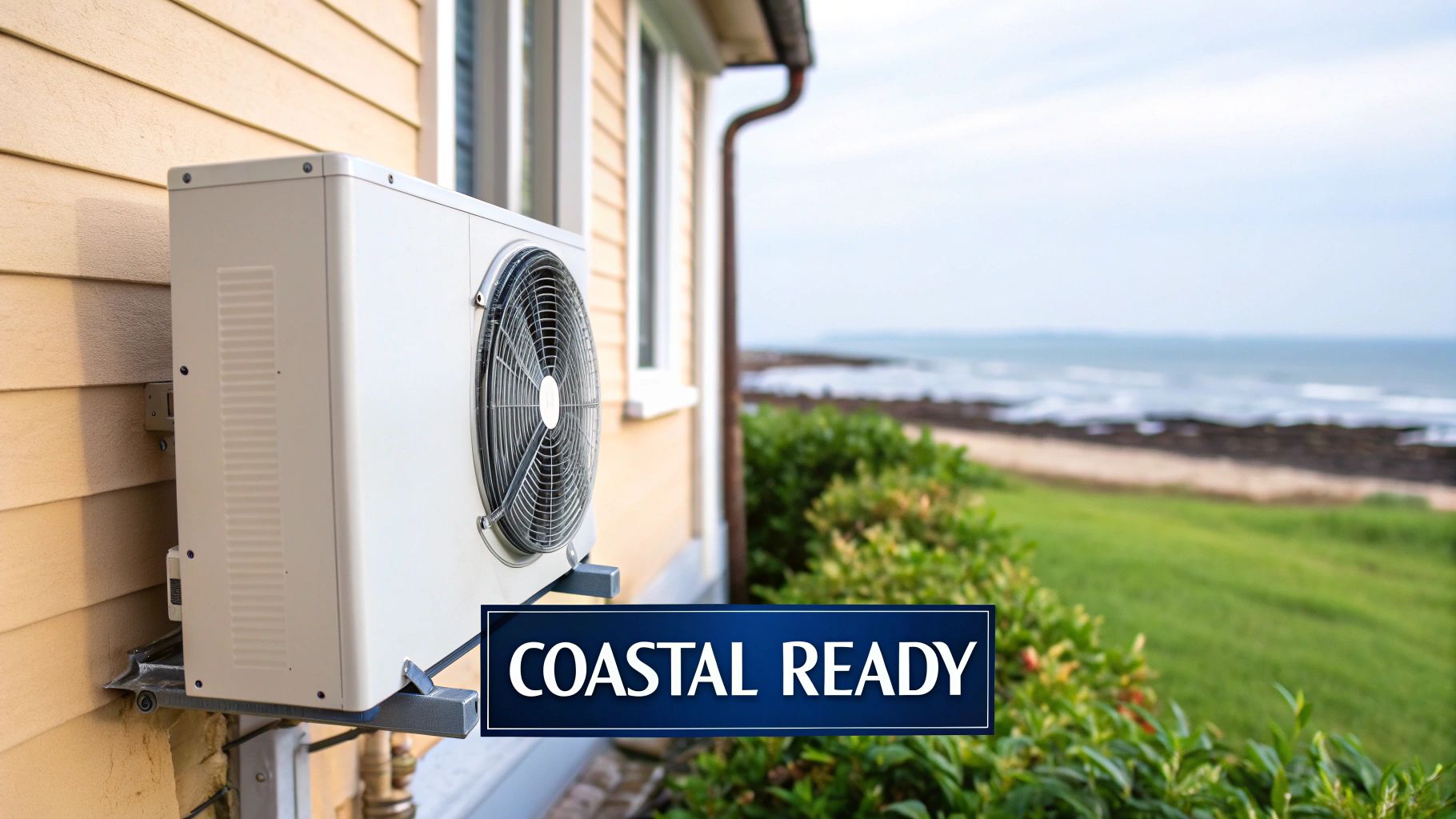
Living anywhere from the Central Coast up to Newcastle means dealing with salty, humid air that is notoriously tough on any outdoor metal equipment. Your air conditioner’s outdoor unit is particularly vulnerable, and this corrosive environment can dramatically shorten its lifespan if you choose the wrong brand.
The salt carried in the sea breeze is the real enemy. It accelerates rust and attacks the delicate fins on the outdoor condenser coil. Once those fins start to corrode, the system can’t get rid of heat properly. This forces the compressor to work overtime, driving up your power bills and eventually leading to refrigerant leaks or a complete system failure. A standard unit installed in Gosford can show serious corrosion in just a few years.
The Importance of Anti-Corrosion Technology
This is where the difference between air conditioner brands becomes crystal clear. Premium manufacturers like Daikin and Mitsubishi Electric invest heavily in specific technologies to combat this exact problem. They understand the harsh Australian coastal conditions and engineer their units to withstand them.
One of the most critical features to look for is a “blue fin” coil. This isn’t just a layer of paint; it’s a special hydrophilic coating applied to the condenser fins that provides a robust barrier against salt and moisture. Think of it as purpose-built armour for the most vulnerable part of your system.
When we assess a home in a coastal suburb like Terrigal or anywhere in the 2250-2264 postcode range, checking for anti-corrosion features is a non-negotiable part of our recommendation. It’s the single most important factor for long-term reliability in these areas.
Brands Engineered for Coastal Durability
While several brands offer some form of protection, Daikin and Mitsubishi Electric are the standouts. They apply these protective coatings not just to the coils but often to other critical internal components and even the external casing screws. It’s this comprehensive approach that really sets them apart.
Choosing a brand that prioritises this protection is a smart investment. You might pay a little more upfront, but you’re effectively buying years of extra service life and avoiding the high cost and hassle of a premature replacement. A system that dies after five years due to corrosion is no bargain, no matter how cheap it was to install.
Protecting Your Coastal Air Conditioner
Even with the best brand on the market, a little upkeep goes a long way. If you live within a few kilometres of the coast, you can help protect your investment with some simple maintenance. You can gently hose down the outdoor unit with fresh water every couple of months to wash away accumulated salt deposits before they can cause damage. Just make sure to turn the power off at the circuit breaker first.
Annual servicing is even more crucial in coastal areas. A qualified technician can check for early signs of corrosion and ensure all the protective coatings are still doing their job. By selecting a brand built for our unique coastal environment and keeping up with basic maintenance, you can ensure your air conditioner delivers reliable comfort for many years to come.
Why Your Installer Is More Important Than the Brand
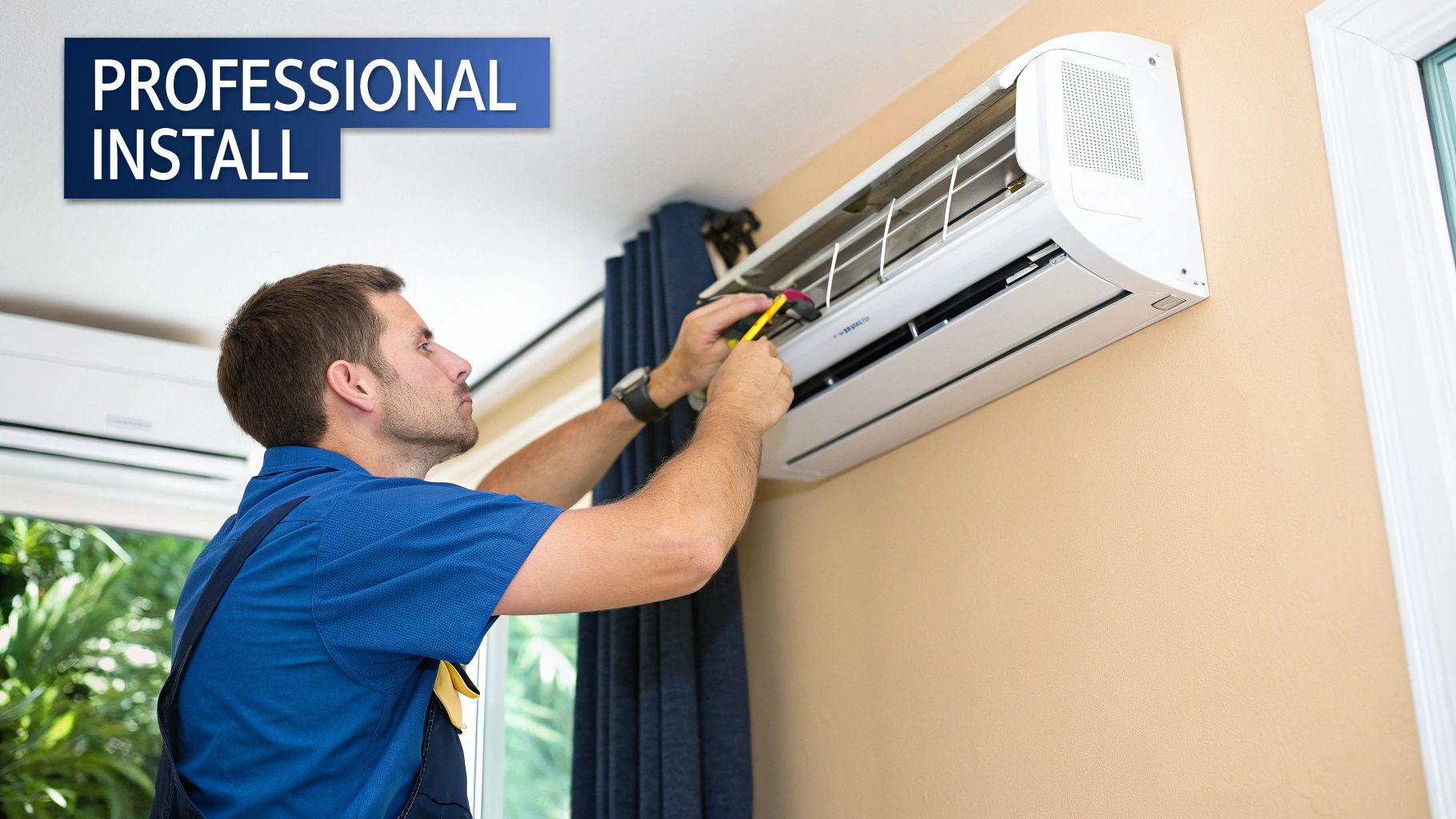
You can spend weeks poring over reviews, pick a top-of-the-line air conditioner, and still end up with a system that performs poorly and fails years before it should. How? Because the single most critical factor in your air conditioner’s performance and lifespan isn’t the brand on the box, it’s the quality of the installation.
A great brand is the right starting point, but a shoddy installation will undermine every feature you paid for. From incorrect sizing to non-compliant electrical work, the mistakes made on installation day will cause headaches for years to come. That’s why choosing a skilled, licensed, and experienced installer is the most important decision you’ll make.
The Dangers of Incorrect System Sizing
One of the most common and costly mistakes is getting the system size wrong. An installer who doesn’t perform a proper heat load calculation is just guessing, and that guess can lead to some serious issues down the track.
Consider this scenario: you have a small apartment in Sydney and an installer puts in an oversized 7kW system. It might sound like more power is better, but it’s not. The unit will blast cold air, hit the target temperature in minutes, and then shut off. This constant on-off process, known as short cycling, is incredibly inefficient, drives up your power bills, and places enormous strain on the compressor, leading to early failure.
On the other hand, an undersized unit in a large Central Coast home with high ceilings will run constantly without ever making the place feel comfortable. It will struggle on hot days, use excessive energy, and wear itself out fast. A professional installer does the maths, performing a detailed assessment to recommend the correct capacity for optimal performance and efficiency.
Licensing and Compliance Are Non-Negotiable
Air conditioning installation isn’t a simple handyman job. It involves both refrigerant handling and high-voltage electrical work, making licensing an absolute necessity for safety, legality, and your own peace of mind.
First up is the ARCtick licence, issued by the Australian Refrigeration Council. This is a legal requirement for anyone touching refrigerants. It proves the technician is qualified to handle these substances safely and responsibly, preventing environmental damage and ensuring your system is correctly charged.
Crucial Safety Note: Hiring an unlicensed person to handle refrigerants is illegal and will instantly void your manufacturer’s warranty. You can easily check a technician’s credentials on the official ARCtick Look for the Tick website.
Second, all electrical work must be performed by a fully licensed electrician and comply with Australian Standard AS/NZS 3000. This ensures all wiring is safe, correctly sized for the system’s load, and won’t create a fire hazard. A qualified installer will always provide a Certificate of Compliance for Electrical Work (CCEW), giving you documented proof that the job meets all safety standards.
What to Look for in a Quality Installer
Beyond the essential licences, a reputable installer demonstrates professionalism from the very first conversation. They should be willing to visit your property to conduct a thorough assessment before locking in a quote. A quick guess over the phone just isn’t good enough.
Here are a few key indicators of a true professional. They should hold both an ARCtick licence and a valid NSW electrical licence and carry comprehensive public liability insurance. They should also perform a proper heat load calculation to determine the right system size, provide a detailed, itemised quote, and have a strong local reputation.
At ALC Air, our team of licensed and accredited technicians has over 15 years of hands-on experience providing expert air conditioning installation across the Central Coast. We understand that a quality installation is the foundation of a reliable and efficient system, ensuring your investment delivers comfort for many years to come.
Making the Right Choice for Your Home
Knowing the strengths of the big air conditioner brands is a great starting point, but it’s only half the battle. The real challenge is connecting that knowledge to your specific home, and that’s where things get personal. The perfect system for a sprawling new build out in the Hunter Valley will be completely different from what’s needed for a two-bedroom apartment in Sydney’s inner west. This is where getting genuine, on-the-ground advice makes all the difference.
We don’t just sell air conditioners. We design and install climate solutions based on years of experience right here in our local area. We know the unique challenges our region throws at a system, from the corrosive salt air on the coast to the dry, baking heat further inland. Our entire process is built around finding the right fit for your home, your family, and your budget.
Our Approach to Finding Your Perfect System
It all starts with a proper, detailed assessment of your property. We don’t do generic quotes over the phone because a quality, long-lasting result depends on getting the details right from the very beginning. There are no shortcuts. Our process involves a thorough on-site assessment where we measure rooms, check insulation, and get a feel for how you use the space.
Based on what we find, we’ll recommend the most suitable brands and system types for your situation. We’ll walk you through the pros and cons of each, making sure you have all the information you need to make a confident choice. You’ll then get a detailed, fixed quote with zero hidden fees.
For instance, a busy family home in Lake Macquarie that needs powerful, year-round climate control would likely be best served by a robust ducted system from a reliable brand like Daikin. In contrast, a smaller apartment in Newcastle might find a sleek, whisper-quiet Panasonic split system is the perfect, most cost-effective solution.
By taking the time to properly understand your specific needs, we make sure the system we install will deliver reliable comfort and efficiency for years to come. It’s all about matching the right technology to the right home.
Our commitment doesn’t end when the installation is done. We provide comprehensive post-sales support and can schedule regular air conditioning servicing to keep your system running at peak performance, protecting your investment for the long haul.
A Few Common Questions Answered
Over the years, we’ve heard just about every question there is from homeowners across the Central Coast, Sydney, and Newcastle. Here are a few of the most common ones we get asked about choosing the right air conditioner.
What is the most reliable air conditioner brand in Australia?
Based on our hands-on experience installing and servicing thousands of units, the Japanese brands like Daikin, Mitsubishi Electric, and Fujitsu consistently come out on top for reliability. True reliability isn’t just about avoiding breakdowns; it’s about a unit that performs as well in year ten as it did in year one, holds its energy efficiency, and is backed by a rock-solid local warranty and parts network.
Daikin, for instance, has built an incredible reputation for trust. They also put a huge focus on air quality, with many of their systems getting the tick of approval from the National Asthma Council Australia’s Sensitive Choice® program. You can get more background on the Australian air conditioner market here.
Are Japanese air conditioner brands really better?
It’s a bit of a generalisation, but in our experience, yes. Japanese brands have earned their reputation through superior engineering, higher-quality internal components, and incredibly strict quality control. This translates into tangible benefits like quieter operation, better long-term durability, and higher overall energy efficiency. While other brands can offer great value, Japanese manufacturers are still widely considered the benchmark for performance and build quality in the industry.
How much should I expect to pay for a good quality air conditioner?
This really depends on the brand, the type of system you choose (split system vs. ducted), and the cooling power you need. For a good quality reverse cycle split system for a single room, fully installed, you’re generally looking at a range from $1,800 to over $3,500. A full ducted system for an entire home is a much bigger investment, often starting in the five-figure range.
It’s so important to think beyond the upfront price tag and consider the long-term running costs. A cheaper, less efficient unit might save you a few hundred dollars today, but it can easily end up costing you thousands more in higher power bills over its lifetime.
Ready to figure out the perfect, most efficient air conditioning solution for your home? The team at ALC Air can give you expert advice and a free, no-obligation quote to make sure you get exactly the right system for your needs. Get a free quote today!