


When your air conditioner decides to pack it in on a sweltering Central Coast afternoon, the only thing on your mind is getting it fixed—fast. But here’s the thing: most air conditioning systems give you plenty of warning signs long before they completely fail.
Learning to spot these signals is the key to avoiding a hot, sticky house and an expensive emergency call-out. We're here to walk you through what to look for, what you can safely check yourself, and when it's absolutely time to call in a licensed professional.
Decoding the Warning Signs from Your Air Conditioner
That sinking feeling when your air con gives up on a scorching day is something we all want to avoid. The good news is, most systems don't just die silently; they send out distress signals first. This is your guide to translating what your unit is trying to tell you.
By catching these clues early, you can call for professional air conditioning repair before a minor issue in your Gosford home turns into a major, costly breakdown. It’s no surprise that the Australian HVAC market is growing so fast. Valued at AUD 7.18 billion in 2023 and projected to hit AUD 12.38 billion by 2035, this growth highlights just how vital specialised upkeep on modern systems has become.
Strange Noises or Unusual Smells
Often, the very first sign of trouble is something you hear or smell. Your system should run with a consistent, low hum. Simple as that.
If you start hearing grinding, squealing, or rattling sounds, it usually points to a mechanical problem like a failing motor or a loose part rattling around. Likewise, if you notice musty odours, it could be a sign of mould growth inside the unit—not something you want blowing through your home. A burning smell is a serious red flag for an electrical fault and needs immediate, professional attention.
This infographic breaks down the key warning signs to watch out for.
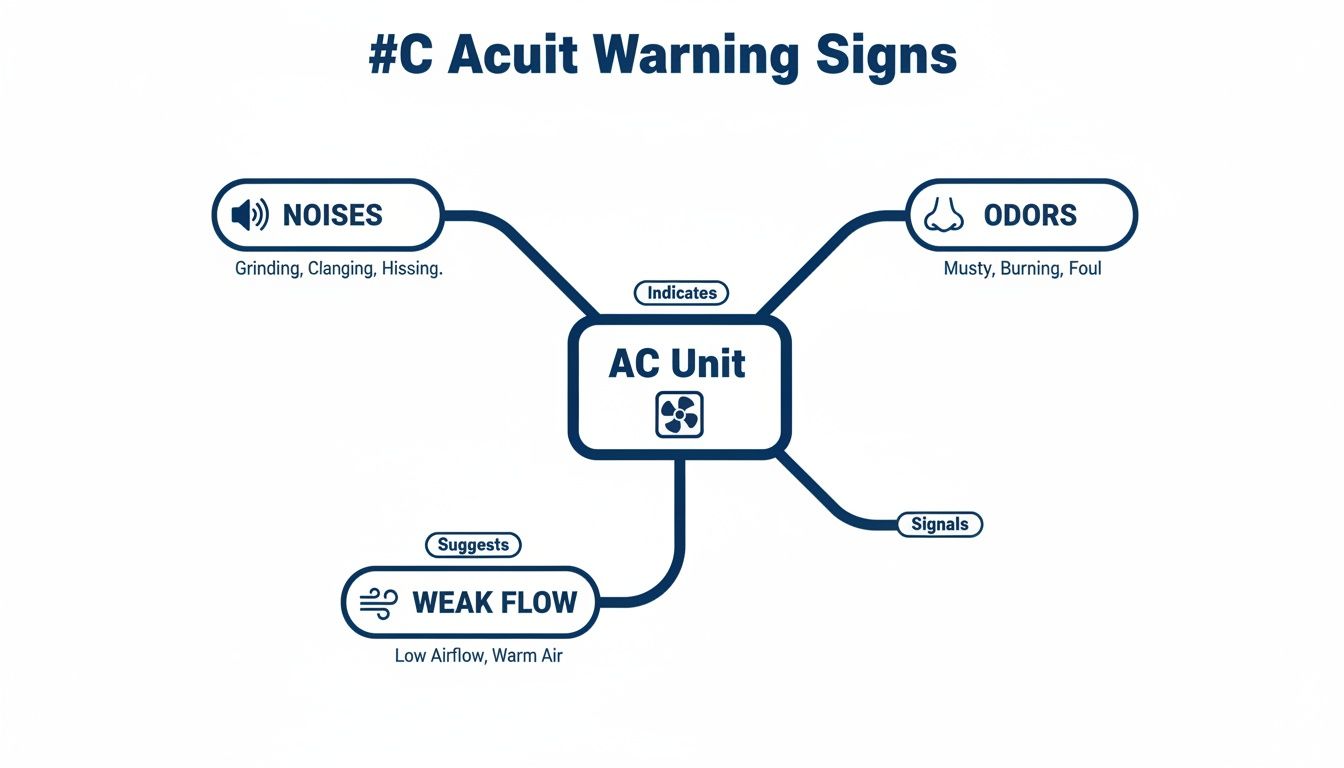
As you can see, simply paying attention to what you hear, smell, and feel can help you get ahead of a problem before it gets serious.
To make things even clearer, here’s a quick guide to what some of the most common symptoms might mean for your air conditioner.
Common AC Problems and What They Mean
| Symptom You Notice | Potential Cause | Recommended Action |
|---|---|---|
| Grinding or Squealing Noises | Worn motor bearings or a loose belt. | Turn off the unit immediately to prevent further damage and call a technician. |
| Musty or Mouldy Smell | Mould or mildew growth in the ducts or unit due to excess moisture. | Get a professional clean and service; you may need your filters replaced. |
| Burning Smell | An electrical fault, such as an overheating motor or damaged wiring. | This is a fire hazard. Shut off the power to the unit at your circuit breaker and call for emergency repair. |
| Weak or Warm Airflow | Blocked air filter, refrigerant leak, or a failing compressor. | Check and clean your filter first. If that doesn't help, it’s time for a professional diagnosis. |
| Sudden Spike in Power Bills | The unit is working harder than it should, often due to low refrigerant or a dirty coil. | A professional service can identify the inefficiency and fix the underlying issue. |
Remember, this table is a guide. The only way to be certain is to have a licensed technician take a proper look.
Poor Performance and High Energy Bills
Is your home just not getting as cool as it used to? Weak or even warm air blowing from the vents is a classic sign of trouble. The cause could be anything from a simple blocked filter to a more serious issue like a refrigerant leak or a failing compressor.
Another common distress signal is a sudden, unexplained spike in your electricity bill. This means your unit is working much, much harder than it should to cool your home, pointing to an underlying problem that’s costing you real money every hour it runs.
Common Repair Issues in Ducted and Split Systems
Not all air conditioners are built the same, and when they decide to give up, they tend to do it in different ways. Here in Australia, ducted and split systems are by far the most common choices, and each comes with its own classic set of problems.
Knowing what to look for can help you pinpoint what’s wrong with your specific setup, whether it’s a sprawling ducted system in a Hunter Valley family home or a split system in a Sydney apartment.
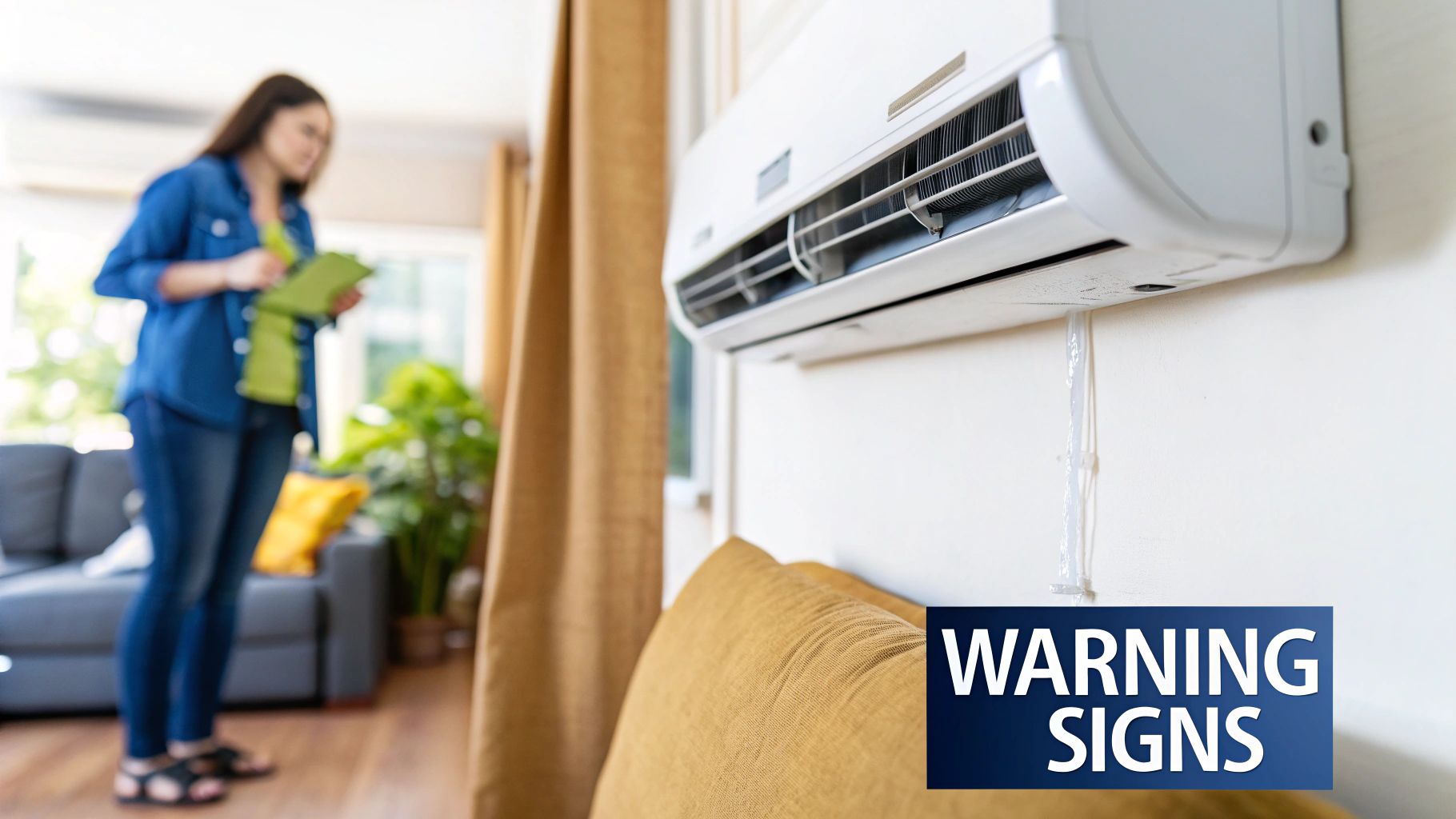
This really matters because a correct diagnosis depends entirely on the type of unit you have. If you're still weighing up your options, getting your head around the key differences is a great place to start. You can learn more about ducted air conditioning vs split systems in our detailed guide.
Ducted System Faults
Ducted air conditioning is fantastic for keeping the whole house comfortable, but its complexity means there are more moving parts that can potentially fail. We see these systems everywhere in larger properties across the Central Coast and Hunter Valley, where their grunt is needed to beat the heat.
One of the most frequent issues we come across is a problem with the zoning system. If one bedroom feels like a fridge while the living room is still stuffy, it often points to a dodgy zone motor or a glitch in the control panel that's meant to be directing the airflow.
Another classic is crushed or torn ductwork up in the roof space. Over time, ducts can be accidentally squashed by someone in the ceiling, or they can simply develop leaks. When that happens, all your precious cool air escapes into the roof cavity instead of your rooms, leading to a system that works hard but achieves very little. A seized fan in the central indoor unit is another big one. If the fan motor gives up or the blades are damaged, it simply can’t push air through the duct network, making the entire system useless until it’s professionally repaired.
Split System and Reverse Cycle Problems
Split systems are the go-to for cooling single rooms or smaller spaces, from Newcastle townhouses to apartments in Sydney's west. Their design is simpler, but that doesn't mean they're bulletproof.
A very common call-out is for a refrigerant leak. You'll notice the unit just isn't cooling like it used to, or you might even see ice forming on the copper pipes of the outdoor unit. This is a job for an ARCtick licensed technician to find the leak, fix it, and safely regas the system.
Another regular offender is a blocked drain line. The cooling process naturally creates condensation, which is supposed to drain away. When that line gets clogged with gunk, the water backs up and starts dripping down your wall from the indoor unit, never a welcome sight.
For reverse cycle models, which do both heating and cooling, a stuck reversing valve is a common winter headache. This little part is what switches the system from cooling to heating mode. If it fails, you’ll be left shivering with no warm air on a frosty Central Coast morning. The outdoor unit’s fan can also seize up from debris or simple wear and tear, which stops the whole system in its tracks.
When to DIY and When to Call a Licensed Pro
When your air conditioner starts playing up, it’s always tempting to have a poke around and see if you can fix it yourself. We get it. But it’s crucial to know where the line is between a safe, simple check and a dangerous, illegal repair.
Knowing the difference can save you a call-out fee, but more importantly, it will keep you and your family safe.
There are a few basic troubleshooting steps every homeowner can safely run through. These simple actions can sometimes get things running again without needing a technician at all.
Safe DIY Checks You Can Perform
Before you pick up the phone, running through this quick checklist is always a good idea. These tasks don’t need any special tools or technical knowledge and often get to the bottom of the problem.
- Check Your Thermostat: Is it actually set to "cool" and at the right temperature? You’d be surprised how often this is the culprit.
- Inspect the Air Filters: A dirty, clogged filter is one of the most common reasons for poor airflow and weak cooling. Check your indoor unit's filter and give it a clean or replace it if it's choked with dust. Our [split system air conditioner maintenance DIY guide](https://alcairconditioning.com.au/blog/split-system-air- conditioner-maintenance-diy-guide-when-to-call-a-pro/) has more detailed instructions.
- Reset the Circuit Breaker: Head over to your switchboard and see if the breaker for the air con has tripped. If it has, flick it all the way off before switching it back on.
- Clear the Outdoor Unit: Wander outside and make sure the condenser unit isn’t blocked by leaves, garden furniture, or overgrown bushes. That unit needs plenty of clear space to breathe and push out heat.
If you’ve tried all these steps and your system still isn’t working properly, it’s time to stop. Any further digging around moves into territory that is legally reserved for licensed professionals.
The Firm Line for Professional Repairs
This is where safety and the law draw a non-negotiable line. Any work that involves the electrical wiring or the refrigerant gas inside your system is strictly off-limits for anyone without a licence.
In NSW, it is illegal to handle refrigerants without an ARCtick licence, and any electrical work must be performed by a licensed electrician, as mandated by SafeWork NSW and Australian Standards like AS/NZS 3000.
Trying to fix these parts yourself isn’t just incredibly dangerous, posing real risks of electrocution or chemical burns. It will also instantly void your system’s warranty and could even compromise your home insurance. Do not attempt to open up the unit's casing, mess with the wiring, or try to "top up" the refrigerant. For these complex and hazardous tasks, a professional air conditioning repair service is your only safe and legal option.
What to Expect from a Professional Repair Visit
It can feel a bit uncertain having a technician come out to fix your air conditioner, especially when you're not sure what the problem is or how much it's going to cost. Knowing what a proper service call looks like can take the mystery out of it and give you confidence you’re getting real value for your money.
A good technician doesn’t just show up and start pulling things apart. They follow a clear, methodical process designed to find the real problem, not just treat a symptom. The visit always kicks off with a thorough diagnostic. This isn't a quick glance; it involves hooking up specialised gauges to check refrigerant pressures, testing all the electrical connections for safety, and properly inspecting the key components, things like the compressor, fan motors, and capacitors. A good tech is like a detective, piecing together clues to find the root cause.
Clear Communication and Transparent Quoting
Once they’ve figured out what’s wrong, the next step is simple: talking to you. Your technician should be able to explain their findings in plain English, telling you exactly what’s failed and what it’ll take to fix it.
Before they even think about picking up a tool, you should receive a clear, itemised quote for the repair. This is non-negotiable. It means you understand all the costs involved and can give the go-ahead with no risk of hidden surprises on the final bill.
For example, let's say your system in a Lake Macquarie home has sprung a refrigerant leak. The technician should explain how they'll find and repair the leak, then safely regas the unit according to Australia's strict environmental and safety laws. This professional approach builds trust right from the start.
The Repair Process and Safety Compliance
Once you've approved the quote, the technician gets to work. This is where their focus on safety and compliance really shows. All electrical work must adhere to Australian Standards like AS/NZS 3000, and they should be using the correct tools and high-quality parts to ensure the fix is a lasting one.
The repair sector is a crucial part of Australia's air conditioner market, which was valued at USD 3.1 billion in 2024 and is forecast to hit USD 5.3 billion by 2033, thanks to hotter summers and more of us living in cities. This growth just underscores the need for skilled, professional technicians to keep our systems running. You can learn more about the Australian air conditioner market on imarcgroup.com.
After the repair is done, they’ll fire the system up and test it thoroughly to make sure everything is running exactly as it should. They’ll clean up their work area, and then walk you through a detailed invoice. A genuinely professional visit leaves your air con working perfectly and your home just as tidy as they found it.
How to Choose the Right Repair Technician
Picking the right person to fix your air conditioner is easily the most critical decision you’ll make. It’s not just about getting the cool air flowing again; it’s about making sure the job is safe, compliant, and won’t lead to a bigger, more expensive headache down the road.
Getting a qualified professional isn't just a good idea, it's the only real way to protect your home and your investment in the system. The Australian air con services industry is massive, expected to hit a market size of $13.1 billion by 2025. With so many operators out there, you need to know how to spot a genuine expert. Discover more insights about the air conditioning and heating services industry on ibisworld.com.
Non-Negotiable Licences and Insurance
Before you even think about letting someone near your air conditioner, there are two crucial licences you absolutely must check.
First is their ARCtick refrigerant handling licence. In Australia, this is a legal requirement for anyone working with refrigerant gases. It proves they know how to handle these substances safely and responsibly, protecting both your family and the environment. Second, they need a full NSW electrical licence. A huge number of air con faults are electrical at their core, and only a licensed electrician can legally and safely diagnose and fix these issues.
Don’t be shy, ask to see physical copies of both licences and check them online if you have any doubts. On top of that, make sure they have comprehensive public liability insurance. This protects your property just in case something goes wrong during the repair.
Experience and Local Reputation
Once the paperwork checks out, you want a technician with a proven track record right here in your local area. A company that has spent years servicing homes on the Central Coast or in Newcastle will have a deep understanding of the unique challenges our humid, coastal climate throws at air conditioning systems.
They also have a local reputation they need to protect, which is a powerful motivator to do good work.
Look for the tell-tale signs of a professional, trustworthy business: a clear, upfront quoting process with absolutely no hidden fees; solid warranties that cover both the parts they install and the labour they perform; and a history of positive online reviews and a willingness to provide references if you ask. A good technician is transparent. They should be able to explain the problem in plain English and give you real confidence in their ability to sort it out properly. For more tips on what to look for, check out our guide on finding a reliable air conditioning service near you.
Technician Hiring Checklist
To make it easier, we've put together a quick checklist. Run through these points before you give anyone the green light to start work on your system.
| Verification Point | Why It Is Important | How to Check |
|---|---|---|
| ARCtick Licence | Legally required for handling refrigerants. Ensures environmental and personal safety. | Ask for their licence number and verify it on the ARCtick website. |
| NSW Electrical Licence | Legally required for any electrical work. Protects against fire and electrocution risks. | Ask for their licence number and check it on the NSW Fair Trading website. |
| Public Liability Insurance | Protects your property from accidental damage during the repair process. | Ask to see their Certificate of Currency. It should be up to date. |
| Local Experience | Familiarity with local climate issues (e.g., salt air corrosion) means better diagnostics. | Check their website for service areas and how long they've been in business. |
| Clear Quoting | Prevents surprise costs and ensures you know exactly what you are paying for. | Ensure the quote is written, detailed, and has a clear breakdown of costs. |
| Warranties | A warranty on parts and labour shows they stand behind their work. | Ask for warranty details in writing before agreeing to the job. |
| Online Reviews | Provides insight into other customers' experiences with their service and professionalism. | Look at their reviews on Google, Facebook, or industry-specific sites. |
Taking a few extra minutes to verify these details is the best way to ensure you're hiring a true professional who will get the job done right the first time, keeping your home safe and cool.
Proactive Maintenance to Prevent Future Breakdowns
The most affordable air conditioning repair is always the one you never have to make. Shifting your mindset from reacting to breakdowns to proactively caring for your system is the smartest way to guarantee comfort, extend its lifespan, and avoid those stressful emergency call-outs on a 40-degree day.
An annual professional service is far more than just wiping down a filter; it’s a comprehensive health check for your entire system. During this visit, a licensed technician will test electrical components for safety, clean indoor and outdoor coils to ensure efficient heat exchange, and check refrigerant levels to make sure your unit is cooling effectively without working overtime. This single visit can head off costly failures before they happen and significantly lower your running costs.
Your Simple Homeowner Checklist
While the technical work absolutely must be left to the pros, there are a few simple things you can do to keep your system healthy between professional services. These small actions make a big difference.
- Regular Filter Cleaning: Check your indoor unit's filters every month or two. When a filter gets clogged with dust and pet hair, it forces the system to work much harder, restricting airflow and driving up your power bill.
- Keep the Outdoor Unit Clear: Your outdoor condenser needs to breathe. Make sure it's free from overgrown plants, fallen leaves, or any garden debris. This is especially vital in leafy suburbs across the Hunter Valley or Central Coast.
- Listen for Changes: You know the normal sound of your unit. If you start hearing new rattles, squeals, or grinding noises, it’s an early warning sign that something is amiss and needs attention.
This proactive approach reframes maintenance not as an expense, but as a wise investment in your home’s comfort and your system’s long-term health. To get a better handle on the ideal schedule for your specific unit, you can learn more about how often you should service your air conditioner in our detailed guide.
Your Air Conditioning Repair Questions Answered
We get it. When your air conditioner gives up on a scorching afternoon, you've got questions, and you need answers fast. Dealing with an unexpected breakdown is stressful, so we've put together some straight answers to the most common queries we hear from homeowners across the Central Coast and Newcastle.
How Much Does a Typical Air Conditioning Repair Cost?
This is the big one, and the honest answer is: it varies. The cost of a repair depends entirely on what’s actually gone wrong with your system. A relatively simple fix, like replacing a blown capacitor on a split system (a very common fault), might only set you back a few hundred dollars, which covers the call-out fee, the part, and the labour.
On the other hand, a major failure like a seized compressor or a significant refrigerant leak is a much bigger job. These kinds of repairs can easily run over a thousand dollars. A good technician will always diagnose the problem properly first, then give you a clear, fixed-price quote before they pick up a single tool. That way, you know exactly what you’re in for with no nasty surprises.
Should I Repair or Replace My Old Air Conditioner?
This is a classic dilemma, and the right decision usually boils down to three things: the age of your system, how much the repair will cost, and how much energy it's chewing through. As a general guide, if your air conditioner is more than 10 to 12 years old and the repair quote is getting close to 50% of the cost of a new unit, replacement is almost always the smarter financial move in the long run.
Think about it this way: a brand-new system comes with a full manufacturer's warranty, giving you complete peace of mind. It will also be dramatically more energy-efficient than your old unit. The money you save on your power bills every quarter genuinely helps to offset the initial investment.
How Long Will I Wait for a Repair in Summer?
During those sweltering summer heatwaves, especially in January and February, the demand for air conditioning repair services goes through the roof. Naturally, this can mean longer wait times. If you have a non-urgent issue, we always suggest scheduling repairs or preventative maintenance during the milder autumn and spring months.
Of course, when your system dies completely, it's an emergency. Reputable local companies will always prioritise urgent breakdown calls to get your cooling back on as quickly as humanly possible. This is where choosing a well-established company with a decent-sized team of technicians really pays off, as they often have the capacity to respond much faster.
At ALC Air, we know a broken air conditioner is more than an inconvenience; it’s a major disruption to your life. Our licensed and experienced technicians deliver prompt, reliable repairs across the Central Coast, Sydney, and Newcastle. If your system is playing up, don't sweat it out and wait for the next heatwave. Contact us today for a free, no-obligation quote and some expert advice.