


Think of your air conditioning maintenance like a regular car service. You wouldn’t drive your car for years without an oil change, especially not before a big road trip in summer. It’s the same principle for your air conditioner. Proper maintenance keeps it running efficiently, helps it last longer, and stops it from quitting on you during a scorching Central Coast heatwave. It’s not just a recommendation; it’s a smart investment in your home’s comfort.
Why Bother with Regular Air Conditioning Maintenance?
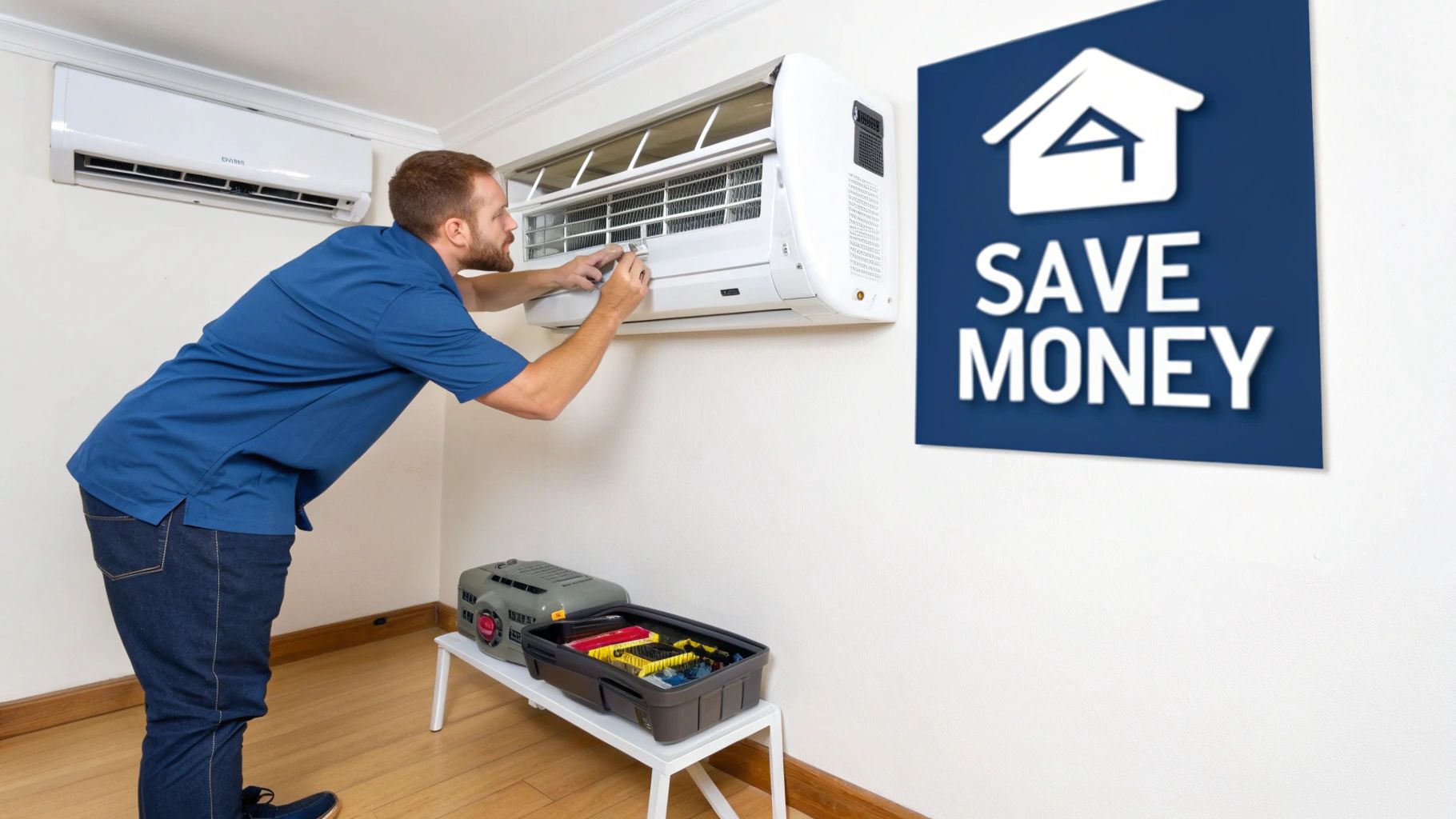
Skipping an annual service might seem like a way to save a few dollars now, but it almost always leads to bigger, more expensive problems down the track. Your air conditioner, whether it’s a split system in your Newcastle apartment or a ducted unit cooling a family home in the Hunter Valley, is a complex piece of machinery that needs care to perform at its peak. Regular tune-ups are the key to unlocking better efficiency and a longer lifespan.
Lower Your Energy Bills
One of the first things you’ll notice after a service is better energy efficiency. When your filters are clogged with dust and the coils are grimy, your system has to work much harder to cool your home. It’s like trying to breathe through a blocked straw; it takes a huge amount of effort for a tiny result.
That extra labour chews through electricity. A clean, well-maintained unit can cool a room faster and more effectively, using far less power. Given that heating and cooling can make up a significant chunk of Aussie power bills, keeping your system efficient is one of the easiest ways to manage your running costs.
Extend the Lifespan of Your System
A new air conditioning system is a serious investment. Regular, professional maintenance is the best way to protect that investment and squeeze every possible year of life out of your unit. During a service, a licensed technician can spot and fix small issues, like a loose wire or a tiny refrigerant leak, before they snowball into a catastrophic failure.
Picture this: an unnoticed refrigerant leak forces the compressor, the heart of your air conditioner, to work under extreme strain. Eventually, it burns out. That’s an expensive replacement that could have been avoided with a simple service call. Regular tune-ups reduce wear and tear, ensuring every part is doing its job properly. You can learn more about how our local climate affects system choice in our guide to choosing air conditioning for Central Coast homes.
Improve Your Home’s Air Quality
Your air conditioner doesn’t just cool the air; it also circulates and filters it. Over time, dust, pet dander, pollen, and even mould spores build up inside the unit. In the humid coastal climate of the Central Coast or Lake Macquarie, this can quickly become a breeding ground for nasty allergens.
When you turn on a dirty air conditioner, all those particles get blasted straight into your living spaces, which can trigger allergies and respiratory problems. A thorough professional clean gets rid of all that gunk, ensuring the air your family breathes is healthier and fresher. This isn’t just about comfort, it’s about keeping your home healthy.
What You Can Do Yourself vs. What Needs a Professional
Keeping your air conditioner in top shape is a team effort. There are simple tasks you can safely handle yourself, and there are technical jobs that legally require a licensed professional. Knowing the difference is key to maintaining your system safely and effectively, while also keeping your manufacturer’s warranty valid.
What You Can Do Yourself (The DIY Tasks)
These are the quick, simple jobs you can do to keep your system breathing easy, especially when it’s working hard in the peak of summer or winter. Crucially, always switch off the power at your home’s circuit breaker before you touch anything. Your safety is the number one priority.
Here are 3 essential DIY air conditioning maintenance tasks you can tackle:
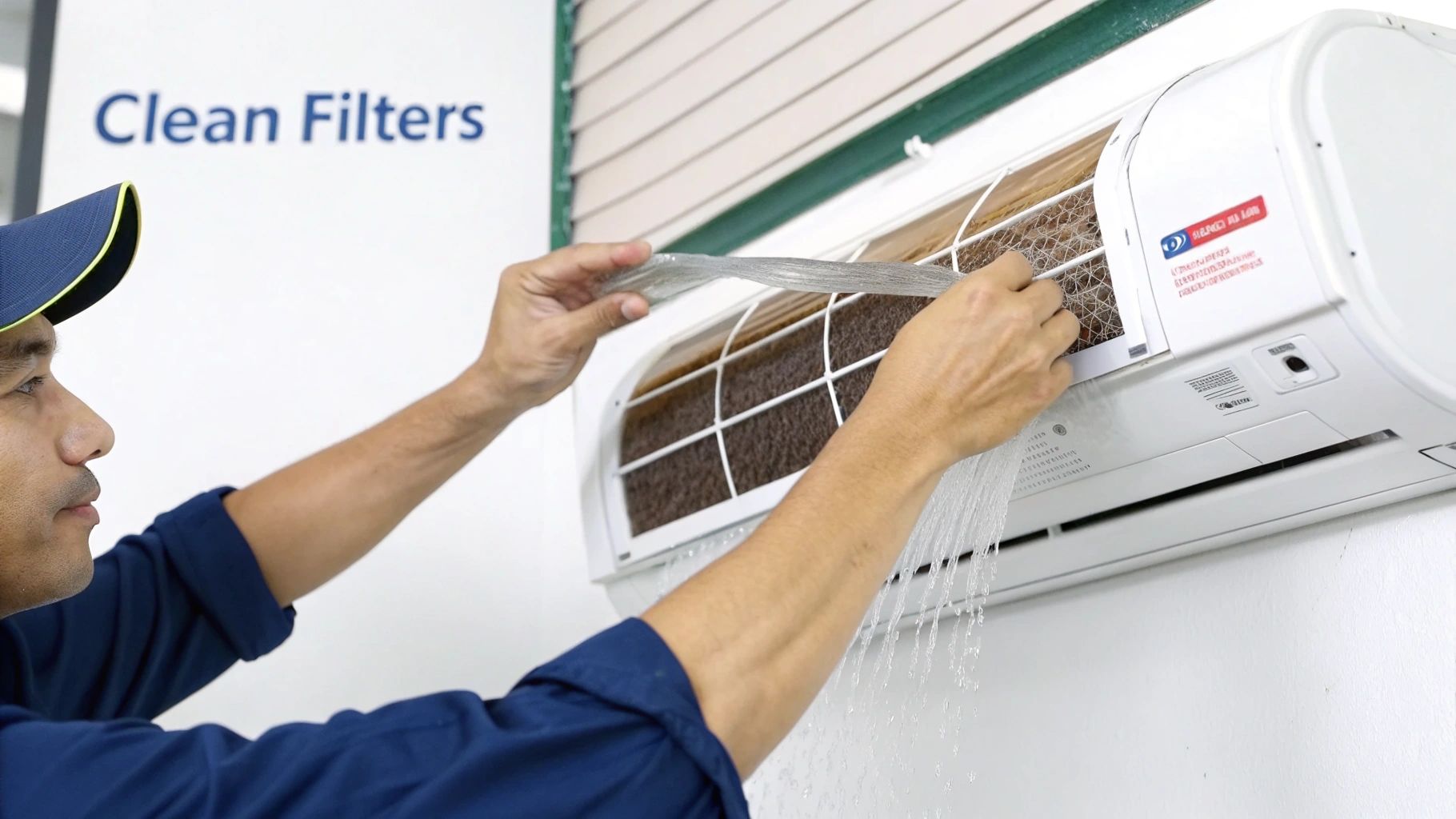
- Clean the Indoor Unit’s Filters: This is the most important DIY job. Clogged filters restrict airflow, reduce efficiency, and can cause the indoor unit to freeze over. Simply slide the filters out, wash them gently in lukewarm water, let them air dry completely, and pop them back in. Do this every 1-2 months.
- Keep the Outdoor Unit Clear: Your outdoor condenser unit needs space to breathe. Make sure the area around it is clear of leaves, grass clippings, and garden furniture. We recommend at least 30-50 cm of clear space around the entire unit to ensure proper airflow. Trim back any nearby bushes or trees regularly.
- Wipe Down the Indoor and Outdoor Units: Use a soft, damp cloth to wipe down the casing of both the indoor and outdoor units. This keeps them clean and allows you to visually inspect for any obvious damage to the casing or louvres. Never use harsh chemicals.
What Needs a Professional (The Pro-Only Zone)
While DIY tasks help, they are no substitute for a comprehensive professional service. Certain jobs are not only complex but are also legally restricted to licensed technicians in Australia. This is to ensure safety and compliance with national standards like AS/NZS 3000.
Here are 5 essential maintenance tasks that need a professional:
- Checking Refrigerant Levels: Only a technician with an ARCtick certification can legally handle refrigerant. Incorrect levels can damage your compressor, and low levels indicate a leak that must be professionally repaired.
- Inspecting Electrical Components: A licensed technician will check all wiring, capacitors, and contactors for safety and wear. This prevents electrical faults, which can be a serious fire hazard.
- Deep Cleaning Coils and Components: We use specialised solutions and equipment to deep clean the indoor and outdoor coils, the blower motor, and other internal parts you simply can’t reach. This is vital for efficiency.
- Clearing Condensate Drains: A professional will flush the drain lines to remove sludge and prevent blockages. This stops water from backing up and leaking into your home, a common issue in humid areas like Newcastle.
- Testing Full System Performance: We run diagnostic tests to measure airflow, check thermostat accuracy, and ensure the entire system is operating at peak efficiency as the manufacturer intended. You can learn more about how different air conditioning systems work in your home.
Your Air Conditioning Maintenance Checklist by Frequency
Sticking to a schedule is the easiest way to stay on top of maintenance. By breaking the job down, you can ensure nothing gets missed.
Monthly Checklist (DIY)
- Check and clean indoor unit filters. If you have pets or live in a dusty area, you might need to do this more often.
- Visually inspect indoor and outdoor units. Look for any obvious signs of damage or debris buildup.
Quarterly Checklist (DIY)
- Clear the area around the outdoor unit. Trim back plants and remove any leaves or obstructions.
- Gently wipe down the outdoor unit’s casing. Use a soft cloth to remove dirt and grime.
Annual Checklist (Professional Service)
- Book a comprehensive service with a licensed technician. This should be done once a year, ideally in spring or autumn, to prepare for the peak season. The service should include all the professional tasks listed above, from refrigerant checks to electrical inspections. This is also crucial for maintaining your warranty.
Signs Your Air Conditioner Needs Professional Maintenance
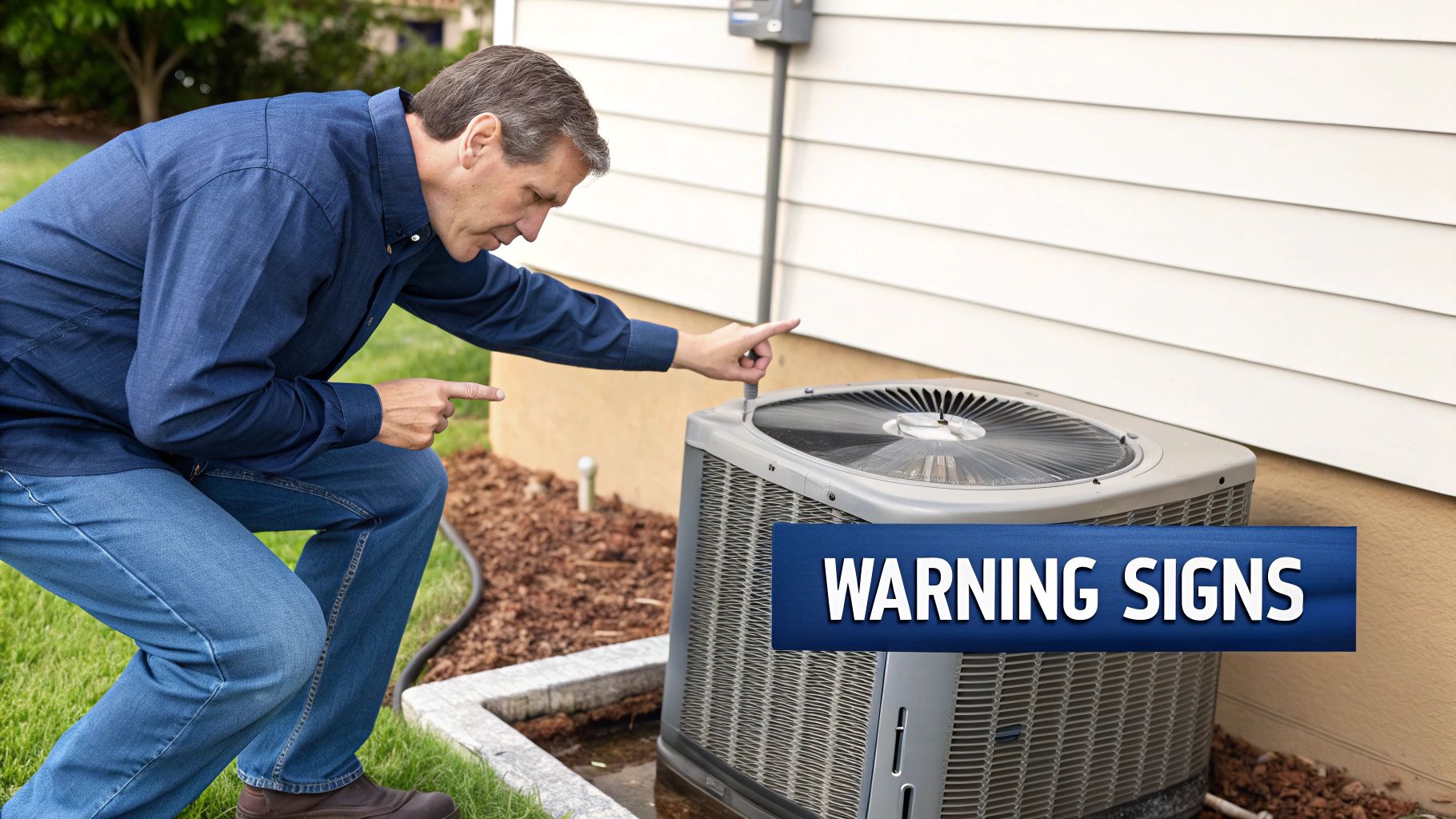
Your air conditioner will almost always give you a heads-up that something’s wrong before it completely fails. Learning to spot these clues is your best defence against a minor hiccup turning into a major, expensive breakdown on a sweltering summer afternoon.
If you notice any of these signs, it’s time to call in a professional.
1. Unusual Noises: Grinding, Squealing, or Banging
A gentle hum is normal, but any loud or sudden noises are a massive red flag. A grinding or squealing sound often points to a problem with the motor’s bearings, while a banging noise could mean a part has come loose inside the compressor. Turn the system off immediately and call a licensed technician.
2. Weak Airflow or Warm Air
If your system is running but the air from the vents feels weak or isn’t cold, first check your filters. If they’re clean, you might have a more serious problem. Weak airflow can signal a fan motor issue, while warm air often points to a refrigerant leak or a failing compressor. This requires an ARCtick licensed technician to diagnose and repair.
3. Water Leaks and Moisture
You should never see water pooling around your indoor or outdoor units. Water dripping from the indoor unit usually means the condensate drain line is blocked. This can cause serious water damage to your walls and floors. A professional needs to flush the line and ensure it’s draining properly.
4. Strange Smells
A musty or mouldy smell is a clear sign of mould or mildew buildup inside the unit, a health hazard that needs a professional deep clean. A burning smell is far more serious; it could be an electrical fault. Shut off the power at the circuit breaker immediately and call for an emergency service.
The air conditioning industry in Australia is a big deal, with around 7,383 businesses contributing to a $13.1 billion industry. The maintenance side is what keeps systems running safely. Read more about the air conditioning services industry in Australia on ibisworld.com.
How Professional Servicing Saves You Money
It’s easy to see professional air conditioning maintenance as just another expense. The reality is, it’s one of the smartest financial decisions you can make for your home. This isn’t about spending money; it’s about protecting the thousands of dollars you’ve already invested in your system and preventing massive future bills.
Protect Your Manufacturer’s Warranty
Most major air conditioning brands require proof of regular servicing by a licensed technician to keep their warranty valid. Without a documented service history, a manufacturer can legally deny a claim for a faulty part, leaving you to cover the entire cost yourself. A consistent service history is your insurance policy.
Prevent Costly Emergency Repairs
During a professional service, a technician can spot the early warning signs of failure. For example, they might notice a capacitor is weakening or detect a tiny refrigerant leak. Fixing this during a scheduled visit is a relatively minor expense compared to an unexpected, multi-thousand-dollar emergency replacement on the hottest day of the year.
Maintain Peak Energy Efficiency
A professionally serviced unit runs more efficiently, which translates directly into lower power bills. Technicians deep clean components you can’t reach, like the evaporator coils, which is critical for maximum performance. This sustained efficiency adds up, saving you money every month and delaying the significant cost of a new system. You can get a sense of system expenses by reviewing our guide on air conditioning installation costs on the Central Coast or our guide to ducted air conditioner costs.
Common Air Conditioning Maintenance Questions
To wrap things up, let’s go through some of the most common questions we hear from homeowners across the Central Coast, Sydney, and Newcastle.
How often should my air conditioner be serviced?
For most residential homes, a professional service once a year is the gold standard. We recommend booking it in autumn or spring to prepare your reverse cycle system for the upcoming peak season. On top of this, you should clean the indoor filters yourself every month or two.
What does a typical air conditioning service cost?
The cost of maintenance varies depending on the type of system (e.g., a single split system vs a large ducted setup) and your location. A standard preventative service usually has a set fee covering a full inspection, clean, and test. It’s always best to ask for an upfront quote.
Can I top up the refrigerant gas myself?
Absolutely not. In Australia, it is illegal for anyone without a valid ARCtick licence to purchase or handle refrigerant gases. If your system is low on gas, it means there’s a leak that a qualified technician must find and repair before recharging the system.
Does my warranty require professional maintenance?
In almost all cases, yes. The vast majority of manufacturers require documented proof of regular servicing by a licensed air conditioner professional to keep your warranty valid. Always keep your service reports and receipts in a safe place.
Ready to give your air conditioner the professional care it deserves? The licensed and experienced team at ALC Air has spent over 15 years helping homeowners across the Central Coast, Sydney, Newcastle, and Lake Macquarie keep their systems running efficiently and reliably. Get in touch today for a free, no-obligation quote and enjoy peace of mind all year round.