


Choosing the right air conditioning for your Central Coast home is a big decision, and it’s one you want to get right. With our sticky, humid summers and those surprisingly chilly winter mornings, having a reliable system isn’t a luxury anymore—it’s essential for comfortable, year-round living. We’re here to help you get it right.
This guide will walk you through everything you need to know. We’ll cover picking the perfect system for a beachfront property in Terrigal, understanding the nitty-gritty of an installation for a family home in Gosford, and what you can expect on the day.
Your Guide to Air Conditioning on the Central Coast
Let’s be honest, an efficient air conditioner has become a core part of living comfortably on the Coast. Our unique climate, with its muggy summer humidity near the water and sharp temperature drops further inland during winter, really demands a versatile solution. Whether you’re in a modern apartment in Gosford or a sprawling family home in Lisarow, getting the installation right from day one is the key to long-term performance and keeping those power bills in check.
Making a smart choice means looking past the initial price tag. You need to think about your home’s specific layout, our local climate, and your family’s lifestyle. For example, a house in Avoca Beach getting hit with salt spray needs a different kind of outdoor unit with anti-corrosion protection compared to one tucked away further inland. Nailing these little details is what separates a decent installation from a great one.
If you want to dive deeper, we’ve put together a detailed guide on how to choose the right system based on our unique coastal climate.
Key Considerations for Your Installation
Before you get bogged down in system types and costs, it helps to get your head around the fundamentals that will shape your decision. Here are a few things we always tell homeowners to keep front of mind.
Consider this scenario: a two-storey house in Wamberal with huge, west-facing windows has completely different cooling demands than a smaller, shaded cottage in Wyong. One size definitely does not fit all, and a proper assessment is crucial. An energy-efficient reverse cycle system might cost more upfront, but it can save you a serious amount on your power bills over its lifespan, especially since you’ll be using it for both summer cooling and winter heating.
Most importantly, professional advice is key. A qualified installer does way more than just connect the bits and pieces. We provide crucial advice on system sizing (kW capacity), the best placement for airflow, and making sure the whole setup is compliant with Australian Standards.
A correctly sized and professionally installed air conditioner doesn’t just keep you comfortable. It runs more efficiently, lasts longer, and helps you sidestep the common pitfalls of a DIY or shoddy job, like weak performance and shockingly high power bills.
Choosing the Right Air Conditioning System for Your Home
Picking the right air conditioning system is easily the most important decision you’ll make. It’s the first real step, and it sets the stage for everything else – your comfort, your home’s look and feel, and what you’ll be paying on your power bills for years to come. It really boils down to matching the right technology to how you live your life here on the Central Coast.
For most homeowners, the choice comes down to a few key options, and each one has its own clear advantages depending on your house and your lifestyle.
Split System Air Conditioners
A Central Coast split system is the go-to for cooling a single room or a specific zone. Think of that main living area in your Umina Beach home that gets absolutely blasted by the western sun in the afternoon, or a master bedroom you want to turn into a cool sanctuary on those sticky summer nights.
They’re made up of an indoor unit mounted high on the wall and an outdoor condenser unit that sits outside. For targeted cooling, they are incredibly efficient and are usually the most budget-friendly option to get installed.
Ducted Air Conditioning Systems
If you’re after seamless, whole-home climate control, then a ducted system for your Central Coast home is the top-tier solution. This setup uses a central unit, usually tucked away in the roof space, that pushes conditioned air through a network of ducts to discreet vents in the ceiling or floor of multiple rooms.
This is the perfect choice for bigger, multi-level homes in suburbs like Wamberal, or for new builds where all the ductwork can be planned and integrated from the start. You get a much cleaner aesthetic (no bulky units on the walls) and the brilliant ability to create different temperature “zones” around the house.
Multi-Split Systems for Flexible Control
So, what happens if you need to cool more than one room but you don’t have the roof space for a full ducted system? This is where a multi-split system comes in. It’s the perfect middle ground. It lets you run several indoor wall units from just a single outdoor condenser.
This setup gives you independent temperature control in different rooms, which is a lifesaver for families where everyone has their own idea of what’s comfortable. It’s a really flexible solution that avoids the major installation work that comes with a full ducted system.
Choosing between these systems is about more than just brute cooling power. You have to weigh up the installation work, how it will look in your home, and how you actually use your space day-to-day. A good, experienced installer will help you find the right balance.
For a deeper dive, have a look at our guide on choosing the best air conditioner for your home.
The Installation Process: What to Expect
Knowing what’s going to happen on installation day makes the whole experience feel much less disruptive. A professional install isn’t just about hooking things up; it’s a precise, methodical process designed to be efficient, clean, and safe, leaving you with a system that runs perfectly from day one.
From the moment our technicians arrive, we run through a clear plan to get the job done right.
The first thing we do is walk through the job with you, confirming the exact locations for both the indoor and outdoor units we agreed on during the quote. We’ll lay down drop sheets and take every care to protect your home before a single tool comes out. Placement is more important than you might think; positioning the outdoor unit in a shaded, well-ventilated spot can improve its efficiency and lower your running costs.
This diagram breaks down what goes into the final cost of an installation.
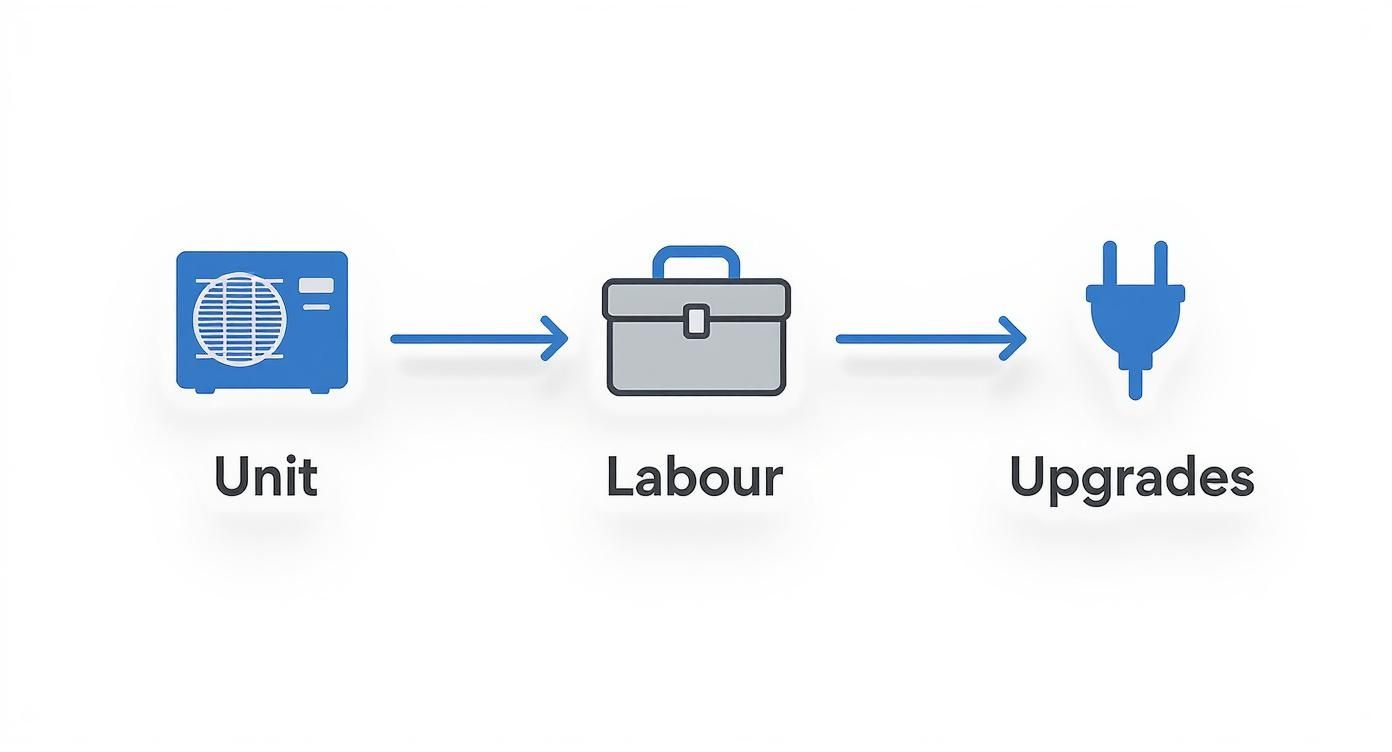
As you can see, the final price is a blend of the unit itself, the skilled labour needed for a compliant install, and any electrical upgrades your switchboard might need.
How Long Does AC Installation Take?
The time it takes for your air conditioning installation on the Central Coast really depends on the type of system you’ve chosen. Here’s a typical timeline:
- Site Assessment & Quote (Pre-Installation): We visit your home to assess your needs, measure rooms, and provide a detailed quote. This is where we plan the ideal unit placement and check your electrical switchboard.
- Split System Installation (3-5 Hours): A standard back-to-back split system installation in Terrigal or Gosford is usually completed within a few hours. This involves mounting the indoor and outdoor units, running the pipes and electrical connections, and commissioning the system.
- Ducted System Installation (2-3 Days): A full ducted air conditioning system is a more involved process. Our team will need access to your roof space to install the central unit and run insulated ductwork to each room’s vent.
- Commissioning & Handover (Final 30 Mins): Once installed, we pressure test the system, check for leaks, and ensure everything is running perfectly. We then walk you through how to use your new remote control and answer any questions you have.
Working Out the Costs
When you’re budgeting for a new air conditioner on the Central Coast, the price tag on the unit itself is just the starting point. The final cost is a package deal: the system you choose, the skilled labour from licensed technicians, all the necessary materials like copper piping and electrical cables, and sometimes, a crucial switchboard upgrade to handle the extra electrical load safely.
The complexity of the job is a massive part of the final price. A simple back-to-back split system installation Gosford homeowners often choose for a single room is far more affordable than a tricky setup in a two-storey Terrigal home requiring extra-long pipe runs or specialised access equipment. For a detailed breakdown of pricing, check our guide on ducted air conditioner costs.
Central Coast Council Requirements for AC Installation
Here’s some good news: for most homeowners, installing a standard residential split system usually doesn’t require lodging a formal development application with the Central Coast Council. However, this doesn’t mean it’s a free-for-all.
There are still important local and state regulations to follow, mainly around noise and visual impact. Your outdoor unit can’t be so loud that it becomes a nuisance for your neighbours, and there are specific rules about how close it can be placed to property boundaries.
If you live in a townhouse, apartment, or any strata-managed property, you will absolutely need to get approval from your body corporate before any work starts. They often have very strict rules about where outdoor units can be placed to maintain the building’s appearance. A good local installer who works on the Coast every day will know these rules inside out.
Choosing the Right Installer on the Central Coast
Let’s be blunt: the quality of your air conditioning installation is every bit as important as the unit you choose. A shoddy install can lead to years of headaches—poor cooling, sky-high energy bills, frequent breakdowns, and even serious safety risks.
Finding a reputable, licensed air conditioner installer on the Central Coast is the single best investment you can make in your new system. It’s the difference between a reliable workhorse and a constant source of frustration.
When you’re comparing quotes, it’s so important to look beyond the final price tag. A true professional will have zero hesitation in showing you their credentials. The non-negotiables? A valid NSW Fair Trading contractor licence and an ARCtick licence. That ARCtick certification isn’t just a nice-to-have; it’s a legal requirement for anyone handling refrigerants, ensuring they do it safely.
The Non-Negotiable Electrical Licence
Here’s one of the most critical checks: confirming the installer has a fully qualified and licensed electrician on their team. All electrical wiring for air conditioning must comply with the strict Australian Standard AS/NZS 3000. This isn’t just a recommendation; it’s the law, enforced by bodies like SafeWork NSW.
A common red flag we see is an installer who tries to downplay the electrical side of things or suggests you hire your own electrician separately. A professional, all-in-one service is the only safe and reliable approach. It ensures total accountability for the entire job, from start to finish.
Questions to Ask Before You Commit
When you’re talking to potential installers, don’t be afraid to ask some pointed questions. How they answer will tell you a lot about their experience and whether they’re the real deal.
Here are a few essentials to have up your sleeve:
- What warranties do you provide? You should always get two: a manufacturer’s warranty on the air con unit itself, plus a separate workmanship warranty from the installer covering their labour.
- Are you fully insured? Ask to see their certificate of currency for public liability insurance. This protects your property just in case anything goes wrong during the installation.
- Do you have local experience? An installer with years under their belt on the Central Coast just gets it. They understand our specific climate challenges, from dealing with corrosive salt air near the coast to managing the intense summer humidity.
Choosing a local company with a solid reputation means you’re not just getting a technician for a day. You’re getting a partner who understands the area and will be there to support you down the track. For homeowners wanting reliable service, understanding what to look for in an air conditioning service near you provides valuable insights.
Your Central Coast Air Conditioning Questions Answered
We talk to homeowners across the Central Coast about air conditioning every single day. Over our 15+ years in business, you start to hear the same questions pop up, which makes perfect sense. It’s a big investment, and you want to get it right.
So, we’ve put together some straight answers to the most common queries we get, from figuring out the right size unit to what happens long after our vans have driven away.

How do I know what size air conditioner I need?
Getting the size—or kilowatt (kW) capacity—spot-on is the single most important factor for an efficient system. If it’s too small, it will run itself into the ground trying to cool a room it can’t handle. Too big, and it will constantly switch on and off, chewing through power without properly dehumidifying the air.
As a very rough rule of thumb, you can budget around 1.0 to 1.5 kW of cooling power for every 10 square metres of floor space. But please, treat this as a ballpark figure only. A proper assessment is non-negotiable because your home is unique. Things like ceiling height, window size and orientation, and the quality of your insulation can completely change the calculation.
What’s the difference between installing in a coastal vs inland suburb?
The Central Coast isn’t one-size-fits-all, and neither is air con installation. For coastal suburbs like Terrigal or Avoca Beach, that salty sea air is the enemy of metal. We always recommend outdoor units with special anti-corrosion coatings to protect your investment and add years to its life.
Head further inland to places like Ourimbah or Somersby, and the challenge shifts. These areas often cop more extreme temperature swings. The focus here is on ensuring the system has serious heating and cooling muscle, sized correctly to handle those scorching summer afternoons and frosty winter mornings. A good local installer knows these nuances and plans for them.
Do I need to service my new air conditioner?
Yes, absolutely. Think of it like a car. Regular maintenance is the key to keeping your new system running efficiently and reliably for years to come. We strongly recommend a professional service at least once a year, usually just before summer starts to really bite.
You can do your part in between services, too. The easiest thing is to regularly clean the filters on your indoor unit. It’s a simple DIY job you can do every month or two, and it makes a huge difference. Clean filters mean better airflow, which stops your system from working harder than it needs to and helps keep your power bills in check.
Ready to get the perfect air conditioning solution for your Central Coast home? The team at ALC Air has over 15 years of local experience. Get in touch for a free, no-obligation quote today!