


Choosing the right air conditioning for your home on the Central Coast is about more than just beating the summer humidity—it's a significant investment in your comfort and your property's value. Getting a professional air conditioning installation on the Central Coast of NSW is the only way to be certain your system is perfectly sized, runs efficiently, and meets all Australian safety standards.
A quality installation is your best defence against shockingly high power bills and a system that fails years before it should. This guide is your practical roadmap to making a great choice.
Finding The Right Cooling Solution For The Central Coast Climate
We'll help you navigate the big decisions, whether that's a whole-home ducted system for a family house in Terrigal or a powerful split system for a sun-drenched apartment in Gosford. We’ll also dig into how local factors, like the salty coastal air and those harsh west-facing windows, have a direct impact on the best unit for your space.
Understanding the process from start to finish gives you the confidence to make a good decision. More importantly, we’ll show you why getting advice from a licensed local technician is non-negotiable. It’s the surest way to avoid costly mistakes, like installing an undersized unit that can't keep up on a 35-degree day, or an oversized one that cycles on and off, wasting a fortune in electricity.
Let's break down the core stages of getting air conditioning installed professionally right here on the Coast.
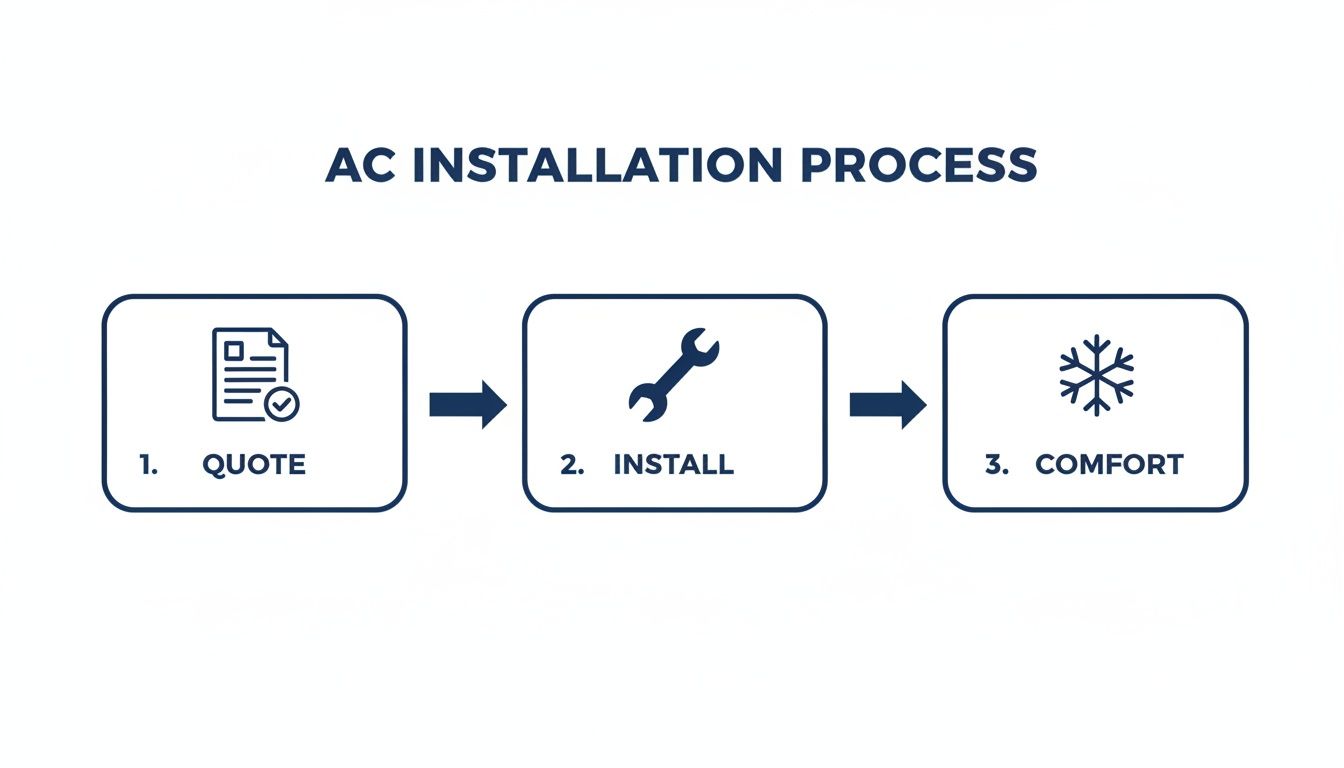
This visual gives you a clear picture of the journey. It shows how a professional team takes you from the initial quote and system design right through to the final installation and year-round comfort.
Why An Efficient System Is More Important Than Ever
With the cost of living rising, making an energy-efficient choice for your home has never been more critical. It's not just a nice-to-have; it's a financial necessity for many of us.
Choosing the right system from the get-go is a smart investment in both your immediate comfort and your long-term savings. An efficient unit provides the comfort you need without the punishing energy consumption of an older or poorly matched unit.
A correctly sized and professionally installed air conditioner is the single most effective way to manage your running costs. It provides that essential comfort you need without the punishing energy consumption of an older, inefficient, or poorly matched unit.
For a deeper dive, check out our guide on choosing air conditioning for Central Coast homes. We give you a clear overview of the entire process—from getting an honest quote to the final walkthrough—so you can feel confident you're making a smart choice.
Matching The Air Conditioning System To Your Home
Your first big decision is figuring out the right type of air conditioning for your home and budget. This choice sets the foundation for your comfort, so it’s worth getting your head around the main options we see across Central Coast homes.
There’s no single "best" system. The ideal solution comes down to your home’s layout, how you live in it, and what you want long-term. Let's look at the most common and effective choices we install across the region, from the leafy streets of Kariong to the salty air of Avoca Beach.
Ducted Systems For Whole-Home Comfort
A fully ducted air conditioning system is the premium option for seamless, whole-home temperature control. It works from a central indoor unit, usually tucked away in the roof space, that pushes conditioned air through a network of hidden ducts to discreet vents in your ceiling or floor.
This makes it a fantastic choice for new builds or larger family homes in suburbs like Wamberal or Green Point, where you want consistent comfort across several bedrooms and living areas. The main thing you need is enough space in the ceiling or under the floor to run the ductwork.
While the upfront investment is higher, the ability to create different "zones" in your home gives you excellent long-term running efficiency.
Split Systems For Targeted Cooling And Heating
On the other hand, split systems offer incredible flexibility and are extremely efficient for controlling the climate in a single room or a specific area. They’re made up of an indoor wall-mounted unit connected by pipes and wiring to an outdoor unit.
Imagine you need to cool a master bedroom in a Umina Beach cottage that gets blasted by the summer heat. A split system is the perfect, cost-effective fix. They are quick to install and give you precise control right where you need it most.
The real advantage of a modern split system is its efficiency. By only cooling or heating the rooms you're actually using, you avoid wasting energy and money on empty spaces. It's just a smarter way to manage your power bills.
Multi-Head Systems: The Hybrid Solution
So what happens if you need to cool more than one room, but a full ducted system isn't practical? This is where a multi-head split system comes in. It’s a great middle ground.
This setup connects several indoor units to a single, powerful outdoor condenser, making it ideal for townhouses, apartments, or homes that just don't have the roof space for ducting. For example, you could have individual indoor units in three bedrooms and the main living area, all running off just one outdoor unit.
This approach gives you independent temperature control in each zone while minimising the system's footprint outside. It’s a seriously versatile option for many properties across the Central Coast. For a deeper dive, you can learn more about choosing the best air conditioner for your home in our dedicated guide.
How Professionals Correctly Size Your Air Conditioner
Getting the size of your new air conditioner right is easily the most critical part of the entire installation. It’s a common myth that bigger is always better, but when it comes to air conditioning, that’s just plain wrong.
An undersized system will run itself ragged on hot Central Coast days, constantly burning through electricity while never quite managing to hit your target temperature. An oversized unit is just as bad. It will blast cold air, hit the temperature too quickly, and then shut off. This constant on-off cycle, known as "short cycling," wastes power and puts massive stress on the compressor, which often leads to it failing years before it should.
The Professional Site Assessment
This is exactly why a genuine professional will never give you a fixed quote over the phone. Instead, we carry out what’s known in the trade as a "heat load calculation" during a proper site visit. This isn't a five-minute guess; it's a detailed assessment of your home's unique thermal characteristics.
Imagine we're looking at a two-storey home in Avoca Beach with a massive north-facing glass wall. That home is going to need a whole lot more cooling power than a well-insulated, single-storey brick home tucked away in a leafy part of Wyong. We measure every single room and account for all the variables that affect how much heat your home gains in summer and loses in winter.
A proper heat load calculation is the difference between an air conditioner that just works and one that works efficiently. It guarantees your system can handle the worst summer days without running itself into the ground, saving you money for years to come.
Factors We Analyse On-Site
During a site assessment for an air conditioning installation on the Central Coast NSW, a qualified technician will meticulously inspect several key factors:
- Room Dimensions: We calculate the total air volume (m³) of every space you want to cool or heat.
- Window Orientation and Size: Those west-facing windows let in a brutal amount of afternoon sun compared to south-facing ones.
- Insulation Quality: The R-value of your ceiling, wall, and underfloor insulation plays a massive role in how much work the system needs to do.
- Ceiling Height: High ceilings in some of the beautiful older homes around Gosford mean there's a lot more air to cool.
- Local Climate: We factor in the specific humidity and temperature extremes we experience right here in our coastal environment.
This detailed approach ensures the system we recommend is a perfect match for your home’s specific needs. For a deeper dive into this crucial step, you can find a comprehensive guide on how to properly size an air conditioner for your home.
What To Expect On Installation Day
Knowing what’s going to happen on installation day makes the whole process feel a lot less disruptive. It’s not just about getting the system on the wall; it’s about a professional, methodical approach that respects your home and guarantees a safe, compliant result.
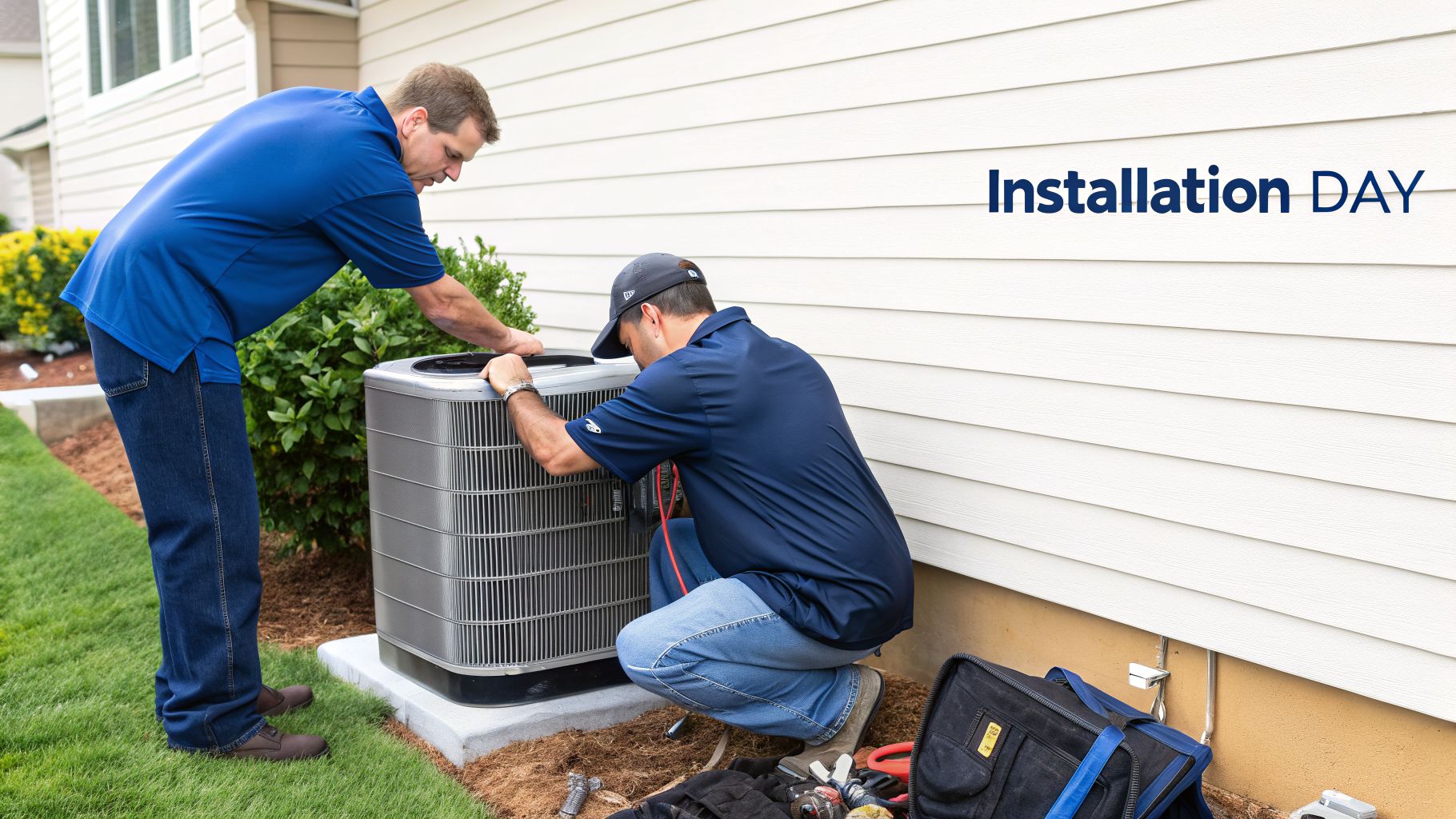
When our licensed technicians arrive at your Central Coast home, the very first thing they’ll do is a quick walkthrough with you. This is simply to confirm the exact placement for the indoor and outdoor units we agreed on during the site assessment. Before a single tool comes out, they’ll lay down drop sheets and take every care to protect your floors, walls, and furniture.
The Core Installation Tasks
The main part of the job involves a few key stages. Our team will securely mount both the indoor head unit and the outdoor condenser unit on high-quality brackets or a solid concrete slab.
Next, they run the essential lines between the two units. This includes the copper piping that carries the refrigerant, the electrical wiring that powers the system, and a condensate drain to safely channel moisture away. This is meticulous work, planned to be as neat and unobtrusive as possible. You can get a more detailed look at the specifics by reading about a standard split system air conditioner installation.
Electrical Work and Safety Compliance
This is one part of the job where there are absolutely no shortcuts. All electrical work for an air conditioning installation on the Central Coast NSW must be performed by a fully licensed electrician. It’s a legal requirement under Australian Standards, specifically AS/NZS 3000, which governs all electrical installations.
Our technicians are not just ARCtick certified to handle refrigerants safely; they are also qualified electricians. This ensures your system is connected correctly to your switchboard, is properly earthed, and has the right circuit protection, safeguarding both your home and your warranty.
Final Checks and Handover
Once everything is connected, the work isn’t quite done. The technicians will pressure test the refrigerant lines to make absolutely certain there are no leaks. They then use a vacuum pump to remove all air and moisture from the lines before charging the system with the precise amount of refrigerant. It has to be perfect.
After this commissioning process, they’ll power up the unit and test all of its functions in both cooling and heating modes. The final step is a complete handover. The installer will thoroughly clean up the work area, show you how to operate your new system and remote control, and answer any questions you have. We don’t leave until you feel completely confident and comfortable with your new air con.
Understanding Warranties And Long-Term System Care
Getting a professional to install your air conditioner isn't just about feeling cool tomorrow; it's about protecting your investment for the next decade or more. That means making sure the job is fully compliant, properly warranted, and set up for a long, efficient life.
Here on the Central Coast, there are two non-negotiable licences your installer must have. The first is a NSW electrical licence, and the second is an ARCtick refrigerant handling licence. These aren't just bits of paper; they're your guarantee that the work meets Australia's strict safety standards and won't put your home or the environment at risk.
Your Warranty: The Two Key Protections
When you invest in a new air conditioner, you should get two separate warranties that work together to give you complete peace of mind.
- Manufacturer’s Warranty: This covers the physical unit itself against any defects. For big-name brands like Daikin or Panasonic, this is typically a solid 5 years.
- Installer’s Warranty: This covers the actual workmanship of the installation. It’s what protects you if an issue comes up from the physical labour, like a dodgy wire or an incorrect pipe connection.
Any reputable installer will happily provide a clear workmanship warranty. They should be confident enough to stand behind the quality of their work for years to come.
The Importance Of Regular Maintenance
Think of it like servicing your car. Your air con needs regular tune-ups to keep it running at peak efficiency and to catch small problems before they become big, expensive breakdowns. This is especially true in our salty coastal air, which can really speed up corrosion on the outdoor units.
As a homeowner, the single best thing you can do is keep the filters on your indoor unit clean. A quick wash every few months is all it takes to maintain good airflow and stop the unit from struggling. For a deeper dive, our guide to essential air conditioning maintenance has some great practical tips.
A professional service goes much further, though. Technicians will check refrigerant levels, give the coils a thorough clean, and test all the electrical components to make sure everything is spot-on. It's also worth remembering that the system is bigger than just the AC unit; professional furnace and duct cleaning services are crucial for keeping the whole system running efficiently and maintaining healthy air quality over the long term.
Common Questions About Central Coast Air Con Installation
We get asked a lot about air conditioning installation, and honestly, most homeowners from Lake Macquarie down to the Hawkesbury River have similar concerns. It's a big decision, so getting clear answers is important. Here are some of the most common questions we hear, answered straight-up to help you feel confident.
How Much Does An Installation Cost?
This is always the big one, and the honest answer is: it varies. The final cost really depends on the system you choose, its kW capacity, and the specifics of the job.
A simple back-to-back split system installation is your most budget-friendly option. At the other end of the scale, a multi-zone ducted system for a two-storey home in Erina is a more significant investment.
Factors that shift the price include things like the length of the pipe run between the indoor and outdoor units, whether your switchboard needs an upgrade, and even how easy it is to get access to the property. The only way to get a real figure is with a fixed, itemised quote after someone has actually seen your home.
How Long Does The Installation Take?
It’s usually much quicker than people expect. A standard, straightforward split system can often be fully installed in about 3-5 hours. If the pipe run is longer or a bit more complex, it might take a full day.
For a complete ducted system in a typical single-storey home, you should plan for 1-2 days of work. A larger or two-storey property might need 2-3 days for a full ducted install. Your installer will always give you a clear timeline with your quote, so you’ll know exactly what to expect.
What Is The Best Time Of Year To Install?
You can get air con installed any time, but the sweet spot is usually the shoulder seasons—autumn and spring. Technicians are typically less busy compared to the first big summer heatwave or that initial winter cold snap.
This generally means you’ll get more flexibility with scheduling and better availability. By planning ahead, you can have your system ready to go before you desperately need it and avoid the inevitable summer rush.
Do I Need Council Approval?
For most standard residential air con installations on the Central Coast, council approval isn't required. But there are a couple of important exceptions to be aware of.
If you live in a strata-managed property, like an apartment complex in Terrigal or a townhouse in Umina Beach, there will almost certainly be by-laws about where the outdoor unit can be placed. This is to manage noise and visual appearance.
Properties in heritage conservation areas can also have specific restrictions. It’s always a good idea to check with your local council or strata manager if you have any doubts. A professional installer can also give you guidance on compliant placement.
Many homeowners also have questions about the financial side of things; it's definitely worth checking if you're eligible for any government rebates and concessions that can help offset the cost.
Ready to get a clear, fixed-price quote for your home? The team at ALC Air has over 15 years of experience providing professional air conditioning installation across the Central Coast. Contact us today for a free, no-obligation assessment of your home's needs.