


When you turn on your air conditioner on a hot Central Coast afternoon, you expect a blast of cool, fresh air, not a damp, musty odour that smells like a forgotten gym bag. If that's what you're getting, it’s a sure sign that mould, mildew, and bacteria are having a party inside your unit, fuelled by excess moisture.
It’s almost always one of two culprits: a filter clogged with damp gunk or a blocked drain line that's turned your AC into a stagnant pond. Getting to the bottom of it is crucial not just for comfort, but for the health of your home and family.
Uncovering the Source of That Musty AC Smell
When your air conditioner smells musty, it's more than just an unpleasant whiff. It’s a red flag. This is a super common issue for homeowners, especially in the humid coastal climates we see from Sydney all the way up to Newcastle, where moisture is a constant battle. The smell itself comes from microbial volatile organic compounds (mVOCs), which are gases released by live, growing mould and bacteria.
The problem starts with a completely normal process: condensation. Your air conditioner’s indoor unit has an evaporator coil that gets incredibly cold to cool your room's air. As warm, humid air blows over this coil, the moisture condenses into water, just like it does on a cold glass of water on a summer day. You can get the full rundown on this process in our guide on how an air conditioner works.
In a healthy system, this water drips into a drain pan and flows away through a condensate drain line. But if any part of that system gets blocked or dirty, the water has nowhere to go. It just sits inside your dark, warm air conditioner, creating the perfect breeding ground for mould.
Common Causes of Musty AC Smells
Let’s zero in on the three most frequent reasons you’re getting that damp, basement-like smell from your split system or ducted unit.
First, you might have a clogged condensate drain. Over time, dust, algae, and other gunk can create a blockage in the drain line. This causes water to back up into the drain pan and stagnate, creating a perfect swampy environment for mould.
Second, the evaporator coils themselves can get coated in a layer of dust and grime. This buildup doesn't just trap moisture; it actually provides a food source for mould spores to feed on.
Finally, a contaminated air filter is a double-whammy. It restricts airflow, making the system less efficient, and it also traps moisture and mould spores right in the airflow path, pumping that smell directly into your room. Essentially, you have the three key ingredients for a thriving mould colony: moisture, a food source (dust), and a dark environment.
The Hidden Culprits Behind a Smelly Air Conditioner
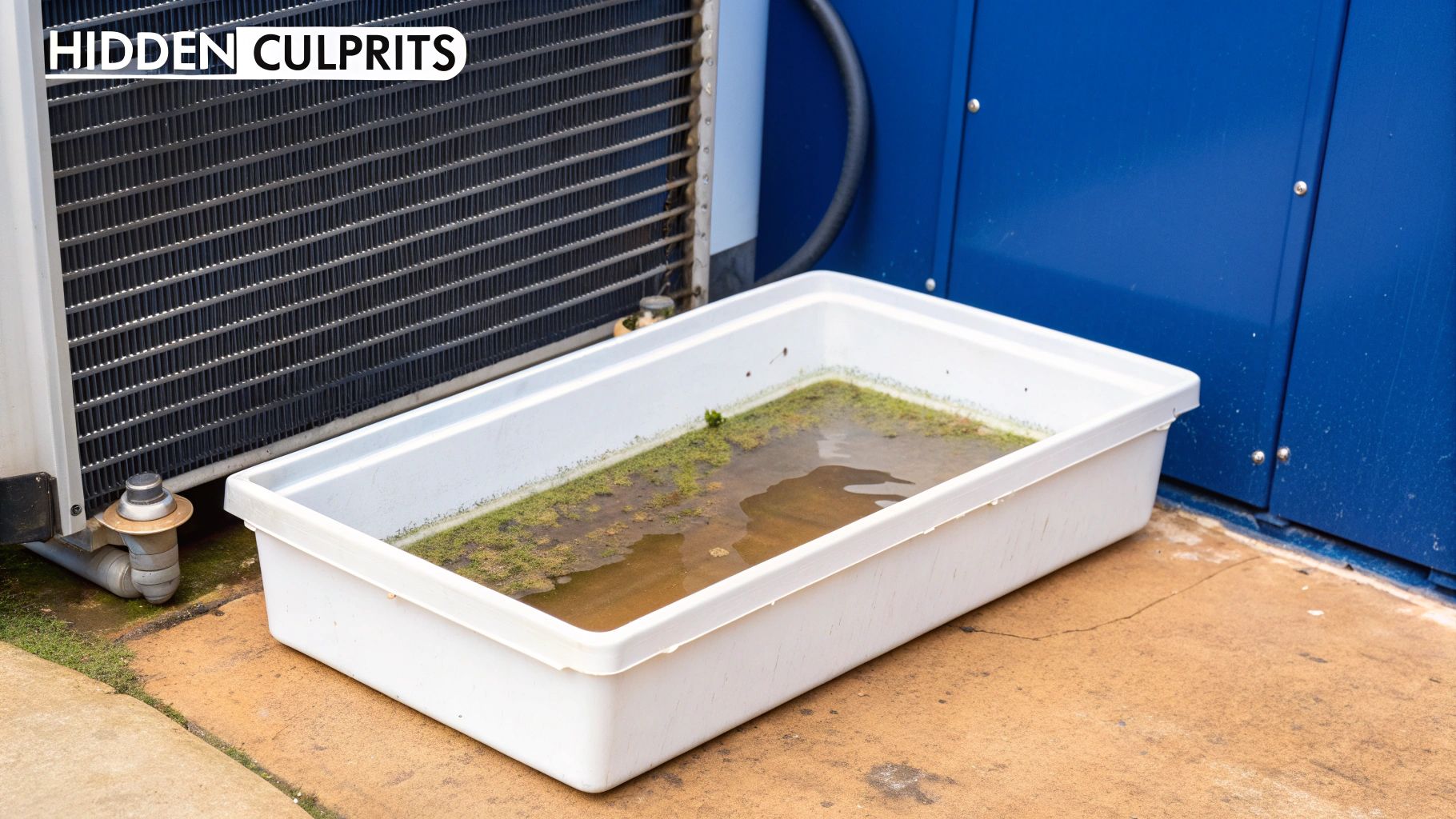
To get to the bottom of that musty smell, you need to understand where it comes from. It’s almost always a combination of three simple things: darkness, moisture, and a food source like dust. When these ingredients meet inside your air conditioner, you’ve got the perfect recipe for mould.
Nine times out of ten, the main offender is the condensate drain line. This little pipe has a big job: to safely carry away all the water that condenses on the cold indoor coils. But when it gets clogged with dust, algae, and other gunk, that water has nowhere to go. It backs up, filling the drain pan and creating a stagnant pool of water inside your unit, an ideal breeding ground for mould and bacteria.
From Blocked Drains to Dirty Coils
Picture a home in Lake Macquarie during summer. The air con is running flat out, pulling heaps of moisture from the humid air. Then a cool spell hits, and the unit sits unused for a couple of weeks. The sludge in the drain line hardens into a stubborn blockage. The next time you turn it on, water immediately backs up, and the mould growth cycle kicks off.
The evaporator coil is another major source of the smell. These delicate metal fins get ice-cold to cool the air, which means they are constantly wet when the system is running. Dust, pet dander, and other airborne particles floating around your home stick to this damp surface, providing an all-you-can-eat buffet for mould spores. When the fan blows air over these contaminated coils, it picks up that musty odour and spreads it right through your room.
The Critical Role of the Air Filter
Finally, you can't overlook a dirty air filter. Its entire purpose is to trap dust, pollen, and mould spores before they can get to the evaporator coil. When the filter gets clogged, it chokes the system and restricts airflow. This can cause the coil to get too cold and actually freeze over.
When the unit cycles off, all that ice melts at once, creating a sudden flood of water that can easily overwhelm the drain pan and make any existing blockage even worse. On top of that, a dirty, damp filter becomes its own little mould colony, so every bit of air that passes through it picks up that signature musty smell.
Regularly cleaning your filter is one of the simplest and most vital maintenance steps you can take. We cover how to do this in our guide to servicing a split system air conditioner.
Your Safe DIY Guide to Cleaning a Smelly AC Unit
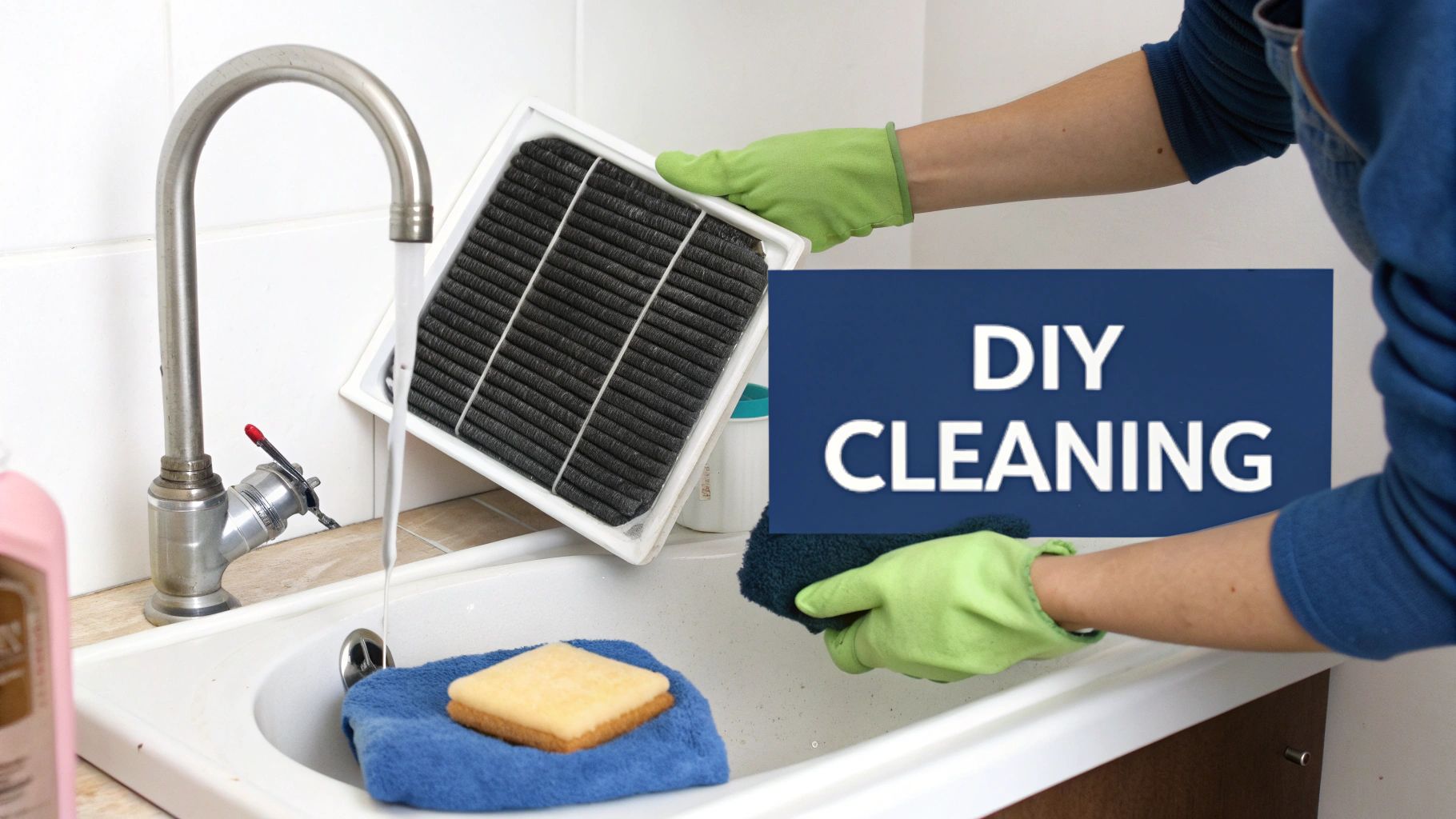
If you're ready to get hands-on and tackle that musty smell yourself, a little bit of basic maintenance can often make a massive difference. For most split systems, cleaning the filters and checking the drain pan are simple jobs you can safely handle. But let's be crystal clear: your safety is the absolute top priority here.
Before you even think about touching the unit, you must cut the power. We don't just mean hitting the 'off' button on your remote. You need to go to your home's switchboard and flick the circuit breaker for the air conditioner to the "off" position. This is a non-negotiable step to prevent any risk of electric shock.
Cleaning Your Split System's Air Filters
The first and easiest place to start is with the filters on your indoor unit. Manufacturers design these for easy homeowner access, and they are your first line of defence against dust and mould spores getting into the system. Gently unclip and lift the front panel of the indoor unit. Inside, you'll see one or two mesh filters that should slide or unclip without much effort.
Carefully take them out, trying not to shake dust all over your room in the process. Your best bet is to take them straight outside or to a laundry sink for cleaning. Using lukewarm water and a tiny bit of mild soap, give the filters a gentle wash. A soft brush can help with any stubborn grime, but don't scrub too hard as you could easily damage the fine mesh.
Once they look clean, rinse them thoroughly and let them air dry completely. Never, ever put wet filters back into your air conditioner. This will just create the perfect damp environment for new mould to grow, bringing that musty smell right back.
Inspecting the Condensate Drain Pan
While your filters are drying, you can do a quick visual check of the area behind them. Look for the shallow tray at the bottom of the unit; this is the condensate drain pan. It’s designed to catch water before it flows out through the drain line.
If you spot any standing water or a slimy buildup in the pan, that’s a dead giveaway you’ve got a blockage somewhere. You can carefully wipe the pan clean with a damp cloth. Be extremely gentle and avoid using any harsh chemicals or abrasive cleaners. They can damage the unit's components or release nasty fumes the next time you turn it on.
Important Safety Note: Do not spray water or any cleaning products directly onto the metal fins of the evaporator coil or any visible electrical components. This can cause serious damage, create a dangerous electrical hazard, and will likely void your warranty.
These simple steps are often enough to get rid of a mild musty smell that has only recently appeared. For a more detailed walkthrough of what you can safely do and when to stop, our DIY split system maintenance guide is a great resource. If cleaning the filters and pan doesn't fix the problem, or if you can see significant mould growth deep inside the unit, it’s time to put the tools down and call a professional.
The Health Risks of a Musty Air Conditioner in Your Home

That musty smell drifting from your air conditioner is more than just an annoying odour. Think of it as a warning sign. It’s a clear signal that your system is likely circulating mould spores, bacteria, and other unwanted contaminants through your home, taking a direct hit at your family’s indoor air quality.
When you ignore it, you’re essentially agreeing to breathe in those microscopic particles every single time the air con kicks in. For many people, this constant exposure can trigger a whole host of persistent health issues, from sneezing and coughing to itchy eyes, headaches, and a general feeling of fatigue you just can’t shake.
Who Is Most at Risk?
This poor air quality is particularly bad news for the most vulnerable members of your household. Children, the elderly, and anyone with existing respiratory conditions like asthma or allergies are far more sensitive to the effects of airborne mould.
Imagine a family in a Sydney apartment, already navigating urban air pollutants. If their air conditioner starts smelling musty, it could be the hidden reason their child’s asthma seems to flare up more often inside, or why their own hay fever feels worse at home than it does outdoors. The very appliance that should be providing comfort suddenly becomes the main source of irritation.
An air conditioner circulating mould spores can turn your home from a safe haven into a source of chronic respiratory irritation. Promptly addressing a musty smell is not just about comfort; it's a critical step in protecting your family's health and wellbeing.
Understanding Dirty Sock Syndrome
In some situations, the smell is particularly foul, often described as being like a pair of old, dirty socks. This unpleasant phenomenon actually has a name: "Dirty Sock Syndrome." It's caused by a nasty build-up of bacteria and fungi growing on the unit’s damp evaporator coils.
We see this problem quite a bit, especially in split systems that haven't had their annual professional service. As our technicians on the Central Coast can tell you, the warm, dark, and moist environment inside an indoor unit is a perfect breeding ground for this bacteria. More often than not, a neglected, clogged filter is the main culprit. You can find more insights on this and other common air con smells on benairconditioning.com.au.
At the end of the day, that odour is your home's way of telling you that the air you're breathing simply isn't clean. Getting to the root of the problem is essential, not just to kill the smell, but to ensure your indoor air is healthy and safe for everyone under your roof.
When You Should Call a Professional AC Technician
Giving your filters a good clean is a fantastic first step, but it's crucial to know where the DIY job ends and a professional's work begins. That stubborn musty smell is often a sign of a deeper issue, one that needs a licensed technician with the right tools and training to sort out safely.
Trying to go deeper yourself isn't just potentially ineffective; it can be downright dangerous. The reality is, any work that goes beyond cleaning those easily accessible filters steps into territory that legally requires a licensed technician. This isn't just about bureaucracy, it's about strict Australian safety regulations designed to protect you.
Signs It's Time for Expert Help
So, you've cleaned the filters, put everything back together, and fired up the AC… but that damp, musty smell is still there. This is the clearest sign that the problem lies deeper within the unit, in places you simply can't (and shouldn't) reach. Most likely, mould has taken hold on the evaporator coils or deep inside the condensate drain line.
Another major red flag is any sign of water leaking or dripping from the indoor unit. This almost always points to a significant blockage in the condensate line which needs to be professionally flushed out. Ignoring this can quickly lead to water damage on your walls, floors, and furniture.
Crucial Safety Warning: Any work involving the internal components of your air conditioner carries a serious risk of electric shock. Under Australian Standards like AS/NZS 3000, only a licensed and qualified technician is permitted to access and work on these parts. It's a non-negotiable safety rule.
What a Professional Service Involves
When you call in an expert from ALC Air, you're getting far more than a surface clean. Our technicians are ARCtick certified, which means they are licensed to handle refrigerants and carry out comprehensive, technical work on your system.
A professional service to eliminate a musty smell involves a deep, hygienic clean of the entire indoor unit. We safely access and clean the evaporator coil, the barrel fan, and all the other internal components where mould and bacteria love to hide. We use specialised tools and cleaning solutions to flush the entire condensate drain line, removing any stubborn blockages and preventing future water backups.
Imagine your split system in a Newcastle apartment just won't stop smelling funky, no matter how often you clean the filters. A professional service will dismantle the necessary components to get to the source, removing the built-up biofilm and mould colonies that are causing the odour. This restores healthy air quality and ensures your system runs efficiently.
If the problem is more complex than just a dirty coil, our technicians have the diagnostic tools to find and fix the root cause. You can learn more about what might be going on in our guide to common air conditioner repairs. Don’t risk your safety, your system’s warranty, or your home's air quality. If the basic clean doesn't work, it’s time to call in the professionals.
Common Questions About Musty Air Conditioners
We get a lot of calls from homeowners across the Central Coast and Sydney about funny smells coming from their air conditioners. It's a common problem, so we've put together some quick, clear answers to the questions we hear most often.
How Often Should I Clean My Air Conditioner Filters?
For most homes, we recommend cleaning your split system filters every one to two months, especially during the heavy-use seasons like summer and winter. However, if you have pets that shed, live near a busy road, or are in a particularly dusty part of the Hunter Valley, you’ll probably need to check and clean them monthly. A clean filter is your first line of defence against a smelly air conditioner.
Can I Use Bleach to Clean My Air Conditioner?
We strongly advise against using bleach or other harsh household chemicals to clean any part of your air conditioner. While it might seem like a good idea to kill mould, these chemicals can cause serious, expensive damage. Bleach can corrode the delicate aluminium fins on the evaporator coil and can release harmful fumes into your home. It’s far safer to use a gentle, pH-neutral cleaning solution designed for air conditioners.
Why Does My AC Only Smell When I First Turn It On?
This is a classic sign of moisture-related mould and mildew growth. When your air conditioner is off, any residual moisture sitting on the coils or in the drain pan has time to stagnate in the dark, warm interior of the unit. When you switch the unit on, the fan’s initial blast of air pushes all those stale, musty particles out into your room at once. That's why you get that strong initial odour. If you'd like to understand more, we explain in detail why your air conditioner smells in another guide.
Is a Professional Air Conditioning Service Expensive?
While there is a cost involved, it’s best to think of a professional service as an investment in your home’s health and your system's longevity. Preventative maintenance is almost always more affordable than dealing with major repairs that arise from neglect. A comprehensive service not only eliminates the source of the musty smell but also improves energy efficiency and can prevent costly breakdowns down the track.
If that musty smell just won’t go away, it’s time to call in the experts. The team at ALC Air has the tools and experience to safely and thoroughly clean your system, restoring fresh, healthy air to your home.
Get a free quote online to schedule your professional AC service.