


When you flick on the air con on a humid Central Coast afternoon, you’re expecting a wave of cool, fresh air, not that unmistakable musty odour. If you’re getting a whiff of something that smells like old, damp socks, that’s a direct warning sign: mould and bacteria are likely growing inside your unit. It’s a classic problem when dust, darkness, and trapped moisture create the perfect breeding ground for fungal growth.
Why That Musty Smell Is More Than Just an Unpleasant Odour
That distinct, earthy smell coming from your air conditioner is more than just a minor annoyance; it’s a symptom of an underlying problem. The odour itself comes from microbial volatile organic compounds (MVOCs), which are gases released by growing mould and mildew. When your air conditioner runs, it circulates these compounds right through your home, damaging your indoor air quality.
This issue is especially common in the humid coastal climates we deal with in Newcastle, Lake Macquarie, and Sydney. The constant moisture in the air provides the ideal environment for mould to thrive inside the dark, damp components of an air con system. Imagine a split system in a Terrigal home that’s constantly battling sea breezes and high humidity. It's a prime candidate for moisture build up if it's not properly maintained.
The Connection Between Moisture and Mildew
Every air conditioner, whether it's a ducted system cooling a large Hunter Valley property or a single split system in a Sydney apartment, is designed to pull moisture from the air as part of the cooling process. This condensation collects and is supposed to drain away harmlessly.
But when something disrupts this process, problems begin. We see this all the time. Here’s a quick guide to what’s usually going on inside your unit when you smell that musty odour.
Common Causes of Mildew Smells in Your Air Conditioner
A clogged drain line is a frequent offender. If water can't escape, it backs up inside the unit, creating a swampy environment where mould can flourish. You should turn off the air conditioner and check the drain line outside for any visible blockages.
Dirty evaporator coils are another major cause. Dust and grime mix with condensation on the coils, creating a food source for mould. This requires a professional clean, as the coils are delicate and easily damaged.
A filthy air filter can also be the culprit. When the filter is clogged, it chokes the airflow, causing the coils to ice up and create excess moisture when the ice melts. Check your filter immediately; if it's grey and clogged, clean or replace it right away.
For those with a ducted system, damp ductwork could be the problem. A leak or condensation issue within the ducts in your roof space requires a professional inspection to find and fix the source of the moisture.
Understanding the cause isn't just about getting rid of a bad odour. It's about recognising a potential health concern and a clear signal that your system is losing efficiency and needs attention. Learn more about different AC smells in our related article to better diagnose what's happening with your system.
Where Does the Mildew Smell Come From?
To get that musty smell out of your air conditioner for good, you first have to play detective and figure out where it’s coming from. Your air conditioner is essentially a small ecosystem where moisture, dust, and darkness create the perfect breeding ground for mould and mildew.
When your air conditioner smells like mildew, the culprit is almost always one of four key spots. Knowing what they are will help you pinpoint the problem, whether you're staring at a split system in your Central Coast home or managing a ducted system in a Newcastle office.
The Evaporator Coils
This is the part of your indoor unit that actually gets cold. As warm, humid air from your room flows over these chilly fins, moisture condenses on them, just like water droplets forming on a cold glass on a summer day. This is how your air conditioner cools the air and pulls humidity out of it.
The problem is, dust, pet dander, and other airborne gunk also get pulled in and stick to these damp coils. This creates a grimy, organic film that becomes a five star buffet for mould. Before you know it, that build up starts pumping out that familiar musty smell every time the fan kicks on.
The Condensate Drain Line and Pan
All that moisture collected by the coils has to go somewhere. It drips into a collection tray (the condensate pan) and flows out of your home through a small drain line. In humid places like Lake Macquarie, this system works overtime, draining litres of water on a hot day.
But if this drain line gets clogged with sludge, algae, or debris, the water can't escape. It backs up into the pan, creating a stagnant pool of water right inside your air conditioner. This is a prime location for mildew and bacteria to thrive, turning your air conditioner into a source of nasty smells.
Did you know that in Australia's coastal NSW hubs like the Central Coast, Sydney, Newcastle, and Lake Macquarie, mouldy air con smells from mildew can affect residential split systems during peak humidity seasons? This is often driven by clogged drains and poor ventilation. To effectively address the problem, it's helpful to recognise the critical signs of hidden mold, as a musty smell often points to unseen growth.
The Air Filter
Your air conditioner’s filter is its first line of defence, designed to trap dust, pollen, and other pollutants before they get inside the unit. When a filter gets completely clogged, it chokes the airflow, forcing the evaporator coils to work much harder.
This strain can cause the coils to get too cold and even freeze over. When that ice eventually melts, it creates a sudden rush of water that the drain system can’t handle, leading to overflows and damp conditions that are perfect for mildew. If you have a ducted system, knowing how to properly maintain your ducted air conditioner filter is one of the most important things you can do to prevent this.
The Blower Wheel
Finally, you have the blower wheel, which is just a fancy name for the fan that pushes the cool air back out into your room. Because it sits right behind the damp evaporator coils, it’s constantly being sprayed with moisture and any grime that slipped past the filter.
Over time, each of the fan blades can get coated in a layer of sticky, smelly mould. As the wheel spins, it picks up these odours and blasts them directly into your home, infusing the air with that distinct mildew smell.
A Practical DIY Guide to Cleaning Your Air Conditioner
Before you pick up the phone to call a technician, there are a few safe and effective things you can do yourself to tackle that musty, mildewy smell. This is a practical guide for any homeowner who wants to do a basic inspection and clean.
Safety is always priority number one, so before you touch anything, head to your switchboard and turn off the power to your air conditioner. Make sure it's completely off.
Once the power is safely disconnected, you can get started. Most of the time, that unpleasant smell is coming from simple, easy to reach places, and a little bit of attention is all it takes to solve the problem.
Start With The Air Filters
The easiest and most common fix is cleaning the air filters. They're your system's first line of defence, and they get dirty fast.
In a split system, you'll usually find the filters just under the front cover of the indoor unit. For a ducted system, the return air grille is typically on the ceiling or a wall in a central spot like a hallway.
Gently remove the filters. If they're caked in a thick, grey layer of dust and lint, you’ve almost certainly found a major contributor to the odour. Use a vacuum with a soft brush attachment to get the loose gunk off, then give them a wash with lukewarm water and a bit of mild soap. Let them air dry completely before you even think about putting them back in.
This flow chart shows the typical journey of moisture and debris through your system, highlighting the key problem areas.
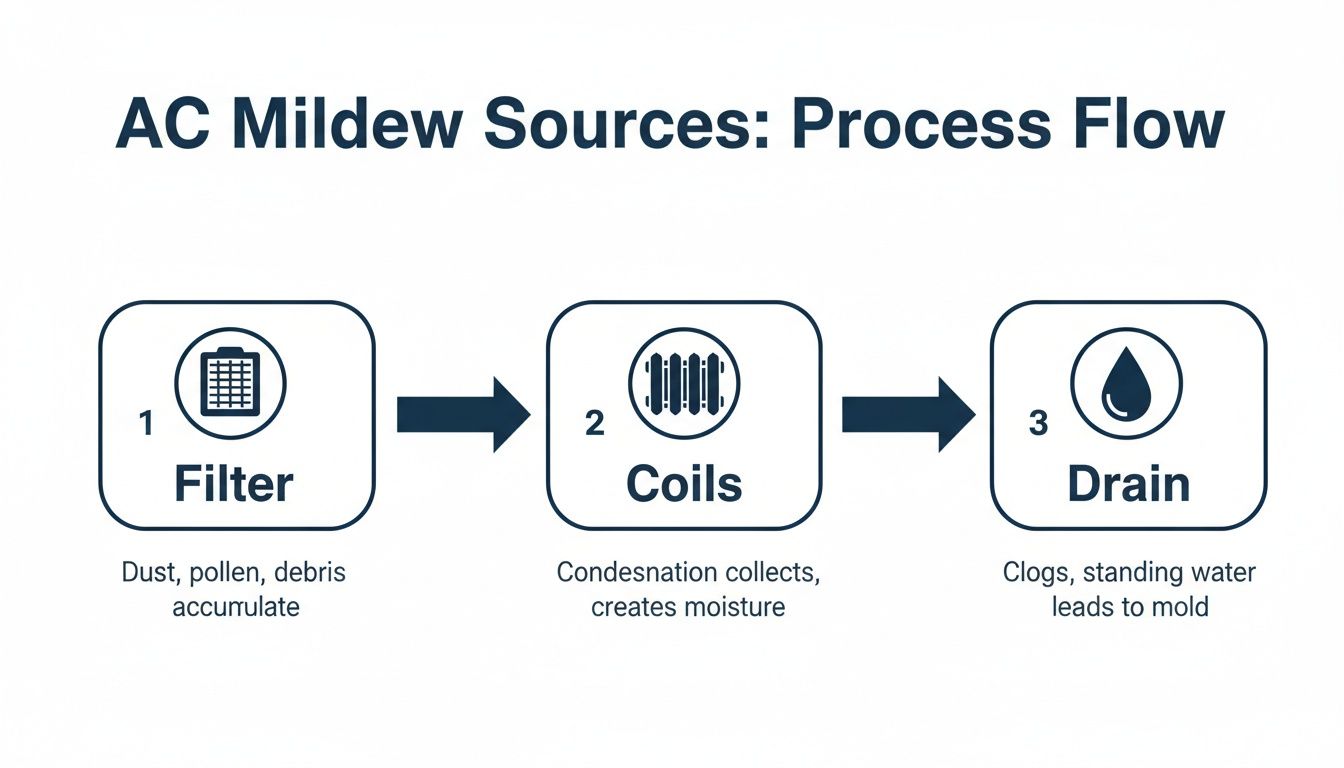
As you can see, the filter is meant to catch everything. But once it’s clogged, the coils and drain line become the next prime real estate for mould.
Inspecting Other Visible Components
With the filters out, take a look at what else you can safely see and reach. You can gently wipe down the louvres (the plastic fins that direct airflow) and the surrounding plastic casing with a damp cloth. A simple solution of mild soap and water is all you need.
Important Note: Avoid using harsh chemicals, bleach, or any abrasive cleaners on your air conditioner. These products can easily damage the delicate aluminium fins on the evaporator coils, corrode plastic parts, and leave behind fumes that you’ll be breathing in later.
If you can see the condensate pan, check it out. On a split system, this is a small tray at the bottom of the indoor unit. If you see standing water in there, it’s a dead giveaway that your drain line is blocked, a very common reason your air conditioner smells like mildew.
Across our key service areas, from the Central Coast to Lake Macquarie, musty smells often start with neglected filters that trap moisture. This issue often peaks right after winter when systems have been sitting idle, creating the perfect environment for mould to take hold.
If cleaning the filters and visible surfaces doesn't sort out the smell, the problem likely lies deeper within the unit. Our detailed guide on split system air con cleaning provides more in-depth steps for those who are comfortable with a more thorough clean. However, for issues like a properly blocked drain line or filthy evaporator coils, it's time to call in a professional.
Knowing When to Call a Licensed AC Technician
While cleaning your filters and wiping down the grilles are great first steps, there's a clear line between what you can safely handle and what really needs a professional. If you’ve done the basic cleaning and that stubborn musty smell is still hanging around, it’s a strong sign the problem is deeper inside the system.
That lingering mildew smell after you've already cleaned the filters is a huge red flag. It almost always means mould has taken hold on components you can't easily see or reach, like the evaporator coils or the internal blower fan. Trying to clean these parts yourself without the right gear and know how can easily turn a small issue into a big, expensive one.
For example, the evaporator coils are made of incredibly delicate aluminium fins that can be bent or crushed with very little pressure. Damaging them restricts airflow, kills your system's efficiency, and drives up your power bills. Even worse, using the wrong cleaning products, like a harsh household chemical, can corrode these sensitive parts, leading to costly air conditioning repairs or even refrigerant leaks.
The Risks of a Deeper DIY Clean
Going too far with a DIY clean isn't just about potentially wrecking your unit. You could also be blasting concentrated mould spores into your home without proper protective gear, which is a genuine health risk.
More importantly, any work that involves the electrical components or the refrigerant gas is not only dangerous but is also illegal for an unlicensed person to perform in Australia.
When the smell just won't go away, it’s time to call in someone with the right qualifications. This is the only way to ensure the job is done safely and correctly, protecting both your air conditioner and your family’s health.
Why an ARCtick Licence Is Non-Negotiable
When you hire a technician in Australia to work on your air conditioner, they must hold a Refrigerant Handling Licence from the Australian Refrigeration Council (ARCtick). This isn't just a friendly suggestion; it's the law under the Ozone Protection and Synthetic Greenhouse Gas Management Regulations 1995.
This screenshot from the official ARCtick website shows the different types of licences available.
This licence is your proof that the technician is qualified to handle refrigerant gases safely, protecting you, your property, and the environment. Hiring an unlicensed person puts you at risk of incorrect repairs, property damage, and voided warranties.
Always ask to see a technician's ARCtick licence before they start any work. It's your guarantee of a professional and compliant service.
How to Prevent That Mildew Smell From Coming Back
Getting rid of that musty odour is a great first step, but the real victory is making sure it never comes back. Preventing mildew is all about proactively managing moisture. You don't have to wait until your air conditioner smells like mildew again to take action.
One of the easiest habits you can get into is using your system's 'Fan Only' mode. After you've been running the cooling hard on a hot, humid day in the Hunter Valley, just switch the unit to run the fan for about 30 minutes. This simple trick circulates air across the damp internal components, helping to dry out the evaporator coils and condensate pan before mould gets a chance to settle in.
Just like the importance of drying wet areas quickly to prevent mould elsewhere in your home, tackling moisture inside your air conditioner is the key to stopping that mildew smell for good.
The Value of Routine Professional Servicing
While your own checks are vital, nothing replaces a thorough, professional service. In the constantly humid climates of coastal Sydney and the Central Coast, an annual check up isn't a luxury, it's essential for keeping your system healthy and efficient.
A professional service is about much more than a quick clean. A licensed technician conducts a comprehensive inspection that addresses the root causes of moisture and mildew, ensuring your system runs optimally all year round.
Think of it as a proper tune up for one of your home's most important appliances. An expert can deep clean the internal coils, flush the entire condensate drain line to remove hidden sludge, and inspect electrical connections to ensure everything is operating safely and in line with Australian Standards like AS/NZS 3000.
What an Annual Maintenance Plan Includes
A proper service goes way beyond what a homeowner can safely access. Our technicians have the right tools and training to perform a deep, hygienic clean that gets right to the source of potential odours.
A typical professional maintenance visit from us includes:
- Deep Coil and Fan Cleaning: We use specialised, non-corrosive cleaning solutions to eliminate built up grime and mould from the evaporator coils and blower wheel.
- Drain Line Flush: We power flush the condensate line to clear out stubborn blockages that could cause water to back up into the unit.
- Refrigerant Level Check: An ARCtick licensed technician will ensure your system has the correct amount of refrigerant for peak efficiency.
- Electrical and Safety Inspection: We check all electrical terminals and components for wear and tear to prevent future breakdowns and ensure safety.
Investing in regular air conditioning maintenance is the single best way to make sure that mildew smell never becomes a problem again. It keeps your air fresh, your system efficient, and your running costs down.
Common Questions About AC Smells
Over the years, we've heard just about every question there is when it comes to funny smells coming from an air conditioner. Here are a few of the most common ones we get from homeowners across the Central Coast, Sydney, and Newcastle, with some straightforward answers.
How Often Should I Clean My AC Filters?
This is the big one. For a typical home, giving the filters a check once a month is a great habit to get into.
During a scorching summer in the Hunter Valley or a humid spell on the Coast, you'll want to clean or replace them every 30 to 45 days. If you’ve got pets shedding hair or you live near a busy road in Sydney, you’ll find they get dirty even faster, so more frequent checks are a good idea.
Think of a clean filter as the first line of defence. It’s the single best thing you can do to stop dust and other gunk from getting to the damp, dark coils where mould loves to set up camp.
Is a Funny Smell Normal for a New Air Conditioner?
Sometimes, yes. A brand new unit can give off a slight plastic or chemical smell for the first few hours it runs. That’s usually just the manufacturing oils and materials burning off, and it should clear up pretty quickly.
But a new air conditioner should never smell musty or like mildew. If you get that specific damp smell from a fresh install, it’s a red flag. It could point to an issue with the condensate drain right from the get go, so it's best to call your installer and have them check it immediately.
Can That Mildew Smell From My AC Actually Make Me Sick?
In short, yes. That musty odour is your nose telling you there's mould and bacteria growing in the system. When you turn the air con on, it blows those microscopic spores all through your home.
For a lot of people, this can trigger allergies, asthma flare ups, headaches, and other respiratory problems. It’s more than just an unpleasant smell; it’s a genuine air quality issue that you really should sort out sooner rather than later.
It's tempting to just spray some air freshener and hope for the best, but that does absolutely nothing to fix the source of the problem. It’s like putting a nice rug over a leaky pipe. You've hidden the evidence, but the damage is still happening underneath. The only real fix is to find and get rid of the moisture that's letting the mould grow in the first place.
Why Does the Smell Seem Strongest When I First Turn the AC On?
This is a classic sign of moisture build up. When your system is switched off, any leftover moisture just sits there on the coils and in the drain pan, creating the perfect dark, damp breeding ground for mould.
The moment you turn the unit on, the fan kicks into gear and blasts that concentrated, stagnant air into your room all at once. That's why you get that initial hit of musty smell. It often seems to fade as the system runs because the airflow starts to dry things out, but the colony of mould is still there, waiting for the next time you turn it off.
If that musty odour is a recurring problem, it's a clear sign your system needs a professional deep clean. Contact ALC Air today for a free, no-obligation quote and let our licensed technicians get your home smelling fresh and healthy again.