


That weird smell wafting from your air conditioner isn't just unpleasant—it's your system trying to tell you something. Think of that musty, vinegary, or even burning odour as a smoke signal. These smells are often the first sign of an underlying issue, from mould growth and bacterial contamination to dangerous electrical faults that need immediate attention.
What That Air Conditioner Smell Is Telling You
When you flick on your air con, whether it's a split system in your Gosford living room or a ducted unit cooling a two-storey home in Newcastle, you expect fresh, cool air. The last thing you want is a strange odour filling the room. This isn't something you can just ignore or cover up with an air freshener. That smell is a symptom of a problem that could be hammering your system's efficiency and, more importantly, your family's health.
For anyone living on the Central Coast, Newcastle, or Sydney, our humid coastal climate creates the perfect storm for some of these issues. The mix of moisture, dust, and organic bits and pieces pulled into your unit can quickly become a five-star resort for mould and bacteria. These unwelcome guests are usually the culprits behind that classic musty or "dirty socks" smell.
Identifying the Problem Quickly
Figuring out the likely cause behind a specific smell helps you decide what to do next. A musty odour might just mean you're overdue for a filter clean, but a sharp, acrid smell could be signalling a much more serious electrical problem that needs to be dealt with straight away. Ignoring these warnings can lead to bigger damage and more expensive air conditioning repairs down the track.
To help you get a quick read on the situation, we've put together a simple diagnostic table. It connects the most common smells with their likely causes and gives you a sense of how urgently you need to act. Think of it as the first step to protecting both your air conditioner and your home's air quality.
Common Air Conditioner Smells and Their Likely Causes
| Smell | Most Likely Cause | Urgency Level |
|---|---|---|
| Musty or Mouldy | Mould or mildew growth on the evaporator coils or in the drain pan. | Medium. Needs cleaning soon to protect air quality. |
| Vinegar or Chemical | An electrical fault, motor overheating, or a problem with a component. | High. Turn the unit off immediately and call a technician. |
| Burning Plastic/Rubber | A malfunctioning fan motor or wiring issue. A serious fire hazard. | CRITICAL. Shut off power at the circuit breaker and call for emergency service. |
| "Dirty Socks" | Bacteria buildup on the evaporator coils. Common in humid climates. | Medium. Requires a professional deep clean to sanitise the unit. |
| Rotten Eggs | A decomposing animal (like a mouse or lizard) in the ductwork or unit. | Medium. Unpleasant but not dangerous. Needs removal and cleaning. |
| Gas or Skunk-like | A natural gas leak somewhere in your home being pulled into the AC intake. | CRITICAL. Evacuate the house, don't use any electronics, and call your gas supplier from outside. |
This table is a great starting point, but remember it's a guide. If you're ever in doubt, especially with burning or chemical smells, the safest move is always to turn off the power and call in the professionals.
Decoding The Most Common Air Conditioner Odours
Now that you know a strange smell from your air con is a warning sign, let's put on our detective hats and figure out what your system is trying to tell you. Different smells point to different problems, and knowing how to identify them helps you understand how urgently you need to act. Some are simple fixes, while others demand immediate professional attention to keep your home and family safe.
The scent you notice can tell us a lot about what's going on inside the unit’s hidden parts. It’s a bit like how a good mechanic can diagnose a car issue just by listening to the engine. We can often pinpoint an air conditioner problem by its smell.
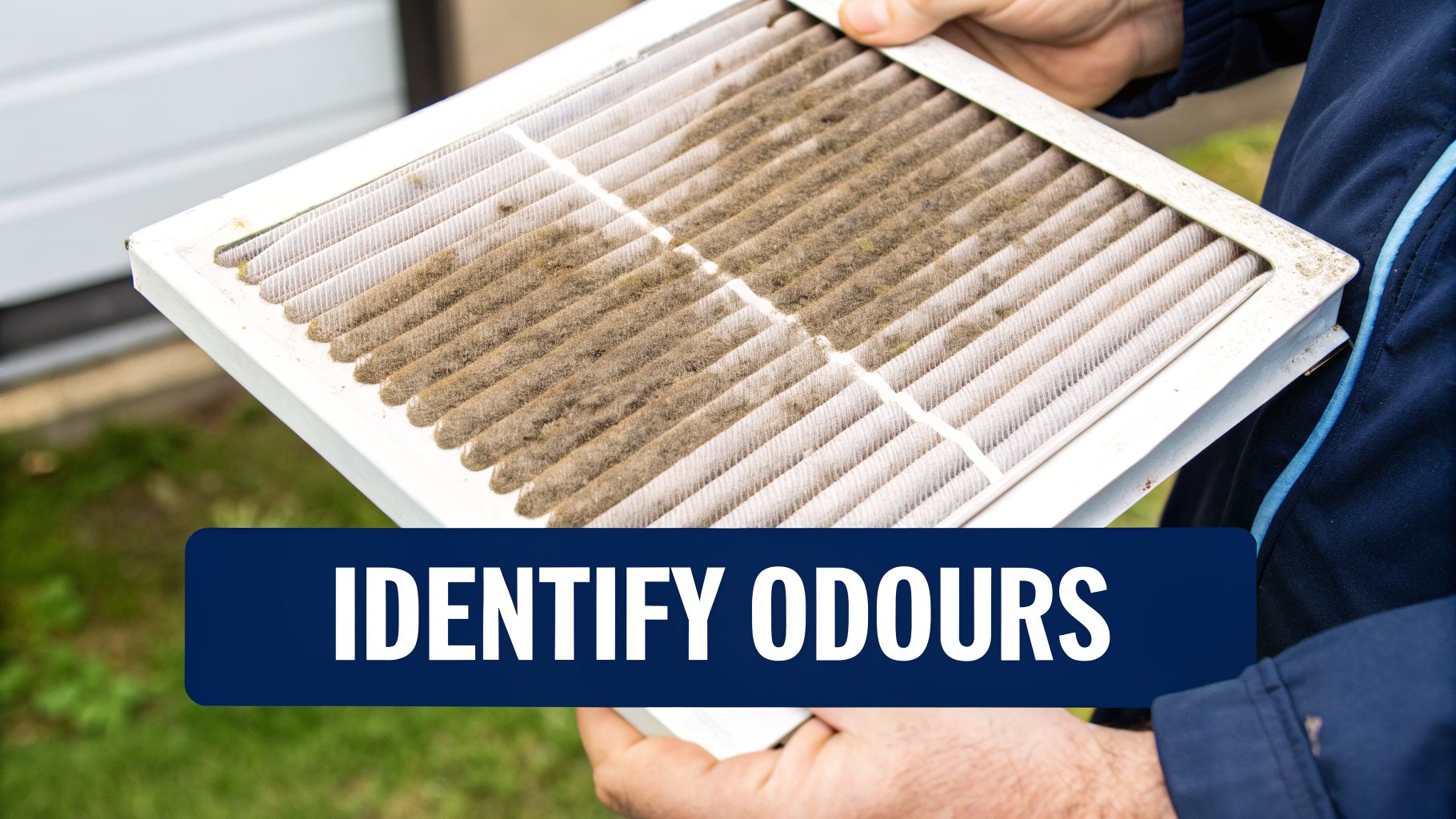
The Musty or Mouldy Smell
This is, without a doubt, the most common complaint we get from homeowners, especially in the humid coastal climates of the Central Coast and Newcastle. That classic "damp cellar" smell is a dead giveaway for mould or mildew. Inside your split system, the evaporator coil is a dark, damp place that gets wet with condensation as part of the normal cooling process. If that moisture doesn't drain away properly, the coil becomes a perfect breeding ground for mould. A detailed breakdown of what causes a musty smell in your house can offer some wider context on this common issue.
When you think about it, it’s no surprise this is such a frequent problem. A blocked condensate drain or just high indoor humidity can quickly lead to moisture building up inside the unit, creating the ideal environment for mould and mildew to take hold.
The Sour Vinegar Smell
If you're hit with a sharp, sour, or vinegar-like smell, your attention should turn straight to the condensate drain line. As your air conditioner pulls humidity from the air, it collects water in a drain pan, which then flows outside through a small pipe. If this line gets clogged up with sludge or algae, the water backs up and becomes stagnant. That standing water is what produces the distinctly sour odour. In some cases, it can also be a sign of an electrical issue, so it's not a smell you should ignore.
The Burning or Gunpowder Smell
This is the one you absolutely must take seriously. An odour like burning plastic, rubber, or gunpowder almost always points to an electrical fault. It could be anything from an overheating fan motor and failing wiring to a problem with the circuit board. These are not issues you can troubleshoot yourself, as they pose a significant fire risk.
Safety First: If you detect any kind of burning smell from your air conditioner, turn the unit off immediately at both the remote and the main switchboard. Do not turn it back on. Call a licensed technician with an ARCtick certification right away.
"Dirty Socks Syndrome"
It sounds strange, but it’s a real and recognised issue in the HVAC world. If your room suddenly smells like a locker room when you turn the air con on, you're likely experiencing "Dirty Socks Syndrome." This is caused by specific types of bacteria building up on the wet evaporator coil. When you switch your reverse cycle system from cooling to heating mode, the coil warms up and essentially 'cooks' the bacteria, releasing that foul odour. While it’s not dangerous, it’s extremely unpleasant and requires a professional deep clean to get rid of the bacteria colony for good. To get a better handle on the components involved, you might find our guide on how an air conditioner works useful.
Rotten Eggs or a Gas Smell
While less common, this is another critical warning. Your air conditioner itself doesn't use gas, so a rotten egg or sulphuric smell usually indicates a natural gas leak somewhere else in your home. The air conditioner's return air vent is simply pulling in the leaking gas and circulating it through your house, making the smell much more obvious. If you suspect a gas leak, your priority is to get everyone out of the property, avoid using any electronics (including light switches), and call your gas supplier's emergency number from a safe distance outside.
Pinpointing Where The Smell Is Coming From
Alright, now that you can tell the difference between a "dirty socks" smell and something more sinister, it’s time to play detective. The next step is figuring out exactly where that smell is coming from.
Think of your air con as having a few key areas where trouble usually starts. By knowing where to look, you can get a much better idea of what's happening inside your unit, whether it's a split system on your wall or a ducted system cooling your whole home. This little bit of investigation helps you know if you're dealing with a simple fix you can tackle yourself or a job that needs a professional.
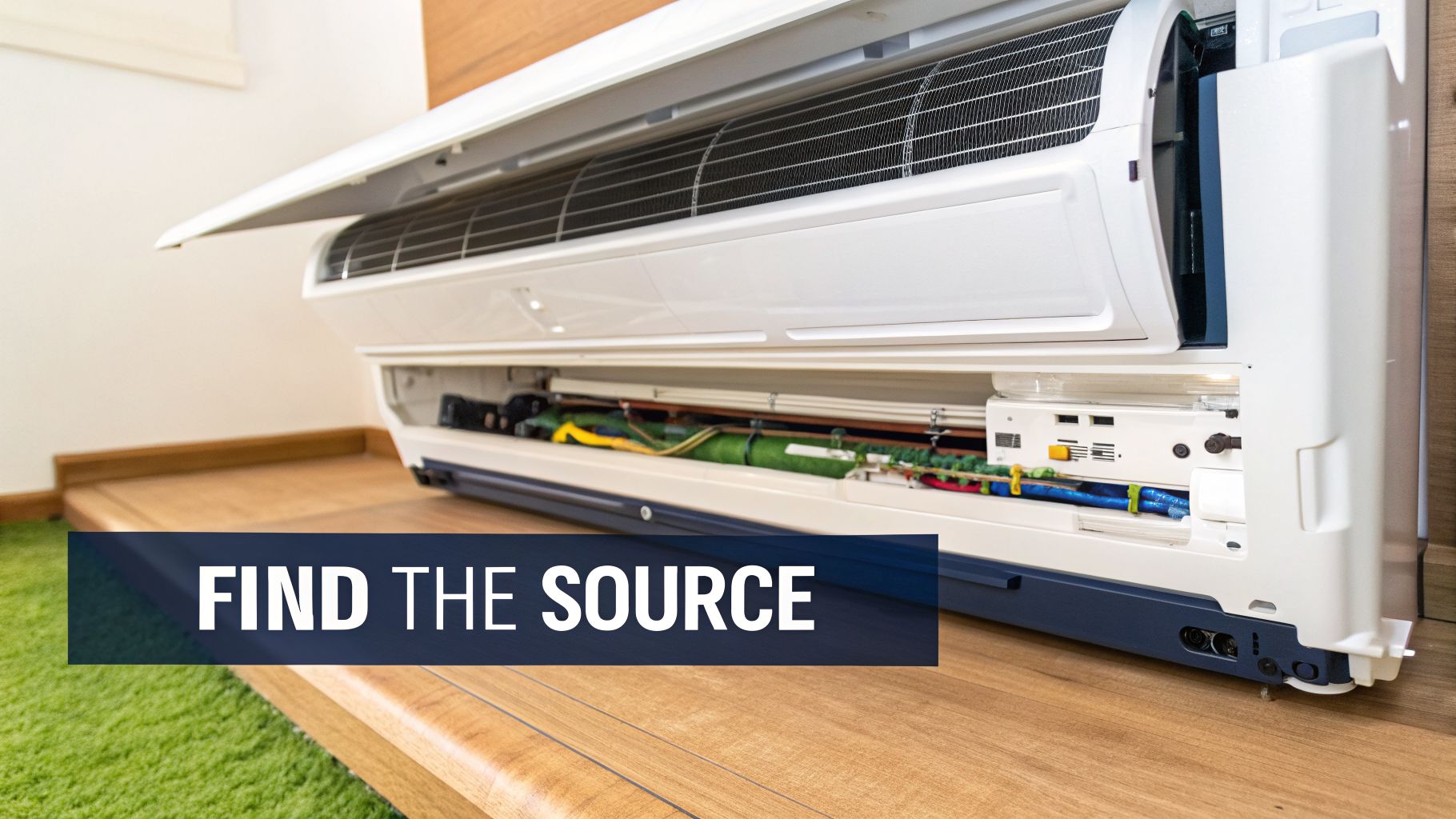
The Indoor Unit Filters And Evaporator Coil
More often than not, the source of a smelly air conditioner is right there in the indoor unit you see on your wall. This unit houses two critical parts that are ground zero for odours: the filters and the evaporator coil.
Your system’s filters are its first line of defence, like the lungs of your air conditioner. They’re designed to trap dust, pet dander, pollen, and all sorts of other airborne gunk. When these filters get clogged, they don't just restrict airflow; they become a stinking collection point for organic matter, especially when mixed with a bit of moisture.
Tucked away behind the filters is the evaporator coil. This is the part that actually cools the air, and as it does, condensation forms on it. This dark, damp, and cool environment is the perfect breeding ground for mould and bacteria, which leads directly to that musty, "dirty socks" air conditioner smell. If you've cleaned your filters and the smell is still there, the coil is the next likely suspect.
The Condensate Drain Line And Pan
Every air conditioner pulls humidity out of the air, creating water. This water collects in a drain pan and is supposed to flow outside through a small pipe called the condensate drain line. Think of it like the drain in your kitchen sink. If it gets blocked, you’re going to have problems.
Over time, this drain line can get clogged with sludge, algae, and grime. When that happens, water backs up into the drain pan and just sits there, becoming stagnant. This standing water is a prime source for musty, sour, and even vinegary smells. In a worst-case scenario, an overflowing drain pan can cause some serious water damage to your walls and ceilings.
A Quick Visual Check: You can often spot the end of the condensate drain pipe outside your home, usually near the outdoor unit. If you never see it dripping on a hot, humid day when the air con is running, it could be a sign that the line is blocked.
Ducted System Ductwork
For homeowners with a ducted air conditioning system, there’s another big area to consider: the whole network of ducts snaking through your ceiling or under your floor. While ducted systems are fantastic for whole-home cooling, the ductwork itself can become a source of odours if it’s not properly sealed and maintained.
Picture this: you've just had a new ducted system installed in your Hunter Valley home, but now the whole house smells a bit dusty or musty. Leaks in the return air ducts can actually suck in stale, dusty air from your ceiling cavity and circulate it right through your home.
In some unlucky cases, small pests or animals can find their way into the ductwork and perish, creating a truly potent rotten egg smell. If the smell is consistent in every room with a vent, there’s a good chance the issue lies somewhere in the ductwork itself. For a deeper look at keeping your unit clean, our guide on split system air con cleaning has some handy tips.
How Smells Impact Your Home's Air Quality
That strange smell from your air conditioner isn't just a minor nuisance; it's a warning sign about the air quality inside your home. Think of your air conditioner as the lungs of your house, pushing air into every single room. When it's contaminated, it's basically broadcasting mould spores, bacteria, and other irritants directly into the air you and your family breathe.
This can turn your home from a safe haven into a source of health issues. Fixing the smell isn't just about comfort, it's about protecting the wellbeing of everyone living there. Every time you switch the system on, those microscopic particles get pushed into your living spaces, settling on surfaces and getting inhaled. For many people, this is a serious health concern.
How A Smelly Unit Affects Your Family's Health
The main culprits behind that musty air con smell, mould and bacteria, are well-known triggers for a whole host of health problems. This is especially true for the most vulnerable members of your family: young children, the elderly, and anyone with existing respiratory conditions like asthma or allergies.
When someone is exposed to airborne mould, it can lead to a range of unpleasant symptoms. You might notice an increase in coughing, sneezing, or persistent headaches. Other common reactions include irritated eyes, a runny nose, or even skin rashes. For those with asthma, inhaling mould spores can trigger more frequent and severe attacks, making it hard to breathe comfortably in their own home.
When you ignore a musty air conditioner smell, you're not just putting up with an odour. You are allowing a potential source of allergens and pathogens to continuously operate, compromising the indoor air quality that is so vital for good health.
The Science Behind The Smell And Sickness
It's not just the mould you can see that poses a risk. Bacteria can also thrive in the damp, dark environment of an air conditioner's coils and drain pan. Think about it: we shed dead skin cells constantly, and these get sucked into your air conditioning unit. Bacteria then feed on these cells and produce ammonium compounds, which can create a distinct urine-like smell. As you can discover in this detailed explanation of air conditioner contaminants, this process is a major contributor to poor indoor air quality.
Health authorities consistently warn about the dangers of contaminated indoor air. The Australian Centre for Disease Control identifies that children, elderly individuals, and people with compromised immune systems face the greatest risks. The problem often develops quietly. You might notice a musty smell long before you see any drop in your unit's cooling performance, meaning the contamination can get worse and worse until the health impacts become obvious.
Don't Wait For Symptoms To Appear
The humid climates across the Central Coast and Sydney make local homes particularly susceptible to this kind of microbial growth in air conditioning systems. This isn't a problem that will fix itself. In fact, the longer you leave it, the more widespread the contamination becomes and the greater the potential health risks.
Taking proactive steps is crucial. If you notice a persistent smell, it's a clear signal that your system needs attention. Making sure your unit is clean isn't just about maintenance; it’s a fundamental part of keeping a healthy home environment. Our comprehensive guide on how to clean your air con offers practical advice for keeping your system fresh and safe. Don't wait until your family starts feeling unwell to deal with that strange air conditioner smell.
Your Action Plan For A Fresher Smelling Home
Alright, so you’ve noticed a strange smell coming from your air conditioner. Knowing what to do next is key. Some issues are simple enough for a confident homeowner to sort out, while others genuinely need the skills of a licensed professional to handle safely and legally. This plan will help you figure out which is which.
Your first step should always be the safest and easiest one. You’d be surprised how often a basic clean-up solves the problem. But it’s crucial to know your limits. Air conditioners have electrical components and pressurised refrigerants that can be dangerous if you don’t know what you’re doing.
This decision tree gives you a quick visual guide for when a smell might signal a health risk, helping you decide on your next move.
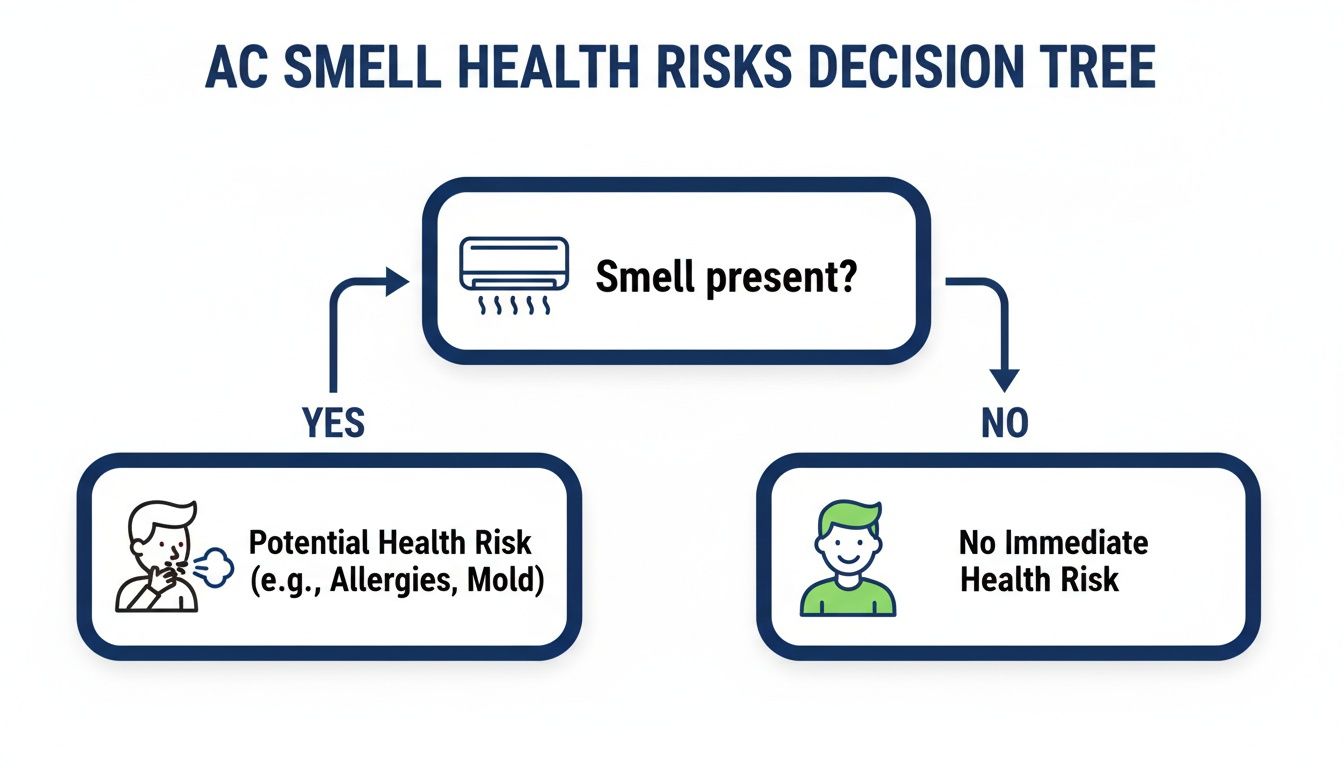
The main takeaway here is pretty simple: any persistent, weird smell from your air con should be treated as a potential concern until you’ve figured out what’s causing it and sorted it out for good.
Try This First: Your DIY Checklist
Before you pick up the phone, there are a few safe and simple checks you can do yourself. These steps tackle the most common causes of funky smells and don’t require any special tools or technical know-how.
1. Power Down for Safety: Before you even think about touching the unit, turn it off with the remote. To be completely safe, flick the corresponding switch off at your home's main circuit breaker. This guarantees there’s no power running to the unit while you’re inspecting it.
2. Inspect and Clean the Filters: Pop open the front panel of your indoor unit. The filters are usually right there at the front and just unclip. If they’re clogged with a thick layer of dust and lint, you’ve likely found the source of your smelly air conditioner. You can give them a gentle vacuum or wash them with lukewarm water and a bit of mild soap. Just make sure they are completely dry before you put them back in. A damp filter is an open invitation for mould.
3. Check the Outdoor Unit: Wander outside and take a look at the outdoor compressor. Is it getting swamped by overgrown weeds, leaves, or other garden debris? This can choke the airflow and create a damp, shady spot where mould and mildew love to grow. Clear everything away from the unit, giving it at least 30cm of clear space on all sides.
These simple tasks are often all it takes to get rid of a mild, musty odour. For more general tips, you can find some great advice on how to get rid of home odors for good.
Call A Pro Immediately If…
While a quick DIY check is a great starting point, some smells are red flags that demand professional help right away. Trying to fix these yourself isn’t just dangerous; it can breach Australian Standards and void your system’s warranty.
You need to contact a licensed and insured technician if you notice any of these signs:
- You smell burning plastic, rubber, or something like gunpowder. This is a critical safety warning. It points to an electrical fault or an overheating motor. Shut the system down at the circuit breaker immediately and don’t turn it back on.
- The smell hangs around after you've cleaned the filters. If cleaning didn't help or the odour came back quickly, the problem is deeper inside the system. It is probably on the evaporator coils or in the drain line where you can't easily reach.
- You hear loud or unusual noises. Any grinding, banging, or screeching sounds paired with a smell often mean a serious mechanical failure is underway.
- Your system isn't cooling or heating properly. When performance drops and a strange smell appears at the same time, it suggests a bigger problem, like a refrigerant leak or a major part failing.
Important: Any work involving the unit's main casing, electrical wiring, or refrigerant lines must be done by a technician with an ARCtick license and an electrical license. This is a legal requirement under SafeWork NSW regulations and ensures the job complies with AS/NZS 3000 standards.
A qualified technician has the specialised tools and expertise to safely access and clean internal components like the evaporator coil and properly flush the condensate drain line. For a closer look at what professional care involves, our guide on air conditioning service and maintenance breaks down what a comprehensive service should cover.
Common Questions About Air Conditioner Smells
Once you've put a name to that funny smell and have a rough idea of what’s causing it, you probably still have a few questions running through your mind. That’s perfectly normal. We hear the same queries from homeowners all across the Central Coast and Sydney, so we’ve put the most common ones together to give you some clear, straightforward answers.
Think of this as your quick-fire guide for those nagging concerns. Getting your head around these details will help you feel more confident about managing your system and knowing exactly when it's time to call in the professionals.
How Often Should I Clean My Air Conditioner Filters To Prevent Smells?
To stop that first whiff of a musty air conditioner smell from ever starting, you should be checking and cleaning your filters every 1 to 2 months. This is non-negotiable during peak summer and winter when your reverse cycle system is putting in the hard yards.
If you live in a new, dusty estate in the Hunter Valley or have a furry family member leaving hair around your Lake Macquarie home, you might need to check them even more often, maybe every few weeks. A clean filter is your number one line of defence against bad odours.
Is A Slight Smell Normal When I First Turn On My Air Conditioner?
It’s pretty common to get a slightly dusty or stale smell for a few minutes when you fire up your air con after it’s been sitting dormant for a while. Usually, this is just dust that has settled on the internal parts burning off, especially on the heating elements when you switch it on in winter.
That said, this smell should be gone within 10 to 15 minutes. If the odour is potent, distinctly mouldy, or hangs around long after the unit has been running, that’s a red flag. It’s a clear sign of an underlying moisture or microbial growth problem that needs a proper look.
Can A Professional Service Completely Remove A Bad Aircon Smell?
Absolutely. In almost every case, a professional service can completely get rid of a bad air conditioner smell. A technician's deep clean goes leagues beyond what you can do with a quick filter wash, using the right tools and specialised cleaning solutions to do the job safely and properly.
A licensed technician will give the indoor evaporator coils a thorough clean, flush out the entire condensate drain line to remove sludge, and treat the unit with solutions that kill mould and bacteria at the source. This isn't just masking the smell; it's removing the cause, which restores your system’s performance and massively improves your home’s indoor air quality.
Will Running The Fan Only Mode Get Rid Of The Smell?
While it might seem like a good idea to just "air it out," running the fan by itself won't solve the real problem. If the odour is coming from mould or bacteria thriving on the damp coils, all the fan will do is blast those contaminated spores and particles all through your room.
It might dilute the smell for a little while, but it does nothing to fix the root cause. To truly get rid of the problem, the source of the moisture and the microbial growth has to be professionally cleaned and sanitised. Anything less is just a band-aid solution that won't protect your air quality.
If you're tired of that persistent air conditioner smell and want a lasting solution, the team at ALC Air is here to help. We specialise in comprehensive system cleaning and servicing across the Central Coast, Sydney, and Newcastle. Get a free quote today and let our licensed technicians restore fresh, clean air to your home.