


You wouldn't drive your car for years without a service, right? Think of air con maintenance the same way. It’s a non-negotiable part of owning a cooling system, involving a series of checks and cleaning tasks that keep your unit running efficiently, safely, and reliably.
Especially during those scorching summer heatwaves we get across New South Wales, neglecting your air con is a surefire way to face higher energy bills and unexpected, frustrating breakdowns. We're here to walk you through why it's so important and what you can do to keep things running smoothly.
Why Consistent Air Con Maintenance Is Crucial
Imagine your air conditioner is an athlete. When it's clean and well-maintained, it performs at its peak without wasting energy. Simple, right?
But when its filters and coils get clogged with dust and grime, it’s like asking that athlete to run a marathon while breathing through a straw. The system has to work so much harder to achieve the same cooling result, leading to wasted electricity and increased wear and tear on vital components.

Save Money on Power Bills
A clean, efficient air conditioner simply uses less power. In NSW, where air con is found in about 60% of homes, regular maintenance is one of the smartest ways you can manage summer energy costs.
It’s forecast that Australians will spend a staggering $3.1 billion on air con running costs this summer alone. The good news? Households that commit to annual servicing can cut their heating and cooling energy use by up to 50%. That can mean saving hundreds on your power bills. You can explore more about these energy consumption trends and see exactly how maintenance makes such a big difference.
Extend Your Unit’s Lifespan
Proactive care stops small issues from snowballing into major, expensive failures. A blocked drain, for example, can quickly lead to water damage inside your home, while an overworked compressor can fail prematurely, which is a very costly repair.
Regular professional checks, especially in the humid coastal climates of the Central Coast or Newcastle, catch these problems early. This ensures your split system or ducted unit lasts for its intended lifespan, protecting your investment for years to come.
Improve Your Indoor Air Quality
Your air conditioner doesn't just cool the air; it also filters it. When that filter is dirty, it ends up recirculating dust, pollen, pet dander, and other allergens throughout your home.
For anyone with asthma or allergies, this can be a serious health concern. Regular cleaning and professional servicing ensure the air your family breathes is as clean and healthy as possible.
Your Essential DIY Air Con Maintenance Checklist
While a proper, deep-clean service needs a licensed professional, there are a few simple things you can (and should) do yourself to keep your air con running smoothly. This isn’t about pulling the unit apart or tackling complex repairs. Think of it as preventative care. It’s the kind of quick check-up that boosts efficiency, improves your air quality, and helps you catch small problems before they become expensive breakdowns.
First things first, and this is non-negotiable: before you touch anything, shut off all power to the air conditioning system at your main switchboard. Both the indoor and outdoor units have live electrical parts, and skipping this step is a serious safety risk.
Inspect and Clean Your Indoor Unit Filters
Your indoor unit’s filters are the first line of defence, catching dust, pollen, and all the other gunk floating around in the air. When they get clogged, your system has to work much harder to pull air through, which costs you money and circulates dirty air around your home. For those of us on the Central Coast, the mix of salt and humidity can make filters grimy surprisingly fast.
Cleaning them is easy. Just pop open the front panel of your indoor unit; the filters should slide or clip out without any trouble. A soft brush or a quick once-over with the vacuum will get rid of the loose dust.
For a more thorough clean, wash them in lukewarm water with a bit of mild detergent. The crucial part? Let them dry completely in the shade before you put them back. Never, ever use hot water or stick them in direct sunlight, as it can warp or damage the filter material.
For a more detailed walkthrough, check out our guide on [split system air conditioner maintenance](https://alcairconditioning.com.au/blog/split-system-air- conditioner-maintenance-diy-guide-when-to-call-a-pro/).
Clear the Outdoor Condenser Unit
Your outdoor unit, the condenser, needs to breathe. Its whole job is to push the heat it has pulled from inside your home out into the atmosphere, and it can’t do that efficiently if it’s boxed in. Things like overgrown shrubs, a pile of autumn leaves, or even the garden furniture you’ve pushed up against it can choke the airflow, forcing the compressor to work overtime.
Get into the habit of clearing the area around it. You want to maintain at least 60cm of clear space on all sides. Trim back any plants that are getting too friendly and sweep away leaves and other debris.
While you're there, just give it a quick look over. Do you see any obvious damage? Are you hearing any weird rattling or buzzing noises? Anything that sounds off is a good sign it’s time to call in a professional to take a closer look.
What a Professional Service Really Involves
When you book a professional for air con maintenance, you’re getting far more than just a quick wipe-down. Think of it as a comprehensive health check for your entire system, designed to catch small issues before they become big, expensive problems. It’s a deep dive into the mechanical and electrical heart of your unit, performed by a licensed expert with specialised tools.
Unlike the simple jobs you can do yourself, a professional service is all about prevention and performance. Technicians are trained to spot the subtle signs of wear and tear that an untrained eye would miss. These are the kinds of things that, if left unchecked, could lead to a complete breakdown on a scorching hot day in the middle of summer.
What Technicians Actually Look For
A qualified technician’s first priority is always safety and compliance. They'll start by checking all the electrical connections, terminals, and capacitors to make sure everything is secure and working correctly. This isn’t just a quick look-over. It’s a detailed inspection following the strict guidelines of Australian Standards like AS/NZS 3000, which is critical for preventing electrical faults that could pose a fire risk.
Next up are the indoor and outdoor coils. Dirty evaporator and condenser coils are one of the biggest culprits behind poor performance and high power bills. They force your system to work much harder than it should. A technician uses specialised, non-corrosive cleaning agents to remove built-up grime without damaging the delicate fins, immediately restoring your unit's ability to cool efficiently.
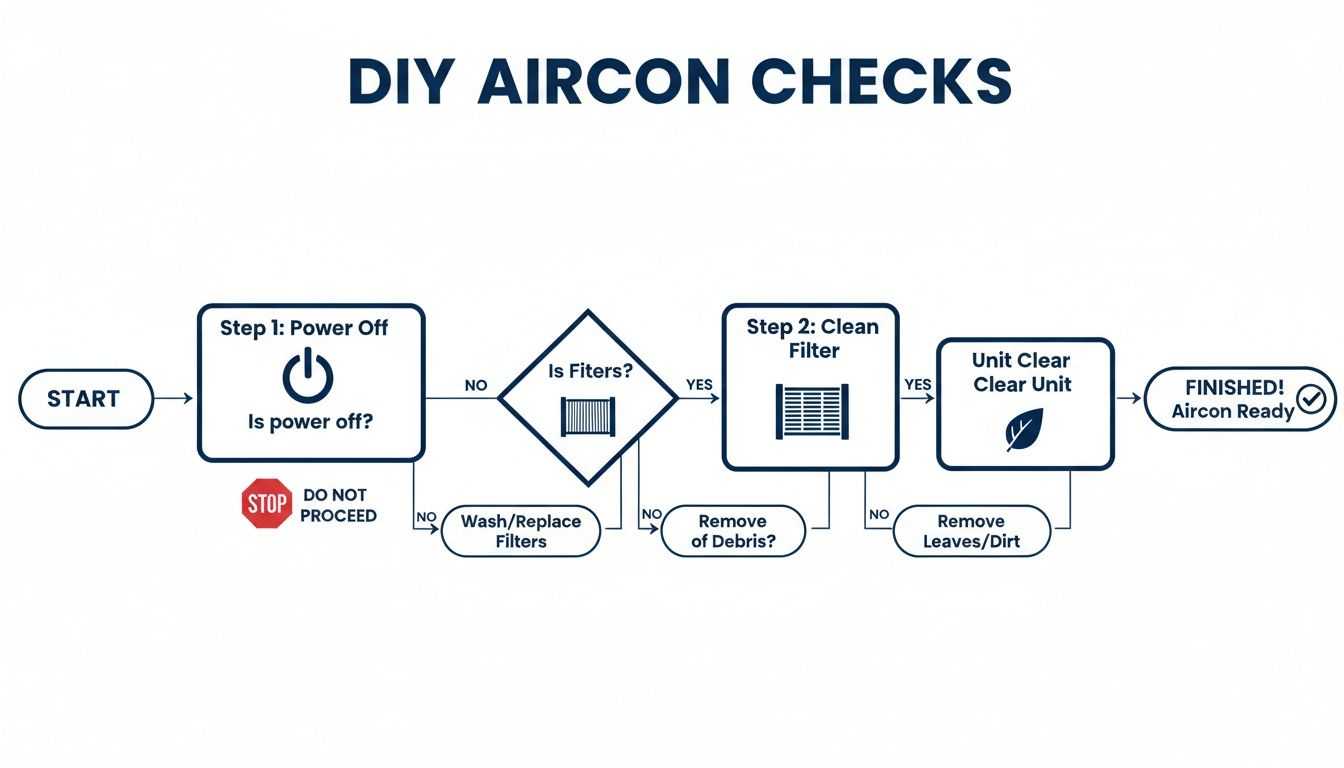
The flowchart below shows the basic DIY checks you can (and should!) do yourself. These are a great first step, but they're just the surface-level tasks that complement the deeper work a technician performs.
Checking Refrigerant and Drainage Systems
One of the most critical parts of any professional service is checking the refrigerant levels. If the gas is low, it’s almost always a sign of a leak somewhere in the system. In Australia, only a technician with an ARCtick license is legally allowed to handle refrigerants, so this is definitely not a DIY job. They’ll test the system's pressure to ensure it’s operating exactly to the manufacturer’s specifications.
Why this matters: Incorrect refrigerant levels don’t just stop your air con from cooling properly. They can cause catastrophic damage to the compressor, which is by far the most expensive component to replace.
The technician will also thoroughly flush the condensate drain line. In humid areas like the Central Coast or Lake Macquarie, these drains are notorious for getting clogged with sludge and mould. A blocked drain causes water to back up and leak inside your home, leading to water damage and unhealthy mould growth. A proper flush keeps the water flowing freely and safely away.
To help clarify what you can tackle versus what needs an expert, here's a simple comparison.
DIY Checks vs Professional Service
| Maintenance Task | DIY Action (Homeowner) | Professional Service (Licensed Technician) |
|---|---|---|
| Filter Cleaning | Clean or replace filters every 1-3 months. | Checks filters and performs a deep clean of internal components. |
| Outdoor Unit | Keep the area clear of debris, leaves, and plants. | Inspects and professionally cleans condenser coils and fins. |
| Thermostat | Test settings and ensure it's communicating correctly. | Calibrates thermostat and tests electrical response. |
| Electricals | N/A – Never attempt electrical work yourself. | Inspects all wiring, capacitors, and connections for safety. |
| Refrigerant | N/A – Illegal to handle without a license. | Checks refrigerant levels and pressures, and inspects for leaks. |
| Drain Line | Visually check for blockages at the outlet. | Flushes the entire condensate drain line to prevent blockages. |
| Coil Cleaning | N/A – Requires specialised tools and chemicals. | Deep cleans both indoor and outdoor coils for efficiency. |
Ultimately, professional air con maintenance is an essential diagnostic and preventative measure. It protects your investment, ensures your family’s safety, and keeps your system running efficiently when you need it most. You can learn more by reading about the full process of servicing a split system air conditioner.
How Often to Service Your Air Conditioner
This is one of the most common questions we get, and the honest answer is that it’s not the same for everyone. The best schedule really depends on how you use your system and where you live, whether that’s a Sydney apartment or a larger family home in the Hunter Valley.
For a typical family home on the Central Coast using their reverse cycle system for both summer cooling and winter warmth, an annual professional service is the gold standard. This yearly check-up is your best insurance policy, making sure your unit is running efficiently and safely before the peak seasons hit. It’s the best way to prevent a sudden breakdown on a 40-degree day when you need it most.
Factors That Influence Service Frequency
Some situations, however, call for a bit more attention. Think about a busy cafe in Newcastle where the air con runs non-stop, or a home in Lake Macquarie with pets shedding hair and dander. In these high-use scenarios, your system is working much harder, and its filters are going to clog up a lot faster.
You might need to shorten the time between services if:
- You have pets or allergy sufferers: More frequent filter cleaning is a must, and a professional check-up every six months can make a massive difference to your indoor air quality.
- You live in a coastal area: Homes in places like Terrigal or Merewether are constantly exposed to salty, humid air. This can speed up corrosion on the outdoor unit’s coils and electrical parts, making an annual inspection critical to prevent it from failing prematurely.
- Your system is getting on in years: Air conditioners over 10 years old will thank you for more regular check-ups. It helps keep them running as efficiently as possible and lets you catch any age-related problems before they become serious.
Commercial vs Residential Schedules
A commercial setting has a completely different set of demands. A retail store in Hornsby or an office in Gosford simply can’t afford to have its air conditioning fail during business hours. For these environments, a tailored preventative maintenance plan, often with checks every six months, is a wise investment to ensure everything keeps running smoothly.
When you’re trying to work out the best schedule, a deeper understanding of predictive vs preventive maintenance can help you figure out the most effective strategy for your specific needs. At the end of the day, a proactive approach always pays off in the long run. For a more detailed breakdown, our guide on how often you should service your air conditioner offers more insights to help you get it just right.
Spotting the Warning Signs Your Air Con Needs a Service
Your air conditioner will almost always give you a few hints that it’s struggling before it gives up completely. Learning to recognise these clues is the key to avoiding a costly, mid-heatwave breakdown.
Think of these signs as your system’s way of asking for help. Catching them early can save you a whole lot of hassle and money down the track.
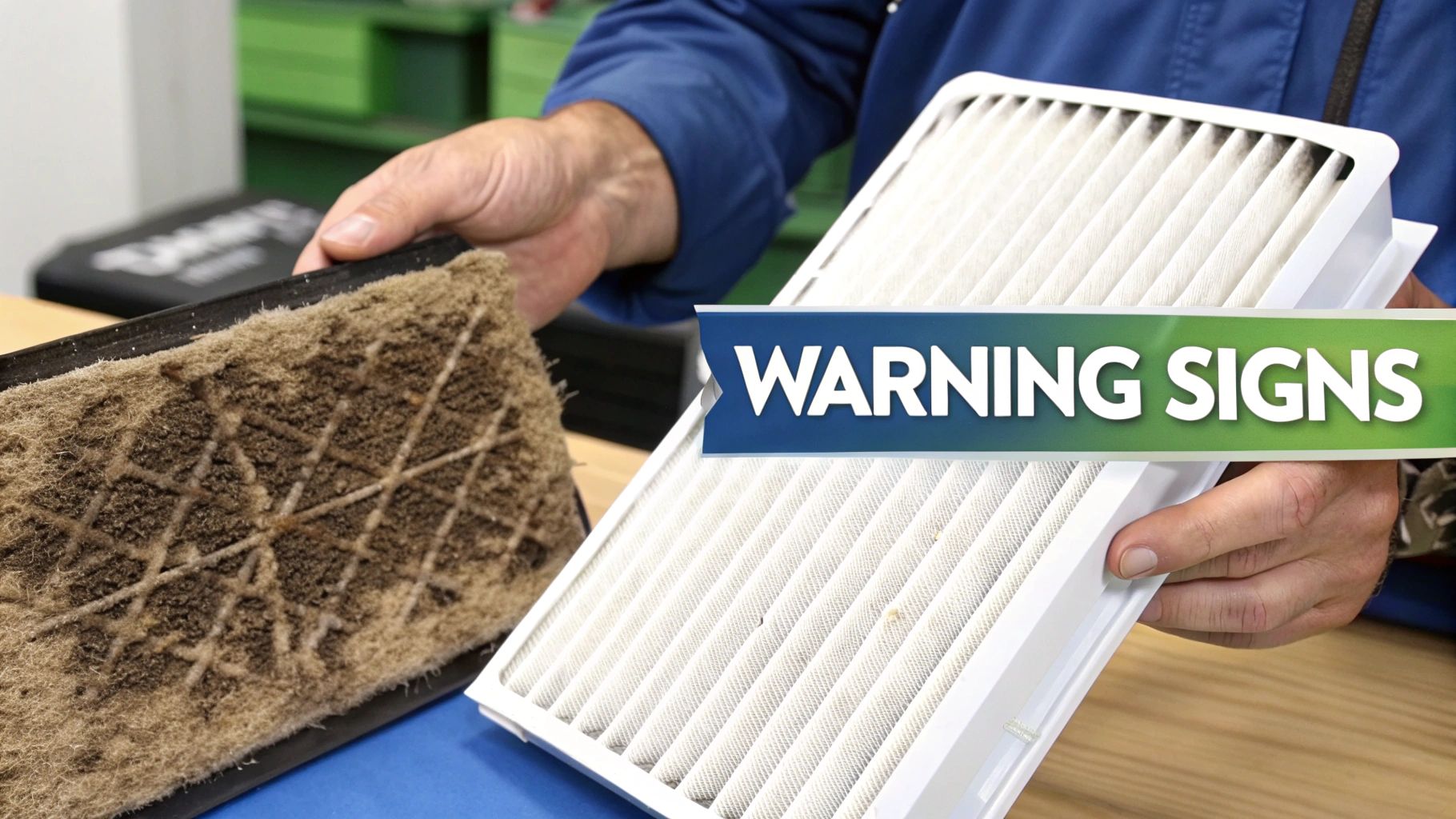
Ignoring the early warnings is a common mistake that catches a lot of people out. Imagine it’s a scorching 35-degree day in Gosford, and your air con is running flat out but the living room still feels stuffy and warm. That’s a classic sign your system is losing its cooling power and needs a professional eye on it.
Unusual Noises and Odours
A healthy air conditioner should operate with a consistent, low hum, the kind of background noise you barely notice. If you start hearing new and unwelcome sounds, it’s time to pay attention.
Grinding, squealing, or rattling noises often point to mechanical problems, like a failing motor bearing or loose parts that need immediate attention before they cause more damage.
Similarly, the air coming from your vents should be completely odourless. A persistent musty or mouldy smell is a major red flag. It usually means there’s moisture building up inside your unit, creating the perfect breeding ground for mould and mildew which then gets blown right into your living space.
Weak Airflow and Poor Cooling
Is the air trickling out of your vents instead of flowing strongly? Weak airflow is one of the most common symptoms of a system in need of air con maintenance. It’s often caused by something as simple as a clogged filter, but it could also signal a more serious issue like a failing fan motor or blocked ductwork.
If your system is blowing air that feels lukewarm or just not as cold as it used to, don't just crank the thermostat down further. This is a tell-tale sign of low refrigerant, which almost always indicates a leak, or that your compressor is struggling. Continuing to run it in this state can cause severe damage. You can read more about what these symptoms might mean in our guide to common air conditioning repairs.
A Sudden Spike in Your Energy Bills
Your power bill is often the first place you'll see hard evidence of a struggling air conditioner. If your usage habits haven't changed but your electricity costs have suddenly shot up, it’s a clear sign your system’s efficiency has plummeted.
It’s working much harder and longer to achieve the same cooling effect, burning through excess energy in the process. Catching these signs early and getting a service ensures you get ahead of major problems before they leave you sweating.
Choosing The Right Air Con Maintenance Professional in NSW
When it comes to getting your air con serviced, not all technicians are created equal. Finding the right one is about more than just getting the job done; it's about protecting your investment and ensuring your family's safety.
With over 7,300 businesses in Australia's Air Conditioning and Heating Services sector, you’ve got a lot of choice. That makes it even more important to know what you’re looking for.
Licensing and Insurance Are Non-Negotiable
Before you let anyone touch your system, there are two credentials that are absolutely essential. Think of them as your non-negotiable safety net.
First, your technician must be a licensed electrician. In NSW, this is a legal requirement for any electrical work on your air conditioner, and you can verify their licence with SafeWork NSW. This isn't just red tape; it protects you from shoddy, dangerous work that could pose a serious fire risk.
Second, they need a valid ARCtick refrigerant handling licence. This is another legal must-have in Australia. It means they are trained to handle refrigerant gases safely and in an environmentally responsible way, which is critical for both your system's health and the planet. On top of that, always ask for proof of their public liability insurance. This protects your property just in case something goes wrong.
Why Local Experience Matters
There's a real advantage to choosing a local company that knows the Central Coast like the back of their hand. A technician with 15+ years of experience working in our area understands things a city-based company might miss.
They know exactly how our humid, salt-laden air attacks different brands of air conditioners. They’ve seen the common problems that crop up in homes from Woy Woy to Warnervale and can get straight to the root of an issue, saving you time and money. This deep local knowledge means your system gets serviced correctly for the unique environmental challenges it faces every single day.
When you're vetting professionals, it’s also a good idea to see if they use modern tools to keep their operations running smoothly, like specialised HVAC business management software, as it often points to a well-organised business.
Before making your final choice, ask a few direct questions. Do they offer upfront, fixed pricing so there are no surprises? What kind of warranty do they provide on their work? Taking a little extra time to find a qualified, experienced, and trustworthy local professional is the single best thing you can do for your air conditioner's long-term health. For a deeper dive into what to look for, check out our guide on finding quality air conditioning service on the Central Coast.
Your Air Con Maintenance Questions, Answered
Over the years, we've heard just about every question there is when it comes to air con maintenance. Here are clear, straightforward answers to the ones we get asked most often.
How Much Does a Professional Air Con Service Cost in NSW?
While the exact cost depends on whether you have a split system, a multi-head setup, or a full ducted system, a professional service is always an affordable investment in your comfort.
Think of it this way: a routine service is always going to be significantly cheaper than an emergency call-out for a major breakdown in the middle of a heatwave. At ALC Air, we believe in transparency, so we provide fixed, upfront quotes. You’ll know the full cost before we even pick up a tool.
Will Servicing My Air Conditioner Void Its Warranty?
It’s actually the other way around. Most major manufacturers, including leading brands like Daikin and Mitsubishi Electric, explicitly state that your warranty is conditional on regular professional maintenance.
Neglecting your system can give them grounds to deny a future warranty claim. Using a fully licensed and insured technician is the best way to protect both your warranty and your investment.
Is Just Cleaning the Filters Myself Enough?
Cleaning your filters regularly is a brilliant and essential DIY task, and we strongly encourage every homeowner to do it. It makes a real difference to airflow and efficiency.
However, it’s not a substitute for a full professional service. A licensed technician does the crucial things you can't, like performing electrical safety checks, deep-cleaning internal coils and drains, and inspecting refrigerant levels. This comprehensive approach is what keeps your entire system running safely and at peak efficiency, saving you money in the long run.
Ready to get your air conditioner running like new again? The experienced, licensed team at ALC Air provides thorough air con maintenance for homes and businesses across the Central Coast, Sydney, and Newcastle.
Contact us today for a free, no-obligation quote and keep your system in top condition for the season ahead.