


Deciding whether to repair or replace your air conditioner can be a tough call, but often, the signs point to a pretty clear answer. If you're facing frequent breakdowns, wincing at unusually high power bills, or dealing with a system that's over 10-15 years old, a full AC system replacement is almost always the most sensible move for your wallet in the long run.
These red flags are your unit’s way of telling you it’s losing the fight against inefficiency and is likely heading towards a complete, and probably inconvenient, failure. Think of it this way: continuing to patch up an old system is like throwing good money after bad. We're here to help you understand when it's time to make a smart, long-term investment in your home's comfort.
Knowing When to Replace Your Air Conditioner
It’s a common dilemma for homeowners from the Central Coast to Sydney: do you fork out for another repair or invest in a completely new system? While a simple fix is sometimes all that’s needed, spending hundreds on an old, clunky unit that's on its last legs is often a costly mistake.
Learning to spot the tell-tale signs that your air conditioner is nearing the end of its life can save you a lot of time, money, and the stress of a mid-summer breakdown. Let's walk you through what to look for, so you can make an informed choice.
Common Warning Signs Your AC is Failing
Your air conditioner will usually give you a few clues that it’s struggling before it gives up completely. One of the most obvious signs is the need for frequent repairs. If you're on a first-name basis with your local technician because they're out more than once a year, the cost of those service calls is quickly adding up. It’s a classic signal that major components are starting to fail one by one.
Strange noises are another big one. A gentle hum is perfectly normal, but sounds like grinding, squealing, or loud banging are clear signs of serious mechanical issues inside. These problems, like a failing motor or worn-out bearings, are often expensive to fix and are a dead giveaway of a system under serious strain.
The Financial Red Flags
Perhaps the most persuasive argument for an AC system replacement shows up in your quarterly electricity bill. If you've noticed your energy costs creeping up every summer, even though your habits haven't changed, it’s a massive signal your old unit is losing its efficiency.
An ageing system has to work much harder and run for longer to achieve the same level of cooling, and it guzzles more power to do it. This simple flowchart helps put the repair vs. replace decision into perspective.
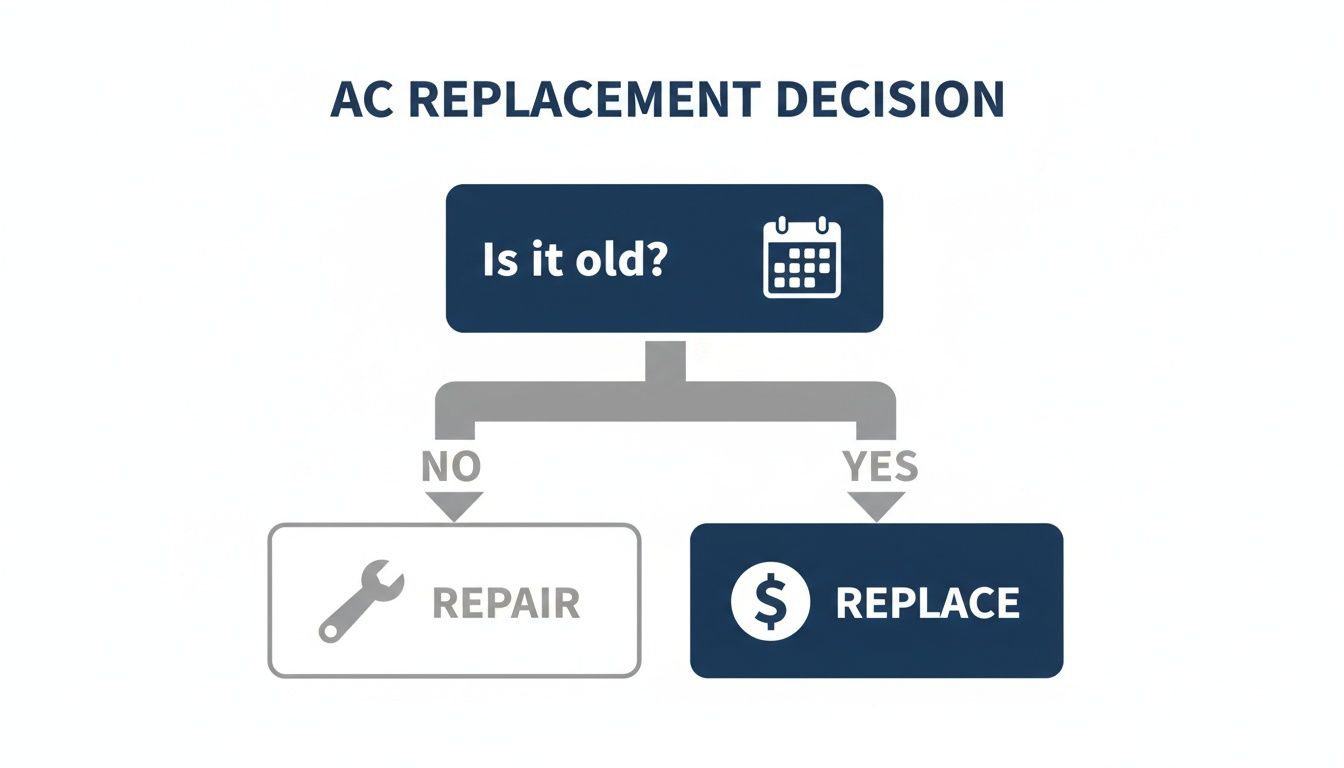
The key takeaway here is that an older system often becomes a money pit. Investing in a new, more efficient unit almost always provides a better return through lower running costs and peace of mind. To make the decision even clearer, let's look at the symptoms.
Repair or Replace Your Air Conditioner: A Quick Guide
Consider this scenario: your air conditioner keeps breaking down. If it's a single, minor issue on a newer unit, a repair makes sense. But if you're calling for service more than once a year on an old system, it's a strong sign of systemic failure where costs will quickly add up.
A sudden, unexplained spike in your energy bills is another major indicator. It means the system's efficiency has dropped off a cliff, and a new unit will start paying for itself in savings from day one. Loud mechanical noises like grinding or squealing signal major component failure, which is often too expensive to justify fixing on an old machine.
Ultimately, the age of the unit is a critical factor. A system under 10 years old that has been well-maintained is often worth repairing. However, once a unit is over 10-15 years old, its lifespan is nearing its end. The technology and efficiency of modern systems have improved so dramatically that replacement becomes the much smarter financial choice.
The 50% Rule for Repairs vs. Replacement
A helpful guideline we use in the industry is the "50% Rule". The rule is simple: if the cost of a repair is more than 50% of the value of a new system, it's more financially sensible to replace it.
For instance, let's say a major repair on your ten-year-old system in Newcastle costs $2,000, but a brand-new, energy-efficient unit would cost $3,500 installed. In this case, replacement is clearly the smarter long-term investment. Sinking that much money into an old unit with no long-term guarantee just doesn't make financial sense.
The typical lifespan of an air conditioner in Australian conditions is around 10 to 15 years. This can be shorter for homes on the Central Coast, where salty coastal air can accelerate corrosion. Conversely, in Sydney's hot western suburbs, units work overtime during heatwaves, leading to faster wear and tear. You can learn more about what impacts durability in our guide on how long air conditioners last. Choosing an AC system replacement before a total failure gives you time to choose the right system for your home without being rushed into a decision on the hottest day of the year.
Choosing the Right Air Conditioning System
Once you’ve decided to replace your old air con, the next big question is: what do you replace it with? Getting this right is about more than just beating the heat; it’s about long-term comfort and efficiency, whether you’re in a sprawling Hunter Valley house or a compact Sydney apartment.
The options can seem a bit technical at first, but it all boils down to a few key system types designed for different homes and lifestyles. Understanding how they work is the first step to making a choice you’ll be happy with for the next 15 years.
Split Systems: The Popular Choice
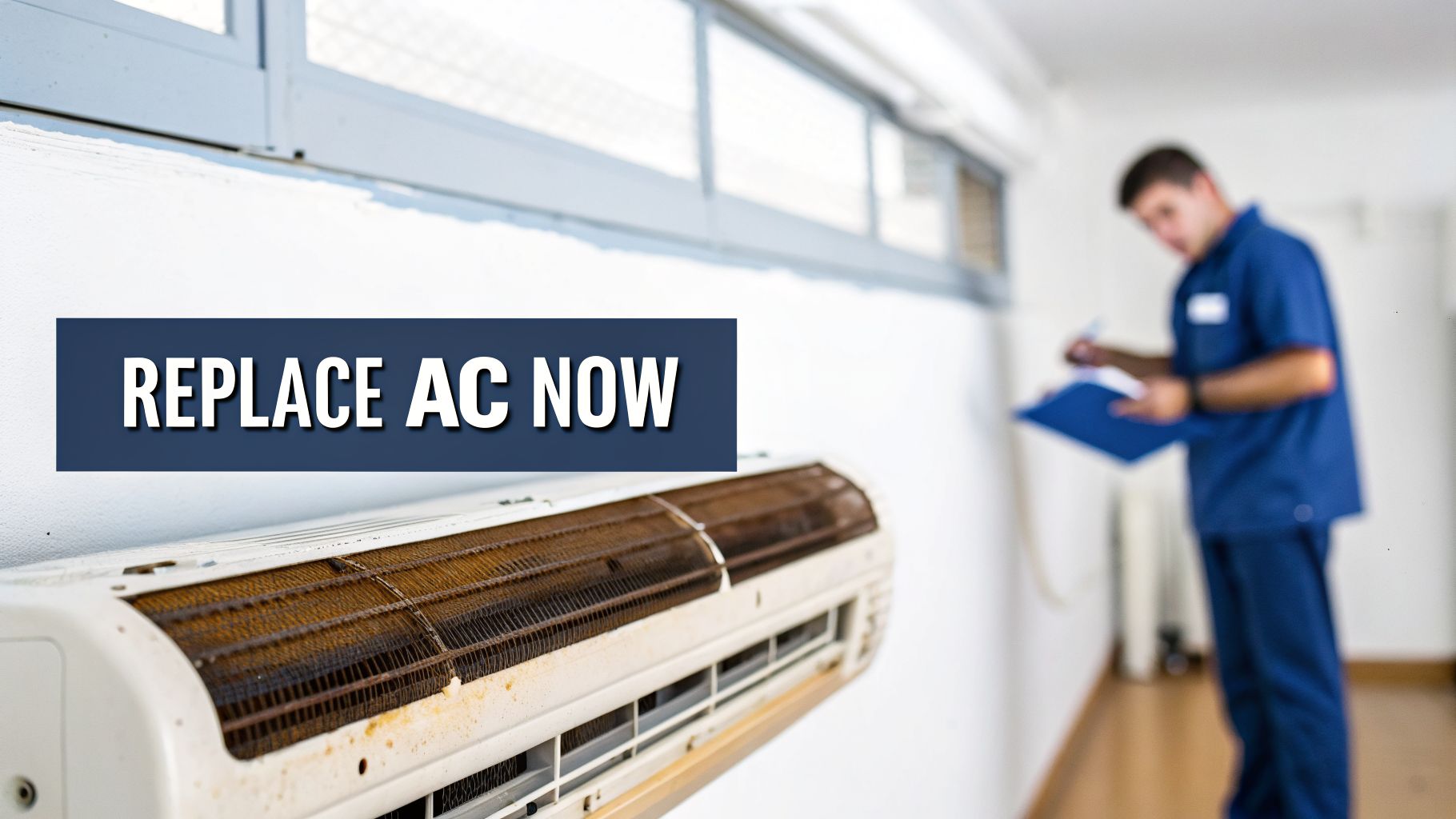
You’ve seen them everywhere. Split systems are easily the most common type of air con on homes across the Central Coast and Newcastle. They’re made up of an indoor unit mounted on the wall and an outdoor compressor unit, and they’re designed to cool or heat a single room or a specific open-plan area. This makes them perfect for bedrooms, living rooms, or the home office.
Their popularity is no surprise. In 2022 alone, Aussies bought a massive 1.14 million single split system units, which accounted for about 84% of all stationary air conditioners brought into the country. These things are dominant for a reason. You can see a full snapshot of the market by reviewing more about Australian AC sales figures on climatecontrolnews.com.au.
If you need to tackle more than one room but don't want to go for a full ducted setup, a multi-head split system is a fantastic middle ground. This setup uses a single, more powerful outdoor unit to run multiple indoor units, giving you independent temperature control in different rooms without the cost and complexity of ductwork.
Ducted Systems: For Whole-Home Comfort
For that seamless, whole-of-house climate control, a ducted air conditioning system is the premium option. It works from a central indoor unit, usually tucked away in the roof space, which pumps conditioned air through a network of ducts to subtle vents in each room.
The biggest advantage here is zoning. You can choose to cool only the living areas during the day and switch to just the bedrooms at night, which saves a huge amount of energy. This makes ducted an ideal choice for larger family homes, especially in places with temperature extremes like the Hunter Valley. For a deeper dive into which system might suit you, check out our guide on how to pick the best air conditioner for your home.
Understanding Key Technology
No matter which system you lean towards, you're going to hear two terms over and over again: reverse cycle and inverter technology. It’s worth knowing what they actually mean.
A reverse cycle system is simply an air conditioner that can both cool and heat. It’s not two different systems in one box; it just reverses its refrigeration cycle to efficiently pull warmth from the outside air, even on a cold day, and bring it inside. It’s a brilliant, cost-effective solution for year-round comfort in NSW.
Inverter technology is the magic that makes modern air conditioners so efficient. Think of it like cruise control for your car. Instead of the old-school method where the compressor slams on at full power and then switches off completely, an inverter-driven compressor just adjusts its speed to hold the temperature steady. This avoids those energy-guzzling start-ups, giving you a more stable room temperature and much lower running costs.
Breaking Down AC System Replacement Costs
Let's be honest, budget is one of the first things you think about with any home upgrade, and replacing your air conditioner is a significant investment. Getting a handle on what’s involved in the cost helps you plan properly and avoid any nasty surprises down the track. The final number on a quote isn't just the price tag of the unit; it’s a reflection of the expertise, safety standards, and hands-on labour needed for a professional job.
The complexity of the installation itself is a massive factor. For instance, swapping out an old split system in a Gosford apartment is a world away from retrofitting a full ducted system into an existing two-storey Newcastle home. The latter simply requires far more labour, materials, and planning.
Beyond the Unit Price Tag
When you get a quote from us, we believe in being transparent about what makes up that total figure. The cost is a combination of several key parts that ensure your new system is installed safely and runs perfectly for years to come. These components typically include the air conditioning unit itself, the labour for our licensed technicians, all necessary electrical work, materials like copper piping and cabling, and the safe removal of your old unit.
This is a big market. Across Australia, the air conditioning upgrade and replacement sector is expected to generate a massive $1,157.5 million in 2024 alone. It just goes to show how many homeowners are making the switch to newer, more efficient systems.
To give you a clearer picture, the final quote is influenced by the type and brand of the unit, its cooling capacity (kW), and its energy efficiency rating. The complexity of the installation plays a big part too. A simple swap-out is cheaper than a complex retrofit needing new wiring, pipe runs between floors, or difficult outdoor unit placement. If your home's wiring is outdated, electrical upgrades may be needed, which can add to the cost but are essential for safety.
The Value of Energy Efficiency
It can be tempting to just go for the cheapest unit on offer, but that’s often a recipe for higher running costs down the road. A system’s energy efficiency rating directly impacts both its upfront price and your power bills for the next decade.
A unit with a higher Zoned Energy Rating Label (ZERL) might cost more initially, but it uses less electricity to give you the same amount of cooling or heating. Over the 10-15 year lifespan of a typical system, the savings on your energy bills can easily eclipse that initial price difference, making it a much smarter investment in the long run.
Consider this scenario: you're choosing between two 7kW systems for your living area in a suburb like Terrigal. One has a basic energy rating, while the other costs $400 more but boasts a much higher efficiency score. The more efficient unit could save you $100-$150 per year on running costs. That means it pays for itself in just a few years and then continues to save you money for its entire life.
Thinking about the lifetime cost, not just the purchase price, is the key to making a wise decision. For a more detailed look at what influences the price, you might find our guide on split system air conditioning installation costs really helpful.
So, What Actually Happens on Installation Day?
Getting a new air conditioner installed is a bigger job than just swapping a few boxes. It's a precise process, and knowing what to expect on the day makes everything feel smoother and less disruptive. A professional installation is genuinely the most important part of making sure your new system runs efficiently for years to come.
Our team always treats your home like it's our own. We'll lay down drop sheets to protect your floors and clean up thoroughly afterwards. The goal is to leave you with nothing but a perfectly cool (or warm) home.
The On-Site Assessment
First things first, before a single tool comes out, our technician will walk through your home with you to confirm everything we discussed during the quote. This isn't just a quick look around; it's a final check to lock in the plan.
We’ll double-check the layout, confirm the best spots for the indoor and outdoor units, and map out the cleanest route for all the piping and electrical wiring. For instance, putting an indoor unit in a north-facing Gosford living room requires careful placement to avoid annoying drafts and ensure the cool air reaches every corner. This final check prevents any surprises on the day.
Safe Removal of Your Old System
With the plan locked in, the first real task is to safely decommission and get rid of your old air conditioner. This is a critical step, especially when dealing with refrigerant gas, and it absolutely must be handled by a licensed professional.
Our ARCtick certified technicians will carefully pump down the old unit, capturing every last bit of the old refrigerant gas according to strict environmental laws. This prevents harmful gases from escaping into the atmosphere. Once it's empty and safe, we'll physically remove the old indoor and outdoor units without marking your walls or damaging your property.
Why does professional removal matter? Old refrigerants like R22 are ozone-depleting substances. By law, they can't just be released. A licensed technician is legally required to handle and dispose of these gases safely, which protects both the environment and your family.
Installing the New Indoor and Outdoor Units
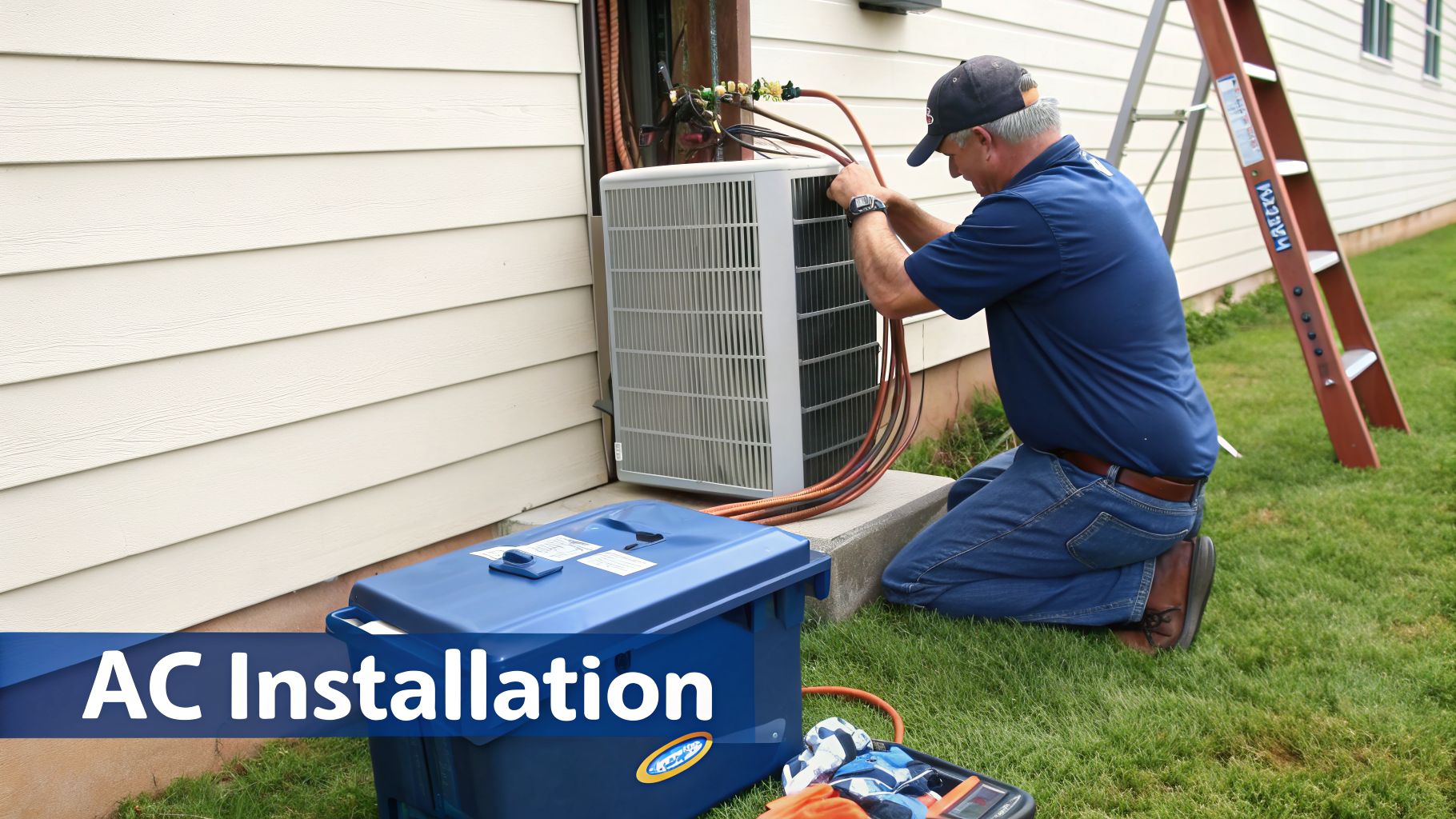
Now for the exciting part: installing your new system. The outdoor unit (the condenser) is usually placed on a solid concrete slab or sturdy wall brackets. It needs good airflow to work efficiently, so for a home in the Hunter Valley, we'll avoid spots where it gets blasted by the harsh afternoon sun or clogged with leaves.
Inside, we'll mount the new head unit. We're not just screwing it to the wall; we're thinking about airflow dynamics. The goal is to position it so it circulates air effectively through the whole space. We take the time to make sure it’s perfectly level and securely fastened to the wall structure.
Electrical and Refrigeration Connections
This is where the technical skill really comes into play. Our licensed electricians will run a dedicated electrical circuit from your switchboard to the outdoor unit, as required by Australian Standard AS/NZS 3000. If your switchboard is a bit older, it might need an upgrade to handle the new system's load safely, something we would have flagged during our initial assessment.
At the same time, we'll run new, insulated copper pipes between the indoor and outdoor units. We then use a special tool to "flare" the ends of the pipes, creating a perfect, gas-tight seal at each connection. A tiny imperfection here can cause a slow refrigerant leak down the line, so we are meticulous about getting this right.
Testing and Commissioning
Once everything is connected, we don't just switch it on and wave goodbye. The final step is a comprehensive testing and commissioning process. First, we use a vacuum pump to suck all the air and moisture out of the copper lines before releasing the new refrigerant into the system.
This step is vital for the long-term health and efficiency of your air con. After that, we power up the unit and use our gauges to check that the refrigerant pressures are spot-on. We'll run it through both its cooling and heating cycles to make sure every function is working exactly as it should. Finally, we’ll hand you the remote, give you a straightforward tour of how to use all the features, and answer any questions you have.
Hiring a Licensed and Insured Installer Is Non-Negotiable
Replacing your air conditioner is a serious investment in your home’s comfort. But it's also a complex job that involves high-voltage electricity and pressurised refrigerant gas. This is exactly why it’s not a weekend DIY project.
Choosing a qualified, licensed, and insured installer isn't just a good idea; it’s a legal requirement in NSW that protects your home, your family, and your new system. Trying to save a few dollars by hiring an unlicensed operator can backfire, badly. The risks are incredibly serious, from electrical faults that could start a fire to refrigerant leaks that harm both the environment and your system's performance.
The Legal Requirements in NSW
In New South Wales, the rules are crystal clear, and they’re there to keep people safe. Any individual or company you hire to install an air conditioner must hold specific, verifiable licences. There are two credentials that are non-negotiable: a Contractor Licence for electrical work, and an ARCtick Licence for handling refrigerant.
All electrical wiring must be done by a licensed electrician, following the strict safety regulations of AS/NZS 3000. And anyone who touches refrigerant gas must be licensed by the Australian Refrigeration Council (ARC). Using an unqualified person for this work is not just a bad idea, it’s illegal and puts you at enormous risk.
Why You Should Never Cut Corners
That temptation of a cheap cash deal might seem appealing, but the potential fallout is huge. An improperly installed system isn't just dangerous; it also voids your manufacturer’s warranty from day one. If a major part like the compressor fails, you'll be stuck with the full cost of replacement because the manufacturer won't honour a claim on a system that was installed illegally.
A professional installation is the foundation of your system's long-term performance. A correctly installed unit will run more efficiently, last longer, and operate safely, giving you peace of mind that a cheap, unlicensed job simply cannot provide.
Your Checklist for Vetting Installers
Before you agree to any work, take a few simple minutes to check that your installer is the real deal. It’s the best insurance you can get for your investment. Ask for their NSW Fair Trading contractor licence number and their ARCtick licence number, and verify them online.
Confirm they have public liability insurance, which protects your property in the unlikely event of an accident. For the electrical side of the job, your installer is legally required to give you a Certificate of Compliance for Electrical Work (CCEW). This is your proof that the wiring was done safely and to Australian standards. Finally, check their experience in your local area, whether it's the Central Coast, Newcastle, or Sydney.
If you're looking for more details on what a proper install looks like, you can find helpful information in our guide about installing a reverse cycle air conditioner.
Maximising Energy Efficiency with a Modern System
Replacing your old air conditioner is about more than just getting the cool air flowing again. It’s a genuine opportunity to slash your power bills and shrink your home’s environmental footprint. Today’s air conditioners are leaps and bounds ahead of models from even a decade ago, making an upgrade a smart move for both your wallet and the planet.
For homeowners anywhere from the hot Hunter Valley to Sydney’s western suburbs, swapping out an old, power-hungry unit for a high-efficiency model can easily save hundreds of dollars a year. These new systems are just built smarter, using advanced tech to give you better performance with a lot less electricity.
Understanding Modern Energy Ratings
When you’re looking at a new air conditioner, you'll come across the Zoned Energy Rating Label (ZERL). This label is a massive improvement on the old, generic star rating system because it shows you exactly how a unit performs in your specific climate zone.
That means you can see whether a system is built for the coastal humidity on the Central Coast or the dry heat we see further inland. This lets you make a much more informed choice, picking a model that’s actually optimised for where you live, not some generic national average.
The Shift to Greener Refrigerants
Another huge benefit of upgrading is the move to more environmentally friendly refrigerants. For years, older systems used gases that had a high Global Warming Potential (GWP), which contribute to climate change if they leak. New regulations are thankfully phasing these out.
In fact, the Australian government has banned the import and manufacture of small air conditioners using refrigerants with a GWP over 750 from 01/07/2024. This is pushing the whole industry towards more sustainable options, ensuring your new system is not only compliant but also much better for the environment.
Smart Features for Smarter Energy Use
Modern systems also come packed with genuinely useful features designed to help you use less energy. Wi-Fi control is a popular one, letting you manage your air con from your smartphone. You can cool the house down on your way home from work instead of leaving it running all day.
Features like programmable timers and sleep modes also give you precise control, making sure you’re only using power when you actually need it. These small tweaks really do add up to big savings over a year. And if you want to take efficiency to the next level, you could even explore cutting-edge solar powered HVAC systems. It's also worth checking if you qualify for any government incentives, which we break down in our post about the air conditioner rebate.
Your AC Replacement Questions, Answered
Deciding to replace your air conditioner is a big step, and it’s completely normal to have a few questions buzzing around. After more than 15 years of helping families across the Central Coast, Sydney, and Newcastle, we've pretty much heard them all.
Let's clear the air and give you some straight answers to the questions we get asked the most.
How Long Will the Installation Take?
This is usually the first thing people want to know. The short answer is: it depends on the system. If we're doing a simple swap of an old split system for a new one in the same spot, our team can often have it done and dusted in about 4-6 hours.
A full ducted system replacement is a different story. If your existing ductwork is in great shape and we can reuse it, we can typically get the job done in a full day. But if the project involves running new ducts, setting up zones, and handling the electrical work, it’s more likely to take 1-3 days. We don't rush these things, getting it right is what matters.
Are You Going to Leave My House in a Mess?
Not a chance. We’re homeowners too, and we treat your place with the respect it deserves. Our technicians lay down drop sheets to protect your floors and furniture and are sticklers for cleaning up as they work. The only evidence we want to leave behind is a perfectly running air conditioner and a blissfully cool home.
Can We Just Use the Old Ductwork for Our New Ducted System?
Sometimes, but it’s rarely the best move. It might feel like an easy way to save a bit of money, but old ductwork can be leaky, poorly insulated, or full of dust and allergens that have built up over the years. We’ll always give your existing ducts a thorough inspection first.
If they're in top-notch condition, we're happy to connect them. But if they're compromised, putting in new ductwork is the only way to ensure your new system actually delivers the efficiency and clean air you're paying for. We'll always give you a straight, honest assessment of your ducts. Investing in new ductwork when you get a new unit is the best way to guarantee you get 100% of the performance and airflow your modern system was designed to provide.
What Air Conditioning Brands Do You Recommend?
We're not locked into any single brand, and that’s a good thing for you. We work with a range of Australia's most trusted names, including Daikin, Mitsubishi Electric, Fujitsu, and Panasonic.
Our focus is always on finding the right fit for your home and your needs. We'll consider your house layout, your budget, and the local climate, whether that’s the humid salt air in Woy Woy or the dry summer heat of the Hunter Valley. This way, you get the best possible solution, not just the brand we happen to have in the truck.
Ready to get clear, expert advice for your home's cooling needs? The team at ALC Air is here to help you find the perfect, energy-efficient solution with a free, no-obligation quote.